One of my family members is an online instructor that teaches classes to UN refugee camps around the world. I respect this person very highly, so when he sends me an email with the title “What Kind of Legacy are We Leaving You?” I feel compelled to engage in the discussion. His students were to read an excerpt from Viktor Frankl’s book “Man’s Search for Meaning”, Plato’s “Euthyphro”, and to describe their own search for meaning. The email he sent to me consisted of one student’s response. The student is not a native English speaker and relayed his experiences outrunning war in Africa and the Middle East. I am not going to write the entire message here but focus on a question the student asked in response: “Let me ask a question, does it mean that from all the way back to thousands of years ago education has done nothing to stop wars?”
This is a sentiment that I started to wonder a little while ago. I enjoy reading about world history and economics and a repeated theme is the idea that we have come so far, we are so educated, that surely this time we’ll get it right if we just have the right people in charge. This time our society will be perfect, a Utopia. It’s a common theme in dystopian novels but frequently reflected in the speeches of many people who consider themselves to be revolutionaries.
Or, y’know, your Utopia
And yet, within a few short years of uttering this sentiment, those societies tend to collapse, almost always violently.
Surely the next time we will be more educated. We will get it right. We just didn’t have the right people in charge or some “other” ruined the dream.
It almost implies that education bestows a moral high ground. If we were more educated, we wouldn’t have so many wars, people wouldn’t starve, and we could get the best and brightest to solve our problems. In many ways our increasing knowledge has alleviated much of human suffering to those who are the beneficiaries of it. Crop yields have increased several times over because of what people have learned and the technology that came with it. In stark contrast, education also creates the most terrible weapons of war. Atomic bombs can wipe out the same population that those increased crop yields can support. It has struck me as an interesting dichotomy.
If education implies morality, then being uneducated must mean that you are little more than a barbarian, and yet we know that that isn’t true, either. Many of us have grown up with or have met many people in our lives who would be considered uneducated but are the most wonderful people to be around. In stark contrast stands the individuals who would lord their education levels over others in search of that distant Utopia. This, of course, is not always true and is not meant to be a generalization of either educated or uneducated individuals.
The implication isn’t that we are pursuing the wrong means for Utopia. The implication is that we can’t escape our base instincts except by conscious choice, and even then, we cannot force others to accept it without conflict. His question neither condemns nor condones education. To me, it succinctly illustrates human nature. Education is another tool mankind has created. It cannot bring us any closer to the Utopia we so desperately desire, but if we recognize that we cannot truly escape our instincts, we can use education to help each other in greater and more fantastic ways, as human beings have always done.
“I don’t know the question, but sex is definitely the answer.”
-Woody Allen
“In a perfect world, you could fuck people without giving them a piece of your heart. [But] every glittering kiss and every touch of flesh is another shard of heart you’ll never see again.”
-Neil Gaiman
“Sex without love is as hollow and ridiculous as love without sex.”
-Hunter S. Thompson
“The main reason Santa is so jolly is because he knows where all the bad girls live.”
-George Carlin
I place blame for this piece squarely on the shoulders of the commentariat. Discussions that began with the absurdity of #metoo quickly went down the rabbit hole of analyses of the sexual marketplace, human mating strategy and unending (indeed, unendable) sexual conflict between men and women. This forced me to think about things, which forced me to want to record and share them, which further forced me to embarrass myself and torture you all once again by inflicting my writing upon you. You have no one to blame but yourselves.
The Backstory
Let me begin with a disclaimer: I am not a biologist nor an expert on evolution or human sexuality. There are likely droves of people in the commentariat that are infinitely more knowledgable about these things than I am. To them, I apologize and please throw rotten vegetables in the comment section. To everyone else that doesn’t know any better, I am a 100% super-knowledgable expert on everything, so take every single word I say as gospel.
“Cave woman seeks cave man, must be at least 5’8″ to ride.”
Good, now that we’ve got that figured out, let’s start with a little story. You are Ug, an archaic male human, newly evolved to self-awareness and roaming the Savannah. You are 16, right in the prime of life, but rapidly approaching middle age. You are ruled by three overwhelming urges that dictate the terms of your existence; thirst, hunger and horniness. Fortunately for you, you have access to watering holes and you’re pretty handy with a spear so the first two are generally taken care of. One day, you come across Oog, an archaic female human with beautiful eyes and hairy pits just the way you like them. Because you are a human, you have no idea if she’s ovulating, all you know is that you need to get little Ug wet immediately. You show your best PUA skills, and 3 minutes later you have scratched that itch that has been bothering you for months. Nine months later, Oog has given birth to a beautiful baby girl Aag. You still have awkward encounters with Oog and see her about the Savannah, but when you see her with Aag you’re not really sure what to make of it. You don’t quite understand that your amorous activities 9 months ago could have caused this; you’re not really sure about anything. Oog could have had sex with 20 different guys and any one of them could be the father, but you don’t know that. Your knowledge of the situation is almost completely opaque. However, what you do know is that she has a baby with her now that needs nonstop attention and resources. Something inside you, another thing you don’t quite understand, is driving you to try and help her take care of this thing. So, against your better judgement, you start sharing your food and water with her and the baby and life goes on, a vision of domestic bliss, complete with a white picket fence around the cave.
The catch is that, Ug may not realize it, but he cannot possibly be sure that he is, in fact, the father of Aag. This is one of the two reasons that he doesn’t pull an alpha lion and kill Aag; the other one being “love” aka: a cascade of hormones (vasopressin, oxytocin, estradiol among others) that create a pair bond and make him want to take care of Oog and Aag and make more babies. So, rather than running back out on the Savannah and chasing some hot new strange, he embraces monogamy, otherwise known as making the best out of a bad situation.
Big Dicks and Horny Chicks
Our bodies and behaviors are museums dedicated to the millennia of evolution that have shaped the human race. Some adaptations are legacies from the larger course of mammalian evolution, internal fertilization, placental fetal nourishment and the eponymous mammary glands providing nourishment post-birth. There are, however, a number of adaptations that are unique (or nearly unique) to humans that must have evolved relatively quickly and can only be explained by sexual selection (physiologic changes brought about by mate preference pressure rather than environmental pressure). Human males have unusually large penises for primates, both as a percentage of body size and in absolute terms. They also lack an os penis or penis bone. The vast majority of mammals have a bone that will actually move into the penis during arousal to create an erection. Human males rely on hydraulic pressure from blood to get the job done. This also means that human penises are a bit more pliable during sex, getting to those hard to reach places. It’s an open question why these adaptations to the human penis happened, but it’s a safe bet that women chose men with these characteristics and had more babies with them. More pleasure? Consequence of bipedal locomotion? Not sure.
For the ladies there are two big ones. The first is my personal favorite; permanently engorged breasts. Biologists are reasonably certain that these are a consequence of humans’ preference for face-to-face sex and evolved as a visual stimulus analogous to the buttock that most male mammals would see while getting their freak on. Preference for large ones could be an indicator of age as bigguns tend to droop as a woman ages. The other adaptation is really important; concealed ovulation combined with year-round sexual availability. This means that humans have no mating season and women are DTF any time. It also means that a lack of being “in heat” ensures that neither partner knows if a particular copulation likely resulted in offspring being produced. This element of paternal uncertainty is essential to the way human relationships developed over time.
Whycome No Pics?
In case you need examples of how this all works (we’re all socially maladjusted failures around here, so it’s entirely possible), I have a pop-up book I can lend you. Before we completely lose the script here, I want to say that the previous story and examples of biological oddity that we humans have are simply to demonstrate that competing sexual strategy has always existed between men and women. This is expressed in our biology and it is certainly expressed in our behavior (what this tome will eventually come around to focusing on). Every animal has such an imbalance to some extent; it’s unavoidable.
Speaking strictly for humans, the cost of reproduction for women always has been higher. She is the one who is saddled with 9 months of pregnancy, followed by the necessity to care for an utterly helpless infant for years. This task, while not impossible to do alone, is light-years easier with Dad involved to procure resources and provide protection. Therefore, it’s in her best interest to be more restrictive when selecting a mate. Compounding her need to be choosy is the fact that she has a limited number of eggs and therefore a limited reproductive lifetime. She doesn’t want to waste scarce and precious resource on the wrong guy. Men, on the other hand, produce zillions of sperm from puberty until death and they’re all raring to be deposited in the nearest vagina, the more the better. Men, intrinsically, have a very low cost of reproduction. No pregnancy, an endless supply of sperm, why not go nuts? That is certainly one strategy that evolved (the “cad”). Fuck as many women as possible, banking on the fact that at least a few of the babies will survive after you love ‘em and leave ‘em. The other strategy (the “dad”), will stick around and help care for the baby, giving it a better chance of survival. The rub with this strategy is that dad only has an incentive to stick around if he’s reasonably certain that the baby carries his genetic material. Otherwise, he’s squandering his time, resources and opportunity cost taking care of someone else’s kid. On the flip side, mom is putting all her eggs (so to speak) in this guy’s basket, so she wants a guy with as many resources as possible. Resources often come along with strength and status, so women want those qualities.
From these few simple rules evolved basically all the pomp and circumstance surrounding human mating behavior. You see, the rules of the game are hardwired into us from thousands of generations. Despite progs’ desire to create the New Soviet Man, you can’t handwave away these realities and any changes to them will necessarily have to happen over a long period of time. Social engineering is a miserable failure when it comes to sex (and, well, pretty much everything else too, but that’s another article).
Modern Sex Pre-1960
Now we reach the crux of this piece, a survey of modern human sexual behavior as a consequence of these biological realities. Before people start throwing autistic fits, I’m fully aware that there are a multitude of other arrangements, lifestyles and aberrations to these rules (see: Sade, Marquis de); however, I’m working in averages here and looking at the most prevalent mating styles. I’m also not going to touch ancient societies with things like sacred prostitution, matriarchal societies (which, BTW, have never really been conclusively proven to have existed), “walking marriages” etc. Basically, I’m going to deal with post-Enlightenment, Western sexual relationships because that happens to be the world we inhabit.
Everyone had so many kids…
Humans are often cited as being unusual in the mammalian world for our penchant for monogamy. Many social critics claim that this is an oppressive social norm forced on women (always specifically women) by the patriarchy to enslave them into becoming breeding cattle. I argue that this is utterly wrong and human monogamy is a direct consequence of concealed ovulation, paternal uncertainty and the complete uselessness of human children for the first 5 years (at least) of life. All of these factors put humans at the extreme end of the K-side in r/K selection (go look it up, I don’t have the energy to go down that rabbit hole). Yes, it doesn’t change the fact that men still have those zillions of sperm raring to be ejaculated in new and interesting places; it also doesn’t change the fact that women want a man with as much wealth, status and resources as possible, but as I said before, monogamy is a compromise on the part of both parties making the best out of a bad situation. Many men still would occasionally satisfy their deep-seated biological urges with low-risk third parties (like prostitutes) in which the chances of yet another woman making demands on his scant resources were minimal. Likewise, women tolerated this because it was a low probability of him leaving her holding the bag. For their part, women would encourage (read: nag) men to improve themselves and their social station to try and make more money or gain more influence. The perfect picture of domestic bliss.
Monogamy is an odd institution because it’s simultaneously natural and unnatural. As I’ve said in previous essays, humans are like onions; we have layers of conflicting desires built one on top of another from the various parts of our ancient evolutionary brains. Our reptilian, mammalian, neo-cortical and spiritual sides are all locked in a battle royale. On one hand, it’s natural for a man to want to stick it in every hole he can find, but on the flip side, it’s natural to want to care for your offspring to ensure their chances of survival. For women, on one hand, it’s natural to want to find the man with the most possible resources (the king or chief), but in that case, you’re most likely going to be competing with several different women for his attention. Therefore, it’s also natural to want to find a decent guy with decent resources who won’t run away and you have all to yourself.
The major rub here is that sex, love and reproduction were all inextricably linked. It was very, very unlikely that you have one without the others coming along for the ride. Our very hormones themselves alter after the birth of a child (for men and women) making it much more likely that mom and dad will stick around and care for that helpless little blob. These are things that are hard-wired into us. You’re not going to change it, at least not with current technology. However, that playbook; the one that got us from the Savannah all the way to airplanes, interchangeable parts, the polio vaccine and indoor plumbing got completely torched with one invention.
The Pill
Those of you who read my previous piece will already know that I consider this to be the most Earth-shattering, life altering invention ever in human history. First approved by the FDA in 1960, this little pack of hormones made possible things that humanity never before dreamed of. Sex, love and reproduction, arguably the most formative phenomena of human evolution, were no longer linked. The world envisioned in Stranger in a Strange Land (published one year after the Pill was approved) was not speculative; it really was possible for people to live in group marriages and sex communes without the messiness of children entering the picture.
And that’s exactly what people did. With gusto. Like a college kid going on a bender at his 21st birthday, the drought was over. No longer would the chains of biology enslave us and repress us. No longer would we have to choose between plodding bourgeois monogamy and family or celibacy. No longer would women have to be so circumspect about who they took to bed. No longer would men have to think twice about having a one-night stand with that hot girl he doesn’t really like that much but has a great rack. As long as she’s on the Pill, all bets are off; no harm, no foul. Everyone gets their various rocks off, then walks away as if nothing ever happened. As easy as playing a game of Gin-Rummy but more fun.
“Intentional communities” (I really hate that term) like Sandstone (counting The Joy of Sex author Alex Comfort and Sammy Davis Jr. as members) and Kerista sprung up practically overnight. The Summer of Love and Woodstock firmly established that consequence-free casual sex and promiscuity were here to stay. The swinging 70s moved it from young free thinkers into the suburbs and the bourgeois community at large. Key parties and swinging became part of the cultural lexicon. Ordinary people began to question what radicals and academics had been questioning for decades; are the expectations of matrimony, nuclear family, monogamy and fidelity a scam? Why do we voluntarily subordinate our urges to outdated social structures? Why do we put a higher value on responsibility and commitment (which can certainly be a drag sometimes) than we do on pleasure, fulfillment and liberation? And the clarion call that still resonates to this day “IT’S NOT NATURAL!”
As stated above, this is true. It’s also not true. It’s also irrelevant. The human situation is one that is much more complex than any 60s sexual radical could conceive of. The millions of years of evolution leading us to this point has, again, created many contradictory urges within us. The onion-like human psyche is far more complicated than than a philosophy of “if it feels good, do it” can contain. But, easy pleasure is a siren song that is very hard to resist. One immediate social consequence of this revolution was a drastic increase in divorce. No doubt, this was a life saver to many people in lousy marriages, but to others it was the first inklings of the “broken homes” and “mixed families” that are ubiquitous today. The mainstreaming of so-called “alternative lifestyles” (another term I hate) would probably have continued apace except for one unfortunate complication.
AIDS
To middle and late Gen-Xers like myself, I have never known a sexual world that did not have the specter of these four letters hanging over it. Previously, STDs were a mild inconvenience. Picked up the clap at the sex party last weekend? Just go get your shot and you’re good for the party next weekend. Even permanent diseases like herpes were NBD; just rub some cream on it and wait for the acute outbreak to go away.
But what a way to go…
Now, however, there was a badass new kid on the block and he wasn’t taking shit from anyone. No vaccine. No cure. Bringing about a horrible, painful, slow and humiliating death. It definitely changed the landscape of relationships and sex toward the more conservative. It’s an interesting coincidence that it just happened to occur during the Reagan Revolution and the New Moral Majority. Since anal sex was and is a much easier way to contract the disease, and since, on average, gay men tend to have more lifetime sex partners than straights and lesbians, AIDS first exploded among male gays. This was not only devastating to the community at large, but adding insult to injury, Social Conservatives used it to take potshots at gays calling AIDS “gay cancer” and “divine retribution” for their “deviant lifestyle”.
People like myself who came of age at this time were relentlessly bombarded with PSAs about how sex will kill you and, if you decide to be an idiot and have sex in spite of our warnings, don’t even *think* about not using a condom; you might as well just give a .357 a blowjob. It’s telling about the overwhelming strength of uncontrolled human sexuality that it took the threat of death to reign it in. Monogamy, sexual restraint and conventional family, never completely abandoned in the first place, came screaming back to overturn the sexual revolution for one brief moment, because the perceived alternative was Russian Roulette. This image was not helped by the fact that many prominent individuals known for their promiscuity contracted and/or died of HIV (Magic Johnson, Eazy-E, Liberace, Freddy Mercury and, more recently, Charlie Sheen).
However, time marches on and human ingenuity is a wonderful thing. New drugs and treatments started cranking out and, while initially very expensive, have become more or less available to anyone that has contracted the disease. Magic Johnson has been living with the virus for decades and seems as healthy as ever. HIV/AIDS was no longer an automatic death sentence; if, in fact, it was ever as big of a threat as it was portrayed in the first place. Some conspiracy-minded libertines maintain that the AIDS scare was trumped up as worse than it actually was to try and purposely counteract the promiscuous tendencies of the previous two decades. Regardless, it had the intended effect until the mid-late 90s when all of a sudden it just didn’t seem like that big of a deal anymore. Sleep around, but use a condom; it would definitely suck to catch it, but if you did it’s not automatically the end. You take drugs for life and, in some cases, the virus won’t even be detectable in your blood. You can even have HIV-negative children using advanced reproductive technologies. The beast of human sexuality was not completely unshackled as it was in the 60s and 70s, but it was let out of the cage and given a long leash.
Tinder, Hook-Ups and #metoo
So here we sit. The sexual revolution mostly back in full swing, so-called “alternative lifestyles” are very much en vogue again. To be fair, people were swinging, making “arrangements” with their spouses and creating sexual sub-cultures all throughout the AIDS scare, but it was definitely more underground and seen as dangerous and shameful. Now, these choices are out in the open big time and sometimes portrayed by the intelligentsia as superior to plodding, bourgeois monogamy; a middle ground between the new ground rules of non-child-bearing recreational sex and the continuing desire for stability and family. Perhaps it’s true. I suppose time will tell.
Sexuality among adolescents and young adults went through a secondary revolution of its own. It’s completely ridiculous to think that teenagers and students weren’t constantly having sex for centuries before the current era. However, many times these unions would involve quite a bit of emotional seriousness due to the looming specter of pregnancy. People married young and typically stayed married. The new rules of sex, intersecting with technology, made having sex more similar to ordering a pizza than a complicated dance of courtship and emotions. In many ways, the sexual revolution had reached its ultimate goal; totally unfettered, (mostly) consequence-free sex on demand. Just swipe right and you’re off to the races. For large swaths of young people, intercourse had become akin to a handshake.
As stated, and the theme of this plodding piece of mental excrement, is that human nature is never so simple and it’s not easily altered. You see, going along with the Savannah Principle (the idea that our brains haven’t changed much since the days of Oog and Ug), doubts, fears and general despair and dysphoria began to creep in to this arrangement. In spite of what the sexual revolutionaries had been saying for decades, intercourse is *not* a handshake, and even barring the physical consequences of pregnancy and disease there are emotional consequences of sex.
Recapping from earlier, on the Savannah, Oog and Ug have intrinsically competitive sexual strategies. This can be traced back to the fact that Oog has to carry the baby, then birth it and take care of it. This all comes at the a huge economic and physical cost; all to produce one lousy human. Ug, while his urges to impregnate as many women as possible are very strong, he also must protect his genetic legacy. Human babies are so useless for such a long time that there is a much higher probability that they will survive if they have two parents looking after them. Compound this with the fact that women have a much higher reproductive economic value; finite number of eggs and only able to carry one baby at a time vs. men’s zillions of sperm and ability to impregnate a theoretically arbitrary number of women; and further compound it with concealed ovulation and parental uncertainty, we have quite a complex social situation. Nature has concocted a cocktail of wonderful things to overcome this complexity; female orgasm, penis size, oxytocin, vasopressin, sexual jealousy among other things combine to bond mates together with strong emotions.
As if things weren’t already complicated enough, men and women are both hypergamous; ie: they want to “marry up”. This means very different things to men and women. Women’s reproductive value is derived from beauty and youth, so men want to find young, beautiful women with whom to mate. Men’s reproductive value is derived from strength and capability at procuring resources for mom and baby, so, in the old cliche, women prefer a big wallet to a big dick. I don’t pretend to have all the answers to these complexities. There are entire philosophies inquiring on the nature of love. Love, lust and sex have probably motivated the creation of more art than anything else in history (with the possible exception of religion). In drastic understatement, human familial relationships are very complicated. It’s no wonder there would eventually be a backlash against the often simple-minded form that they take today.
#MeToo
At first started by women coming out to claim that they had been victims of rape/assault and were too ashamed to say anything until now, it has now morphed into a sinister condemnation of male sexuality. Acting like a tactless boor is enough to get you #metoo’ed and potentially put your family and livelihood in jeopardy. Again, at the risk of over-simplifying, this can all be traced back to women giving up their leverage in the sexual marketplace. The ingrained biological behaviors from the Savannah cannot be forgotten or dismissed so easily. To put it bluntly, pussy used to be scarce and expensive, now it’s plentiful and cheap. The supply and demand have been drastically altered from the way things were for essentially all of human history up until 50 years ago (less than the blink of an eye in the grand scheme of things). Men behave like boors and expect easy sex because those are the new rules of the game. Men have always wanted easy sex, but the possibility/likelihood of pregnancy incentivized women to keep pussy scarce and expensive; after all, they had a much higher cost associated with sex. This was their leverage, and it was the most powerful leverage known to humanity. Women have always had the upper hand in sexual relationships because of this, in spite of what pop culture and half-baked feminist theories argue. Women certainly got a raw deal when it came to political freedom and, in some cases, arranged marriage. I do not trivialize the treatment women sometimes got as second-class citizens. These were strategies concocted by male-dominated institutions to try and wrestle some control back from the omnipotent vagina. But, it is always in vain because pussy is the ultimate trump card. Men want it. Women have it. And women ultimately decide who gets it, in spite of social constructs designed to contravene that power.
#Metoo, in my opinion, is a reaction by women who find they don’t especially like the results of the revolution. They feel cheated that they no longer have that leverage, even though their Savannah brain is telling them they should. They feel used and cheap and, in many cases, through no fault of their own, they are. To try and win back some of the control they lost through biology, they now are, consciously or unconsciously, using the apparatus of the State and public shaming to try and reel in male sexual fervor. I’ve always thought it self-evident that male and female sexuality are different, but complementary. Men are the engine and women are the transmission. Men are filled with drive and energy and power; a walking hard-on looking for a hole. Women channel that energy from unfocused sexual excess into a sublimation of productivity, art, engineering, etc. Thus things have been since G-d said, “Let there be light”. Now, the transmission has lost its ability to direct the power of the engine; running out of control, the engine tears apart millennia of tradition, family structure and personal motivation. Both sexes perhaps should be more careful what they wish for.
The ultimate purpose of this tome is not to answer any questions, provide predictions or suggest how things can be “fixed”. There *is* nothing to fix. Things are what they are now. The toothpaste is not going back in the tube. Who knows what the future holds? Perhaps some new, even more badass STD will (likely temporarily) push people back to their old ways of sexual restraint. Perhaps the swingers and polyamorists are right that monogamy no longer has a purpose and will be phased out, paving the way for group marriages or some other such arrangement. Due to the hard wiring in our brains, I doubt this is something that would happen on a large scale anytime soon, however. More likely, we’re going to continue escalating the sex war to some kind of breaking point. What comes after that is anyone’s guess. We are indeed cursed to live in interesting times.
I thought about titling this “Hey Hihn, how’s this for deep libertarian thought?”, but I’m not that spiteful. This article is based upon an idea I’ve been tossing around in my head for a while. It usually comes back to the forefront whenever we’re talking about transfolk or open marriages. As with all of my articles, I make no representation that I’m not unknowingly ripping off some philosopher or, even worse, walking into some trap.
There seem to be two types of libertarians… really more of a spectrum with clustering near the edges. On one end is what I’ll call the Deferentialists. The Deferentialists work from the premise that when an individual makes a decision, it is the right decision for them. Deferentialists’ motto is “live and let live.” They’re deferential to the individual’s decision making.
On the other end is what I’ll call the Restraintists. The Restraintists work from the premise that when an individual makes a decision, it is their decision to make, whether or not it is the right decision. Restraintists’ motto is “who am I to tell you what to do?” They restrain their own sense of morality to avoid overstepping their authority.
The oddest image that came up for “authority”
I’ve written in the past about my authority-based view of rights. To sum it up, your mom had the authority to wash your mouth out with soap when you cussed as a kid, but a politician doesn’t have the authority to punish you for your speech. This places me firmly in the Restraintist camp, and I think that all libertarians who care about being effective should join me.
The Ineffectiveness of Deferentialism
When viewed from a simplistic and static point of view, Deferentialism and Restraintism achieve the same thing. Should the government implement a law implementing some social goal? Deferentialism says no because the social goal may be right for some people, but it may also be wrong for some people. Restraintism says no because even if the social goal is good, the government overstep of its authority is evil, and the ends don’t justify the means.
However, Deferentialism is ineffective in two ways. First, people, even Deferentialists, tend to have a line drawn in the sand where they shift from relativistic deference to the individual to a more absolutist stance. For example, Cosmotarians tend to be Deferentialists up to the point where their particular identity politics ox is gored. Second, Deferentialism gives no answer to Cultural Marxism. Deferentialists are either forced to kowtow to the virulent left, or they end up drifting authoritarian.
This image seemed oddly appropriate.
In contrast, Restraintism handles both of these issues differently. Restraintists have absolutist stances for everything, so there is no line drawing to be done. Any failure to properly act libertarian on a certain issue is a failure of moral restraint, not a philosophical deficiency. Similarly, Restraintism isn’t hampered when facing off against Cultural Marxism. While Restraintists would never strip away the rights of Marxists, they’re free to criticize, ostracize, and attempt to curtail the creeping growth of Cultural Marxism.
Trigger Warnings: rampant misogyny and unnecessary cursing. I don’t claim to be a professional journalist, nor do I care to write in an erudite fashion. That’s Heroic Mulatto’s job. But, unlike HM, I do bring the alt-text.
I’m not normally a McDonald’s guy.
I don’t have any problem with them, from a philosophical standpoint. They make something they claim to be food, and bizarrely, many millions of people enjoy these products and shower them with money. It just typically isn’t something that I enjoy eating.
Last week a buddy of mine told me to swing by and try their new Buttermilk Chicken Tenders. So, on my way home from work today, I stopped in to give this new item a fair hearing.
Let me tell you, those things are delicious. I will seriously go there at some point in the future specifically to get those again.
But enough about the food. As I was standing to the side of the counter waiting inexplicably for seven minutes (I thought the whole point was, “Yeah it sucks, but it’s fast“?), I noticed the young lady who took my order was a very attractive young Hispanic woman. Pretty face, perky tits, hips, the whole nine yards.
I looked back into the kitchen, and saw at least two other relatively hot Hispanic chicks. So I started thinking to myself, man, if I hadn’t already been dating my eventual wife when I graduated college, this would be a totally sweet fishing pond for random ass. I mean, how picky can they possibly be? They work at fucking McDonald’s.
This is what the girl who took my order looked like. More or less.
So my 25 year old self would roll up, strike up a conversation, and be like, “Hey – I’ve got a regular job in a cubicle, involving Excel formulas and v-lookup. I make enough so that I don’t get a 100% refund on my taxes. I have a late-model car that isn’t upside-down financially, and my own apartment. I can take you out to dinner – at a sit-down place with a leather-bound menu. And I eat pussy like it’s goin’ out of style.”
In my mind’s eye, at that point, any chick with little enough command of English and even less economic prospects would pretty much just drop her drawers. “Oh I suck yo dick!”, she says in a Vietnamese accent for some reason even though she’s clearly Mexican or Central American (damn you Full Metal Jacket for permanently fucking up my internal monologue when it comes to casual sex!).
It’s kind of like my version of slumming. It would have been fun, and I would have had access to free McDonald’s, which I recall not being as gastronomically opposed to 10 years ago.
That’s pretty much it. Oh, and I saw this flier on the way out. It was some kind of community outreach bullshit. What really drew my eye was one of the items listed among the other boiler-plate stuff like fundraisers and sponsorships. “Store Tours”. Um…what? How in the ever-loving fuck is giving a tour of your fucking shit-shack of a goddamn fucking store, and I fucking quote, “Giving Back To Our Communities”???
Our journey together for good? So do the McDonald’s locations in Snake Mountain and the Hall of Doom say, “Our Journey Together For Evil”?
To start with the disclaimer, I have read quite little of the considerable corpus of either the Frankfurt school – a many of whom were, in fact, neo-Marxists – or postmodern philosophy – quite a number of whom were, in fact, Marxists or neo-Marxists. What little I have read was, for me, rather uninteresting and kinda obscurantist, which I dislike, and overall not a good use of my time. Why am I writing about it? It is the internet, brethren. This is what it is for. Reading is for cucks; writing opinions on any and everything is for the modern Alpha male. So I am about to drop the definitive view on Cultural Marxism et al.
Now, cultural Marxism is en vogue these days among certain segments of the population, of the right wing persuasion. It is sort of like fascism for the left. The difference is that, beyond being buzzy and exaggerated, it is slightly more accurate, at least in my opinion. Most things that are literally Nazi are not Nazi much, if at all. But many things that are cultural Marxist can be somewhat described as such. As long as you define the term properly (and in these brave new worlds of ours, you get to define everything for yourself and thus never lose a debate)
Not part of a series on Marxism
When I use a phrase like “Cultural Marxism, Critical theory and postmodern nonsense”, I use it knowing well enough that those are different concepts and that they don’t quite gel together. It is a way to describe some modern leftists’ views that take a bit from each place, usually the worst bit, and mix it up together.
These elements of the Modern Left are not really critical theory; it is not really postmodern philosophy. Current postmodern philosophy may not be postmodern philosophy, but, being obscurantist, no one can tell, really. There is great debate what Derrida or Foucault or whomever really meant. This is not relevant that much, it is more how what they said is interpreted in the rpesent. On my Romanian lit papers in high school, no one cared what the poet really wanted to say with this or that metaphor, but what respectable literary critics thought they meant.
So what is cultural Marxism? It is used, yes, excessively, as a generic catch all term for “Everything I don’t like is cultural Marxist” by some on the right. But does the term have its uses? In serious debates, probably rather limited. But in less-than-serious ones, it can send across some information – people know, in a general way, what you mean when you say it. But is there a rigorous, clear definition?
Wikipedia does not seem to have a page on it, except as a subsection of Frankfurt School saying:
“‘Cultural Marxism” in modern political parlance refers to a conspiracy theory which sees the Frankfurt School as part of an ongoing movement to take over and destroy Western society.
Now, I admitted as much that it is a catch all buzzy word. But conspiracy theory seems a bit strong to me. I have seen many left wingers recently on the interwebz countering the term with “conspiracy theory”. Not to engage in conspiracy theory, it does seem a bit coordinated.
Wiki: “The term ‘cultural Marxism’ has an academic usage within cultural studies, where it refers to a form of anti-capitalist cultural critique which specifically targets those aspects of culture that are seen as profit driven and mass-produced under capitalism”
Well, yes. And in many views of the successors of the Frankfurt school those aspects of culture that are seen as profit driven and mass-produced under capitalism are almost all aspects of culture.
Continued: “it was misappropriated by paleoconservatives as part of an ongoing culture war in which it is argued that the very same theorists who were analyzing and objecting to the “massification” and mass control via commercialization of culture were in fact working in a conspiracy to control and stage their own attack on Western society,”
Ah, here we get to the key points. Was it misappropriated? In a way yes, but many words were, sadly, changed in meaning over time. But it was only partially misappropriated; it had a nugget of truth.
I think it is quite obvious many elements of the left wanted to obtain social change. It is clear to me that a way of achieving this is through taking over educational and cultural institution. Just like elements of the right want the same thing. Where is the conspiracy theory? Most of the vast right wing and left wing conspiracies alike are quite in the open. We are having a sort of kind of war aren’t we, on the cultural front. It is clear the sides want different things and are willing to use this war to get them. So where is the conspiracy? Hell, even some classical Marxist use the term cultural Marxist in a derogatory fashion, because they believe it draws attention from class war to more meaningless struggles.
Wait Pie, Culture War is also an ill-defined buzzword. Never mind you that, that is not the point, focus here!
All activists want to change society in a way they see fit. That is why they are activists. Progressives quite more so then others, it is one of their defining characteristics. All people in the culture war want something different. It is ridiculous to suggest otherwise.
And anyone with half a brain can see the left are trying to shove their social justice views in popular culture, being books, movies, games, comics, etc. It is not conspiracy that in certain areas of education it is more likely to have a Marxist professor than a moderate conservative one. And to the right, this equates with a destruction of Western Civilization as they see it. No need to see conspiracies everywhere. If I believe socialism destroys society (and I do), then I believe people who push socialism aim to destroy society. Maybe they don’t believe they do, but that does not change things. And they do quite clearly state that western society must be radically changed, in way to make it almost unrecognizable. So… destroy and rebuild in a different fashion, but destroy nonetheless.
The future of politics
I will come on record: I despise most of what the social justice left wants to achieve and would very much like to see it stopped. I outed myself as a supporter of conspiracy theories.
So basically Cultural Marxism, Critical theory and postmodern nonsense for me means the modern far left side of the culture war and the weapons used by them, attacking culture and education that does not conform, intersectionality and the oppression Olympics, attacking reason and reality when it does not go their way, calling math and science racist, sexist, ableist. Making everything white patriarchy. Can there be better definitions for this? Sure. I usually try to avoid these terms myself. But cultural Marxism can be good enough on Twitter – not that I am on Twitter, mind you. Helps some folks never forget these people support actual Marxism. The good ones do, others are Stalinists and Maoists.
So can you tell us more of postmodern philosophy? Carpenter in the sky, you people with all the questions. Ask HM or something, he’s the one blessed with the gift of book learning (I got the looks and sexual endowment part instead).
And on this note, how about you my fellow glibs? Do you like your Marxism of the cultural variety? Is your theory critical? Would you say you moved on beyond modernism? Thoughts below.
“3 out of 4 Americans believe that killing animals for meat is immoral, according to a MSNBC-MediaMatters-PETA poll. Based on this information, Congress is debating new rules put forth by the FDA to tax meat production at a higher rate than vegetables.”
The infant mortality rate is nearly double in Mississippi and Alabama than it is in New York and California!!!! Oh wait, It is 0.4% in NY and CA and 0.8% in MS and AL. And wait, there’s more! There’s a longstanding and well-known correlation between poverty and higher infant mortality. CA and NY are 2 of the richest states and MS and AL are 2 of the poorest states. What, exactly, is the point of this article except to poor shame the south?
Every media outlet has published a metric ton of articles that start just like this. It’s lazy writing, but it’s also the platinum standard for crafting a narrative. See, people are social animals that are primed to go with the crowd. When that subconscious impulse is manipulated through polling, people’s behavior becomes malleable. When you have some basic understanding about the strata of voters and their belief systems, you can get them to do your bidding without them even knowing.
Three basic concepts make public opinion polling an irresistible tool used to bias an audience: herd behavior, identity politics, and aura of authority. The formula is simple, using a favorable polling result, generalize the findings so that it is implied that a majority of an identity group believe a certain way, relying on herd behavior to solidify support of the belief within the identity group.
The ironic part is that none of what makes public opinion polling such a strong tool is based in reality. The herd behavior is based on an illusion. By and large, support for a politically controversial position sits somewhere between 40% and 60%, meaning that nearly half of people oppose said controversial position. Further, polling doesn’t allow for enough nuance to differentiate between being opposed to legalizing machine guns and being for the repeal of the 2nd Amendment. Identity politics, as well, is subtle. Take, for example, the approval/disapproval ratings of prominent politicians. If identity politics were the primary driver of public opinion, the surges and drops in approval ratings would be quite attenuated.
However, the illusion of universal agreement is very powerful.
Social Science is Modern Day Astrology
The holy grail of science is replicability. If you can produce an effect in one study, you should be able to replicate the conditions and achieve the same effect in a successive study. In physics or chemistry, this is usually fairly straight forward. Barring some unknown environmental variable affecting the experiment, the bowling ball and the feather land on the ground at the same time in a vacuum. The sodium and the water create a highly exothermic reaction when combined.
Social science is much squishier, both in methodology and in result. When you’re working with people, they don’t behave like molecules in a vacuum. They lie, they are affected by minor biases in your methodology, they are subject to many weird psychological effects like the placebo effect, and they don’t take kindly to being locked in a laboratory for 15 years for a longitudinal study.
Resultantly, more social science is done by “poll” than by “experiment.” Not that the experimental method is any better. I experienced the infamous psychological experiment where they flash pictures of different races of people and then time how fast you click on the good word or the bad word.
This has led many skeptics to put scare quotes around social “science”, which more and more resembles phrenology than physics. Adding more fuel to the fire is the “replicability crisis.” The replicability crisis affects both experimental and poll based studies. Essentially, social science can’t find the same effect two times in a row. Not only that, but they can make a study say that any effect exists (such as, listening to songs about old people makes you younger).
However, in a world that fucking loves science and decides social policy by sound byte, the internal crisis in social science becomes a very public issue. As discussed in Part 1, science journalism is a farce. When an ethically compromised journalism industry interacts with an ethically compromised social science industry, you get science journalism that is slave to the agenda of the media. We live in a world where science is subservient to the state. If you publish something that aligns with the state’s goals, you get media coverage and additional grant funding. If you try to publish something that goes against the state’s goals, you get undermined at every step.
Manipulating the Results: Bias in the Experiment
People are quite malleable as I’ve already said, and this is evident in the results of studies. Wording is very important. Want an anti-abortion poll result, mention “mother” and “convenience.” Want a pro-abortion poll result, mention “choice” and “woman”. I’ll let the next example speak for itself.
An example of a wording difference that had a significant impact on responses comes from a January 2003 Pew Research Center survey. When people were asked whether they would “favor or oppose taking military action in Iraq to end Saddam Hussein’s rule,” 68% said they favored military action while 25% said they opposed military action. However, when asked whether they would “favor or oppose taking military action in Iraq to end Saddam Hussein’s rule even if it meant that U.S. forces might suffer thousands of casualties,” responses were dramatically different; only 43% said they favored military action, while 48% said they opposed it. The introduction of U.S. casualties altered the context of the question and influenced whether people favored or opposed military action in Iraq.
There are quite a few known phenomena that influence studies, as well.
Acquiescence Bias – Making a statement and asking the poll taker to agree or disagree. Usually folks with lower education will agree disproportionately with the statement in comparison to when the same issue is asked in a question format.
Social Desirability Bias – We saw a bunch of this last election cycle. People tend not to like to tell others about their illegal or unpopular opinions, so they’ll simply lie to make the poll giver like them.
Question Order Bias (“Priming the Pump”) – Ask a question that will likely get a positive or negative reaction, then follow it with a question you want to influence in that positive or negative way. For example, if I were to ask y’all whether you like the current spending levels of the federal government and then followed it up with a question of whether you like deep dish pizza, the pizza question will be skewed negative.
Interviewer Effect – Related to the Social Desirability Bias. The poll taker changes their responses based on characteristics of the poll giver. For example, if a woman is giving a poll on equal pay, the poll taker may respond more favorably than if a man gives the poll.
Observer Effect – The poll taker is subtly affected by the poll giver’s unconscious cues, resulting in their responses being biased toward the poll giver’s expectations. For example, if the poll giver expects that black people will answer a question a certain way, they may change their inflection when asking the question in a way that influences a black poll taker to answer in that way.
This still ignores the cognitive biases that we have talked about in Parts 1 and 2.
How do you sort through all this crap and get to a real, measurable effect? You design a good experiment. How do you design a good experiment when taking a survey? You don’t.
Manipulating the Results: Playing with the Data
Okay, so we have highly questionable data from a shit survey, but at least we’re now in the realm of math. Nothing can go wrong here!
A core requirement of legitimate polling is “randomization.” Taking a random sample of the group you’re trying to study is what allows you to generalize the results to the group as a whole. If you do something to disrupt the random sample, you weaken the ability to generalize the results to the group as a whole.
How do people screw with the random sample?
Weighting – Let’s say you’ve done a 1,000 person survey, but you’re concerned that your relatively small (but random) sample isn’t actually representative of the world. See, you’re a savvy poll taker and you know that a recent poll showed that there are 41% Democrats, 37% Republicans, and 22% Independents in the locality of your poll, and your poll has 39% Democrats, 40% Republicans, and 21% Independents. We’ll just inflate the results of the Democrats in the poll to reflect 41%, deflate the result of Republicans to reflect 37% and mildly inflate the results of the Independents to 22%, and we’ll do our further analysis based on this massaged data. Of course, this assumes that the pollster’s understanding of reality is correct, and it screws with the randomization of the data, resulting in a strong danger that the data no longer reflects reality.
Margin of Error – You survey 1,000 people, and 44% love Trump and 46% hate him. Therefore, Trump is unpopular on the net. Well, except for the margin of error. For a 1,000 person survey in a country of ~300 million, the results are roughly correct. Roughly correct means that your poll (and others designed in the same way) is within 3% of the reality 95% of the time. This, of course, assumes a representative (read random) sample.
Data dredging – Let’s do a huge survey asking a zillion questions. Then let’s go fishing for correlation between variables. We’ll just ignore that correlation does not imply causation, because who actually believes in that. It actually makes for some amusing reading.
Fudging the data – How about we do 15 runs of the survey, pick the 3 that most support my hypothesis, and publish a paper with the results of those 3 data runs?
A more technical issue is highlighted in Anscombe’s quartet. Four completely different sets of data that are statistically identical. Why? Let me tell a story from Poli Sci 300-something, Statistics for Political Science. One of the main statistical analyses performed by Poli Sci statisticians is linear regression. Linear regression (which you may remember from 5th grade math) is trying to fit data to a straight line (technically you can fit it to another curve). However, the problem is that you have to predetermine the type of curve you’re fitting it to. It doesn’t self-tailor. If you have an exponential relationship between being libertarianism and small government views, it won’t fit well to the straight line regression. It struck me, sitting in that class, how much statistical analysis was an art, not a science. If you don’t understand the math and conceptual understanding behind the numbers (as most social science students don’t), you’re going to come to somewhat worthless results when doing statistical analysis.
The Results are Garbage In the First Place: The Telephone Problem
Garbage in, garbage out. It’s pretty much my motto. It’s especially true with public opinion polling. Let’s quickly mention two issues so you get a sense for the type of garbage being used in modern public opinion polls. No need to linger on this issue.
1) Self-selection bias – This has always been there. Who is likely to answer a telephone poll? Is there some inbuilt bias caused by some declining to participate? Is there a destruction of the randomness of the sample if it takes 3,000 phone calls to get 1,000 poll takers?
2) The shift away from landlines – This is new. Currently, less than 50% of people still have landlines. Cell phones really screw up some of the assumptions behind the methodology of telephone polling. For example, if a pollster wanted to survey people in central Indiana about some local issue, it’s possible that I would get a phone call. I don’t live in central Indiana, and haven’t for over 5 years. What does it mean for the poll that I’m not in the expected cohort? Nothing good. However, it’s easy enough to ask where I live at the beginning. What about the other way around. A pollster is trying to survey northern Virginians about some local issue. I’m essentially disenfranchised by that poll because my area codes is central Indiana. Further, cell phones make it really easy to block unknown numbers, resulting in even fewer “hits” for each phone call.
Knowing the Public: What Motivates Voting Behavior?
Now that I’ve thoroughly shattered your trust in the public opinion poll, let me shatter your trust in the people being polled. Let’s talk about a truly experimental social science study looking at beliefs and voting patterns.
The interesting result of this experimental study of people’s beliefs and voting habits is this:
There are 5 different types of voters:
Ideological – Able to abstract their issue positions into larger conceptualizations (principles) and set those conceptualizations relative to other ideologies.
Near Ideological – Have awareness of an ideological spectrum, but their positions don’t particularly rely on an ideology.
Group Interest – Good ol’ identity politics. I’m black therefore I vote Democrat.
Nature of the Times – Something bad happened in the world when Republicans were in power so I’m voting Democrat.
No Issue Content – I vote because…well… argle bargle, incoherent rambling, no making sense. Seriously, this is the category where the pollster couldn’t make any sense of their motivations for their beliefs.
There must be a bunch of people in groups 1 and 2, a ton in 3, and a smaller amount in groups 4 and 5, right? That would be the sort of society I want to live in.
Sorry to disappoint.
Group 1 (Ideologues) – 2.5%
Group 2 (Near Ideologues) – 9%
Group 3 (Identititarians) – 42%
Group 4 (Idiots who can rationalize their opinons) – 24%
Group 5 (Idiots who can’t even coherently explain the reason for their opinions to a pollster) – 22.5%
This was taken in the early 1960s. Wanna bet it’s even worse today? Identity politics wins because that’s how a plurality of people think. Principals over principles is a thing because 42% of people care about principals and 11.5% (generously) care about principles.
The sickening part is that group 4 and 5 vote. (Table 1 of the study shows the percentages for the study as a whole and for likely voters, with only marginal changes to the percentages).
I could type more about the horrifying prospects of society based on this study, but I think it’s more impactful to let the data sink in. 89% of people base their worldview/politics/beliefs on something other than a set of principles/ethics/morals. Almost 50% have blatantly idiotic reasons for holding their opinions.
As a final note, 35% of respondents randomly varied across opposing positions for issues in successive interviews. There wasn’t a trend in these changes, which made the pollster come to the conclusion that these people weren’t able to come to the same opinion two interviews in a row.
Quick Takeaways from the series of articles
The media is untrustworthy, and not just in the obviously biased ways
Gell-Mann amnesia is real
Science journalism is neither about science nor is it good journalism
Any conclusion drawn from social science should be viewed with great skepticism
Anything being pushed based on majoritarian or poll-tested bases is probably shit
By thinking in terms of principles, you’ve elevated yourself into rarified air. Most people struggle to even rationalize their opinions.
I was going to start this off with a Google[1] Ngram of the usage of “reality-based,” but it only goes to 2008, so it doesn’t confirm my gut feeling that the term has been tossed around an awful lot in the past election cycle. It does show a surge starting in the reign of Bush the Elder, increasing throughout the Clinton years, and peaking with GWB.
I think that we all know that most of the time that “reality-based” is used, it is a synonym for “someone who is my political ally.” But maybe we can try to give it some actual meaning? Is there such a thing as a “reality-based” community? Is there a “reality-based” mindset? I think there is, I think I’ve seen it, I think I can describe it.
In 2011, I moved to Upstate New York to open up a semiconductor fab. Most of the people involved were brought in from all over the world, since the local talent pool was almost nil. We did have some new college graduates from RPI and SUNY Albany and watching their transformation was…entertaining. During one of the earliest operations meetings, an NCG from the module responsible for classifying the finished dies was asked how the product was yielding. He answered, “it sort of yields.” This brought down great vengeance and furious anger from the person running the meeting. “What do you mean it sort of yields? Can you play video games on it or not?” (The product at the time was the CPU/GPU combo for the Xbone.) This leads me to an observation:
If you can talk your way out of it, it is not reality-based.
Reality doesn’t care about your opinion. It can’t be bargained with, it can’t be reasoned with. It does not feel pity, or remorse, or fear. And it absolutely will not stop. Ever. Until you are dead. Having said all of that, while reality will always win in the end, it’s not actually the most important thing out there. An awful lot of really great things are all about opinions, attitudes, and various human happy delusions (like natural rights *ducks*) so do not consider this some sort of attempt at setting up a hierarchy with “Reality” at the top and “Opinion” at the bottom. That’s not what I am trying to do. Though in the Glib Spirit® of encouraging conflict and snark, I will refer to the realm of opinion as “Bullshit.”
Although the unfortunate young’un at the ops meeting was presented with a binary choice, categorizing communities/mindset results in three:
1) The Bullshit community. This is a very easy community to live within, and might be the most populous community in the industrialized world. If the success/failure of your endeavor depends totally (or nearly so) on the opinion of other people, you are a bullshitter. This includes such fields as:
Entertainment
Politics
Law
Bureaucracy
Services
You can live quite a comfortable lifestyle while remaining completely within the bullshit bubble. Again, this is not necessarily a bad thing. Even non-Bullshitters benefit from or require the application of bullshit from time to time. Sales and marketing, interface design – these are all matters of popularity and opinion. They are the bullshit that enriches the fertile fields of consumer choice!
2) The reality-adjacent community. These are people who have at least a nodding acquaintance with reality but whose work often deviates from it, or relates to it in such a way as to prevent reality from interfering too much with the results. Mathematics is a reality-adjacent field. It can model reality amazingly well when it isn’t being used to determine how many ways you can pack nine-dimensional spheres. Pure sciences can also fit into this category. If the work purports to describe reality but cannot be tested (M-theory) or relies on simulation to confirm it (climate science) then it is reality-adjacent. Likewise archaeology, history and pretty much all of the social sciences are reality-adjacent, excluding those disciplines that are bullshit. Actually, it’s the reality-adjacent people that scare me. The ability (or habit) of accepting premises as a given (spherical cows with a radius of 1 meter anyone) and then accepting that the logical conclusion is correct because the logic is correct, makes them prime candidates for all sorts of appeals to “the greater good.” I mean, there’s not too much wrong with the logic of Marx or Malthus; it’s their premises that are faulty.
3) The reality-based community. If your work can be definitely said to be successful or unsuccessful, regardless of the opinion of the observer [2], then you are working in a reality-based field. This includes, but is not limited to:
Trades
Sports
Manufacturing
Veterinary and some fields of human medicine
You can play video games using the chip, or you can’t. The fitting leaks, or it doesn’t. The engine starts, or the javelin travels 110 meters [3], or the crops grow. You may attempt to explain away the result, but you’d be being literally absurd. There is an enforced honesty in the reality-based world. A hellish, panopticon-like traceability of one’s work actions. The clash that comes about when a bullshitter tries to bullshit in the reality-based world can be hilarious. One of the labs in our group will do checks on the various process chems to verify material integrity and blender performance. Almost all of our process chemicals look identical (49% HF, 31% H2O2, 25% TMAH, 96% H2SO4, etc.) but respond very differently (potentially dangerously) when being prepared for analysis. So when some jackhole drops off samples that are labeled with the wrong chemical label they get very irate. When the lab manager complained, [insert Litigious Industrial Supplier here] demanded to know how we were so certain that they had mislabeled the chemicals. Let me repeat that: they asked the people in the chemical analysis lab who are being paid vast sums of money to analyze chemicals…how we knew what chemical was in the bottle.
For those that would say that reality is itself a matter of opinion (but, like, that’s just your opinion maaaan) [4] I would respond thusly: if there ever comes a point where you, armed with your metaphysics can defeat me, armed with a baseball bat then I will consider that you may have a point. Until then, go STFU and do a bong rip with the maharishis.
_____________
[1] Google is an excellent example of a bullshit company that pretends to be reality-based.
[2] While the outcome of a play is determined by a referee’s ruling, the actual physical result of the play is a real fact. This is why officiating that is divergent from reality is known as a “bullshit call.”[5]
[3] Gorram Frenchies polluting my healthy sporting endeavors!
The FBI agents arrived as expected, though they took up a few of the parking spaces for my own young troops that were working shift that day. When I looked out of my office window I sighed and thought to myself, “typical government agents.” I had deliberately marked those spaces off and told the agents they needed to park next door before their arrival. I strode outside and calmly but firmly asked the first agent I saw to get their guys’ gear packed up and moved over to the next parking area so my own people could use their own parking lot. I received a dark glare in response, but he grudgingly moved his two dozen or so agents, their heavy weapons, armored and unmarked SUVs, and the various listening and breeching devices they had to the next lot over.
Christ, what an asshole.
I’ll be damned if I let some dipshit civilian agents take up the parking spaces of my own troops. I’ve already got a chip on my shoulder from reading you lot’s opinions about law enforcement, and being a LEO myself, it’s hard not to get that nagging feeling that if I’m going to be principled about this then I’ll make sure every other prick I’ve got to work with is too.
It isn’t long before the rest of the FBI equipment starts arriving. Blackhawks, armored carriers, and a few other odds and ends that would make the tinfoil hat wearers’ skins crawl. This, of course, is all happening within the United States. I voice my displeasure to my boss, who is well aware of my leanings, and he just shrugs and says that we aren’t involved, we’re just letting them use our parking lot.
Most days, that’s the best answer I can get.
I must preface the rest of this by saying that military law enforcement is not like civilian law enforcement. My jurisdiction ends at the gates except under extremely special circumstances where there is an immediate danger to life or national security. There are very, very few circumstances where that is the case and for the most part we are quite content to sit on our own little plot of land and protect our assets and the other military personnel, their families, and the support civilians who use them. There are a lot of other differences related to military law and the various responsibilities of commanders and such. That’s not really what this post is about though. It is kind of a two-for-one post about police reform and using tactical leadership to live out libertarian principles.
As much as I hate to do so, I try to follow the police shootings that make the news. I am not a legal eagle. I can only make judgments based on what is shown to me by the extremely biased news and I can only look at so much news before I have to find something else to do that doesn’t make me want to gouge my eyes out with a wooden spoon. Every single shooting on the news in recent memory makes me cringe.
You see, the thing I dislike most in life is a person who is unwilling to reflect on their own weaknesses or shortcomings. I don’t hate them, it’s more like pity, and nothing fills me with more pity than watching some untrained lackey in a uniform tap dance around the fact that they fucked up. They fucked up real bad and it cost someone their life when there are clear (at least to me) alternatives. Worse, I listen to the excuses of their defenders…their bosses, the public, the families. It is here that I need to remind the readers that there is a lot that goes on in the background that we may not hear about, but I can tell you from a law enforcement perspective that not enough occurs for it to make a meaningful difference. When I see the excuses being made to the public, what I see is what is happening behind the scenes. The chiefs are raging about image and the lawyers are making up public releases. The other cops are busting the balls of the shooter, maybe even shunning them. At the end of it all, “cooler heads prevail” and someone decides that we can’t let the public see us admitting a mistake because it emboldens our enemies and weakens trust.
That’s all total horseshit. If it were up to me, Attorney General Mustang, I would put every cop on trial that fired their gun and they would be subject to the same rights, prosecution, and defense that every other civilian is entitled to. I want them to consider every round before it leaves the chamber and I want to eliminate, no, decimate every police union that has ever existed. Grind it up into dust and scattered to the winds with their union bosses (metaphorically) strung up for the world to see that if you become a law enforcement officer, you had better be the best, and you had better be prepared to defend every action you take ON YOUR OWN, just like every other human being you are supposed to be protecting. I would not oppose doubling the punishments against law enforcement officers for committing even the smallest offense.
A secondary part that you are all familiar with is reducing the number of laws that officers must enforce. This is a huge deal. There is no possible way to effectively police every law on the books and it doesn’t matter how much money is in the budget. The task that goes hand-in-hand with this item is the elimination of funding from tickets. A military law enforcement officer may write tickets on base, but not one cent goes towards the unit’s budget. That this isn’t the case for civilian law enforcement is so perverse that it needs to be at the top of the list for criminal justice reform. Furthermore, not everything even needs a damn law. This is pretty well covered on a daily basis around here, but it is sufficient to say that the state of law in this country is an abhorrent mess…is it any wonder that a cop can’t make an effective judgment call if they can’t even understand the law they’re supposed to be enforcing?
A third item worth addressing is the standards for recruitment. They’re abysmal. Special forces applicants undergo extensive psychological testing to determine their ability to make decisions under pressure and accomplish the mission. It would be perfectly acceptable to subject law enforcement applicants to a standard that is at least as rigorous without the emphasis on destruction. In fact, I propose the opposite of destruction. Whereas special operators are expected to mete out absolute death in the circumstances they are ordered into, we should establish a system for law enforcement applicants where they are expected to mete out absolute life so that the citizens they are protecting can be assured that when an officer responds they are going to do everything within their power to keep people alive. Here’s the real catch that will send current officers into a frothing mess: law enforcement officers must do this for people who are actively breaking the law. If a perpetrator dies, officers should be subjected to a trial wherein it is determined whether or not the officer did everything in their power to keep the perpetrator alive. An officer who has passed a mental exam reserved for special operators but who would die to protect a victim and a perpetrator would be an impressive officer indeed.
Officers must remember that they are a part of the community, even if they are coming from far away. This is something I have to remind my own troops of on a regular basis. It never fails that there is always at least one “supercop” who feels it is their absolute duty to ticket any and every offense to the maximum extent. At my last assignment, I had an individual who would line the cars up on the streets as they passed by and go down the line writing tickets. I quickly put a stop to this. It is complete and utter nonsense and hurts the community far more than it helps protect them. At every assignment I’ve been to I’ve had to rein in “supercop.” I’ve often heard the rebuttal “the law is the law” and to some extent that is true, however, I often find myself applying the NAP to decide on the application of the law. Often, this results in me simply turning someone around who may be bringing an illegal substance into my jurisdiction.
I’ve also been hit square in the face with the realization that it’s not just the “supercops” who fall victim to the idea that cops are the only thing standing between civilization and anarchy. On at least one occasion, an individual I was well acquainted with and who was a director for another unit came up to me one day and asked if it was normal for my officers to place their hands on their weapons when approached. I was a bit taken aback. This has never been standard practice since I’ve been in. In fact, we are specifically taught to keep our hands in front so as not to escalate a situation. The director informed me that during his usual early morning walk through his supply yard, coffee cup in hand, he was approached by one of my officers who had his hand on his weapon and was demanding ID. While I don’t expect the officer to recognize everyone on base, I do expect them to compose themselves in a professional manner when they are out in the community. Upon calling up my training section and initiating more focused efforts on community relations (and basic fucking police tactics, like don’t hold your gun like a scared little twerp), I quickly found out that all the “war on cops” rhetoric in recent years was weighing on my very young group of officers. I created a brief presentation on the actual statistics on violent crime and police deaths, one which was well received and proved to be a relief for my officers.
Here is where I can tie in the use of body cameras. I believe they are a wonderful tool because in my limited experience, the officer will never tell the whole truth. I do not necessarily believe that they intentionally lie at all times, however, an uneducated individual that was hired using poor standards might be inclined to forget incriminating circumstances or less likely to take in the entire set of circumstances they find themselves in. The public should demand body cameras for all their officers and not only that, there must be a punishment associated with not using them. We use fail safes in many other professions to learn what went wrong and apply those lessons in the future. If these officers have nothing to hide, then they have nothing to fear. Standard libertarian disclaimer: I don’t believe this saying applies to private citizens. It absolutely applies to government employees.
I wish I could say that it’s just bad apples, but that would be a lie. As a young officer, this became apparent to me very quickly following a meeting I had with local police chiefs. I was asked to provide my antiterrorism expertise for an event and, having never done something like this before, I was eager to talk about the subject. It wasn’t long into the meeting that I found out they weren’t really interested in terrorism. There was only a passing interest in looking for backpack bombs or something else of that nature. No, the real threat was that a group of gun rights advocates were preparing to attend the event as well with their firearms in full view. The discussion quickly turned away from spotting the real threats to this “extremist militia.” I attempted to bring the discussion back around by pointing out that anyone who is open carrying and minding their own business is going to be the least of your concerns when looking for terror threats, but to no avail. I left the discussion at the first break, disgusted by what I had learned.
It is with this little bit of background that I came up with a subject called “tactical libertarianism.” I know some of you will cringe at the concept of applying military terms to this philosophy, but it’s how I think and it’s what works for me. The idea stems from my training as a Special Reaction Team leader (a kind of SWAT) and from some experience overseas. The basic premise to me is that each individual that makes up a team must be responsible for themselves, first and foremost, so that the team is not carrying them in life threatening situations. How does this apply to libertarianism?
Every person, whether we like it or not, is a part of a team. Of course, there are exceptions to every rule, but in general, most of us can look around and see the team framework all around us. It could be a family unit, a group of friends, coworkers, etc. As libertarians, we often joke about being antisocial, the tiniest of political minorities, insignificant on any stage worth noting. I believe, however, that that is not the case. To me, there is nothing mightier than an individual who recognizes their own self-worth and can apply that to a team construct.
A fire team encourages each other. They bust each other’s balls. They push each other in the gym and help each other through tough times, but ultimately, they all know that the individual must make the conscious effort to be the best they can be for the team. An individual who doesn’t measure up, who drags the team down, is dropped.
In normal society, however, we can’t just drop someone because they drag us down. We have obligations to each other for various reasons (no, this isn’t some social contract fuckery, I’m just talking about the ties we have with the individuals around us that we voluntarily create). As libertarians, we tend to be stronger mentally because of our unceasing desire to better ourselves as individuals. We constantly look inward, challenge ourselves to find cracks in our armor, seek out knowledge and arguments, and look around us to better understand the world we live in.
Tactical libertarianism is the idea that when we, as libertarians, recognize our being part of a team, we can push the entire team forward to become stronger than it was before. You push yourself to be healthier, stronger, more financially stable, more educated, and more individualistic because of your unwavering support for the libertarian philosophy. If you model libertarianism and stand on principle within the framework of the teams you are a part of, you might find yourself able to lead the team forward because of what you have pushed yourself to do. In fact, I actively encourage that leadership. The joke is often said here that anyone who seeks a position of power is exactly the type of person who shouldn’t have it. I agree. The difference here is that by consciously acknowledging the corrupting effect of power in a position, and then making the decision to give up that power upon the expiration of your time in that position, you have already proven that you are in some way qualified to hold those positions. George Washington did not seek to be President, but he did not hide from that duty either.
An example of tactical libertarianism I will use has to do with active shooter scenarios. As the person who is considered the authority for all things violent crime-related on base, I am tasked with teaching the local populace the best way to handle a situation where someone has opened fire around you. Beyond the usual “run, hide, fight” stuff you may be familiar with, I have taken the liberty of adding violent crime statistics from the FBI into my training to show the real trend of shootings (it’s going down, regardless of how they screw up the definition). I pushed to have “run, hide, fight” clarified by my chain of command so that people understand that it doesn’t have to be in this order. You must decide what is most advantageous to your survival and follow through.
I emphasize in my training that the individual must decide how they will behave before being confronted with these dangerous situations. I’ve been given feedback that this has helped people in other situations, not just dangerous ones, where they prepare themselves ahead of time to act and it is easier to follow through later. While this may seem obvious, it is often taken for granted. This is something of a new concept in the world of stopping violent crime (especially the fight part).
As part of my training, I also began advocating that people carry a firearm whenever possible. In the context of an active shooter scenario, it is very easy to show how modern firearms are a great benefit to the individual. I have gone so far as to push for concealed carry on base (for some reason this is controversial…). A briefing that I gave made its way up and convinced some important people to allow concealed carry in certain circumstances on the installation. It’s a small step in the right direction. This is how I’ve chosen to lead my little corner of the tactical environment based on the libertarian principles of individual responsibility (deciding beforehand) and self-defense.
You may find that as you place yourself into positions to assist the team at a tactical level, leadership roles will be placed on you because of your ability to stand up and look around to see what needs to be fixed. Someday, that tactical libertarianism may expand to an operational level, or even a strategic level, but it starts right back with the fire team…the small group of individuals we each helped to move forward.
The point isn’t to propel libertarianism into some political wave to sweep the nation. It isn’t to turn it into some militaristic shadow of its former self. The point is to help your family. It’s to help your community. In doing so, you take part in and enjoy explaining the principles behind what makes it all work, the team building and organization that stems from individuals working together, without government assistance, to prove what they can do. No politician can withstand a principled individual and no government could ever hope to withstand a principled team that is the foundation of a principled community.
I said to myself, ‘Come now, I will test you with pleasure to find out what is good.’ But that also proved to be meaningless. ‘Laughter,’ I said, ‘is madness. And what does pleasure accomplish?’ I tried cheering myself with wine, and embracing folly […] I acquired male and female singers, and a harem as well—the delights of a man’s heart. I became greater by far than anyone in Jerusalem before me. In all this my wisdom stayed with me. I denied myself nothing my eyes desired; I refused my heart no pleasure. My heart took delight in all my labor, and this was the reward for all my toil. Yet when I surveyed all that my hands had done and what I had toiled to achieve, everything was meaningless, a chasing after the wind; nothing was gained under the sun.
– Ecclesiastes, Chapter 2
We all stand at a precipice. Not the Chicken Little, world is coming to an end, “society” is falling apart, WHER MUH KUNTRY DUN GON precipice; but a personal precipice from which each and every one of us could step off and fall at any moment. This, of course, is true now, has been true in the past and will continue to be true forever. The human condition is a precarious one; one of constant challenge and grief and suffering and boredom. In addition to the standard, garden variety existential crises we continue to experience, sex, love, family, death, tribe, legacy, purpose; all have transformed rapidly while simultaneously not transforming at all. In fact, it is precisely because humans have not changed and cannot change at the same pace as their environment that we face unique challenges today our ancestors didn’t. At the risk of being overambitious (as well as sounding insufferably pretentious), I’m going to attempt to analyze one aspect of modern Western existence through the lens of my pathetically layman understanding of Kierkegaard. Buckle up buckaroo.
Preamble
“Who is Søren Kierkegaard and why should I give a shit?” “What’s with that stupid O with a cross through it? Seems vaguely communist…” “What the fuck am I reading this for? Show me some cheesecake pics, clown!” are all comments that are likely spinning in your head at the moment. Question 1: I’m getting to it, settle down. Question 2: In English it’s called a “slashed o” and it’s a diphthong “oe”-type sound. And it’s Scandinavian so it probably is a little commie. Question 3: How the hell should I know why you’re reading it? And don’t worry, I’m sure I’ll include lots of tits in the comments.
Despair, Not Just For Moody Teenagers Anymore!
Kierkegaard was a Danish philosopher. He was THE Danish philosopher; Danes are crazy about the guy and I can understand why. He is generally considered to be father of Existential Philosophy. Existentialism in today’s world is typically associated with nihilism and emptiness. However, at its core it’s actually quite simple; it starts from the assumption that the individual is the beginning and the end of the philosophical question of what comprises a life well lived. It rejects that meaning can be derived from any collective, be it societal or religious. The nihilism enters when people are unmoored from these waypoints of existence. Freedom is profoundly uncomfortable, especially when it is the very meaning of your existence at stake. You must make and accept authentic choices of existence then live with those consequences. This is why over the years existentialism gained a reputation of being dark and meaningless; it wrestles with the question of what happens when you remove any bedrock metanarratives from an individual’s life.
It would be impossible, both in theory and in practice for a dolt like myself, to summarize the entirety of Kierkegaard’s philosophy in such a forum, but I will do my best to outline it for the purpose of this short piece. Suffice it to say that he is a man of great contradiction; he spearheaded a philosophy dedicated to liberating man from metanarratives and authoritarian diktat, but he was extremely devout and religious acceptance is key to his understanding of living well. He was passionately in love with and engaged to a woman. He also spoke very highly of marriage in his works as being a proper ethical duty to all people. Yet he inexplicably broke it off with her in a very callous way, causing her to nearly be institutionalized from the intensity of her heartbreak. In fact, much of his work shows he never got over it; he begged her for forgiveness for years, even after she had married someone else. Finally she and her husband fled the country. He was a recluse of towering intellect, but once got into the 19th century equivalent of a flame war with a third rate satire magazine for their unattractive cartoon of him. I personally find him to be one of the most fascinating figures in history.
In the smallest of nutshells, Kierkegaard’s theory of existence hinges on a metaphysical model of the human essence as two competing parts, the finite and infinite. The finite part encapsulates our mortal nature; physical, carnal, material, covetous and demanding. The infinite part is that touch of divinity endowed within us by our Creator; the transcendent, non-corporeal and eternal. Furthermore, his definition of the “self” is, as he calls it, “a self becoming itself” through the irreconcilable conflict between these two parts. The self is an ever-evolving thing that is utterly unstable and, frequently, miserable.
Kierkegaard was the first to explore the concept of existential angst or in his terminology, despair; the sickness unto death. Despair is a cornerstone of his philosophy in that every living human experiences it, and hardly anyone ever resolves it. He divides the human experience into three types of despair: being unconscious in despair of having a self, not wanting in despair to be oneself and wanting in despair to be oneself.
The first is despair born of ignorance that there is an infinite part to the self at all. Think of your favorite vapid celebrity or the clueless idiot at your office or any one of a million other examples. This would, in my estimation, be by far the most common type of despair in our world. The second type of despair is a refusal to accept any self beyond immediacy. An individual realizes that there is an infinite part to the self, but that realization is so distressing it must be immediately suppressed with finite pleasures.
An individual in the third type of despair has full recognition of the infinite part of self. However, this person refuses to acknowledge that the only way to reconcile the conflict between the finite and infinite parts is recognition of the self’s complete dependence on “the love of the power that created” (typically seen as G-d’s love, but open to interpretation).
Kierkegaard openly acknowledged that this was not something that could be understood logically and that a “leap of faith” (he coined the term) was necessary to resolve the despair inside. Once the leap of faith is made, one becomes either the Knight of Infinite Resignation, or the Knight of Faith depending on that individual’s level of actualization. It’s important to note that the Knight of Infinite Resignation is still in despair because his leap of faith has left him empty and nihilistic. This is the ultra-Reader’s Digest version of Kierkegaard’s metaphysical philosophy.
What. The. Fuck.
I know right? It’s totes coming together now! OK… that may have seemed like a pointless slog, but I promise I’m going somewhere. The types of despair outlined roughly correspond to Kierkegaard’s stages of life. This connects his metaphysics to his aesthetics and his ethics. Kierkegaard envisioned that there are three stages of life; calling them stages may be a bit of a misnomer because they were not necessarily sequential, you could return to a stage later in life and not everyone hits all of them. They consisted of the aesthetic stage, the ethical stage and the spiritual stage.
The prototype of the aesthetic stage is the seducer; an individual devoted to worldly pleasure and the avoidance of any commitment or responsibility. This is most closely associated with the first two types of despair. The prototype of the ethical stage is the spouse and the parent. One in this stage accepts responsibility of action and makes commitments as an ethical obligation to those around him. Typically the third type of despair and the Knight of Infinite Resignation are in the ethical stage. In the spiritual stage is a person who has fully resolved the existential crisis, taken the leap of faith and become a Knight of Faith. This is kind of like attaining enlightenment.
Still Not Understanding What the Point of Any of this Is…
OK, for those few who read my comments on the site outside of the titties, you’ll know that the inspiration for this piece was an article on RealClearLife extolling the virtues of sex parties as a replacement for relationships while living in the shadow of #metoo (article here). I have long been fascinated by the conflicting priorities our reptilian, mammalian, neo-cortical and spiritual parts place on us. I’ve always considered humans to be kind of like onions; we have a lot of layers built on top of one another from all the billions of years of evolution and all the shifting demands placed on us. We have carnal, venal and insatiably destructive appetites on one end, and a yearning for meaning and spiritual understanding on the other (sounds a bit like those finite and infinite parts eh?).
The principal point here is that, as a species, a culture, a “society”, whatever you wanna call it, I see us more in despair and further from enlightenment each day. I must remain mindful of the so-called “good old days” fallacy, but I think my reasoning here is sound. I’m far from a SoCon and, as usual, standard libertarian disclaimers apply; live however you please and in accordance with what allows you to look in the mirror each day and be satisfied. These are simply my observations and conclusions and not meant to be seen as judgements being passed.
I strongly believe that if you are attending sex parties as a substitute for authentic relationships, you are deeply in Kierkegaardian despair. I do not see this as an isolated phenomenon either. The addiction to the immediacy, the refusal to acknowledge anything beyond the physical, the constant need for dopamine stimulation; it’s all a way of shielding one’s eyes from the Void. Kierkegaard says that when confronted with the Void, we should all have “fear and trembling” and be deeply uncomfortable. Running from that discomfort to immerse ourselves in physical pleasure is not an authentic response. Though it would be just as easy to talk about smartphones, I’m going to pick on sex here because it is the most consistent, biological way to feel euphoria and distract oneself from the Void. It has also been subjected to, IMO, the single most revolutionary development in the history of mankind: the Pill.
More than antibiotics, more than anesthetic, more than powered flight or interchangeable parts or nuclear power or the Internet, I believe the Pill has done more to fundamentally change the human experience than anything else, ever. See, we’re still on the African Savannah 50,000 years ago you and I. Not literally, of course, but from an evolutionary standpoint, our brains still are. And outside of basic survival needs like food and water, there is no stronger drive out here on the Savannah than the reproductive drive. That *is* your purpose. Mate. Copulate. Fuck. Make and raise babies. Beyond that, there is nothing else.
How do I know that we haven’t moved from that point? Because you watch porn (so do I BTW). If the brain had kept pace with technology, porn would hold no sway over anyone. Our brains would understand that it’s just an image of a receptive sexual partner and not one in real life, thus, not arousing. In fact, if you were a cis-het male shitlord, you’d be utterly uninterested in any woman on the Pill because your brain would have evolved some way to distinguish and identify a woman who is not fertile. The same reason that women after menopause become much less alluring, women on the Pill would have some inchoate quality that would turn men off. Concealed ovulation, year-round sexual receptivity, men’s zillions of sperm vs. women’s finite number of eggs; these are all physical adaptations that serve mating strategies following a playbook that has remained unchanged for millions of years. The Pill took that playbook and put it through the woodchipper.
The Pill and the subsequent sexual revolution has mind-fucked us. We have now opened the door and allowed our deepest, most basic urges to run wild and have free reign over our lives. Never before in the history of mankind has such a cornucopia of fleshy pleasure been available to such a wide spectrum of the population with so few consequences. Previously, rampant copulation inevitably resulted in parenthood and increased responsibility. Our very biology alters our hormone levels (male and female) upon becoming a parent. In the past, only monarchs could have such excess in their lives as we do now; which brings us full circle to the quote at the beginning of the article. Ecclesiastes is widely attributed to King Solomon, a man with hundreds of wives and concubines, massive wealth, beloved by his people and still he struggled with the despair Kierkegaard describes. Maybe, just maybe, he actually struggled with it more…
Our access to easy pleasure and distraction has given way to a species-wide naturalistic fallacy; if it’s natural, it must be good. While it is, at a fundamental level, natural to be as promiscuous as possible (or as acquisitive as possible, or as gluttonous as possible etc. etc.), it is fallacious to assume that doing so is automatically good. Speaking from a Kierkegaardian perspective, the easier these pleasures become, the *more* despair people should feel because we are regressing further away from resolving the crisis of finite and infinite. We immerse ourselves in the finite, as Solomon did, and find our lives wanting.
Under no circumstances should this be interpreted as a condemnation of modern medical advances and the abundant wealth that technology and capitalism has provided. By every possible measure, our lives are healthier, wealthier, more comfortable and longer than ever before. What it should be interpreted as is a warning and a reminder to acknowledge your infinite self. Those conflicts and the Big Questions are always there, hovering in the background no matter how many sex parties a person goes to. Refusing to acknowledge those questions and resolve them in an individual manner means despair. I don’t necessarily think that Kierkegaard was a prophet whose prescriptions for living a good life are universal.
However, I do think each person must try to find their own way to live a good life and I believe that an individual is ill-prepared to do so if constantly distracted by the immediacy of the finite. I agree with Kierkegaard that each person does have a spark of divinity inside and we ignore it at our peril. I would like to see more people living in less despair. Now shut up and let me look at boobs.
This will be quite a bit less thorough than my last writing, primarily because of the subject matter. The earlier piece was easier to come up with examples for, as it is so transparently obvious that the metric system is more overrated than any other system, with the possible exception of Urban Meyer’s spread. [Note to editors, please remove that bit if Oklahoma gets crushed in the first round of the playoffs. Likewise, if the Sooners take the whole thing before this gets published, feel free to add “Booya!” or “Oh no he di-in’t!” or similar. Also, definitely include this clip. Editor’s note: I have no idea what happens in sportsball-world, so I left this in for the lulz]. At the end of this article I expect to receive an offer for a tenured position in Whiteness Studies.1
I hereby proclaim my theory of whiteness based on two indisputable facts: first, that whiteness (as specified below) increases over time (at least until very recently) and second, that “mighty white of you” was a compliment. Now when I am talking about whiteness, I mean that term as it applies to the United States (sorry Rufus). I doubt I need to recap but maybe for Pie, there was a time when in America, the White Race was the English Race. Even the Germans were considered non-white by Ben Franklin. Ponder that for a moment.2 Even as late as the 20th century, “true whites” were also referred to as WASPs (anyone else find it odd how that term seems to have completely vanished?) or White Anglo-Saxon Protestants (remember how the KKK hated Catholics). Now here is the thing: “white ethnics” never went away. Which leads me to my first point:
Whiteness is not an ethnicity; it is a meta-ethnicity.
I didn’t see this much growing up in Indian Territory, but when I moved to upstate New York, I entered a place were white ethnic enclaves are still a thing. The local paper’s sports section has a story titled “Danes Defeat Dutchmen” and as God is my witness, I can tell people from those towns apart by sight. Ditto those descended from Poles. And the Irish, and the Eye-ties and… There is enough endogamy going on up here that the various white ethnicities maintain their physical and cultural (expressed through styles of dress) differences that I never expected to see from my few decades living in the south-central part of the country. There is no conflict between someone being “white” and being “Italian,” because they are separate categories of taxonomy.
A helpful guide to tracking your white heritage
But what about me? I am a white man[citation needed]. I don’t really have access to an actual ethnicity. I’m all mutted up. I have a German (maternal) grandmother (Northern German, she would stress, not one of those silly southern Germans), but all I really have of a heritage from her is a smattering of verbal imperatives and the ability to play this on the accordion. (Side note: none of the women in my family descending from that grandmother, including my sister and her daughters have pierced ears. Proper German girls don’t piece their ears. That’s for those Polish trollops.) My father’s mother’s mother’s mother was of the (((tribe))). That left me the ability to correctly pronounce “kibitz” and “chutzpah,” but the inability to remember more than half of the Sh’ma Yisrael at any given time. One of my grandfathers managed to do a genealogy going back to the Norman invasion, but the other only made it back a few generations since most of them were actively trying to change their identities as they *ahem* sought greener (or at least less jail-filled) pastures. Yeah, they pretty much fucked anything that would let them. Oh, and in my only defense of Elizabeth Warren ever, I can confirm that every child born in Oklahoma is told that they are descended from a Cherokee princess. Apparently they looooved the D.3
Anyway, if Albion’s Seed is correct, the Borderers (Scots-Irish, Border Reavers, “Scum of Two Nations,” whatever) brought their tendency to eschew any cultural identity with then when they settled in the US. I’d guess this would be why there is a large portion of the country that has no real interest in an ethnicity and therefore are “white by default” as Ozy Franz would never say.
Now about this mutting process, is it the case where I do have a “real” ethnic identity, but I just don’t identify with it? I… don’t think so. My mother almost never made strudel. I think she made spätzle once. She did make pork meatballs in sauerkraut on a fairly regular basis and liked to cook pork ribs with onions and apples, but you couldn’t really call her cuisine “German” outside of some ironclad rules on meal preparation (each supper needed a starch, a meat, a yellow vegetable, a green vegetable, and a salad). She cooked pots and pots of chili. Mountains of meatballs with enough spaghetti to consume the entire harvest of Ticino. Corned beef and cabbage. Pinto beans and cornbread (did I mention she was born in Milwaukee?). And those unfortunate culinary relics of the pre-Carter era which need not be spoken of. The point is, my culinary “heritage” is a hodge-podge of things that tasted good to my mom that she learned to cook, just as my genetic heritage is a hodge-podge of those people my ancestors liked to bang.
So how is it that nowhere people like myself and also pureblood ethnics all fall under the rubric “white?” Because…
Whiteness does not refer to your ethnicity; it refers to your relationship with other ethnicities
If your ethnic culture is in a state of mutual intelligibility (and I would say respect) with the dominant ethnic culture, you are white. That’s it. If the WASPs understood and tolerated the way another group lived, and that group reciprocated, they became less “other,” especially in comparison to TGOT. This is not to say that this understanding is deep or even accurate. It’s just enough that the other cultures are grokked as being comprehensible, even if not currently comprehended. This is why whiteness expands. Groups experiencing a cultural exchange (appropriation!) and especially those living close enough to intermarry will inevitably gain mutual understanding. Unless, of course, you make an effort not to.
Any group that does not actively resist becoming white, will become white
“I can has culture?”
There is a good example of a (((group))) that made an effort to keep itself separate and isolated from the larger society that it lived in, and it worked in maintaining otherness for a couple of millennia. In the US, that’s rapidly changed. I can’t speak for other parts of the country, but in Austin, people of Mexican descent are white. So are Vietnamese, though the average gringo in Austin knows a lot fewer words of Vietnamese than they do Spanish. I think this trend may be happening nationwide, as I’ve heard Jews and Asians referred to in the derpverse of reddit/twitter/tumblr as “Schrödinger’s POCs.” About that term–POC, I absolutely loathe it. It is as wrong as a term could possibly be. It creates false connections where none exist and disregards those similarities that do. Any mindset that can claim that my US-born and raised coworker of West Indian descent has less in common with me than he does with a subsistence yak farmer in Tibet is simply diseased. It’s as insulting as telling a political lesbian that her sexuality is defined by her lack of desire for penis4. I do understand why the term exists, though; it’s a deliberate attempt at destruction. Everyone got their aluminum foil ready? *takes a drink of water, inhales* Whiteness expands, since it’s just the ever-increasing understanding of one’s neighbors. Capitalism expands because it works. A certain worldview which has a penchant for red flags and brass ornaments equates both of these as hegemonic movements. *Voice changes to O’Brien’s.* Action needed to be taken to stop the cisheteropatriarchical albumkyriarchcapitalistic5 forces. Whiteness is a state of mutual understanding. That needed to be broken. So, break the culture. Eliminate the canon. Make sure that the only books that an entire generation has read is Harry Potter. Make the educational system focus on literature that is recent, so there won’t be any intergenerational touchstones. Ensure that the only common references available are from mass media, and ensure that you can determine what makes it into the mass media. Emphasize differences. Emphasize slights. Emphasize hurts. Let nothing pass unremarked, no aggression is too micro to not demand an apology for. Make sure that apologies demand humiliation so that you may inspire resentment. That’s the genius of POC. Whiteness is a state of commonality. POC is the definition of difference. It’s an identity based on opposition to that idea of mutual understanding. Prevent cultural exchange, make it a new sin, call it “appropriation.” Abolish the word “normal.” Everyone’s identity must be broken down to as many different axes of oppression as possible, for each axis is another attempt to demonstrate just how alien we are to each other, another potential fault line. Eventually, the only thing that people should have in common is their subservience to the state.
I can has grant monies nao?
1 I do not actually expect this to happen.
2 “You know who else didn’t consider Germans white?” may be the first time where the game cannot actually be answered.
3 An alternate interpretation is that there is just a whoooole lot of inbreeding going on.
4 Do not actually attempt to do this. It will not go well.
5 Fun fact: randomly mashing on a keyboard generates leftist academic concepts.


 And that’s exactly what people did. With gusto. Like a college kid going on a bender at his 21st birthday, the drought was over. No longer would the chains of biology enslave us and repress us. No longer would we have to choose between plodding bourgeois monogamy and family or celibacy. No longer would women have to be so circumspect about who they took to bed. No longer would men have to think twice about having a one-night stand with that hot girl he doesn’t really like that much but has a great rack. As long as she’s on the Pill, all bets are off; no harm, no foul. Everyone gets their various rocks off, then walks away as if nothing ever happened. As easy as playing a game of Gin-Rummy but more fun.

 There seem to be two types of libertarians… really more of a spectrum with clustering near the edges. On one end is what I’ll call the Deferentialists. The Deferentialists work from the premise that when an individual makes a decision, it is the right decision for them. Deferentialists’ motto is “live and let live.” They’re deferential to the individual’s decision making.


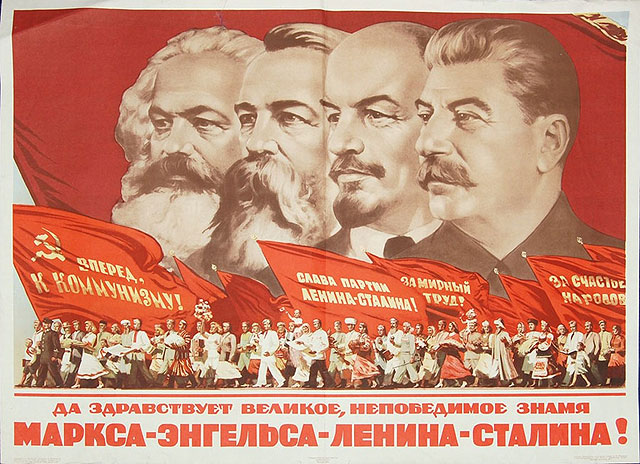


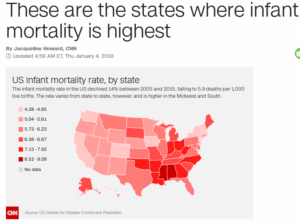
 Social science is much squishier, both in methodology and in result. When you’re working with people, they don’t behave like molecules in a vacuum. They lie, they are affected by minor biases in your methodology, they are subject to many weird psychological effects like the placebo effect, and they don’t take kindly to being locked in a laboratory for 15 years for a longitudinal study.
 Acquiescence Bias – Making a statement and asking the poll taker to agree or disagree. Usually folks with lower education will agree disproportionately with the statement in comparison to when the same issue is asked in a question format.
 1) Self-selection bias – This has always been there. Who is likely to answer a telephone poll? Is there some inbuilt bias caused by some declining to participate? Is there a destruction of the randomness of the sample if it takes
 The FBI agents arrived as expected, though they took up a few of the parking spaces for my own young troops that were working shift that day. When I looked out of my office window I sighed and thought to myself, “typical government agents.” I had deliberately marked those spaces off and told the agents they needed to park next door before their arrival. I strode outside and calmly but firmly asked the first agent I saw to get their guys’ gear packed up and moved over to the next parking area so my own people could use their own parking lot. I received a dark glare in response, but he grudgingly moved his two dozen or so agents, their heavy weapons, armored and unmarked SUVs, and the various listening and breeching devices they had to the next lot over.
 Officers must remember that they are a part of the community, even if they are coming from far away. This is something I have to remind my own troops of on a regular basis. It never fails that there is always at least one “supercop” who feels it is their absolute duty to ticket any and every offense to the maximum extent. At my last assignment, I had an individual who would line the cars up on the streets as they passed by and go down the line writing tickets. I quickly put a stop to this. It is complete and utter nonsense and hurts the community far more than it helps protect them. At every assignment I’ve been to I’ve had to rein in “supercop.” I’ve often heard the rebuttal “the law is the law” and to some extent that is true, however, I often find myself applying the NAP to decide on the application of the law. Often, this results in me simply turning someone around who may be bringing an illegal substance into my jurisdiction.


 I strongly believe that if you are attending sex parties as a substitute for authentic relationships, you are deeply in Kierkegaardian despair. I do not see this as an isolated phenomenon either. The addiction to the immediacy, the refusal to acknowledge anything beyond the physical, the constant need for dopamine stimulation; it’s all a way of shielding one’s eyes from the Void. Kierkegaard says that when confronted with the Void, we should all have “fear and trembling” and be deeply uncomfortable. Running from that discomfort to immerse ourselves in physical pleasure is not an authentic response. Though it would be just as easy to talk about smartphones, I’m going to pick on sex here because it is the most consistent, biological way to feel euphoria and distract oneself from the Void. It has also been subjected to, IMO, the single most revolutionary development in the history of mankind: the Pill.