So this week, I will try and mix it up a bit. Since for some of us it feels like spring already, I will try to draw some attention to the second coming of Glibertarians Beer it Forward. After discussing it with its owner, the gentleman known around here as Nephilium, I decided to turn this into a bit of a contest. The details of which I will explain later.
This is my review of Grand Canyon Brewery Shaggy Bock.
Williams, AZ is not particularly well known. Most people drive around it, but for a long time they had to drive through it. Like many towns in the area there is a cheap draw for tourism but this one isn’t as flimsy or as popular as a town a couple hours to the east.
Roll Tide
Route 66 is actually a collection of highways that was renamed as a single highway in 1926. It began in Chicago to the east and ended in Los Angeles to the west and routed through 8 states in total. It is romanticized in American culture by John Steinbeck in The Grapes of Wrath as the mother road, a show in the 60’s, and a song first sung by Nat King Cole. Today it is mostly merged with other active highways, notably Interstates-55, 44, 40, 15, 10. There are a number of towns that lay claim to the highway, such as Winslow, and others like Flagstaff maintain it as part of their municipal roadways. It is for this reason I can technically scratch off riding a motorcycle down Route 66 off my bucket list, because it runs through Flagstaff. Another fun fact, there is a restaurant in Flagstaff called the Dog Haus, that claims the entire scene on the corner in Winslow occurred there when it was a Wienerschnitzel. “Flagstaff” just didn’t roll off the tongue like “Winslow.” That is their claim, not mine. If you choose to investigate this yourself, I suggest ordering the chilli dog, they’re pretty damn good.
Where does Williams fall into this? On June 27, 1985 Williams, AZ was the last locality to officially decommission Route 66 as a highway. Being first gets you in the history books, but sometimes there is some honor in being last. Williams is also the starting point of the longest portion of the highway that is still drivable. Williams didn’t die like other towns because of another attraction: The Grand Canyon Railroad.
Here you can avoid driving north to the Canyon and avoid what really is a boring drive once you get past the San Francisco Peaks. It routes north through the mountains and gives you a more scenic ride to the park. They also convert the train to a Polar Express theme around Christmas and steam up towards a “North Pole,”. They’ll even give your kids a bell as a souvenir.
This isn’t a straightforward bock. It is light like all lagers and has a smooth malty character. The twist is this one contains the byproduct of one of our favorite inventions: the woodchipper. They call it a “flavor bomb” but it’s a bunch of wood chips secured in a bag. This gives the beer a similar effect to barrel aging without the added expense of storing it in a barrel. It is quite enjoyable variety in a style that sometimes gets overlooked; Shiner Bock aside. Grand Canyon Brewery Shaggy Bock: 4.0/5.
Here’s where the contest comes in. This is a limited release from a local brand that doesn’t have much of a footprint outside AZ. Which makes it perfect for the Glibertarian Beer it Forward coming up this spring. I have purchased a second bottle and stored it appropriately next to the boiler. Hopefully, I don’t need to turn it on in the next few weeks. In an attempt to generate interest for this next BIF, I will be sending this to the Glib member whose name I will be randomly assigned. So if you think you want this, sign up! This has the added benefit of at least one of you knowing that I’m not crazy. Well, at least within a respectable spectrum of crazy.
For the most part our tastes in beer have been established. Some like balanced to malty beer while a smaller number are somewhat vocal about their taste for hoppy beers.
Others still, throw you entirely for a loop.
A what? Cream Ale? That sounds like one of those oddly named east coast numbers–like the egg-cream soda, which contains neither eggs nor cream.
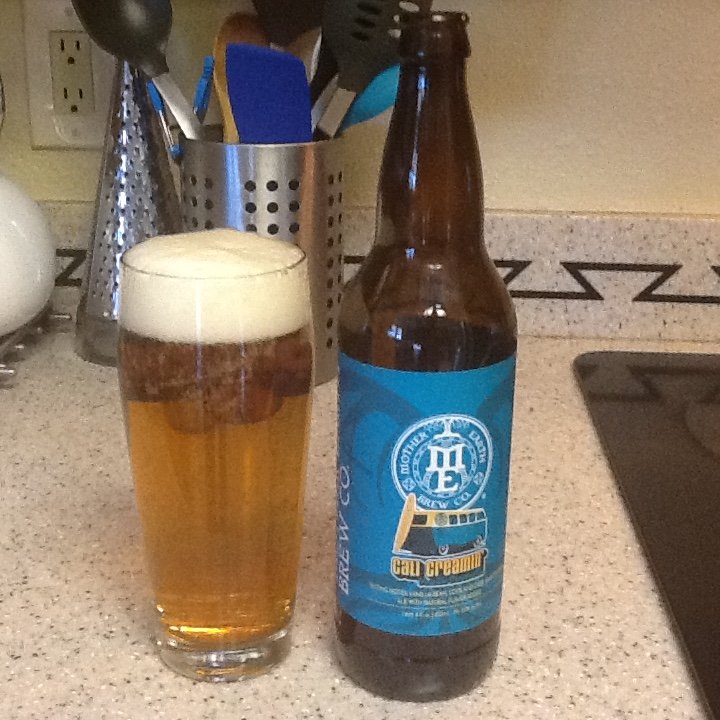
This is my review of Mother Earth Brew Co , Cali Creamin Ale.
An odd thing growing up in Arizona during the 90s was that was the time people from the east coast began to migrate there. Prior to that it was mostly Cubs and Packers fans, who are large enough in number they actually make a noticeable increase in ticket sales to the local sports venues. Here is Chase Field for example. While the Red Sox and Yankees have drawn the largest average crowd size, their numbers are skewed by the limited appearances as they are both AL teams. In the Yankees case, four of those games were from the 2001 World Series.
I’ll give you this one Jersey. This stuff is good.
At least that is the perception. The reality, unsurprisingly, is California dominates the in-migrant flow to Arizona. On page 22 of this report from Arizona State there is a brief discussion on migratory patterns from 2001-2014. Although smaller in number the east coast migrants still make their presence known. Yes, particularly in the winter. Much of this was in the form of local restaurants becoming hang outs for fans of different teams, but also small markets for food that wasn’t previously available out west. For instance, the aforementioned egg cream soda is made with UBet Chocolate syrup. It’s been available here since I was a kid. You could use something else, but its not the same and dare I say improper. Another example is Scrapple, which I’m not going to eat but Taylor Ham I will. I will also contend it’s basically an artisanal form of Spam no matter how much it irritates my stepdad. Many of these things he simply explained as, “an East Coast thing,” as he is a refugee from New Jersey. Which is why he insisted I take the SAT even though I was going to major in a science which meant the ACT would be advantageous for me to take but that was a “west coast thing.” This brings us to another “East Coast thing:” the cream ale.
So what is it anyway?
It is no secret that German immigrants moved to America during the 1870s. A few of these immigrants started brewing lagers. Many argue these are now better suited for scare quotes, so these are now “lagers.” Because of this migrant pattern, Americas taste for beer changed. English style ales fell out of favor for crisp, light, German-immigrant made lager.
“Ale brewers responded to this demand by creating a top-fermented product similar to an American lager. Using ale yeast (or possibly even a combination of lager and ale yeasts, though no concrete evidence exists for the use of lager yeast in the early cream ales), they could produce beer more quickly than the lager brewers could, thereby potentially increasing sales and market share.* It may also have meant that they could use the same worts for both lagers and ales and benefit from economies of scale. These new beers were termed “brilliant,” “sparkling,” or “present use” ales, with the nickname “cream ale” sticking as the common name.”
In other words, a cream ale is the best of both worlds. It has the light, crispness of a lager but also has the complexity of an ale. They do this in part by brewing the ale at a colder temperature like a lager. Few breweries that made these survived prohibition however, or were acquired by others. A good example that is well known is Genesee. Which for the record I have been able to locate in Arizona, but only once.
So how is this one? Disturbingly good. It is every bit as refreshing as advertised, it is light, not hoppy at all. This one has a pleasant vanilla aroma they added in, making it something that is practically begging to be chugged. I’ll be buying it again, even though the only downer was the price, which the bomber costing about $8. Mother Earth Brew Co , California Creamin’ Ale: 4.5/5.
Don Winslow – The Force. Is the story of a cop who thought himself good and spent his entire career methodically crossing line after line until he was really a villain. Maybe. Winslow seems unsure if this is going to be elegy or indictment and I found the damn thing an infuriating listen. There’s some unironic patter about his first duty is to get home to his family. Seriously.
James S. A. Corey – Leviathan Wakes (The Expanse Book 1). It was fun dipping my toe back in hard sci-fi. I wish I’d read this before watching the first season of the show as the show was a fairly faithful retelling of the book with some alterations so that you saw more of Earth’s politics from the beginning, primarily from the view point of Chrisjen Avasarala (Shoreh Aghdashloo), who does not appear in the first book. It cannot be stated enough that I would listen to Shohreh Aghdashloo read an intro to chemistry text book for all eternity and be content.
Richard Phillips – Mark of Fire (The Endarian Prophecy Book 1). Fantasy, a little on the generic side, but well paced. The magical system was a fun departure from most of what I’ve read, and while not exactly unique, it was well fleshed out. The second book just came out in January and the third on 02/20, so I may just continue on with the series.
SP
I’ve been driving around the country helping elderly relatives with various health stuff this month. (Pro tip: Don’t be the oldest-female-child-and-only-child-with-medical-training in a huge family.)
But, hey, I don’t mind driving. And I love my elderly relatives. Interstates, however, get on my nerves. Yes, I’d prefer to take the “blue highways” but time hasn’t allowed.
What to do? Listen to an audiobook, of course!
On this last drive, I started listening to the somewhat lengthy Shooting Victoria. The length – 19 hrs and 54 mins – would normally be off-putting for me, but when one has endless, mind-numbingly-boring hours to fill…feature, not bug.
Shooting Victoria tells the stories of the eight(!) failed attempts to assasinate Great Britain’s Queen Victoria over the course of the 19th century. Although perhaps a bit dry for some, it’s quite interesting to me from a social history standpoint. I’m only 8 hours in or so and we’ve already had much discussion of Bedlam, Chartism, the state of the judiciary, the plight of the Spitalfields silk weavers, and the Irish Potato Famine. Also fascinating-yet-not-surprising are the machinations of the political figures and those within the Queen’s household.
I am enjoying the book and will likely finish it on my next driving trip. Webdominatrix and I are headed to Florida soon to check in on OMWC’s elderly relative, with stops to visit Brett & his family and SugarFree & his bourbon (not a euphemism) along the way. Nothing good can come from this. No, there will not be pics.
Old Man With Candy
For sheer thrills and excitement, there’s nothing to match C.D. Motchenbacher, and I managed to score a copy of an older edition of Low Noise Electronic Design, sent to me as a gift from one of my favorite technical authors. It may be old, but so am I, and the basic physics that are discussed are still valid. It’s comprehensive and readable, everything a technical book should be.
For fun, I realized that it had been years since I picked up my copy of The Annotated Alice, the Lewis Carroll classics thoroughly annotated in a witty and scholarly style by the late polymath Martin Gardner. The fact that the author may well have been a closeted pedophile wasn’t the main attraction, I swear. I’m not a poetry kinda guy, but The Walrus and the Carpenter and Jabberwocky still speak to me in a way nothing else has, other than the works of Don Marquis. As someone whose professional career has been tied to molecular physics, I am particularly delighted by the insights of Through the Looking Glass and Gardner’s commentary. Everyone should own this.
Riven
All of my reading time since last month has still been dedicated to this sole book. The good news is that I should be testing on it in a few weeks. The bad news is that, until then, it’s going to be the only book I’m reading and I will continue to be scarce.
Brett L
I read The Shadow of What was Lost by James Islington, which Amazon’s AI has been pushing on me for a long time and reviewers compare to Robert Jordan. I like Mr.Islington’s writing, but the plot is very reminiscent of Jordan, which is to say that there probably is one but I can’t discern it. The plot of the book — two young men who are destined to be magic users are set on a quest. Along the way they meet a 3rd young man who may be a mass murder as well as a wizard who is probably a mass murderer, but the men he killed were probably going to kill one of the original two young men. These 4 men meet a princess who turns out to be the 2nd young man’s cousin. Eventually an army is defeated, much wrong is righted, the young mass murderer turns out to be The Highlander — an immortal with a super-sword who has killed more people than dysentery.
Oh, and a shit-ton of Microsoft Azure and DevOps training. DevOps sounds cool if I ever work on a team of more than 1 or have clients who actually can be arsed to test what I write.
SugarFree
I have read so much. So bigly of the reading. Yuge reading.
Read The Iron Druid series. I liked it quite a bit, unlike some [cough]Brett L[cough]jesse[cough]. Basically Dresden Files Lite crossed with American Gods. Druids and shit. A talking dog. Hot redhead bartenders. The ultimate in “don’t stick it in crazy Death Goddess” sex. Will say… I thought the series was finished or I would have avoided it until it was. Between Planetary and GRRM, I have literary battered wife syndrome: I never want to get into that sort of abusive situation again. The final book of the series is supposed to be out in April. I’ll believe when I see it and not before, mofo.
I have this urge to read the book before I see the movie, and over the years I have built up a large backlog of movies I’ve been waiting to see. My project for the next few months is to finally do something about it. So far I’ve read/watched The Other by Tom Tryon, The Fury by John Farris, The Stepford Wives by Ira Levin and I’m working on reading The Devil Rides Out by Dennis Wheatley.
The Other was a bit of a bust since the movie hews so closely to the novel. Kind of pointless if you’ve read the novel. But the novel was very good. The whole thing goes down like a fever dream.
De Palma’s film of The Fury is better than the book, honestly. The novel introduces better characterization and motives but is so disjointed it feels like maybe the copy you are reading had some chapters torn out at random. Time shifts back and forth, plot threads weave and unweave at random, and whole character arcs will have the important middle bit excited. Also, filming the novel as written would have had De Palma up on child porn charges.
I had already seen The Stepford Wives a couple of times, so it was a bit of cheat. In this case, both the novel and the film are worth it. The plot doesn’t make much sense–if you can make realistic sexbots, just sell the sexbots, make a ton of cash and buy young hot wives; lather, rinse and repeat every ten years or so President Donald style. But the feminist paranoia of the piece is so palpable and so–for the lack of a better term–hysterical, it creates excellent tension. And I’m pretty sure there’s not a single scene of Katherine Ross or Paula Prentiss wearing a bra for the first 3/5ths of the movie. It was the 70s, man. Can you dig it?
And that font. I’m not a font nerd or anything, but could that font be more 70s?
JW
So I was reading the milk carton at breakfast, and discovered something interesting. Besides it providing me with the minimum daily adult requirement of Vitamin D, it turns out that Mary Margaret Cameron, age 9, is missing. She was last seen on October 13, 2007 in the company of her noncustodial father, and they had a cool picture of what she looked like with age progression. She’s developed well, and I’m sure he’s a proud daddy.
Disclaimer: Contributions not necessarily actually by the author whose name appears above them.
Web Dominatrix
I have had a slow reading month. I too have been enjoying Shooting Victoria at SP’s recommendation. I am currently reading Salt: A World History and I find this far more fascinating than I expected. It is, as you might have guessed, the tale of how salt has shaped civilisation.
I am also reading/listening to (Thanks, Amazon, for allowing me to switch between Kindle and Audible!) Uncertainty about Heisenberg’s principle.
I will skip the introductions as this is part two of a post and continue where I left off in the last post. Romanians usually eat, rather anticlimactically, 3 meals a day, unless you are too poor or following one o’ them new-fangled intermittent fasting things the kids seems to like these days.
Eat at Pie’s!
To do the linguistic part first, breakfast is called “mic dejun” (similar to French I would say, mic meaning small). The mid-day meal is “pranz”. And the evening meal is “cina”.
To start with breakfast, it can be either eggs (fried – in the one proper way, not like you Americans and your 50 ways of frying an egg – scrambled, boiled or omelette) or cold cuts. Most often cheese accompanies either the eggs or the cold cuts as a side, along with some raw vegetables (onion, radishes, tomatoes, bell peppers most often). More traditional, as in 100 years ago, it would mostly be bread or mămăligă with branză (cheese), slană (basically pig fat, sort of like eyetalian lardo) and raw onion. Romanians eat lots of raw onion, red onion being preferred as somewhat milder in taste.
Mama Pie’s homemade noodle soup
Lunch and dinner traditionally are somewhat similar, and are usually a first course which is mostly liquid and a second course which mostly solid. Dessert is included to make the standard 3 course meal.
For the liquid part, Romanians distinguish primarily between supă – which is generally a clear broth with dumplings or noodles – and ciorbă – which is denser and has lots of vegetables and sometimes meat.
Ciorbă is further categorized. There is borş – which is soured with either the eponymous borş or with verjuice made from unripe grapes or fruit, or the juice from pickling cabbage. There is peasant style, which is less sour and has more vegetables in it – making it quite think (and hated by kids, me included, who tend to try to eat the broth while skipping the veggies which are left in the plate until angry parents tell you to eat them). There is a style made with sour cream incorporated into the broth – which is most often called a la greque. And there is ciorbă de burta which stands alone, a tripe soup made with sour cream but soured with vinegar.
Smantana is often added – superfluously in my view – to peasant style ciorbă, although adding it after cooking has a different effect then incorporating it into the broth during the cooking process.
Really sour ciorbă is seen locally as a hangover cure. In fact, there is a traditional very sour one called Ciorbă potroace and this is traditionally eaten the second day after a wedding. In the past, wedding feasts were some of the rare occasions when people got fresh meat and plenty of it. They would get various poultry to roast. The neck, feet and innards (hearts and such) were used to make the broth which would be amply soured. The next day, after plenty of food and liberal libations, a meal of ciorbă de potroace was seen as good for recovery. There was also a silly superstition not to give chicken feet to school aged children because it was going to make them do badly at exams. No idea where that came from.
My family version of ciorbă de potroace was New Year’s turkey ciorbă. The tradition was to roast a turkey for New Year’s dinner and use the not-thighs-and-breast parts to make a really sour ciorbă which would be the first meal after sleeping in the next day, suitable due to the long night and plentiful libations.
Duck legs and cabbage
Now, solid food can be mostly stews with cabbage, beans or potatoes for most people. Duck over cabbage is a preferred delicacy – an entire roast duck over a bed of cabbage. Beans are eaten with pork, often smoked rib or sausage. There are also moussakas and vegetable stews and roast chicken. Often sarmale – leaves stuffed with meat/rice mixture, most often cabbage or grape vine, but also my mother makes some good ones using young horseradish leaves. These are probably similar to such dishes in other countries. Romanians are also big about grilling – with pork being prominent and mici the national grilled dish – small caseless sausages. A local favourite is MBS or mămăligă with branză (cheese – feta style) and smantană (sour cream). Besides the main ingredients butter is usually added and sometimes soft boiled eggs.
One particularity of Romanians, usually older ones, is that they eat bread with everything. Soups, stews, meats, vegetables, a few slices of cheap white bread are always included.
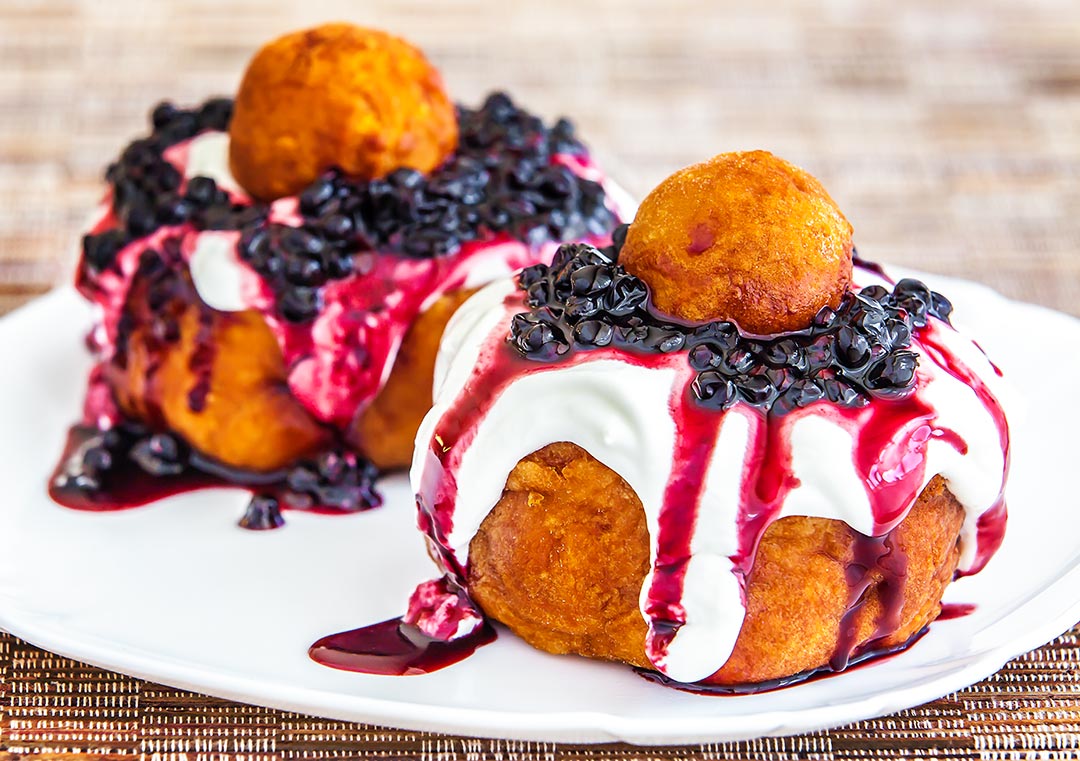
On dessert, there is not much to say. There are usually crepes or cakes or ice-cream and such. One local favourite is papanasi – a highly caloric a deep fried cheese doughnut covered in sour cream and sweet preserves. Generally they come in pairs, two per portion. This is I think because originally one came just with sour cream and one just with sweet preserves, so they were two – one each way – but now they kept the number but add both sauces on both donuts.
Well, that is about it I would say. Probably the last time you have to suffer through a Romanian food post for quite some time.
A couple days ago, you may have noticed certain people had a black cross tattooed across their foreheads. You may have chuckled a bit at such foolishness, but not at me. Because I didn’t go to the mass? No. I happened to grow up in a part of Phoenix where a large number of kids at school were going to ask me what’s with the cross on the forehead? Between the popped collar crowd and, well–(((them))), it was a conversation that got old fast.
While I went to mass, I decided I didn’t need the whole world to know I did. I had the good sense to wash it off when I got to work. If I’m going to burn in Hell, let’s be real, it’s not going to be for that.
This is my review of The Bosteels Brasserie Tripel Farmelier.
Here, I will explain what I preferred not to explain before. Ash Wednesday is the start of Lent. Lent is not supposed to be be some form of medieval self punishment. Unless you want it to be, in which case I leave you here with this guy.
For everyone else, it’s simply a time for prayer and fasting. The word itself is derived from the Middle English word Lenten, which means springtime. The days after all, are lengthening this time of year–get it? Its origin as a time for spiritual renewal was brought about by the tradition of baptizing Catechumens on the Saturday before Easter. Now you know why I never go to Easter Saturday mass, because its three hours long and. It. Takes. Forever…..to watch these people get dunked.
The fasting part was something that developed during the 4th century AD (…or CE) and was typically observed by monks. It might seem like a convenient time to go without eating anything given the abbey was probably running out of food by the end of the winter, but the time of year the fast begins has been as early as January. This time in history is also when it became linked with the traditional 40 days. No one is really certain how Ash Wednesday became recognized as the start of Lent, but for our purposes it is when it is observed. The fast part is now observed by Catholics “giving up” something. There are some theological origins to this, such as the story found in Luke 4:1 to 4:13, but the fast is now more or less observed by going without something. Whether that be something trivial like chocolate, or something more of a challenge like bread, eggs, or milk, its up to the individual. After all, even the monks did not starve themselves. They stayed alive by drinking beer.
By the way, in the interest of full disclosure, this is all relevant because I give up beer for lent. Every year. That and meat, because you’re not supposed to eat meat on Friday and quite frankly I screw that up at breakfast so I just make everyday Friday.
The beer we now associate with these monks originates around the 11th century AD (…fine, CE) with the Order of Cistercian Monks.
The Order of Cistercians was founded in 1098 when monks from the Benedictine abbey of Molesme left to form their own monastery in nearby Citeaux, France (Cistercium in Latin), feeling that things were too lax in Molesme. They wished to return to a more strict adherence of the teachings of St. Benedict.
That sounds familiar. Apparently, the Benedictines of Molesme at the time were the Nick Gillespie of Benedictine Monks.
Word got around of these monks who valued the fruits of hard labor and austerity. The nobility at the time began to offer the Cistercians undeveloped tracts of land, knowing they were capable of turning the wild into hubs of social and economic activity. 200 years later, at the peak of their influence, there were over 300 Cistercian sects across Europe. Benedict XII was a Cistercian. It is during this time, the Trappist Ale became associated with Catholic monks.
It is also during this time the naming convention for Belgian Ales were coined. The Cistercians did not discover it, but by then it was well known that by “washing” the wort a number of times they were able to create multiple ales of varying strength from a single batch of wort.
This was first discovered (documented) by the Jesuit brewers who offered a 5% to travelers and used the 2.5% second run beer for themselves. The next big step came when they realized that people would pay a lot more for a stronger beer, more than the cost of the extra grain. This allowed even bigger beers with more runnings. The first runoff would be the richest and brew the best beer. The second would be next best, and the final running would be the weakest. Again, the first would go to the guests and be sold to help maintain the abbey. The second would be for the monk’s use. The last runnings would be for the poor. This is also the likely origin for terms “single,” “double,” “triple,” and “quadruple.”
This allowed the monks to engage in the abbey’s other function: hospitality. Because grapes are not easily grown in Belgium and a law in the early 20th century that outlawed liquor, strong beer became commonplace. The monasteries were no longer the only ones producing Trappist ales. So if it matters to you, if the bottle bears this mark, it was made in a monastery:
Which is good to know, because after a thousand years the patent runs out. This one, made in Canada however, was just as good.
The Trappist Ale is a wheat based variety, but has more of a sour, citrus like taste. There is substantial body to this type of beer, which in a way is quite satisfying, if this is the only sustenance you had that day. Neither of these bear the mark, which is why I mentioned Chimay a short time ago–which does.
I had the Rouge, which was the last for me until Good Friday. Until then, everything I write has been in a sense, pregamed. Enjoy. The Bosteels Brasserie Tripel Farmelier 4.0/5.
Romanians have the peculiar habit of, on occasion, eating food. This is talk of such food. So without further ado, let’s get to the heart of the matter – sometimes literally. Romanians consume offal, we eat nose to tail, like most not that prosperous countries, waste not and all that. As a note, I will not be covering fresh blood, as this is a touchy subject for outsiders. I will just mention that the best quality is from subjects 16 to 25 and their virginity is unimportant.
Nothing like sucking on a nice bone
I will not attempt to cover what are authentic, traditional Romanian dishes. I have no idea and doubt anyone does. There is no way of knowing where a particular dish comes from, and Romanians generally share a lot of dishes with other countries around them. There are plenty of Slavic, Turkish, Greek and German/Hungarian influences. While Romania’s version of a stuffed leafs dish may derive from Greek, they may be independent. I will not go into the food available to relatively well-off urbanites such as yours truly (the sushi isn’t bad), but what is the generally the food of the common folk (such as you glibertarians might consume were you residents of this fine country).
Romanians do eat a lot of ciorbă, but how typical it is, I dunno. Here is a example of a pork one, with a large bone with some meat covered by broth, a small glass of tuica and the requisite hot pepper. Please also notice the typical Eastern European plastic table covering for the kitchen table – which as you can see also graces my kitchen. Eating such ciorbăcan be an unaesthetic affair and a bit savage if you are not used to it, as it implies taking the bone in your hands, ripping meat off it with you teeth and then loudly slurping the bone marrow.
Mujdei
Some claim mujdei de usturoi is Romanian, which is basically crushed garlic with salt, oil and water. I dunno, but several countries have garlic dips, although most are creamy and mayo-like. Mujdei is more watery and has small slivers of garlic in it, unincorporated in a paste. We also have mămăligă – basically corn meal, salt and water – similar to polenta, with various degrees of softness, depending on taste. It can range from quite solid to porridge like.
Now an ehm… burning question is: is Romanian food hot or spicy? No it is not, or very rarely so. The local habit is to have a hot pepper on the side of the dish and occasionally bite it. This is raw in summer or pickled in winter. Generally Romanian farmers are not careful about grouping their peppers by heat or cultivar, so a particular pepper is usually a gamble on how hot. Romanians are not particular about cultivars so you always buy/request peppers. And in the same batch some may be hot, some not. Ciorbă is always accompanied by a hot pepper. For cabbage dishes some people – me included in some cases where the smell factor is not important – bite out of cloves of raw garlic as they eat.
As for other spices, Romanian kitchens are not spice rich. Besides the ever present salt and pepper, garlic is used a lot, alongside thyme, paprika, parsley, dill. Bay leaves on occasion. Some other dried spices in small quantities.
Sibiu cheese
For oil, Romanians most often use sunflower. It is cheaper and readily available, and made the locals feel good because it is mostly of local production, Romania is an important grower of sunflowers in Europe. Similar to sugar coming from locally grown sugar beets rather than imported cane sugar, although olive oil and cane sugar are rapidly growing in quantity consumed. Vinegar is most often white wine vinegar, followed by apple vinegar.
Cheese is a big part of Romanian diet. Brânză is, as a random factoid, one of the words still considered to be left in Romanian from the Dacian language. In Romania, it is actually split into several categories: white cheese called brânză and yellow cheese called Caşcaval (etymology apparently from Sicilian Caciocavallo cheese). Brânză can be telemea (somewhat feta like) either fresh or aged, caş (soft with very little salt), urdă (made from whey) or using the diminutive branzica for cottage cheese. Caşcaval is often eaten breaded and deep fried, unlike the white stuff.
The main meats the Romanians eat are pork and chicken. Those are by far the most consumed, with beef, mutton and waterfowl as second tier, “whatever else” is third.
The main fish freshwater eaten are crap (European carp), caras (crucian carp) which is the main pan fish, somn (wells catfish), biban (perch), pastrav (trout), ştiuca (pike), şalau (zander), Scrumbie (Pontic Shad), with some other minor fish.
Stuffed pike is a delicacy
Traditionally more freshwater fish is eaten than salt water. Stuff like tuna and salmon and sea bream are now eaten in the cities, but I will not include them. The main saltwater fish are chefal (golden grey mullet), guvid (Pinchuk’s goby), Hamsie (anchovy) served whole deep fried, zargan (garfish, Belone belone, or sea needle). Of the pricier traditional fish, the delicacies so to say, are calcan (turbot), rechin (shark) and various sturgeons. Fish is most often eaten grilled or fried (usually dragged through corn flower before frying). Grilled fish is often eaten as Saramura (briened). Basically you heat some water, add salt, pepper, slice chile peppers in it and pour hot water on top. When you take the fish from the grill you place it in the brine, also besides on the grill sometimes bell pepper and tomatoes are added, and after grilled themselves, they are peeled cut into chunks and placed into the brine. Grilled chicken thighs are also sometimes eaten in Saramura.
Romanians, at least ones I know, usually have a side salad with dishes. Unlike other people who have the salad as a separate course, salad in Romania is on the side of the main for lunch/dinner, or as a side to breakfast. It is most often lettuce or chopped cabbage (with sunflower oil and vinegar, not ugh mayo). In summer it is tomato salad – tomatoes, salt, pepper, sunflower oil and chopped raw onion. Another local favorite is ardei copt (baked bell pepper) which is as it sounds – you put a dry pan on a fire and add peppers in it until the skin turns blackish and can be easily removed. Take them off, peel the skin; add a bit of salt, a bit of oil and a bit of vinegar, and that is it. In winter, side salads are replaced by pickles – Romanians eat a lot of pickles.
You can see the gogoșar in my Christmas post
On pickles, Romanians have The Big Four pickles with a bunch of minor additions. The Big Four being cabbage, cucumbers, gogosari (a cultivar of ball pepper) and gogonele (unripe tomatoes). There are two ways of pickling: brine and vinegar. Cabbage and tomatoes are always brined, gogosar is always vinegar, cucumbers can be either the right way (brine) or the wrong way (vinegar). Cucumbers are also the only ones pickled in summer, with a different taste due to much faster pickling at a much higher temperature (often left in direct sunlight as they pickle). Autumn pickles are low temp long time.
While these are the main pickles, many other things are added, usually in smaller quantities mixed in. For example when pickling gogosari, the core is taken out and the inside filled with, in general, cauliflower, grapes and slices of carrot. Among the green tomatoes we get cauliflower, cabbage, and some green bell pepper, sometimes small unripe watermelons and sometime red beet, mostly to give it colour. Cucumbers (if you ignore some dill which is added) and cabbage are pickled alone. In general horseradish is added to most pickles as a preservative (don’t know if it actually works as one but is used as one nonetheless.)
This is my review of Wessterhuffenphasterphallenhoffeersheissen’s Hefeweissbier.
HT: DEG, MikeS, Q Continuum and Hayeksplovises
M’am
Hefeweiss is the predominant German style wheat beer. There are other varieties of course, depending on the region, but for most of us this is the one that comes to mind when the term, “German wheat beer” comes up in conversation. People like this, apparently. I am not one of those people. Why?
It tastes like banana. I don’t like bananas. The semi-sugary taste, the texture, the fact that none of my kids can open the damn things and will go through a bunch of them in a day. This sentiment was developed well before the CHM 235 Organic Chemistry course taught by what I later found out to be a really awesome professor. Think (((special forces))) awesome, but wouldn’t give anyone a definitive answer. For the lab part of this course, my lab partner and I were given several bananas. The project was to extract and isolate an organic compound called an ester from the fruit.
Most of it involved smashing up bananas into a paste, then putting the paste into a press. Then squeezing the liquid out of the paste. Then vaporizing the liquid multiple times through a distillation column, to extract a weapons grade distillate of Isoamyl Acetate–or Banana Oil in English. It went fine until my lab partner managed to spill the vial on me. The grad student in charge of the lab saw the whole thing so I didn’t lose any points for failing a simple distillation. Not that there was no other way I could prove it was spilled on me. The bad part was when I went to work immediately after the lab. At the time I worked the sporting goods counter at the local Wal-Mart. The clientele was the predictable group of rednecks.
“Hey kid, why do you smell like a monkey?”
“Mother of Christ.”
“Can you write that that mountain lion tag for yesterday?”
“I’m not gay or anything, but you smell really nice.”
“We fielded a few complaints. Were going to go ahead and pay your remaining hours for the day. Go home.”
Predictably, this tastes like every Top.Men-compliant hefeweizen out of Germany: banana with a twist of lemon. If you’re into that, have at it. Wessterhuffenphasterphallenhoffeersheissen’s Hefeweissbier 2.0/5
If you are looking for a traditional Top.Men approved ale, keep looking. It has significantly less body and you’ll probably say they over hopped it and should apologize to the German people for such an atrocity. For me, it doesn’t taste so much like banana, so it’s not so bad. Lagunitas Little Sumpin Ale. 2.2/5
In my family, real estate is sort of a big deal. Since we all know what happened to the housing market in 2008, we began doing something every year for Christmas: we drew names. Ultimately this meant I only had to buy a single gift but it did mean I was also receiving a single gift. This year, my brother got me and while it really was thoughtful of him to get what he got me–I already had one. Semper paratus as they say, he had the receipt handy: Bed, Bath and Beyond.
Shit. At least they sell beer in the “beyond” section.
This is my review of Lindemann’s Kriek Lambic.
Lambic is among the oldest styles of beer, but do not confuse this to mean these are in any sense of the word, primitive. On the palate these are as complex as they come, with several diverse sub-styles. To get a good idea of how old these may be, the painting below titled, Peasant Wedding from around 1567 suggests, people have been enjoying Lambic for centuries.
It’s a style believed to have originated in Belgium around the time of the Roman conquest. The Germanic tribes viewed the wine made by Mediterranean cultures to be effeminate, which even now seems to be an opinion held by many, though not me personally. The earliest known account was from Holy Roman Emperor Charles V, while travelling to the region he ordered a pitcher at a local pub. He took a liking to the lambic and had several servings from the pitcher, and apparently harassed the blonde waitress. Man of the people, he was.
But like everything else these days, there seem to be conflicting reports. According to this guy, there is no specific evidence that lambics existed before the 18th century. There is nothing medieval about this beer other than the stoneware Belgians used. It is a myth perpetuated mostly by lazy beer writers who don’t know what they’re talking about and sure enough, the misconception is the story that stuck.
The commonality between the stories is what I can assume isn’t fake news. What is common? Lambics are a type of sour beer that is defined by its spontaneous fermentation. That is, the brewers will put the casks outside to allow and even siphon wild yeast and bacteria into the wort to do the dirty work. Modern lambics are not made with a biochemist on staff with some GMO yeast strain in a test tube. It’s as natural as it gets without isolating a strain from a brewmaster’s hipster beard (Rogue), or even a yeast pulled from some lady’s yoo hoo.
No, seriously. A lab in Poland swabbed and isolated the strain from a Czech model. If I told you they swabbed her, would you drink it?
Much like wine and whiskey (or whisky for your Canadians), lambics are often blended with other lambics to allow for varying levels of complexity. Charles V himself was likely served a blend with a sweeter variety to make it more palatable. These can be served like champagne, and the sour varieties are great to pair with food because they do well to cleanse the palate. This one is made with sour cherries, hence the name Kreik. Others made by Lindemann include strawberry, raspberry (framboise), black currants (cassis), and peaches (peche). This one is more tart than sour and is very light. If you happen to like cherries, you’ll like this one. Lindeman’s Kreik Lambic 4.0/5.
Well, I sort of stalled out on The Skinner by Neal Asher so I could read this instead. It’s very exciting and so far it’s taking up all my valuable Zelda playing time. Just kidding–I make time for the important things, and saving Hyrule is pretty far up there. But don’t ever study for the FINRA exams, kids. Not even once. At least I have this to read for leisure, thanks to a certain Swiss Servator who drew my name in the Christmas gift exchange. It’s actually been very interesting in the first four chapters, as there has been no mention of schtupping yet, nor any guides or the like. Truly, it’s all philosophy in the first four or five chapters; namely, the importance of that particular aspect of your life. There was an entire chapter on what women should learn (and continue to learn with the consent of their husbands, once they use these skills to attract and retain one), and it was definitely not what you would expect. “Magic (sorcery), carpentry, architecture, chemistry, knowledge of war, the art of cock fighting,” and many more that you really would expect–singing, danging, playing instruments, and doing all three at the same time, for examples. I’ve not finished it yet, since is strictly “wind-down-before-bed-after-abusing-my-eyes-with-S65” material, but based on what I have read so far, I’d say it’s worth picking up. Get yourself an illustrated guide and give it a look! (Who knows, you might even read it one day.)
Gojira
I’m currently reading The King in Yellow, by Robert Chambers, and The Three Imposters, by Arthur Machen. I picked up this fantastic annotated volume of Lovecraft, and was in the mood for more weird fiction. Seriously, if you love Lovecraft, this is the one you need. The annotations are so detailed you sometimes lose yourself reading several pages of run-on notes and forget where you were in the actual story. And the forward is by noted magician, author, anarchist, and complete maniac Alan Moore!
Old Man With Candy
I’m reading a slick piece of non-fiction called Metalworking Fluids, by Jerry Byers. This shows you what an exciting life I lead. The chapter about anticorrosion additives warmed my heart, but I found the chapter on contact dermatitis somewhat irritating. Beg, borrow or steel a copy.
Joe Haldeman rarely disappoints, but The Coming did. When you get to the surprise ending, you’ll think, “That’s what I figured out on Page 10.” It’s set in Future Florida, where everything is fucked up because of global warming and has a few interesting characters tossed into a totally formulaic story. Haldeman does a cute writing gimmick bypassing of the POV between characters in a sequential way (i.e., A has the point of view and interacts with B, the next chapter has B’s POV as he or she interacts with C, and so on). Not enough to rescue a limp effort.
And guilty pleasure: I hadn’t read The Sum of All Fears in about 20 years, so I thought, “Let’s see how this has aged.” Not well. Still, it’s a technical gem from an assembly standpoint that must have taken a massive effort to plot out and in true guilty pleasure fashion, I admit that I’m enjoying it.
JW
I’ve branched out in my reading and am now including fruit juice jars. OMWC sent me a bottle of Dr. Bronner’s soap, but after 5 minutes or so, my lips got tired.
SP
I’m working semi-diligently on learning Italian. HM pointed out that I already learned one language, so I can, in fact, learn a new language…in spite of my previous failures to learn a second language. I’m using Duolingo. It seems to be working. I no longer need to translate the social media posts from my Italian art-world friends and I have recently found myself dreaming in Italian.
I’m also tackling the chaos in the non-public areas of my home. Again. This time, I’m trying the advice of Real Life Organizing: Clean and Clutter-Free in 15 Minutes A Day. It’s inspirational, really. “You don’t have to actually be an organized person to live like one.” Most horrifying tip: take “before” photos of your space to really see how bad it is since we become inured to the reality over time and block stuff out. This is eye-opening. And, did I mention, horrifying? I’m making some progress, though!
Also dipping into Idiot’s Guide to Plant-Based Nutrition, 2nd Edition prior to starting GlibFit next week. I really like co-author Ray Cronise and read pretty much everything he writes. So, this will be my second try at a plant-based way of eating, for health reasons. Hope it sticks this time; it really did help me feel somewhat better the last time I was doing it. (This is not medical advice of any kind. I am not a doctor, nor do I play one online. YMMV.)
Accidentally read a cursed scroll of confuse monster over Thanksgiving weekend, and will be functionally illiterate for at most another 32 turns.
SugarFree
I worked my way through the massive, exhaustive Nightmare Movies: Horror on Screen Since the 1960s by Kim Newman. Updated twice since its initial publication in 1984, Newman’s deep dive into horror, thrillers and hybrids like SF-horror eschews well-examined films like Alien and Halloween to focus on smaller niche moves and grindhouse fare. Newman’s prose is breezy yet not flippant and keeps the sub-genre focused chapters moving along to contextualize and critique styles like giallo and Hammer Films gothic horror well-enough for even a casual horror fan to understand. Much like his Apocalypse Movies: End of the World Cinema (1999), I came away with dozens of movies added to my watch list and just as many to re-watch. Newman does come at horror from a British perspective; for a more American (and especially grindhouse) focused work, try Nightmare USA: The Untold Story of the Exploitation Independents by Stephen Thrower.
No, I didn’t buy a bunch of cheap beer to chug after I came home from the gym. I don’t think it was particularly wise of me to do that and while I like you guys (and the 5 ladies we’ve been able to confirm here) I’m not doing that for you again. At least not for free.
Nothing gets by this crowd though, and everyone here is intelligent enough to notice a pattern in that first article. On the off chance you missed it I’ll point it out: With the exception of the IPA and Daybreak those affordable but skunky beers are all Pilsners.
This is my review of Sierra Nevada Nooner Pilsner.
The Pilsner is the most common beer in the world. Some estimates I have heard but not verified, is that over 90% of the beer consumed on Earth is a Pilsner. A claim I find believable, but again not verified. It is named for it’s origin in the city of Plzen, Bohemia (Czech Republic), where it is was first brewed by Pilsner Urquell. Credited to Josef Groll, a Bavarian brewer hired by the city’s brewers to teach them to lager. At the time they were having issues with their ales spoiling and in 1838 they chose to flood the streets of Plzen with spoiled beer to dump it.
Nobody knows who it was that smuggled the Bavarian yeast out of Bavaria, but some blame a monk. What made this yeast special? This is one of the first strains identified that fermented at the bottom of the barrel, rather than ale yeast which ferments at the top. Ales brew at higher temperatures and often are hardy enough to handle moderate temperature fluctuations. Lager yeast on the other hand needs a consistent temperature, often somewhat cold. Whoever smuggled out this trade secret, Groll had the yeast and in 1842 he combined it with the city’s remarkably soft well water, and generous portions of Noble Saaz hops. The result is still made to this day. https://www.thespruce.com/history-of-pilsner-353306
Others realized the Bohemians were on to something, so as they say–scaramoosh, scaramoosh when you do the fandango.
What is it that sets beer like this apart from the mass produced libations everyone from the Trumpeñero, to the bearded hipster that doesn’t seem to understand what irony is but claims to own it anyway, all seem consume in ridiculous quantities? I don’t know. But I have a couple theories.
The old adage is that one cannot have it good, cheap, and fast; somewhere within those three attributes, corners will be cut and compromises will be made. The main difference between buying a luxury good from a mass produced good, it what is compromised. Not to step on anybody’s toes here, but take this for example:
Thunder Bolt and lightning
This is the revolver I purchased a few weeks ago. On the outside, it looks excellent. The finish is reasonably well polished, there are no sharp edges, the lockup and action are…okay. There are no machining marks and yes the barrel is aligned properly (I checked before I bought it). Where was the compromise? The design itself for one thing, as revolvers are really meant for a niche market, most of which with more grey hair than I and much more discernable in terms of quality. The $10 rubber grip is another as are the usable sights, which I think can be improved. Both however, can be had in the aftermarket as so that is no big deal. Where the compromise truly is to be seen, is when you pull off the sideplate:
Very, very frightening.
The trigger group is made from extruded parts rather than machined to shape from bar stock. They are heat treated for strength, which is why they look burnt. These parts rub together and are meant to grind smooth against themselves over time. The only parts that are fitted, are on the hammer, just below the sear and the hook of the trigger where they contact each other–right behind that superfluous safety device. Once these are removed, one will find they are sitting in a gum-like mess meant to pass as lube. The inside of the frame is rough and unpolished. I knew when I bought it, that I had it cheap and fast. Together these gritty parts make for a trigger group that is terrible for the overall price of the gun. To Smith and Wesson’s credit, in order to make it good I only needed an Arkansas stone, watchmaker tools, wipes soaked in jeweler’s rouge, 5w30 and a Sunday afternoon with a Radenberger. I suppose a flashlight was also needed because I somehow managed to lose explosion diagram part #71. The result is something with much less compromise.
The other theory? Americans only have a history going back a couple hundred years. The standards and traditions that are lauded in European culture have been built over centuries and thus their standards and expectations for certain things, like food and drink are higher. Also America was built on an idea, therefore anybody no matter where they are from can theoretically be an American so those standards and expectations get lost over time. So how is it that the Germans are able to put a better Pils to market? I’m not privy to that information to know for sure, but I would guess the compromise is price and time to some extent, because their home market is rather discerning. This is not to say an American company cannot build it to the same standard. Sierra Nevada makes this in what I find is the more enjoyable Czech style. It is light, properly carbonated and has the crisp finish that almost everyone can enjoy. It is perfect to quench your thirst on a hot day. While it is hard to compete when the Germans give you full pint cans for the same price, it stacks up well. I will say that I liked Breakside’s version better, but it is Oroegone based so it may not be available in your area. Sierra Nevada makes theirs in California and North Carolina so its available on both coasts! Sierra Nevada Nooner Pilsner: 3.8/5


 Here you can avoid driving north to the Canyon and avoid what really is a boring drive once you get past the San Francisco Peaks. It routes north through the mountains and gives you a more scenic ride to the park. They also convert the train to a Polar Express theme around Christmas and steam up towards a “North Pole,”. They’ll even give your kids a bell as a souvenir.

 It’s been available here since I was a kid. You could use something else, but its not the same and dare I say improper. Another example is Scrapple, which I’m not going to eat but Taylor Ham I will. I will also contend it’s basically an artisanal form of Spam no matter how much it irritates my stepdad. Many of these things he simply explained as, “an East Coast thing,” as he is a refugee from New Jersey. Which is why he insisted I take the SAT even though I was going to major in a science which meant the ACT would be advantageous for me to take but that was a “west coast thing.” This brings us to another “East Coast thing:” the cream ale.






 No, seriously. A lab in Poland swabbed and isolated the strain from a Czech model. If I told you they swabbed her, would you drink it?


 Sierra Nevada makes this in what I find is the more enjoyable Czech style. It is light, properly carbonated and has the crisp finish that almost everyone can enjoy. It is perfect to quench your thirst on a hot day. While it is hard to compete when the Germans give you full pint cans for the same price, it stacks up well. I will say that I liked Breakside’s version better, but it is Oroegone based so it may not be available in your area. Sierra Nevada makes theirs in California and North Carolina so its available on both coasts! Sierra Nevada Nooner Pilsner: 3.8/5