Category: Products You Need

  • Wines and vines of Romania: a bit of history

    Wines and vines of Romania: a bit of history

    To start, in the beginning there was a formless void. Then the Dacians created the world, and after it, wine. Moving in the realm of less fictional, but maybe somewhat so, based on serious archaeological evidence, we can estimate at least 4000 years of wine making round these parts. Getting to the 60s – BC that is – we have Dacian king Burebista – the first to unify the tribes in what is now Romania and parts of Ukraine and Hungary into something resembling a kingdom, or kingdom like tribal alliance. Wanting a better, stronger kingdom, military and economic, he ordered the burning of the vineyards, because the people drank too much wine. So wine around these parts goes back thousands of years. And drunkenness as well.
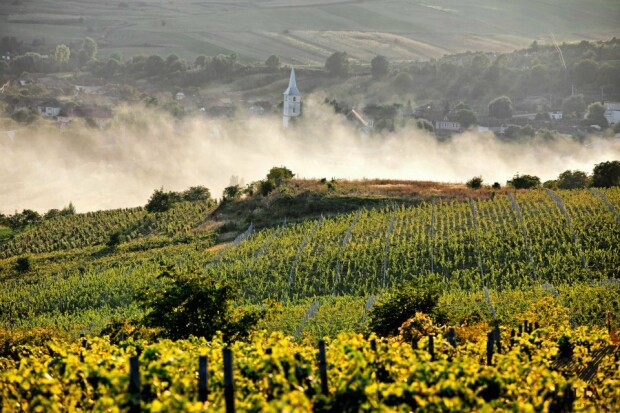
    Just a random vineyard
    Not my property

    Romania does have a history of wine and does have several famous wine regions, suitable from a geographical and climate point of view. Wine from areas like Cotnari, Odobesti, Drăgășani, Dealu Mare had its moments of being considered among the good European wines and are mentioned by foreign sources since the 1500s.

    The present situation is… complicated, with good and bad. Much of the bad, as I said in my previous post, was due to communism – bad, cheap mass produced wine to export for low prices. Usually semi-sweet with added flavor.  The vines and facilities were not maintained, a lot of knowledge was lost. The 90s were a bit of a dark age, as government agricultural cooperatives were  dismantled, some vines being given to former owners or their heirs, others to dysfunctional government enterprises.

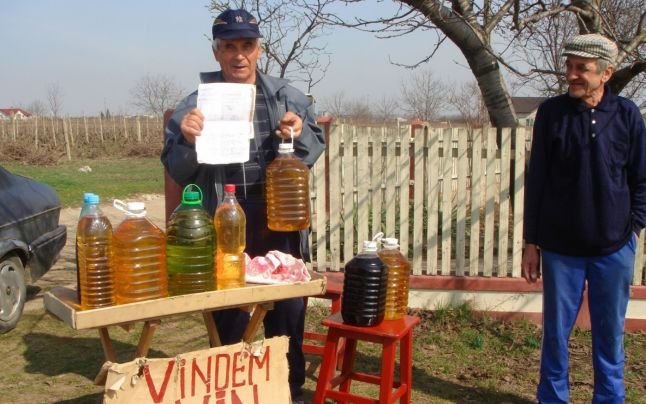
    New owners did not maintain vineyards any better, and most of the wine was mass produced and of very dubious quality. At least in my view. Many Romanians like to claim they enjoy “natural clean country wine”, not that commercial stuff. Natural and clean meaning not polluted with the things that stabilize and clear the wine of impurities, thus making it drinkable. The resulting liquid is sometime – rarely – quite decent if not great, but more often brown and murky, reminding one of a muddy river. I feel the home made wines in Italy or Portugal are of significant better quality because people actually bother to have some skill.

    But some of the… roots is the proper word… of the problem predate communism. Even before, quality wine was but a fraction of the total wine production. Most of it was made, then and now, for personal consumption on very small lots – basically each peasant’s garden. A lot of trade in the 1800s in Romania was still barter and did not involve money, which rural populations did not always have, so there was no developed market in wine, like in, say, France.

    Story time: as I said in my very first post on Glibertarians, my great-grandparents were from the Pitești region, grew plum trees for țuica and owned a pub in Pitești. Back in those days, the pubs sold mainly țuica and wine, so they made extra țuica, loaded up some wagons and traveled over several days to a wine producing region and traded for wine.

    You paint what you see
    Ox cart, common theme in Romanian painting

    Transport was bad in Romania back then, mostly by wagon and dirt road, so it made sense that most of the people made wine themselves, it was hard to buy from a distance. So each town or village had some vines surrounding it. The quality of the wine varied greatly. Some people respected the craft and themselves and made quite decent, if rustic, wine. Clear, somewhat stabilized micro-biologically – the barrels were sort of fumigated with sulfur providing the sulfites, wine was sometimes filtered using egg whites – something still done in modern times, although now artificial gelatin is favored. Others, not so much. It was just plain bad, or mixed with water, made with added sugar or with certain additives to make it seem better.

    Now a little break for fun with etymology! Șmecher is a quite common Romanian word –which mean crafty, cunning, shrewd and difficult to trick. An assumption is that the etymology is from the German word like “schmeck” or schmecken, which means to taste. The legend goes that German merchants came to the Drăgășani region of Romania to buy wine. The locals gave them a bit of the good stuff, and then a bit more, and the merchant got a bit drunk, and then they sold him some bad wine as well, but for the price of good. Now, say what you will of German merchants, they were not stupid. Fool me once, as the saying goes. So the next time they brought tasters which did not get drunk and made sure to get the good stuff. These schmeckers or tasters were people who were hard to trick, who did not buy bad wine for the price of good. Hence the Romanian word.

    Wine is the nectar of the vines, if we want to be pseudo poetical about it. And why would we not want to be? But wait; there are plenty of crawling plants, so which ones? Vitis vinifera is responsible for all that which most humans with a discerning palate consider good wine. So plant that shit and drink up! Well, that is what people did. A lot. So up to this point, all is well, everyone was all happy and drunk – as happy as semi-starving peasants can be that is – until you bloody Americans had to screw things up, with you interventionist policies and such. In the year 1884, enter phylloxera stage right. And things got considerably worse.

    What is phylloxera ? It’s an insect, a bug, a parasite, vermin. You mean like socialists? Yes, precisely like socialists. Phylloxera is a pale yellow insect native to North America, which, instead of doing productive work, sucks the sap from good, honest grapevine roots. Americans have evolved some natural defenses against parasites such as these, which Europeans did not. But Americans lack the sophistication needed to make a good wine. And speaking of Americans, as a side note, just to avoid all sorts of silly comments, a hectare is 2.5 acres.

    No nasty sulphites

    In 1884, Romania, not yet including Transylvania, had at least 200.000 hectares of grapevines – mostly local versions of vitis vinifera. Most villages and towns had their own vines, due to the difficulty of transporting things on dirt roads. Then the disease devastated the vines, and by 1905, 90 thousand hectares were left.

    By the time the bug was in full swing round these parts, Western Europe, which was hit first, had found the solution. After many trials and errors with pesticide, insecticides, fumigating vineyards and such, the new vines were planted grafted on American root stock – vines that did not give good wine but resisted phylloxera. Romanians, red blooded and proud as the mighty oak that grows in the forests, said, naturally, we ain’t gonna let a bunch of foreigners tell us what to do. So instead, they started experimenting with pesticides, insecticide and fumigating vineyards. This failed miserably and in the end they turned to, you guessed it, planting vines grafted on American root stock.

    Being a poor country, money was tight. As such, by 1910 Only 70 thousand hectares were left, out of which 20 thousand hectares had been replanted, and the others managed to hang on. The majority of the country, used to growing and making their own wine, and not being able to afford the new solution, settled on a not great but inebriation enabling intermediary solution. Direct producing hybrid vines. Hybrids of European and American vines, which were resistant to phylloxera and created a drinkable, if bad wine, were planted. They grew, they were maybe more productive than the “noble vines,” as they came to be called, and made a drink that got you buzzed. Good enough.

    You know the type
    Sap sucking parasites

    By 1935, after gaining Transylvania with a lot of vineyards, Romania had some 160 thousand hectares of European vines and 160 thousand of hybrids. By the end of communism in 1990, there were 160 thousand hectares of European vines and just 60 thousand of hybrids – results of collectivization and elimination of some of the hybrid vines. Sadly, things did not get better immediately, as many people who land from the old state cooperatives sometimes took out noble vines and replaced them with easier to maintain hybrids. So in 1997, the numbers were 80 thousand good vines versus 120 thousand hybrids. Right now, officially at least, it is illegal in the European Union to plant hybrid vines for wine making. This was, I assume, a standard protectionist method for established agriculture, although the pretext was the poor quality of the wine and the higher possibility of methanol in wine from hybrid vines.

    Now, more than 100 years later, according to the national statistics institute, there are 180 thousand hectares of vines in Romania, out of which about half, 90, are grafted vitis vinifera. So 150 years after phylloxera, the country has half the vines capable of producing good wine. And the current territory also includes Transylvania. Sadly, many people who make wine for their own consumption still plant hybrids which create a good natural country wine. Because swill does not have the same ring to it.

  • Mother Earth Brewing Co. Cali Creamin’ Ale

    For the most part our tastes in beer have been established.  Some like balanced to malty beer while a smaller number are somewhat vocal about their taste for hoppy beers.

    Others still, throw you entirely for a loop.

    A what?  Cream Ale?  That sounds like one of those oddly named east coast numbers–like the egg-cream soda, which contains neither eggs nor cream.

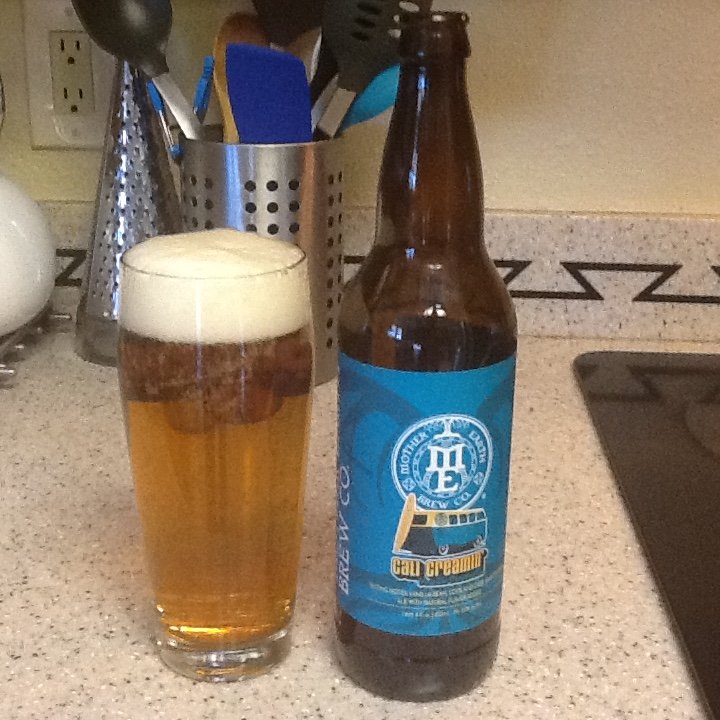
    This is my review of Mother Earth Brew Co , Cali Creamin Ale.

    An odd thing growing up in Arizona during the 90s was that was the time people from the east coast began to migrate there.  Prior to that it was mostly Cubs and Packers fans, who are large enough in number they actually make a noticeable increase in ticket sales to the local sports venues.   Here is Chase Field for example.  While the Red Sox and Yankees have drawn the largest average crowd size, their numbers are skewed by the limited appearances as they are both AL teams.  In the Yankees case, four of those games were from the 2001 World Series.

    I’ll give you this one Jersey. This stuff is good.

    At least that is the perception.  The reality, unsurprisingly, is California dominates the in-migrant flow to Arizona.  On page 22 of this report from Arizona State there is a brief discussion on migratory patterns from 2001-2014.    Although smaller in number the east coast migrants still make their presence known.  Yes, particularly in the winter.  Much of this was in the form of local restaurants becoming hang outs for fans of different teams, but also small markets for food that wasn’t previously available out west.  For instance, the aforementioned egg cream soda is made with UBet Chocolate syrup.  It’s been available here since I was a kid.  You could use something else, but its not the same and dare I say improper.  Another example is Scrapple, which I’m not going to eat but Taylor Ham I will.  I will also contend it’s basically an artisanal form of Spam no matter how much it irritates my stepdad.  Many of these things he simply explained as, “an East Coast thing,” as he is a refugee from New Jersey. Which is why he insisted I take the SAT even though I was going to major in a science which meant the ACT would be advantageous for me to take but that was a “west coast thing.”  This brings us to another “East Coast thing:”  the cream ale.

    So what is it anyway?

    It is no secret that German immigrants moved to America during the 1870s.  A few of these immigrants started brewing lagers.  Many argue these are now better suited for scare quotes, so these are now “lagers.”  Because of this migrant pattern, Americas taste for beer changed.  English style ales fell out of favor for crisp, light, German-immigrant made lager.

    “Ale brewers responded to this demand by creating a top-fermented product similar to an American lager. Using ale yeast (or possibly even a combination of lager and ale yeasts, though no concrete evidence exists for the use of lager yeast in the early cream ales), they could produce beer more quickly than the lager brewers could, thereby potentially increasing sales and market share.* It may also have meant that they could use the same worts for both lagers and ales and benefit from economies of scale. These new beers were termed “brilliant,” “sparkling,” or “present use” ales, with the nickname “cream ale” sticking as the common name.”

    In other words, a cream ale is the best of both worlds.  It has the light, crispness of a lager but also has the complexity of an ale.  They do this in part by brewing the ale at a colder temperature like a lager.  Few breweries that made these survived prohibition however, or were acquired by others.  A good example that is well known is Genesee.  Which for the record I have been able to locate in Arizona, but only once.

    So how is this one?  Disturbingly good.  It is every bit as refreshing as advertised,  it is light, not hoppy at all.  This one has a pleasant vanilla aroma they added in, making it something that is practically begging to be chugged.   I’ll be buying it again, even though the only downer was the price, which the bomber costing about $8.  Mother Earth Brew Co , California Creamin’ Ale: 4.5/5.

  • Wines and vines of Romania: a bit of an introduction

    There seems to be some interest in Romanian wine. Now, one can probably write 100 posts on such a topic, so where to start? There are grapes, there are wines, and there is history. I will try a quick general introduction, and then will get more specific in potential future posts. Wine, like most things in this world, was invented on the present day territory of Romania by the dacians, although this fact has been covered up historically by other jealous people wanting to steal our legacy. Georgians and Armenians and middle easterners and the like. All lies. Romanian had the first and the best wine. It is known. That being said … to procede.

    I could start with a bit about red wine. Red is the colour of the blood that was spilled defending the land and such pseudo patriotic nonsense. I will not. Although Romanians, believe you me, are very patriotic about their wine and consider it among the best. This may have been somewhat true for some wines 150 years ago, before it stagnated significantly and others – especially New World producers – had a bit of aggressive growth going on. This feeling has decreased somewhat in recent years which in turn has led to more imports – a good thing, because more wine variety and a bit of extra competition made the locals pick up their game.

    This may break the hearts of some of our fine readers, but communism was not exactly beneficial to the wine industry – or any other. I have to be honest with you guys, communism sucks on all possible levels. Quality wine is bourgeois, comrades. The wine industry was devastated and reduced to producing cheap, low-quality wine, often with added sugar and artificial flavoring, which along with Bulgarian wines were drunk in Western Europe as wine for students with a very tight budget and a non-existent palate.

    Map from revino.ro

    The state controlled the wine, and while there were, like in all fields, a few passionate and honorable people who did a good job, because it was their nature, more were not thus. There were some wine research institutes that actually did great work, it must be said. But alas, they were in the minority. And, like in many areas in communism, there was laziness and theft. When it came to working, well, it is not my vineyard. When it came to taking, well, it belongs to all of us. Wine was not easily found in stores, nothing was, so people developed their home wine-making, a legacy which persists, producing bad wines in large quantities.

    Then communism fell. And things, at first, got worse, which is to be expected in case of massive social upheaval. Many vineyards were abandoned. Many were split in minor parcels as part of distributing land to peasants. Many were simply uprooted. The wineries were closed or privatized. Many times the former workers of the agricultural cooperatives stole everything they could, and stainless steel – quite used in the wine business – was high on that list. It was mostly a disaster.

    But then, after the first 10 years, slowly, too slowly if you ask me, things got better. There was a bit of a renaissance in the last 15 years or so, with more and more good wines produced. This was due to a significant inflow of both private investments, from Romanians and companies from the EU alike, and European Union funding. This led to a lot of replanting of vines and rebuilding wineries.

    Some of the first doing quality were foreign. S.E.R.V.E was among the first, owned by a French count named Guy Tyrel de Poix since 1993. Oprișor is another, owned by the German Reh Kendermann group. Vinarte was created by a joint group of Romanians, Italians and French. Davino, probably the top producer, was started by a Romanian. Prince Stirbey was a continuation of an old Romanian noble family, but Baroness Ileana Kripp-Costinescu lived in Germany during communism and came with funds from there. Halewood is a British company that came here to make wines for England. Mihail Rotenberg was among the Jewish Romanians who was allowed to leave for Israel – probably after the Government got paid, made his money in engineering, and came back to Romania to make wine.

    Rotenberg

    While you may say many a things of the EU, the point I would make is this. If you happen to be in it, subject to all the rules and such, you might as well make the best of the funding available. This may split libertarians, but I am of a view that if the state is going to tax and spend, it is better to at least get something out of that spending. And the wine industry is one of the few areas where Romania, notoriously bad at getting EU funding due to massive corruption and incompetence, got 100% of available funds.

    There was, in truth, some over-investment, as often happens in high growth areas, and also excessive expectations. Many expected to get their investment back fast and make a profit. They did not take the view we are building a multi-generational business, like many quality wineries are. Hoping to make a quick profit, most new vineyards wanted to make wine for the so called premium sector, which meant expensive rather than you know… good. There was a lot more premium wine than the market could bare. It was also hard to compete with outside producers, which had been investing for hundreds of years.
    There were other issues. It is difficult to make great wine off 5 year old vines. Many of them talked of terroir when the vineyard was on its first wine. If we accept the terroir thing, we must also accept it takes time, years, to understand the soil, the micro-climate, to experiment and find a way to express the terroir. This is why talk of terroir is bullshit in at least 90% of cases.

    In the last few years a sort of balance was achieved, more and more good wine appeared at reasonable prices. Most new entries in the last 5 years were not “premium”. It is still hard to compete with the old world for tradition and the New World for quantity and popularity, but things are moving in the right direction.

    One mistake, in my view, with all this replanting was that mostly international grapes were planted. It is very hard to compete in the world market making one more Cabernet. It would have been much better to focus on local grape varieties. Some do, but not as many. Planting Touriga Nacional in Romania when you have yet to master the local varieties may be a bit of a rush.

    Overall, Romania is a decent country for wine, geography wise. The soils, the climate, the sunshine hours are all pretty good. There is a risk of late spring frosts, but that is true for most of Europe. There is also, compared to counties like Chile, more variability from year to year, which means the wines are vintage dependent, not the same, but this is not always a bad thing. In most areas, summers are generally of the hot and dry varieties, which can limit the range of wines you can make. But there are a few cooler zones here and there.

    Most of the wines regions of Romania are currently in the foothills of the Carpathian Mountains and some plateaus in Transylvania. This all covers a good bit of the country. Other regions are along the Danube, in Dobrogea close to the Black sea. And pretty much all over, really. To drop some names based on Romanian regions, in Muntenia there is Dealu Mare is one of the main red wine areas, close to the cities of Ploiesti and Buzau. In Oltenian is Drăgășani on the Olt river, Samburesti and a few others. There is Murfatlar and Ostrov and Sarica in Dobrogea by the sea. Vrancea, Cotnari and Odobesti are in Moldova. In Transylvania there is Tarnave and Miniș-Măderat and more. In Banat the main one is Recas. There are dozens more besides these, and not the time or space to cover them all.


    Some people, in a case of being amusingly very wrong, claim Dealu Mare as the Bordeaux of Romania, as it is on the 45th parallel, same latitude as Bordeaux. Let’s ignore the different soil, different exposure, different accumulated heat, different sunshine hours, different rains, lack of the oceanic influence Bordeaux has and more. It is the same, really.

    To close this long post, I will give some Romanian wine producers I like and some I do not. Producers I like are Davino, Stirbey, SERVE, Vinarte, Bauer, Ferdi, Oprisor, Rotenberg, and Wine Princess. Second tier producers Avincis, Petrovaselo, Vitis Metamorfosis, Corcova, Licorna, Segarcea. I would avoid Murfatlar, Jidvei, Cotnari, Vincon, Ostrov, Pietroasele and others I will not list.

    So I guess this is it for the first one. Let me know if for the next you want something about grapes and actual wines or a bit more history and culture.


  • In case you’ve ever wanted to rest your head on salmon

    Now you can!

    For the cost of a venti soy latte and a croissant you can have the salmon pillow you’ve always dreamed of. Thanks, Amazon!

    Yummy...?

    You know you need this.

    Don’t forget to add the “large shrimp neck pillow” to your shopping cart to complete your collection. At the time of this writing the shrimp pillow has a coupon for 10% off.

    If you had any questions about its quality, let your mind be put to rest. It’s been awarded Amazon’s Choice for “shrimp pillow“, which is a larger category than you might think.

    Who could resist?


  • You’re not worthy. None of us are.

    It might surprise you to know that I have travelled to 32 states.  By travel I don’t mean pass through.  By that definition, I’ve been to over 40.  In that time, since I’ve been an adult at least, there has been one thing that comes up up from time to time, is some states are shall we say, lacking.

    This is my review, of Stone Arrogant Bastard Ale.

    Where were they lacking?  At 7.2% abv this is over twice what some states will allow for sale in grocery stores.

    Thankfully, Arizona does not participate in such asshattery.  As it turns out Arizona has lax laws regarding alcohol with the exception of hours when you can purchase:  6AM-2AM the next day, 10AM-2AM on Sunday, but nobody seems to enforce Sunday. They also defer to Federal laws as far as what you can purchase. So anything approved by BATFE is legal for sale at a grocery store.  Drive through liquor stores are also legal.  Some restrictions were in place in terms of the volume a local brewer could produce and distribute but was lifted a little over a year ago.  Overall, not bad for a state overrun by socons who kept John McCain in office for over 30 years.  See how your state compares, here.

    Other states?  Some of them are pretty weird.

    The fourth Friday of every October is dedicated to teaching kids about the dangers of overindulgence in the Palmetto State.  They do this in honor of Frances Willard. She was a temperance reformer who helped pass the Eighteenth amendment to the Constitution.  I’ll give her some credit though, as she at least recognized an amendment was necessary for her to impose her stupid ideas over everyone.  I will concede, some of her stupid ideas included allowing women to vote.  Thankfully, the Air Force moved me when they did, because among other reasons, had I stayed there I’d have no money on account of putting three kids through Catholic School.

    Not to be outdone for stupidity.  Colorado where you can’t make it over a mountain pass without tripping over another brewery does not allow the sale of beer in grocery stores.  Well, it does but it must be 3.2% or less, which explains Coors light.  It has spawned a common practice of having a liquor store on nearly every corner.  Which  is convenient when you run into your squadron’s Chief Master Sergeant and he says something to the tune of, “yeah, I got a….retirement to attend.  Need to bring a gift.”  I can reply with, “you don’t need to explain anything to me, Chief” and find a new booze merchant.

    Yes, I will mention Utah.  Do you ever plan to go to Utah? No?  There, I mentioned Utah.

    Finally, the dumbest alcohol law comes from where else?  Florida.  Where  after a week of Silver Flag the blonde bartender asked, “So, you boys from Silver Flag?”

    “Oh yeah.”  Where she immediately went from bubbly girl from the panhandle to scaring the hell out of five guys that spent the last week running around with guns, training in MOPP4 and building a BEAR base in the woods in the middle of June.

    “You’re not EOD are you!?”

    See! Look how much fun they are having.

    I replied, “Can I get the shrimp po-boy?”  I woke up a few hours later on the bus back to Hurlburt. In Florida, establishments selling alcohol can be fined $1000 for allowing or participating–in a dwarf throwing contest.  Well done, Florida.

    This beer has the distinction of quite literally, telling it’s customers not to buy it.  Reading the back of the label brings to mind Larry Correia’s infamous rant about the German arms company, Heckler and Koch.  Click at your peril, it is a tad dated and Larry is a professional rant artist, so this will take a while to read.

    They are right though, its not for everyone.  It has a high malt complexity and is balanced out by an obscene amount of hops.  It is as about as balanced and flavorful as it gets without going into the barleywine category.  Once you get past the stage where this is truly intense and it begins to be just another beer, Stone has you covered with the Double Bastard.

    Arrogant Bastard Ale: 3.9/5

  • What Are We Reading – February 2018

    jesse.in.mb

    Don Winslow – The Force. Is the story of a cop who thought himself good and spent his entire career methodically crossing line after line until he was really a villain. Maybe. Winslow seems unsure if this is going to be elegy or indictment and I found the damn thing an infuriating listen. There’s some unironic patter about his first duty is to get home to his family. Seriously.

    James S. A. Corey – Leviathan Wakes (The Expanse Book 1). It was fun dipping my toe back in hard sci-fi. I wish I’d read this before watching the first season of the show as the show was a fairly faithful retelling of the book with some alterations so that you saw more of Earth’s politics from the beginning, primarily from the view point of Chrisjen Avasarala (Shoreh Aghdashloo), who does not appear in the first book. It cannot be stated enough that I would listen to Shohreh Aghdashloo read an intro to chemistry text book for all eternity and be content.

    Richard Phillips – Mark of Fire (The Endarian Prophecy Book 1). Fantasy, a little on the generic side, but well paced. The magical system was a fun departure from most of what I’ve read, and while not exactly unique, it was well fleshed out. The second book just came out in January and the third on 02/20, so I may just continue on with the series.

    SP

    I’ve been driving around the country helping elderly relatives with various health stuff this month. (Pro tip: Don’t be the oldest-female-child-and-only-child-with-medical-training in a huge family.)

    Not one of SP's elderly relatives, or OMWC would have married SP for her money But, hey, I don’t mind driving. And I love my elderly relatives. Interstates, however, get on my nerves. Yes, I’d prefer to take the “blue highways” but time hasn’t allowed.

    What to do? Listen to an audiobook, of course!

    On this last drive, I started listening to the somewhat lengthy Shooting Victoria. The length – 19 hrs and 54 mins – would normally be off-putting for me, but when one has endless, mind-numbingly-boring hours to fill…feature, not bug.

    Shooting Victoria tells the stories of the eight(!) failed attempts to assasinate Great Britain’s Queen Victoria over the course of the 19th century. Although perhaps a bit dry for some, it’s quite interesting to me from a social history standpoint. I’m only 8 hours in or so and we’ve already had much discussion of Bedlam, Chartism, the state of the judiciary, the plight of the Spitalfields silk weavers, and the Irish Potato Famine. Also fascinating-yet-not-surprising are the machinations of the political figures and those within the Queen’s household.

    I am enjoying the book and will likely finish it on my next driving trip. Webdominatrix and I are headed to Florida soon to check in on OMWC’s elderly relative, with stops to visit Brett & his family and SugarFree & his bourbon (not a euphemism) along the way. Nothing good can come from this. No, there will not be pics.

    Old Man With Candy

    For sheer thrills and excitement, there’s nothing to match C.D. Motchenbacher, and I managed to score a copy of an older edition of Low Noise Electronic Design, sent to me as a gift from one of my favorite technical authors. It may be old, but so am I, and the basic physics that are discussed are still valid. It’s comprehensive and readable, everything a technical book should be.

    For fun, I realized that it had been years since I picked up my copy of The Annotated Alice, the Lewis Carroll classics thoroughly annotated in a witty and scholarly style by the late polymath Martin Gardner. The fact that the author may well have been a closeted pedophile wasn’t the main attraction, I swear. I’m not a poetry kinda guy, but The Walrus and the Carpenter and Jabberwocky still speak to me in a way nothing else has, other than the works of Don Marquis. As someone whose professional career has been tied to molecular physics, I am particularly delighted by the insights of Through the Looking Glass and Gardner’s commentary. Everyone should own this.

    Riven

    All of my reading time since last month has still been dedicated to this sole book. The good news is that I should be testing on it in a few weeks. The bad news is that, until then, it’s going to be the only book I’m reading and I will continue to be scarce.

    Brett L

    I read The Shadow of What was Lost by James Islington, which Amazon’s AI has been pushing on me for a long time and reviewers compare to Robert Jordan. I like Mr.Islington’s writing, but the plot is very reminiscent of Jordan, which is to say that there probably is one but I can’t discern it. The plot of the book — two young men who are destined to be magic users are set on a quest. Along the way they meet a 3rd young man who may be a mass murder as well as a wizard who is probably a mass murderer, but the men he killed were probably going to kill one of the original two young men. These 4 men meet a princess who turns out to be the 2nd young man’s cousin. Eventually an army is defeated, much wrong is righted, the young mass murderer turns out to be The Highlander — an immortal with a super-sword who has killed more people than dysentery.

    Oh, and a shit-ton of Microsoft Azure and DevOps training. DevOps sounds cool if I ever work on a team of more than 1 or have clients who actually can be arsed to test what I write.

    SugarFree

    I have read so much. So bigly of the reading. Yuge reading.

    Read The Iron Druid series. I liked it quite a bit, unlike some [cough]Brett L[cough]jesse[cough]. Basically Dresden Files Lite crossed with American Gods. Druids and shit. A talking dog. Hot redhead bartenders. The ultimate in “don’t stick it in crazy Death Goddess” sex. Will say… I thought the series was finished or I would have avoided it until it was. Between Planetary and GRRM, I have literary battered wife syndrome: I never want to get into that sort of abusive situation again. The final book of the series is supposed to be out in April. I’ll believe when I see it and not before, mofo.

    I have this urge to read the book before I see the movie, and over the years I have built up a large backlog of movies I’ve been waiting to see. My project for the next few months is to finally do something about it. So far I’ve read/watched The Other by Tom Tryon, The Fury by John Farris, The Stepford Wives by Ira Levin and I’m working on reading The Devil Rides Out by Dennis Wheatley.

    The Other was a bit of a bust since the movie hews so closely to the novel. Kind of pointless if you’ve read the novel. But the novel was very good. The whole thing goes down like a fever dream.

    De Palma’s film of The Fury is better than the book, honestly. The novel introduces better characterization and motives but is so disjointed it feels like maybe the copy you are reading had some chapters torn out at random. Time shifts back and forth, plot threads weave and unweave at random, and whole character arcs will have the important middle bit excited. Also, filming the novel as written would have had De Palma up on child porn charges.

    I had already seen The Stepford Wives a couple of times, so it was a bit of cheat. In this case, both the novel and the film are worth it. The plot doesn’t make much sense–if you can make realistic sexbots, just sell the sexbots, make a ton of cash and buy young hot wives; lather, rinse and repeat every ten years or so President Donald style. But the feminist paranoia of the piece is so palpable and so–for the lack of a better term–hysterical, it creates excellent tension. And I’m pretty sure there’s not a single scene of Katherine Ross or Paula Prentiss wearing a bra for the first 3/5ths of the movie. It was the 70s, man. Can you dig it?

    And that font. I’m not a font nerd or anything, but could that font be more 70s?

    JW

    So I was reading the milk carton at breakfast, and discovered something interesting. Besides it providing me with the minimum daily adult requirement of Vitamin D, it turns out that Mary Margaret Cameron, age 9, is missing. She was last seen on October 13, 2007 in the company of her noncustodial father, and they had a cool picture of what she looked like with age progression. She’s developed well, and I’m sure he’s a proud daddy.

    Sloopy

    The only thing anyone here needs to be reading is the TUNNELL ESTATE AUCTION SALE DAY CATALOG.

    Disclaimer: Contributions not necessarily actually by the author whose name appears above them.

    Web Dominatrix

    I have had a slow reading month. I too have been enjoying Shooting Victoria at SP’s recommendation. I am currently reading Salt: A World History and I find this far more fascinating than I expected. It is, as you might have guessed, the tale of how salt has shaped civilisation.

    I am also reading/listening to (Thanks, Amazon, for allowing me to switch between Kindle and Audible!) Uncertainty about Heisenberg’s principle.

  • The Fat Tuesday Special

    Explain this shit, Reali.

    A couple days ago, you may have noticed certain people had a black cross tattooed across their foreheads. You may have chuckled a bit at such foolishness, but not at me.  Because I didn’t go to the mass? No. I happened to grow up in a part of Phoenix where a large number of kids at school were going to ask me what’s with the cross on the forehead? Between the popped collar crowd and, well–(((them))), it was a conversation that got old fast.

    While I went to mass, I decided I didn’t need the whole world to know I did. I had the good sense to wash it off when I got to work. If I’m going to burn in Hell, let’s be real, it’s not going to be for that.

    This is my review of The Bosteels Brasserie Tripel Farmelier.

    Here, I will explain what I preferred not to explain before. Ash Wednesday is the start of Lent. Lent is not supposed to be be some form of medieval self punishment. Unless you want it to be, in which case I leave you here with this guy.

    For everyone else, it’s simply a time for prayer and fasting. The word itself is derived from the Middle English word Lenten, which means springtime. The days after all, are lengthening this time of year–get it? Its origin as a time for spiritual renewal was brought about by the tradition of baptizing Catechumens on the Saturday before Easter. Now you know why I never go to Easter Saturday mass, because its three hours long and. It. Takes. Forever…..to watch these people get dunked.

    The fasting part was something that developed during the 4th century AD (…or CE) and was typically observed by monks. It might seem like a convenient time to go without eating anything given the abbey was probably running out of food by the end of the winter, but the time of year the fast begins has been as early as January. This time in history is also when it became linked with the traditional 40 days. No one is really certain how Ash Wednesday became recognized as the start of Lent, but for our purposes it is when it is observed. The fast part is now observed by Catholics “giving up” something. There are some theological origins to this, such as the story found in Luke 4:1 to 4:13, but the fast is now more or less observed by going without something. Whether that be something trivial like chocolate, or something more of a challenge like bread, eggs, or milk, its up to the individual. After all, even the monks did not starve themselves.  They stayed alive by drinking beer.

    By the way, in the interest of full disclosure, this is all relevant because I give up beer for lent. Every year. That and meat, because you’re not supposed to eat meat on Friday and quite frankly I screw that up at breakfast so I just make everyday Friday.

    The beer we now associate with these monks originates around the 11th century AD (…fine, CE) with the Order of Cistercian Monks.

    The Order of Cistercians was founded in 1098 when monks from the Benedictine abbey of Molesme left to form their own monastery in nearby Citeaux, France (Cistercium in Latin), feeling that things were too lax in Molesme. They wished to return to a more strict adherence of the teachings of St. Benedict.

    That sounds familiar. Apparently, the Benedictines of Molesme at the time were the Nick Gillespie of Benedictine Monks.

    Word got around of these monks who valued the fruits of hard labor and austerity. The nobility at the time began to offer the Cistercians undeveloped tracts of land, knowing they were capable of turning the wild into hubs of social and economic activity. 200 years later, at the peak of their influence, there were over 300 Cistercian sects across Europe. Benedict XII was a Cistercian. It is during this time, the Trappist Ale became associated with Catholic monks.

    It is also during this time the naming convention for Belgian Ales were coined. The Cistercians did not discover it, but by then it was well known that by “washing” the wort a number of times they were able to create multiple ales of varying strength from a single batch of wort.

    This was first discovered (documented) by the Jesuit brewers who offered a 5% to travelers and used the 2.5% second run beer for themselves. The next big step came when they realized that people would pay a lot more for a stronger beer, more than the cost of the extra grain. This allowed even bigger beers with more runnings. The first runoff would be the richest and brew the best beer. The second would be next best, and the final running would be the weakest. Again, the first would go to the guests and be sold to help maintain the abbey. The second would be for the monk’s use. The last runnings would be for the poor. This is also the likely origin for terms “single,” “double,” “triple,” and “quadruple.”

    This allowed the monks to engage in the abbey’s other function: hospitality. Because grapes are not easily grown in Belgium and a law in the early 20th century that outlawed liquor, strong beer became commonplace. The monasteries were no longer the only ones producing Trappist ales. So if it matters to you, if the bottle bears this mark, it was made in a monastery:

    Which is good to know, because after a thousand years the patent runs out. This one, made in Canada however, was just as good.

    The Trappist Ale is a wheat based variety, but has more of a sour, citrus like taste. There is substantial body to this type of beer, which in a way is quite satisfying, if this is the only sustenance you had that day. Neither of these bear the mark, which is why I mentioned Chimay a short time ago–which does.

    I had the Rouge, which was the last for me until Good Friday. Until then, everything I write has been in a sense, pregamed. Enjoy. The Bosteels Brasserie Tripel Farmelier 4.0/5.

  • You know you need a Tiddy Bear

    When I saw this on an 8 Out of 10 Cats rerun tonight, I just assumed (like any good mocker and scoffer would) this was a parody.

    It’s not.

    According to CNET in 2008:

    The Tiddy Bear Comfort Strap was invented by two women, one of whom is a breast cancer survivor who experienced uncomfortable pressure from her seat belt.

    This product is not to be confused with the Titty Bear, Chest Wrinkle Preventer, though that sounds like a must-have product, too.

  • It works every time.

    Every once in a while, I draw inspiration from the audience.  None of you have steered me wrong.

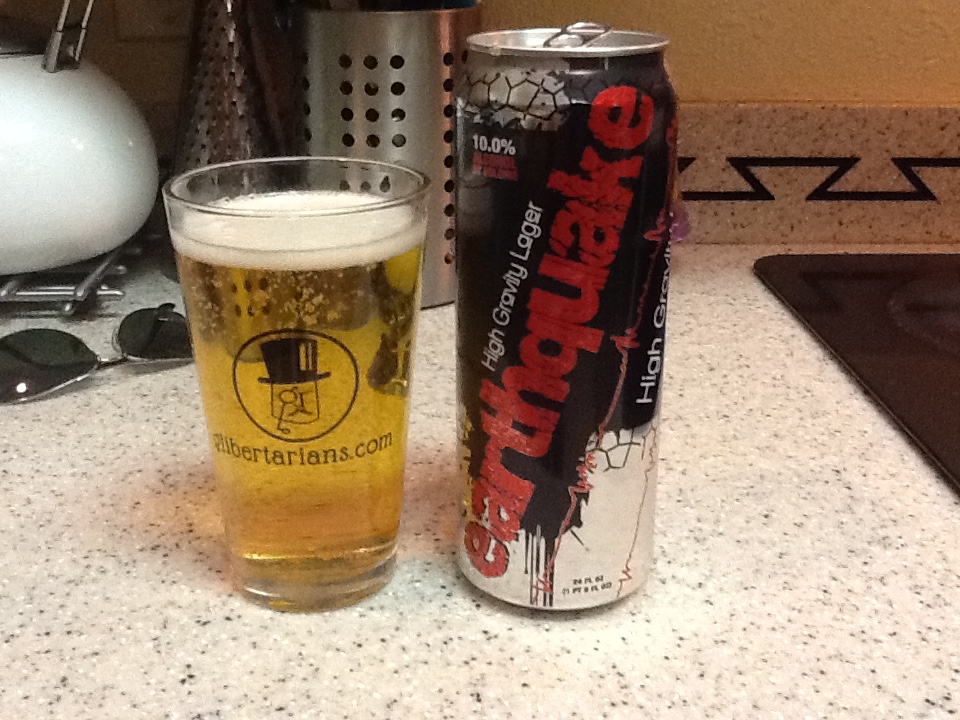
    This is my review of Earthquake High Gravity Lager…

    Okay.  One of you did.  I’m not about to start pointing fingers, because its more fun for me to wait until the end.

    A primer on Malt Liquor:  Brooklyn, the 1970’s

    This is a dream, man.  A man’s dream.  A man named Don Vultaggio  At the time he had nothing but a VW, an underserved market, and a dream.

    “Vultaggio began delivering malt liquor. This was a dangerous job — so dangerous, in fact, that the breweries’ own truck drivers refused to do it, which is the opening Vultaggio wanted to exploit. He braved stickups and shoot-outs. He hauled cheaper product from upstate wholesalers back into the city, because gas was 30 cents a gallon, and the hassle paid well.”

    Relax, this gets better.

    “One little fly-by-night distribution operation became a $2 billion beverage empire that now makes everything from malt liquor and flavored malt beverages, to beer, to — wait for it — AriZona Iced Tea.”

    True story.  Arizona Ice Tea is not a product of Arizona.  Actual people from Arizona, that is, the 10-20% of the population that are actually from here, are fully aware it is made in New York.  Like that terrible salsa from San Antonio, and their sales pitch– New York City!

    You probably know where this is going.

    “Ultimately, marketers failed to convince the white bourgeois that malt liquor was the new drink of the white bourgeois. But they did convince someone, albeit unintentionally. The word bubbled up the supply chain, from corner store, to distributor, to brewer, and finally to marketing departments: malt liquor is selling well in black neighborhoods. No one knew exactly why. It wasn’t cheaper than regular beer (that would come in the late ’80s, when Schlitz, then the market leader, undercut the competition and triggered the whole category’s slide from premium to bottom shelf). And the messaging was still white as all hell — in fact, a marketing study from the era suggests that malt liquor’s upper-class packaging may have been a contributing factor to its appeal to black customers, though this is no easy thing to corroborate.”

    Alas, I could continue to give you excerpts of this article.  I am not going to do that.  Am I that lazy? Yes.  This article though should be of interest to anyone that values capitslism.  After all, it never matters who you sell it to.  It matters that you sold it.

    “malt liquor’s fortunes have been entangled with America’s sorest social bugbears, from race, to class, to poverty, to whether or not capitalism ought to give a shit about any of those things.”

    In spite of the halfhearted attempt to SJW, this article is actually pretty good.  Read the whole thing.

    So how is Eathquake?  It pretty bad.  I’m not about to indulge myself in its flat body.  Its bitter sweet taste and its nose that reminds me of the bathroom in the gas station.  There is no redeeming quality about it.  It’s made with enzymes that break down the malt to allow the industrial grade yeast to process the sugar as a monosaccharide.  This is depression, and squalor in a can.  If it were possible to take being a New York Jets fan, distill it, bottle it, distribute it, market it and ultimately sell it–I imagine it would taste like this.  Ultimately, everyone will need a drink from time to time, and at least this one it honest enough that all we will know is that it will do its job–and nothing else.  Earthquake Malt Liquor 1.5/5.

    This is your fault. I blame you.


    Hat Tip: This sick, twisted man.
  • The cake you never knew you needed

    Tonight’s Product You Need comes from Nadia’s Cakes in Maple Grove, Minnesota.

    This gorgeous geode cake is…well…obviously a vagina.

    It really is supposed to be a geode cake, not a vagina.

    Abby, their social media manager, has said: “Guys, have you seen the mad skills of our cake design team? If we made a vagina cake, you wouldn’t be saying ‘OMG, that cake is a vagina.’ You’d be saying ‘That vagina is a CAKE?!’”

    But she has even begun using quote marks when she refers to the “geode cake.”