Overloaded with supplies, Chuck and I gas up and head East on I-10, past the Windmills, past Palm Springs and then South at Indio, down Rt.86. Through the Badlands and hang a left at Main St. (Don’t miss it!) in Niland. Pulling into Slab proper, I needed to Micturate, and off in the Shrubbery was a Nice Spring!
I moved off so as not to contaminate it, but how Cool!
3:45 PM We met Coz, who runs the Library, Donated some Shakespeare and Tolkien, Drank a few beers, and off to the Range we go. I did a bit more Photography this time, with emphasis on the Somalian side, at it were. Burned out RVs, People in Camping tents under trees, Zombies, I have no idea where they live, Maybe they don’t either, Libertarian Paradise isn’t exactly Utopia.
It seems to be a big Mess, debris everywhere, Handicapped Parking abounds, and there are often no property lines, so watch where you walk, lest the Crazies come out and get you. After dark, stay in the light. Or provide your own, no Moon = Ink Black. Anyway…
We found some shade over by Bill’s Driveway and talked to a couple of nice enough chaps, Chris and Mingo the Half Breed, it’s about 4:30 and these guys are WASTED, but happy. Turns out Chris is a Known Thief, so as soon as Bill saw him, BENNY HILL TIME, Chris had to leave in a hurry, Property Rights in Action!
Later, we met up with Opie the guitar player, and Various musical folks who drifted in from the Outside World, Sharing Herb, Beer and Good Times, very Mellow, watching the sunset.
Now, if you want to play on open mic night, you are supposed to sign up, Richard and his Harem did, several others did, but We had set up with Bill earlier so, Priority?
Much Music ensued, 6 or 7 acts, some good, some Horribad, but everyone got cheers, so it was all to the good, I know Chuck and I played well, and were well received, but we were too busy playing to record ourselves! A nice crowd, maybe 100 constant,150 overall, and they were there to hear Music, not a bar scene at all, everyone drinks anyway, a very good Vibe.
Damn if the locals didn’t shut down early, Midnight, we are standing in the Dark going, Now What? Driving! The details are hazy but I told Chuck to turn right and he did, Right into a Sand trap, OOPS! IIRC, We waited til more daylight, and all of a sudden, over the Horizon, comes, OPIE! I’m like WTF? But happy, and we all start digging out, 20 minutes later, Brian! Comes rolling in with his 4×4, straps us up, and pops us out! We have AAA, We called them, we were 15 feet off the road, they wouldn’t help us, The Slabbys did, I paid them 20$, they would have done it for free, a Trifle for our situation, and We made more friends.
There seems to be a lot more common cooperation in Free Societies such as the Slabs , Most obey property rights, and personal rights are whatever you decide they are, there are a lot of wild ideas these people have, maybe it’s good they stay out there, IDK.
We have gone with fun and Friendship on our minds, and have not been disappointed. There was some tension, but people tended to work it out amongst themselves, no Violence, overt thievery, however, there was much Gambling, which is a crime in most States, but Hey, no Rules out here. I must give a shout out to My Best Friend Chuck, He helped this all come down, and it’s been fun so far. We are already thinking about whether or not to continue going, we need a reason to drive 155 miles to hang out in oppressive heat, who wouldn’t. Until next time…
Jefferson: He liked France, but he didn’t LOVE France like Franklin.
Back in March, my wife and I took a trip to England. We saw the sites, did the tourist thing, watched a soccerfootball local sporting event. Something odd came up a week prior—a friend of mine just happened to be in Paris that weekend. Side trip! One thing I learned from the people I sat next to on the Eurostar to Paris, it doesn’t matter what country you are in, people bitch about the same stuff at work. Also, since it was snowing, no matter what country you are in people will irritate me by bitching about the cold. I’m from Arizona, if I can handle a little snow without complaining, what does that say about you?
This is my review of Kronenbourg 1664.
This is also my review of Kronenbourg 1664.
I thought I would find out if a beer was different here vs. across the pond. So I bought three cans on the train with the intent of smuggling one of them back home. Cost for three 500mL cans: about €11. But why Kronenbourg? Honestly, it was the only one available at the time I thought of it that was sold on both continents. Once I got home I picked up a six pack from a local Kroger. Cost: about $8.
Here’s the problem, when I decided to finally drink it I found out what was available at my local grocer was imported directly from France, rather than a contract brewer located somewhere in North America.
Edinburg, that’s in still in Scotland, right?
To make matters worse, the can I stuffed in my checked bag at Heathrow was actually brewed by a contract brewer in Scotland. Which gives me the further impression that not only does the Auld Alliance still live[!], the modern Scottish economy is mostly booze, and [fucking] sheep related.
Incidentally this 500mL can is 2.5 out if the 4 daily units of alcohol recommended by the British government. Which is a shame, given the amount of alcohol available over there. Not as shameful as the beer; this is rather forgettable. Neither is one I would recommend when others are available, but for purposes of consistency: Kronenbourg 1664 2.5/5.
Due to this disappointment I went and found another to feature. This one is from Grand Canyon Brewery in Williams, AZ which for the observant among you will recall the last time I raised awareness for the Glibertarian Beer it Forward.
This one uses the same schtick as the bock with the bag of wood chips in the bottle to add notes of fresh cut oak but also raw coffee beans. I was much happier with this one. Grand Canyon Coffee Bean Stout: 3.5/5.
Not long ago I saw an article that amused me. It was a bunch of eggheads puzzling over the mystery of how humans were able to domesticate dogs. I had to laugh. Clearly none of those guys had ever domesticated a wild animal. Any mammal that lives in social groups, and some birds, domesticate easily. Don’t hit them with a stick and give them food. I dare you to try and get rid of them after that. I have rescued and raised cottontails, raccoon, and red squirrel. I know people who have had pet flying squirrels, grey squirrels, foxes, and I once dated a girl who raised a whitetail doe. The damned thing lived in the house and slept in the bed with her every night. Don’t ask.
Anyway, the real question is not how did we domesticate dogs, but why. My wife jokes that we did not domesticate dogs, they domesticated us–or as she says dogmesticated. I think it is closer to enslavement. Hold on while I check my grocery list. I think they need more chews and treats, maybe even a bag of food that runs around $50….
I’m back. The answer, of course, is simple. Having a pack of wolves hanging around your paleolithic camp at night is a good idea when you live in a world where all manner of beast and man are trying to eat you. It is nearly impossible to sneak up on a camp of sleeping people without sounding the alarm by waking the wolves. They were the original burglar alarm. In that world, people didn’t move around all that much. Wander outside your tribe’s territory and you were likely going to be put on a spit. Contemporary primitive cultures live within strict boundaries. Many people I have met in the more backward parts of the world live out their whole lives never traveling more than a few miles from the spot where they were born. I once tried to explain to a Bolivian who wanted to know where I was from by telling him how long it would take to get there by canoe. “Two years that way,” and I pointed north. That made sense to him.
Beyond the pale. Ever wonder what that means or where it came from? Europeans didn’t have the extinct Eurasian wolf to domesticate, so they would build a fence around their village that was bristling with sharpened sticks or thorns. That was called the pale. Try to get past it and you were likely to be impaled. It was often whitewashed, which is why we use the word ‘pale’ to describe a color. At night, if someone got inside the pale, their silhouette could be seen more easily against the white background. The expression ‘beyond the pale’ refers to going outside the safe zone or going too far.
I am saying that there was never a golden age of gamboling about the fields and dales. Throughout all of human history, people lived within strict boundaries. Go outside those boundaries and some dude named Trog was going to bring your nutsack home to his wife so that she could tan it and make a little purse out of it. Travel has always been restricted. In fact, I would contend that people have more freedom of movement today than at any time in history.
I have heard people blame travel restriction on the rise of nation states and the modern idea of borders. Human history is mostly a chronicle of ethnic or cultural groups invading their neighbors. Travel restrictions were always there; nation states arose from the need for greater security. Borders were not drawn arbitrarily. They mark the edges of cultural territories. Restricting who may or may not cross those borders was and is a matter of life or death.
The open borders advocates around here have gotten me on the fence once or twice, but looking at contemporary events around the world got my feet back on the ground. I agree that freedom of movement is an inalienable right. One has freedom of movement so long as they do not trespass. If one believes in self-ownership, that every person’s mind, body, and conscience are their own property and no one else’s, then by logical extension they must accept that the fruit of one’s labor is their own property also. I decide who is welcome to set foot on my property and who is restricted from doing so. If a group of like minded people own property collectively, then they decide who may or may not set foot on it. I have no problem with the principle or practice of a nation preventing trespass so long as they do not restrict movement out of those borders or prevent one of the collective owners from re-entering.
There are other factors at play besides security, of course–the welfare state being the largest of those. Ideology is a concern of mine, as well. I am not a multiculturist. All cultures are not equal and the spectrum is quite wide. Flooding our country with people who do not accept the principle of inalienable rights or private ownership is worse than a bad idea. There are many individuals despite being from inferior cultures that would be a great credit to our country, and we should allow them in, even encourage them. Allowing just anyone based solely on their culture or ethnicity on the other hand is…unwise. A merit based system really is the only sensible policy in my mind.
I know this is one of the more contentious subjects around here, so y’all have at it. I’ll make popcorn.
The Salton Sea was created in 1905 when engineers attempted to divert the Colorado River inland to irrigate the Imperial Valley. The flood engulfed the lower than sea level plain and created the Salton Sea over a period of two years. When the diversion was capped, it was thought that the lake would soon dry up, but nature and man said no…
The 50’s and 60’s brought the cream of Hollywood. This was, after all, the Riviera of the West Coast.
Fishing, boating and seaside leisure weren’t the realm of the rich, and everyone enjoyed life on the the great inland sea.
OK, TMI: the Salton Sea is dead, and so are all the surrounding towns, whether they know it or not. So on to Slab City…
From Wikipedia: “Camp Dunlap was a U.S. Marine Corps base activated on October 15, 1942, as a training facility during World War II. The camp was named for Brigadier General Robert H. Dunlap. It was used to train artillery and anti-aircraft units of the Fleet Marine Force. The base was located at the present-day location of Slab City (also known as The Slabs) in Imperial County, California. In October 1961, the United States Department of Defense conveyed the land on which Camp Dunlap was situated back to the State of California.” Let’s visit…
Salvation Mountain
I guess it’s a Christian thing, but a very colorful pile of dirt greets you at the entrance to The Slabs. And sadly, it’s become very touristy–a small scale Disneyland. So much so that they closed the yellow brick road to the top, which is still very cool.
East Jesus
From what I’m told by the overlords, this area is owned by an affiliate of the Burning Man group. It was originally created by Charles Russell as an art studio and creative space for artists to, well, create. According the docent I spoke to (a crazy old hipster dude), there are three rules of East Jesus:
Don’t stay on the carpet
Touch everything
If you break it, blame it on the artist for using shoddy materials or because he didn’t properly realize his vision
The entire facility is a magical dream of a dystopian future: beautiful and haunting. I long to be there, even as I write this.
The Range
The Range is the outdoor theatre built by Builder Bill, and on the weekends it hosts many local and outside musical thing., I was told open mic ran from noon til ??? So when we drove by and saw people jamming we dropped in. I met Bill and introduced myself as Bob the Builder, and are we related? It was a good ice breaker, but Bill said Sunset til ??? Bummer because we brought our guitars, etc. While we had a good chat about the state of the Slabs with Bill, we offered food and drink and smoke, which made us many friends. Chuck chatted up Bob and Jinxie, who are a few of the more talented of the group, but everyone had something to offer. We have been offered a slot in two weeks to come and play, local friends!
The Coliseum
This place is a big reason I decided to come. The level of artwork in The Colosseum is astounding. Of course, someone has ruined part of it, but the portraits on the large tower are so big and so high, no graffiti artist can wreck them. And the Graffiti is astounding, as well. I guess if you’re gonna wreck something, do it right.
Impressions
When you first arrive, it seems like a video game, truly a vast wasteland of scrap metal and debris/trash. But then you notice an order to things, very twisted–yet it has a flow and an odd rhythm to it. I felt at peace, and didn’t carry any weapons. I felt no need. Every person I spoke to was quite adamant about the lack of violence and crime. They take care of their own, they tell me. OTOH, everyone I met seemed a bit… off. I took no pics of locals, and didn’t intrude on anyone, no video interviews, etc. It seems tacky to me to treat these people in their homes as zoo animals.
FUCK Snowbirds!
Whilst enjoying the peace of East Jesus a pack of six or so giant dune buggy things came up, spewing noise and tourists all over, ruining the experience for us. SAD!
More info is out there, but I went for myself and for you guys. Glib reportage, as it were. It is a very free place, and you could feel the vibe everywhere. I’m going back, and spend more time there, I must.
Some people on this fair forum want more Pie in the states, or so is my impression, and to be fair, who can blame them. Which got me a-thinkin’ maybe the pendulum swings both ways and some want to move themselves the other way. There may be some glib out there, somewhere, wanting to immigrate to good ol’ Bucharest. And said glib may want to know a thing or two about the cost of living, before jumping in. Well this is the post for that glib, and whomever else may have the curiosity.
Kinda lost its shine
So let’s, shall we? To start, in order to buy stuff, you need money, cash, dough. In our particular case we are talking of the mighty Leu (lion to you). Although the Leu often loses its roar in bouts of inflation (one of them legendary in the 90s), it is still our good ol’ currency. Although now we are talking about the new Leu (RON) versus the old Leu (ROL) after 4 zeroes were chopped off.
Back in the day, the day being 1850s, it was based on the Dutch thaler , which had a lion engraved on one side – an animal which was not a heraldic symbol in our country (we were more along the lines of eagles and aurochs), hence the name. The Bulgarian currency lev also means lion. In that particular time, the Romanian leu was 5 grams of 83.5% silver. Now the same silver cost 8.5 RON – after several times when zeros were taken from the end, that is.
I will, in general, try to express prices in dollars, so you understand better. I will enact the labour of currency conversion, if you will. I will not enact the labour of unit conversion so, sorry, you get grams and liters and such.
So we need Lei, yes we do. How much does an honest day’s work pay? Hard to say, Romanians always think in terms of monthly after tax salary. This is due to the fact that all the taxes are payed by the employer, and as such you only get to see your after tax. In general people negotiate their after tax salary on job interviews, called net salary round here. The average take home pay in Bucharest is 3200 RON or 850 of your inferior American dollars. A qualified engineer or programmer usually can get 2000-2500 dollars per month, and more for very good or highly specialized people. I mention this because engineers/programmers are among the best paying jobs in Romania. OK now, how far will all this get you?
Usually salary means you pay for the fabulous government healthcare and government pension, although if you actually get sick you need some money for bribes. But I will not give healthcare costs or pension fund costs. They are not relevant in the context.
As I know Americans to be drivers, I will start with the cost of regular gas, which is around 5.5 dollars per gallon. For non-drivers, a bus ticket is about 30 cents, a 10 trip subway pass about 5 dollars. Uber or taxi is usually 40-50 cents per kilometer.
All Pictures shown are for illustration purpose only. Actual store may vary
A three bedroom apartment, 1000 square foot or so, in a good area can cost 800-900 dollars a month, in an average area 400 to 500 and in a bad area 350. These are apartment in those concrete communist era brutalist apartment buildings, in new developments the prices can be 30% to 50% higher. Now that you have your apartment, let’s talk utilities. For gas the price is given, strangely, per kW-hour – not a unit of volume, and it is 30 cents. Electricity is 13 cents per kW hour. Internet for a gigabit connection, standard home connection non-guaranteed, of course, but it is usually very fast, costs 10 dollars per month. A decent cellphone package can go to 12-15 dollars a month – unlimited talk/sms and 3 to 5 GB of data. Netflix costs 15 a month for the top package, but not everything available in the US is available here.
Now a man/woman/otherkin must eat (I would ask the moderators to catbutt any vampire jokes at this point.) For food, I will reference the supermarket chain I do most of my shopping at. It is not the cheapest, but it is not particularly expensive either. I would add that, in a un-libertarian way I assume, I do not eat in the most cost effective fashion. This is because I do not have pantry staples and do not buy in bulk. If I did, I could go to cheaper large stores and save money, but then again I might throw away a lot more and lose some money that way. I usually buy just what I plan to cook/eat in the next day or two, so I go to a supermarket on my way from work home. I also dislike using frozen meat, so I buy all my meat fresh, which is pricier.
So what does food cost? Depends, I assume, on what you buy. Standard eggs are 4 dollars for 30, while the cage free organic can be 3 dollars for 10. Milk is 1 dollar 30 cents per liter and 200 grams of unsalted 82% butter is two fifty, same price as 350 grams of plain cheese. Romanians eat a lot of cold cuts, which are locally called mezeluri (I assume from the Middle Eastern meze or mezze). These can range from very cheap in a “don’t ask what’s in it” way to quite pricy. Two and a half dollars can buy you 400 grams of cheap salami (42% pork meat according to the label), 4 dollars buys 70% meat salami in the same quantity, and 6 dollars buy you 300 grams of the good stuff. There is also parizer (which is meant as an equivalent to what you may know as mortadella / Bologna), which has the same things in it like the cheapest hot dogs, pink slime like substances I would think, which is a dollar for 500 grams – never touch the stuff myself. Pork hot dogs are a dollar fifty per 300 grams. And cheap yellow mustard can be had for 3 dollar 350 grams. Whole chicken is 4 dollars per kilogram; average cut of pork is the same, not too fancy cut of beef can be 8 to 12 dollars per kilogram. Bread can be between 20 cents and 2 dollars a loaf.
Mmmmm pink slime and chemicals
I think this is enough food prices, off course there are many more items, but this is to give a rough idea. Now let’s get boozing. Basic local beer can be had between 50 cents and one dollar per 500 ml can. The craft stuff it 2 to 4 dollars per 500 ml bottle. Wine starts at 2 dollars and can get to 50 and beyond. Smirnoff Red vodka is about 15 per 700 ml, Jack Daniel’s 23 per 700 ml. I don’t touch the stuff, but coca cola and similar sugary crap sodas are generally 2.5-3 dollars per a six-pack of 330 ml cans.
What else? I am beginning to think this is enough for a general idea and the post can get too long. A good meal in a good restaurant, not cheap no too fancy, is between 20 and 30 dollars per person, including wine and service (in Romania tips are 10%), depending on one’s appetite. In a bar a beer will set you 2 to 4 dollars, a cocktail (keep in mind it is very hard to get a decent cocktail in Romania) is 4 to 6 dollars. A movie ticket is 5 to 7 dollars at a good multiplex, where the concession stand costs way too much. I think this about covers it for now and I hope this convinced you to immigrate to Romania, had you any lingering doubts.
March in Del Boca Vista is…bland. It’s just…pleasant. It’s not horrible, it’s not great. It’s just unremarkable.
Day after day, the same weather, the same activities, the same people. Which, according to OMWC’s (((Mom))), is just the way they like it. (The only mystery around here is how such a lovely lady could have spawned OMWC.)
OK, Webdominatrix is enjoying the lack of snow. I am enjoying the lack of Chicagoland traffuck.
Whenever I come to DBV, I am struck by the fact that nearly everyone I see is an oldster. The grocery stores are filled with elderly people in motorized carts blocking the aisles. The parking lots are filled with giant cars with NY Giants bumper stickers. The restaurants are filled with senior citizens enjoying the ubiquitous Early Bird Discounts. The swimming pools are filled with…well, I’ll let your imagination be your guide there. Let’s just say, tattoos are generally not attractive on 85 year old bodies.
There is nothing wrong with free association, but it pulls me up short when I realize I’ve gone days without seeing anyone under 70 who isn’t a server or health care aide.
Much as I love my MIL, I’ll be happy to get back to the nonstop excitement of living with OMWC.
To start, in the beginning there was a formless void. Then the Dacians created the world, and after it, wine. Moving in the realm of less fictional, but maybe somewhat so, based on serious archaeological evidence, we can estimate at least 4000 years of wine making round these parts. Getting to the 60s – BC that is – we have Dacian king Burebista – the first to unify the tribes in what is now Romania and parts of Ukraine and Hungary into something resembling a kingdom, or kingdom like tribal alliance. Wanting a better, stronger kingdom, military and economic, he ordered the burning of the vineyards, because the people drank too much wine. So wine around these parts goes back thousands of years. And drunkenness as well.
Not my property
Romania does have a history of wine and does have several famous wine regions, suitable from a geographical and climate point of view. Wine from areas like Cotnari, Odobesti, Drăgășani, Dealu Mare had its moments of being considered among the good European wines and are mentioned by foreign sources since the 1500s.
The present situation is… complicated, with good and bad. Much of the bad, as I said in my previous post, was due to communism – bad, cheap mass produced wine to export for low prices. Usually semi-sweet with added flavor. The vines and facilities were not maintained, a lot of knowledge was lost. The 90s were a bit of a dark age, as government agricultural cooperatives were dismantled, some vines being given to former owners or their heirs, others to dysfunctional government enterprises.
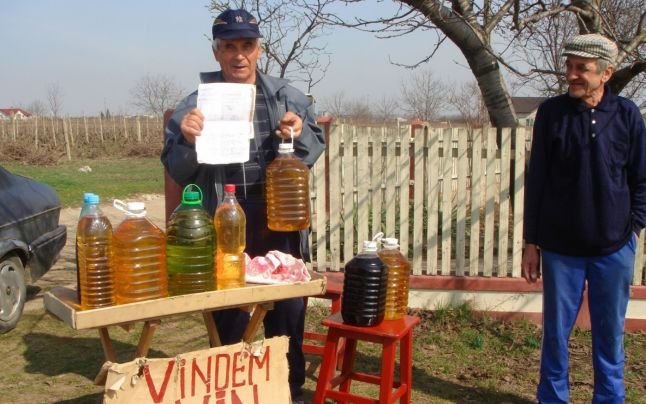
New owners did not maintain vineyards any better, and most of the wine was mass produced and of very dubious quality. At least in my view. Many Romanians like to claim they enjoy “natural clean country wine”, not that commercial stuff. Natural and clean meaning not polluted with the things that stabilize and clear the wine of impurities, thus making it drinkable. The resulting liquid is sometime – rarely – quite decent if not great, but more often brown and murky, reminding one of a muddy river. I feel the home made wines in Italy or Portugal are of significant better quality because people actually bother to have some skill.
But some of the… roots is the proper word… of the problem predate communism. Even before, quality wine was but a fraction of the total wine production. Most of it was made, then and now, for personal consumption on very small lots – basically each peasant’s garden. A lot of trade in the 1800s in Romania was still barter and did not involve money, which rural populations did not always have, so there was no developed market in wine, like in, say, France.
Story time: as I said in my very first post on Glibertarians, my great-grandparents were from the Pitești region, grew plum trees for țuica and owned a pub in Pitești. Back in those days, the pubs sold mainly țuica and wine, so they made extra țuica, loaded up some wagons and traveled over several days to a wine producing region and traded for wine.
Ox cart, common theme in Romanian painting
Transport was bad in Romania back then, mostly by wagon and dirt road, so it made sense that most of the people made wine themselves, it was hard to buy from a distance. So each town or village had some vines surrounding it. The quality of the wine varied greatly. Some people respected the craft and themselves and made quite decent, if rustic, wine. Clear, somewhat stabilized micro-biologically – the barrels were sort of fumigated with sulfur providing the sulfites, wine was sometimes filtered using egg whites – something still done in modern times, although now artificial gelatin is favored. Others, not so much. It was just plain bad, or mixed with water, made with added sugar or with certain additives to make it seem better.
Now a little break for fun with etymology! Șmecher is a quite common Romanian word –which mean crafty, cunning, shrewd and difficult to trick. An assumption is that the etymology is from the German word like “schmeck” or schmecken, which means to taste. The legend goes that German merchants came to the Drăgășani region of Romania to buy wine. The locals gave them a bit of the good stuff, and then a bit more, and the merchant got a bit drunk, and then they sold him some bad wine as well, but for the price of good. Now, say what you will of German merchants, they were not stupid. Fool me once, as the saying goes. So the next time they brought tasters which did not get drunk and made sure to get the good stuff. These schmeckers or tasters were people who were hard to trick, who did not buy bad wine for the price of good. Hence the Romanian word.
Wine is the nectar of the vines, if we want to be pseudo poetical about it. And why would we not want to be? But wait; there are plenty of crawling plants, so which ones? Vitis vinifera is responsible for all that which most humans with a discerning palate consider good wine. So plant that shit and drink up! Well, that is what people did. A lot. So up to this point, all is well, everyone was all happy and drunk – as happy as semi-starving peasants can be that is – until you bloody Americans had to screw things up, with you interventionist policies and such. In the year 1884, enter phylloxera stage right. And things got considerably worse.
What is phylloxera ? It’s an insect, a bug, a parasite, vermin. You mean like socialists? Yes, precisely like socialists. Phylloxera is a pale yellow insect native to North America, which, instead of doing productive work, sucks the sap from good, honest grapevine roots. Americans have evolved some natural defenses against parasites such as these, which Europeans did not. But Americans lack the sophistication needed to make a good wine. And speaking of Americans, as a side note, just to avoid all sorts of silly comments, a hectare is 2.5 acres.
No nasty sulphites
In 1884, Romania, not yet including Transylvania, had at least 200.000 hectares of grapevines – mostly local versions of vitis vinifera. Most villages and towns had their own vines, due to the difficulty of transporting things on dirt roads. Then the disease devastated the vines, and by 1905, 90 thousand hectares were left.
By the time the bug was in full swing round these parts, Western Europe, which was hit first, had found the solution. After many trials and errors with pesticide, insecticides, fumigating vineyards and such, the new vines were planted grafted on American root stock – vines that did not give good wine but resisted phylloxera. Romanians, red blooded and proud as the mighty oak that grows in the forests, said, naturally, we ain’t gonna let a bunch of foreigners tell us what to do. So instead, they started experimenting with pesticides, insecticide and fumigating vineyards. This failed miserably and in the end they turned to, you guessed it, planting vines grafted on American root stock.
Being a poor country, money was tight. As such, by 1910 Only 70 thousand hectares were left, out of which 20 thousand hectares had been replanted, and the others managed to hang on. The majority of the country, used to growing and making their own wine, and not being able to afford the new solution, settled on a not great but inebriation enabling intermediary solution. Direct producing hybrid vines. Hybrids of European and American vines, which were resistant to phylloxera and created a drinkable, if bad wine, were planted. They grew, they were maybe more productive than the “noble vines,” as they came to be called, and made a drink that got you buzzed. Good enough.
Sap sucking parasites
By 1935, after gaining Transylvania with a lot of vineyards, Romania had some 160 thousand hectares of European vines and 160 thousand of hybrids. By the end of communism in 1990, there were 160 thousand hectares of European vines and just 60 thousand of hybrids – results of collectivization and elimination of some of the hybrid vines. Sadly, things did not get better immediately, as many people who land from the old state cooperatives sometimes took out noble vines and replaced them with easier to maintain hybrids. So in 1997, the numbers were 80 thousand good vines versus 120 thousand hybrids. Right now, officially at least, it is illegal in the European Union to plant hybrid vines for wine making. This was, I assume, a standard protectionist method for established agriculture, although the pretext was the poor quality of the wine and the higher possibility of methanol in wine from hybrid vines.
Now, more than 100 years later, according to the national statistics institute, there are 180 thousand hectares of vines in Romania, out of which about half, 90, are grafted vitis vinifera. So 150 years after phylloxera, the country has half the vines capable of producing good wine. And the current territory also includes Transylvania. Sadly, many people who make wine for their own consumption still plant hybrids which create a good natural country wine. Because swill does not have the same ring to it.
There seems to be some interest in Romanian wine. Now, one can probably write 100 posts on such a topic, so where to start? There are grapes, there are wines, and there is history. I will try a quick general introduction, and then will get more specific in potential future posts. Wine, like most things in this world, was invented on the present day territory of Romania by the dacians, although this fact has been covered up historically by other jealous people wanting to steal our legacy. Georgians and Armenians and middle easterners and the like. All lies. Romanian had the first and the best wine. It is known. That being said … to procede.
I could start with a bit about red wine. Red is the colour of the blood that was spilled defending the land and such pseudo patriotic nonsense. I will not. Although Romanians, believe you me, are very patriotic about their wine and consider it among the best. This may have been somewhat true for some wines 150 years ago, before it stagnated significantly and others – especially New World producers – had a bit of aggressive growth going on. This feeling has decreased somewhat in recent years which in turn has led to more imports – a good thing, because more wine variety and a bit of extra competition made the locals pick up their game.
This may break the hearts of some of our fine readers, but communism was not exactly beneficial to the wine industry – or any other. I have to be honest with you guys, communism sucks on all possible levels. Quality wine is bourgeois, comrades. The wine industry was devastated and reduced to producing cheap, low-quality wine, often with added sugar and artificial flavoring, which along with Bulgarian wines were drunk in Western Europe as wine for students with a very tight budget and a non-existent palate.
Map from revino.ro
The state controlled the wine, and while there were, like in all fields, a few passionate and honorable people who did a good job, because it was their nature, more were not thus. There were some wine research institutes that actually did great work, it must be said. But alas, they were in the minority. And, like in many areas in communism, there was laziness and theft. When it came to working, well, it is not my vineyard. When it came to taking, well, it belongs to all of us. Wine was not easily found in stores, nothing was, so people developed their home wine-making, a legacy which persists, producing bad wines in large quantities.
Then communism fell. And things, at first, got worse, which is to be expected in case of massive social upheaval. Many vineyards were abandoned. Many were split in minor parcels as part of distributing land to peasants. Many were simply uprooted. The wineries were closed or privatized. Many times the former workers of the agricultural cooperatives stole everything they could, and stainless steel – quite used in the wine business – was high on that list. It was mostly a disaster.
But then, after the first 10 years, slowly, too slowly if you ask me, things got better. There was a bit of a renaissance in the last 15 years or so, with more and more good wines produced. This was due to a significant inflow of both private investments, from Romanians and companies from the EU alike, and European Union funding. This led to a lot of replanting of vines and rebuilding wineries.
Some of the first doing quality were foreign. S.E.R.V.E was among the first, owned by a French count named Guy Tyrel de Poix since 1993. Oprișor is another, owned by the German Reh Kendermann group. Vinarte was created by a joint group of Romanians, Italians and French. Davino, probably the top producer, was started by a Romanian. Prince Stirbey was a continuation of an old Romanian noble family, but Baroness Ileana Kripp-Costinescu lived in Germany during communism and came with funds from there. Halewood is a British company that came here to make wines for England. Mihail Rotenberg was among the Jewish Romanians who was allowed to leave for Israel – probably after the Government got paid, made his money in engineering, and came back to Romania to make wine.
Rotenberg
While you may say many a things of the EU, the point I would make is this. If you happen to be in it, subject to all the rules and such, you might as well make the best of the funding available. This may split libertarians, but I am of a view that if the state is going to tax and spend, it is better to at least get something out of that spending. And the wine industry is one of the few areas where Romania, notoriously bad at getting EU funding due to massive corruption and incompetence, got 100% of available funds.
There was, in truth, some over-investment, as often happens in high growth areas, and also excessive expectations. Many expected to get their investment back fast and make a profit. They did not take the view we are building a multi-generational business, like many quality wineries are. Hoping to make a quick profit, most new vineyards wanted to make wine for the so called premium sector, which meant expensive rather than you know… good. There was a lot more premium wine than the market could bare. It was also hard to compete with outside producers, which had been investing for hundreds of years.
There were other issues. It is difficult to make great wine off 5 year old vines. Many of them talked of terroir when the vineyard was on its first wine. If we accept the terroir thing, we must also accept it takes time, years, to understand the soil, the micro-climate, to experiment and find a way to express the terroir. This is why talk of terroir is bullshit in at least 90% of cases.
In the last few years a sort of balance was achieved, more and more good wine appeared at reasonable prices. Most new entries in the last 5 years were not “premium”. It is still hard to compete with the old world for tradition and the New World for quantity and popularity, but things are moving in the right direction.
One mistake, in my view, with all this replanting was that mostly international grapes were planted. It is very hard to compete in the world market making one more Cabernet. It would have been much better to focus on local grape varieties. Some do, but not as many. Planting Touriga Nacional in Romania when you have yet to master the local varieties may be a bit of a rush.
Overall, Romania is a decent country for wine, geography wise. The soils, the climate, the sunshine hours are all pretty good. There is a risk of late spring frosts, but that is true for most of Europe. There is also, compared to counties like Chile, more variability from year to year, which means the wines are vintage dependent, not the same, but this is not always a bad thing. In most areas, summers are generally of the hot and dry varieties, which can limit the range of wines you can make. But there are a few cooler zones here and there.
Most of the wines regions of Romania are currently in the foothills of the Carpathian Mountains and some plateaus in Transylvania. This all covers a good bit of the country. Other regions are along the Danube, in Dobrogea close to the Black sea. And pretty much all over, really. To drop some names based on Romanian regions, in Muntenia there is Dealu Mare is one of the main red wine areas, close to the cities of Ploiesti and Buzau. In Oltenian is Drăgășani on the Olt river, Samburesti and a few others. There is Murfatlar and Ostrov and Sarica in Dobrogea by the sea. Vrancea, Cotnari and Odobesti are in Moldova. In Transylvania there is Tarnave and Miniș-Măderat and more. In Banat the main one is Recas. There are dozens more besides these, and not the time or space to cover them all.
Some people, in a case of being amusingly very wrong, claim Dealu Mare as the Bordeaux of Romania, as it is on the 45th parallel, same latitude as Bordeaux. Let’s ignore the different soil, different exposure, different accumulated heat, different sunshine hours, different rains, lack of the oceanic influence Bordeaux has and more. It is the same, really.
To close this long post, I will give some Romanian wine producers I like and some I do not. Producers I like are Davino, Stirbey, SERVE, Vinarte, Bauer, Ferdi, Oprisor, Rotenberg, and Wine Princess. Second tier producers Avincis, Petrovaselo, Vitis Metamorfosis, Corcova, Licorna, Segarcea. I would avoid Murfatlar, Jidvei, Cotnari, Vincon, Ostrov, Pietroasele and others I will not list.
So I guess this is it for the first one. Let me know if for the next you want something about grapes and actual wines or a bit more history and culture.
I will skip the introductions as this is part two of a post and continue where I left off in the last post. Romanians usually eat, rather anticlimactically, 3 meals a day, unless you are too poor or following one o’ them new-fangled intermittent fasting things the kids seems to like these days.
Eat at Pie’s!
To do the linguistic part first, breakfast is called “mic dejun” (similar to French I would say, mic meaning small). The mid-day meal is “pranz”. And the evening meal is “cina”.
To start with breakfast, it can be either eggs (fried – in the one proper way, not like you Americans and your 50 ways of frying an egg – scrambled, boiled or omelette) or cold cuts. Most often cheese accompanies either the eggs or the cold cuts as a side, along with some raw vegetables (onion, radishes, tomatoes, bell peppers most often). More traditional, as in 100 years ago, it would mostly be bread or mămăligă with branză (cheese), slană (basically pig fat, sort of like eyetalian lardo) and raw onion. Romanians eat lots of raw onion, red onion being preferred as somewhat milder in taste.
Mama Pie’s homemade noodle soup
Lunch and dinner traditionally are somewhat similar, and are usually a first course which is mostly liquid and a second course which mostly solid. Dessert is included to make the standard 3 course meal.
For the liquid part, Romanians distinguish primarily between supă – which is generally a clear broth with dumplings or noodles – and ciorbă – which is denser and has lots of vegetables and sometimes meat.
Ciorbă is further categorized. There is borş – which is soured with either the eponymous borş or with verjuice made from unripe grapes or fruit, or the juice from pickling cabbage. There is peasant style, which is less sour and has more vegetables in it – making it quite think (and hated by kids, me included, who tend to try to eat the broth while skipping the veggies which are left in the plate until angry parents tell you to eat them). There is a style made with sour cream incorporated into the broth – which is most often called a la greque. And there is ciorbă de burta which stands alone, a tripe soup made with sour cream but soured with vinegar.
Smantana is often added – superfluously in my view – to peasant style ciorbă, although adding it after cooking has a different effect then incorporating it into the broth during the cooking process.
Really sour ciorbă is seen locally as a hangover cure. In fact, there is a traditional very sour one called Ciorbă potroace and this is traditionally eaten the second day after a wedding. In the past, wedding feasts were some of the rare occasions when people got fresh meat and plenty of it. They would get various poultry to roast. The neck, feet and innards (hearts and such) were used to make the broth which would be amply soured. The next day, after plenty of food and liberal libations, a meal of ciorbă de potroace was seen as good for recovery. There was also a silly superstition not to give chicken feet to school aged children because it was going to make them do badly at exams. No idea where that came from.
My family version of ciorbă de potroace was New Year’s turkey ciorbă. The tradition was to roast a turkey for New Year’s dinner and use the not-thighs-and-breast parts to make a really sour ciorbă which would be the first meal after sleeping in the next day, suitable due to the long night and plentiful libations.
Duck legs and cabbage
Now, solid food can be mostly stews with cabbage, beans or potatoes for most people. Duck over cabbage is a preferred delicacy – an entire roast duck over a bed of cabbage. Beans are eaten with pork, often smoked rib or sausage. There are also moussakas and vegetable stews and roast chicken. Often sarmale – leaves stuffed with meat/rice mixture, most often cabbage or grape vine, but also my mother makes some good ones using young horseradish leaves. These are probably similar to such dishes in other countries. Romanians are also big about grilling – with pork being prominent and mici the national grilled dish – small caseless sausages. A local favourite is MBS or mămăligă with branză (cheese – feta style) and smantană (sour cream). Besides the main ingredients butter is usually added and sometimes soft boiled eggs.
One particularity of Romanians, usually older ones, is that they eat bread with everything. Soups, stews, meats, vegetables, a few slices of cheap white bread are always included.
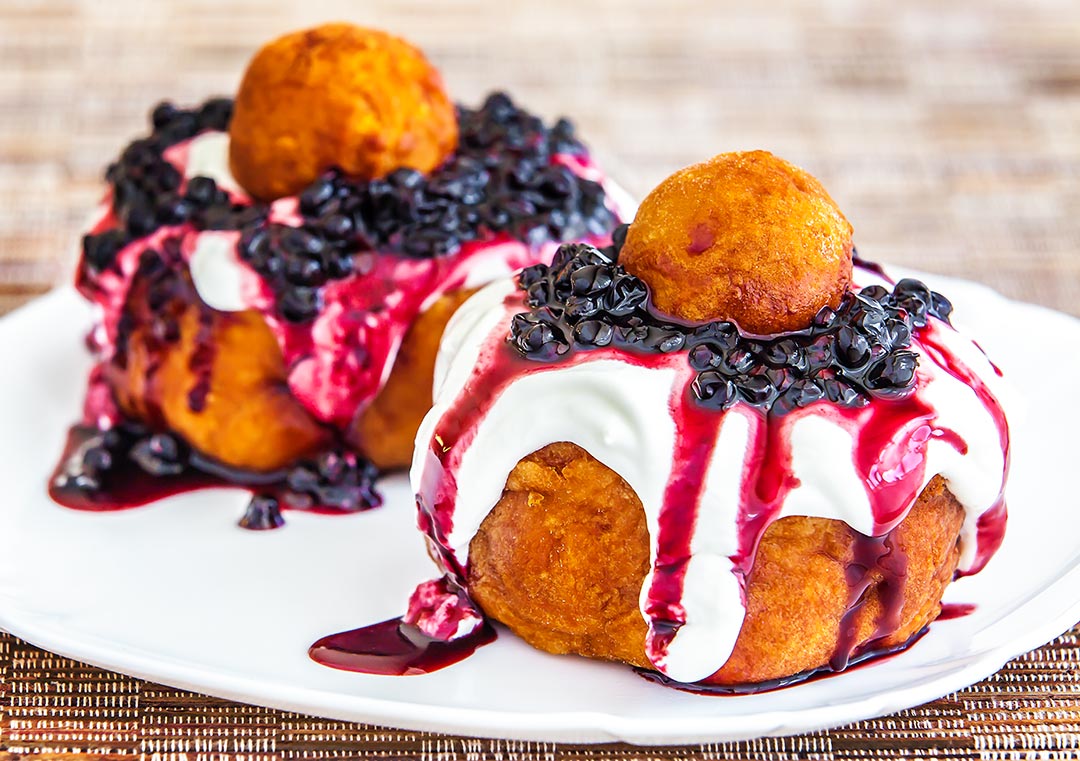
On dessert, there is not much to say. There are usually crepes or cakes or ice-cream and such. One local favourite is papanasi – a highly caloric a deep fried cheese doughnut covered in sour cream and sweet preserves. Generally they come in pairs, two per portion. This is I think because originally one came just with sour cream and one just with sweet preserves, so they were two – one each way – but now they kept the number but add both sauces on both donuts.
Well, that is about it I would say. Probably the last time you have to suffer through a Romanian food post for quite some time.
To start, I do not write from the perspective of an American. My country has more of a problem with emigration than immigration, and it is not out of the question that I might want to leave myself. So I can see myself on the other side of the border to many from the States. I live under a sort of double jurisdiction, Romania and the European Union, and of a nationality that has been often the object of attack and mockery as immigrants in Western Europe. We are all lazy thieves, beggars, gypsies, wanting to take both the good jobs and welfare of the British chav. I have been bullied on this very website by, to my greate shame, Canadians of all people. I am aware of the collectivist generalization most Western Europeans are prone to – despite the fact that without Eastern European doctors and nurses, their fabulous state medicine would have collapsed a while ago. And if you want trained doctors and engineers, some riff raff will inevitably come along. Although, after influxes of immigrants of late, Romanians no longer seem so bad.
The Picts payed for this
I am a reasonably moderate libertarian, in that I am a bit of minarchist plus. So I do not write or think from an an-cap perspective. I am also the kind of libertarian who believes you have to advocate for both ethical, principled libertarian positions – regardless of their chance of being implemented – and policies that are fit for purpose, good enough, and move things to the right direction while being more palatable to others. I see little point to the “Fiat justitia, et pereat mundus” of libertarians, purity to the exclusion of everything else, who only recite philosophy and ignore the real world. And I am well aware of the danger of compromise but find it acceptable when the alternative is nothing. To complete, I am not a nationalist, I am not a patriot and dislike patriotism in most cases, and I do not feel any particular affinity for certain people over others just because there is a border between us. I can see I have more in common with the fine people on this fair website than with the vast majority of Romanians.
So I am starting with what I consider to be some basic facts: states and governments exist. Debating whether they should is meaningless at this certain point in time, for the purpose of this discussion. These governments have jurisdiction over state borders and have citizens and residents and temporary visitors, with the former having additional prerogative and responsibilities, especially in politics. Governments more or less (usually less) are – should be, to be more accurate – accountable to the citizens. Governments, having jurisdiction inside certain borders, have powers over and responsibilities towards people inside those borders. The US government should uphold the rights of people – including temporary visitors – in areas it has jurisdiction over – by libertarian standards this is its only job – and not the people of, say, Romania. The exceptions to this are American citizen abroad, towards which the government has certain responsibilities.
So a government treats insiders differently than outsiders. The question at hand is in what way the latter should become the former. Has government the right to control who crosses the border? My view is yes, up to a point.
The most often libertarian view for open borders is, paraphrased, the state has no right to impede peaceful people from traveling where ever they wish on public property, and to where ever they are invited on private property. The state has no right to stop people from freely associating. It is the right of humans to travel where they choose. Or to go bleeding heart about it (which I do not recommend), we should care more about humans than borders.
This is all very feel-good, but has some issues, in my view. I would in first instance. replace people with people under the jurisdiction of said state. In my view when talking about rights – freedom of speech, assembly, religion in the context of government – we are talking first and foremost people who happen to be within those border. In a better, non-interventionist world, government should not be able to influence non-residents, outside letting them in or not.
From a pure libertarian an-cap / minarchist point of view, many immigration issues would not be issues at all. With most property private and fully protected, the issues of public lands / areas would be minimal. With no government support at all for immigrants and refugees and with the perspective of being shot if you aggress the locals, a good number of problems would not appear. But that is not the world we live in.
There are several utilitarian reasons for some immigration restrictions. There is a risk posed by a large number of people with radically different values moving into an area, if these values can lead to breaking the Law. Any area has limited capacity to absorb newcomers and exceeding this will cause conflict. Police doing their job plus an armed citizenry could be a reason this problem would not appear in certain societies, but overall it can be unpleasant to have constant conflict in a community that needs to be addresses with violence. How about deontological ones?
Lines are important
Libertarians who do not want to become caricatures understand liberty is not defined as do whatever you want, but within limits. First and foremost, your fist my nose, as the saying goes, but even beyond, there are certain elements of living in a society that will curtail liberty – just the difficulty of defining boundaries between my liberty and yours, and compromises necessary to live in a community.
The libertarian argument is this should be as little as possible and for very good reason. It is, of course, a vulnerable argument, like all arguments in politics – where to draw the line. (Bugs step over this line.) This always applies to human dealings and there should be a constant attempt to swing things in libertarian direction, err on the side of freedom and all that. Even anarchic communities have rules about behaviour, written or not, and probably debate them. But in the end, the community needs a very good reason for any intervention. That is the basic argument.
I usually ignore the every square inch of land privately owned school of libertarianism. This is not the case. Not how humans function. Commons always exist, the village green was rarely privately owned, many roads and lanes likewise.
While no libertarian would deny the right to associate on your property – as long as you are not doing something to affect others’ property – you will not have an immigrant solely on your property (except that 15 year old Russian girl you buy on the dark web and keep in your basement, but this is an exception). The community will have a role in deciding what happens in the commons. So unless you can teleport people onto your private property and then teleport them away, immigration will not be a solely private property issue.
Similarly there is not always an absolute right of free association. I cannot associate with convicted murderers whenever I choose. So here I go back to an earlier paragraph “the state has no right to impede peaceful people from traveling where ever they wish”. So I would say a state can at the very least restrict access to non-peaceful people.
Let the right one in
I talked above about Romanians in Europe. To be completely fair, plenty of Romanians went West with mischief on their minds and some locals were rightfully annoyed. Especially in small towns and villages in which people were not used to rude, loud foreigners making a mess and stealing whatever they can. Romanians eating sunflower seeds and drinking beer on the street while spiting the seed husks is not something a Swiss mountain town wants to see – although these can be mere tourists, not immigrants. So the problem here can be simply of generalizing immigrants, not all immigrants. Some Romanians are, I assume, good people.
So I can say that a government may restrict access of people with high probability to engage in violent or illegal acts, or deport those who do engage. Another class of people with restricted access beyond the violent may be the very diseased. A government may refuse access to people with dangerous, contagious diseases.
I find it difficult to make the freedom of association argument for completely open borders, let any and all in just in case I might want to associate with one of them. One solution to the freedom of association standard might be a resident should vouch for immigrants he want to associate with, a member of community with skin in the game and possibility of redress of wrongdoing.
In a world of government welfare – which I am not happy about the locals getting but there at least is some limit to them – and in which government does not properly protect the locals from immigrants, open immigration will not work. A main argument against this along the lines of two wrongs do not make a make right argument, or just because we have welfare does not mean we should restrict immigration. I do not agree with this argument. If a needs b to work, then you can’t have a before b, is my view. So yes, in libertopia immigration self regulates. To a point. Rapist and thieves may want to come anyway, but they would be dealt with without all the politics involved in current governments. We do not live in libertopia.
To be clear, I am not saying build a wall or kick all immigrants out. I am for as much immigration as possible within limits of safety, with some clear rules. No criminals would be a basic one. You cannot really bring the thieves of the world to your country. It is not in order to protect jobs, not racial or cultural purity. Just keeping a certain control of dangerous criminal elements is not too much to ask. You can still get all the good people you need while restricting the very violent. And I would also add no government aid to new immigrants for at least a couple of years in which they earn income and pay taxes. Giving no aid at all is not an option.
Ok, thoughts? Let me have it in the comments. (I did write this post because my last few were kind of light on the comments, and it is sort of an experiment to see if I can get an good old fashioned argument going like on you know which site.)


 To make matters worse, the can I stuffed in my checked bag at Heathrow was actually brewed by a contract brewer in Scotland. Which gives me the further impression that not only does the Auld Alliance still live[!], the modern Scottish economy is mostly booze, and [fucking] sheep related.


 The open borders advocates around here have gotten me on the fence once or twice, but looking at contemporary events around the world got my feet back on the ground. I agree that freedom of movement is an inalienable right. One has freedom of movement so long as they do not trespass. If one believes in self-ownership, that every person’s mind, body, and conscience are their own property and no one else’s, then by logical extension they must accept that the fruit of one’s labor is their own property also. I decide who is welcome to set foot on my property and who is restricted from doing so. If a group of like minded people own property collectively, then they decide who may or may not set foot on it. I have no problem with the principle or practice of a nation preventing trespass so long as they do not restrict movement out of those borders or prevent one of the collective owners from re-entering.
 The Salton Sea was created in 1905 when engineers attempted to divert the Colorado River inland to irrigate the Imperial Valley. The flood engulfed the lower than sea level plain and created the Salton Sea over a period of two years. When the diversion was capped, it was thought that the lake would soon dry up, but nature and man said no…


 The Range is the outdoor theatre built by Builder Bill, and on the weekends it hosts many local and outside musical thing., I was told open mic ran from noon til ??? So when we drove by and saw people jamming we dropped in. I met Bill and introduced myself as Bob the Builder, and are we related? It was a good ice breaker, but Bill said Sunset til ??? Bummer because we brought our guitars, etc. While we had a good chat about the state of the Slabs with Bill, we offered food and drink and smoke, which made us many friends. Chuck chatted up Bob and Jinxie, who are a few of the more talented of the group, but everyone had something to offer. We have been offered a slot in two weeks to come and play, local friends!


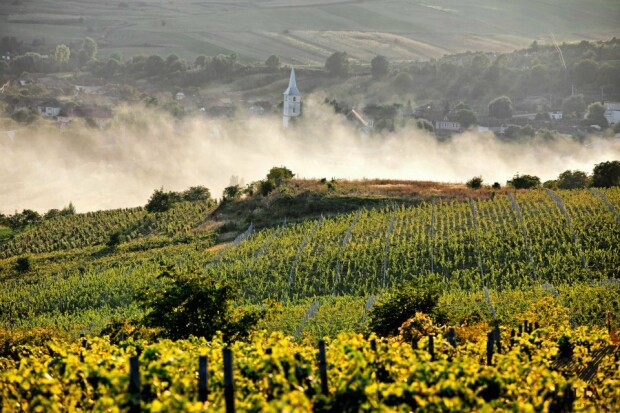


 Most of the wines regions of Romania are currently in the foothills of the Carpathian Mountains and some plateaus in Transylvania. This all covers a good bit of the country. Other regions are along the Danube, in Dobrogea close to the Black sea. And pretty much all over, really. To drop some names based on Romanian regions, in Muntenia there is Dealu Mare is one of the main red wine areas, close to the cities of Ploiesti and Buzau. In Oltenian is Drăgășani on the Olt river, Samburesti and a few others. There is Murfatlar and Ostrov and Sarica in Dobrogea by the sea. Vrancea, Cotnari and Odobesti are in Moldova. In Transylvania there is Tarnave and Miniș-Măderat and more. In Banat the main one is Recas. There are dozens more besides these, and not the time or space to cover them all.