Category: Society

  • The Slabs – Part 2: The Range

    By Yusef Drives a Kia

    Saturday, 12:30

    Overloaded with supplies, Chuck and I gas up and head East on I-10, past the Windmills, past Palm Springs and then South at Indio, down Rt.86. Through the Badlands and hang a left at Main St. (Don’t miss it!) in Niland. Pulling into Slab proper, I needed to Micturate, and off in the Shrubbery was a Nice Spring!

    I moved off so as not to contaminate it, but how Cool!

    3:45 PM We met Coz, who runs the Library, Donated some Shakespeare and Tolkien, Drank a few beers, and off to the Range we go. I did a bit more Photography this time, with emphasis on the Somalian side, at it were. Burned out RVs, People in Camping tents under trees, Zombies, I have no idea where they live, Maybe they don’t either, Libertarian Paradise isn’t exactly Utopia.

    It seems to be a big Mess, debris everywhere, Handicapped Parking abounds, and there are often no property lines, so watch where you walk, lest the Crazies come out and get you. After dark, stay in the light. Or provide your own, no Moon = Ink Black. Anyway…

    We found some shade over by Bill’s Driveway and talked to a couple of nice enough chaps, Chris and Mingo the Half Breed, it’s about 4:30 and these guys are WASTED, but happy. Turns out Chris is a Known Thief, so as soon as Bill saw him, BENNY HILL TIME, Chris had to leave in a hurry, Property Rights in Action!

    Later, we met up with Opie the guitar player, and Various musical folks who drifted in from the Outside World, Sharing Herb, Beer and Good Times, very Mellow, watching the sunset.


    Now, if you want to play on open mic night, you are supposed to sign up, Richard and his Harem did, several others did, but We had set up with Bill earlier so, Priority?

    Much Music ensued, 6 or 7 acts, some good, some Horribad, but everyone got cheers, so it was all to the good, I know Chuck and I played well, and were well received, but we were too busy playing to record ourselves! A nice crowd, maybe 100 constant,150 overall, and they were there to hear Music, not a bar scene at all, everyone drinks anyway, a very good Vibe.

    Damn if the locals didn’t shut down early, Midnight, we are standing in the Dark going, Now What? Driving! The details are hazy but I told Chuck to turn right and he did, Right into a Sand trap, OOPS! IIRC, We waited til more daylight, and all of a sudden, over the Horizon, comes, OPIE! I’m like WTF? But happy, and we all start digging out, 20 minutes later, Brian! Comes rolling in with his 4×4, straps us up, and pops us out! We have AAA, We called them, we were 15 feet off the road, they wouldn’t help us, The Slabbys did, I paid them 20$, they would have done it for free, a Trifle for our situation, and We made more friends.

    There seems to be a lot more common cooperation in Free Societies such as the Slabs , Most obey property rights, and personal rights are whatever you decide they are, there are a lot of wild ideas these people have, maybe it’s good they stay out there, IDK.

    We have gone with fun and Friendship on our minds, and have not been disappointed. There was some tension, but people tended to work it out amongst themselves, no Violence, overt thievery, however, there was much Gambling, which is a crime in most States, but Hey, no Rules out here. I must give a shout out to My Best Friend Chuck, He helped this all come down, and it’s been fun so far. We are already thinking about whether or not to continue going, we need a reason to drive 155 miles to hang out in oppressive heat, who wouldn’t. Until next time…

    The Good

    The Bizarre

    The Folkies

    Here’s a link to the entire album


  • Pity v. Compassion: A distinction without a difference or all the difference?

    There are thoughts that gnaw at me sometimes. One, for example, is the extent to which my faith-informed morals (DISCLAIMER: I may skirt around some Jesus-y stuff in this article, where necessary) allow for resistance against those who would take advantage of me, whether it be asserting my interests when somebody is being manipulative or whether it be using violence in defense of self and others. Another example is the difference between charity and welfare.

    My faith-informed morals also compel me to be charitable with my time, my money, and my efforts. I don’t believe that it is something “over the top” for me to do as a “good” person. It is, to me, a basic component of obedience to the morals and principles that guide me. As such, it can sometimes be hard to conceptually separate charity from welfare when you strip away the ad hominems, the dystopian undertones, and the inherent force of government and view welfare in its most favorable light, as “people more effectively helping their neighbors out of a hard place.” Yes, this is a rather unfaithful definition of welfare, but it’s important to be able to address opponents at their most mendacious.Now Our Charity Is Born! - Chris's Cancer Community

    Of course, when addressing welfare, it’s easy for a libertarian to toss out a few cliches and dismiss the entire thing. Taxation is theft. The ends don’t justify the means. There is a man with a gun behind every government program. However, cliches don’t change minds. Cliches also don’t address the emotional imbalance that is equivalent to the economic imbalance discussed in Economics in One Lesson. Specifically, when the warm-fuzzies are openly apparent and the pain is diffused among an entire tax base and hidden in withholding lines of a pay stub, it’s important to address this issue on an emotional level.

    Most who advocate for welfare do so under the guise of compassion. Their overwrought whinging about how everybody against welfare hates the poor is convincing to many who feel true compassion for the poor. They are apparent emotional allies with the welfare advocates. Any amount of nuance and rationality on our part feels to them like equivocation and excuse-making. However, I’ve found that hearts are a blunt-force instrument and minds are a precision instrument. The heart is really bad at differentiating similar emotions or similar intentions. Without engaging the mind, the heart can easily mistake compassion for the similar emotion of pity. However, pity is different enough to completely change the emotional tenor of a situation.

    Compassion is an emotion of similarity. You feel compassion because you recognize the innate human dignity of another. You see somebody who is suffering and want to help them overcome their suffering. It’s an emotion of humility.

    Pity is an emotion of difference. You feel pity for something beneath you. Something pitiable is low and less than you. Pity is an emotion of pride. There’s a tinge of smug condescension that comes with pity.  As libertarians, we know that if anything describes statists, it’s smug condescension.

    Welfare isn’t driven by compassion, but by pity. This is why welfare is rotten to its core. The dehumanizing effects of welfare dependency are easily observed, but it’s no clearer than when somebody tries to get off of welfare. If you want to see somebody’s “compassion” for the needy vaporize, watch them interact with somebody who isn’t willing to stay enslaved to the welfare system. It starts with a guilt trip, continues with anger, and finishes with jealousy. See, the competitive undergirding of their pity motive for supporting welfare can’t deal with their lessers becoming their equals. When they say “think about the people who haven’t been as successful as you,” they’re really saying “mind your place in the order of things.” When they say “you’re being ungrateful for the help you were given” they’re really saying “welfare comes with strings, and these strings can’t be cut.” When they say “you’re self-hating” they’re really saying “back to the plantation, slave!”Top 10 Tips: Avoid Pickpockets & Thieves On Your Next ...

    If welfare were truly about compassion, it wouldn’t merely be a check-writing mission. Compassion imparts dignity, and cutting a check isn’t always the dignified action to take. Compassion is a personal connection, welfare is profoundly bureaucratic and impersonal. To the extent that welfare moves beyond writing checks, it is still completely beholden to the pity that drives it. Welfare programs are designed to maintain and increase enrollment in order to show a need for further investment. Much like any other government program, any initial “good intention” is quickly corrupted by the perverse incentives that come with “free” money. Of course, I question the initial good intention in the first place. Pity is lazy, and welfare is lazy. The hard work of understanding the poor and formulating a dignified response to their challenges is a herculean effort, not something that a government program is usually known for.


    This "Sesame Street" Photo Will Give You Nightmares ForeverCharity shows what true compassion looks like. Most charity isn’t front page news. It isn’t touted. People aren’t shamed for not throwing their whole-hearted support behind a cause. Recipients aren’t shamed for no longer needing charity or for making suggestions for improvement. By removing the competitive dynamic that exists in pity based relationships, charity becomes more effective than welfare. This may seem counter-intuitive to those who are used to talking about competition as a primary driver of the free market, but social competition between the provider and the recipient is a very different competition than economic competition between similarly situated providers.

    In summary, the supposed compassion of the welfare advocate is truly pity, which introduces a competitive dynamic between the provider and the recipient. This pity-based giving has the potential to be a net harm and is based in pride rather than humility. Charity, on the other hand, is a true act of compassion and is based in humility. This is why charity is effective while welfare is chronically ineffective.

  • Help me settle a very important debate

    What are these called?

    1. Cheezies
    2. Cheese Puffs
    3. Cheese Poofs
    4. Cheesie Poofs
    5. Cheese Curls
    6. Cheese Doodles
    7. Something else
  • Politics’ Pseudo Pragmatism Problem

    By PieInTheSKy

    In this particular piece, Pie ponders people’s perceptions of pragmatism pertaining to politics, particularly partisanship. Is it just me or does this blog need more alliteration?

    2 Major Parties

    This is, as you know, the most important election of our lives. This is a time to be pragmatic; there is no place for philosophy or idealism. It is important to stop Insert Candidate Here and now. For every other country, add names of parties, rinse, repeated. This is something I am often faced with people when I try to discuss principle. A call to pragmatism is what I get. People do not have time to read and debate the fundamentals of economy, philosophy, and ethics. They are pragmatic. They care, mostly, that the party they oppose loses this time. This time is important, we will think of principle after. Unfortunately this time is every damn time.  So is this truly pragmatic? Yes, my candidate has many flaws, but the other is worse and this is not the time nitpick a bit of theft and fraud here and there.

    The question I would ask, as a libertarian, is when and how can we get to the point where the election is not that important and we can think principle? Also, if so many crucial elections were lost by the side The Great Pragmatists support, it is obvious The Wrong People will inevitably end up in power and the Most Important Election will be lost. So would it not be a good idea to reduce government power and make these often wrong elections less crucial? Of course not. This time, we cannot allow the wrong lizard to win. And when Our Side gets that elusive Permanent Majority, we will have the time to think upon the fundamentals.

    This permanent pseudo-pragmatism is rather obviously, to me at least, engineered for a very clear purpose: a way to keep people alarmed by the next election. Create urgency so people do not think long term, or in perspective. Many blame politicians for thinking only about the next election, but regular voters do the same. And more importantly, vastly lowering the expectations placed on politicians. Some Romanians have been voting the lesser evil for going on 30 years now, and are constantly screwed. And the lesser evil gets worse and worse, as it is no longer expected of politicians not to steal, but to be the lesser thief in the election. And this led to exactly what they wanted. So how fucking pragmatic is it, in the end, to constantly vote for the lesser thief? Maybe it would be better to vote on some clear principles. Maybe the lesser evil might lose until it becomes not evil? Maybe … eh who am I kidding?

    This so called pragmatism often leads to missing the forest from the trees, to miss the fundamentals of what a government should and should not do. In the end, to hardly notice that the parties are not all that different, and not in the positive aspects, if there are any. That certain people make bank whomever is in power. That lobbyists thrive, that laws are getting complicated mostly for the benefit of special interests. That year after year things are not improving nearly as much as they should.

    Each election we try to fix the cracked window, but what about the rotting foundation of the house? Well I don’t have time to think of the foundation, I am, after all, a pragmatist. That crack in the window is crucial, so it needs fixing. Laws and regulations are constantly patched without thinking if they are so bad to need constant patching maybe, we should rethink them. But people are pragmatists and they patch and patch and one year later a new patch is needed. Not unlike software, a point comes where the code is too complicated and full of bugs; you need to outright rewrite it.

    Beyond ideology of left and right, if people were actually intending to create a good society , some things would be a lot more bipartisan, like make things as clear as simple as possible, constantly analyze if things work and if not change, don’t patch. But they do not intend that. They want to push their little pet projects, protect their sacred cows and care not a jot about anything else.

    I used this Douglas Adams quote before, but I will again, ’cause I like it:

    “It comes from a very ancient democracy, you see…”
    “You mean, it comes from a world of lizards?”
    “No,” said Ford, who by this time was a little more rational and coherent than he had been, having finally had the coffee forced down him, “nothing so simple. Nothing anything like to straightforward. On its world, the people are people. The leaders are lizards. The people hate the lizards and the lizards rule the people.”
    “Odd,” said Arthur, “I thought you said it was a democracy.”
    “I did,” said Ford. “It is.”
    “So,” said Arthur, hoping he wasn’t sounding ridiculously obtuse, “why don’t the people get rid of the lizards?”
    “It honestly doesn’t occur to them,” said Ford. “They’ve all got the vote, so they all pretty much assume that the government they’ve voted in more or less approximates to the government they want.”
    “You mean they actually vote for the lizards?”
    “Oh yes,” said Ford with a shrug, “of course.”
    “But,” said Arthur, going for the big one again, “why?”
    “Because if they didn’t vote for a lizard,” said Ford, “the wrong lizard might get in. Got any gin?”
    “What?”
    “I said,” said Ford, with an increasing air of urgency creeping into his voice, “have you got any gin?”
    “I’ll look. Tell me about the lizards.”
    Ford shrugged again.
    “Some people say that the lizards are the best thing that ever happened to them,” he said. “They’re completely wrong of course, completely and utterly wrong, but someone’s got to say it.”

    So Long, and Thanks for All the Fish…


  • Beyond the Pale

    Not long ago I saw an article that amused me. It was a bunch of eggheads puzzling over the mystery of how humans were able to domesticate dogs. I had to laugh. Clearly none of those guys had ever domesticated a wild animal. Any mammal that lives in social groups, and some birds, domesticate easily. Don’t hit them with a stick and give them food. I dare you to try and get rid of them after that. I have rescued and raised cottontails, raccoon, and red squirrel. I know people who have had pet flying squirrels, grey squirrels, foxes, and I once dated a girl who raised a whitetail doe. The damned thing lived in the house and slept in the bed with her every night. Don’t ask.

    Anyway, the real question is not how did we domesticate dogs, but why. My wife jokes that we did not domesticate dogs, they domesticated us–or as she says dogmesticated. I think it is closer to enslavement. Hold on while I check my grocery list. I think they need more chews and treats, maybe even a bag of food that runs around $50….

    I’m back. The answer, of course, is simple. Having a pack of wolves hanging around your paleolithic camp at night is a good idea when you live in a world where all manner of beast and man are trying to eat you. It is nearly impossible to sneak up on a camp of sleeping people without sounding the alarm by waking the wolves. They were the original burglar alarm. In that world, people didn’t move around all that much. Wander outside your tribe’s territory and you were likely going to be put on a spit. Contemporary primitive cultures live within strict boundaries. Many people I have met in the more backward parts of the world live out their whole lives never traveling more than a few miles from the spot where they were born. I once tried to explain to a Bolivian who wanted to know where I was from by telling him how long it would take to get there by canoe. “Two years that way,” and I pointed north. That made sense to him.

    Beyond the pale. Ever wonder what that means or where it came from? Europeans didn’t have the extinct Eurasian wolf to domesticate, so they would build a fence around their village that was bristling with sharpened sticks or thorns. That was called the pale. Try to get past it and you were likely to be impaled. It was often whitewashed, which is why we use the word ‘pale’ to describe a color. At night, if someone got inside the pale, their silhouette could be seen more easily against the white background. The expression ‘beyond the pale’ refers to going outside the safe zone or going too far.

    I am saying that there was never a golden age of gamboling about the fields and dales. Throughout all of human history, people lived within strict boundaries. Go outside those boundaries and some dude named Trog was going to bring your nutsack home to his wife so that she could tan it and make a little purse out of it. Travel has always been restricted. In fact, I would contend that people have more freedom of movement today than at any time in history.

    I have heard people blame travel restriction on the rise of nation states and the modern idea of borders. Human history is mostly a chronicle of ethnic or cultural groups invading their neighbors. Travel restrictions were always there; nation states arose from the need for greater security. Borders were not drawn arbitrarily. They mark the edges of cultural territories. Restricting who may or may not cross those borders was and is a matter of life or death.

    The open borders advocates around here have gotten me on the fence once or twice, but looking at contemporary events around the world got my feet back on the ground. I agree that freedom of movement is an inalienable right. One has freedom of movement so long as they do not trespass. If one believes in self-ownership, that every person’s mind, body, and conscience are their own property and no one else’s, then by logical extension they must accept that the fruit of one’s labor is their own property also. I decide who is welcome to set foot on my property and who is restricted from doing so. If a group of like minded people own property collectively, then they decide who may or may not set foot on it. I have no problem with the principle or practice of a nation preventing trespass so long as they do not restrict movement out of those borders or prevent one of the collective owners from re-entering.

    There are other factors at play besides security, of course–the welfare state being the largest of those. Ideology is a concern of mine, as well. I am not a multiculturist. All cultures are not equal and the spectrum is quite wide. Flooding our country with people who do not accept the principle of inalienable rights or private ownership is worse than a bad idea. There are many individuals despite being from inferior cultures that would be a great credit to our country, and we should allow them in, even encourage them. Allowing just anyone based solely on their culture or ethnicity on the other hand is…unwise. A merit based system really is the only sensible policy in my mind.

    I know this is one of the more contentious subjects around here, so y’all have at it. I’ll make popcorn.

  • Slab City – Pt.1

    A Glib place to be

    Some Background

    The Salton Sea was created in 1905 when engineers attempted to divert the Colorado River inland to irrigate the Imperial Valley. The flood engulfed the lower than sea level plain and created the Salton Sea over a period of two years. When the diversion was capped, it was thought that the lake would soon dry up, but nature and man said no…

    The 50’s and 60’s brought the cream of Hollywood. This was, after all, the Riviera of the West Coast.

    Fishing, boating and seaside leisure weren’t the realm of the rich, and everyone enjoyed life on the the great inland sea.

    OK, TMI: the Salton Sea is dead, and so are all the surrounding towns, whether they know it or not. So on to Slab City…

    From Wikipedia: “Camp Dunlap was a U.S. Marine Corps base activated on October 15, 1942, as a training facility during World War II. The camp was named for Brigadier General Robert H. Dunlap. It was used to train artillery and anti-aircraft units of the Fleet Marine Force. The base was located at the present-day location of Slab City (also known as The Slabs) in Imperial County, California. In October 1961, the United States Department of Defense conveyed the land on which Camp Dunlap was situated back to the State of California.” Let’s visit…

    Salvation Mountain

    I guess it’s a Christian thing, but a very colorful pile of dirt greets you at the entrance to The Slabs. And sadly, it’s become very touristy–a small scale Disneyland. So much so that they closed the yellow brick road to the top, which is still very cool.

    East Jesus

    From what I’m told by the overlords, this area is owned by an affiliate of the Burning Man group. It was originally created by Charles Russell as an art studio and creative space for artists to, well, create. According the docent I spoke to (a crazy old hipster dude), there are three rules of East Jesus:

    • Don’t stay on the carpet
    • Touch everything
    • If you break it, blame it on the artist for using shoddy materials or because he didn’t properly realize his vision

    The entire facility is a magical dream of a dystopian future: beautiful and haunting. I long to be there, even as I write this.

    The Range

    The Range is the outdoor theatre built by Builder Bill, and on the weekends  it hosts many local and outside musical thing., I was told open mic ran from noon til ??? So when we drove by and saw people jamming we dropped in. I met Bill and introduced myself as Bob the Builder, and are we related? It was a good ice breaker, but Bill said Sunset til ??? Bummer because we brought our guitars, etc. While we had a good chat about the state of the Slabs with Bill, we offered food and drink and smoke, which made us many friends. Chuck chatted up Bob and Jinxie, who are a few of the more talented of the group, but everyone had something to offer. We have been offered a slot in two weeks to come and play, local friends!

    The Coliseum

    This place is a big reason I decided to come. The level of artwork in The Colosseum is astounding. Of course, someone has ruined part of it, but the portraits on the large tower are so big and so high, no graffiti artist can wreck them. And the Graffiti is astounding, as well. I guess if you’re gonna wreck something, do it right.

    Impressions

    When you first arrive, it seems like a video game, truly a vast wasteland of scrap metal and debris/trash. But then you notice an order to things, very twisted–yet it has a flow and an odd rhythm to it. I felt at peace, and didn’t carry any weapons. I felt no need. Every person I spoke to was quite adamant about the lack of violence and crime. They take care of their own, they tell me. OTOH, everyone I met seemed a bit… off. I took no pics of locals, and didn’t intrude on anyone, no video interviews, etc. It seems tacky to me to treat these people in their homes as zoo animals.

    FUCK Snowbirds!

    Whilst enjoying the peace of East Jesus a pack of six or so giant dune buggy things came up, spewing noise and tourists all over, ruining the experience for us. SAD!

    Conclusion

    We are going back in two weeks to overnight and play some songs. Here’s a link to the entire album, which has many more pics.

    More info is out there, but I went for myself and for you guys. Glib reportage, as it were. It is a very free place, and you could feel the vibe everywhere. I’m going back, and spend more time there, I must.

    Until part 2!

  • Victimhood as Social Currency: A Case Study of Victimhood Culture

    Moral Cultures

    A couple years back, a paper made the rounds through the daily “science” “journalism” blogs. It discussed three types of moral cultures that exist: honor cultures, dignity cultures, and victimhood cultures. In the context of the US, the country started as an honor culture, evolved into a dignity culture in the early 19th century, and is in the process of evolving into a victimhood culture now.

    As a background, honor culture is a type of culture where small slights are amplified into grievous insults, and are addressed with direct retribution. For example, a cad insinuates that your wife is his paramour and you slap him across the face with your glove to challenge him to a duel. A dignity culture is a type of culture where small slights are ignored and larger conflicts are elevated to a paternalistic overseer like a court or an administrator. For example, your neighbor builds a fence on your side of the property line, and you take them to court to resolve the issue. Finally, a victimhood culture is a natural outgrowth of the other two. Victimhood culture amplifies small slights into grievous insults (microaggressions) and elevates these small slights to their overseers, usually campus kangaroo courts, social media censors, or advertisers.

    Victimhood as Social Currency

    Campbell and Manning, in the linked paper, discuss the virtuosity of claiming victimhood status in a victimhood culture:

    When the victims publicize microaggressions they call attention to what they see as the deviant behavior of the offenders. In doing so they also call attention to their own  victimization. Indeed, many ways of attracting the attention and sympathy of third parties emphasize or exacerbate the low status of the aggrieved. People portray themselves as oppressed by the powerful – as damaged, disadvantaged, and needy. This is especially evident with various forms of self-harm, such as protest suicides and hunger strikes. Other such gestures include the ancient Roman practice of “squalor,” where the aggrieved party would let his hair grow out, wear shabby clothes, and follow his adversary through the streets, and the Indian practice of “sitting dharna,” where he would sit at his adversary’s door. But why emphasize one’s victimization?

    Certainly the distinction between offender and victim always has moral significance, lowering the offender’s moral status. In the settings such as those that generate microaggression catalogs, though, where offenders are oppressors and victims are the oppressed, it also raises the moral status of the victims. This only increases the incentive to publicize grievances, and it means aggrieved parties are especially likely to highlight their identity as  victims, emphasizing their own suffering and innocence. Their adversaries are privileged and blameworthy, but they themselves are pitiable and blameless. To the extent that others take their side, they accept this characterization of the conflict, but their adversaries and their partisans might portray the conflict in the opposite terms. This can give rise to what is called “competitive  victimhood,” with both sides arguing that it is they and not their adversaries who have suffered the most and are most deserving of help or most justified in retribution.

    . . .

    Appeals that emphasize the victimhood status of the aggrieved appear to arise in situations where people rely on authorities to handle their conflicts. Even relatively wealthy or powerful litigants might approach the court by presenting themselves as victims in need of assistance against a bullying adversary (see, e.g., Bryen 2013: Chapter 4). Most state propaganda, on the other hand, is not aimed at superiors or equals, but at subordinates. It seeks to inspire not sympathy, but loyalty, fear, and respect. This is also largely true of the communications between states, particularly those of similar size and military power. Warring states have no central authority to which they might appeal to handle their conflict or deter violence, and so they handle their conflicts directly through aggression and negotiation. In this respect states resemble individuals living in settings where legal authority is weak or absent.

    In essence, victims try to amplify the harm done to them, usually in an oppressor-oppressed context, to elicit pity from the authority, which they see as a parental figure. Usually, this results in an escalating comparison of grievances between opposing parties. Sound familiar? It should to all of you parents out there, especially parents of small children. Victimhood culture is the triumph of the tattle tale. One of the big themes of a victimhood culture is “actively retarding the process of growing up.”

    Victimhood Culture and Statism

    If you read the above excerpt carefully, you’ll notice something predictable, but rather telling. “Appeals that emphasize the victimhood status of the aggrieved appear to arise in situations where people rely on authorities to handle their conflicts.” Victimhood culture is a characteristically authoritarian culture. Campbell and Manning explain:

    In sum, microaggression catalogs are a form of social control in which the aggrieved collect and publicize accounts of intercollective offenses, making the case that relatively minor slights are part of a larger pattern of injustice and that those who suffer them are socially marginalized and deserving of sympathy. The phenomenon is sociologically similar to other forms of social control that involve airing grievances to authority figures or the public as a whole, that actively manage social information in a campaign to convince others to intervene, and that emphasize the dominance of the adversary and the victimization of the aggrieved. Insofar as these forms are sociologically similar, they should tend to arise in under similar social conditions. These conditions include a social setting with cultural diversity and relatively high levels of equality, though with the presence of strongly superior third parties such as legal officials and organizational administrators. Furthermore, both social superiors and other third parties are in social locations – such as being distant from both disputants – that facilitate only latent or slow partisanship. Under these conditions, individuals are likely to express grievances about oppression, and aggrieved individuals are likely to depend on the aid of third parties, to cast a wide net in their attempt to find supporters, and to campaign for support by emphasizing their own need against a bullying adversary.

    With the growth of authoritarian control factors in our society, whether through government, increasingly invasive social media, pussyfooting corporations, or university echo chambers, the flitting peacock dance of the victim isn’t truly focused on the so called offender, but is primarily signaling their virtue to the relevant authority. The demented offspring of the helicopter parent generation have choppered their way back home to roost. When somebody hurts your fee-fees, you tell your parental figure, and they will tell that nasty bully/teacher/coach/professor/employer/bigot/random internet person/wrongthinker what’s what and buy you an ice cream cone on the way home.
     

    Watching It All Play Out In Real Life: #NeverAgain

    As we deal with the political fallout of yet another school shooting, we can see exactly how this victimhood culture operates on a very public scale. In this case, the issue wasn’t a microaggression, but a legitimate tragedy. Of course, the backdrop of this entire charade is the fact that an activist authoritarian movement is working with a complicit media and a well-established community organizing infrastructure to ban guns.

  • Greetings from Del Boca Vista!


    Random thoughts from the Sunshine State.

    March in Del Boca Vista is…bland. It’s just…pleasant. It’s not horrible, it’s not great. It’s just unremarkable.

    Day after day, the same weather, the same activities, the same people. Which, according to OMWC’s (((Mom))), is just the way they like it. (The only mystery around here is how such a lovely lady could have spawned OMWC.)

    OK, Webdominatrix is enjoying the lack of snow. I am enjoying the lack of Chicagoland traffuck.

    Whenever I come to DBV, I am struck by the fact that nearly everyone I see is an oldster. The grocery stores are filled with elderly people in motorized carts blocking the aisles. The parking lots are filled with giant cars with NY Giants bumper stickers. The restaurants are filled with senior citizens enjoying the ubiquitous Early Bird Discounts. The swimming pools are filled with…well, I’ll let your imagination be your guide there. Let’s just say, tattoos are generally not attractive on 85 year old bodies.

    There is nothing wrong with free association, but it pulls me up short when I realize I’ve gone days without seeing anyone under 70 who isn’t a server or health care aide.

    Much as I love my MIL, I’ll be happy to get back to the nonstop excitement of living with OMWC.

  • Anarcho Capitalism, private property, bank failure and use of force

    Anarcho Capitalism, private property, bank failure and use of force

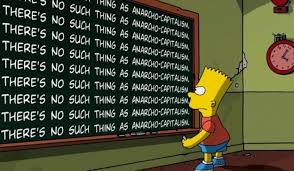
    Throughout my life, people have often wondered why I’m an anarcho capitalist. Often asking questions like “Why?” and “How about roads?” and “Why is private property not theft?” and a million other questions. This is a series of essays on the subject so that I can refer people to them, just to make my life slightly easier. So let’s start out with a small description of what Anarcho-Capitalism is.


    Anarcho-Capitalism is not a system of government–it’s a system of society, one which allows for the existence of whatever subsystems you want: Anarcho-Communism, Socialism, free market communes, whatever you want. The whole point is that people engage in free association and don’t aggress against each other. In fact the central tenet is the NAP, or the Non Aggression Pact, which stipulates that someone can’t attack someone else unless previously attacked or trespassed upon beforehand. There is of course a simple problem however, how does one avoid a “tit for tat” situation? Well that ends quite simply in that although others cannot punish the infractor normally, they may instead enact an effective ban on interaction with the aggressive actor. Because of this, one can’t force people to follow certain rules, unless they’re on your land or property, and you may peacefully eject people who are on your property, assuming that you can persuade them to do so.

    Is this so hard?

    So now that that’s out of the way, time to answer the meat and potatoes of this essay, “Why is private property not theft? If people are laboring and the factory owner sits in his office, why does he deserve the money and profits that they make?”

    Products rely on a few simple things, the actual labor going into them, and the organization of that labor. 20 men digging randomly with spoons is a lot of labor, but in fact very little is made, whereas if 3 men are using shovels to dig a trench with 1 man organizing it to lay a pipeline, there is far less labor but the actual product is worth far more. The private property is organized by the owner while the laborers enact the labor. The point is that the business is an agreement between the workers and the owner, the owner organizes their labor and adds most of the value to their work, thus the owner is entitled to most of the profit. Especially in situations where a single owner has accrued massive wealth by the virtue of their company, if an owner can manage to make it so profitable then they are still entitled to all of the profits. One ought to notice that playboys themselves often have very lackluster lifestyles.

    I’m on a bit of a roll, so how about another question, “How would people be protected against bank failure without insurance on their deposits?”

    Well the answer to that is simple, the banks will be organized slightly differently, or insurance companies will ensure the customers just like any other product is entitled to. But how is everything organized you might be asking? Well, allow me to explain. The insurance company will be entitled to a fee, a fee which is determined based on your choice of bank and the practices from that bank, as well as how much you are insuring under them. The worse the bank’s practices, the higher fee they charge and the lower the percentage they will return to you is. But what about the new organization of bank? Well that’s even more exciting, the bank is organized so that it may not fail, it must be organized so that in case of a severe series of withdrawals, that it may force all people who have taken loans to return those loans to them.

    Let’s throw down one more before I have to leave before this turns into a novel, “How would people be protected from attacks without an organized military or even a police force?”

    For this single question I have two answers, the first is protection without the police. Private police forces, these police forces are actually better than the current system, because if you don’t like the way your police force is handling your protection, you can easily fire them and instead hire a different force or even start your own. In fact a private police force will have far more accountability, after all if an officer shoots your dog, he can’t say “I feared for my life” and the company he works for will fire his ass to make sure that it doesn’t get out that they hired a psychopath and lose many more prospective customers. But what about the second component: protection without a military? For this I must use a small part of Machiavelli’s one book, The Prince. He states that republics and other freer states are more difficult to dominate, because the people will not submit to an outside force. So there is no reason for another state to be able to move in and expect to retain that land. But what about someone who wants to kill everyone in the area? Quite simply it’s harder to execute an entire population without encountering extreme resistance, especially if the natives are armed with high grade weaponry. There’s not even a reason to fear a nuclear attack, because nuclear weapons are only useful in destroying a state’s will to fight.

    Anyway, those are my answers to those questions, if there are any other questions about the answers of an AnCap, don’t hesitate to ask! I love answering questions about this.

  • Songs To Censor and Spotlight Bio Features

    One was my escapades in the Arctic was clubbing baby seals for kicks. Alas, I found the on-going costs of this natural libertarian activity to be expensive. Renting a dog-sled is way too expensive, plus I don’t feed them so they always end up dying or some shit, driving my expenses higher. I experimented with orphans but I couldn’t get much mileage out of them; plus I didn’t feed them, etc., etc.

    Moreover, the price of baseball bats are just too high. I use wood; not that aluminum stuff.

    But one feature that could be fun are songs that may offend the perpetually outraged. Songs that, given the state of current cultural affairs, could be up for censorship.

    Let me begin with an obvious one.

    Lola. We should all be so lucky it hasn’t been singled out…yet.

    If Lou Reed is a target, then nothing is literally safe anymore. Nuffin.

    All I know is, thank God we still have him.

    The Kinks? Not so much:

    Lola 2018.

    “Girls will be boys, and boys will be girls
    It’s a mixed-up, muddled-up, shook-up world
    Except for Lola, lo lo lo lo Lola”

    What a bunch of uneducated, cis-normative toxic men they are! Science has proven gender is fluid and a social construct. Can we update these lyrics already?

    And if you think that’s it….

    Me singer, she meat.

    I bring you the songs and lyrics of Faces (Small Faces/Rod Stewart – whatever they’re called. Let’s just call them The Ronnie Lane Band) and The Rolling Stones. I mean, come on!

    “In the morning
    Don’t say you love me
    ‘Cause I’ll only kick you out of the door
    I know your name is Rita
    ‘Cause your perfume smelling sweeter
    Since when I saw you down on the floor
    Guitar
    Won’t need to much persuading
    I don’t mean to sound degrading
    But with a face like that
    You got nothing to laugh about”

    /jaw drops.  That’s cold.

    There are no safe spaces big enough for the snowflakes.

    “She said, my breasts, they will always be open
    Baby, you can rest your weary head right on me
    And there will always be a space in my parking lot
    When you need a little coke and sympathy
    Yeah we all need someone we can dream on
    And if you want it baby, you can dream on me
    Yeah, we all need someone we can cream on
    Yeah and if you want to, you can cream on me

    This is why we need strict sexual speech control.

    *Int. Night. Rufus’s Pontiac Chevette (draped in Iron Maiden’s Piece of Mind). Teases mullet, fiddles with radio searching for curling scores, tosses bottle of hootch out of the window, inserts ‘Let it bleed‘ with wide grin. Winks and turns to girl with tongue sticking out.*

    Onto Australia, who really have the art of sexual innuendo perfected:

    “I’ve got big balls
    I’ve got big balls
    They’re such big balls
    And they’re fancy big balls
    And he’s got big balls
    And she’s got big balls
    But we’ve got the biggest balls of them all”

    Tremendous.

    Bon Scott.

    Hoo-kay.


    And how about ‘Girl Watcher‘ by The O’Kaysions?

    I mean for fuck sakes:

    He’s a girl watcher.

    “I’m a girl watcher, I’m a girl watcher
    Watchin’ girls go by, hey, my my
    I’m a girl watcher, I’m a girl watcher
    Here comes one now”

    Here comes one now? Are we not more progressive than this? Way to go objectifying women, jerks.

    Meeeow! In Welsh.

    I know what you’re thinking. When it comes to outright offensive music, the Welsh immediately enter your mind. I know it does for me.

    “What’s new pussycat whoa
    What’s new pussycat whoa oh
    Pussycat, pussycat, I’ve got flowers
    And lots of hours to spend time with you
    So go and powder your cute little pussycat nose”

    Other than this is a song made for Pepe Le Pew (Teep toe, to thee weendow…), I’d say this is pretty bad given our current elevated and enlightened cultural discourse, no?

    Let’s continue since I’m on a roll.

    Under a boardwalk USA

    “Oh when the sun beats down and burns the tar up on the roof
    And your shoes get so hot you wish your tired feet were fire proof
    Under the boardwalk, down by the sea, yeah
    On a blanket with my baby is where I’ll be
    (Under the boardwalk) out of the sun
    (Under the boardwalk) we’ll be havin’ some fun
    (Under the boardwalk) people walking above
    (Under the boardwalk) we’ll be falling in love”

    Sounds like rape culture to me. Do people know what happens under the boardwalk? Hint: THEY’RE WORKING.

    Fun fact with Rufus: The mayor of Wildwood was a client of my father’s tailoring service in the 1970s and 1980s. When we visited one summer, he gave us a personal tour of Wildwood (it was just like Venice, I swear) and regaled us with stories of the real “fun and games” under the boardwalk. Hint: It wasn’t always fun and games.

    Thus we arrive at the other feature for Glibs called ‘Spotlight on Bios”.

    For this, let’s head to Canada.

    One Nicholas Matte from the University of Toronto:

    “Nicholas Matte is a politically-conscious interdisciplinary historian who curates the Sexual Representation Collection and teaches in the Sexual Diversity Studies program. In his classrooms, Dr. Matte builds learning environments that foster creative thinking and he encourages students to grapple with new and difficult ideas, particularly those they find most interesting and relevant to their interests, lives, and goals. As a historian who works with living memory and marginalized communities, Matte connects historical contexts and efforts with present-day experiences through oral histories and other interactive and engaging interdisciplinary methods.”

    If you want to see this paragon of intellectualism; a deluge of scholarly magnificence, soak in his passive-aggressive interaction with the ‘infamously controversially obscure’ Jordan Peterson.

    https://youtube.com/watch?v=1x8XPX7YW14

    You are a cunt, Matte.

    That’s it for now.

    Be safe.