Category: Religion

  • A Very Special Jewsday Tuesday Tradition: Chanukkah

    [Editor’s note: Yes, this is a repeat of last year’s piece. But, don’t think of it like a tired, old, overdone rerun. Think of it more as a new Glibertarians choliday tradition! (TRADITION!) ~ SP]


    Yes, it’s that time of year again, when Jews all over the world celebrate their most treasured and most holy days… well, not really, but I’ll Jewsplain.

    First, the part everyone knows: this is supposedly the commemoration of the Maccabees doing something or other. But here’s the catch- Jews do not accept the books of the Maccabees as canonical and derive their understanding of Chanukkah and the Maccabees from the Talmud. The usual reason given is that the Macs came along too late, the canon was completed. But it may be deeper than that, so let’s start with the familiar parts.

    The whole megillah happened around 2200 years ago when I was just a wee yeled. The Middle East was a seething cauldron of petty rivalries, bloody wars, and conquests back and forth, unlike today’s quiet and civilized environment. The two major warring empires were the Ptolemies and the Seleucids, who were proxies for various swarthy European types. There were some Macedonians, Romans, and Persians in the mix as well. Like I said, it was a mess. And as usual, the Jews were right in the middle of the shit because of their geographic location and because Yahweh liked fucking with us.

    If you read through the histories of that era, it’s a confusing mess because so many of the warring monarchs had the same name, with only nicknames and numbers allowing you to tell them apart. But the overwhelming cultural bit of this was the spread of Greek civilization, which brought things like rationality, philosophy, mathematics, and science to the gibbering tribal masses of Asia and Northern Africa. Unlike the tribal kingdoms, the Greeks were very big on universal culture and values, as well as a surprising tolerance for other ways of life- they basically were the first assimilationists, and in ways that would seem very familiar to Americans.

    Now, the official story is that those awful Greeks, who at that point in history ruled over Palestine, had a culture that was so attractive that the Jews started assimilating, speaking Greek, adopting airs of tolerance, eating pork, wrestling naked, and wearing clip-on foreskins (that is not a joke, they really had them). This, of course, could not be tolerated by the Jews, goes the usual narrative. And then, in a total reversal of Greek policy, the latest tyrant, Antiochus IV (Epiphanes), was said to have outlawed Jewish religious practices and forced everyone who hadn’t adopted Greek culture and mores to do so by clipping on foreskins and chowing down on ham (anticipating the later American Jewish custom of eating pork by dismissing it as “Chinese food”). So after the usual litany of atrocities, which prominently featured defilement of the Temple in Jerusalem, they naturally rebelled. The Talmud gives its version of one of the atrocities, the story of Hannah and her sons. One at a time, Antiochus ordered each of Hannah’s sons to eat bacon, and each son in turn refused, shouted a slogan about their devotion to Yahweh, and was then killed for maintaining their religious righteousness. After watching each of her sons in turn being executed, Hannah threw herself off a building in a fit of grief and madness. An inspiring tale, nu?

    The familiar tale continues with the great Judah Maccabee leading his ragtag band of righteous Jews into a successful rebellion against the heathen Greeks, driving them out of Palestine, then rededicating the Temple by the use of various priestly rituals. Note the last. The miracle of Chanukkah was the burning of a ritual lamp in the Temple for eight days while consuming only one day’s worth of oil, which is all they had in terms of ritually pure oil.

    As a libertarian sort, I’ve learned to be a bit cynical and assume that any story like this glides past unsavory truths. I also assume that cupidity rules and is usually the driver of events. So, with that in mind…

    At that time, there were multiple schisms among the Jews- the famous Life of Brian scene about the Judean People’s Front versus the People’s Front of Judea was not entirely a joke. Three of the major factions were the Pharisees, the Sadducees, and the Hellenizers. The Pharisees and Sadducees fought over who really had control of Jewish law, with the Pharisees maintaining that the rabbis were really the ones to control things, the Sadducees insisting that it was the Temple priests, and the Hellenizers being the Reform Jews of their time, incorporating Greek practice and language into the Temple rituals and eschewing the fundamentalist interpretations of Jewish law (yes, this is an oversimplification, but the big picture always is).

    Judah Maccabee was the son of Mattathias, who was a Temple priest and a fundamentalist. Within the priesthood, the Hellenizers and fundamentalists struggled, with the Hellenizers having won out. Their priest, Menelaus, deposed the fundamentalist priest, Jason, by paying off Antiochus. This was a good investment since this gave Menelaus control of the Temple treasures and receipts. Mattathias, being a fundy allied with Jason was clearly a loser here. In his view, anyone not following the religion in the way his faction thought proper should be executed and they certainly did their share of killing. And indeed, one of the outcomes of the rebellion was the execution of Jason as a heretic and traitor to the One True Faith.

    So a cynical person might look at this as less of a rebellion against Antiochus, but more of an internal struggle between factions fighting for power and treasure. The winners write history, so the fact that the Greeks mostly didn’t interfere with religious practice before or after the Maccabean rebellion but somehow Antiochus was the exception and tried to wipe out Judaism could possibly be… well you know what self-serving storytellers and drama queens those Middle East folk can be. The cynic might look at historic parallels and see the Maccabees as akin to the modern Taliban, fighting against the encroachment of civilization (literal, in this case) in favor of a strict and violent fundamentalism that just coincidentally put them in power. And that’s what we celebrate for Chanukkah.

    Fun fact: the Hebrew word for a Jew who has given up strict religious practice is “apikoros,” which derives from the Greek “Epicure.”

    One more cynical observation: why the books of the Maccabees are not canonical among the Jews despite lots of slaughter and a Yahweh miracle. Although the usual excuse is timing, someone miiiiight notice that the decisions about canonicity and religious practice were made by the faction which survived and ended up controlling Judaism- the Pharisees, bitter foes of the Sadducees, with whom the Maccabees, as priests who got their share of Temple treasure and tribute, were aligned. But that would be overly cynical, right?

    Fun fact: Judah Maccabee was the first Jew to make contact with the Romans, seeking assistance in his fight against the Greeks. As readers of Matthew will note, this did not end well for the Mac family.

    Fun fact: although potato latkes seem like the canonical Chanukkah food in the US and Europe, in Israel they’re almost unknown. The treat of choice is… jelly donuts. And why is that? Because the bakers in Israel have traditionally been part of state-sponsored trade unions. And although latkes are easy to make at home and best served fresh, donuts are more difficult and are much easier to pick up at a (union) bakery. Just look for the union filling.

    And speaking of latkes, here’s the way to do it right.

  • Where Are We Going?

    Weep Not

    Weep Not, weep not,

    She is not dead;

    She’s resting in the bosom of Jesus.

    Heart-broken husband – weep no more;

    Grief-stricken son – weep no more;

    Left-lonesome daughter – weep no more;

    She’s only just gone home.

    James Weldon Johnson[i]


    This is the third in the three-part sub-series on the Plan of Salvation. The first part is here, and the second part is here.


    The Spirit World

    Death, regardless of method, results in the separation of the soul. The body goes into the ground, and the spirit goes into the spirit world to await the resurrection.

    The spirit world is comprised of two major divisions. The righteous – those who have accepted and lived the gospel – go to paradise. Paradise is “a state of rest, a state of peace, where they shall rest from all their troubles and from all care, and sorrow.”[ii] Those who have not accepted or have not lived the gospel go to spirit prison. This is where those who have actively rejected the gospel pay for their own sins.[iii] This time of suffering is what we call hell.[iv]

    In the spirit world, we will be reunited with our loved ones who have pre-deceased us. Joseph Smith said:

    I have a father, brothers, children, and friends who have gone to a world of spirits. They are only absent for a moment. They are in the spirit, and we shall soon meet again. . . . When we depart [from this life], we shall hail our mothers, fathers, friends, and all whom we love, who have fallen asleep in Jesus. . . . It will be an eternity of felicity. [v]

    What is a Spirit?

    A spirit is a non-corporeal person. Spirits are adults – even the spirits of people who died as children. Our spirits were adult before we were born into mortality, and they still are.[vi] They look like they did in mortality, but they are perfect in form. They take with them all the attitudes and appetites they had in mortality.[vii] According to a revelation received by Joseph Smith, spirits are material – simply a finer grade of matter than we are.[viii]

    Where is the Spirit World?

    According to Brigham Young – the second president of the Church – the spirit world is here, all around us.[ix] We simply cannot perceive them because our eyes aren’t pure enough.[x]

    Missionary Work

    The spirits who have accepted the gospel and received the needed ordinances don’t get to spend all their time lounging around, however. They are actively engaged in teaching the gospel to the spirits in prison[xi]. Once one of the spirits in prison accepts the atonement they are cleansed from their sins, and once their ordinances have been done, they move to paradise. There is, you might imagine, some urgency on both sides of the veil to get this work done. Elder Neal A. Maxwell, an apostle, estimated that there are seventy billion people in the spirit world.[xii] What percentage of those are in spirit prison is unknown, but consider that the majority of humanity has lived in a time when the gospel and its ordinances were not available. Each of those must have the gospel presented to them in the spirit world, and the ordinances performed on their behalf in the mortal world, before their final judgement can occur. During the millennium, the temples will be open 24 hours to catch up on all the ordinance work which will be possible once we can consult the resurrected dead directly about when and where they lived, and how they fit into the overall family tree.

    The Resurrection

    Resurrection is the joining of the spirit with a perfect and immortal body. This will happen to everyone ever born on the earth[xiii] as a result of the Atonement. This is a gift from our Heavenly Parents and Jesus. Jesus was the first person resurrected, and others who had died before him were resurrected at the time of his resurrection. Since Christs’ resurrection, individuals have been resurrected when it was necessary to their mission. As an example, Moroni died sometime after A.D. 420, but he was a resurrected person when he appeared to Joseph Smith in 1822. Additional examples include John the Baptist, (who restored the Aaronic priesthood [xiv]) and the apostles Peter and James (who, along with John the Beloved[xv], restored the Melchizedek priesthood [xvi]).

    The Morning of the First Resurrection

    When Christ returns at the beginning of the millennium, the righteous among the living will be caught up to greet him, and the righteous dead (those who accepted his gospel on earth, or who never had the chance to hear it on earth but accepted it in the spirit world) will be resurrected to descend with him.  Once Christ has descended to the earth, there will be another resurrection of those who were unwilling to accept the gospel in mortality, but accepted it in the spirit world. These two resurrections are what Christ referred to as the resurrection of life.[xvii] It is also referred to as the resurrection of the just.[xviii]

    The Resurrection of Damnation

    Those who reject the gospel in the spirit prison will remain there until the end of the millennium. They will then be resurrected in what Christ called the resurrection of damnation.[xix]

    Judgement Day

    After the millennium, and after all of us are resurrected, comes the final judgement. Each of us will stand before Christ and be judged for our actions in mortality.[xx] We say “stand before” Christ, but I believe it will be more along the lines of a private interview where we will review our life with Him, and we will come to a mutual agreement as to where we should go. Christ will be our judge because he paid the debt for our sins and suffered our afflictions in the Atonement, and is thus best able to give a rendering of our account which is both just and merciful. The final judgement will determine where we go for eternity. Both grace and works will factor into the determination, but the precise mix is unknown. As I mentioned in the religion poll, my understanding of grace is evolving.

    With a very few exceptions, our eternal destination will not be a punishment. It will be a reward for the level of faithfulness we showed in mortality. In the Joseph Smith article, Mojeaux made the following comment in reply to Creosote Achilles:

      Mojeaux on September 17, 2018 at 12:39 pm
    “Not bad, but no where near as good as it could be.”

    But you might not be comfortable in what is as good as it could be.

    This is a crucial point. Because Christ is a merciful judge, we will be sent not to a place which will make us miserable, but rather to where we will happiest. We would not want to be in a place of greater glory than we are able to bear. The prophet Moroni said:

    Behold, I say unto you that ye would be more miserable to dwell with a holy and just God, under a consciousness of your filthiness before him, than ye would to dwell with the damned souls in hell.[xxi]

    Kingdoms of Glory

    In a response to Tundra in the first article, I said (in part) “There isn’t really a burning hell in Mormon theology, simply various degrees of distance from God.” This was the seed which grew into these articles on the Plan of Salvation. The degrees of distance are, with one exception, referred as kingdoms of glory. The kingdoms are named the Celestial Kingdom, the Terrestrial Kingdom, and the Telestial Kingdom, and their glories are compared to the sun, moon, and stars respectively.[xxii]  The final destination is not a kingdom of glory, and is simply referred to as Outer Darkness. What follows are brief descriptions of the kingdoms, and what kind of people will live in them. For full descriptions, see D&C Section 76.

    The Celestial Kingdom[xxiii]

    The glory of the sun. This is the brass ring. This is the kingdom every member aspires to. Those who live in the Celestial Kingdom will dwell in the presence of our Heavenly Parents forever. Christ and the Holy Ghost will also live here This is eternal life.[xxiv] The people who reach this kingdom will be gods.[xxv]To reach this kingdom, one must have accepted Christ and His Atonement, received the necessary ordinances, and lived in accordance with the teachings of the gospel. The exception to this rule is little children. Little children who die before the age of eight are innocent, and will live in the Celestial Kingdom.[xxvi] Also, those who had no opportunity to accept the gospel in this life, but did accept it in the spirit world will live here.

    The Terrestrial Kingdom[xxvii]

    The glory of the moon. Christ and the Holy Ghost visit, but not our Heavenly Parents. This is the kingdom of the less valiant. These are the people who rejected the gospel in mortality, and accepted it the spirit world, or were members of the Church who didn’t live up to the principles of the gospel.

    The Telestial Kingdom[xxviii]

    The glory of the stars. The Holy Ghost visits here, but neither our Parents, nor Christ come. This is the kingdom for the unrepentant who accepted Christ neither in mortality, nor in the spirit world. These are the people who stayed in the spirit prison, paying for their own sins, and only came out in the resurrection of damnation.

    Outer Darkness[xxix]

    This is not a kingdom of glory. No member of the godhead comes here. Those who dwell here are permanently cut off from the presence of our Parents.[xxx] Getting here requires a total rejection of God’s plan after knowing the truth of it. Satan and his angels will be here. The people who go here from mortality are referred to as the Sons of Perdition. These are the damned, and this is as close as our theology gets to the classical burning hell. They have voluntarily put themselves into a state where they are incapable of repentance. Of these, Joseph Smith said:

    He must receive the Holy Ghost, have the heavens opened unto him, and know God, and then sin against Him. After a man has sinned against the Holy Ghost, there is no repentance for him. He has got to say that the sun does not shine while he sees it; he has got to deny Jesus Christ when the heavens have been opened unto him, and to deny the plan of salvation with his eyes open to the truth of it;[xxxi]

    Compared to the kingdoms of glory, not many mortals will wind up here. It requires deliberately rejecting a level of spiritual knowledge most simply cannot attain.

    Final Thoughts

    It should go without saying, but the kingdoms of glory are incomprehensibly better than our lives here. When Joseph Smith was shown the vision recorded in Section 76 of the Doctrine and Covenants, his description of the Telestial kingdom – the lowest kingdom of glory – was “And thus we saw, in the heavenly vision, the glory of the telestial, which surpasses all understanding;”[xxxii] Imagine how much better the others are. Compare the brightness of the stars in the night sky to the brightness of the moon or the sun.


    [i] James Weldon Johnson, God’s Trombones Seven Negro Sermons in Verse (New York, Penguin Books, 1927) “Go Down Death” 27

    [ii] Alma 40:12

    [iii] Alma 40:13-14

    [iv] Doctrine and Covenants Student Manual: Section 76

    [v] Joseph Smith, History of the Church of Jesus Christ of Latter-day Saints, (Salt Lake City, Deseret Book Company, 1980) 6:316

    [vi] Joseph F. Smith, Gospel Doctrine Sermons and Writings of President Joseph F. Smith (Salt Lake City, Deseret Book Company, 1919) 455

    [vii] The Post-Mortal Spirit World

    [viii] D&C 131:7-8

    [ix] Introduction to the Book of Alma

    [x] D&C 131:7-8

    [xi] D&C 138:28-31

    [xii] Neal A. Maxwell All These Things Shall Give Thee Experience (Salt Lake City: Deseret Book, 1979), 99

    [xiii] 1 Corinthians 15:21-22

    [xiv] D&C 13:1

    [xv] John was not a resurrected being, because John has not died. See John 21:22

    [xvi] D&C 27:7-8, 12

    [xvii] John 5:28

    [xviii] Doctrine and Covenants Student Manual: Section 76

    [xix] Ibid,  John 5:29

    [xx] Mormon 3:20

    [xxi] Mormon 9:4

    [xxii] Bible Dictionary: Degrees of Glory

    [xxiii] D&C 76:50-70

    [xxiv] John 17:3

    [xxv] D&C 76:58

    [xxvi] D&C 137:10

    [xxvii] D&C 76:71-80

    [xxviii] D&C 76:81-113

    [xxix] D&C 76:28-49

    [xxx] D&C 76:37

    [xxxi] Doctrine and Covenants Student Manual: Section 76

    [xxxii] D&C 76:89

  • Trailing Clouds of Glory

    Our birth is but a sleep and a forgetting:
    The Soul that rises with us, our life’s Start,
    Hath had elsewhere its setting,
    And cometh from afar:
    Not in entire forgetfulness,
    And not in utter nakedness,
    But trailing clouds of glory do we come
    From God, who is our home:
    Heaven lies about us in our infancy!

    William Wordsworth[i]


    This is the second in a three-part sub-series on the Plan of Salvation.


    Welcome to the World


    “Color is good, and …” the sound of the baby’s first wail echoes through the room, “a good strong cry.” The midwife puts a swaddled bundle on Alice’s chest. “Here she is, Alice. Say hello to your daughter.”

    Alice opens her eyes, takes hold of the infant, and looks at the small head poking out of the bundle. She smiles, and speaks in an exhausted voice. “Hello, Jennifer. Welcome to the world.”

    We come into this world naked and screaming. Our autonomic reflexes kick in and keep us breathing and our hearts beating. We start learning things almost instantly. We learn that Mom is the source of food and love. We learn that Dad is the transport vehicle to take us to Mom.

    By the time we’re two we’ve started to talk, and the word constantly on our lips is “Why.” Why is water wet? Why is the sky blue? Why is Daddy so tall? As we grow older, our questions begin to include the spiritual and philosophical as well as the physical. At some point, “Why am I here?” becomes the question of the day.

    Why am I here?

    In the previous article[ii], we discussed our pre-mortal development and touched on the plan to take us from spirit children of godly Parents to gods in our own right. Part of that plan sent us down into mortality with no recollection of pre-mortality.

    Why did the path lead through forgetful mortality? Because there are some lessons you only learn when you are on your own. We come here to gain a body and learn to control it, learn to exercise our agency by being tempted and making choices, and to be tested. Additionally, there are specific ordinances which are required in order to return to our Heavenly Parents. All of this is designed to give us the instruction we need to be able to realize our divine potential.

    Gain a Body

    In our pre-mortal life, we were spirits. We saw that our Heavenly Parents had bodies, and wanted to be like them. To obtain a body, we came to earth. Once here, we need to learn to control our bodies. This means not only learning to walk and talk and control our bodily functions, but it also means learning to control the urges our mortal body is prone to in its natural state. This isn’t just referring to biological urges. Our mortal bodies attempt to dominate our spirits, tempting us towards less spiritual destinations than we are aiming for.

    For the natural man is an enemy to God, and has been since the Fall of Adam, and will be, forever and ever, unless he yields to the enticings of the Holy Spirit, and putteth off the natural man[iii]

    A god cannot be swept along by passions. He or she must be in control, and make proper choices.

    Exercise Agency

    We are here to learn to make those choices. The underpinning of the Plan of Salvation is personal agency. We chose to follow Christ rather than Lucifer in our pre-mortal lives. Once here, we are constantly confronted with the same choice on a regular basis. Not every choice we are confronted with is between good and evil, but many are – if on a smaller scale than the one which triggered the war in heaven. The cumulative effect of these choices, however, is just as important. The choices we make here help determine what will happen after we leave mortality. The goal is to be like the people in this story:

    John Taylor, the third President of the Church, reported: “Some years ago, in Nauvoo, a gentleman in my hearing, a member of the Legislature, asked Joseph Smith how it was that he was enabled to govern so many people, and to preserve such perfect order; remarking at the same time that it was impossible for them to do it anywhere else. Mr. Smith remarked that it was very easy to do that. ‘How?’ responded the gentleman; ‘to us it is very difficult.’ Mr. Smith replied, ‘I teach them correct principles, and they govern themselves.’”[iv]

    Temptation

    Both God and Satan tempt us. God, through his Holy Spirit, tempts us to do good, and make choices which will enable us to return to him. Satan tempts us to do the opposite. Satan’s goal is to make “all men … miserable like himself.”[v]

    So, if Satan’s goal is to frustrate God’s plan, why does God tolerate his interference? There are a couple of reasons. First, if you don’t have multiple options, it’s not a choice. The Book of Mormon prophet Lehi knew this when he said: “For it must needs be, that there is an opposition in all things.”[vi] Second, God “give[s] the Devil benefit of the law,”[vii] and the law is that judgement cannot be rendered prematurely. As with all of us, judgement will be rendered on Satan at the final judgement, and he will be sent to his … reward.

    Through trial and error, and based on instruction from parents and other respected adults, we learn to distinguish right from wrong and make correct choices. When we sin, and later repent, we learn about the costs of sin, and what forgiveness feels like. All of these things teach us to make correct decisions based on correct principles.

    Testing and Obedience

    And we will prove them herewith, to see if they will do all things the Lord their God shall command them.”[viii]

    This life is a test. How will we use our agency? Can we be trusted to control ourselves? When faced with trials will we stick to our beliefs or will we abandon them if it looks like we can get out of our troubles by doing so? This leads us back to my earlier question about why we had to have our memory blocked. If we could remember the ages we lived in the presence of our Heavenly Parents, it would invalidate the test. The Devil’s temptations would be of no effect because we would remember what we had left behind, and would know the way back.

    Trials

    One of the age-old questions is “Why does God allow bad things to happen to good people?” The answer is that He doesn’t interfere. Our Heavenly Parents are not helicopter parents. They allow us to make our choices, and then expect us to deal with the consequences of those choices. This doesn’t mean that when someone finds themselves in unfortunate circumstances they’ve made bad decisions, much less are evil. Sometimes, people get caught up in the consequences of other people’s decisions. For example:

    During rush hour, a tractor-trailer driver misjudges the curve on a freeway on-ramp and winds up tipping over on an SUV in the next lane. The on-ramp is completely blocked. The SUV is totaled. The driver of the SUV escapes with minor injuries, and the truck driver walks away unharmed. Traffic in that part the city is snarled for eight hours, until they can get the truck off the on-ramp.

    The only bad decision was made by the truck driver. Everyone else simply decided to be on that on-ramp at that time.

    Ordinances & Covenants

    An ordinance is a religious ceremony in which the participant makes a sacred promise, and God promises blessings in return. This promise is called a covenant. To achieve exaltation, a person must receive certain ordinances and make the covenants which go along with them. The specific ordinances are baptism and confirmation,[ix] the temple endowment,[x] and temple marriage.[xi]

    Baptism is the familiar ordinance whereby the participant symbolically dies and is reborn. Baptism cleanses the participant of their sins, and prepares them to start a new life as a follower of Christ. In the Church, baptism is done by immersion, and not until the person being baptized has reached the age of accountability (the age at which they are responsible for their own actions) – defined as eight years old.[xii]

    The confirmation is a blessing in which the recipient is confirmed as a member of the Church and has the gift of the Holy Ghost conferred upon them. The gift of the Holy Ghost is the privilege of having the influence of the Holy Ghost with you always, on condition of worthiness.

    The temple endowment is a ceremony where members of the Church make a number of covenants with the Lord. “These covenants include obeying God and keeping His commandments, living the gospel of Jesus Christ, keeping yourself morally pure and virtuous, and dedicating your time and talents to the Lord’s service. In return, God promises wonderful blessings in this life and the opportunity to return to live with Him forever.”[xiii]

    The temple marriage ceremony is similar to a normal marriage ceremony, but instead of being “till death do you part,” marriages performed in the temple are for “time and all eternity.” This is because the temple marriage ordinance also seals the bride and groom together in the eyes of God.[xiv]

    Vicarious Work

    As I mentioned above, these ordinances are required in order to return to live with our Heavenly Parents. That would seem to leave the billions of people who have lived on the earth without the benefit of the gospel out in the cold. This is accounted for in our Parents’ Plan for us as well. You may have noticed that the Church obsesses over genealogy and family history. The genealogical information is used as documentation for the vicarious work members do in the temples.

    In the temples, members who have received their own ordinances perform those same ordinances as proxy for the dead[xv]. This does not force the dead into the Church. Force is not part of our Parents’ Plan. The work in the temple gives the dead the opportunity to live with our Parents again. The temple work in this life is paired with an ongoing missionary work in the next.[xvi] Those who never had the opportunity to hear the gospel (or heard it and rejected it), in this life will have the opportunity to hear and accept it in the next. Since they no longer have bodies, however, they cannot receive the required ordinances directly. Because of the proxy work being done in the temples by members of the Church, the dead will be able to accept the ordinances done in their names.

    Exit … Stage Left

    We enter this world naked and screaming, but we leave it in an infinite number of ways from the sublime to the ridiculous to the horrifying. At the end of the day, however, we all leave our mortal bodies and fortunes behind and enter the next world exactly as we left the pre-mortal world – with just our spirits.


    [i] William Wordsworth, “Ode: Intimations of Immortality”

    [ii] And God Stepped out on Space

    [iii] Mosiah 3:19

    [iv] Teachings of the Presidents of the Church: Joseph Smith p 284

    [v] 2 Nephi 2:27

    [vi] 2 Nephi 2:11

    [vii] A Man for all Seasons, Act I

    [viii] Abraham 3:25

    [ix] John 3:5

    [x] LDS.org About the Temple Endowment

    [xi] D&C 131:2

    [xii] D&C 68:25-27

    [xiii] LDS.org About the Temple Endowment

    [xiv] Helaman 10:7

    [xv] 1 Corinthians 15:29

    [xvi] 1 Peter 3:18–20, 1 Peter 4:6, D&C 138:28-31

  • And God Stepped out on Space

    And God stepped out on space,
    And he looked around and said:
    I’m lonely –
    I’ll make me a world.

    James Weldon Johnson[i]

    This is the first in a three-part subseries about the Plan of Salvation. This article deals with our life before we came to earth.


    In the comments on the first article, interest was expressed in a comment I made about the Latter-day Saint view of the afterlife. Specifically, I said: “[W]e believe that only people who have accepted the gospel, and received the required ordinances will be able to live in God’s presence. There isn’t really a burning hell in Mormon theology, simply various degrees of distance from God.”

    So, if interest was expressed in the afterlife, why am I writing about what happened before we were born? In a word, context. Our beliefs about the afterlife are part of what we call “the Plan of Salvation” which refers to the overarching plan our Heavenly Parents (The Church is clear in the doctrine that we also have a Heavenly Mother, and that He and She work as a team.[ii]) have for our development and future. The goal of the plan is specifically stated in by the Lord: “For behold this is my work and my glory – to bring to pass the immortality and eternal life of man.”[iii] Immortality is just what it sounds like – we will all be raised in the resurrection and be immortal. Eternal life or exaltation is the life which God the Father lives. Immortality is a gift from the Father made possible by the Atonement of Christ. Exaltation is also made possible by the Atonement, but can only be achieved by “obedience to the laws and ordinances of the gospel.”[iv] Thus, the goal of the plan is for us to be immortal and live again with our Heavenly Parents and be like them – in short, they want us to become gods and goddesses – their peers, friends, and colleagues.[v]

    Spirit Children

    Why would they want this for us? Because they are our Parents, and they love us. They don’t claim that title by happenstance. The scriptures agree: God is the father of our spirits.[vi] Every parent worth his or her salt wants their children to grow up to reach their adult potential. Our Heavenly Parents are no different. Indeed, they set the standard for earthly parents to follow.

    As with all parents, they undertook to educate us with the things we would need as we embarked upon our journey to adulthood.[vii] One of these things was the use of our moral agency.[viii] As might be expected, some spirits advanced more quickly than others, and God marked these spirits for leadership roles on earth.[ix]

    Council in Heaven

    Eventually, we had progressed as far as we could. It was time to leave home and go out into the world. Our Parents called a council to discuss the plan. Jesus, our eldest brother, presented the plan: We would be born into mortality, having no memory of the time before our mortal birth. Prophets would be sent to teach us why we were there and how to return to our Parents. We would continue to learn to exercise our agency by being tempted by both good and evil. Correct use of our agency would enable us to resist the evil temptations. We would make mistakes and commit sins which would render us unable to return to our Parents. Because sin is inescapable in the mortal condition, a Savior would be provided who would make atonement for all our sins, enabling us to return. This Savior would be Jesus. Because of our agency, some of us would choose not to accept the atonement, and thus choose not to return.

    War in Heaven

    Lucifer, one of the advanced spirits, had his own plan. He would force us to live in such a way that all of us would return. Because it was his plan, the glory and honor would go to Lucifer.[x] Lucifer’s plan was rejected, and he rebelled. Because of this rebellion, he and the spirits which wanted to live by his plan were cast out of heaven.[xi] This amounted to one-third of all the spirits in the council.[xii] They became the devil and his angels, and are here to tempt us and draw us away from God’s plan. Because of their choices, they will never enter mortality, will never have a body, and will never have the chance to progress to Godhood.

    Time to Go

    Through uncounted time we had matured as spirits. In the end, we had helped to cast out one-third of our brothers and sisters when they rebelled against our Parents. With the war moved to earth, it was time for us to leave our Heavenly Parents, and enter mortality. One by one we approached the veil which would block our memories, bade our Parents farewell, and “[w]e walked, as it were, through an open door. The door was closed behind us.”[xiii]


    [i] James Weldon Johnson, God’s Trombones Seven Negro Sermons in Verse (New York, Penguin Books, 1927) “The Creation” p 17

    [ii] LDS.org – Heavenly Mother; Paulsen, David L. & Pulido, Martin “A Mother There”: A Survey of Historical Teachings about Mother in Heaven (pdf)

    [iii] Pearl of Great Price Moses 1:39

    [iv] LDS.org – Eternal Life, Articles of Faith 1:3

    [v] Chieko N. Okazaki, Sanctuary (Salt Lake City: Deseret Book, 1997), 59

    [vi] Acts 17:29, Doctrine and Covenants 76:24, Romans 8:16

    [vii] D&C 138:56

    [viii] Moses 4:3; D&C 29:36

    [ix] Abraham 3:22–25; Jeremiah 1:4–6; Alma 13:3–5

    [x] Moses 4:1-4

    [xi] Abraham 3:27–28; D&C 29:36–38; 2 Peter 2:4; Revelation 12:7–9

    [xii] D&C 29:36-38

    [xiii] Harold B. Lee, The Teachings of Harold B. Lee: Eleventh President of The Church of Jesus Christ of Latter-day Saints, ed. Clyde J. Williams (Salt Lake City: Bookcraft, 1996), 20–21.

    I have removed the “Mormons in the Mist” title because the Prophet has asked that we not use the term “Mormons” to refer to members of the Church of Jesus Christ of Latter-day Saints.

  • The Keystone

    [i]

    “I told the brethren that the Book of Mormon was the most correct of any book on earth, and the keystone of our religion, and a man would get nearer to God by abiding by its precepts, than by any other book”[ii]

                                                                                                                                                                              Joseph Smith, Jr.


    The previous article discussed Joseph Smith and the translation of The Book of Mormon. This article discusses the book itself.
     

    So, what is The Book of Mormon? To start with, the full title of the book is The Book of Mormon Another Testament of Jesus Christ. The book is a volume of scripture similar to the Bible. Like the Bible it is comprised of “books” – the writings of various prophets expressing the will of the Lord to people whose willingness to obey what the Lord said varied wildly.

    If it’s just like the Bible, then why do we need it? It’s another witness of the divinity of Christ. In Paul’s second epistle to the Corinthians, he re-stated the Old Testament dictum that “in the mouth of two or three witnesses shall every word be established.”[iii] We have had the Bible and now we have the Book of Mormon which both bear witness of the divinity of Christ.

    The Book of Mormon teaches of Christ on nearly every page. As Nephi, the first prophet of the Book of Mormon, states “And we talk of Christ, we rejoice in Christ, we preach of Christ, we prophesy of Christ, and we write according to our prophecies, that our children may know to what source they may look for a remission of their sins.”[iv]

    The Church of Jesus Christ of Latter-day Saints sees the Book of Mormon as the fulfillment of prophecy. It is Isaiah’s “voice from the dust”,[v] and “sealed book”[vi] (see the story of Martin Harris’ encounter with Dr. Charles Anton in the previous article), and the stick of Joseph referenced by Ezekiel.[vii]

    The importance of the Book of Mormon to the Church cannot be overstated. Joseph Smith’s description of the book as the “keystone of our religion” is apt. Like the arch a keystone supports, the Church would crumble without it. If the Book of Mormon is not the word of God, then Joseph Smith was a master con-man whose fraud continues to this day, and all the millions of people who have professed a belief in his teachings are either credulous dupes or cynical perpetuators of the fraud. If, on the other hand, the Book of Mormon is the word of God, then it was translated as Joseph Smith said it was, which means that Joseph Smith was a prophet, and the Church has a modern imprimatur from God.

    The Book of Mormon is an abridgement of sacred writings generated over a thousand years by prophets living in the Americas. The records were selected, edited, and compiled mostly by the prophet Mormon (after whom the book is named). The project was completed by Mormon’s son Moroni (the same Moroni who gave them to Joseph Smith). After Moroni finished his father’s work, he added two things: The Book of Ether, which relates the story of the Jaredites (see below), and the Book of Moroni, which contains letters and sermons which Mormon gave to his son along with procedures for ordinances such as baptism and the administration of the sacrament.

    The Book of Mormon was not created for the people it talks about. It was written for the people who lived in the time it was brought to light – our time. The prophet Mormon was compiling it as his nation was sliding towards oblivion. His enemies would have destroyed the writings if they had found them. His son Moroni added his contributions and buried the plates to preserve them, and there they remained for 1400 years, until he showed them to Joseph Smith.

    So, what’s in the book? Wonderful things. The Book of Mormon relates the rise and fall of two civilizations on the American continent. The earlier civilization, known as the Jaredites, began as a number of family groups who came out from the confusion of tongues at the Tower of Babel under the guidance of a prophet known only as the brother of Jared. This prophet guided them to the sea shore where the Lord instructed them to build boats in which he would carry them over the sea to the land of promise. While the Jaredites were building the boats, the brother of Jared went to the Lord with two problems: because the boats were airtight, 1) it was dark and 2) the people in them would suffocate and die.[viii]

    The Lord told them how to solve the problem of the air: Drill holes in the top and bottom of the boat, and stop them up. When the air gets foul, open which ever plug is on top. If water comes in, you’re underwater, plug it back up.[ix]

    For light, the Lord told the brother of Jared to come back with a suggestion. They couldn’t have fire – they’d be going up and down on waves and diving beneath them – but he should come up with something.[x] The prophet melted sixteen clear, small, stones (two for each boat) out of a rock and brought them to the Lord, and asked him to touch them so that they would shine in the darkness.[xi] The Lord agreed, and when he reached out to touch the stones, “the veil was taken from off the eyes of the brother of Jared, and he saw the finger of the Lord; and it was as the finger of a man, like unto flesh and blood; and the brother of Jared fell down before the Lord, for he was struck with fear.”[xii]  When the Lord asked him what had happened, the brother of Jared replied that he had seen the Lord’s finger, and was afraid he would be struck down “for I knew not that the Lord had flesh and blood”[xiii].

    The Lord responded that faith had enabled the brother of Jared to see the finger, and the fact that he would eventually take on a mortal body. He then revealed his spirit body to the brother of Jared, and introduced himself as Jesus Christ.[xiv]

    After this revelation, the brother of Jared took the lit stones down off the mountain and put them in the boats. After preparing stores for themselves and their flocks for the voyage, the Jaredites boarded the boats, and the Lord conveyed them across the ocean. The remainder of the Book of Ether reports a cycle of righteous and wicked kings among the Jaredites. They war and intrigue against each other until finally, in a last calamitous battle, the Jaredite nation destroys itself completely. The Book of Ether reports that the lone survivor was one of the kings, who had been warned by the prophet Ether that if he did not repent of his sins, he would live to see his lands taken over by another people.[xv] The Book of Mormon records the fulfillment of this prophecy in the Book of Omni.[xvi]

    The other major civilization described by the Book of Mormon is the family of Lehi. Lehi was a prophet who lived near Jerusalem in 600 BC. Lehi warned the people of Jerusalem about the imminent Babylonian invasion. When the people tried to kill him, the Lord instructed Lehi to leave and take his family – comprised of his wife, Sariah, his sons Laman, Lemuel, Sam, and Nephi, and an unspecified number of daughters – out of the city. 1 Nephi, the first book in the Book of Mormon, is the story of their travels in the wilderness until they came to the seashore, where they built a boat, and were guided by the Lord to the Americas.

    The story is punctuated by tension between the brothers. The older brothers (Laman and Lemuel) were quite happy with their civilized lifestyle, and didn’t actually believe their fathers teachings. Bailing out of the city at a moment’s notice, based on a dream their father had was not part of their plan. The younger brothers (Sam and Nephi) believed their father and obeyed his commands without complaining.

    One example of this division is an event which took place in 1 Nephi 3. The Lord commanded Lehi to send his sons back to Jerusalem (several days journey from where they were) to obtain plates which contained the scriptures and other records they would need to preserve their civilization once they arrived at the promised land. These plates were in the keeping of Laban – a powerful member of the ruling class in Jerusalem.

    From the beginning of the journey back, Laman and Lemuel complained about the orders and their father. When the plan ran into difficulties, they took it out physically on their younger brothers.[xvii]

    Eventually, the plates were obtained by Nephi who found Laban drunk in the street, killed him after a fair amount of soul searching, and assumed his identity to trick Laban’s staff into giving him the plates.[xviii]

    Once the family reaches the Americas, the split grows wider. Once Lehi dies, the family splits into the two factions by which they are known for the rest of the Book of Mormon: the Nephites and the Lamanites. The Book of Mormon is told from the point of view of the Nephites who followed the same cycle of righteousness followed by wickedness we saw in the Book of Ether.

    The highlight of the Book of Mormon takes place in 3 Nephi. At the death of Christ, the Nephites and Lamanites are wracked by a series of natural disasters followed by three days of impenetrable darkness.[xix] At the end of these three days, the resurrected Christ appears and ministers to them.[xx] He preaches the Sermon on the Mount, blesses them, heals their sick, and ministers to their children. While he was among them, he chose twelve especially righteous men as disciples to run the church, and gave them their choice of a reward. All but three of them chose to be reunited with him once they had lived out a normal lifespan. Those three made the same choice as John the Beloved and chose to remain on the earth as ministers until Christ’s millennial return.[xxi]

    After the departure of Christ, the inhabitants of the new world lived in peace for 200 years. There were no divisions among them, “nor any manner of
    -ites.”[xxii] After the 200 years were done, people began to abandon the teachings of Christ, and things began to go downhill. One group who left the church called themselves the Lamanites, and the old divisions began again. By about AD 320 the entire civilization was sliding over the edge into apostasy and wickedness.

    The prophet Mormon, who compiled the Book of Mormon, narrates the end of the Nephite nation. His writings form an internal Book of Mormon. The people had grown so wicked that they would not listen when he tried to teach them, and, at one point, the Lord forbade him to try because they had willfully rebelled against God.[xxiii] Mormon’s writings tear at the heart, because you watch this man of God desperately trying to save his people. A people so far gone into wickedness and nihilism that they weren’t interested in survival, much less salvation.

    The final battle took place at a location called Cumorah in about AD 384. Mormon lists by name 11 commanders of 10,000 who fell along with their commands – wiped out to a man – along with his 10,000 and those of his son Moroni. He also states that “there were ten more who did fall by the sword, with their ten-thousand each[.]”[xxiv] There is no count of the Lamanite casualties, but of the nearly a quarter million Nephites who marched to that final battle, 24 escaped alive.

    After the death of Mormon, Moroni completes the project of compiling the plates, adds the Book of Ether and his own writings, and buries them. This was completed in about AD 420.

    That’s the bare plot, but it doesn’t do justice to what the book is. Intertwined with the narrative are the teachings of Christ. The book discusses faith, moral agency, the fall of Adam, the atonement of Christ, and many other principles – sometimes putting them in terms clearer than what the Bible describes.

    So, what is the Book of Mormon? To the believers, it is another testament of Jesus Christ. It contains His gospel, and His promises to our day. It is also a warning – that God will not always strive with man. Sometimes, when we are sufficiently unwilling to listen his voice, he withdraws and leaves us to the natural consequences of our actions.


    [i] Photo credit: www.lds.org

    [ii] History of the Church 4:461

    [iii] 2 Corinthians 13:1 KJV

    [iv] 2 Nephi 25:26

    [v] Isaiah 29:4

    [vi] Isaiah 29:11-12

    [vii] Ezekiel 36:16, 19

    [viii] Ether 2:19

    [ix] Ether 2:20

    [x] Ether 2:22-25

    [xi] Ether 3:1-5

    [xii] Ether 3:6

    [xiii] Ether 3:7-8

    [xiv] Ether 3:9-15

    [xv] Ether 13:18, 20

    [xvi] Omni 1:20-22

    [xvii] 1 Nephi 3:10-28

    [xviii] 1 Nephi 4

    [xix] 3 Nephi 8:1-23

    [xx] 3 Nephi 11 – 26

    [xxi] 3 Nephi 28:1-8

    [xxii] 4 Nephi 1:17

    [xxiii] Mormon 1:16

    [xxiv] Mormon 6:10-15

    I have removed the “Mormons in the Mist” title because the Prophet has asked that we not use the term “Mormons” to refer to members of the Church of Jesus Christ of Latter-day Saints.

  • Poll: Religiosity

    In the comments of a post this past Monday by Gadianton, the question came up about religiosity among the Glibertariat.

    For many people this is a complicated, and perhaps sensitive, topic. But when have we ever shied away from THAT here at Glibs?

    However, there are some parameters, please. As you all know, there have been a great many atrocities committed in the name of religion across history, and that continues today. There have also been a great many benevolent acts committed in the name of religion, also continuing today. This is not a poll about which religion is better or worse. This is specifically asking about YOU and your life.

    So here we go! As always, answer all questions, none, or bits and pieces, as you see fit.

    1. Are you an adherent to any particular religion? If so, which?

    2. Were you “born into” a family religious tradition? If so, have you remained in that tradition?

    3. Have your views on faith and religion changed at different stages in your life?

    I’ll start.

    My mother was Roman Catholic, so my sibs and I were all christened. None of us were confirmed. None of us has stayed in that tradition, although at one point I worked for an RC religious order. Mom stayed a member and served on the parish council and was a regular reader for Mass.

    My father was United Methodist, refusing to convert when he married my mother in 1958 (which almost scuttled the whole thing). His second wife is Lutheran, going back and forth between Missouri Synod and ELCA (Evangelical Lutheran Church in America), based on who are the other members of the particular church. Dad has been active at various points in whatever Lutheran church to which my stepmom happened to belong, but has never become a member. He is “quietly religious,” but especially likes the “doing good” activities, such as rebuilding homes after Katrina and helping families locally (his non-academic-year profession was electrician), running food banks and cooking for fundraising events, helping kids directly and supporting kid-centric charities and organizations.

    I am an ordained non-denominational minister. I certainly value the legal ability to perform various ministerial ceremonies, but that’s not the main reason I became ordained. People tend to tell me everything, and I mean everything. I have always assumed anything someone tells me is told in confidence, unless it was explicitly stated otherwise. Ordination confers some (varying by state statute) protection against being coerced into spilling that information to representatives of the government. I can legally say, “Fuck off, slavers” in many instances and get away with it.

    Your turn!

  • Mormons in the Mist: Had for Good or Evil

    The Prophet Joseph Smith[i]


    33 He called me by name, and said unto me that he was a messenger sent from the presence of God to me, and that his name was Moroni; that God had a work for me to do; and that my name should be had for good and evil among all nations, kindreds, and tongues, or that it should be both good and evil spoken of among all people.

    Joseph Smith – History 1:33

    The first installment of the Mormons in the Mist articles can be found here. This is part one of a subseries on the history of the Church. This article covers Joseph’s life through the translation of the Book of Mormon.


    You cannot discuss The Church of Jesus Christ of Latter-day Saints without dealing with Joseph Smith, Jr.

    People who know nothing else about the Church know two things: Polygamy and Joe Smith’s Golden Bible. There have been many biographies written about him, from every angle. The best of these of which I am aware is Richard L. Bushman’s 2005 Joseph Smith Rough Stone Rolling. Dr. Bushman acknowledges Joseph’s shortcomings without sliding into a warts-only version and describes his life without becoming hagiographic.

    So, who was Joseph Smith, Jr? To the believing members of the Church, he is the Prophet of the Restoration. A seer and revelator who restored the gospel of Jesus Christ to the earth, founded the Church under the direction of God, and was martyred for his beliefs. His critics say he was a con man and a fake.

    Joseph Smith, Jr. started life as a farm boy. He was born 23 December 1805 in Sharon, Vermont to Joseph Smith Sr. and Lucy Mack Smith. He was the 5th of 11 children (of whom 9 lived to adulthood). When Joseph was 9, the family moved to Palmyra, New York and, four years later, to the nearby town of Manchester.[ii] This positioned the family perfectly for the Second Great Awakening. When he was 14 the wave of religious revivalism swept over the area and the Smith family was caught up in it. Confused by the contention, he followed the advice of James[iii] and prayed for wisdom.

    Joseph reported the results of this prayer:

    I saw a pillar of light exactly over my head, above the brightness of the sun, which descended gradually until it fell upon me.

    17 […] When the light rested upon me I saw two Personages, whose brightness and glory defy all description, standing above me in the air. One of them spake unto me, calling me by name and said, pointing to the other—This is My Beloved Son. Hear Him!

    Joseph Smith – History 1:16-17

    In this vision of the Father and the Son, known as the First Vision, Joseph was instructed not to join any church at that time. A few days later, he mentioned the visitation to a local minister who contemptuously dismissed it as being of the devil and said, “that all such things had ended with the apostles.” Telling the story also “excited a great deal of prejudice against me among the professors of religion[.]”[iv]

    The Golden Plates

    Three years later, he had another visitation[v]. This time the messenger identified himself as Moroni and told the seventeen-year-old prophet about a book of gold plates containing the history of past inhabitants of the Americas. Moroni instructed Joseph through the night, and the next morning Joseph made his way to where the plates were hidden. In a stone box with the plates were a breastplate and two stones connected in the fashion of old fashioned spectacles. The stones were called a Urim and Thummim and were referred to as “interpreters”. He made an unsuccessful attempt to retrieve the contents of the box and was told to return every year for the next four years to receive more instruction.

    Over the course of the next four years, Joseph returned for instruction each year. Among other jobs, he hired on for a month in 1825 to assist a man who was looking for old Spanish silver mines in the area. While engaged in this, he boarded with the family of Isaac Hale, where he met his future wife Emma (Isaac’s daughter). They were married (against the wishes of her family) in January 1827.

    On 22 September 1827, Joseph went to receive his yearly instruction, and Moroni gave him the plates. Behind the relatively bland tale in the canonical version, there is a bit more which Dr. Bushman relates. ‘The angel had commanded Joseph to come to the hill on September 22. To be precise in his compliance and still throw off meddlers who knew of the date, Joseph chose to go to Cumorah in the dead of night, almost the minute September 22 arrived. Around twelve o’clock Joseph came into the room to ask if his mother had a chest with a lock and key. Knowing at once why he wanted it, Lucy was upset when she was unable to provide one. “Never mind,” Joseph assured her. “I can do very well for the present without it – be calm – all is right.” Minutes later Emma passed through the room in her bonnet and riding dress, and Lucy heard the two of them drive off in Joseph Knight’s wagon.’[vi]

    Joseph, Emma, and the plates did not make it home before breakfast. Lucy (Joseph’s mother), covered for them until they returned. Joseph did not bring the plates home at all that day. He hid them in a birch log which he had hollowed out.[vii] In order to make money to pay a cabinet maker to make a box in which to keep the plates safe, Joseph left the next day for Macedon where he was hired to dig a well.

    Along with the plates came a warning that he was “responsible for them; that if I should let them go carelessly, or through any neglect of mine, I should be cut off[.]”[viii] Why such elaborate measures, and such a strict charge? The day after Joseph left for Macedon, his family learned of a plot to find and steal the plates: “[Joseph’s father] learned that ten or twelve men working with Willard Chase were conspiring to find the plates, and had sent for a conjuror sixty miles away whom they believed could discover the hiding place.”[ix] Emma went for Joseph, who left the well and returned quickly to the Smith farm. He then left to retrieve the plates from their hiding place. On the way back from the hiding place, he wrapped the plates in a frock he had been wearing while digging and carried them under his arm. He carried the plates (estimated to weigh between 40 and 50 pounds) that way the three miles back to the farm. Joseph was assaulted three times on the way home but made it back intact except for a dislocated thumb. Over the next several weeks, several groups of people searched for the plates but never found them.[x]

    In order to escape the attacks, Joseph and Emma left Manchester in late fall 1827 and went to Harmony, Pennsylvania to live on her father’s land. There, Joseph settled down to the work of learning how to translate the plates – at the same time providing for his pregnant wife. As part of the process, he copied some characters from the plates and translated them using the Urim and Thummim.

    The Translation of the Book of Mormon

    In February 1828 Martin Harris, a Palmyra farmer who had helped the Smiths escape, paid a visit. He took the copied characters and the translations to Dr. Charles Anthon in New York. Harris related to Joseph what happened:

    64 “I went to the city of New York, and presented the characters which had been translated, with the translation thereof, to Professor Charles Anthon, a gentleman celebrated for his literary attainments. Professor Anthon stated that the translation was correct, more so than any he had before seen translated from the Egyptian. I then showed him those which were not yet translated, and he said that they were Egyptian, Chaldaic, Assyriac, and Arabic; and he said they were true characters. He gave me a certificate, certifying to the people of Palmyra that they were true characters, and that the translation of such of them as had been translated was also correct. I took the certificate and put it into my pocket, and was just leaving the house, when Mr. Anthon called me back, and asked me how the young man found out that there were gold plates in the place where he found them. I answered that an angel of God had revealed it unto him.

    65 “He then said to me, ‘Let me see that certificate.’ I accordingly took it out of my pocket and gave it to him, when he took it and tore it to pieces, saying that there was no such thing now as ministering of angels, and that if I would bring the plates to him he would translate them. I informed him that part of the plates were sealed, and that I was forbidden to bring them. He replied, ‘I cannot read a sealed book.’ I left him and went to Dr. Mitchell, who sanctioned what Professor Anthon had said respecting both the characters and the translation.”[xi]

    Harris returned to his farm in Palmyra, but returned to Harmony in mid-April. He became Joseph’s scribe as the work of translation continued. Joseph would dictate the translation (obtained through the interpreters) to Martin, who sat on the far side of a curtain which kept him from seeing the plates. By mid-June, they had a manuscript of 116 pages hand-written on foolscap. At this point, Martin – hoping to have something tangible to show his wife – asked to be allowed to take the manuscript home and show it to her. [xii]

    Joseph made the request to the Lord and was told no. Martin persisted, and was told no a second time. The third time, the Lord gave permission on the condition that only Martin’s wife, his brother, his parents, and his wife’s sister could see the manuscript.[xiii] Harris left for Palmyra, manuscript in hand.[xiv]

    Two weeks passed with no word from Harris and Joseph began to wonder about the manuscript. Emma encouraged him to go check up on Martin, so Joseph went to his parents’ house in Manchester. When he arrived, a message was sent to Martin, who was expected for breakfast at eight. Martin did not arrive as expected. He finally appeared at twelve-thirty. Joseph’s mother Lucy reports: “[W]e saw him walking with a slow and measured tread towards the house, his eyes fixed thoughtfully upon the ground. On coming to the gate, he stopped instead of passing through and got upon the fence, and sat there some time with his hat drawn over his eyes.”[xv] Martin had not kept his word, and the manuscript was gone.

    The Lord, as you might expect, was not pleased. Martin’s role in the translation of the plates ended. He also withdrew Joseph’s gift of translation until the following Spring. When He restored it, He informed the prophet that the pages were still out there in the hands of people who did not want Joseph to succeed and that to fulfill this goal they had altered the manuscript so that when the section was re-translated, they could publish the altered original and say that Joseph was a fraud.[xvi] To frustrate this, the Lord instructed Joseph not to re-translate the same section, but to begin at another point which covered the same events from another angle.[xvii]

    On 5 April 1829 Oliver Cowdery came to visit the Smiths in Harmony. He had been teaching school in Manchester, and heard about Joseph and the plates while residing at Joseph Sr.’s house. Oliver became Joseph’s scribe, and the translation of the plates resumed.[xviii] In May, as the translation progressed, they came across a passage on baptism. Desiring more information from the Lord, they went to the woods to pray. Joseph relates what occurred:

    “68 […] While we were thus employed, praying and calling upon the Lord, a messenger from heaven descended in a cloud of light, and having laid his hands upon us, he ordained us, saying:

    69 Upon you my fellow servants, in the name of Messiah, I confer the Priesthood of Aaron, which holds the keys of the ministering of angels, and of the gospel of repentance, and of baptism by immersion for the remission of sins; and this shall never be taken again from the earth until the sons of Levi do offer again an offering unto the Lord in righteousness.[xix]

    This being told them that he was John the Baptist, and instructed them to baptize one another. He also told them that there was another priesthood, called the Melchizedek priesthood which would be conferred upon them later.[xx]

    We do not have a date for the conferral of the Melchizedek priesthood. Since it has the authority to organize the Church, it is reasonable to assume it was restored between the visitation of John the Baptist and the organization of the Church in April of 1830. The first acknowledgement of the event is in a revelation dated August of 1830.[xxi]

    Continuing persecution required them to relocate at the end of May 1829, this time to the farm of Peter Whitmer Sr. in Fayette, New York. Once there, Oliver and Joseph continued the work of translation and completed it about July 1st.[xxii]

    During the entire time the translation was going on, Joseph was not allowed to display the plates to anyone.[xxiii] In a revelation dated March 1829, Martin Harris was told to repent and humble himself and be patient, and he would be one of the people allowed to see the plates.[xxiv] Once the translation was completed, Oliver Cowdery, Martin Harris, and David Whitmer (the son of the owner of the farm where the translation was completed) received a revelation where, in their own words “And we declare with words of soberness, that an angel of God came down from heaven, and he brought and laid before our eyes, that we beheld and saw the plates, and the engravings thereon[.]”[xxv] An additional eight witnesses (Smith and Whitmer family members) also saw and handled the plates, but did not see an angel.[xxvi]

    Joseph Smith will always be a controversial figure. He founded a church in a log cabin which has grown to over 16 million members. These people believe that he is precisely what he claimed to be – a prophet, seer, and revelator. His critics will tell you that he was a fraud and a charlatan, and that those of us who believe what he said are deluded.

    [i] Photo Credit: www.mormonnewsroom.org

    [ii] Pearl of Great Price Joseph Smith – History 1:3-4

    [iii] James 1:5 KJV

    [iv] Joseph Smith – History 1:21-22

    [v] Joseph Smith – History 1:27-54

    [vi] Bushman, Richard Lyman; Joseph Smith Rough Stone Rolling p 59 internal notes omitted

    [vii] Ibid p 60

    [viii] Joseph Smith – History 1:59

    [ix] Bushman p. 60

    [x] Ibid pp 60 – 62

    [xi] Joseph Smith – History 1:64-65 See also Isaiah 29:11-12

    [xii] Bushman p. 66

    [xiii] ibid

    [xiv] Ibid pp 66 -67

    [xv] Ibid p 67

    [xvi] Doctrine and Covenants 10:10-19

    Personal side note: Those pages are still out there – or were 40 years ago. My father was friends with a man who, at the time this occurred, was a professor of religious studies at BYU. At one point while I was a teenager, this man was in our area giving a talk. After the talk, my father took him out to dinner. In the course of the conversation, the subject of the missing manuscript pages came up, and this man told my father that someone he knew had information on the whereabouts of the manuscript pages. This person had not revealed to my father’s friend where they were or who had them, merely that he had this information.

    [xvii] Doctrine and Covenants 10:30,38-41

    [xviii] Joseph Smith – History 1:66-67

    [xix] Joseph Smith – History 1:68-69

    [xx] Joseph Smith – History 1:70-72

    [xxi] Doctrine and Covenants 27:12

    [xxii] Bushman pp 76-78

    [xxiii] Doctrine and Covenants 5:3

    [xxiv] Doctrine and Covenants 5:23-24

    [xxv] Book of Mormon The Testimony of Three Witnesses

    [xxvi] Book of Mormon The Testimony of Eight Witnesses

  • Mormons in the Mist: What do they Believe


    Mormons (members of The Church of Jesus Christ of Latter-day Saints), are everywhere, and there seems to be a bunch of nonsense over what we believe. So, I thought I’d start with our basic faith statement: The Articles of Faith. The Articles of Faith lay out thirteen points which members of the Church believe. They are part of a larger document known as the Wentworth Letter. The Wentworth letter was written by Joseph Smith, Jr. at the request of John Wentworth, editor of the Chicago Democrat, in 1842. Wentworth was looking for a sketch of the history of the church, along with some insight into what we believed.  Here, then are the Articles of Faith.

    We believe in God, the Eternal Father, and in His Son, Jesus Christ, and in the Holy Ghost.

    The Godhead is comprised of 3 individual beings: The Father, the Son, and the Holy Ghost. The Father and the Son have physical bodies, while the Holy Ghost is a person of spirit[i]. Each member of the Godhead has a specific mission. The Father is God, our creator. We worship him. The Son is Jesus the Christ. He is our Savior. We return to the presence of God only by virtue of his Atonement.[ii] The Holy Ghost is a messenger and witness. He is the bearer of inspiration and testifies of truth.[iii] The relationship between them is indicated when we pray:

    I would exhort you that ye would ask God, the Eternal Father, in the name of Christ, if these things are not true; and if ye shall ask with a sincere heart, with real intent, having faith in Christ, he will manifest the truth of it unto you, by the power of the Holy Ghost.[iv]

    As you can see from the verse above, we pray to the Father in the name of Christ (the Son) and receive our answer through the Holy Ghost.

    We believe that men will be punished for their own sins, and not for Adam’s transgression.

    Sin is not heritable. The first time I heard about the doctrine of Original Sin, I was confused. How could you hold someone else responsible for the acts of another person? The answer, of course, is that you can’t. And God doesn’t. What is inherited (depending on the action) are the consequences of those actions. The consequence of the Fall is that men are mortal and separated from God.

    We believe that through the Atonement of Christ, all mankind may be saved by obedience to the laws and ordinances of the gospel.

    The Atonement of Christ – when He took upon Himself our sins and afflictions – opens the way to overcome the consequences of the Fall. If we live in accordance with the gospel, we will be able to return to the presence of God. He has specified the conditions under which this is possible. The laws of the gospel are principles which help us return to God. The ordinances of the gospel are specific ceremonies (such as baptism) which are required to return to God.

    We believe that the first principles and ordinances of the Gospel are: first, Faith in the Lord Jesus Christ; second, Repentance; third, Baptism by immersion for the remission of sins; fourth, Laying on of hands for the gift of the Holy Ghost.

    Faith is an active belief in “things hoped for, the evidence of things not seen.”[v] In the Book of Mormon, the prophet Alma adds the qualification “which are true.”[vi] Faith in Christ leads us to a recognition of our fallen state, and our need for repentance. Repentance is the process whereby we take advantage of the Atonement and receive forgiveness for our sins.

    Baptism is a ceremony whereby your sins are symbolically washed away, and you are reborn.[vii] In the LDS faith, baptism is done by immersion (complete submergence in the water). The Gift of the Holy Ghost is the privilege of always having the Holy Ghost with you, on condition of worthiness.

    We believe that a man must be called of God, by prophecy, and by the laying on of hands by those who are in authority, to preach the Gospel and administer the ordinances thereof.

    “And no man taketh this honour unto himself, but he that is called of God, as was Aaron.”[viii] No member of the Church simply hangs out a shingle and declares himself a bishop (head of a local congregation), or a Sunday School teacher, or any other position in the church. Positions in the Church are filled by being called by the person with the authority to issue the calling. The Church has a hierarchy of who issues which callings.

    We believe in the same organization that existed in the Primitive Church, namely, apostles, prophets, pastors, teachers, evangelists, and so forth.

    The Church organization is patterned after the Church in the time of the apostles. “And he gave some, apostles; and some, prophets; and some, evangelists; and some, pastors and teachers;”[ix] We believe that this is the organization which Christ wants, and that he established in antiquity, and again when he restored the Church.

    We believe in the gift of tongues, prophecy, revelation, visions, healing, interpretation of tongues, and so forth.

    The LDS Church is built on the concept of revelation. The beginning of the church can be traced to a revelation given to Joseph Smith, Jr. in 1820.[x] Examples of the other spiritual gifts feature prominently throughout church history.

    We believe the Bible to be the word of God as far as it is translated correctly; we also believe the Book of Mormon to be the word of God.

    Errors in translation and transcription have crept into the Bible. As a result, many parts are confusing, and even contradictory. The Book of Mormon was translated by the gift and power of God, and the translation is assumed to be as God wants it. This does not mean that we hold the Book of Mormon to be inerrant, merely that any mistakes are not errors in translation. The title page of the book states in part “And now, if there are faults they are the mistakes of men[.]”[xi]

    We believe all that God has revealed, all that He does now reveal, and we believe that He will yet reveal many great and important things pertaining to the Kingdom of God.

    The canon is not closed. As noted above, the church is based on revelation, and that revelation continues to this day. We believe that everyone in the Church can receive revelation for their own lives, and the lives of those for whom they are responsible (The Prophet for the Church, parents for their families, bishops for their congregations, teachers for their classes, etc.). People learning of the Church are urged to ask for a personal revelation regarding the truth of what they are being taught.

    We believe in the literal gathering of Israel and in the restoration of the Ten Tribes; that Zion (the New Jerusalem) will be built upon the American continent; that Christ will reign personally upon the earth; and, that the earth will be renewed and receive its paradisiacal glory.

    This one speaks for itself. We believe that these events will occur as we get closer to the millennial return of Christ.

    We claim the privilege of worshiping Almighty God according to the dictates of our own conscience, and allow all men the same privilege, let them worship how, where, or what they may.

    The choice to worship (or not) and how to do it is personal. Worship (or don’t) as you see fit and extend the same courtesy to others.

    We believe in being subject to kings, presidents, rulers, and magistrates, in obeying, honoring, and sustaining the law.

    Members of the Church are expected to be good citizens of their countries. Where there are inequities in the laws, they are expected to work within the system to address them. 

    We believe in being honest, true, chaste, benevolent, virtuous, and in doing good to all men; indeed, we may say that we follow the admonition of Paul – We believe all things, we hope all things, we have endured many things, and hope to be able to endure all things. If there is anything virtuous, lovely, or of good report or praiseworthy, we seek after these things.

    We strive to be righteous, faithful, and patient people, and to learn as much as we can. We believe that “the glory of God is intelligence,”[xii] and that truth is not restricted to what we already know.

    Feel free to ask questions in the comments. I’ll be happy to respond – either immediately, or in another article


    [i] Doctrine & Covenants 130:22

    [ii] Acts 4:12

    [iii] Book of Mormon Moroni 10:5

    [iv] Book of Mormon Moroni 10:4

    [v] Hebrews 11:1

    [vi] Book of Mormon Alma 32:21

    [vii] John 3:3-5

    [viii] Hebrews 5:4

    [ix] Ephesians 4:11

    [x] Pearl of Great Price Joseph Smith – History

    [xi] Book of Mormon – Title Page

    [xii] Doctrine & Covenants 93:36

  • Thursday Afternoon Links

    Artist’s rendition of BrettL hopped up on Bathsaltz and Florida sunshine

    Hey guys, it’s Thursday and Brett is either high on bathsaltz, covered in bacon fat and wrasslin’ gators or in some kind of very dull workplace meeting (your imagination knows best), so I’m filling in today. All links are safe for work, so feel free to you know, click through and then make salient comments about them.

    • Florida oysters viciously murder 71-year-old man. You knew it wasn’t safe to swim in Florida water with open wounds, but you apparently also shouldn’t eat the shellfish while vaguely immunocompromised. VISIT FLORIDA TODAY!
    • We all know that those dastardly Millenials are killing everything from industrial beer production to fabric softener, but what will they be responsible for killing next? Themselves, apparently: A Spike In Liver Disease Deaths Among Young Adults Fueled By Alcohol. Drink up, me hearties, yo ho!
    • I’m guessing you guys are just as into the fringiest Christian eschatology of (repeatedly proven) false prophets/straw-grasper Rabbi Jonathan Cahn and opportunistic asshole John Hagee as I am, so I’ll give you a heads up that a BLOOD MOON (or for the less dramatic: lunar eclipse) is happening soon and it’ll be the longest in the last century. Look to the heavens the night of 07/27 if it’s visible in your area and the weather is good, for the four horsemen will totally be coming this time.
    • Out of respect for/fear of one of the most powerful of us, I will not label this story but will only mention that those who like things trapped in amber, or issues of a herpatological nature might find the story interesting.
    • Speaking of herps, hackers may have the latest results from your HSV1/2 test Hackers Breach Network of LabCorp, US’ Biggest Blood Testing Laboratories, so you may want to engage in some proactive radical honesty with your sex partner(s). Currently the intrusion seems like it was contained and no confidential information was accessed, but that’s always how these things start and then it’s Russians reading your emails and making fun of your use of comic sans. Just be glad those doofy Chevy HHRs aren’t autonomous…yet
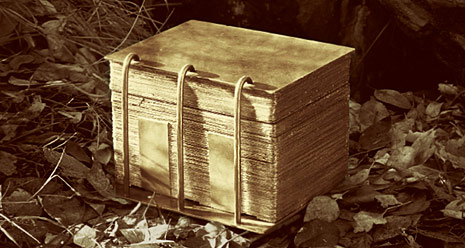
    • For the nerds among us…I assume that’s most of you: CNET’s 2018 SDCC roundup. I know you’re all nerds in your unique and meaningful ways and I’m not going to enact your labor if I don’t have to.

    Huh, I’m being told that not including a music link is a grievous sin. I’ll let this raccoon DJ some background jams for you while you curate your tittaaaays and whatnot.