Category: Regulation

  • A libertarian analysis of Chevron deference

    A libertarian analysis of Chevron deference

    Why the hell would I bother to give deference to a damn evil oil (pronounced ohl) company? Well, Chevron deference has very little to do with oil, and nothing to do with genuflecting to a multi-national molester of Gaia. Chevron deference refers to the measure of how much a court should defer to an administrative agency’s interpretation of an ambiguous statute when a case hinges on the ambiguity.

    As a trivial made-up example, let’s say that an employment law states that the “most senior” employee in a department is entitled to wear a crown in the office, enforceable by the NLRB. (yes, it’s a stupid example… so sue me) The NLRB creates regulations about what a crown is, what wearing a crown means, how to break seniority ties, etc. Of interest to us is the fact that the phrase “most senior” is left ambiguous by the statute. “Most senior” may be interpreted to mean oldest by age. “Most senior” may also be interpreted to mean the longest tenure at the company. Assuming that there is no clear statutory guidance to resolve that ambiguity, it’s up to the NLRB to determine what “most senior” means as they enforce the statute. The NLRB creates a regulation stating that “most senior” is by age. Years later, Sandy, an employee of Top Hats R Us files a complaint with the NLRB about the company’s blatant violation of the crown law. The NLRB sues Top Hats R Us for violating the crown law. Top Hats R Us rebuts by asserting that they followed the crown law. They provided the crown to Latitia, who has the longest tenure at Top Hats R Us. The NLRB counters back that “most senior” means oldest, not longest tenured.

    The court is placed in an interesting bind. How do they interpret the statute? Perhaps the court is inclined to agree with Top Hats R Us that “most senior” means longest tenured. Perhaps there’s some weight to be given to the NLRB’s interpretation of the statute given their administrative role. In Chevron v. A bunch of Hippies, the SCOTUS answered this question once and for all (lol).

    If Congress has explicitly left a gap for the agency to fill, there is an express delegation of authority to the agency to elucidate a specific provision of the statute by regulation. Such legislative regulations are given controlling weight unless they are arbitrary, capricious, or manifestly contrary to the statute. Sometimes the legislative delegation to an agency on a particular question is implicit, rather than explicit. In such a case, a court may not substitute its own construction of a statutory provision for a reasonable interpretation made by the administrator of an agency.

    Well, this may seem like a pretty easy decision for a libertarian. Either an agency gets to define the terms, or the people get a say in the interpretation of the terms. This takes some of the power out of the hands of the government. It’s very easy to over simplify the libertarian view on Chevron deference as “bias toward the agency means bias toward big government.”

    However, this line of thinking is wrong! Chevron deference is a separation of powers issue that requires a deeper analysis than a superficial “government bad”drive-by. If you view Chevron deference in the lens of administrative agency v. private citizen, you’re already heading down the wrong path. Chevron deference is about establishing the border between the executive branch and the judicial branch. It’s not overreaching administrative agency v. abused private citizen. It’s overreaching administrative agency v. overreaching activist court. This is Marbury v. Madison type stuff. Ilya Somin writes:

    As a general rule, deference to agencies tends to promote a pro-regulatory agenda, whether of the right or of the left. But there are notable cases where it might instead promote deregulation. It is worth remembering that Chevron itself deferred to a Reagan-era agency EPA policy that liberals thought did not regulate industry stringently enough. The plaintiff challenging the agency was the Natural Resources Defense Council, a prominent liberal environmentalist group. Ironically, Neil Gorsuch’s mother, Anne Gorsuch Burford, was the EPA administrator at the time the lawsuit began. The fact that his mother’s agency ultimately won the case evidently has not prevented Gorsuch from wanting to overrule it.

    The separation of powers argument against Chevron deference is a strong one. Critics claim that the judicial branch unconstitutionally abdicates its judicial power when it defers to an administrative agency. Somin explains:

    Article III of the Constitution gives the judiciary the power to decide “all cases, in law and equity, arising under this Constitution, the laws of the United States, and treaties made, or which shall be made, under their authority.” Nowhere does the Constitution indicate that federal judges are allowed to delegate that power to the president or to the bureaucrats that work for him in the executive branch.

    The legislature makes the laws, the executive branch enforces the laws, and the judicial branch interprets the laws. To be mixing and swapping these powers between branches is to undercut the fragile balance crafted by the founders. Cutting down to the core issue at hand, when the enforcement power of the executive branch requires some minimum amount of interpretation of the statutes that it enforces, how much of that interpretation is covered under the umbrella of the enforcement power, and how much is subject to reinterpretation by the judicial branch using their interpretation power? Justice Gorsuch has a very simple answer… all of it is subject to reinterpretation. This seems on first blush to be a fairly obvious statement. Where a branch is, by necessity, stepping on the toes of another branch, it would seem obvious that the other branch would have power to override the decisions of the overreaching branch. Chevron runs against that simple principle, thus Chevron is bad law.

    Well, you may ask, how is this even a controversy? It seems fairly cut and dried. It’s not.

    The Court [in Chevron] gave three related reasons for deferring to the EPA: congressional delegation of authority, agency expertise, and political accountability.
    Who haven’t yet been implicated in this mess? The legislature. Yeah, without the legislature passing crappy laws that are ambiguous and rely on administrative bureaus to do the real legislating through regulation, this wouldn’t be an issue. Yes, the legislative branch is the source of the mess that is Chevron deference. The reason for this will become clear later, but let’s just say for now that the legislature isn’t stupid, they know exactly what they’re doing when they pass these vague, crappy laws.
    Going back to the stated reasons for deference to agency interpretations, a problem with this scheme is that one of the factors is based on a fiction. Political accountability? Not necessarily so says Randolph May:

    Chevron itself involved a decision of the Environmental Protection Agency, an executive branch agency. With regard to executive branch agencies like EPA, or, say, the Departments of Commerce, Labor, or Transportation, it may be natural, as Justice Stevens did, to refer to the “incumbent administration” and to invoke the chief executive’s direct accountability to the people.

    But not so with the so-called independent agencies like the FCC, SEC, FTC, or the NLRB, with their potent brew of combined quasi-executive, quasi-legislative, and quasi-judicial powers. Unlike the single heads of executive branch agencies who may be terminated at will by the president, the independent agencies’ members serve fixed, staggered terms. And the prevailing view is that they may be fired by the president only for good cause.

    There are strict rules for holding agencies politically accountable, especially the independent agencies. The President, on a whim, cannot clean house at the EPA or the SEC. These bureaucrats may be even more fully insulated from the political winds than the judicial branch… a branch set up to specifically be insulated from politics.

    Quickly addressing agency expertise, I’ll say that as a person who has to deal with an expert agency on a daily basis (the USPTO), agency expertise is vastly overrated. If you trust the cop pulling you over to know his 4th and 5th Amendment jurisprudence, then maybe this “agency expertise” thing works for you, but for those of us in the real world, it’s laughable that the bureaucrats at these various alphabet soup agencies could be called “experts.”

    Another motivation discussed by the case was Congressional delegation. Can Congress even delegate their lawmaking authority? Is that Constitutional? Facially, no:

    The non-delegation doctrine, grounded in the separation of powers, arises from the very first word of the Constitution, after the Preamble: “All legislative Powers herein granted shall be vested in a Congress of the United States ….” (emphasis added). Taken at face value, that clear a statement would seem to preclude much of the “lawmaking” that goes on every day in the 300 and more executive branch agencies to which Congress over the years has delegated vast regulatory authority.

    However, FDR, riding on the coattails of Woody “The Real Lizzy Warren” Wilson and Teddy “Bloodthirsty Sociopath” Roosevelt (go read about them), did a number on the Constitution with his judicial intimidation tactics, including the non-delegation doctrine. Hell, how are these independent, legislatively controlled executive administrative agencies allowed to exist? Well, when you scratch the paint away, you’ll find a “living Constitution” argument:

    [This idiotic law review article] contends that the Founding Fathers made the Constitution flexible enough to meet administrative exigencies and did not intend to leave the enforcement of all laws to the President

    Remember, “flexible enough” means that we get to ignore the plain text meaning of the Constitution, and “did not intend” means that “The executive power shall be vested in a President of the United States of America.” in Article II of the Constitution does not actually mean all executive power, but only the executive power convenient to the totalitarian left. More seriously, there’s a good article here on the subject.
    Getting back to the subject at hand, current law says that the legislature can delegate their lawmaking responsibilities to executive and independent administrative agencies on a limited basis, and the agencies are tasked with executing intentionally ambiguous statutes laid out by Congress. This actually shifts the core question a bit. What if the administrative agencies aren’t interpreting the law nor executing the law, but actually making law? *shudder*
    I actually think that this is the closest interpretation to the truth, and I think it highlights what’s actually at the root of the problem. Chevron deference is merely a diseased branch on a rotten tree, the trunk of which is legislative abdication of responsibility. The judicial branch should excise the headless fourth branch of government wholecloth, and should slap the legislature back to the 19th century. The political accountability for laws rests on Congress. The expertise as to the meaning of the law rests on Congress. The delegation of authority by Congress is unconstitutional, and the court’s unwillingness to tell Congress to do their damn job is what is creating this issue with Chevron deference.  It’s time for the Supreme Court to bring back the non-delegation doctrine!
    The good news is that it looks like the SCOTUS is using the new Chevron unfriendly majority to move against Chevron deference. The better news is that it looks like SCOTUS is going to chip away at the hostility toward the non-delegation doctrine, too!
    Stay tuned during this next court session. Perhaps we’ll see a bit of power stripped away from the unconstitutional administrative branch. It’d be the first step away from handing unfettered power to these technocratic abominations in nearly 80 years.
  • Simple Things the Government Screws Up Part III: Burning Incompetency

    Simple Things the Government Screws Up Part III: Burning Incompetency

    Dammit, the pipe out the backs is metric, stupid Norwegians
    A government approved Jotul F 3 CB. It’s fancy because it’s European.


    There’s nothing better than that first chilly evening of the year. You gather a load of wood and bring it inside. You load the wood stove, add some kindling, and use your blow torch to get that first fire of the year burning. The fire lights and your home starts to warm. It’s a wonderful feeling and a wonderful time of the year.

    But, over the years your stove might start to rust beyond the point of repair, or maybe you’ve moved somewhere new and need to buy a new one. Regardless of your reason for getting a new one, you’ll be happy to know that our friends in the government are watching out for us! Because, if you didn’t know, your wood stove needs to be EPA approved. You wouldn’t want your emissions to be to high. And don’t worry, they’re making them even more stringent in 2020!

    My first trash barrel was green
    Future Wood Stoves, or trash burning barrels, I’ll bet the EPA doesn’t like that

    That’s right, the government can screw up something as simple as a metal box with a door and hole. I mean, why wouldn’t you want a catalytic converter on your wood stove? Really, it’s something so simple that you can make one from a 55 gallon metal drum. In fact, since government has artificially raised prices with all of the new testing required for emissions, more people than ever are making them out of metal drums.

    While many people (myself included) have fires for ambiance and supplemental heat, there is a large group of people that heat their homes solely with wood. These people tend to skew poorer. But don’t worry, Big Brother is just making sure these people . . . I can’t finish that sarcastic sentence. We all know it’s just a racket. It has nothing to do with the environment. It’s there to increase the bureaucracy, and subsequently it disproportionately hurts the poor. Not that I wish them any harm, but I hope that if they end up in hell, they get burned in an efficient EPA approved stove.


    A kit? This is gonna be fancy like that European Stove


  • Simple Things the Government Screws Up Part II: Spilling Your Fluids

    Simple Things the Government Screws Up Part II: Spilling Your Fluids

    I pour lots of things every day. I might pour myself a cup of coffee in the morning. A glass of tea with lunch. At dinner I might pour myself a glass of milk. Sometimes I pour laundry soap into the washing machine. Once every couple of months I’ll pour some new oil in the deep fryer.

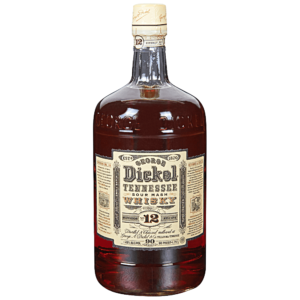
    Dickel is some mighty fine lickel
    If you only know Jack, You don’t know Dickel

    And occasionally, I’ll pour a George Dickel Barrel Select into a rocks glass (for medicinal purposes only). I can usually do all of these things while spilling very little. I mean I might miss a drop here or there, especially when I’m on my third or fourth Dickel. But, for the most part, I do a good job at getting my fluids where they’re supposed to go.

    Do you know what I can’t pour without spilling? No, it’s not the fifth glass of Dickel. It’s gasoline. Do you know why? Because I have a government mandated and approved gas can. I don’t know if you’ve had to get a new gas can in the last ten years or so, but if you have, you know my pain. All of the new spill proof gas cans make me spill gas more easily than anything else I’ve ever poured.

    Seriously, how do you screw up a gas can? Can it get more simple. A bottle with a spout and a hole for air. That’s all you need. But somehow, our benevolent overlords screwed them up. Old gas cans are actually a commodity today. An old employee of mine mentioned that her father (a farmer in central Indiana) goes to estate sales to find the elusive gas cans from yesteryear that have disappeared from store shelves. He sells them to other farmers. That’s right. There’s a secondary market for old gas cans because of the government. There’s also an array of YouTube videos showing how to hack the new gas cans. Really, there are countless videos to tell you how to make a government approved spill proof gas can usable.

    I guess I’m now one of the lucky ones though. A few weeks ago my neighbors’ garage got damaged in a storm. When they tore it down I saw an old fashioned gas can in the dumpster. I climbed in there and grabbed it. I couldn’t let it go to waste. I’m now using a functional gas can, my apologies to those who don’t have one.

  • Simple Things the Government Screws Up Part I : Low Flow

    Simple Things the Government Screws Up Part I : Low Flow

    It’s been a long, hard day. As you enter the room you let the last bit of your clothing drop to the floor. You’re already feeling good and you know that the hot and steamy water flowing over you will only further your ecstasy. You lift in one leg and then the other. As you turn the knob water begins to flow from the tub faucet. It’s getting hotter and hotter. Just when you’ve reached the perfect temperature you grab the knob and turn. You can hear the water running up the pipe to the shower head. You’re ready, you’re excited, and you’re disappointed. It’s a low flow shower head.

    Yep, it’s an incredibly simple thing that the government screwed up. Now, if you live in California or some other arid climate, maybe there’s an argument to make for low flow showers (I have a free market base approach that might work here, but that’s a side debate). I don’t live in an arid climate. I live in Indiana with some of the most abundant water aquifers in the world. Not to mention one of the largest fresh water bodies on the planet that might just be a little bit north of my current location. With the exception of a minor, occasional mid summer drought. We don’t have a shortage of water here. Also, it’s incredibly cheap, so I’m not worried about price.

    Now this has been an increasing problem throughout my life. But there is a solution. It involves a couple pairs of pliers. One to take the shower head off and a pair of needle nose to pull out the flow restrictor. It’s really simple. Just keep working at it until all the plastic and bits aren’t in the way anymore. In fact, I carry pliers with me on every road trip that I take. There are hotels as far east as Virginia, as far north as Montana, as far west as California, and as far south as Texas that have higher flow rate shower thanks to me.

    Imagine water as a hot dog and this as the hallway. In this scenario it’s actually good for the hallway to be large.

    Unfortunately, this solution is working less and less. They’ve figured out people like myself are doing anything and everything I can the thwart their efforts. Manufacturers are now incorporating low flow into the faucet valve. I have a solution to this to, but it’s not quite as simple. It involves a drill and being willing to buy the parts two or three times for when you screw up. It’s still usually well worth it. Or, if you don’t about aesthetics you can make your own flow heavy setup using ball valves. Now your wife may not like it at first, but when it no longer takes her 20 minutes to wash the soap out of her hair, she’ll hopefully come around.

    In the meantime make sure you turn on a faucet and let it run for 15 minutes a day to counteract their measures.

  • An Eight Year Journey

    My old pal Joe, one helluva good friend

    I started smoking somewhere around the age of 14. My dad smoked, his three brothers smoked, it just seemed like the right thing to do. I started with Camel Lights and moved on to Winston, because it tastes good, like a cigarette should. Even early in high school, I was known as the heaviest, most constant, and most consistent smoker around. I was buying cartons by my senior year. By the time I reached college, I would go through 5-6 packs a weekend during my sessions of binge drinking. And all that was without sharing, I didn’t bum to people, I hate bums. Get a damn job and buy your own smokes you leach. And I never tried and had no plans to quit. I loved smoking, let me repeat, I loved smoking! Besides, it just takes the shitty years off the end of your life. 

    Somewhere around 2008-2009, smoking started to look a lot less glamorous to me. I was fine with idea of getting lung cancer. Lung cancer usually kills you quick. While I don’t prefer it, at least it won’t ruin your life for years. My fiance (at the time, now ex-wife) had a grandfather with COPD. That’s what really changed my mind. Watching the misery he went through was enough for me. I hearkened back to the asthma I outgrew during my childhood. I remembered what it was like to not be able to breathe. I decided I didn’t want that feeling ever again.

    Tastes Good like a cigarette shoud
    A pack of Winston S2’s I recently found in my old hiding spot at my parents house.

    I didn’t know anything about e-cigs at the time. So I tried to switch to dip. I had done it a few times in college; it really wasn’t my thing. But, I’d rather lose my gums and jaw than not be able to breathe. Grizzly Mint Long Cut was semi-successful. I was smoking less, but I certainly hadn’t quit. I was probably down to a pack or so a week for about 6 months. I went back to cigarettes, nearly exclusively, at the funeral of the man who was my inspiration to quit (the grandfather).

    Right around this time I had moved back in with my parents again while saving for my wedding. My brother, a lover of gadgets, had ordered my dad an electronic cigarette from some company online, I scoffed at the idea. But my father, who had never tried to quit in his life, decided to give it a go. He had one “analog” cigarette three days after starting the electronic and was disgusted with how it tasted. That was 2010, he hasn’t smoked a cigarette since.

    He told his bothers, all lifelong smokers, about it. 2 of the three switched with him. Now after a month or so of their success, I decided maybe it wasn’t the snake oil I thought it was and maybe I should give it a shot. These were the earliest days of vaping. The only shop in town that sold this stuff was actually a rare coin shop. The owner of the shop had started vaping and after his success he decided to start selling it out of the coin store. I bought my first ego 510 and I was off to the races.

    I was amazed at how well it worked. It didn’t taste exactly like smoking, but it was close enough. It mimicked the motion and movement. It produced the visual effect. Most importantly, it kept my nicotine receptors happy. Also, I can’t begin to tell you how much better I felt. I could breathe and I could breathe well. It only took a few weeks for my smoker’s cough to vanish. It was amazing. The other thing that I really like about it was that I could cheat. When I was drinking with friends, I’d have a smoke or two. The next day, I was fine with going right back to vaping.

    The technology changed incredibly rapidly during those first couple of years. In the early days you actually put a few drops on some poly-fill stuffing and held it up to the atomizer. It burned the poly-fill often and tasted awful when it did. Tanks came out next. Variable voltage after that. Then sub-ohm atomizers, variable wattage, stainless steel coils, etc. The products out there today are vastly superior to what I started out with.

    Shit i spent a lot of money batteries
    An array of the batteries I’ve used through the years. On the far right is the Joytech ego 650mA. As the got more advanced they got bigger. The one on the far left is the Innokin Cool Fire IV with variable voltage/wattage up to 100 watts.

    After the first couple of years of vaping, I actually stopped using tobacco flavored juice. That was a big step. And when that happened, I realized I wasn’t addicted to cigarettes any longer. I was actually more addicted to vaping than I was cigarettes. I still cheated occasionally (especially while drinking or hanging out with old smoker buddies), but it became less and less as time went on. About two years ago, I realized I really didn’t like smoking anymore, not even my occasional cheat. So I stopped real cigarettes altogether.

    Finally, about a year ago, I started questioning if I should try to quit vaping. Like cigarettes, I had never planned to quit. I actually thought I’d vape until I die. But, I started to worry about impending FDA regulations. I was concerned how much it was starting to cost (Indiana regulations drastically increased the price). And with more FDA regulations, the price is only destined to get higher.

    I started taking Wellbutrin (aka Bupropion or Zyban), a prescription quit smoking aid (and anti-depressant). I could tell when I first started taking it that I cared less about my nicotine addiction. About two weeks after starting it, on January 28th, 2018 I stopped vaping and all forms of nicotine. I haven’t had any since. Truthfully, after just a few days, almost all of cravings had subsided. After about 6 months I stopped taking the Wellbutrin. I very rarely crave nicotine at all anymore, and when I do it passes almost instantaneously. I really have no desire to ingest it in any form anymore.

    It was about an 8 year journey for me to quit nicotine. I think that using the dip actually helped me to start to break my habit. Then, the e-cig saved my life. They are a life saving device. If you smoke and you want to quit, give it a shot. My father, two of his brothers and countless friends of mine also quit smoking by switching to vaping. It really is a miracle of modern times. The only caveat is that you have to want to quit for vaping to work. But if you do, it might save your life.

    As a quick aside, I wrote many smoking related papers while in college. That’s how I found Jacob Sullum’s book For Your Own Good: the Anti-Smoking Crusade and the Tyranny of Public Health. His book led me to TOS, which in turn brought me here. BTW, I recommend the book, I wish there were an updated revision.


  • The Beer Wars:  An Incomplete History of the American Beer Industry (pt 1)

    Part I – Pre-prohibition

    This is part one (of five) in a series of the Beer Wars in America (primarily 1970-1990) and some before and after history.  There are much better beer historians than me who would be far more accurate.  At the end of each piece, I am going to include how the period in question effected a local brewery to me, Falls City.  It adds a bit of individuality to a big picture story.  And now let us begin.

    In the beginning of America there was beer, and it was good, but it wasn’t really an industry so I am going to ignore it.  The Mayflower had beer, Washington and Franklin brewed beer, some breweries existed on the Eastern Seaboard.  But the exciting stuff happened with a combination of the industrial revolution and the German invas…ummm, immigration wave in the 19th century.  This was followed by the commercial use of refrigeration and an industry was born.

    Below is a not-so-random selection of mostly-German, mostly Midwest, breweries that were founded in the mid 19th century and would continue to play a major part in our story in the late 20th century.  This list is by no means complete, but it gives you a flavor of the Germanic character of the industry in these days.

    Yuengling, 1829, Pottsville
    Falstaff, 1838, St Louis
    Ballantine, 1840, Newark
    Schaefer, 1842, New York
    Pabst 1844, Milwaukee
    Schlitz 1849, Milwaukee
    Stroh 1850, Detroit
    Blatz, 1851, Milwaukee
    Anheuser-Busch, 1852, St Louis
    Christian Moerlein, 1853, Cincinnati
    Leibmann, 1854, Brooklyn
    Hudepohl, 1855, Cincinnati
    Miller, 1855, Milwaukee
    Jacob Schmidt, 1855, St Paul
    Heileman, 1858, La Crosse
    Christian Schmidt, 1860, Philadelphia
    Hamm, 1865, St Paul
    Coors, 1873, Golden
    Sterling, 1880, Evansville
    Pfeiffer, 1882, Detroit
    Anchor, 1896, San Francisco

    The Seibel Institute in Chicago taught brewing in German up until World War I.  The Brewmaster’s meetings at Budweiser were held in German up until about the 1960s.  The inability to speak German limited a brewer’s advancement in the company in the first half of the 20th century.

    Prior to this time, American breweries were based in the English tradition and were primarily Ales.  Lager became King with the German influence.  In 1873 there were 4,131 breweries in America, a number that would not be topped until late 2015.  In the 60 years from 1865 to 1915, the amount of beer produced and the per capita drinking increased dramatically (from 3 to 18 gallons per capita per annum).  However, the number of breweries decreased as industrialization and refrigeration allowed for larger breweries.  See the chart below:

    1865-1915

    Year National Production (millions of barrels) Number of Breweries Average Brewery Size (barrels)
    1865 3.7 2,252 1,643
    1870 6.6 3,286 2,009
    1875 9.5 2,783 3,414
    1880 13.3 2,741 4,852
    1885 19.2 2,230 8,610
    1890 27.6 2,156 12,801
    1895 33.6 1,771 18,972
    1900 39.5 1,816 21,751
    1905 49.5 1,847 26,800
    1910 59.6 1,568 38,010
    1915 59.8 1,345 44,461

    Source: United States Brewers Association, 1979 Brewers Almanac, Washington DC: 12-13.

    Of course, by the next line in the chart, the number was zero.  At least legally.  But that is a story for another post.

    At the beginning of the 20th century, Central Consumers Company, an alliance of Louisville breweries, had many of the taverns in Louisville under contract as “tied houses.”  Basically, they had a monopoly and a contract to prevent the taverns from buying elsewhere.  Some independent taverns and grocery stores refused to sign on and instead created a cooperative brewery in 1905 – Falls City.  In 1911, Central Consumers tried to buy out Falls City, but the owners chose not to sell.  Falls City would continue to grow and succeed until a horrible shadow fell over the country with the 18th Amendment.

    But there is a point to this part of the story – even in the face of monopoly, there isn’t a need for the government to fix the problem.  The plucky upstarts were able to succeed without subsidy and without selling out.  It’s a libertarian success story … for now.

  • Philosophy of Food

    I’m an animal lover.  I have two very spoiled dogs and a long history of pet ownership ranging from reptiles, rodents, cats and farm animals.  In high school I was a member of Future Farmers of America and showed poultry at the state fairs.  My parents owned a hobby farm populated with cows, goats, pigs, geese, ducks, chickens and one very fat turkey hen named Tiger.  I was showing Tiger at a fair and stopped for dinner at a sub shop.  I got a turkey sandwich.  As I ate my turkey sandwich looking at the turkey I had raised from an egg and had trained to follow me around, I heard a little voice say, “Isn’t that a little cruel to eat in front of your pet?”  Being 17 or 18 at the time, I wasn’t exactly a deep thinker and excused the thought due to the fact that I had no relationship with the turkey on my sandwich.

    The animals my family raised were never eaten by us.  Sure, we sold them knowing they would be butchered, but our hands were clean.  But as I grew older and started reflecting more on life, often while eating, I thought of the cows that I’d named and sold to market.  I could never have killed one of them.  I don’t think I could enjoy eating them even if someone else had butchered them, but here I am eating a hamburger.  I’d outsourced my killing. Did that make me morally superior or inferior?  I would never pay someone to do something I wasn’t willing to do myself, so how could I outsource my dirty work.  I decided around 27 years old to stop eating beef because of the time I’d spent close to cows, learning how curious and gentle they can be, each with their own unique personality.  Later I questioned what made cows special, other than the fact that I like them.  We had a pot belly pig that liked a good scratch and treat.  It is widely acknowledged pigs are intelligent animals, so pork fell off the menu.

    The little voice said: “Why only beef and pork?  Isn’t that an arbitrary line drawn by nothing but your feelings?”

    My hypocrisy was glaring and I decided I would eat no mammals.  An arbitrary line to be sure, but we are mammals ourselves and that seemed fair at the time.  So another year goes by eating fish, poultry and the occasional reptile when I thought back to Tiger the turkey and remembered eating that sandwich and the little voice reminding me that I wouldn’t have killed any turkey.  Well, I enjoy fishing and have no shellfish allergies so pescatarianism here I come.  Finally I could honestly say that although I was hiring someone else to catch and provide my food, I would be willing to do it myself.  I remained on that diet for several years and continued enjoying animals through zoos, aquariums, nature walks and television programs.  I love nature shows.  I find any animal fascinating.  The way they live, breed and hunt. Watching lions hunt on tv as a child I always rooted for the gazelle to get away.  As I got older I realized that the lion needs to eat too.

    Little Voice: “Is the lion an immoral creature because it hunts?”

    Only the most rabid PETA person would say yes.  So if the lion is not immoral for hunting, why did I myself consider it immoral?  Because I have agency?  I can choose not to kill.  I have empathy.  I can image what other people and animals feel.

    Little Voice: “What about the bass you love to catch?”

    That, I told myself was different; they aren’t a higher animal.

    Little Voice: “They fight for their lives.  They want to live.”

    Fine, fish off the menu.

    Little Voice: “What about shellfish?  They didn’t evolve those hard defensive shells for no reason.”

    Fine, all animals off the menu.  Are you happy now voice in my head?!?  I’ll go vegetarian!

    Little Voice: “Cows are slaves to dairy farmers.”

    Fine, vegan!  Good enough for you conscience?!?

    Once again,  I was watching a nature program, this time about wild tobacco plants.  Tobacco plants produce natural pesticides to protect themselves from insects and when exposed to a new pest that is resistant to their chemical warfare, they evolve a new pesticides in a never ending evolution of defense.  Not only do tobacco plants fight to live, they send a message to other tobacco plants with the design for the new pesticide.  The plants have empathy, they shared their hard work so the species could survive.

    Little Voice: “Seems like plants want to live as much as bass.”

    Fruit?  How about that brain? You got anything against fruit?  I’ll go full Jainism!  Not to offend any Jainist reading, but if you look into evolutionary history, that fruit isn’t meant for humans.  The reason that ripe fruit changes color is to signal birds that it is ready for them, not some local primate.  Prior to color vision development in primates, only birds could see the color change and the plants were offering a tasty snack to the birds in exchange for spreading seeds far and wide.  If a monkey ate the fruit, the distribution would be limited, so plants, specifically peppers, developed capsaicin in an effort to discourage mammals from eating their precious seeds.  Birds, fish and reptiles don’t have capsaicin receptors.  This was a limited chemical attack aimed at mammals, including us.

    Little Voice: “So animals don’t want us to eat them and plants don’t want us to eat them, what are you going to eat smart guy?”

    I thought about it.  Single cell organisms that use photosynthesis and have no defensive mechanism?  They aren’t even harmless!  I’m sure, little voice in my head you are familiar with the great oxygen event.  You must, you know what I know! Those little light consuming bastards wiped all other life off the planet with poisonous oxygen!  As I gained control of my addled mind, I began to think about how a small organism changed an entire planet and took my attention from the very small to the very large; our universe.

    The universe is big place and the vast majority is empty and yet filled with danger; vacuums, extreme cold, radiation, black holes and burning balls of gas.  The universe is racing to reach it lowest form of energy through constant expansion and organisms are fighting the flow of energy seeking its lowest state as the heat death of the universe approaches. Microbes to man are engaged in a Sisyphean challenge of rolling a rock up an energy hill, forever.  In that context, living is fighting. It is the ultimate fight club with no holds barred.  Our ancestors came down from the trees and developed efficient locomotion to pursue game; a unique shoulder design that allows for projectile weapons such as slings and arrows.  We learned to use fire to make meat more digestible and with that calorie boost our brains grew to develop even more complex hunting schemes and weapons.

    Little Voice:  “Does that mean YOU can do whatever you please with no consideration for life?”

    No.  Humans are still cursed/gifted with sentience.  We are not bound strictly by evolution.  We can make choices about what and how we eat.

    Little Voice: “Are animals nothing more than property?”

    That is a debatable question for another post, but let us assume yes, animals are property AND in need of special consideration.  Just because animals are a food source doesn’t mean we can’t still show empathy.  With these revelations my diet expanded to include animals once again, but with a wider consciousness.  I thought, what is the most ethical way to procure food?  A shallow thinker may conclude a vegan diet hurts no animals.  I already posited that plants may not want to be food, but conceding that point, growing vegetables isn’t harmless.   The land where soybeans and kale are grown had to be cleared and the native animals displaced.  After the animals and non-commercial plants are eradicated, the land needs constant protections from animals trying to eat the crops and plants invading the inviting soil.  A clear battle line is marked at the edge of the farm and pesticides must be applied which kill not only pest but other harmless insects.

    The veggie farm is just another arena in the fight club of life.  Cattle ranches and poultry farms have the same issues but with added ethical considerations of living conditions for the animals.  Buying cage free and free range is an option but still the animals aren’t wild and the land still managed.  Commercial fishing has it own set of issues such as long net vessels catch the target fish for market, but also thousands of fish with no food value.

    Little Voice: “There ought to be a law!”

    There oughtn’t, I counter.  Everything comes with a price, including ethical farming, fishing and ranching.  I choose to pay extra for what I consider to be the more ethical methods, but not everyone has room in the budget to make those same choices or has the same set of values as I do.

    Little Voice: “Clearly hunting is the most cruel.  Everyone knows that.”

    Not so fast my imaginary friend.  Recreational hunting is limited to only certain times of the year and subject to bag limits for native animals; on private land you can target invasive species year round.  In both cases, the land is left in a natural state so all non-game animals and plants can live without molestation.  Only a few of the game species are harvested so the majority is left to thrive and the sacrificed few aren’t wasted by responsible hunters, since the meat is eaten and the hides turned into trophies. Sport fishing is the cousin of hunting, where limits are set and only a sustainable number of animals taken during certain seasons.  Hunting and fishing are the most honest ways to procure meat in my opinion.  The hunted have a chance for escape and ethical hunters give fair chase to the animal.  The cow has no chance for life beyond the ranch and may even see the rancher as a friend who provides food, until led to the abattoir.

    After years of self reflection and deep though, I have made peace with the little voice in my head.  I try to eat sustainable fish, free range/cruelty free animals and this year I plan to buy a lifetime hunting/fishing license for the state of Florida, so I can supplement my diet with what I consider the most ethical meat source.  I would grow my own vegetables too, but it turns out I don’t have much of a green thumb or patience for weeding.  How is any of this of interest to libertarians?  Libertarianism is a governing philosophy, not a moral code.  Where the debate comes into play is how government regulates use of public lands for hunting, seas for fishing, animal cruelty laws for ranching and regulation of herbicides/pesticides/GMO for farming.

    As libertarians, we can debate how heavy the regulatory hand should be.  No FDA?  I’m listening.  No FWC?  I think they provide a valuable service of ensuring native species aren’t over hunted on public lands.  A better solution would be selling public lands to private conservation groups and have private regulation.  Mandate cruelty free food?  This is where my standards for myself and the law come into conflict.  I chose a diet that I believe to be ethical, but as a libertarian I would never force others to make that same choice.  If enough people would choose to pay the price difference the market will provide cruelty free alternatives.  As the market grows, prices should come down.  In the end, it is up to each individual to make peace with that little voice in their head.

  • The Hyperbole’s Homebuilding Hurly-burly Part Addendum.

    My hotel bathroom last weekend. You be you West Virginia.
    I may have to rethink my stance on vigorously enforced building codes.
  • The Hyperbole’s Homebuilding Hoop-de-doo Part TL/DR

    Previously on H3

    Part 1: Introduction, Caveat, and Stakeout

    Part B: Permits and Foundations

    Part III: Do’h, Stumps, Rodan!!!, and Framing

    Part The Fourth: Rough-in, Decks, and Inspection

    The Penultimate Part: Drywall, Insulation, Siding, The Big Finish, and More.


    TL/DR

    A six-part series? Ain’t nobody got time for that.

    Looking good
    Peppers

    A quick synopsis for newcomers or those who haven’t kept up or those have who smoked and/or drank away all their long-term memory cells. In 1988 I helped my father build a home, since then we’ve built on average two homes per year. All but one in the same development, a gated lake community run by a Home Owners Association. Over those thirty years, building codes were adopted and updated, the HOA’s rules and requirements were expanded, technology improved the tools of the trade, products, and materials. In the previous articles, I examined these changes by comparing the building of that first house and the one we started this spring. Here I attempt to relate what all this has to do with libertarianism, or at least how it has influenced my libertarianism, otherwise known as the only true libertarianism.

    What Did You Learn?

    Aside from the specifics, probably not much, the recurring themes were likely no surprise to most Gliberati, being the heartless greedy anarchistic greasepaint-mustachioed aginners that you lot are.
    ⦁ Market driven improvements in tools and materials save time and money or add value through better products.
    ⦁ The regulatory changes be they from the HOA or the building codes they adopted do little if anything to add value to the homes, and cost the builders and owners time and money.
    ⦁ Codes and regulations create a false sense of security. Why exercise due diligence when the Government/HOA says everything’s cool?
    ⦁ Top Men® are rarely competent or particularly knowledgeable, and even the good ones are subject to human nature, i.e. power corrupts…etc.
    ⦁ Paperwork, red tape, and other bureaucratic nonsense are at best a ‘cover your ass’ legality for the HOA and at worst a ‘process as punishment’ deterrent.

    What Did I Learn?

    WTF Cukes?
    WTF Cukes?

    That writing is hard; I can install crown moulding like it grew there, but stringing together a few sentences takes far more skill. You get drunk and bang out a few paragraphs then the next morning you delete all but a few phrases, rinse and repeat until you have something resembling a coherent thought. Luckily, I also learned that I can absolutely butcher the language and waterboard syntax for the sole purpose of shoehorning Elvis Costello album titles into my posts and not a single one of you will notice. I mean I can see how ‘This Year’s Model’ kind of worked but who says ‘Punch the Clock’ or ‘Imperial Bedroom’? C’mon people, work with me here.

    What Does This Have To Do With True libertarianism?

    After all the bitching it may surprise some of you that I have absolutely no problem with the concept of HOAs. Some of you may recall that I even defend HOAs when we get the occasional link about a resident breaking some stupid rule and getting into a fight with their HOA. I may not want to live under the rules of one, but it’s not up to me to tell others that they can’t. As I tell Commies and So-cons alike, if I had my way they would still be able to go off and live in some free-loving-malnourished-dog-filled-smelly-hippie commune or some stick-up-their-ass-WASP-only-country-club community, just don’t force anyone to join who doesn’t want to. That’s how I see HOAs.

    Red Sauce Walking!
    Red Sauce Walking!

    Some argue that this is a violation of basic property rights, that you don’t ‘truly’ own your land if you can’t do whatever you want with it. That may be true; it’s just not a big deal, if people want to buy land that comes with strings attached, who am I to stop them? If I want to sell some excess property but don’t want a pig farm next door, there is nothing un-libertarian about having a ‘no pig farm’ clause in the contract. I also have no problem with an ‘if you sell you have to include a ‘no pig farm clause” and an ‘if you sell you have to include an ‘if you sell you have to include a ‘no pig farm clause”’ and so on and so on and scooby doobie doo. You want un-stringed land? proclaim yourself King, Chief, or Big Kahuna then raise an army, conquer some land, and hold it. That’s the only way you’re going to truly own your land.

    That said, all rules are not created equal. Most people join HOAs because they want to live in a community with certain shared aesthetics. They don’t want a doublewide next to their half-million dollar manse, they don’t want chain link fences or front yards filled with cars on blocks. What they do not particularly care about is if their neighbor’s great room has natural lighting equal to or greater than 8% of the floor area. However once you set up a system to make and enforce rules you get people using it to make and enforce rules, and they don’t stop at the ones that ‘most people’ want, they use the system to push their agenda.

    Like the discussion had in the comments of Desk Jockey’s excellent ‘Hillbillies can Maths Two’ post, governing bodies govern. Mini anarchism is an impossibility. Even in this small rural community, the HOA has grown year after year infringing on more and more of the freedoms the people who voluntarily joined once enjoyed. Most of these people don’t care, they are content to live their lives… going fishing or boating or just sitting in their home and reading self-affirming blog posts. It’s human nature and the inevitable lure of power that ensures governments will only attract those that want something to be done!!

    Dealing with the arbitrary rules of both the HOA and the building code that they adopted led me to realize that all rules, not most, but all rules are subjective. For a while, I accepted that we needed electrical and plumbing and structural codes: egress windows and smoke detectors just make sense. These were objectively obvious necessities. Then they changed the rules about attaching deck ledger boards to the house. The laws of physics hadn’t changed, and the way we had always done it was structurally sound, decks weren’t falling off of homes left and right and yet some far off panel of ‘experts’ had decided that we now had to do things differently. This got me thinking about the other ‘obvious’ codes. Why is a railing required to be 36″, why not 35″ or 37″. Why should smoke detectors be required in every bedroom but not the living room or den? Oh, I see, bedrooms are ‘sleeping areas.’ I’m sure not one of you reading this has ever fallen asleep on the couch in your living room or office or den. Hell, I’ve woken up (okay ‘come to’) in my bathtub a time or three.

    Lastly

    Trust all this useless beauty, the King of America may spike the brutal youth with secret(s) profane and sugarcane. When I was cruel yet mighty, like a rose, blood and chocolate brought national ransom by the delivery man with the Juliet letters. North!! Il Sogno, Momofuku…Momofuku’s


    Huh, so that’s how Agile Cyborg did it. I’ll be damned.

  • OC (Open Carry)


    In October 2012 I went to the local gun show in New Bern, North Carolina with my sons (10 and 16). A gun store dealer had a steel .45 caliber Baby Eagle for $600. I had shot one of these a couple years before and had been looking to buy one. My younger son told me, “Just buy it, it’s your money, you don’t need to ask Mom.” But, luckily for me, common sense prevailed and I called my wife. She gave me permission, but she wasn’t happy about it. My wife is Japanese and was used to my rifles, but she is not a gun person.

    Best $600 .45 you can buy IMO

    Since it was a gun show, and I had never bought a new gun before I was surprised and a little irritated that they had to do a background check on me. I had always heard of the “gun show loophole” and was stupid enough to believe it. As Suthenboy always says, “Gun grabbers lie, it’s what they do.” But I went through with it (never again) and was approved. The only loophole was as an active duty Marine I needed permission from my Commanding Officer, but this doesn’t apply to gun shows.

    I was due to deploy to Afghanistan in January, so I planned on getting my North Carolina Conceal Handgun Permit(CHP) when I got back. While I was deployed, I started looking into the laws and requirements for the CHP. As I did the research it was grinding my gears, and I kept thinking this is not something you should have to ask permission for. One of the websites I found was www.opencarry.org and there I learned that a permit was not required if you open carry in North Carolina.

    I was unfamiliar with OC and really looked into the pros and cons.

    OC Pros:

    • Comfortable, I don’t have to dress to hide the gun.
    • Easier to access the weapon in emergency
    • Deterrent factor, if a bad guy sees it, I’ll be more likely to be left alone.
    • NO PERMIT REQUIRED! (in NC, VA, and 29 other states)

    OC Cons:

    • Potential target, this is the one most often mentioned by CC advocates, but if you look at statistics it is a minuscule risk.
    • Attract attention from law enforcement, this happened to me once and it was scary and enraging.
    • People reacting negatively, hasn’t really happened, most people either don’t notice or care.
    • Prohibited from certain stores, happened to me once, but I’m ok with this. If you object to my being armed, I assume you don’t want my money.
    • Losing the “element of surprise,” this is another one you hear from CC’ers, I would rather not shoot someone that tried to rob me because they thought I was unarmed, but that’s just me.

    I decided OC was the best option for me, and since June of 2013, I OC everywhere outside of work, since I work on a military base. The first time it was like a 13-year-old boy with an awkward boner, you feel like everyone is looking at you. Over time it gets easier as you realize nobody cares. My wife is used to it, and even my proggy Mom doesn’t complain when she comes to visit.

    I’ve had several comments and the overwhelming majority have been positive. As I look over the list below, there are some that were negative, but I’ve forgotten many of the nice things random people have said to me. 99% of the time no one says a word and I think most people don’t even see it.

    Custom FIST Leather holster with thumb break

    Here is a rundown.

    Went to the Wicked Superstore in Havelock NC to look for a costume for my 11 y/o son. We weren’t in there for more than a minute when a guy who worked there came up to me:

    Guy: “The owner wanted me to ask if you were law enforcement?”

    I’m wearing work boots, jeans , a long sleeve black t-shirt with a Spartan helmet on the front and MOLON LABE on the sleeves and an old Penguins ball cap, so I don’t look like a cop.

    Me: “No, just a normal guy.”
    “She said if you’re not then you need to put the pistol in your truck.”
    “Then we’re leaving”
    “Oh.”
    “I’ve been to a lot of different places and never had a problem.”
    “It’s her property.”
    “I know, guess we’ll go somewhere else.”
    “Sorry about this.”
    “I don’t care, we’re going.”

    So we left and drove to the Halloween store in Morehead. I wish I could have taken a receipt back to the Havelock store, but my son was getting into the too cool for Halloween stage and we ended up not buying anything.

    At a Hardee’s in Fredericksburg VA, I had a man walk up to my table.

    Man: You can carry like that here?
    Me: Yea, totally legal.
    Man: You got a permit though, right?
    Me: No, not required and I don’t want to jump through hoops for other people’s feelings.
    Man: I’m not used to that, we’re from Jersey.
    Me: Feel sorry for you, that is on the list of states I won’t move to.
    Man: OK have a good one.
    Me: you too

    Later he came back and was amazed when I told him there were no limits to the number of bullets I could carry, I finished with, “Freedom is awesome”, and he replied with “I guess,” although I did hear him tell his wife they should move here “to get away from the Nazis.”

    Chick-fil-A in New Bern with my wife, had the following conversation.

    Some Guy: Excuse me, do you mind if I ask you a question?
    Me: Not at all.
    SG: Are you a cop?
    M: No.
    SG: Do you ever get hassled?
    M: No, been kicked out of one store, but that doesn’t bother me.
    SG: So the police leave you alone?
    M: Yeah, I’ve eaten in here right next to two state troopers and been at another place with a couple county sheriffs and they didn’t say a word.
    SG: Cool, I let my concealed lapse, since I didn’t want to take the class again, so I was OC’ing earlier, but put it in the truck before I came in here since I thought it would create a scene.
    M: I go all over the place in New Bern and Havelock and 99% of the time people don’t notice or they have nice things to say about it.
    SG: That’s good, I’ll let you get back to your lunch. Have a good day.
    M: You too.

    Dryer quit one night, so my wife and I went to the coin laundry in New Bern. There were two people plus the attendant, no one said anything and about 15 minutes later the other people left.

    Now that it’s just my wife and me, the attendant calls me over.

    Attendant: Do you have a permit for that?
    Me: Nope, don’t need one to open carry, only if you conceal it. It’s still mostly a free country.
    A: You can’t be in here, what if someone tries to take it and shoots us?
    M: That never happens, are you telling me to leave?
    A: Yes, I’m not comfortable with you in here.

    So I stood outside on the sidewalk while my wife was inside (clothes were in the dryer at this point). Little later he came out.

    A: It’s illegal to carry that without a permit.
    M: No it’s not, can you tell me the actual company name?
    A: Why?
    M: I want to email the corporate office and find out if it’s their policy or just your policy.
    A: It’s my policy, but I’m in charge so I say you can’t be in here.
    M: I am not arguing that, I am just trying to find out where this comes from.
    A: You can’t be in here.

    Then he mumbled something about permits and walked back into the laundry. So I figured I could Google the company and find out. Five minutes later he comes back.

    A: I’m not trying to be a dickhead, I tried to call my supervisor, but she’s not answering. You can go back in if you want.
    M: OK, I’m not trying to cause a problem.

    So I went in and he wanted to talk about problems with other people not listening and bringing dogs in, I said my gun will cause less problems than a dog. He asked why I didn’t get a permit, so I told him I don’t believe in asking permission, so I open carry.

    All in all, minor inconvenience, and when I went back one more time he didn’t say a word, just nodded a greeting.

    I got thanked in Popeye’s for “exercising your 2nd Amendment right.” I wasn’t quite sure what to say, went with, “do it everywhere I can.”

    This one still pisses me off. Went to the Havelock Chili Fest, ate some good chili and walked around for a while. I think we were there for an hour, but as we were leaving a pair of Havelock cops came over to me. Only one cop did all the talking.

    Cop: You can’t be armed here.
    Me: Why not?
    C: It’s illegal.
    M: No, it’s not.
    C: This is a festival.
    M: So?
    C: You can’t carry here, not even concealed, just like a place that charges admission, or a parade.

    I jokingly point to their pistols and say, “but you’re carrying.”

    C: You’re just a citizen.
    M: This isn’t a parade or demonstration, so it’s legal.
    C: No, it isn’t and you can either cooperate or….

    He shrugged his shoulders a little and gave me a look. He didn’t say it, but I knew what he meant. I couldn’t keep my big mouth shut though.

    M: I carried here last year. I also carry at the seafood fest and mum fest; cops definitely saw me.
    C: If they didn’t stop you they are wrong. Are you going to put the weapon in your vehicle or not?
    M: (deciding on not being arrested) We were leaving anyway.

    I just started walking towards the parking lot and they didn’t say anything else. My wife says I need to work on my “angry face,” and I know I talked a little more than I should have, but at least they didn’t try to ID or disarm me. Spoiler Alert: I was 100% legal, but I was retiring from the Marine Corps and job hunting so I wanted to avoid having to answer “YES” on the “Have you ever been arrested” questions.

    At Flatwoods Outfitters in Jacksonville NC, the RSO made me go back to my truck to unload and then hand carry my empty pistol to the line. It is illegal to OC if admission is charged, he admitted it was stupid, but the law is stupid and makes you do stupid things.

    I went to the NC seafood festival, not sure why: food was too expensive and there were way too many people. But on the bright side, there was not a single reaction to my pistol (except my wife). She started with, “there are so many people, if something did happen, you couldn’t do anything.”

    I explained that if someone started shooting, most people would get down and it’s not like I would go looking for them, but if they were coming towards me it would be fairly obvious who the BGs were. Then she told me that I was the only one with a gun, so I said that’s not true, I’m just the only one you can see. No big deal, for the most part she leaves me alone about it.

    The gun did protect me while walking to the festival, there were two ladies sitting outside of the Democratic Party HQ and they stopped the people about 100 yards in front of me, but when I got to them they didn’t say a word.

    At a HESS in Ahoskie or Oriental (it was a long trip, not sure) a man says, “You can carry like that up here?”

    Me: That’s the only way I carry, since I refuse to get a permit.
    Him: That’s legal? I’m from Florida so I’ve never seen that before.
    Me: Totally legal, most people don’t notice or care.
    Him: My man! I’m all about that.
    Me: Freedom is awesome.
    Him: We need more like you.
    Me: Carry yourself. NC is a good place for it.
    Him: Maybe I will, I keep mine in the truck.

    It was nice to get a positive reaction, although no reaction is just as nice.

    In 2015 we went to the gun show again. There were some nice guns and accessories there and the usual group of booths. I entered a few raffles and bought both of my boys a knife. One booth had a raffle for a free CC class and when the guy asked me if I wanted to enter, the conversation went like this:

    Me: No, I carry open and don’t want a permit.
    CC’er: Really, well what if the you go to CVS and the minimum wage worker freaks?
    Me: I’ll leave and contact management.
    CC’er: What if she calls the cops? (starting to get himself hyped up about something)
    Me: Not breaking the law.
    CC’er: What if he doesn’t know that and takes you to jail?
    Me: I’ll sue their asses.
    CC’er: Well, you be careful, that doesn’t seem like a good idea to me.
    Me: I am, never had a problem (as I’m walking away, no patience for this).

    It struck me as strange that a legal activity that doesn’t affect him at all was such a big deal. He was a little agitated when he got into the “what if” scenario, but it could have been worse; I thought he was going to start with the, “you’ll be the first guy shot” thing. My kids thought it was funny especially after I put it into the “two types of people”* discussion. It was funny to me because I’ve seen these types of discussions on the Internet, but this was my first experience in real life.

    *There are two types of people, the ones who want to be left alone and the others who refuse to leave them alone. I always try to stay in the first group, but a lot of people jump back and forth depending on the issue at hand (drugs, healthcare, guns, religious freedom and so on).

    If it doesn’t hurt anyone else I believe there is no reason to join the second group.

    I was in Truckers Toy Store in Morehead City and no one complained, but I did have a customer come in and loudly say, “What the hell is going on here, we got guys with guns!” The lady behind the counter looked up a little startled and said, “WHAT! Oh yeah, he has his,” then she kind of shrugged and after he left she said “sorry about that.” I don’t know why people feel the need to bring attention to themselves trying to make a stupid joke. But it really didn’t bother the staff so it’s all good.

    Since I’ve moved to Suffolk, Virginia and have been OC’ing all over Hampton Roads, I’ve seen some other OC’ers and haven’t had a single negative reaction. I always try to encourage OC’ing instead of CC’ing, but I think most people think it’s crazy. If you carry and it’s legal for you, maybe this will at least help you think about letting your freak flag fly.*

    *Disclaimer: Check your local and state laws