I am made of busy. Fortunately the single busiest day is past, though there will be a significant local maximum next week. Hopefully the week after that work should return to normal levels. Of course, I’m moving at the beginning of September, so that activity is picking up. My visual media collection fits in four 12″ x 14″ x 18″ boxes. My cookbooks fit in two.
I have been so busy that I haven’t been able to Glib properly. I will say that after reading ‘s excellent fiction piece that this site is just some Gilmore couture reviews away from being Hefner-era Playboy.
It is very strange to have an alignment that lasts for a week, especially those involving inner planets. But this week we still have that good-but-awkward-lovin’ arrangement of Venus-Jupiter-Mercury (retrograde). It’s not in the same orientation, what with orbital resonances and all, but is still exists. Someone up there wants you to have good stories to tell. Please do tell in the comments. I’m sure there are lonely people reading that would appreciate it.
There is another, more disturbing alignment this week: Sol-Mercury (retrograde)-Terra-Mars (retrograde) with the Moon in opposition. Bad weather, destruction, extreme tides, loss, ill tidings, floods, wild animal attacks, drownings, fires. Other than that, things should be fairly routine.
Other than that, how did you like the play, Mrs. Lincoln?
With all this retrogradin’ going around, the zodiacal influences are stagnating. Capricorn and Aquarius are going to be with us for a loooong time. That’s not going to be too terrible actually, though we will be coming uncomfortably close to the very bad retrograde house crossing. Close, but it won’t be happening. So we got that going for us.
Other things we have going for us? Stars-aligning-for-destruction music.
The final BIF submission is by MikeS, and I said, its a doozy:
First; apologies for my tardiness both in shipping and in getting everything drank drunk drinked quaffed. Life got in the way.
ron73440 sent me some really good beer as well as some nice swag; including a pint coozie that has already seen a fair share of use. I don’t have the palate of a professional reviewer, so bear with me.
Here we go…Glibs beer tasting; “Life on the Farm Edition”:
No, this is not George Jones’ lawn tractor.
O’Connor Green Can Golden Ale
Crisp and clean. Refreshing. Mild citrus aftertaste. Good lawn mower beer. If you have a friend who refuses to drink anything other than BMC, and you live by O’Connor, have them try this. 3.7/5
O’Connor Norfolk Canyon Pale Ale
Very similar to Green Can, just more hops. Decent. Passable PA. I’m sure PA fans would like it. 3.1/5
Three Notch’d Hydraulion Red
Nice reddish-gold color. Can’t explain taste very well. A tish sweet…caramel notes? Damn good. 4.1/5
Midnight Brewery Rockville Red Irish Red Ale
Slightly different than the Hydraulion. Not as much sweet (not that the Hydra’ was overly sweet). A little more carbonation. A little less flavor than the Hydra’. Honestly, a little bland. 3.2/5
Belhaven Scottish Ale
Good beer. A little sweet. Smooth. What is that I’m tasting…malt I think? Like the malt in a malted milk. Not a lot, just a touch. And the faintest bit of dryness on the backend. This is going down pretty quick. I like this beer. 4.3/5
Midnight Brewery Not My Job English Brown Ale
Not bad. Almost “light” considering it’s a brown ale. This is one of those beers that would shock your friends who think all dark beers can be cut with a knife. But there is something there I don’t quite like…a dryness at the end. It’s not a deal breaker, just not what I expected. 3.5/5
O’Conner Odis Black as Sin Stout
First off; I tried shining a very bright light through the glass. No go. This is black as an IRA bomb maker’s soul. First taste was like toast dipped in coffee…without the soggy grossness. So far I’m digging it. Not a heavy beer like some stouts can be. It’s an approachable beer for people who like craft beer, but think they don’t like dark beer. 3.6/5
_____
In honor of MikeS, I wanted to make sure the one I featured today, was something he could find in his neck of the woods. After all, most of his comments on my articles contain some variant of the words “I,” “can’t,” “find,” and “that.” In that order. Let’s just say I was feeling a bit ironic while completely ignoring the definition of ironic.
So Pabst went and made a Pale Ale? I must confess, I went into it assuming it was going to smell like urine. I don’t know about anyone else around here, but I for one am familiar with the scent of urine, and this my friends does not smell like urine. This is a bit overhopped in the style preferred by the hipsters this product is aimed at. Now whatever hops they picked for this doesn’t seem to suit the style of beer, but that’s okay. This isn’t going to win any blue ribbons, unless the participant ribbons nowadays are blue.
The question is….Can MikeS find this at his local merchant of mind altering beverages? Pabst American Pale Ale: 2/5.
Let’s talk about gunbelts and holsters for outdoor work. No concealed-carry stuff here – let’s discuss rigs for carrying a heavy, powerful belt gun for serious outdoor business.
But before we do that, let’s talk about guns and loads.
Western drop holster with N-Frame Smith
Woods-Bumming Guns
While I favor my Glock 36 for everyday concealed carry, for outdoor work I like a big-bore wheelgun. When woods-bumming, I usually have either my S&W 25-5 or my Ruger Vaquero, both in .45 Colt. If I take it in my head to carry a semi-auto, it’s either the 1911 or the Glock 21, both (obviously) .45 ACPs. In the revolvers I like 8 grains of Unique behind a Lasercast 250-grain hard-cast flat point. That load will blow through a railroad tie and knock a big handful of splinters out the far side and will easily lengthwise a big mulie or a cow elk.
For the .45 ACP I like the 200 grain Lasercast semi-wadcutter. Like most Glocks, my 21 will feed almost anything; the 1911 is a little fussier but will feed SWCs fine with a good magazine. I use Kimber magazines, and the 1911 will feed empty cases with those.
Now, your mileage may vary; almost all my woods-bumming these days is done in the Rockies in Colorado and Wyoming, where there are several species of big, thick-skinned, toothy critters in residence, so I recommend a major-caliber handgun for hereabouts. But if you’re outdoors in areas where the most likely targets for your sidearm are coyote-sized, anything from a .32 Long to a .38 Special will work as well, along with being a little easier to shoot. The Ruger Single-Six is available in .32 H&R Mag, a fine revolver in a good round for medium-sized varmints and, with a mild load topped with a hard-cast lead pill, nice for whatever edible small game presents itself.
Advantage of a drop belt rig: Fast into action.
But, let’s move on to what I really wanted to talk about, and that’s how to tote your belt iron.
Gun Belt Rigs
The gun belt and holster should be comfortable and solid. Choice of material is up to the shooter; some like nylon web belts and holsters, and there is certainly nothing wrong with such a rig; I’ve used many myself. But it’s hard to beat good leather. Heavy harness leather should be used in the belt, and good stout bull hide in the holster. A heavy leather rig will start out very stiff, but wear and the application of a softening oil, like neat’s-foot oil, will soon make the rig softer and more wearable.
A simple cartridge belt with the Vaquero in a Mexican loop holster.
(Disclosure: I am in no way connected to nor do I have any financial interest in the companies mentioned, I just like their products.)
For my belt guns, I like (in fact, it’s my favorite rig) the America’s Gun Store #110 Wyoming Drop belt with the #114 Cheyenne holster, which rig hangs the butt of the gun at about wrist height when your arms are hanging naturally. I find this near perfect for being able to get the gun into action quickly; if you use the leg tie down to hold the holster in place, you can wipe off the holster’s hammer loop with the shooting hand’s thumb just as your fingers wrap around the grip.
Train yourself to keep your finger off the trigger while drawing; cock the single-action or start the double-action pull after you have cleared leather and are already pushing the muzzle of the piece towards the target. I try to get in some reflex shooting practice every year, but draw and dry-fire won’t always work; most folks tend to shoot high when shooting instinctively. Practice!
The Wyoming Drop Belt also comes in a two-gun version if dual six-guns are your thing, and a cross draw holster is available for the one-gun version as well. Personally, I don’t much see the point in carrying two revolvers; if you’re that concerned about running into some kind of trouble, best to pack along a rifle.
Lots of folks like the Threepersons holster as well, and the same statements apply. For that matter, there is nothing wrong with a simple leather cartridge belt like the Hunter Company Straight Cartridge Belt outfitted with the classic Mexican loop holster, like the one I tend to tote my Vaquero around in.
Trouser Belt Holsters
Full-size 1911 in Bianchi leatherA flap holster is good for keeping the elements off your belt iron.
There are options for folks who aren’t into dedicated gunbelts as well. When talking belt holsters, I’m tempted to just mention Bianchi and let it go at that, but there are plenty of good holsters our there, ranging from Uncle Mike’s vinyl to high-end leather, prices from $25 or so to, well, as high as you care to go.
Find a holster that holds the piece canted at the right angle for your natural grip and your gun hand and carry it in a position that’s comfortable for your build; I tend to favor a right-hand hip carry. I’ve used a cross draw belt holster a time or two but don’t much care for them, as I find it awkward to reach across with my shooting hand. Your mileage may vary; as noted above, continue your draw-dry fire practice until you find the holster position that allows you to bring your piece into action quickly with a minimum of extraneous movement.
Bad Weather
If your stomping grounds tend to be wet and snowy/rainy, like the Pacific Northwest or Alaska, Great America’s also makes their very nice K #17 flap holster, which keeps weather off the gun but makes it take longer to bring the piece to bear. Bianchi makes a mil-spec flap holster for various automatics if more modern hardware is your thing.
Whichever rig you choose, keep it clean and softened (saddle soap and water for leather rigs, good cleaning with clear water and a little clear soap for synthetics) and it will give many, many years of solid service. A well-made firearm can last for a couple of generations if it’s well cared for; there’s no reason the carry rig shouldn’t last as long.
Socialism in the USA can happen any time now and I’d be cool with it.
Seriously. It can happen any time that the Socialists in the USA want it, all thanks to Capitalist technology. And the Capitalists shouldn’t even mind.
The Socialists can design a Meetup/Hookup-type app that matches Socialist Makers with Socialist Takers. Members would either be a Maker-Seeking-Taker or a Taker-Seeking-Maker.
Those numerous guilty well-to-do Socialists, the Makers, those convinced of their regretful privilege, who have excess income/possessions/accounts/shoes/value can register on the site as Makers-Seeking-Takers. Likewise, the suffering masses of Socialists, the Takers, upon whose backs the Makers have trod in their patriarchal white-male-cishetero (regardless of whether or not you are such a thing, for if you’re a Maker it’s this oppressive identity class that forced you to be unwittingly successful) pursuit of greed, will register as Takers-Seeking-Makers.
The Makers will be subject to the “From Each According to Its Ability” questionnaire to determine their Bougie-ness, their level of unacceptable indulgence. And in their turn, the Takers will complete the “To Each According to Its Need” profile, so as to determine their level of Victim’hood. The app will then find matches among these Socialists, appropriately pairing equal levels of Bougie-ness to Victim’hood. The ensuing orgy of wealth transfer will be epic!!!
Naturally, the affluent Democrats suffering from white guilt will flock to the site, abandon their “you first” approach to benevolence, and shed their damning excess. No longer will obstructionist conservative legislators force Socialists to take lavish vacations, own expensive homes, patronize Starbucks. The Socialist Makers will finally be free to voluntarily give away to the Takers all that they are able. Existing charities already accepting donations and aiding the less-fortunate will cease to be a hindrance to the Socialists’ attempts at uplifting their fellow [insert preferred pronoun here].
That’s all the brainstorming I’ve time for. I entrust the Glibs to naming the app, adding features, etc.
Food history shows generally fall into two categories: those that focus on cooking with a side of history, and those that focus on history as told through food. I’d like to recommend three series that focus on history with a side of food.
First, is The Supersizers (hat tip to Lafe Long), available on YouTube. It seems to be two series, The Supersizers Go and The Supersizers Eat. The hosts are Giles Coren and Sue Perkins. The show is focused on food culture throughout British history. There are a few partial cooking demonstrations (watch a chef sew a bird’s head onto pig’s body), and they do discuss changes throughout time. For example, shifts in food due to the introduction of spices like nutmeg or the increased availability of sugar.
The hosts eat the diet of a particular era, such as Roman or Edwardian, for a week. Like Morgan Spurlock’s Supersize Me, the two get checked out by a doctor before and after embarking on their new diet. (What should they expect from drinking all that booze during the Elizabethan era?) They dress in period costumes – Sue Perkins continues to wear her nerdy, black, hipster glasses even when wearing a toga – and sit down to eat a table set in period style. They eat off trenchers (a piece of bread) in a number of episodes because plates weren’t in use yet. The series is silly and fun and full of bite sized pieces of culinary history.
Breakfast, Lunch and Dinner with Clarissa Dickson Wright is more substantial fare. This three part series is also available on YouTube. Each episode focuses on a different meal and she explores how trade and technology have influenced and changed what and how we ate each meal. As in The Supersizers, the show has little in the way of cooking demonstrations, but we do see what a meal would look like and she gives a more erudite discussion of the culture surrounding food. It defintely kept my interest.
Food: A Cultural Culinary History is a banquet of information. It is available through the Great Courses channel on Amazon Prime (you can get a trial membership to binge this series). I had never watched a Great Courses series before and I’m not sure what I expected. Perhaps a Ken Burns style documentary with pictures and voice-over, or maybe something more like the History Channel with its badly acted re-enactments. Nope.
It is just a chubby guy in a suit, standing there talking. And I was riveted. This a survey of the history of the world told through food and culture. It covers the impact of trade and technology on what and how we eat from pre-history to modern times. Ken Ablala is master lecturer. He does throw in the rare, amateur food demonstration; charoset, penitent’s salad, and sushi. If you watch no other series, watch this one.
So, what did I learn? Well, two things I’d like to share. First, no matter what time period you consider, or what diet people followed, someone will passionately insist it’s wrong. And, not only is that diet physically unhealthy, it is morally unhealthy and anyone who eats that way is a bad person. (Shakes finger.) This, of course, creates an opportunity for the governing institutions of church and state to intervene. For example, during the middle ages, the Catholic Church designated nearly half the year as ‘fast days’ which meant eating fish. Even after England’s break with the church, the government (particularly the Elizabethan government) continued to require fast days – mostly to support the English naval fleet. By fishing, they retained their seaman skills and supported themselves, without the crown having to pay for a navy – thrifty. So, when someone tells you that people used to eat a lot more fish, just remember that it wasn’t necessarily by choice. The weird categorization of things as fish (beaver tails) demonstrates that people were not necessarily excited about eating fish, fish, and more fish.
Second, I have long considered cooking to be a basic life skill. I confess to being a bit condescending to those who complain about having to cook. To me, its not that hard, and how else are you going to feed yourself? Do you expect someone else to cook for you? Well, actually, for much of history, yes. Most people didn’t cook. Cooking for one’s self or one’s own family is a relatively modern practice. And, as an economist, once the reasoning for why this was dawned on me as I was watching these shows, I felt pretty stupid.
Abigail Adams by Gilbert Stuart Cooking utensils (especially metal utensils) and a hearth designed for cooking (or later a stove) were expensive. The Roman populace couldn’t afford to have their own ovens. They took their grain to the baker, who would mill the grain and bake the bread for them. During medieval times, if you worked for the king, or even a local lord, you didn’t cook. You ate in the hall and someone else cooked for you. Peasants working in the field would bring their grain and vegetables to the field with them and it would be cooked in a communal pot.
In colonial America, Abigail Adams and her husband were wealthy people. She didn’t have her own bread oven. It was too expensive, and not just because of the capital investment, but because of the cost of fuel. Instead, she took her dough to the baker and rented time in his oven.
During industrialization, dormitories with eating halls were common for workers. Well into the 1950s, unmarried working people who moved to the city for work lived in boarding houses that provided meals. Even today, we largely expect college students to live in a dormitory and eat in a cafeteria. Mostly due to the cost of renting and furnishing an apartment.
Education should always change us and my foray into culinary history has made me even more willing to ignore the ever changing diet advice. It has also tempered my attitude toward those who don’t cook. In the big picture of history, not cooking isn’t that odd.
Before I begin, lets get it out of the way since it comes up from time to time:
Am I Mexican? No, I am not from Mexico, but my family originates from a town split by the Gadsden Purchase. I happen to descend from somebody that resided on the north side. I am no more Mexican than any of you who happen to know which country your (great…) grandparents got of the boat from and lived in a neighborhood populated entirely by immigrants from the same country. Ultimately, the avatar is a reference to a character from 3:10 to Yuma.
Now for the part that was actually questioned:
I am not Carlos Hathcock, but I think I mastered basic marksmanship. Pistol (left) and Rifle (right).
Yeah, yeah, yeah. Control your breathing…
Cool?
The grocery store in my neighborhood was closing down. For some reason, the clerk explained, the lease Safeway held for the last 30 years was not renewed. This meant that everything was 25% off.
Everything?
Yes, everything. Including things I normally think are likely too expensive for what they are. Other things included brisket, scotch whiskey, artichokes, frozen salmon…
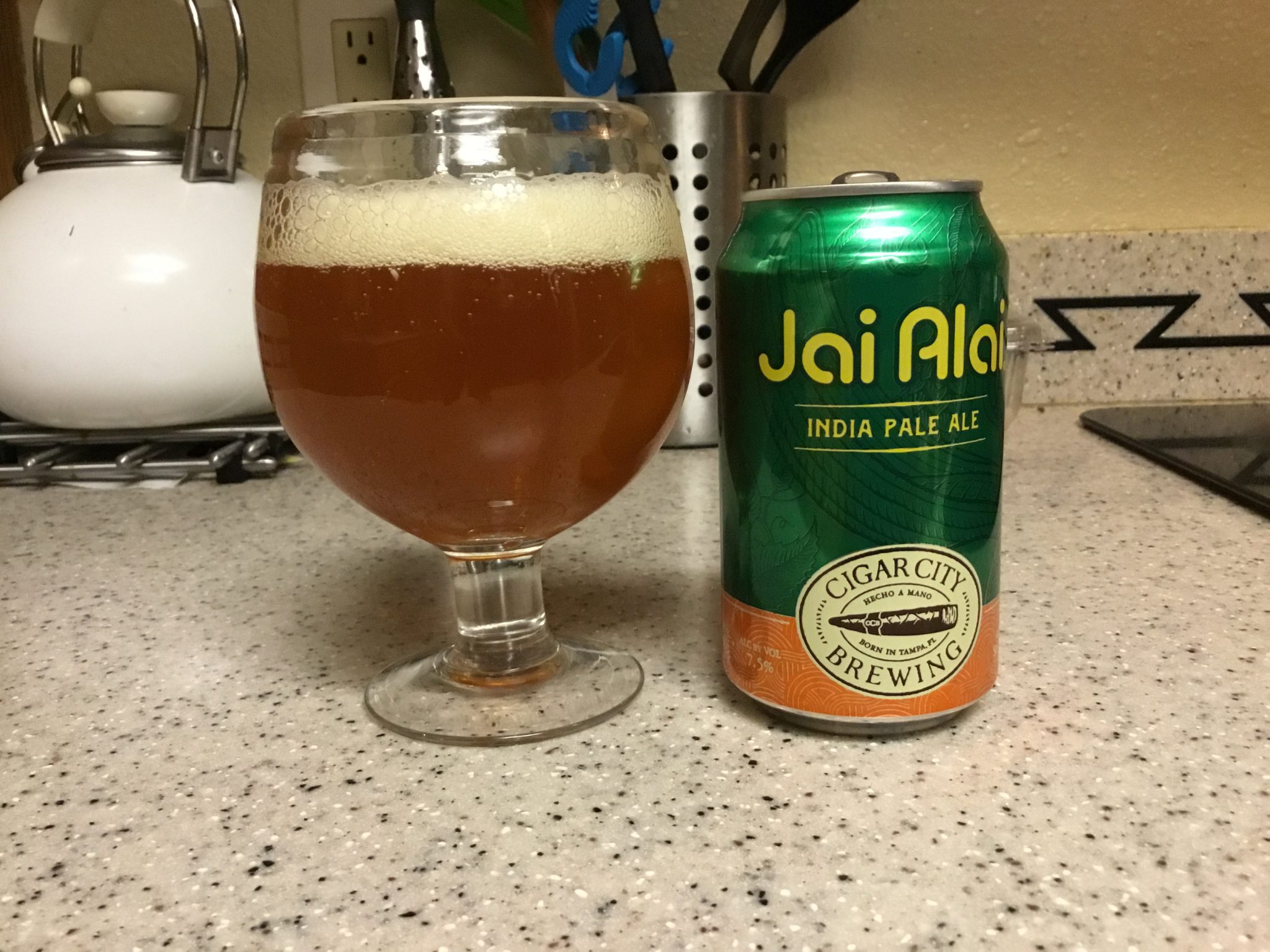
This is my review of Cigar City Brewing Jai Alai IPA:
I always thought this was some kind of extreme handball. Originating in the Basque region of Spain where players simply caught and threw a ball against a wall in the church courtyard, later evolved into an actual sport. If you were at all a part of the social scene in South Florida during the 70s, you were watching Jai Alai (pronounced Hī a Lī). The sport is almost dead today, but interest spiked about ten years ago when back in the day, the Most Interesting Man in the World made a few gamblers happy.
Part of the reason it died out was a players strike that lasted three years, and Whitey Bulger whacking the World Jai Alai president. It is a sport people gamble on after all…but in all fairness gambling is probably the biggest reason people still play it.
The Fronton: That is the front wall. It is made from granite for reasons to be touched on shortly. The arena itself, called the Cancha, is composed of the granite Fronton, a back, and left walls each made from concrete. There is no wall to the right, but there is an out of bounds line and a fence to protect the crowd. There is also a foul area on the Fronton itself, that is made from a different material and makes a different sound when struck. Foul balls are not playable.
The Cesta: This is the big curved basket worn on the right hand. Each is made from woven wooden reeds grown in the Pyrenees. It is attached via a leather glove to the right hand of the player and fastened together with a leather strap called a ‘cinta.’ The Cesta allows the player to both catch and throw the ball in “one fluid motion” as required by the rules. Judges are stationed to make sure the player does not hold the ball, and throws it fluidly. It is also handy for putting a wicked spin on the ball to outwit your opponents.
Are you left handed? You may play Jai Alai with your right hand. Because of the way the Cancha is set up, it is too dangerous to play left handed for both spectators and players. Consequently, no Cesta will be made for a left hand. If you want an advantage in a dangerous sport by being wired up backwards—stick to boxing.
The Pelota: That means ball, en Español. The ball itself is made from a metal core, hard wound Brazilian rubber, string, and wrapped in goatskin. It is approximately ¾ the size of a baseball, or similar to a lacrosse ball should you actually be familiar with a lacrosse ball. One thing to take away; it is harder than a golf ball and hurled at speeds averaging 150-180 mph. The pelota is exchanged at 15 minute intervals and the cover replaced because of how quickly it gets worn out in a game. This is why the Fronton is made from granite; the ball would otherwise tear apart other materials. Yes…I am linking this site as a reference.
The rules: Ever watch prison inmates play handball in the yard? That’s pretty much it, just without the stabbings. Here’s a good rundown.
So is it any good? If you happen to like heavy citrus IPA, yes. This is more orange/tangerine rather than the overpowering grapefruit variety that everyone loves to hate. Not my first choice but it does pique my interest in Cigar City’s other offerings, should any ever become available near me. Cigar City Jai Alai IPA: 3.5/5
The premise is you stick this plastic plate on the wall of your tub via the handy dandy suction cup, and spread peanut butter on the plate. The dog, in theory, will stand in the tub and lick it while you bathe the dog.
I’m not sure why you don’t just spread peanut butter on the shower wall and then wipe it down with a sponge afterwards, but, perhaps the value is in the ridges. One reviewer indicates it takes longer for her dog to lick this plate clean than the shower wall.
“I used to spread peanut butter on my tub and my dog licked it off faster than it took to give him a bath. Bought the Bath Buddy and used it today for the first time…it not only took him longer to lick the peanut butter off but when I got him out of the tub…he jumped right back in to try and get more off!!”
Another reviewer says:
“I gave him the easiest and quickest bath I’ve ever given him tonight. I’m so pleased with this product. Also, it stuck to my tile wall (that’s around tub) just fine. Didn’t fall off at all while my 80 pound dog licked away at it. Well worth the 20.00.”
It probably works better if your dog will get into the tub in the first place; our dogs are smart enough to know what happens when they’re guided to the bathroom, so I’m pretty sure this wouldn’t work for any dogs in our family, who are all Great Pyrs and notoriously anti-bathing, but perhaps there are some Glib pups who would fall for it.
Next lab move, I’m going to murder all the pipefitters, do the work myself, write it up as a cost avoidance, and win Employee of the Year.
But that is/was the week that is/was, we are interested in the Week the Will Be.
Mars (retrograde)-Terra-Sol: Ooof. Not Good. Mars is always a dick (that’s kind of his thing)
This is a spear and shield
but when he goes retrograde, he’s pure asshole. Then when you add the Earth (source of all evil) and empower the whole thing with the Sun, bad things happen. And I don’t mean “bad things” in the whole “tee hee, I’ve been a bad boy and need spanking” way, I mean legitimately bad in a Saw III fanfic sort of way. Then when you put Mars in Aquarius (source of plenty) and you wind up with destruction of valuables, loss of income, and warranties voided. Looking at the other end of the alignment, we see the Sun in Cancer (keeper of secrets) so expect a covert attack leading to the above disaster (fun fact: “disaster” is an astrological term).
Is there any good news? Well, kind of. The conjunction of Luna with Jupiter in Scorpio indicates a breakthrough in medicine, so that’s nice, though not necessarily applicable to any one in particular. Weight gain is indicated (that’s bad) because of particularly tasty baked goods (that’s good) and everyone’s love life should remain stable (that’s good, unless your lonely in which case that’s bad). With all this equivocation, you’d think there would be some activity in Libra, but there’s not.
Enjoy your day in the sun, Cancers. It’s fast coming to an end (where did this month go?) More political news is indicated, though that’s one of those signs that you feel embarrassed at reading (you’d expect that Mercury would be somehow stuck in Leo for the next couple of years, but that won’t happen. It will be there longer than normal though — tune in next week to see the shocking news why!)
Both groovy, and reminiscent of one who did not cross over:
Or so the makers would have you believe. “doesn’t smell a thing like old books. More like a fruity vanilla smell.”
But if you want to mess with a book lover and get their hopes up their house will fill up with that beautiful musty smell of books, grab this from Amazon.
In the fall of 2017, the outdoor cannabis harvest was a bumper crop for growers throughout the state of Oregon. This epic weed haul was the result of two factors; weather, and bureaucracy. The weather was spectacular for growing cannabis, particularly outdoors. A wet fall, winter, and spring (nearly 220 straight days of rain) meant there was plenty of water available. And the summer was warm and dry. Conditions that are favorable for growing trees with plenty of flower on them. The sunshine helped to ensure that flower would be potent. The other cause was bureaucracy. Normally inimical to the production of any good or service of value, on occasion bureaucrats manage to step on their dicks in such a way as to help the actual productive class. Such was the case in 2017 with the OLCC (the Oregon Liquor Control Commission).
The OLCC is the regulatory pseudo agency (much like the fed it is a non-government organization with a government mandate) responsible for enforcing Oregon’s pot laws. In 2017, the OLCC declared open season for anyone with a license to grow marijuana when it announced that “due to a lack of allocated funds, enforcement efforts will primarily be focused on those growing cannabis without legal license to do so and on those with a recreational license. However, next year will see increased enforcement for medical growers.” In plain English and practical reality, this meant that as long as you had a medical license you could grow as much pot as you wanted. The statutory limits on the number of plants one could grow was out the window. Worst case, if you were caught, they’d cut down plants of your choosing until you were down to the legally allowed number. Every grower was growing as much pot as he could get in the ground that summer as cuttings are cheap.
Fields of Green
The resulting harvest was huge. And while the left may not understand or believe it, the laws of supply and demand are iron. If supply is greater than demand, the price falls until an equilibrium is reached. And the result was The Glut. A situation where outdoor weed wholesale prices fell as low as $300 per pound. If you could find a buyer and had good enough quality weed. There were rumors of weed going as low as $100/lb but that had to have been either exaggeration or for some really ditch weed bullshit. Either way, that was the first bump in the road.
Once the harvest was in, properly dried and cured, and finally trimmed and packaged up, we had enough product that once The Glut ended we’d be able to fund our next phase. Right where we need to be to build our indoor facility and go through the process of getting the rec license that would allow us to expand. That’s where the next bump in the road occurred. We just need to wait for The Glut to recede and the price to come back up to our floor of $800 to $1000/lb. While it would put a crimp in our timeline, waiting even six months wouldn’t be catastrophic.
An aside; indoor and outdoor pot flower are of differing quality. Indoor is higher quality and fetches a relatively higher price. But outdoor is far cheaper to produce and the aforementioned conditions were conducive to outdoor pot production. In 2017 we had both indoor and outdoor operations.
End Product
My business partner was impatient to take the next steps however, so was looking to expand beyond our established channel of buyers to sell all that outdoor product. The short version is that the buyer was a scammer that my partner thought he knew but didn’t. My partner took his stepson with him to the transaction, verified the guy had a med card, and gave the stepson the cash to count, made the transaction “selling” 80% of our harvest, and the best quality at that, and they left. Only to get home and discover the money was, as he texted me, “counterfeit.” I didn’t hear from him for 3 days and when I finally got the full story I have never been closer to murder than I was at that moment.
Turns out the money wasn’t counterfeit. It was movie money that looked just this side of monopoly money for verisimilitude. I wasn’t even mad at the scammer (whom my partner didn’t even take a picture of the guy’s med card or his license plate and only had a phone number that of course turned out to be a burner). I mean, the balls to try that and get away with it? But my partner and his idiot stepson? Yeah. Them I was furious at.
Does that look like legal tender to you?
Anyway.
As of February, we had only 20% of our harvest, The Glut was finally receding, and we were at a crossroads. We came up with a last-ditch plan of selling that final amount to finance continued expansion of existing indoor med operations of high THC plants, and to get legal for growing outdoor hemp as we did have a legit buyer for hemp flower by that point for processing for CBD products. Those funds from a large hemp harvest could then be leveraged to do the build out for a rec license grow. As described in my previous article, a rec license allows a much larger size grow operation than a med license.
Another digression: Marijuana and hemp are the same plant, save that hemp has been bred primarily for its fibers in the stalk and has only trace amounts of THC but plenty of CBDs, even in the flower. Marijuana flower contains both, and various strains have various proportions. THC is what gets you high and CBDs are the actual medicinal chemicals, especially for seizures, muscle & joint problems, pain, and anxiety. CBDs also don’t get you high and won’t, generally, show up on a piss test. Getting licensed for hemp is far less expensive than getting a rec marijuana license and you can grow as much as you like. There’s a fee for a 2-year license and you must have proof that the plants are hemp and not marijuana, and that’s it. Far easier compliance and we have enough acreage on the farm it could be quite lucrative. THC flower is usually more valuable, esp. indoor grown. But there’s potential in CBDs, especially with hemp as the input costs are way lower, the regulatory burden is lower, and the labor costs are lower offsetting the lower sales price one can get per pound.
Unfortunately, due to the remainder being lower quality and The Glut being so epic, it took a long time to move that product. The revenue hasn’t come in fast enough to buy the hemp plants needed to get the hemp license or get them in the ground for a spring or summer crop. The flow has been a trickle; just enough to keep the lights on and pay the basic bills while expanding the amount of indoor plants we can grow up to the legal limit for the number of med cards we have. There’s an outside shot that by next spring there’ll be money for hemp. But I don’t see it.
The result is that two months ago I washed my hands of it and told my partner that as long as he kept things legal and he paid the lease payments on time for the farm, he could keep going, but that I was done being actively involved. I started looking for a job and found one. I started that the last week of June and I’m enjoying it.
The saving grace, from a financial perspective, is related to the legal technicalities on having a rec license and the land we purchased for the business. The land use regulations related to marijuana are somewhat convoluted. There are both county regulations and state regulations. The state regulates the maximum square footage of flower canopy one can have per rec license. It also insists that no individual or entity may have multiple licenses on the same tax lot. The county regulates the zoning for tax lots, which determines whether you can grow indoor, outdoor or both. It also sets a minimum size for a rec license. Usually 2-5 acres. Further, to obtain a rec license, one must prove water rights. If they aren’t already registered on the deed, this isn’t as simple as digging a well. One must obtain those rights through a process that takes 1-2 years.
To give an example. If one purchases 40 acres in a county where the minimum size for a rec license is 4 acres you may not, then obtain 10 licenses from the OLCC. You can obtain one and lease out the other nine to other folks with a license. But if you want a second license you must buy another tax lot somewhere. Many of the larger operations are buying 5-10-acre plots with proper zoning building a minimum size rec grow, and then offering the rest as turnkey, then buying another parcel and repeating. That was part of our plan. But the number of parcels that are properly zoned in counties with relatively simple regulations is small. More importantly, the piece of land we bought has county water and therefore automatically has water rights.
The land is valuable in and of itself. And the land is in my wife’s name and my name. It’s appreciated about 20% in value since we purchased it. And the company is leasing it from my wife and me. So worst case we have a valuable piece of property that has a current market value that is keeping pace with the rest of the money we invested and then some. Also, it’s a good place to go shooting whenever I want. We may even just keep it and build a country house as a retreat there.
I learned my lesson. My next startup will be a side-hustle that I build until it replaces a significant portion of my income. I’ll have no partners, only employees, or minority ownership stakes if I need someone with special skills, but not a partner. And while I’m probably out $20-$40k counting lost income, it was worth the gamble as it was money I could afford to lose. I don’t regret taking the chance, though, and I learned a great deal about myself and managing people, and just how tough it is to start a business. I’ve always admired folks who run their own enterprise, but I do so even more now that I’ve taken a shot at it.
End Note: I appreciate all the interest and encouragement as well as kind words. It’s helped immensely. This place really is a community.




 First, is