A while back there was a post where someone referenced the Digital Time that was proposed by the French Revolution. Well, arguments about our calendar are really useless.
Your calendar: The changeover of the day occurs at midnight. The changeover of the year occurs on 1 January.
Status: WRONG
This one is similar to the seasons example. Looking at the daylight as a sine wave (negative light? work with me here), starting the day at the peak of the negative is the same as starting winter on the day of the Winter Solstice. Again, looking at history, day used to begin at daybreak.1
Make 6AM the start of the new day. While we’re at it, start the hour count at that time. Noon is 0600, nominal sunset it 1200 and midnight (“middle of the night”) is 1800. Suddenly makes much more sense.
Oh, yeah. Notice the 24-hour clock notation in there? Who decided that we need to reset the clock again in the middle of the day? Why are there two 8 o’clocks every day? If you’re going to have 24 hours in a day, count them all, dammit!2
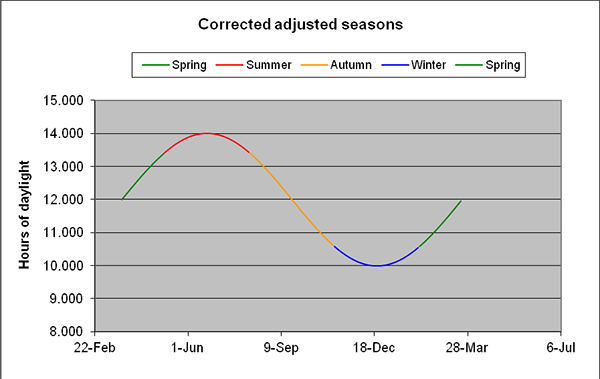
By the same token, the year starts at perihelion? Our time, human time, is based upon the days of the season rather than some arbitrary orbital milestone. Again, looking at the previous post’s graph (reproduced at right), the logical start of the new year is the Spring Equinox, the positive-going zero-crossing. Interesting that this date was used as the start of a new Presidential term in the early days of the Republic. The Romans (among others) used that date to start their year.
1. I think the Romans used this. No citiation.
2. Of all of my crackpot ideas, this would be the easiest to implement and the most certain to get the most screams; i.e.“Military Time!!” (the elimination of the BC/AD would be a very close second)
3. Well, I’ve gotten this far without a citation so you’re on your own.
Folks who are, like me, of the outdoorsy persuasion, like to talk about big game hunting. Why? Because it’s exciting. Big stuff with horns, hooves and pointy teeth are more exciting to hunt, and to talk about.
But when it comes to hunting opportunities, you can’t beat small game. The amount of time you can spend afield in pursuit of small game far outweighs limited big-game seasons, and anything from squirrels to pheasants produces some of the best eating you’ve ever laid teeth on. And, for the prepper/TEOTOWAKI set, small game hunting for food is far more likely to be a problem you need to solve than fighting off Mad-Maxian bands of raiders.
So, let’s look at arms and equipment for small stuff.
Rifles
Rimfire rifles kind of rule the roost for small game hunting nowadays, but it was not always thus. One of the best small-game cartridges around back in the day is the old .25-20, still available in old Winchester 92s if you’re willing to shell out the bucks for and shoot a collectible. The Winchester 43 bolt gun was also available in this fine old round, and likewise commands a high price. The .25-20 is a great small game round when loaded moderately with a hard-cast lead bullet, killing game up to woodchuck-size very nicely without tearing up as much meat as a .22 high-velocity hollow point. But centerfire rifles for this and similar old small game rounds aren’t made today, with one exception: The .22 Hornet.
Factory loads in the .22 Hornet aren’t too useful for small game. It’s a good 125-yard varmint round as factory-loaded, useful up to coyote-sized critters at those ranges, but factory loads do too much damage on small game. But loaded with (again) a hard-cast lead bullet at moderate velocities, it becomes a great round for rabbits, hares, squirrels and marmots. I keep one, a Ruger #3, as a fall turkey rifle; with the same kind of loads it will put down a big turkey inside of 100 yards right now. And here’s the fun part: If you have a good .22 Hornet rifle but would really, really like a .25-20 for the tad extra bullet diameter or just because you want one, you could have a barrel made; the two cartridges share a case head. But that sounds like an expensive proposition.
Let’s face it; in today’s small-game rifle world, rimfires are where it’s at, and there’s no sign of that changing any time soon.
Accurate but heavy. Oops.
I won’t discuss the various .17 rimfires, as I’ve never owned or shot one. I’ll leave the well-informed readers to discuss those in the comments. There are at present several .22LR rifles kicking around the gun rack at the Casa de Animal, but the one I set up for just such precision shooting, I kind of ended up outsmarting myself; I did the full-blown Ruger 10-22 conversion, with a .920” target barrel, a laminated Fajen thumbhole stock and a big target scope; the rifle shoots like a dream but weighs as much as many a big-game rifle. A .22 should be light and handy.
But while the .22 Long Rifle and the .22 WMR are both well-suited for most small-game work, the .22 WMR is more versatile. Why? Because the .22WMR will handle game up to the size of big marmots, foxes and at close ranges, coyotes. The .22LR would not be advisable for larger animals like those, even with precise shot placement.
That doesn’t mean the .22LR rifle isn’t great for most small game. Back in the day my friends and I killed a whole bunch of rabbits and squirrels with .22LR rifles; ammo was cheap and plentiful, and so were the guns. But even out of a rifle, it runs a tad on the weak side for the big hares, marmots and foxes, even with the high-velocity hollow-point rounds. That’s where the .22WMR shines, as the 40-grain jacketed hollow-point will easily kill big hares, foxes and marmots out to about a hundred yards, and with the full-jacket solid loads available, it won’t mess up too much meat on smaller game. Find you a rifle for either cartridge that’s light, easy to carry and accurate. The Ruger 10-22 is available everywhere and they’re great shooters. The famous old Marlin 60 is cheaper, and millions have been made. There are far too many options to talk about here. Look around!
But it’s not always easy or convenient to tote around a rifle, even a .22, so let’s talk about…
Handguns
Something that seems to have fallen out of the shooting world is the “kit gun,” usually a small-frame .22 revolver intended for taking small game at short range. The Smith & Wesson .22-32 Kit Gun was one such. There are many good examples; I keep a Colt Officer’s Target in .22LR for such things, and it’s seen a fair amount of use on early-season mountain grouse here in Colorado, where we routinely plink dumb young birds out of trees with .22 handguns. The old Colt is fussy about ammo, preferring CCI Green Tags above anything else, but with those it puts down grouse and rabbits handily without destroying too much meat if head shots aren’t possible.
Colt Officer’s Target and Colorado Dusky Grouse
But here’s the cool thing about handguns: Most of them up to the .357 Mag will do great on even small stuff like rabbits, with the right load. A .44/45 will work if you go for head shots, but the smaller guns are even good for body shots on rabbits and grouse with FMJ or hard lead pills. A .357 loaded with .38 wadcutters is great for rabbit-sized game; a 9mm with FMJ bullets will kill quickly without messing up too much meat. Find a moderate load with a non-expanding bullet and you’re set for opportunity shots at small game. The .32 centerfires are great, too, and happily there has been something of a renaissance in .32 revolvers lately.
As with anything handgun-related, the gun that’s most useful is the one you can shoot well.
But the most versatile small game gun has yet to be discussed, so let’s move on to…
Shotguns
Short answer: You can’t go wrong with a 12-gauge pump shotgun. With that said, there are always other options, but let’s talk about the good old 12-gauge pump first.
You might ask: “Why a 12-gauge, and why a pump gun?” Well, I’ll tell you; there are two main reasons.
Availability of ammo. 12-gauge shells are ubiquitous. You can get ammo from 2 ¾” light trap loads to 3 ½” Roman candles, in every shot size known to man. You can get mil-spec or 3” mag buckshot, slugs, and oddball shells like Dragon’s Breath. The versatility of available 12-gauge factory ammo makes it the obvious choice.
Ruggedness, reliability and versatility. Pump-guns are tough, easy to operate, and not prone to the fussiness about ammo that affects some semi-autos. If you’re a southpaw, you can find an Ithaca 37 or a Browning BPS that features bottom ejection, so you don’t have spent shells flying across your field of vision. There are literally millions of new and used pump shotguns available, which makes them something of an obvious choice.
I’m something of a fan of the 16 gauge, and the 20 is still widely available and a good choice for kids or the small-framed, but if you can only own one shotgun, buy a 12. If you can only own one gun, buy a 12-gauge pump-gun.
Citori and Mountain Quail
No matter what the gauge, the key to various types of small game is selecting the right choke, load and shot size. Look here:
Quail/grouse/doves: Low-base loads, 7 ½ or 8 shot (AA trap loads are great here.) An improved-cylinder choke is enough for what is normally close shooting on quail and grouse, but open-country doves require an Improved-Modified or Full choke.
Pheasant/rabbit/partridge: 2 ¾” field loads, 5 or 6 shot. Modified, Improved-Modified chokes are best.
Hares/late season pheasant/sage grouse: 3” magnums, 4 or 5 shot. Choke as above.
Spring turkey: 3 or 3 ½” magnums, buffered 4 or 6 shot. Most spring turkey hunters favor tight chokes, and there are quite a few full and extra-full specialty turkey choke tubes floating around the market.
There are special cases for waterfowl, but that’s probably a discussion for another day.
Now, there are other guns than pump guns, of course. Lots of folks prefer semi-autos, and the newer guns are more versatile than, say, the old Browning Auto-5 with its bearing bands that had to be reversed when moving from light to heavy loads. Doubles are still popular, and few shotguns handle as sweetly as a well-balanced side-by-side or over-under; and almost no guns are as beautiful as a well-made, engraved side-by-side stocked with a nice piece of walnut. And if your budget is tight, single-shots can be had for under a hundred bucks.
Now, if you are in a place where you must be quiet…
Air Guns
Air guns have come a long way since the Crosman pump-up BB gun I toted around when my age was still in single digits. In fact, if you read up on the Lewis & Clark expedition, they had come a long way before that, but let’s focus on today.
Air guns have a few things going for them. Ammo Is cheap; they can be purchased in most civilized places without all the Imperial foo-fraw about background checks and associated paperwork; they are quiet, which can be advantageous for discreetly disposing of pests in a built-up area. A good air gun for small game should be able to deliver 600fps or better with either a .177 or .22 lead pellet; I prefer the .22 but either will work OK on squirrel/rabbit sized game at short range. A good pump-up pellet pistol can be handy for discreet things as well, say if you have some bedraggled, exhausted house finches dragging baby cowbirds twice their size to your feeder. Now, it’s illegal to shoot the nest-bandit cowbirds and their freeloading offspring. I’m not saying I would use an inaudible, discreet pellet pistol to quietly dispose of such a pest. But if I were to do so, a pump-up .22 caliber pellet pistol would sure get the job done.
Trapping
Big Game seasons can result in freezing your ass off.
This is just a tad off-topic, but trapping can be fun and even somewhat profitable, although not as profitable as it was back in the Seventies when I trapped every winter; the decline in popularity of fur garments and the rise of farmed furs, which are more consistent in color and quality, has led to a crash in wild fur prices. But trapping can be a good way to get small game in a survival situation. A steel trap or coil of snare wire has a big advantage over, say, a .22LR or 12-gauge shotgun cartridge; you can catch an edible critter in a trap, clean and re-set the trap and use it again. Once a round of ammo is expended, it’s expended.
When I was a little tad back in Allamakee County, Iowa, shortly after the Earth’s crust finished hardening, I kept myself in .22 shells and pizzas by running a trapline in the winter. Mostly muskrats and raccoons but the occasional fox or mink; I never focused much on trapping edible game (although raccoon ain’t bad stewed), but the principles involved in trapping, say, rabbits, are pretty much the same.
Maybe I’ll write up an article on trapping sometime.
Conclusions
Small game hunting is loads of fun. Seasons are measured in months instead of days or weeks, which means you can be a little choosier about the weather you want to deal with. Bag limits are often generous, you can bring in some healthy, free range, additive-free, low-fat protein, and spend plenty of time out in the great wide open. Licenses are cheaper. And these days, in our increasingly shut-in, urbanized population, competition for game isn’t all that tough.
Find you a good shotgun and bring in some bunnies or birds. You won’t regret it.
The knife is likely humanity’s second or third oldest tool, with the pointy stick probably being developed from the not-pointy-stick prototype. I’ve always been in love with knives. Every one has its own feel. Its own personality. Its own special purpose. Some of them almost leap out of your hand, ready to do their job. Some are big and burly without being clumsy. Some of them will slice a warm tomato paper thin, if you treat them right. Youtube must have known about my love, and it knew I like to watch productive people make stuff on Youtube, because it kept suggesting I watch this video. And it was right. I wanted to learn how to make knives.
Long story short, its really hard to do it from scratch without expensive equipment. Its possible, but hard and tedious. However, there are a few short cuts you can take to jump right in with minimal equipment. Err, and minimal skill. Like what I have.
Mora is a maker of some really great, low-cost knives. And they’ll sell you just the blade. In this post, I’ll walk you through the steps I took to put my own custom handle on this 6 inch blade. The end result is a large bushcraft knife suitable for all manor of outdoor misadventure. Mora make a simple, bullet proof item. Carbon steel, nothing fancy there. A scandi blade is really basic, but that’s where the magic is. Most blades have a primary bevel then a secondary bevel where its sharpened. The scandi blade just has a single bevel, like a razor. This is particularly well suited to digging under the grain of wood or other fibers. At the cost of a bit more difficulty sharpening, this means the scandi is particularly well suited to camp tasks like preparing kindling, slicing rope, etc.
The first step in this project is to lay out your plan. Instead of going for a traditional scandinavian handle, as you’d expect on a scandinavian style blade like a puukko, I went for a more shaped handle. I much, much prefer more options for bracing my fingers on forward strokes or when poking, and this design provides that. Also, I tend to hold my knives in a saber grip. That’s the nice thing about DIY. You can D whatever the F U want.
I traced the blade on paper, and then sketched out the outline of the handle I want. The front finger groove comes a little close to the tang, so that’s something I had to keep an eye on.
Then I laid out a few bits of material that I want to use for the handle. I had a bit of cheap red oak from the hardware store, some green leather bits, and a block of leopardwood I grabbed on a lark when I got some exotic hardwood one time. At this point, I also have a spacer made of black micarta scrap, but this didn’t make it into the final design since I fucked this piece up made a thoughtful decision to not include this material. The goal here is purely design. I’m looking for a nice balance of colors, contrasting textures, etc. Most rules for aesthetic designs are domain independent. That means that rules for putting together a proper suit and tie apply here as well. High frequency next to low frequency next to no frequency next to high frequency. Pick two colors, and add in one highlight. Avoid symmetry and follow the rule of three or the golden ratio.
Now that we have the general design down, its time to actually get to work. If not done already, make sure all your stock is square and flat. Like, really flat. And if you aren’t sure you can pull that off… use leather spacers. Making a knife is more like fitting jewelry than it is like carpentry. You need everything to fit perfectly and you need to fret every detail. Because this shit is HARD. The bolster, that’s the part of the handle that interfaces with the knife, the bolster needs to fit the tang like a glove. I find the center of the block, drill a row of holes smaller than the diameter of the tang, and then use needle files to connect them. This should make a slot that is dead-on square and normal in the center of the bolster. If you take your time, it will be perfectly square. Just put on an audiobook and zen out, and you’ll have it perfect in no time. Like this.
FUCK! Ok, not great, but not a disaster. Anyway, the knife blade isn’t perfectly square on all surfaces, so you’ll need to fit, file, fit, file, fit, file, fit, file until your eyes are ready to fall out of your head. Eventually, you’ll get it to seat correctly.
Perfectly, within some margin of error. If you look close, well, you’ll see its seated pretty well, but not perfect. Like I said, this is jewelry, not carpentry. I said its an easy job to pick up. Mastering it will take a lifetime. For my skill level, I’m looking to get a good enough seat that the finish will fill that gap. More on that later. Note the blue painters tape around the blade. That’s to prevent premature hematological baptism.
Once the bolster is fit, the rest of the handle is easy. Using a drill bit just slightly wider than the tang, dill a hole straight and through the center of the rest of the wood blocks. I also used a table saw to split the bolster since I ruined my spacer decided not to use the micarta spacer. If you do this, this cut is super, super critical and you really, really need to make sure it is square and straight. Also, mark your piece before you cut it so that you can assemble it later with proper grain orientation.
At this point, all the material is in shape and ready for glue up. Up till this point, its been a fidgety project but you can go nice and slow. Well, that ends here. Its now a fidgety project that is also gloopy and you will also be on a the clock. So spend ten minutes dry fitting your knife so that you could assemble it blindfold, because once you mix your epoxy, shit gets real. This is also your last chance to change the design. Here I am out in the sunlight making sure I still like the way it looks under natural light.
Epoxy is a hell of a material. Its going to fill all the space in the handle and hold this knife together. A modern epoxy, properly mixed and applied, will be harder than the wood and last longer than I will. The task here is to fill the bolster with epoxy, slide it on, cover the spacer with epoxy, slide it on, cover the next spacer, slide it on, cover the next spacer, slide it on, fill up the last handle, slide it on, and then clamp it all together. And make sure you use enough to fill all gaps. But not so much it squeezes out the top of the bolster. And don’t epoxy your knife to your clamps. And don’t get epoxy in your hair. And don’t tighten your clamp so much it all explodes like you just lost at Perfection. And don’t use five minute epoxy because you will need more than 5 minutes. Because I’ve done all that before and each one of those things sucks.
But if, if you do it all correctly, you will be rewarded with a very stinky garage as you let this cure under a little bit of compression for at least twenty four hours. PS make sure you orient it so that the squeeze out goes on the handle, not the blade. Because if it cures on the blade, there’s no fixing that. You are stuck with an ugly knife forever.
But the next day, after your garage airs out and doesn’t smell like an old tire is fermenting in Satan’s asshole, you get to see if you’ve fucked up all your hard work. Lets take a look.
Success! That squeeze out is not problem. It’s all coming off. What matters is the handle is one solid, rock hard piece. No wiggle. No wobble. Now you just need to turn that big, blocky knob into a smooth, sleek handle like you drew on the paper. I used a band saw to get it roughly square, then I use a belt sander to rough out the shape. A rasp works really well here, too. Then, once you have the shape, just sand. And sand. And sand. And sand. You really want to take it to the finest grit your wood can stand, and then maybe one more. Oak and leopardwood are both fairly hard, so I took this to 2,000 grit. You’ll need to get automotive sandpaper for this, but if you skimp here your knife won’t ever feel as good as it should.
The last step is to apply a finish. In theory, any wood finish is possible here, but poly or lacquer are not good finishes. Superglue is actually pretty great, but I’m partial to a paste made of mineral oil and beeswax. Its food safe, and you can oil the blade with the same oily rag as you use for the handle. Its not as permanent as some other finishes, so it will need touched up every year or so. But meh, if I didn’t want to put a little work into my tools, I wouldn’t be making them myself. Also, wax is a good enough gap filler to fill the tiny gap around the base of the blade.
This is my first time using leopardwood, and I really like the way it turned out. I also really like the way the shape turned out. Its made to fit my hand, and I kept checking it as I roughed out the shape. Its asymmetrical and maybe it looks a little sloppy if you look from the top down, but it fits my hand like it was made for it. Because it was. My thumb fits on the top of the bolster just right, and I have good purchase with my pointer and pinky.
But most of all, every time I pick up this knife, I’m going to remember the work that I put into it. It was my mind and my hands that brought this humble tool into the world. It has visual and utility elements of a scandi knife, but it also has a few other particulars that I really like. I didn’t mine the ore or smelt it. I didn’t forge and grind the blade. I didn’t even generate one unique feature on this knife – I copied the best from a couple different place. But I made that knife. And I’ll know it in my bones every time I pick it up.
One of the problems I find with my preferences is that it is simply too damn hot for me to be drinking the type of beer that I normally go for. When it’s 110 degrees outside, the last thing I want to drink is milk. I hate the stuff. The way it coats your mouth, the full feeling, probably sourced from a few dozen Holsteins… On a hot day it’s a bad choice and let’s be real—I get a lot of hot days. A close second is an IPA but given my purchasing habits no longer revolve around what I want to drink and what serves a sufficient writing prompt, I have to choke that down from time to time. But imperial stout? I could but it’s just not refreshing, and quite frankly I am drinking copious amounts of beer because I am thirsty.
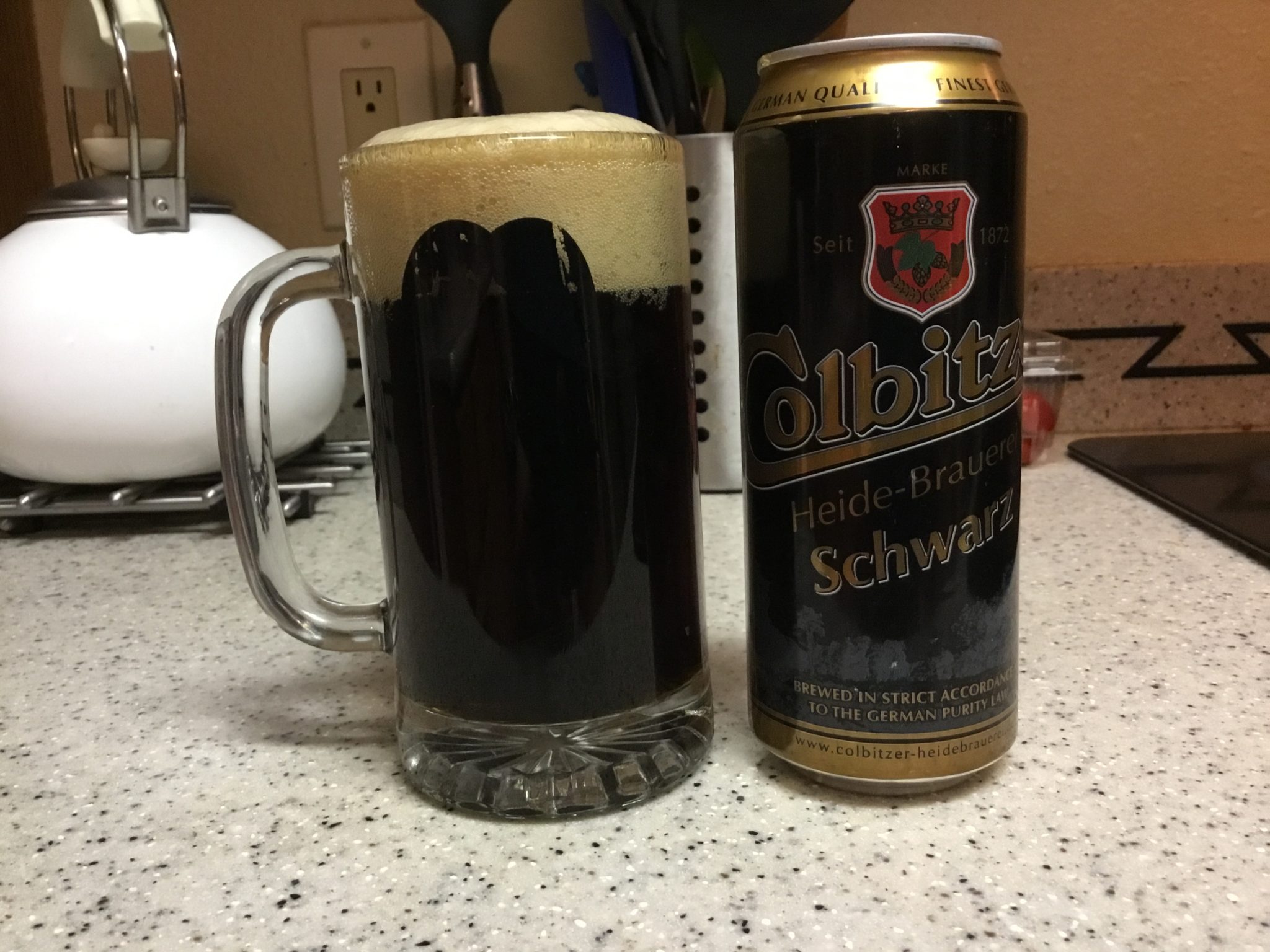
This is my review of Colbitz Heide-Braurer Schwartzbier. Cue the Space Balls-related puns.
This beer reminds me of a friend of mine who got into Black Lager about ten years ago during college. We would take advantage of the $0.50 wings Tuesdays on Buffalo Wild Wings and get a bunch of wings. Until that one day it occurred to me I got a free T-Shirt if I did the Blazing Wing challenge. The challenge was only to eat 24 within their time constraint of an hour. Later they made it more difficult where you had to eat fewer of them, but had to do it in a few minutes.
So…um…would ya?
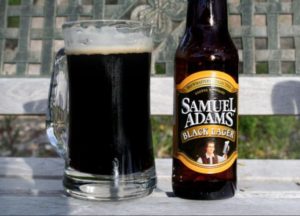
So I did it, and had a Sam Adams Black Lager or two along with it.
Word to the wise–do not do this to yourself. You might think it’s a good idea to eat 24 ghost pepper wings, with the capsicum burning your lips the entire time. The pH balance in your stomach altering ever so slightly that you feel like your insides are digesting themselves. The mild acid reflux, the stench of fried chili grease oozing from your pores. Then there’s the morning after…. I was in ROTC at the time and had PT at 0600 the morning after. They accepted my stupidity as an excuse for missing it, because they were laughing too hard to stay serious enough to admonish me at the time.
By the way, I didn’t get a free t-shirt.
Eventually we made it a weekly thing. I didn’t do the challenge again, because as it turns out I am not that much a glutton for punishment, but the Black Lager thing continued.
What is Schwartzbier anyways? You may not know it, but it is apparently one of the oldest styles around.
Schwarzbier, literally “black beer,” is probably the longest continuously brewed beer style in the world, with its known ancestors close to three millennia in age and with definitive origins in the modern brewing cradle.
Today’s schwarzbier combines Old World rusticity with the graceful smoothness of lagerbier, and a clean roasted edge with German malt complexity. It’s deep, ruby-black color and modest strength makes schwarzbier the lager equivalent of basic stout.
The origin of schwarzbier lies in what perhaps the most significant historical brewing region in the world: southeastern Germany, including some of Bavaria, and portions of the former Bohemia, now the Czech Republic. The most famous, and arguably the most important, development from there was the invention of pilsner beer less than 200 years ago in Plzen, Bohemia. But the true gems from the region are the ancient, but modernly polished styles: schwarzbier and the smoky rauchbier.
There is concrete evidence that crude schwarzbier was being brewed there as long ago as the ninth century B.C. (and undoubtedly, well before). This proof comes from an 1935 archaeological discovery seven miles west of Kulmbach in Northern Bavaria. The venture unearthed an Iron Age Celtic tomb that dated to about 800 B.C. That grave held an amphora with some residual brewing material and the charred crumbs of partially baked wheat bread, known to be the raw material for Celtic and Germanic brews of the time. Since this discovery places the oldest evidence of brewing in Central Europe in Kulmbach, and that beer was black, we can deduce that the world’s oldest, and still-produced, style of beer was schwarzbier.
The result is something that has the dark roasted complexity of a stout (minus the lactose) combined with the refreshing nature of lager.
Serve it cold, in tall mugs with a group of friends. This one in particular was actually pretty inexpensive for a six pack of pint cans and like all German beer is made in compliance with the Reinheitsgebot, assuming that means anything to you at all. Colbitz Heide-Braurer Schwartzbier 3.5/5
A vegan kitchen is not too unlike a non-vegan kitchen, but there are some tools and products that make life much, much easier.
Foodsaver
I am new to the ways of vacuum saving food, but I am already in love. SP & OMWC gifted me with this FoodSaver for my birthday, and I can’t get over how awesome it is.
One of the biggest challenges for me being vegan is that it’s very hard for me to get fresh produce unless I hop over to a farm stand, and they almost never have lettuces. With my FoodSaver I’m able to vacuum pack my produce, tofu, and leftovers, and get many more meals out of them. I haven’t tried it yet, but I will be trying to reheat my vegetables using the sous vide method now that I have my food so well sealed.
A Fuckload of Mason Jars
For a well-stocked vegan kitchen (where you also don’t need to spend hours every night cooking), you really need a fuckload of Mason jars. One of the great things about the FoodSaver is there is an accessory attachment you can order and you can vacuum seal jars. Now, as the package will remind you about 10 million times, this is no replacement for canning food, but you can do salad jars. Throw some greens and veg into a jar and seal it up. It can last in the fridge for over a week.
Ever want to make cool spiraled veggies? Zucchini noodles? Other spiraly things? Cookhelp at your service. This tool will make your vegan salads a lot more interesting.
An Award Winning Spatula
I originally got this award winning spatula (another gift from SP) for breadmaking, but I use it for basically everything. It’s rigid yet flexible. It does the best job scraping bowls out of every spatula I’ve ever used.
Glass Milk Jugs
These are so freaking useful for iced tea and non-dairy milks like oat milk (which is super easy to make at home and much, much cheaper).
Immersion Blender
I am in love with my immersion blender. It’s changed the way I make soups, and I would argue it’s an essential kitchen tool whether or not you’re vegan.
AND Bonus Link!
Football season is almost upon us. Here’s a story for vegetarian athletes everywhere.
Stargazing can be depressing, since it seems like there are so many bad omens. There actually ARE a lot of bad omens, and the most interesting things (comets, novae, etc) are the worst omens. There are two reasons for this:
The first is that Astrology, like all real sciences, is based on empirical observation. The celestial influences were mapped to significant events and once a correlation was established, these correlations were codified and promulgated. The issue is that the historical eras in which this painstaking scientific research occurred sucked camel balls. All sorts of bad shit was going on, between plagues, famines, invasions, tyrants, pubic lice, forcible conversions, slave raids, indigestion, hyena attacks and poor kitchen hygiene coupled with no toilet paper, there were many more bad events to match up than good ones. The charts indicate this. There is only one planet that is unambiguous in its beneficence (Venus) and even it goes retrograde every now and then.
The second is that “interesting” things are breaks in a pattern. But with the stars, that pattern is perfection so any breaks are Bad Things. If auto racing were as perfect as the stars, the best driver would have won the pole position, and the race would proceed flawlessly with no changes in the race order. Nobody would watch this. The biggest, brightest, most noticeable deviations in astrology (a new star appearing where there wasn’t one before) are the multi-car collisions sending flaming shrapnel into the spectator seating.
So yeah, lots of bad news to be seen in the night sky.
So what’s the bad news for this week? Not a lot really, at least in comparison to last week. That massive double-alignment of despair has broken up, with a piddly little BARCO double hinging on Mars retrograde (Sol-Luna-Mars (retrograde) and Mars (retrograde)-MERCURY RETROGRADE-Terra) which gives very weak influences in the following ways:
A conflict will end.
There will be bad news regarding a war
A general will have his ass handed to him (possibly literally — this is the same construction that heralded Qaddafi’s death-by-bayonet-sodomy)
As for the celestial houses:
Leo still has to deal with MERCURY RETROGRADE, but at least the moon has skedaddled. If you have a cat, expect more kitty zips and general destruction from the little furball. Haircuts are still risky, but I’ll be getting one because my hair has gotten really annoying when I have to put on a cleanroom suit. This is also backed up by the moon moving into Sagittarius; “Nocturnal hunters awaken.”
If you are a Capricorn, do NOT get into any fights. Mars has backed ass-first into your sign so that Saturn (retrograde) which has been hanging out pretty clearly points to “violence leads to loss.” Yeah, I said that wasn’t going to happen. Either I need better charts, or I need to read them better.
Jupiter in Scorpio: minding your own business leads to good things. The stars give really good advice. SCIENCE!
Finally, Venus in Libra. If you can keep your center, good things follow.
Recently Phoenix was hit with a few storms, and one occurred over a Saturday afternoon. No problem. I can just hang out here, right? Sure. This however was no ordinary Saturday, it was one where we had one of these, and I simply didn’t want to go outside. Would you go outside during one of these?
Probably not. So it was one of those afternoons where I tell my kids to go somewhere else in the house and find something to put on for noise. Sadly, I didn’t have the remote. I never have the remote. Why? Because I am not normally interested in what is on TV; live sports, DIY, and Food Network being an exception. So I don’t care what is on because I’m probably just going to ignore it anyway. My wife picked a Netflix show called, GLOW.
This is my review of Unity Vibration Raspberry Kombucha Beer.
I hope you appreciate this is a free service I provide.
Prior to the storm I went to Sprouts and found this while waiting for the butcher to finish my order. I can’t watch women wrestling in the 80’s while sober; its just weird. Kombucha seemed an appropriate choice.
You heard me. Its about women wrestling—in the 80’s!
The story begins where two actresses are at their aerobics class. I paid little attention to the dialogue, but they’re both out of work and the story line takes off when one later finds out the other slept with her husband. Cue the main conflict. One is significantly more attractive in the opinion of many that recall the 80’s fondly–specifically, she’s a buxom blonde. Next they add in more conflict at the audition, where two women are questioning why are they there. They are both relived to find out it isn’t porn, but mildly disturbed it is wrestling.
The director of this whole thing is a hilarious composite of 80’s tropes between the thick glasses, the power-stache, alcoholism, and womanizing. He embodies the type of toxic masculinity that quite frankly is missing from popular culture. Yes, he’s a dick, but he’s kind of the glue that binds all these people together and frankly that’s probably why you will watch beyond episode 1.
Coming to Comicon!
Another reason is you might find “Wolf Girl” strangely compelling, as she is the only character not playing a character within a character. She’s just “Wolf Girl.” The rest of the girls are hilarious stereotypes that outside the context of 80’s culture would never be seen anywhere. Some are okay, the Valley Girl, and the British girl named, “Britannica,” for example. Others are intentionally offensive, such as the Hindu girl playing a Libyan Terrorist, the Asian girl playing a character named, “Fortune Cookie,” and a Black Actress as the character called, “Welfare Queen.”
Most of the plot revolves around the actresses learning to wrestle, finding a character to play, the blonde lady coming to terms with being a headliner for a wrestling show, having nobody else to pair in the act but with her former home-wrecker friend, and her former home-wrecker friend being unable to find a character. That is until she figures out how to counter the blonde’s character as an All-American, Apple Pie type appropriately named, “Liberty Belle.”
…I was wrong, this is coming to Comicon near you!
Naturally, her nemesis is a Soviet agent named, “Zoya the Destroyer.”
The show is filled with good one liners. Once they actually get around to performing in front of live audiences does the plot start to slow down. They could’ve stopped there, but they didn’t. If you get to this point, you’re probably just going to finish the season just to find out what happens.
So what in the hell is Kombucha? It’s a probiotic tea fancied by the crunchy vegan types at Whole Foods and Sprouts. Its meant to replace the “good” bacteria in the digestive tract. I don’t recommend it unless you simultaneously spent the weekend snorting a Z-pack and are lactose intolerant. In this situation, they simply let the bacterial cultures ferment until it comes to a high enough ABV they can reasonably market it as beer. It’s not beer. It’s an affront to humanity.
So the bottom line, this show is silly but you might like it, so check it out before they make it suck like the X-Files. This drink is also silly, and you’ll probably hate it. Try it at your peril. Unity Vibration Raspberry Kombucha: 1.1/5
In my forty-odd years of being a shooting sports aficionado, I’ve learned that like me, most gun nuts like reading about guns and shooting sports almost as much as they like the sports themselves. The explosion of the Information Revolution has resulted in a plethora of scribes talking about guns and shooting, but back in the old days of paper and ink, the market was a lot tighter.
Nevertheless, the shooting scene saw some great gun scribes from a variety of backgrounds. We had cops and cowboys, hunters and target shooters, and some of them were prolific writers. Like must gun cranks, I had my favorites.
So here they are, in some sort of particular order.
Jack O’Connor (1902-1978)
Jack O’Connor with a mountain sheep.
Jack O’Connor was probably the Dean of American gun writers. One of my favorite bits of his work was an article for Outdoor Life titled “Moose Are Too Big,” in which he described being on an Alaskan trip when he was asked to help find and kill a moose for camp meat. The story revolved not around the hunt but the ordeal of dressing, quartering, boning and packing out hundreds of pounds of moose meat, about which O’Connor expressed a preference for birds: “You can shoot a quail, put it in your pocket and go find another.”
O’Connor did nevertheless spend much of his career hunting big game. He was an early advocate for the .270 Winchester cartridge for game up to and including elk, emphasizing the importance of marksmanship and shot placement over raw power. (Not that you can’t have both.)
O’Connor’s books include:
Game in the Desert
Hunting in the Rockies
Sporting Guns
The Rifle Book
Hunting with a Binocular
Sportsman’s Arms and Ammunition Manual
The Big-Game Rifle
Jack O’Connor’s Gun Book
The Outdoor Life Shooting Book
The Complete Book of Rifles and Shotguns
The Big Game Animals of North America
Jack O’Connor’s Big Game Hunts
The Shotgun Book
The Art of Hunting Big Game in North America
Horse and Buggy West: A Boyhood on the Last Frontier
The Complete Book of Shooting
The Hunting Rifle
Rifle and Shotgun Shooting Basics
Sheep and Sheep Hunting
Game in the Desert Revisited
The Best of Jack O’Connor
The Hunter’s Shooting Guide
Hunting Big Game
The Last Book: Confessions of an Outdoor Gun Editor
Hunting on Three Continents with Jack O’Connor
Elmer Keith (1899-1984)
Keith’s autobiography, a crackin’ good read.
Elmer Keith was a prolific gun writer; his book Sixguns is a personal favorite of mine, having survived the test of time to still be one of the best all-around books on revolvers and revolver shooting available. His biggest claim to fame in the shooting world is probably his role in the creation of the .44 Magnum cartridge, which was based on heavy .44 Special loads he devised for the N-frame Smith & Wesson revolvers. He was a fan of the Smith & Wesson Triple Lock, calling it the “finest revolver ever devised,” and Keith was an early convert to Bill Ruger’s placing modern lockwork and sights on the classic American single-actions, resulting in the now-classic Ruger Blackhawk. On hunting rifles, he was a staunch advocate of big guns; he co-developed the .333 OKH wildcat and was an early proponent of the .338 Winchester Magnum.
Funny thing; Jack O’Connor and big-gun advocate Elmer Keith were contemporaries in the American shooting scene, but they held differing views on hunting rifles and sidearms and cordially (and sometimes not-so-cordially) detested each other for many years.
Keith’s books include:
Sixgun Cartridges and Loads
Big Game Rifles and Cartridges
Keith’s Rifles for Larger Game
Elmer Keith’s Big Game Hunting
Shotguns
Sixguns
Guns and Ammo for Hunting Big Game, with John Lachuk.
Safari
Keith, An Autobiography
Hell, I Was There (autobiography)
Townsend Whelen (1877-1961)
Whelen’s “On Your Own in the Wilderness.”
(Army) Colonel Whelen is best known for his experiments on wildcat rounds based on the then-standard military-issue rifle cartridge, the Caliber .30, Model of 1906. The .35 Whelen was accorded legitimacy by Remington some years back, but his other efforts, including the .25 Whelen, .375 Whelen and the .400 Whelen never gained much traction, although the .25-06 wildcat that became the .25-06 Remington was very similar to the .25 Whelen.
While Colonel Whelen wrote several books, my favorite of his works appeared in Outdoor Life around 1910 and described a several-months adventure he embarked on with a friend, a saddle horse and pack horse each, a rifle each, plenty of ammo and his buddy’s dog. Red-Letter Days in British Columbia is a must-read for any outdoor nut.
Whelen’s books include:
Suggestions to Military Riflemen
The American Rifle
Telescopic Rifle Sights
The Hunting Rifle
Small Arms and Ballistics
Hunting Big Game (of which he was the editor)
Amateur Gunsmithing
Why Not Load Your Own?
Col. Charles Askins, Jr (1907-1999)
Can’t really add much to that title.
You’ve got to love a guy whose autobiography is entitled Unrepentant Sinner. (Dammit, he stole my title.) Askins had two careers, one in the U.S. Army and one in the Border Patrol, and claimed at least 27 men killed in armed combat, which is probably nearly a record in the 20th century. So, when it comes to the deployment of a sidearm in combat, he knew of whence he wrote. He was something of an unsavory character, claiming at one point in his later years that he hunted game because he was no longer allowed to hunt men, but his survival in some nasty environments speaks volumes of his skills with a firearm.
Askins’ books include:
Hitting the Bull’s-Eye
The Art of Handgun Shooting
Wing and Trap Shooting
The Pistol Shooter’s Book
Unrepentant Sinner: The Autobiography of Col. Charles Askins
The Gunfighters: True Tales of Outlaws, Lawmen, and Indians on the Texas Frontier
Shotgun-ology: A Handbook of Useful Shotgun Information
The African Hunt
Asian jungle, African Bush
The Shotgunner’s Book – A Modern Encyclopedia
Texans, Guns & History
The Federalist
Bill Jordan (1911-1977)
Bill Jordan demonstrating the quick draw.
Bill Jordan’s book on handgun combat, No Second Place Winner, was the result of his long career as a lawman. He was also a Marine, with service in WW2 and Korea, leaving the Corps with the rank of Colonel.
Jordan was a lawman back when lawmen was not the visored, armored paramilitary forces we see in our cities today; his armor was a shirt, his only recourse against bad guys was a holstered revolver and cuffs. He was a master with the double-action revolver, once having been recorded drawing, firing and hitting his target in .28 seconds – and he instructed James Arness in fast-draw techniques for Arness’ role as Marshall Dillon in Gunsmoke. Jordan’s thoughts on guns in general and combat handguns in particular are still worth reading.
Jordan’s books include:
No Second Place Winner
Mostly Huntin’
Tales of the Rio Grande
Warren Page (1910-1977)
While the saying “only accurate rifles are interesting” is bandied about a lot and is frequently named a quote from Townsend Whelen, it’s originally attributed to Warren Page, and few have done as much to spread the cause of accurate rifles than he did.
Gun Greats: Norm Williams, Bill Ruger, Warren Page, Joyce Hornady and Clyde Willey.
Page was responsible for the greatest name ever for a wildcat rifle cartridge; he took the old .244 Remington case and blew it out to a 28-degree shoulder and called it the .240 Page Souper Pooper. It was a good round, largely eclipsed now in wildcatting circles by the .243 Improved.
Page’s books include:
The Accurate Rifle
One Man’s Wilderness
Col. Jeff Cooper (1920-2006)
The Browning/Colt 1911 pistol never had a more ardent advocate than Jeff Cooper. A retired Marine, Cooper also promoted the use of the rifle, stating in his book The Art of the Rifle, “…the rifle itself has no moral stature, since it has no will of its own. Naturally, it may be used by evil men for evil purposes, but there are more good men than evil, and while the latter cannot be persuaded to the path of righteousness by propaganda, they can certainly be corrected by good men with rifles.” That’s a good point lost on all too many folks today, but Colonel Cooper was a man of a simpler time.
Colonel Cooper also coined the term hoplophobia, meaning to have an irrational fear of gadgetry – especially weapons.
Colonel Cooper making a couple of points.
Cooper’s books include:
Principles of Personal Defense
Another Country: Personal Adventures of the Twentieth Century
C Stories
Fire Works
Shotluck
To Ride, Shoot Straight, and Speak the Truth
The Art of the Rifle
The Modern Technique of the Pistol
Yukon Journal
A Man in Full
Cooper on Handguns
Handguns Afield
Guns of the Old West
Fighting Handguns
Custom Rifles
Honorable Mention: Denis McLoughlin (1918-2002)
Denis McLoughlin was not, strictly speaking, a gun writer. But if you’re interested in the Old West, his book Wild & Woolly – An Encyclopedia of the Old West is an essential reference. Ever wondered what Valley Tan was and where it originated? Heard of the Dog Soldiers but weren’t sure who they were? Don’t know who Annie Moses, Martha Jane Cannary, Alfred Swartz or Melvin King were? Wild & Wooly will tell you. Ever wondered where the Llano Estacado, Inscription Rock or the Mormon Trail were? Ah, but Denis McLoughlin has the answer! Funny thing is, he was a Brit.
Reading about guns isn’t as much fun as shooting them. But imagine the ammo costs if you spent as much time shooting as you can be reading. Take a browse through any of the authors listed here; you won’t be disappointed. Read, and enjoy!
YouTube, despite its corporate leadership being very regressive, has become a hub for alternative viewpoints regarding current political and cultural events. I thought I’d do a writeup about YouTubers who create content I believe would be of interest to Glibs. The video creators are mainly concerned with current events from a political and/or philosophical perspective, however a few make videos about popular culture or general interest topics as well.
This article is not meant to be either authoritative or comprehensive (and there will be follow ups regarding these or other YouTubers), but rather a jumping off point for commentators to add both their own perspectives on those I’ve listed, disagreements with my opinions, as well as discussing YouTubers I’ve omitted either through ignorance or difference in perspective.
So here, in no particular order, are some of my YouTubers of interest:
Liberty Doll – A Libertarian woman with a Judy Greer-esque 40’s-50s’ nerd chic vibe, she often discusses 2A issues, including the recent 3D printing kerfluffle. She also discusses current events, liberty issues, as well as feminism and other anti-liberty philosophies.
Styxhexenhammer666 – A former Satanist and current mystic/spiritualist, Styx creates a lot of content about current political events, both foreign and domestic (including Trump). He occasionally has a slightly unusual take on matters which doesn’t always jibe with the standard libertarian view. He’s done a couple series of non-political videos. They are mostly related to the occult, but he also has a series of garden videos.
Matt Christiansen – His perspective is (in my view) somewhere between classical liberal and libertarian. Unlike many video producers, he doesn’t see the need to inject a hyper personality, instead stating the facts (and unleashing his acerbic wit) in his calm midwestern inflection. The videos might be on Trump or, say, pointing out the current stupidity in Portland. He also does the Beauty and the Beta podcast/livestream with Blonde in the Belly of the Beast. Blonde is an attractive woman who, over the past few years, moved from libertarianism to a much more conservative / identitarian perspective. (Think an American Lauren Southern without the public provocation).
Sargon of Akkad / The Thinkery – One of the bigger names in the anti-SJW ‘skeptic’ YouTube community, Sargon generally holds classical liberal views. He’s able to court controversy even beyond the standard regressive community (a few Glibs have been quite critical). As a UK resident, his perspective is mainly focused on Britain. In addition to his videos on the Islamization of the UK and Europe, he also has videos about recent events.
Karen Straughn / Honey Badger Radio – Karen and the others at Honey Badger Radio focus on men’s rights issues and critiques of feminism. The mostly female group makes interesting videos pointing out the discrepancies in feminist narratives and the legal and existential realities related to gender issues, ‘male disposability’, and why men’s issues are generally not taken seriously in the larger society (including why women should care about men’s issues).
Freedom Toons – Freedom Toons creates satirical cartoon videos from a libertarian perspective. Some of his targets have included modern journalism and free speech. These videos are short, so they’re good if you only have 5 minutes or so.
Hard Bastard – He largely does videos regarding current events – such as the Cohen tapes – from a right of center perspective. A former Jehovah’s Witness, he often brings a slightly different view to his videos. His girlfriend is Aydin Paladin, who is (amazingly) a sociological graduate student with a general liberty focus. She mainly does videos on recent events, but also likes to delve into academic topics, both largely using that sociological framework. She has also worked with the Honey Badgers on a few of their videos. (Note: while I find her videos interesting, they are 1) academic, and 2) not short)
Timcast – This will probably be one of my more controversial picks. Tim Pool is a former Vice reporter who is now trying to make a living as an independent reporter. As you’d suspect from someone who used to work with Vice, his politics are left of center. I include him because he does a couple things incredibly rare for journalists these days. He tries to get his facts correct, and he separates those facts from his evaluation of them. While he deeply dislikes Trump, he actually evaluates Trump’s actions on an individual basis rather than issue a blanket condemnation. I respect this.
Ben Shapiro – While Shapiro is mostly conservative rather than libertarian, he’s a skilled debater and often interesting. Also, since I’ve pointed out the women here a few times, let me link to his interview with Mike Rowe for Kristen.
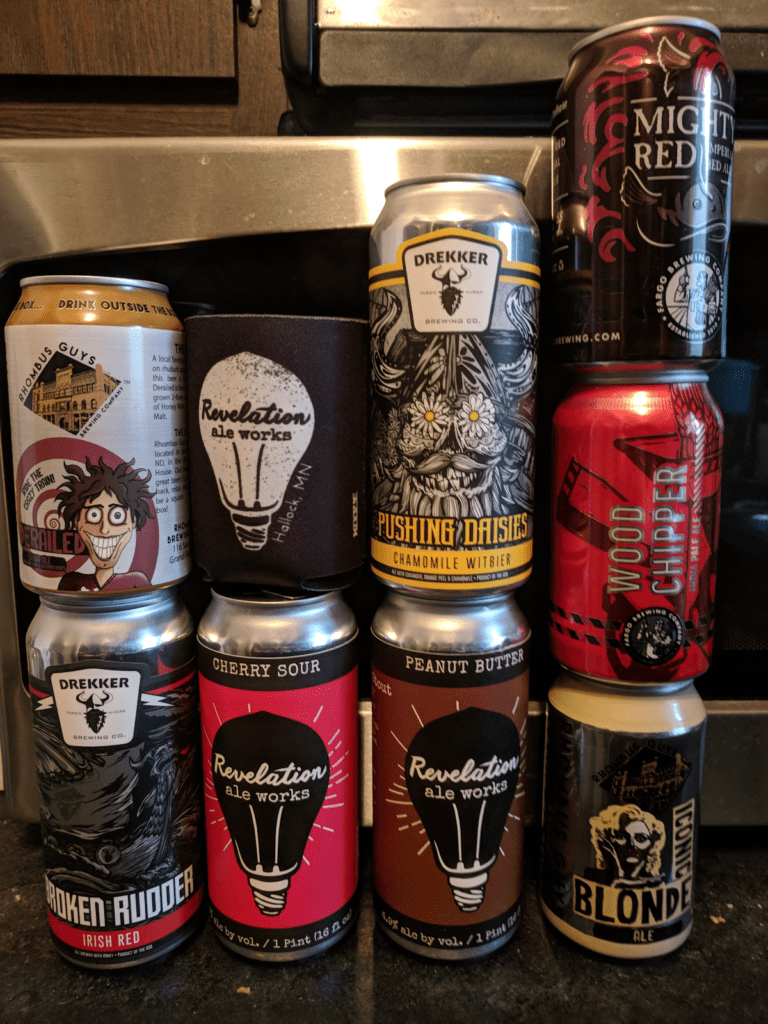
The box arrived, albeit with some damage. Thankfully MikeS listened to the suggestion to ship cans, and everything in the package survived:
Revelation Ale Works Cherry Sour(below):
This pours a clear red with a huge pink head. The aroma is a hint of cherry, and a bit of funk with some acid in the back end. The head sticks around for a while, then fades out. Bright sour notes, with notes of sweet and tart cherries coming through. Lactic acid is the
one I’m picking up the most of, with a sharp sour note in the back of the throat. Light bodied, with lively carbonation makes this an excellent summer beer. Overall: 3.75/5.00
Drekker Broken Rudder Irish Red (right):
Pours a clear brown-amber, a bit light for a red ale, with a white head. Aroma is of caramel, with a touch of roast. Mild flavor, roasted notes, some caramel notes, and a touch of malt sweetness. Just enough hops present to prevent it from getting cloying, with just a hint of earthy notes in the finish. The beer has a full mouthfeel, with moderate carbonation. Overall a solid Irish red. Overall: 3.5/5.00
Revelation Peanut Butter Stout (below):
Aroma is moderate peanut butter, pours an opaque black with a thin ring of tan head and some dusting on top of the pint. Almost no carbonation present (though this may be due to the can and shipping), flavor is mildly sweet with a touch of roast, and a finish of peanut butter. I’d like to try this one properly carbonated. Overall 3.25/5.00*
Drekker Pushing Daisies (right):
Pours an opaque orange-yellow, with a thin white head. Bright aroma, with hints of citrus, clove, and chamomile. Nice carbonation levels, with a moderate body. Flavor starts a bit sweet with a touch of creamy wheat. It finishes with a nice spice and floral finish. Overall
a solid witbier. Overall 3.75/5.00
Fargo Woodchipper IPA (below):
Aroma is of pine, with some floral notes. Pours a clear amber with a white head. This is definitely on the hop forward side, with just a touch of sweet malt notes coming through with a kiss of caramel before pine, pith, and bitterness come through. The bitterness lingers for a while, with some earth noticeable in the finish. A bit light in body, but overall a solid IPA. Overall 3.75/5.00
Fargo Mighty Red Imperial Red Ale (right):
Pours a clear reddish-amber with a thin white head. Aroma starts off with caramel, and then fades to piney hops. Mild hop presence then the aroma would indicate, Nice caramel notes, a touch of roast, and then a mild earthy bitter finish. Moderate body, and nicely inviting. Not sure it really reaches Imperial levels (at only 6.6%), but a solid Red. Overall 3.50/5.00
Rhombus Iconic Blonde (below):
Pours a clear, pale straw with a white head. The aroma is a touch of grain, with a bit of something sharp behind it. Light bodied, just a touch of malt sweetness, and a bit of floral hop notes. Crisp and refreshing on a hot day. This is a very solid blonde ale. Just the thing to reach for when you just want a clean, cold beer. Overall 3.75/5.00
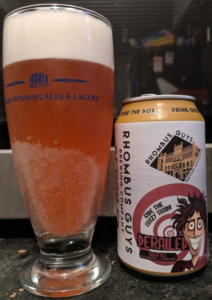
Rhombus Derailed – Strawberry Rhubarb (right):
A mild sour aroma starts off, with a touch of strawberry lurking behind the tartness. The beer pours a hazy pinkish-straw with a full white head. Bright sour flavor, with both the rhubarb and strawberry coming through. There’s enough lively carbonation to lift the flavor off the palate and keep the beer light and refreshing. Overall a very good fruited sour.




 One of the problems I find with my preferences is that it is simply too damn hot for me to be drinking the type of beer that I normally go for. When it’s 110 degrees outside, the last thing I want to drink is milk. I hate the stuff. The way it coats your mouth, the full feeling, probably sourced from a few dozen Holsteins… On a hot day it’s a bad choice and let’s be real—I get a lot of hot days. A close second is an IPA but given my purchasing habits no longer revolve around what I want to drink and what serves a sufficient writing prompt, I have to choke that down from time to time. But imperial stout? I could but it’s just not refreshing, and quite frankly I am drinking copious amounts of beer because I am thirsty.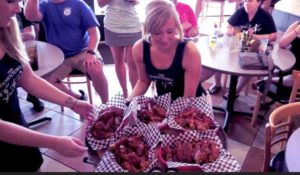

 As for the celestial houses:


 he director of this whole thing is a hilarious composite of 80’s tropes between the thick glasses, the power-stache, alcoholism, and womanizing. He embodies the type of toxic masculinity that quite frankly is missing from popular culture. Yes, he’s a dick, but he’s kind of the glue that binds all these people together and frankly that’s probably why you will watch beyond episode 1.


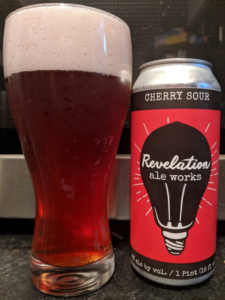 This pours a clear red with a huge pink head. The aroma is a hint of cherry, and a bit of funk with some acid in the back end. The head sticks around for a while, then fades out. Bright sour notes, with notes of sweet and tart cherries coming through. Lactic acid is the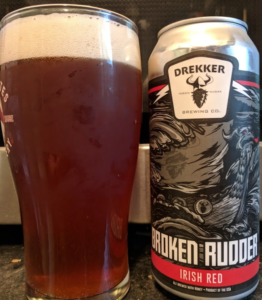
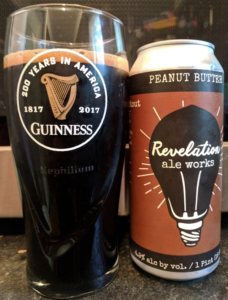 Aroma is moderate peanut butter, pours an opaque black with a thin ring of tan head and some dusting on top of the pint. Almost no carbonation present (though this may be due to the can and shipping), flavor is mildly sweet with a touch of roast, and a finish of peanut butter. I’d like to try this one properly carbonated. Overall 3.25/5.00*
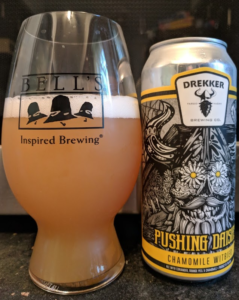 Pours an opaque orange-yellow, with a thin white head. Bright aroma, with hints of citrus, clove, and chamomile. Nice carbonation levels, with a moderate body. Flavor starts a bit sweet with a touch of creamy wheat. It finishes with a nice spice and floral finish. Overall
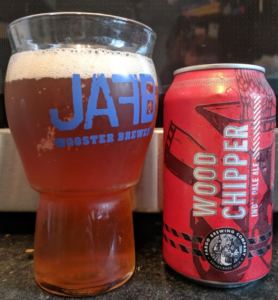 Aroma is of pine, with some floral notes. Pours a clear amber with a white head. This is definitely on the hop forward side, with just a touch of sweet malt notes coming through with a kiss of caramel before pine, pith, and bitterness come through. The bitterness lingers for a while, with some earth noticeable in the finish. A bit light in body, but overall a solid IPA. Overall 3.75/5.00
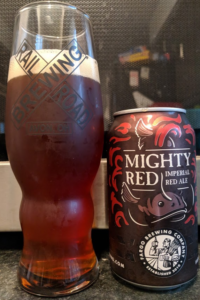 Pours a clear reddish-amber with a thin white head. Aroma starts off with caramel, and then fades to piney hops. Mild hop presence then the aroma would indicate, Nice caramel notes, a touch of roast, and then a mild earthy bitter finish. Moderate body, and nicely inviting. Not sure it really reaches Imperial levels (at only 6.6%), but a solid Red. Overall 3.50/5.00
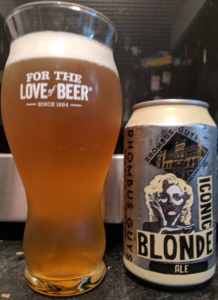 Pours a clear, pale straw with a white head. The aroma is a touch of grain, with a bit of something sharp behind it. Light bodied, just a touch of malt sweetness, and a bit of floral hop notes. Crisp and refreshing on a hot day. This is a very solid blonde ale. Just the thing to reach for when you just want a clean, cold beer. Overall 3.75/5.00
 A mild sour aroma starts off, with a touch of strawberry lurking behind the tartness. The beer pours a hazy pinkish-straw with a full white head. Bright sour flavor, with both the rhubarb and strawberry coming through. There’s enough lively carbonation to lift the flavor off the palate and keep the beer light and refreshing. Overall a very good fruited sour.