Category: Politics

  • On Political Extremes (And What to Do About Them)


    A Polarizing immigrantIt seems the word of the last two years, if not the last decade, is “polarizing.” The media runs countless stories about how polarized the country has become, with each segment of the media casting political opponents as the cause of the polarization. I do not deny that some people in our society espouse extreme or outrageous viewpoints; such is a known risk when freedom of speech and freedom of conscience make up the framework of our governing philosophy. But despite a few oddballs and whack jobs, I think we find that most people, whether conservative or progressive, hold beliefs that are not irrational. The polarization, then, comes from opponents misrepresenting the other side’s views to their own bases. So rather than finding common ground to have a dialogue we are left with hysterical screaming in defense of or against some view or another. This is my attempt to cut through some of the screaming to help each side understand the other a little better in three specific areas: immigration, education, and wealth/poverty gap.

    I read a story like this about MS-13 attracting girls to their ranks–and yes, it’s Salvadorans and not Mexicans–and the very real truth is that there are violently-minded people illegally immigrating to the United States. To deny that is naïvete at best and utter mendacity at worst. Some of these girls are driven to MS-13 or affiliated gangs because of some past trauma, but only a dyed-in-the-wool progressive would argue that assimilation to American culture radicalized them.

    Still, not every immigrant that comes to this country illegally is ready to behead someone or stab a man 153 times with fellow gang members watching and laughing. In fact, many come here in spite of the danger that illegal entry presents because the opportunities continue to be far better than what they can achieve in their countries of origin. Even the risk of deportation and a lifetime ban from re-entering the United States (which means leaving other family and even offspring behind) does not deter many who just want to provide for themselves and their families. A new documentary series on Netflix called Ugly Delicious, produced by renowned chef David Chang, explores this very issue in its second episode on tacos.

    In a similar vein, but on the topic of education instead of immigration, my wife and I were discussing some of the students in her class last week. She seems to have quite a few bad apples this year, but one girl in particular stands out. This girl failed sixth grade last year and was actually held back to repeat the sixth grade again (shocking in Chicago Public Schools!), and is now in danger of failing again. My wife says the girl’s mom has to work 2-3 jobs and crazy hours just to provide for her daughter, and the mother was in tears about what to do since she can’t be home to watch the girl do her homework every night. The girl attends a magnet school but chooses to hang out after school with kids that go to the much worse neighborhood school. Basically, the girl is a textbook case of total apathy toward education (and life in general), even with a mother who wants her to become something more.

    Many people believe education is so important that it should be provided for free to students at taxpayer expense. And I agree that education is vitally important. But progressives who demand public subsidizing of education deny the existence of students like the one in my wife’s classroom. When my wife has to focus more attention on this girl and other students who are not interested in learning, it holds back the potential of many others in the class. The “Education is a Right!” crowd would have us believe that every student has an innate desire to learn and the only thing preventing them from doing so is a lack of money or profit-seeking charter schools. (In fact, the latter may actually address the needs of apathetic students more by giving them a school to be proud of. See The Ron Clark Academy, for example.)

    I think the other side, however, plays up the apathy or entitlement a bit too much. There are plenty of students who grow up in homes where education is not valued, but with the right teacher or educational environment they could thrive. Unfortunately, our system rewards teachers based on tenure and not on merit, creating a structure that chews up and spits out young and inspiring teachers who can reinvigorate apathetic students with a passion for education. Meanwhile, thousands, tens of thousands, or even hundreds of thousands of jaded teachers clock in at 7:30 and clock out at 2:30 just so they can collect a paycheck and employee benefits that are funded by the taxpayer, and care little for the time and attention it takes to nurture a student’s desire for learning.

    With public education, most families are at a complete loss when assigning value to their kids’ education because they do not have any direct costs. On the other hand, they know how much their groceries cost; they can see how expensive refueling the car is. They even know, for the most part, how expensive a new car or cell phone is (although there are a lot of hidden fees in those contracts that can ensnare the unsuspecting buyer). But when it comes to education, people have accepted the belief that education is “free,” and therefore they assign no value to it. It’s just something one has to do, going through the motions from K-12 and beyond because society tells us its important.

    A final example of the polarizing extremes that people ascribe to their opponents comes from personal finances. One side believes that all wealth is inherited and every millionaire only got where he or she is by stepping on others. Dave Ramsey, on his national radio show, disproves this theory regularly with a segment he calls “The Millionaire Theme Hour.” He asks millionaires–those whose net worth is over one million dollars–to call in and asks a series of questions about how they obtained their wealth. Only a tiny fraction of callers received any inheritance, and for those who did it was a paltry sum from a family member who died well after they were already self-made millionaires. By and large, the secret to success is, wait for it… spending less than you make!

    The other side, however, categorizes the poor and downtrodden as lazy, dumb, or victims of divine judgment. There is a common perception that because most successful people have pulled themselves up by their bootstraps, anyone who is struggling must not be working hard enough. Although free markets and laissez faire government offer the best economic opportunity for people to rise from nothing to something, reality intrudes on that idealistic worldview in that some people just get bad breaks. Whether they are immigrants whose options are limited because of their legal status, or they come from a family of under-educated individuals, or they just have unplanned expenses continue to assault their monthly income, life has plenty of people who can’t get ahead.

    Ultimately, the solution to all of these situations–immigration, education, poverty–lies not in either of the extremes, but in looking past the collective and at the individual. A system that cares more about enabling hungry, driven, and dedicated individuals to thrive will prosper far more than one that seeks only to sustain a lower class in poverty. If we focus on providing incentives to make good decisions rather than making decisions for others, we will prosper. This means that some people will continue to make bad decisions, and we have to be okay with that. We–as individuals–can show them grace; we can show them compassion and mercy; we can even show them charity and generosity. But if we–as a society–continue to enable people to coast instead of strive to succeed, everyone suffers.

  • Up Your Coffee Game!

    You know, life is stressful and you need to unwind. Trips to a tropical island or a secluded cabin in the woods are great, but few of us can afford to go with any regularity. You know what is cheap and relaxing? No, not meth. Coffee! It is the one thing I do everyday to relax. I take a few minutes to brew an excellent cup and let the world melt away. Coffee, when consumed black, is low calorie and packed with antioxidants, which your body craves. So why not make those few minutes as enjoyable as possible? It’s time to take your coffee game to the next level, friend.

    So if you are still reading, I assume you drink coffee and if you drink coffee, odds are you are using a conventional coffee maker with drip method. Good news reader, I’m not going to tell you to throw your machine in the trash and go buy a $1000 wonder brewer. You can get more out of your existing brew method with some inexpensive changes. Coffee is mostly water, so it stands to reason you should use the best water available. Invest in a cheap water filter or use your fridge water dispenser if it has a built in filter, instead of using tap water.

    Next, upgrade your coffee filter to a reusable mesh filter instead. Not only will you reduce the amount of waste you produce, you will save money in the long run. Coffee beans are oily, and that oil carries a lot of character and flavor. Unfortunately, paper filters trap a significant amount of oil muting the flavor in the cup. Using a metal filter not only allows more flavor from the bean to the cup, you can compost or use the used coffee grounds for fertilizer without having to remove the paper filter. So with those two easy tweaks you can getter a better cup, without a lot of expense. What’s that? You want to know more…

    Want more flavor, but don’t want to toss your Mr. Radar, I mean Mr. Coffee? Okay, you’re ready for whole bean. I’m not shaming you for using ground coffee, it’s just as soon as the bean is ground at the factory it starts to lose flavor. Not only does the essence de cafe seep out, foreign flavors soak into ground coffee. Protect your coffee with a coffee vault. A coffee vault will keep your coffee fresh longer than the bag. So do yourself a favor, you’ve earned it, buy whole bean and grind it just before you brew.

    Obviously, you will need a method of grinding. If you are an 18th century cowboy, you can buy a hand grinder. For everyone else, I would recommend a conical burr grinder. I know some budgets are tight, but please do not buy a blade grinder. It will not give you a consistent grind and your coffee will suffer. Conical burr grinders provide precise and accurate grinds and are well worth the price difference. I will list some of the equipment I’ve tried at the end of the article with pros and cons. Now you can enjoy that fresh ground coffee smell and experiment with different grind/bean combos to find your tailored cup of Joe. You say you have a few bucks you held back from your pimp? Risky, but I salute your bravery.

    French Press is the best method getting the full flavor of the bean, because you can precisely control water temperature, grind, steep time and there are no flavor robbing paper filters. The process is deceptively simple. You place coarsely ground coffee in the carafe, and pour water just off boil (205F) and let it steep for 4 minutes, then press the plunger with wire mesh down slowly, then pour gently into your favorite mug.

    Any kettle will do for heating water, but I’ve recently switched to an electric kettle. It cuts boiling time down, and is safer because it shuts off automatically. But don’t feel like you need to run out and buy one if you already own a traditional kettle. French press is how I drink 95 percent of my coffee. If you buy a quality FP it will last you a lifetime and no filter expense.

    Another method that is equally simple, but allows less control is the Moka Pot, which gives you a cup of coffee similar to espresso. They are inexpensive and again require no filters. If you like strong, dark coffee this is the method for you. Plus you get to use those adorable little espresso cups. The grind is on the opposite end from FP. You want a very fine grind, as opposed to very coarse for FP.

    I can hear people screaming “What about AeroPress or Chemex pour over or cold brew?” To be honest I haven’t tried those methods, so cannot provide an informed opinion. If this article proves popular, I promise to buy and review those methods. If you are rolling in Koch dollars, there are some very expensive machines that make steamed milk and froth and I assume for the price, provide sexual gratifications. Unfortunately, for you the reader, but fortunate for my wife, I have no interest in anything other than black coffee, so haven’t dumped my 401K in a machine I could never hope to comprehend.

    But here are some items on which I’ve spent my hard earned dollars. I am not affiliated or paid by any of these companies and these opinions are solely my own. Prices from Amazon.

    So there you have it Glibs. Something for every budget and experience level to make your morning coffee a little more enjoyable.

    Bunn coffee maker with reservoir
    I don’t own this coffee maker anymore because I changed brew methods to French press. It was a fine coffee maker for high volume drinkers or for parties.
    Pro: Coffee brews quickly, multiple cups, precise temperature
    Con: Unless you use it frequently, the reservoir can become moldy and is difficult to clean. Also the weakness inherent to paper filter drip coffee.
    Price: $79.99

    Bodum Stainless Steel French Press
    My daily drinker. Nothing but love for this product.
    Pro: Bullet proof design, no glass to break. Keeps coffee warm. Comes in multiple sizes. Pretty enough to leave on counter
    Con: Longer prep time. “Muddy” coffee at the bottom of the cup.
    Price: $40.00

    Capresso Burr Grinder
    I’ve had this grinder longer than I can remember.
    Pro: Consistent grind, well made
    Con: Really for only small volumes, but that’s how I grind. Plastic hopper could break if dropped.
    Price: $99.00

    Moka Pot
    Made in Italy, you draw whatever conclusions you want.
    Pro: Inexpensive way to bring a little Italian variety into your kitchen
    Con: Needs to be cleaned and dried immediately. Can be tough to gauge when brew process is finished.
    Price: $34.95

    Hamilton Beach Electric Kettle
    I bought this when my stove top broke and I couldn’t use my traditional kettle.
    Pro: Cheap, makes hot water quickly, automatic shut off.
    Con: You don’t get the traditional kettle whistle to let you know it’s ready
    Price: $19.96

    Coffee Gator Stainless Steel Container
    My fresh roasted coffee goes straight into this guy.
    Pro: Keeps coffee fresh and provides attractive storage
    Con: It cost money, bags are free
    Price: $28.97

    Reusable Coffee Filter
    This will obviously be priced according to what brewer you use.
    Pro: Cheaper over long run, more complex coffee
    Con: Up front cost, more muddy cup of coffee
    Price: Around $15.00

    Keurig
    I own one of these and use it for parties. You don’t waste coffee and can provide a variety of choice, including tea.
    Pro: Flexible
    Con: Expensive machine and pods. More waste, less control over final product.
    Price: $65.00 and up

    For those who are really into coffee, you can roast your own. I didn’t put that into that in the article because I assume that would be the extreme minority of readers. Sweet Maria’s is the company I source my green coffee beans from and is an excellent resource for roasting.

    Whirly Pop
    I used this method with a propane cook stove for a few months, then the agitator broke. I would not recommend.
    Pro: Can really see/smell the roast process. Decent control of roast. Can do medium volume.
    Con: You need an external heat source and an outside area to roast.
    Price: $49.99

    Air Popper
    My first “roaster”. It does an okay job for me because I like lighter roast, but I drink too much coffee for this to keep up with my demands. If you like light roast coffee and aren’t a high volume drinker, it could be for you.
    Pro: Cheap, easy way to see if you like roasting.
    Com: Less control over the roast, hard to get dark roast, very small volume, must be used outside.
    Price: $20.00

    Behmor 1600 Plus
    My current roaster. I’m happy with this roaster. It fills that spot between complete noob and pro roaster. The next step up in drum roasters are like $1,100; more than I want to spend.
    Pro: Smoke suppression, can do up to a pound, more hands free, can roast dark
    Con: More expensive, takes up room, will set off smoke alarm in house
    Price: $369.00

  • On Welfare State, compassion aside

    There was a fine post on this fair blog about compassion, pity and the welfare state. I though I would add my 2 grams of silver and share a few thoughts.

    Outside a narrow circle of non-bleeding heart libertarians or, as I like to call them, actual libertarians, there is about zero support of completely removing welfare. The people on the left generally want more of it, and the people on the right just want somewhat less of it and “more efficiency”. Neither of these options will work in the long term, in the opinion of this heartless libertarian who just hates the damn children.

    The Universal Basic Income is, for example, one of the more prominent recent attempts to fix welfare, one that even some libertarians support. The idea is no welfare is not an option, so let’s have the best system. Sadly, I do not believe a best system, even if it existed in theory, can exist in practice. Why? This is what I will try to cover.

    They just want what is best for you, really...
    Kind, compassionate people

    The essence of the question is found in the essence of government. Government is at its core a concentration of power. This, naturally, now and always, attracts people who want power. So in the end, the ultimate goal for many at the top of government will be to get and retain power. Sure, they may have other ideas about society and maybe even be honest about wanting to improve it (at the point of a gun if necessary) and thinking they have the capability to do so (ignoring a few broken eggs here and there). But this is always secondary, at least for the ones who get to the top.

    In my view, in a struggle between those who want power to use it for, let’s say for lack of a better word, “good” and those who want power for the sake of power, the latter will come on top. What has this got to do with welfare? Well, any government activity will be inevitably used as a tool to get power, and will not be shaped to maximize results but to keep people in power. Welfare is no different. You will never get the welfare that is most efficient and helps the poor; you will get the one that helps politicians.

    Now, there are moments when feelings get the best of reason, and I think it would be acceptable to have a limited welfare system for the truly needy. This is a view of many right wing people I know. This will not work because there is not choice between limited welfare just for truly needy and a massive and much abused inefficient system. The choice is between no welfare and a massive and abused inefficient system. A limited system will never stay limited because, in essence, any program that allows politicians to transfer money from one person to another will be used to buy votes. More and more needy will be found. More and more people will receive something. And the limited help will be declared insufficient.

    Honesty is the best policy... exept in politics
    Telling it how it is

    It was always strange to me how people who support a social democracy scream about the evils of campaign money as “buying votes” while their political platform is literally buying votes. If someone gets money from the government, when a politician says, “I will increase these payment,” that someone will, quite literally, hear vote for me and I give you money. A welfare state is practically a license for a politician to buy power with other people’s money. And if I am wrong, I would love to hear a reasonable, logical argument as to how I am wrong.

    But there is a second layer. The large amounts of people not on welfare but who emotionally support the programs, either out of a misguided view on compassion or basic signaling of their moral high ground. So this is another group who will be convinced to give their votes because welfare is insufficient. I have seen multiple articles in the press where such people tried to live on welfare money to prove it can’t be done, and the conclusion was it can but it is not easy. So even when there is a level of welfare that many view as quite enough, others want more of it.

    One should keep in mind that the cost of welfare is not just the money that ends up at welfare recipients. Welfare also keep politicians in power, which means lots of money spent on various graft, not directly related to the welfare, but related to the politicians. Another point is that there will be an ever-growing bureaucracy dedicated to administering welfare, which may end up costing more than the welfare itself. There is also the cost associated with people who may be able to do something productive and do not, both due to incentives of welfare and to the economy in general, which is affected by the taxes needed to fund all the above costs.

    On the other side of the spectrum, other politicians will use it as a tool for their base, talking about scroungers and welfare frauds. But this will basically lead to another layer of division between people which is exactly what the politicians want. Divide et Impera is what keeps the big parties in power. There always need to be another side which is bad, and my side which is less so.

    The art of politics is basically to keep the people split on as many issues, so that they do not notice that no issue is handled properly. Must spread attention as thinly as possible to keep scrutiny off what the government actually does.

    Universal Basic Income will be no different. It will not stay for long as the only program, as different programs for different groups will be invented. It will constantly be under pressure to increase. And it will create an ultimate feeling of entitlement. You get money for breathing, basically.

    So to me the alternative is no welfare or a system which will inevitably become first and foremost a tool for power, with all other functions secondary. If no welfare is not an option,  I will accept a constant struggle will be on this and just stay out of it and leave it to others. I assume the system will oscillate, going too far then followed by a snap-back and then too far again. But to those who think welfare will be mostly about helping people as well as possible, I have a bridge to sell.

  • Lies, Damned Lies, Statistics, and Yuman Trafficking

    Cha too ma laya conky, ya neema loka nyan.

    During a press conference held earlier today, Donald Trump made the claim that thanks to the Internet “there’s more yuman[sic] trafficking, and slavery, than at any time in the history of this world.” Of course, Trump provided no citation for this remarkable claim, because citations are for losers. Nevertheless, I was curious as to the truth of this claim.

    A cursory internet search revealed many articles that put forward this claim, the earliest, being from an Alternet post in 2009. Indeed, this claim was repeated as gospel by several outlets across the ideological spectrum, including The Atlantic, World News Daily, and various newspapers. When authors of these articles deigned to provide a source for this claim, they usually pointed to various think-tank reports, including an Obama-era report by the Department of State, all of which place the total number of those enslaved around the world from 20 to 40 million.

    When one considers that on the eve of the American Civil War, there were almost 4 million slaves, this number may seem shocking. Well, it may seem that way if you are a drooling microcephalic. People who possess an intelligence quotient of 80 or higher (Stanford-Binet or WAIS, take your pick) are cognizant of another absolutely shocking fact: there are more people alive now than at any time in the history of this world!

    If, for the sake of argument, we take the highest estimate for the current number of slaves in the world, it represents a mere 0.5263% of a total global population of 7.6 billion individuals. Are Trump et al. truly claiming that in the past the total number of slaves had never represented more than half a percent of the world’s population? In 1860, slaves represented 12.57% of the total population of the United States alone!

    Comparing total number of slaves across time periods without accounting for the increase in total world population is a statistical trick even worse than the “1 in 5 women are raped at university” claim. Whereas the latter myth relies on cooking the books with both an extremely expansive and idiosyncratic definition of sexual assault that utterly destroys its construct validity and a piss-poor sample size that provides nowhere near the statistical power needed for the inferences made by the report, the former merely pins its hopes on the fact that you are innumerate.

    Now, all of this may just be merely risible fodder for the world-famous Glibertarians.com sneer take if it weren’t for the fact that these factoids are used as rhetorical lubricant for advancing public policy. The 2012 Department of State report used this claim to advocate for less restrictive requirements for victims of human trafficking seeking asylum, the 2016 WND op-ed uses the same claim to advocate for immigration restrictions from countries that follow sharia law, and today, Trump squarely placed blame on the Internet for this supposedly unprecedented number of slaves around the world.

    It is this mythology that is used as a screen for the power-grabs the Federal government has made through the Stop Enabling Sex Traffickers Act (SESTA) and Allow States and Victims to Fight Online Sex Trafficking Act (FOSTA), which Trump signed into law on April 11th. FOSTA-SESTA remarkably passed the House of Representatives with a 388-25 margin, and the Senate 97-2, with only Ron Wyden and Rand Paul voting against. Truly, it seems the naked ambition to control one’s fellow man is the only thing that enjoys broad bipartisan support these days. Well, that and the erroneous belief that there is more human trafficking and slavery than any other time in world history.


  • Politics’ Pseudo Pragmatism Problem

    By PieInTheSKy

    In this particular piece, Pie ponders people’s perceptions of pragmatism pertaining to politics, particularly partisanship. Is it just me or does this blog need more alliteration?

    2 Major Parties

    This is, as you know, the most important election of our lives. This is a time to be pragmatic; there is no place for philosophy or idealism. It is important to stop Insert Candidate Here and now. For every other country, add names of parties, rinse, repeated. This is something I am often faced with people when I try to discuss principle. A call to pragmatism is what I get. People do not have time to read and debate the fundamentals of economy, philosophy, and ethics. They are pragmatic. They care, mostly, that the party they oppose loses this time. This time is important, we will think of principle after. Unfortunately this time is every damn time.  So is this truly pragmatic? Yes, my candidate has many flaws, but the other is worse and this is not the time nitpick a bit of theft and fraud here and there.

    The question I would ask, as a libertarian, is when and how can we get to the point where the election is not that important and we can think principle? Also, if so many crucial elections were lost by the side The Great Pragmatists support, it is obvious The Wrong People will inevitably end up in power and the Most Important Election will be lost. So would it not be a good idea to reduce government power and make these often wrong elections less crucial? Of course not. This time, we cannot allow the wrong lizard to win. And when Our Side gets that elusive Permanent Majority, we will have the time to think upon the fundamentals.

    This permanent pseudo-pragmatism is rather obviously, to me at least, engineered for a very clear purpose: a way to keep people alarmed by the next election. Create urgency so people do not think long term, or in perspective. Many blame politicians for thinking only about the next election, but regular voters do the same. And more importantly, vastly lowering the expectations placed on politicians. Some Romanians have been voting the lesser evil for going on 30 years now, and are constantly screwed. And the lesser evil gets worse and worse, as it is no longer expected of politicians not to steal, but to be the lesser thief in the election. And this led to exactly what they wanted. So how fucking pragmatic is it, in the end, to constantly vote for the lesser thief? Maybe it would be better to vote on some clear principles. Maybe the lesser evil might lose until it becomes not evil? Maybe … eh who am I kidding?

    This so called pragmatism often leads to missing the forest from the trees, to miss the fundamentals of what a government should and should not do. In the end, to hardly notice that the parties are not all that different, and not in the positive aspects, if there are any. That certain people make bank whomever is in power. That lobbyists thrive, that laws are getting complicated mostly for the benefit of special interests. That year after year things are not improving nearly as much as they should.

    Each election we try to fix the cracked window, but what about the rotting foundation of the house? Well I don’t have time to think of the foundation, I am, after all, a pragmatist. That crack in the window is crucial, so it needs fixing. Laws and regulations are constantly patched without thinking if they are so bad to need constant patching maybe, we should rethink them. But people are pragmatists and they patch and patch and one year later a new patch is needed. Not unlike software, a point comes where the code is too complicated and full of bugs; you need to outright rewrite it.

    Beyond ideology of left and right, if people were actually intending to create a good society , some things would be a lot more bipartisan, like make things as clear as simple as possible, constantly analyze if things work and if not change, don’t patch. But they do not intend that. They want to push their little pet projects, protect their sacred cows and care not a jot about anything else.

    I used this Douglas Adams quote before, but I will again, ’cause I like it:

    “It comes from a very ancient democracy, you see…”
    “You mean, it comes from a world of lizards?”
    “No,” said Ford, who by this time was a little more rational and coherent than he had been, having finally had the coffee forced down him, “nothing so simple. Nothing anything like to straightforward. On its world, the people are people. The leaders are lizards. The people hate the lizards and the lizards rule the people.”
    “Odd,” said Arthur, “I thought you said it was a democracy.”
    “I did,” said Ford. “It is.”
    “So,” said Arthur, hoping he wasn’t sounding ridiculously obtuse, “why don’t the people get rid of the lizards?”
    “It honestly doesn’t occur to them,” said Ford. “They’ve all got the vote, so they all pretty much assume that the government they’ve voted in more or less approximates to the government they want.”
    “You mean they actually vote for the lizards?”
    “Oh yes,” said Ford with a shrug, “of course.”
    “But,” said Arthur, going for the big one again, “why?”
    “Because if they didn’t vote for a lizard,” said Ford, “the wrong lizard might get in. Got any gin?”
    “What?”
    “I said,” said Ford, with an increasing air of urgency creeping into his voice, “have you got any gin?”
    “I’ll look. Tell me about the lizards.”
    Ford shrugged again.
    “Some people say that the lizards are the best thing that ever happened to them,” he said. “They’re completely wrong of course, completely and utterly wrong, but someone’s got to say it.”

    So Long, and Thanks for All the Fish…


  • On Laws


    In general, as a libertarian, I’m skeptical of any new laws that people want to propose. Controlling people just goes against my grain. But I’ve noticed lately that people of differing policies seem to be talking past one another. So, I’d like to propose a universal framework for considering laws.

    In general, I think any law should be decided upon as a balance sheet–with benefits weighed against costs. The important thing is to recognize fully all the costs and benefits and reject the things that shouldn’t be included.

    I’ll start with my libertarian observation that any law, of necessity, entails a curtailment of individual freedom. That’s (for me) a big run up in the costs category. But different people are going to assign different weightings to different rights and freedoms. The important thing to recognize here is that people will assign different weightings to the loss of freedom and to understand that a different weighting isn’t the hallmark of stupidity or evil. The one time I think it’s genuinely fair to discount the cost of freedom is when you have a situation where a law is banning an actual violation of individual rights. I think it’s fair to say we shouldn’t mourn the loss of people’s freedom to rape, rob, or kill other people.

    The second consideration is whether the law is going to work. Too often people demand laws because they don’t like something or consider something awful, and assume the legislative process is a magic wand to make the world be the way they want. But it isn’t. And that kind of magical thinking is how we wound up with the wonders of organized crime during Prohibition and the glories of our modern War on Drugs. Generally, trying to ban something that’s wildly popular is a pretty sure recipe for massive flouting of the law. It’s not a perfect guideline, but, if you already have a bunch of laws on the books about something, one more probably isn’t going to do the trick. The benefit you see of a law should be weighted by the probability of the law actually working.

    On a related note, ask yourself what the secondary and tertiary effects of your law will be. Sometimes these can be positive, but, much more often, they fall on the cost side of the ledger. In fact, quite a few of the problems people have that they want to pass new laws for are the result of previous laws that people thought would magically change human nature. Consider whether the law you’re seeking to implement is going have some relatively easy workaround. If it is, ask yourself what will be the consequences of huge numbers of people availing themselves of that workaround. Make an entry in cost or benefit accordingly.

    Now, ask yourself about enforcement. How heavily are you going to have to enforce the law, and, perhaps more importantly, how heavily are you willing to go to enforce the law. Some laws can be implemented with little attention to enforcement. A lot can’t. If the law would be easy to enforce, that probably counts as a benefit. On the other hand, if you’re not willing to go to the extent you’d need to to enforce the law, you should probably count that as a cost. As a libertarian, I tend to implement this standard through what I’ll call the silver-haired, kindly old grandmother rule – if I’m not willing to shoot someone’s silver-haired, kindly old grandmother in the face over it, it probably shouldn’t be a law.

    Finally, we get to motivation and morality. Ask yourself, are you advocating this law as a rational means to achieve a specific policy goal, or are you looking to feel good about yourself without much personal effort or sacrifice? If it’s the latter, you should probably discount your expected benefits of the law accordingly or even throw out the proposal in its entirety. Passing laws doesn’t make you a good person. You don’t get moral credit for what you demand someone else do. If you want to be a good person, just go about doing that in your own life without placing demands on everyone else. The rest of us will respect you a lot more.

    So, there you have it. This is a framework that, I think, will allow conservatives, libertarians, progressives and liberals all to discuss proposed laws and much of the rest of politics, in a common framework. As a libertarian, my calibration of the framework obviously tilts against any proposed law. But, it can be calibrated lots of different ways. And at least acknowledging the calibration might lead to more meaningful engagement between people with different politics.

  • Two in the Pinker; One in the Stinker

    Last week, as part of his latest book-shilling tour, Steven Pinker looked us straight in the eye and threw down the gauntlet with his Big Think rumination “Why libertarianism is a marginal value and not a universal value.” Pinker argues that “the free market has no way to provide for poor children, the elderly, and other members of society who cannot contribute to the marketplace.” Furthermore, Pinker claims a robust social safety net as a necessary characteristic of a “developed” economy.

    Of course, this is argument is even more laughably fallacious than his criticisms of the connectionist model of language acquisition. To support his premise, Pinker indulges in a false choice fallacy, argumentum ad populum, and the beloved ‘Somalia fallacy‘. It truly is a mediocre bit of hackery that exposes the poverty of his arguments in just a little over 4 minutes.

    Split Pinker’s wig and bust his cheeks open in the comments below, and when you are finished, you can wash your ears out with this.


  • Wines and vines of Romania: the grapes

    So we covered a bit of general information and a bit of history on wine in Romania, best wine in the world. Now let’s get a bit more specific and let’s us talk grapes. Well not individual grapes of course, I mean varieties. As mentioned previously, accurate figures are difficult to come by, in Romania or elsewhere, due to informal wine making and general issues with such statistics, but I will try to give some numbers, as accurate as I can. So take it with a grain of tartrate, so to speak.  According to Ministry of Agriculture estimates, Romania has about 200,000 hectares of vines, 80% of which are dedicated to extracting the nectar of the grapes, making 500 million liters of wine. Give or take 150 million.  Half of them are European vines, half are hybrids. I will ignore the latter altogether because, personally, I do not consider that to be wine wine, and frankly there is not much to say of the mighty Căpşunica.

    strawberry wine... theres a song in there somewhere
    Isabella or strawberry wine

    Fine…  I will talk briefly of Căpşunica, the most popular hybrid wine grape. The word comes from căpşună, meaning strawberry. It came to Romania via Italy, where it was called Fragolino, hence the name.  It is a hybrid originating in, I think, South Carolina or thereabouts, where it was called Isabella or somesuch. Many Romanians drink wine made of this. I am not among them. I find it utterly unpalatable. Anyway… Moving on…

    About 70% of wine grapes in Romania are white and the remaining 30% red. There may be a few confused, inter-color, bi-curious and such, but a negligible amount. This data is basically approximation as no one knows for certain. This is due to the highly fragmented nature of the holdings, mostly because of those who grow for personal consumption. While in the EU the average vineyard size is 1.3 hectares, in Romania it is 0.2. So everyone and their grandmothers have a couple of vines to make a bit of wine, usually ready in spring and to be drunk by mid-summer, otherwise it goes sour. There are exceptions though; a minority of people do make good homemade wine.

    The white is predominant due to local preference for lower alcoholic, sweetish wines that can be drunk in high quantities, usually mixed with soda water. Șpriț, as the locals call it, word coming from the German Spritze. This leads wine snobs, such as yours truly, to turn their nose up and look down upon the plebs. For one thing, I dislike wine that isn’t dry. And second, I would rather drink a smaller quantity of something good than a larger one of something bad. And I don’t mix my wine. Some people actually put Cola in wine.  One thing that amused me, as an anecdote, was one such person criticizing another:  I understand drinking red wine with Cola, I do it all the time, but white wine with Cola is just weird. White wine is with Sprite or mineral water.  But the șpriț has its reasons: if you want to drink all night and keep hydrated, half wine and half water works better. You don’t get pissed as fast.

    Old school sifon

    As an anecdote, most people use bottled mineral water now. But back in the day – 80, 90 or so, it would be sifon, which I don’t know how to translate other than soda water. This was basically tap water with CO2 added. There were special places – sifonarie – where you would take your reusable bottles to refill. The bottles had a special head.

    The main white grapes cultivated in Romania are Fetească Alba, Fetească Regală, Riesling, Aligote, Sauvignon Blanc, Muscat Ottonel, Pinot Gris, Chardonnay, Tămaioasă Românească, Grasă de Cotnari, Francusă, Galbenă de Odobești, Crâmpoșie Selectionata, Mustoasă de Mădarat, Zgihară de Huși, Sarba, Plavaie,  and several others. Riesling is mostly Italian Riesling, but small amounts of Rhine Riesling have been planted recently, for the local need of a wine with just a hint of petrol in the nose.  The largest amounts are planted with the local grapes Fetească albă and Fetească regală, together being 18% of plantations.

    The main red grapes planted are Merlot, Cabernet Sauvignon, Băbească Neagră, Fetească neagră, Pinot Noir, Burgund Mare, Traminer Roz, Busuioacă de Bohotin, Cadarcă. Merlot is the most planted red grape, with about 12 thousand hectares. (As a side request for the admins, please catbutt any post saying they won’t drink any fucking Merlot.)

    I will not talk of international grapes much, but focus on the local ones. While there are several varieties, a fraction of the pre-phylloxera varieties still exist. I think there are probably lost varieties still grown among villages off the beaten track, but there is no project or funding to identify and preserve them (one of the things I would fund were I a billionaire). Many more were probably lost in the recent frenzy to replant everything with Cabernet and Syrah and other such invasive species.

    Fetească is sort of the local flagship grape, both in white (alb means white) and red (negru means black). Fetească Alba is a white clone of Fetească Neagra.  Feteasca comes from the word fata, meaning girl, and it could be translated as young girl like. I do not know how this came about.  Another common grape Băbească neagra (red fruit, higher acidity), comes from babă which means old woman. Băbească is to Fetească maybe stretching it a bit what Pinot is to Cabernet, and is used to make lighter somewhat fresher and fruit forward wine. Fetească is the more serious grape, making more complex wines. There is an old saying, heteropatriarchical I would think, about how young men like the older woman and old men like younger girl (meaning youth prefer the lighter wines from Băbească and the older, with or without candy, like the more complex Fetească). Băbească  also has it’s white wine clones Băbească Albă sau Băbească gri, but these are very rare.

    The general harvest date for Fetească Neagra (considered typical with a significant aroma of dried plum) is around 15 September, having a growth period of 160-170 days.  They get about 230-240 g/l of sugar and acidity of around 7 g/l. I will not give technical notes on other grapes. For more info there are encyclopedias for this sort of thing.

    Saperavi spoiled the Romanian purity, but still good wine.
    Negru de Dragasani

    Less common red wine varieties which make, in my view, good wine are Negru de Drăgășani (black cherries, blackberries, blueberries and other dark fruit) and Novac (raspberries, sour cherry, cloves, black pepper, dark chocolate – I do not do tasting notes myself so I just copied these from some professional wine taster, I find describing wines in such detail a bit silly), both from Drăgășani, a wine region in southern Romania, and both obtained by different crossings of an old Romanian pre- phylloxera grape Negru Vârtos with the grape Saperavi. They make a velvety red wine with some aging potential and one of the local candidates to making what some might call “Great Wines.” Negru Vârtos – meaning strong, powerful black – was one of the more appreciated pre phylloxera wines of Romania, and it was preserved in Negru de Drăgășani and Novac.

    As a note, many of the wines that are traditional to Romania (which contains the subregion Moldova) are also common in the now independent country Moldova. Some say one grape comes from one or other, but being that the language and culture are mostly common (despite the best efforts of Russians to make Moldova Russian), I do not think it is relevant. Jancis Robinson makes claims about this, for example, but I find it meaningless. The national grape of Moldova is Rară neagră which is simply another name for Băbească Neagra.

    Now to go through a few more grapes quickly… Grasă de Cotnari -gras means fat – is the flagship grape of the Cotnari region and is used to make sweet, aromatic white wine – and I remember reading that it was also planted in South Africa for this purpose. Fetească Regala is a cross between Fetească Alba and Grasă de Cotnari in order to get a more aromatic wine, but used for dry whites. Francusă is the Cotnari grape used for dry and rather acidic wine. In the old days people in general preferred sweet wines to dry, but the legend goes that Cotnari wine was generally so sweet that the boyars occasionally drank some Francusă as a palate cleanser.

    Crâmpoşia is one of the grapes believed to date back to ancient Dacia. Crâmpoșie Selecționată was obtained from Crâmpoșie crossed with a grape called Gordan, which I know little about, in order to solve some problems with sterile vines. It has high acidity and is used to make fresh, fruity whites. While traditionally used for dry wines, the possibility of both high sugar and high acidity made it useful for semi sweet and sparkling wines (Prince Stirbey vineyard makes a good sparking from Crâmpoșie). Another local wine use for sparkling is Mustoasa de Madarad, from the Arad region of western Romania.

    Tămaioasă Românească – tămaie means frankincense – is of the main white grapes used in Romania to make sweet aromatic wine. Although traditionally only used for sweet, some dry varieties were produced recently, due to the changing of tastes towards dry wines – Romanians still like a lot of sweet or semi-dry wines but tastes are shifting. Some of the dry versions were, in fact, pretty good. The grape is related to the French Muscat de Frontignan. A variation called Tămaioasă Roza – used to make a rose sweet wine – is actual Muscat de Frontignan, but they are, apparently, not allowed to call it that.

    Another sweet rose wine of some fame is Busuioaca de Bohotin. Busuioc means basil and it is a reference to the wine being quite aromatic. This was, during communism, grown on a limited surface and was reportedly Ceaușescu’s favourite. Due to this – the dictator drunk it and the people didn’t get any – after communism it got real popular because everyone wanted to drink Busuioaca. In the 90’s, probably 10 times more Busuioaca was sold than produced, a cheap, sweet red wine of the poorest quality. Recently, a few reputable producers made some, and while I’m not a fan, it can be pretty good as sweet wines go.

    As far as international grapes, I would say that if you are a fan of Pinot Noir, I would be very careful buying Romanian one. It is most likely bad, and not very typical due to the hot summers. Say what you will of Romania as a wine region, Burgundy it is not. Not even, say, Oregon. Furthermore, Pinot Noir was mostly made in Romania as a semi-sweet red wine of poor quality. It was what Romania was known in the past in England and Germany for – bad cheap Pinot for students and drunks.

    I was thinking of making one more post on recommended Romanian wines, but due to the availability in the states, there is little point. I already mentioned the wineries I like in the first post. Most wines from those are good. To highlight a few, Fetească Neagra I like from SERVE (Guy Tyrel de Poix), Bauer (FN quite different style to others), Davino, Balla Geza (Stone Wine Fetească Neagra) and Ferdi Feteasca Neagra – although this is nearly impossible to get in Romania, small family winery which does not really retail in stores, you need to know a guy. . . For Negru de Drăgășani and Novac the top is Prince Stirbey. There are other producers in the Drăgășani area that make it and only one outside, Via Marchizului Negru de Drăgășani from the somewhat hotter Dealu Mare, but an interesting variation of the wine. White wines I drink less of, but recommend the same producers. Stirbey and Bauer make great Sauvignon Blanc, but that is not a local grape. Bauer is the main oenologist of Stirbey, who made his own boutique winery with great results and even made the first Orange wine in Romania.

    About where to get it … TotalWine apparently has the mid-range Recas, which OMWC reviewed. The net said something about Mariano’s in the Chicago area, but we will have to ask Swiss if that is true. Mission Liquor & Wines Pasadena, CA, had, at least on the website, Nedeea – a blend of Fetească Neagra, Negru de Drăgășani and Novac and some Panciu which should be decent if not spectacular. The website has some stuff on it, no idea if it retails or how. Besides that… who knows.

  • The Greatest Political Movie Ever- And My Favorite Politician

    The Greatest Political Movie Ever- And My Favorite Politician

    In my professional life as a scientist, we spend a lot of research effort on phenomena known as “phase transitions.” The most interesting of them are ones which are sudden and irreversible- for example, if you’ve ever had the experience of superheated water from a microwave oven, where it looks placid, but a small disturbance causes it to violently boil, almost exploding, you know what I’m talking about.

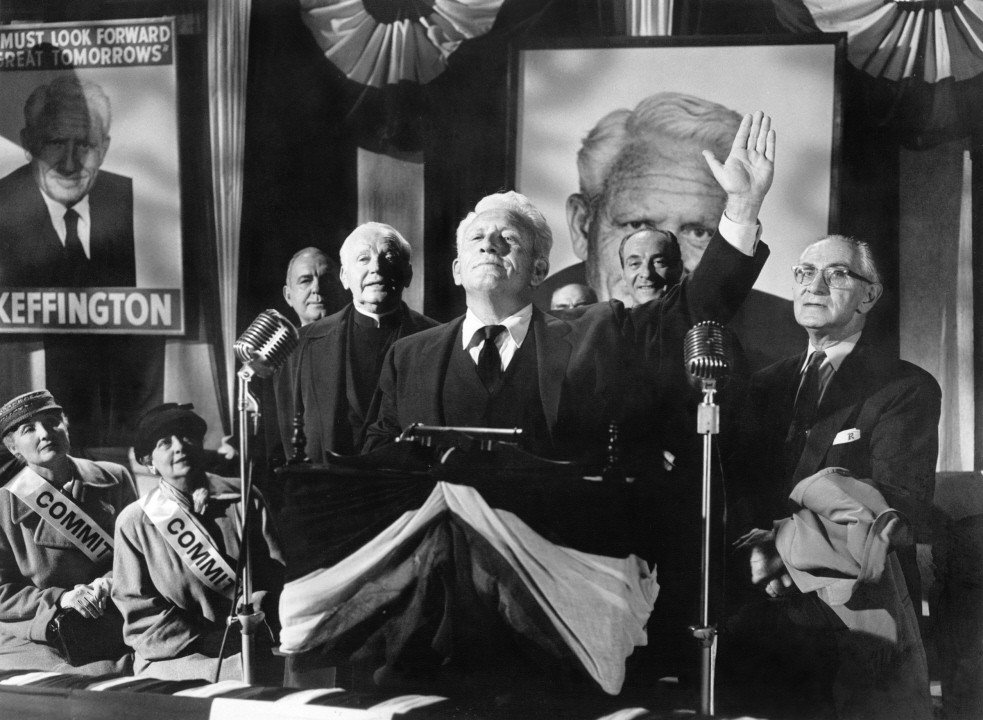
    There have been lots of excellent movies about politics- Wag The Dog, In The LoopPrimary Colors, The Candidate… but the one I think is the greatest of all time deals with a phase transition in a social sense. The Last Hurrah was made in the late 1950s as television was really taking hold in American culture. And it was extremely prescient in that it perfectly captured the moment of political phase transition. Old school politics was relentlessly retail- as with the principal character in this film, a city mayor would have a true and deep love for his city, know anybody who was anybody (and that did not exclusively mean “the rich and powerful”), spend all his time taking the pulse of every community, and almost exclusively focus on what we now call “constituent services.” Campaigning was in person: appearances at funerals, weddings, bar mitzvahs, pancake breakfasts, lodge meetings, everywhere the mayor could be seen. And everyone knew exactly who he was and had stories to tell about how he helped them personally.

    In this movie, Spencer Tracy played Frank Skeffington (a thinly disguised version of Boston mayor James Curley), a true old-school politician, who clashed with the social elite (rather than counting on them for funding) and was familiar to the ordinary folks. The film follows him (through the eyes of his nephew) during his last campaign, which he runs exactly like all of his other previously successful campaigns. But there’s a new element, a phase transition about to happen. The city elite find a telegenic young man, inexperienced and without any real ideas or principles, a tabula rasa made for TV. He runs a campaign that’s an early version of a modern political campaign, TV-oriented, all about image and appearance, and well-funded by the old-line old-money elite who hated Skeffington. The only thing missing is Frank Lutz doing a focus group.

    And of course, Skeffington loses. The phase transition is irreversible. We have suddenly transitioned to modern politics.

    So beyond this being an excuse for me to urge all of you to see this movie, and maybe tell me I’m full of shit for calling it the greatest movie about politics ever made, I wanted to reminisce a bit about my favorite politician, someone very much of that era. Mimi Dipietro was a city councilman for 25 years in Baltimore, a product of lower-middle-class ethnic white East Baltimore, and while not exactly the articulate and smooth Frank Skeffington, he embodied the virtue of truly being one of the people.

    “I know how to do my job. I do it honestly, sincerely and I help everybody who needs help. Yes, I got a big mouth, and if you got it coming to you, I’ll give it to you. But I’ll help you. That’s one thing. I’ll represent you, and I’ll try to help you. “

    And that he did. Have a problem? Mimi will fix it. Potholes, weeds, zoning issues, permits, Mimi was on your side and ready to use his power and influence to get it fixed. Despite his conversational abilities in English, Italian, German, and Polish, his battles with the English language were legendary, and the English language usually lost.


    “I would never tell a lie. If I have to lie to you, I’ll deviate from you.”

    “I have been to half a dozen political affairs lately, and each time I get a standing evasion.”

    “The criminal justice system suffers from too much flea bargaining.”

    Asked about why Baltimore was a great city (right after the Mount St. Helens eruption): “’Cause we ain’t got no volcanoes.”

    My favorite Mimi story has, to my knowledge, never been printed. I know about it because a friend of mine was a witness. My friend was visiting Mimi’s office during the winter, when two of his constituents came in with a problem. “Our apartment ain’t got the heat workin’ and the landlord ain’t fixin’ it.” Mimi immediately got the city inspector’s office and the city custodian on the phone. “I got a coupla niggers in here that ain’t got heat! Ya gotta fix this for ’em!”

    My friend, stunned, said, “Mimi, you can’t use language like that!”

    The two constituents replied, “That’s OK, that’s just how he talks, we don’t care, we just want the heat.”

    And two hours later, a city crew was at their building and they got the heat.

  • Wines and vines of Romania: a bit of history

    Wines and vines of Romania: a bit of history

    To start, in the beginning there was a formless void. Then the Dacians created the world, and after it, wine. Moving in the realm of less fictional, but maybe somewhat so, based on serious archaeological evidence, we can estimate at least 4000 years of wine making round these parts. Getting to the 60s – BC that is – we have Dacian king Burebista – the first to unify the tribes in what is now Romania and parts of Ukraine and Hungary into something resembling a kingdom, or kingdom like tribal alliance. Wanting a better, stronger kingdom, military and economic, he ordered the burning of the vineyards, because the people drank too much wine. So wine around these parts goes back thousands of years. And drunkenness as well.

    Just a random vineyard
    Not my property

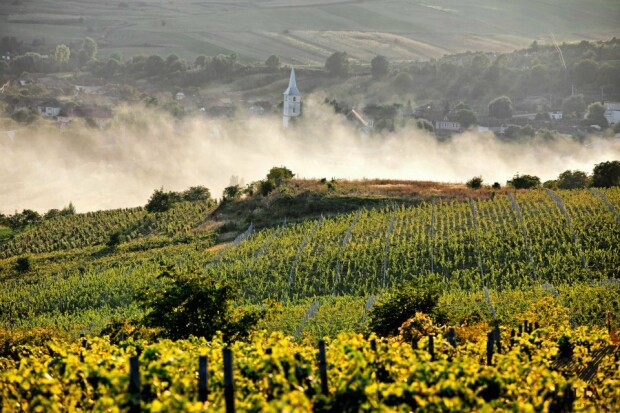
    Romania does have a history of wine and does have several famous wine regions, suitable from a geographical and climate point of view. Wine from areas like Cotnari, Odobesti, Drăgășani, Dealu Mare had its moments of being considered among the good European wines and are mentioned by foreign sources since the 1500s.

    The present situation is… complicated, with good and bad. Much of the bad, as I said in my previous post, was due to communism – bad, cheap mass produced wine to export for low prices. Usually semi-sweet with added flavor.  The vines and facilities were not maintained, a lot of knowledge was lost. The 90s were a bit of a dark age, as government agricultural cooperatives were  dismantled, some vines being given to former owners or their heirs, others to dysfunctional government enterprises.

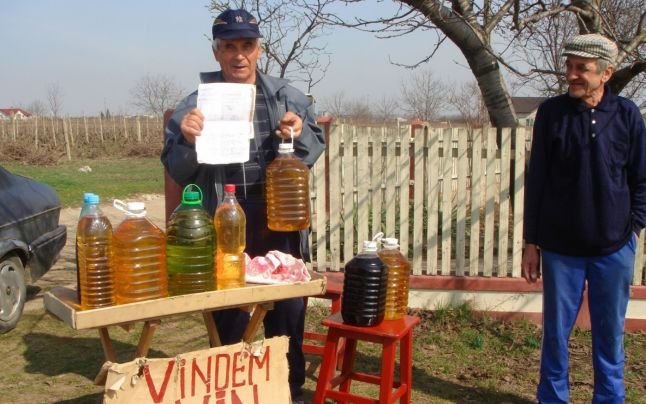
    New owners did not maintain vineyards any better, and most of the wine was mass produced and of very dubious quality. At least in my view. Many Romanians like to claim they enjoy “natural clean country wine”, not that commercial stuff. Natural and clean meaning not polluted with the things that stabilize and clear the wine of impurities, thus making it drinkable. The resulting liquid is sometime – rarely – quite decent if not great, but more often brown and murky, reminding one of a muddy river. I feel the home made wines in Italy or Portugal are of significant better quality because people actually bother to have some skill.

    But some of the… roots is the proper word… of the problem predate communism. Even before, quality wine was but a fraction of the total wine production. Most of it was made, then and now, for personal consumption on very small lots – basically each peasant’s garden. A lot of trade in the 1800s in Romania was still barter and did not involve money, which rural populations did not always have, so there was no developed market in wine, like in, say, France.

    Story time: as I said in my very first post on Glibertarians, my great-grandparents were from the Pitești region, grew plum trees for țuica and owned a pub in Pitești. Back in those days, the pubs sold mainly țuica and wine, so they made extra țuica, loaded up some wagons and traveled over several days to a wine producing region and traded for wine.

    You paint what you see
    Ox cart, common theme in Romanian painting

    Transport was bad in Romania back then, mostly by wagon and dirt road, so it made sense that most of the people made wine themselves, it was hard to buy from a distance. So each town or village had some vines surrounding it. The quality of the wine varied greatly. Some people respected the craft and themselves and made quite decent, if rustic, wine. Clear, somewhat stabilized micro-biologically – the barrels were sort of fumigated with sulfur providing the sulfites, wine was sometimes filtered using egg whites – something still done in modern times, although now artificial gelatin is favored. Others, not so much. It was just plain bad, or mixed with water, made with added sugar or with certain additives to make it seem better.

    Now a little break for fun with etymology! Șmecher is a quite common Romanian word –which mean crafty, cunning, shrewd and difficult to trick. An assumption is that the etymology is from the German word like “schmeck” or schmecken, which means to taste. The legend goes that German merchants came to the Drăgășani region of Romania to buy wine. The locals gave them a bit of the good stuff, and then a bit more, and the merchant got a bit drunk, and then they sold him some bad wine as well, but for the price of good. Now, say what you will of German merchants, they were not stupid. Fool me once, as the saying goes. So the next time they brought tasters which did not get drunk and made sure to get the good stuff. These schmeckers or tasters were people who were hard to trick, who did not buy bad wine for the price of good. Hence the Romanian word.

    Wine is the nectar of the vines, if we want to be pseudo poetical about it. And why would we not want to be? But wait; there are plenty of crawling plants, so which ones? Vitis vinifera is responsible for all that which most humans with a discerning palate consider good wine. So plant that shit and drink up! Well, that is what people did. A lot. So up to this point, all is well, everyone was all happy and drunk – as happy as semi-starving peasants can be that is – until you bloody Americans had to screw things up, with you interventionist policies and such. In the year 1884, enter phylloxera stage right. And things got considerably worse.

    What is phylloxera ? It’s an insect, a bug, a parasite, vermin. You mean like socialists? Yes, precisely like socialists. Phylloxera is a pale yellow insect native to North America, which, instead of doing productive work, sucks the sap from good, honest grapevine roots. Americans have evolved some natural defenses against parasites such as these, which Europeans did not. But Americans lack the sophistication needed to make a good wine. And speaking of Americans, as a side note, just to avoid all sorts of silly comments, a hectare is 2.5 acres.

    No nasty sulphites

    In 1884, Romania, not yet including Transylvania, had at least 200.000 hectares of grapevines – mostly local versions of vitis vinifera. Most villages and towns had their own vines, due to the difficulty of transporting things on dirt roads. Then the disease devastated the vines, and by 1905, 90 thousand hectares were left.

    By the time the bug was in full swing round these parts, Western Europe, which was hit first, had found the solution. After many trials and errors with pesticide, insecticides, fumigating vineyards and such, the new vines were planted grafted on American root stock – vines that did not give good wine but resisted phylloxera. Romanians, red blooded and proud as the mighty oak that grows in the forests, said, naturally, we ain’t gonna let a bunch of foreigners tell us what to do. So instead, they started experimenting with pesticides, insecticide and fumigating vineyards. This failed miserably and in the end they turned to, you guessed it, planting vines grafted on American root stock.

    Being a poor country, money was tight. As such, by 1910 Only 70 thousand hectares were left, out of which 20 thousand hectares had been replanted, and the others managed to hang on. The majority of the country, used to growing and making their own wine, and not being able to afford the new solution, settled on a not great but inebriation enabling intermediary solution. Direct producing hybrid vines. Hybrids of European and American vines, which were resistant to phylloxera and created a drinkable, if bad wine, were planted. They grew, they were maybe more productive than the “noble vines,” as they came to be called, and made a drink that got you buzzed. Good enough.

    You know the type
    Sap sucking parasites

    By 1935, after gaining Transylvania with a lot of vineyards, Romania had some 160 thousand hectares of European vines and 160 thousand of hybrids. By the end of communism in 1990, there were 160 thousand hectares of European vines and just 60 thousand of hybrids – results of collectivization and elimination of some of the hybrid vines. Sadly, things did not get better immediately, as many people who land from the old state cooperatives sometimes took out noble vines and replaced them with easier to maintain hybrids. So in 1997, the numbers were 80 thousand good vines versus 120 thousand hybrids. Right now, officially at least, it is illegal in the European Union to plant hybrid vines for wine making. This was, I assume, a standard protectionist method for established agriculture, although the pretext was the poor quality of the wine and the higher possibility of methanol in wine from hybrid vines.

    Now, more than 100 years later, according to the national statistics institute, there are 180 thousand hectares of vines in Romania, out of which about half, 90, are grafted vitis vinifera. So 150 years after phylloxera, the country has half the vines capable of producing good wine. And the current territory also includes Transylvania. Sadly, many people who make wine for their own consumption still plant hybrids which create a good natural country wine. Because swill does not have the same ring to it.