Category: Musings

  • This is not real glibertarianism: the importance of definitions in politics

    This is not real glibertarianism: the importance of definitions in politics

    Hello and welcome back to “Pie ponders”, in which Pie – that is me, for those who are situationally unaware – raises questions on various topics of great importance. Today, we talk about definitions and their role in politics.

    Typical glibertarian femaleWhat is glibertarianism, as a doctrine? Let me drop some definitions on you, as the self-appointed arbiter of all things glib for today.  Well it is the perfect political idea that leads to liberty, universal happiness, a better world where all the men are thicc and all the women can deadlift 800 pounds. In this utopia everyone knows wine is better than beer, scotch is better than bourbon and the NBA is the best sports league in the US. Anything else, well that is not real glibertarianism. Don’t @ me, as the kids say these days on the twits.

    I noticed a real problem with definitions in current debates on that most marvelous of mediums, the internet. Whenever something looks bad, well that is not the real deal. See socialism. While this may be seen as a version of the true Scotsman fallacy, I am not sure it is quite the same.

    Being a Scotsman, you see, can have some measurable definition- was one born in Scotland would be a start? On the other hand, one can claim any ideology one wants, without having to suffer through haggis and bagpipe music, and very often it can indeed be the case that X is not a true liberal/conservative, but just claims to be. For the actual ideology, we need to see if we can define things to see what is what, and then to measure the individual, preferably by the walk they walk as opposed to the talk they talk. Talking is exceedingly easy, after all.

    All failures of socialism were, off course, not true socialism. Well, socialism needs to have a clear definition to see what is and is not true. And this definition, like all definitions in politics, needs to respect some ground rules.

    Let us start with Wikipedia:

    Socialism is a range of economic and social systems characterized by social ownership and workers’ self-management of the means of production[10] as well as the political theories and movements associated with them.[11] Social ownership may refer to forms of public, collective or cooperative ownership, or to citizen ownership of equity.[12] There are many varieties of socialism and there is no single definition encapsulating all of them

    These are the alleged goals of socialism, while implementation takes a variety of forms, mostly authoritarian and disastrous in outcome. To go around the issue of the bear in the room, internet socialist change the definition in an idiotic manner and say socialism is some sort of perfectly just, utopian, classless society where everyone is happy. This is a neat little trick, if you define an ideology as an ideal outcome, whenever it fails, well it was not the real one.

    One rule of defining ideology should be that you cannot define it as outcome, but as the path to reach the outcome. Outcome is not guaranteed. Outcome is what is expected and needs to be proven. So you say we do socialism like this and it leads to that. If the result is an authoritarian hellhole, it does not mean it was not real socialism, it means socialism just does not lead to what proponents say it leads to. Critics of communism, on both left and right, said before it was implemented the very first time that it will lead to dystopian authoritarianism. And they were right. Which means communism is a bad ideology, not that the USSR was not real communism.
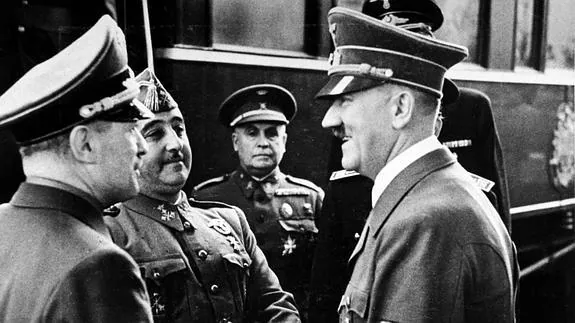
    Not real fascists, real fascism was never tried

    Certainly, one can very well claim their own personal flavor of socialism will not lead to all that. But since every attempt failed, it takes a bit of a burden of proof that a slight variation will succeed. Every attempt under the umbrella of socialism failed, and one can easily find an infinity of minor variations that are claimed different from any other minor variations attempted. Why, beyond empty claims and wishful thinking, will this variation succeed? This time the right people will be in charge is not acceptable, because that is, again, an outcome that cannot be guaranteed. I think we are at the point where we can safely say socialism failed and ignore minor variations which keep the fundamentals the same, as the fundamentals are rotten.

    The criticism of socialism is based on incompatibility with human nature, not due to minor flaws in minor variations. If, for example, there can be no functioning economy without property – no way to allocate resources, establish prices as has been shown long ago – no minor variation of property-less ideologies will help. Because the core is the problem, not the “implementation.”

    Let us take a look at another definition.

    Feminism is a range of political movements, ideologies, and social movements that share a common goal: to define, establish, and achieve political, economic, personal, and social equality of sexes.[1][2] This includes seeking to establish educational and professional opportunities for women that are equal to those for men.

    This seems a straightforward definition, with some goals that different between flavors and may or may not be achieved. On the other hand, internet feminist define feminism as „equal rights for men and women” in order to say that people who do not consider themselves feminists are against equal rights.  This is again a type of definition I oppose. You cannot define an ideology as abstract concept.

    Just another version of feminism, reallyFeminism is a loose group of ideologies who claim to strive for what they believe to be equality. That does not mean that is what they actually want, just what they say they want. It does not mean it is what they will actually achieve. It does not mean there are no other ways to achieve equality besides feminism. As such, it does not mean that those who think there is a better way are against equality. Off course, inside feminism there are also multiple subcategories, being various waves, attitudes (to men, government, trans, sex work etc etc etc) or simply opinions.

    Now that we can be somewhat more honest about definitions, we should ask ourselves how useful are they? Because one of the key words in both definitions above is “range”, which means those two labels cover a whole range of movements. So are they of any use? Do we need to break them down into subsets or can we use the whole as a guideline? And if we break down enough, do we not get to individual opinions and decide to forgo labels and focus on the individual? Off course not, that is crazy talk. And humans like to categorize things, to put them in boxes and apply labels.  In the end, we can only address an ideology by the common underlying paradigm of all variations.

    Wait Pie, but if labels may not be of use and people keep using them, that may lead to a total shitshow! Quite astute, dear reader, but fortunately, looking at the world, things somehow seem to have worked out perfectly, so no worries. Libertarianism in general has an even bigger problem as there is less than the usual amount of groupthink, the labels are even more unworkable. So what is the solution? Personally, I am going to go with get drunk and ignore all this. If you have a better plan, do tell.

  • Bob Boberson tries to sound intellectual about Envy

    Bob Boberson tries to sound intellectual about Envy

    You shall not covet your neighbor’s house. You shall not covet your neighbor’s wife, or his male or female servant, his ox or donkey, or anything that belongs to your neighbor. -Exodus 20:17

    It is interesting to note that the Tenth Commandment and final commandment is the only statute of the Decalogue that is concerned with an internal desire as opposed to an outward action. (Arguably you could claim the first is as well but that is a discussion for another forum) The author of the Ten Commandments, whether you believe it to be God or Moses or someone else entirely, thought purging envy from ones inner being to be a moral imperative worthy to be listed alongside prohibitions on murder, theft and bearing false witness. The reason, I believe, is because envy is a destructive force that left unchecked destroys the envious and wreaks havoc on those around them.

    Winston Churchill famously said:

    “Socialism is the philosophy of failure, the creed of ignorance, and the gospel of envy.”

    We Glibs repeat this creed daily in various ways as we comment on the avarice, greed and base human instincts that drive all things political and particularly as we see those vices on full display in the antics of the progressive/socialist left. Envy’s various manifestations can accurately be assumed to be the underpinning passion that motivates left-wing ideology.

    But what is envy? I think Kant’s definition is probably the most precise:

    “Envy is a propensity to view the well-being of others with distress, even though it does not detract from one’s own. [It is] a reluctance to see our own well-being overshadowed by another’s because the standard we use to see how well off we are is not the intrinsic worth of our own well-being but how it compares with that of others. [Envy] aims, at least in terms of one’s wishes, at destroying others’ good fortune.” (The Metaphysics of Morals 6:459)

    It is necessary at this point to distinguish between envy and jealousy as the terms are often confused in common usage. Viewed through the lens of the Stoic passions; delight, lust, fear, and distress; jealousy differs from envy in that jealousy is rooted in fear whereas envy is rooted in distress. Jealousy requires three parties; the subject, the rival and the beloved. Jealousy is the fear of the subject losing the affections of the beloved to the rival. More simply put, it is the fear of losing what we have, or what is within our power to possess, to another. Using the word strictly within the confines of its definition would relegate its application almost entirely to interpersonal relationships. Envy, on the other hand, is a two-party relation consisting only of the subject and the rival. This distress is an irrational contraction on the part of the subject toward the rival. At its core it is the belief that one is inadequate in comparison to another. It is a self-applied judgement. While it could certainly be argued that jealousy has as many roots in distress as it does in fear, it is quite clear that envy is not fear-based as the subject stands to lose nothing to the rival because they do not possess the object in question. It is an irrationality arising solely from comparison. We may say “I’m jealous of my neighbor’s car” but in reality, unless he somehow outcompeted you for it, we are envious rather than jealous as we never were in a position to possess that particular car in the first place.

    So we see manifestations of envy everywhere and indeed deal with our own irrational envious impulses hundreds of times daily. Some psychologists differentiate ‘good envy’ (I want my neighbors car so I’ll emulate my neighbors actions in order to obtain one of my own) from ‘bad envy’(I want his specific car or, short of that, I don’t want him to have it). I reject the notion of ‘good envy’ on the grounds that aspiration and emulation are perfectly consistent with rational self-interest and it does not seek to deprive the rival of anything. It is a concept in need of a term of its own. Envy, as I see it, is entirely negative and harmful. It is the irrational impulse to deprive someone else of something they have to thus alleviate one’s own sense of inferiority.

    A tranquil heart gives life to the flesh, but envy makes the bones rot. Ps 14:30

    I think the analogy of envy as rot is accurate. Once the irrational belief that another needs to be deprived to satisfy our own insecurity manifests itself, it becomes all-consuming, spawning all kinds of other soul-destroying passions. As Walker Percy said, “it consumes and twists our logic until nothing but itself makes sense.” In an attempt to rationalize our irrational passion we must justify our base desire to deprive others in order to feel adequate. We must convince ourselves that the rival somehow deprived us of what is rightfully ours. From this twisted logic we see all the other negative passions grow from the seed of envy; hatred, enmity, greed, anger, malice, vexation, depression, sadness, despondency, and on and on…

    Eric Hoffer identified in his seminal work True Believer who is most susceptible to the ravages of envy;

    “The weak are not a noble breed. Their sublime deeds of faith, daring, and self-sacrifice usually spring from questionable motives. The weak hate not wickedness but weakness; and one instance of their hatred of weakness is hatred of self. All the passionate pursuits of the weak are in some degree a striving to escape, blur, or disguise an unwanted self.”

    Those consumed by envy have somewhere buried deep in their psyche a profound sense of inadequacy. Rather than aspiring to gain through emulation those things they do not possess, whether they be material, relational or moral, they seek to climb above their station on the backs of others, or at the very least drag them down into the mire with them. This sense of inferiority is so profound that the subject must alter their world-view to satisfy it. Sadly these altered world-views have given rise to ideologies which give shelter and comfort to the envious (I’m looking at you Karl Marx).

    Again I’ll quote Hoffer;

    “A doctrine insulates the devout not only against the realities around them but also against their own selves. The fanatical believer is not conscious of his envy, malice, pettiness and dishonesty. There is a wall of words between his consciousness and his real self.”

    So we see myriad praises and excuses for envy dressed up in intellectual and garrulous finery. The subject is constantly reassured that their sense of inadequacy is natural, if not righteous. The moral obligation to combat their own passions is instead transferred to the rival who must be made to pay for their perceived superiority. Put even more simply, the rival is now responsible for the way the subject feels. The implications are terrifying when you couple a doctrine of envy with collectivism. The only acceptable outcome for the collective envious subjects is to see their collective superior rivals brought low and punished for the self-hatred the subject feels. Debasement or annihilation are the only thing that can satisfy the irrational contraction that spawned the ideology.

    So what is to be done?

    In regard to social-political movements, I have no idea. Envy is a part of the human condition and will rear its ugly head wherever human action transpires. I have little power to change anything other than myself.

    I refer once again to the first part of the Psalm above;

    “A tranquil heart gives life to the flesh, but envy makes the bones rot.” Ps 14:30

    We cannot control what is in the heart of others, only what is in our own. I believe this concept is one shared by any worthwhile religion or philosophy. We subdue our passions through logic and morality. We recognize that the inadequacy we feel relative to the rival’s superiority is a logical fallacy. One can only aspire to be the ideal version of themselves and cannot possess the personage of another. We must recognize that envy is a purely destructive force and the first to be destroyed by it is the envious. Beyond logic, we have a moral duty to recognize that envy seeks to justify violations of the natural rights of others:

    For where jealousy and selfish ambition exist, there will be disorder and every vile practice. James 3:16

    If the source of envy is not recognized for what it is, we find ourselves going down the primrose path from envy to resentment, resentment to hostility and from hostility to action. The end result of unchecked envy is the violation of first principles if not the outright abandonment of them.

    In my opinion, the opposite of envy is gratitude. This is no profound revelation yet the application is a constant challenge. When one takes stock of the blessings in their life and values them in the right order, contentedness takes the place of envy.

    I write these articles to be instructed more so than to instruct, so perhaps some of you fine Glibs can propose how we might organize (or disorganize) society to combat collective envy?

    “Don’t set your mind on things you don’t possess…but count the blessings you actually possess and think how much you would desire them if they weren’t already yours.” –Marcus Aurelius

  • Human deNatured

    Human deNatured

    The following musings were inspired by Suthenboy’s latest submission that discussed the folly of ignoring human nature. It got me thinking that “human nature” is something I recognize as a thing, but perhaps in a somewhat erroneous way, in that upon deeper consideration human nature isn’t really something that can be utilized in a monolithic sense. I’ve settled on human nature as being more like an average of individuals’ several natures. My attempts to detail these natures started to lead me down a path of relativism involving time and cultures… too complicated. Instead, I backtracked to more visceral aspects of what I believe to be our nature, some natural contradictions, and stuck to the broad strokes of the topic.

    In starting out with an overarching definition, ideas like self-interest and the invisible hand come to mind as references, along with concepts such as, “the whole is something else than the sum of its parts.” Various thinkers have offered simplistic terms for human nature: divinity, good, animal, conjugal, social, etc. For me, I find it’s whatever comes naturally to each person, whatever reactions they can’t effectively control, many of which most humans hold in common. I’ll leave it at that and get on with it, but add that humans don’t always act in their own best interest – most of us can identify self-destructive people, otherwise we wouldn’t know what not to stick our (metaphoric, for the fairer readership) dicks in.

    I deal with and utilize human nature as a profession: I run a manufacturing plant. My staff are the various department heads. In my managing, at times, I negotiate the plant as a whole; at others, each department’s unique personality – as may evolve from its leader and/or its typical employee, depending on necessary skill sets – and its interactions with the others; and sometimes, an individual.

    In each case, I look for the subject’s motivation, and that helps me to fashion my, dare I say, manipulation of it to achieve the plant’s goals. If I assumed all of humans’ nature to be the same, there’d be no need to search for a motivation. Some work-related examples…

    Some folks are naturally predominantly lazy, others are overtime commandos who’d live at the plant and do nothing but work and sleep if I let them. Most people fall in the middle, but I believe humans possess both desires – to work and to rest – and that the tradeoff is what’s in society’s self-interest: work hard to survive, yet carve out time to recuperate. Slavery is not a sound long-term economic model, nor is collectivism, for they both deny (these aspects of) human nature.

    There are loners and social butterflies, which natures I consider when building teams and filling positions.

    A minority seek to control others, with controlling as an end in itself; others can’t take a piss without being told. Neither extremes are desirable in managers or workers. For the average, we can look to the quote, “You cannot be a leader… unless you know how to follow, too.” Somewhat related, my dogs try to lead me everywhere I’m going even though they don’t know where that is.

    Other thoughts on human nature…

    Sexual desire is decoupled from the desire to have children, though the evolutionary result of sexual desire is species proliferation. Why don’t we simply desire procreation as opposed to wanting to shag or to fawn over pudgy little cherubs? As an aside, this is evidence to me for evolution and against creationism.

    Peeps are generally attracted to younger looking potential mates, giving our species the evolutionary benefits of neoteny. However, this goes too far when it results in pederasty, hence OMWC. That perversion may be balanced out by the demonstrated preference by some of being attracted to much older looking people, despite the odds against its being beneficial to our race’s continuing.

    Human nature sans societal influence is a not good thing. Children must be taught to share, not to steal; to speak civilly, not to be violent. These lessons are best practices taught to them by their families, by society. From a bigger picture perspective, maybe a baby’s complete greed is expected by evolution to be balanced by the restrictions placed upon it by its parents. For the survival of the species, a vulnerable human-as-baby must be wholly demanding, and as it becomes less vulnerable it must learn to conform to its local culture, to whatever the humans-as-elders have worked out is in their group’s best interest. Children left to their nature become brats and thugs.

    Given such conflicting desires/traits, it’s tough to pinpoint a distinct human nature, unless we look at how they balance, so again, I find it better to look at the averages to guide me, similar to how biologists consider an ant colony as the organism, rather than just one ant of the crew as being representative of the species, since the biology of a given ant can so vary from its fellow colonists depending on its function. Ant nature cannot be determined by looking at the queen’s behavior alone, just as one nature cannot begin to describe one human, let alone a planet full of them.

    That said, I am optimistic about humans’ collective direction. Slavery as a human institution is now, for the most part, a thing of the past. Causing civilian casualties in war is now a bug, not a feature. Imperialism through violent acquisition is likewise no longer acceptable on the human stage. I’m hopeful that one day, all forms of authoritarianism will be viewed with disdain. On average, at least.


  • Castles in the Air

    Castles in the Air

    Recently my Glib friends were kind enough to publish an article I had written  wherein I laid out a case that there is empirical evidence of the existence of natural rights. I contend that natural laws existing independent of man govern both human society and the natural world. We don’t invent these laws, we discover them. When we attempt to concoct laws to better suit ourselves it has invariably resulted in failure of our attempts to shape the world around us.

    Today we can successfully manipulate the natural world beyond the wildest dreams of our ancestors. Because we have discovered many of the laws that govern nature people from even one generation past would be in awe or disbelief of the world we live in today. Our understanding of the natural laws governing chemistry and adherence to them has given us ever increasingly sophisticated and useful metals, plastics, medicines, fuels, and building materials. Combining that with our understanding of physics allows us to create ever more useful machinery for manufacture, transportation, communication and tools for discovery or deeper understanding of natural law. They have allowed us to discover whole worlds, both macro and micro that mankind never knew existed. Using that deeper understanding increases our ability to lengthen our own lives and improve the quality of that life. It enables us to vastly improve our ability to produce food and simultaneously improve our environment.

    These applied sciences are not a God’s eye view of the universe. They are analogies. Underlying these sciences is mathematics which is also a human invention and an analogy. Underlying the mathematics of applied science are mathematical constants. These constants may be expressed mathematically but they themselves are not analogies. They are descriptions of the behavior of the natural world as it exists independent of man.

    If we try to invent our own, such as changing the gravitational constant to G/2 instead of G to save ourselves a great deal of effort and expense in the construction of rocket ships, our rocket ships will fail disastrously. Using any number other than G will result in failure. From this we can infer that a gravitational relationship exists. We simply express it as G. It is not subject to our whims. It existed before humankind, it exists now and it will exist long after we are gone. The universe makes the rules, we do not.

    In the same way that discovering and adhering to the laws of physics gives us success in manipulating the natural world, discovering and adhering to the laws of economics and human nature gives us success in social endeavors. Human nature is a product of evolution, not something we concocted. Any system we devise is subject to the body of natural law. Numerous efforts to change human nature have been tried in order to salvage some preferred but failing system and like The Good Ship G/2, all have failed disastrously. Our successes have been the result of observing human nature and creating a system to mesh with it. Our most notable failures have been the result of working the other way about. From this we can infer that human nature exists independent of our desires, it is not ours to invent.

    By far the most successful political system in human history is the one currently in effect in the United States, and not just by a little bit. The success has been so spectacular as to almost defy description. It has allowed individuals, both natives and foreign born immigrants, to contribute more to humankind than all of the systems in history combined. It has created more wealth in a mere hundred years than all of humanity throughout history. Nearly everything that makes the modern world what it is was conceived or popularized by people in the United States.

    This tells us that the premises that underlie that system are more comport with the natural order of things than any other system. The corner stone of that system is the premise that all people inherently and equally possess inalienable rights. Inalienable in that those rights exist as a product of our humanity. They cannot be granted or taken away. They are an integral part of every person. Building this system from the bottom up resting on that premise is the key to that system’s success. From this we can infer without doubt that inalienable rights are naturally occurring.

    The key to other system’s failures is ignoring natural law and attempting to build the system from the top down, something that can no more result in success than attempting to levitate and build a house from the roof down. Starting with a preferred ideal outcome, ignoring simple truths and then inventing a system to achieve that outcome does not work. It does not work in politics or economics any more than it works in science. It is remarkable to me how far afield from natural law some systems go. We only have to miss one or two natural laws for the system to collapse, yet some systems ignore even stark truths, such as that happiness is better than sorrow, that strength is better than weakness, that wealth is better than poverty, that independence is better than dependence, that health is better than sickness, that success is better than failure, that good is better than evil, and of course that natural rights even exist.

    Being of the mind that ends justify the means, that a few eggs have to be broken to make an omelet, leads one to commit all sorts of evil. Evil does not result in good. Wishes do not inform reality. That is farcical thinking, pure and simple, akin to magical spells. Recognizing that inalienable rights are naturally existing and respecting them results in success. Violating inalienable rights results in failure. Building up from sound principle gives us a sound house. Attempting to build on air from the roof down gives us a pile of rubble.


    *I am not attempting to argue the origin of natural rights. That is an argument that cannot be resolved. My attempt is to give a sound argument that they exist not as an invention of man but are naturally occurring. Those that argue that they are in invention of man are doing so to justify hand waiving them away. As for the arguments over the origin, God or nature, I don’t care. It is good enough for me that both sides agree that they do in fact exist.


  • Liberty for Me, but Also for Thee

    Liberty for Me, but Also for Thee

    Philosophical consistency is an aspirational goal.  It is not, no matter how much we may want to believe in our own purity, something any of us will ever truly achieve.  Also, even if you drive a Prius your farts stink; you have to spring for a Tesla before they turn to perfume.

    It is easy to see the inconsistencies in the belief systems of people with whom we disagree (because they are all stupid and rude); it is much harder to recognize those in our own noble, and wise beliefs. Almost all of us here are small l libertarians.  I am a conservative leaning libertarian.  We yokels sometimes make jokes about capital “L” Libertarians being all about pot, Mexicans and ass sex which is our deliberately offensive shorthand for our belief that The Libertarian Party, (sorry I know it doesn’t really deserve a capital letter but how else do we distinguish between libertarians and Bill Weld?) campaigns exclusively on sexual liberation (which has been pretty completely achieved, and no you did not get a speck of credit from the progs), drug legalization (yay crony pot!), and open borders, to the exclusion of freedom of association, gun rights, and limiting the massive growth of government, which we see as the more significant issues.

    I set this all out as a starting point, because I am going to be examining one of my own prejudices and it helps to give some context about my belief structure.  In other words I studied law and philosophy and am now completely incapable of getting directly to the point.  Hell, just be glad I didn’t spend 5 pages defining every noun in this article.

    Up to this point you are probably thinking:  Pompous guy spouting above the fray platitudes, libertarian model II, Paulista edition, time to move to the comments, nothing interesting here.  But I am not writing this to signal virtue; I am writing this, and struggling with it, because I have realized (not for the first time) that I have a conflict in my beliefs, and one that I think quite a few people here share.  

    It has to do with everyone’s favorite non-acronym acronym.  That wonderful keyboard swipe that defines sexual politics, LGBTQ. I am not worried about the L, they take care of themselves just fine, the G, they aren’t even victims anymore, the B, doubled date chances and all, or even the Q (Hi Q thanks for the mammaries!), but I have a problem with the T.  Ok, I don’t really understand the Q, I mean literally, I do not understand what queer means if it is something not covered by the L, B, or G.  So back to that troublesome T.

    I believe that there are three phenomena lumped into that T, and that due to deliberate conflating of these phenomena, a great deal of misery is being created.  First, there are the physically intersex individuals.  That tiny minority who are born with some ambiguity in their sexual characteristics.  Second, there are those suffering from gender dysphoria.  Also a small minority, but in this case with a psychological disconnect between their otherwise normal physiology and their self perception.  Finally, there are those I think of as the snowflakes.  Generally young people who I believe identify as transgender either in confusion about their sexual desires, a search for victimhood, or just to dramatize teen angst.

    For the intersex folk out there I have nothing but compassion.  My only wish for them is that they find whatever role and path to happiness they can.  If that means surgery, hormone treatments, and selection of a gender, great; if it means some other path, also great.  For those with actual gender dysphoria my thoughts are more complicated.  I personally think that treating a psychological disconnect by changing the body is the wrong path, but it isn’t my place to decide what path someone else should take, so who cares what I think?

    For the snowflakes, less sympathy, a lot less. As with many snowflake issues the answer is that growing up is hard, but worthwhile, and I suggest they give it a try.  No, occasionally having a stereotypical feminine feeling does not a dysphoria make. You are not a lesbian woman trapped in a man’s body.     You are just a straight dude, even if you get off on wearing women’s clothes. Equally, if you are ok with your body, but want to engage in sex with another dude that is called being gay, it does not require surgery, hormones, or switching restrooms.   Just do what makes you happy, don’t harm other people and stop being so dramatic.

    And now you are all thinking:  Ok, what’s so contradictory about all this?  These are pretty bland, basic viewpoints on this issue, and even the part where I diverge from the sjw narrative I admit is none of my business so why bother to spout off? Aren’t I just being an angsty snowflake myself with all my dramatic “philosophical contradiction” nonsense?  BUT I AM SPECIAL DAMMIT!

    Well, there is a more controversial part of all this.

    What about the kids?  Pretty much anyone who claims to be libertarian is going to eventually come around to the idea that adults can make their own choices about hormones and surgery.  There may be some waffling about bathrooms, and we may think prisons, sports leagues and other sex segregated venues should go by biology, but it’s very hard to claim to be pro individual liberty and at the same time deny adults the right to make their own decisions about their bodies.  Children are a different thing. (Why will no one ever think of them!)

    Children do not have full autonomy.  Obviously, you cannot let a toddler, or grade-schooler, or even a middle-schooler  make all, or even most, of their day to day decisions.  A diet of soda, candy, and ice cream is unhealthy.  Spending all day playing Fortnite or hunting Pokemon is less productive than school (ok, maybe the kids are right on this one).  Vaccinations are actually a good thing, even if shots sting.  And, no, the dog does not want to be dressed as your caparisoned stallion and ridden to battle with the forces of evil over at Mikey’s house.  So, we all accept that children can rightly be prevented from doing as they wish.  

    We accept the concept of parental authority, and the idea that children’s basic right to liberty is in abeyance until some degree of maturation has occurred. (Or at least until they get big enough to be useful as cannon fodder.)  Very young kids have effectively no liberty, and as they get older they gradually get more autonomy until at some magic point they morph into adults and become free to go to hell in their own way, just like all of us.

    I have voiced the opinion that encouraging, or even allowing, children to take puberty blockers, or cross sex hormone treatments, is blatant child abuse.  Puberty blockers have permanent effects and the idea that prepubescent kids are developed enough to make permanent decisions, or even to decide that they are transgendered, as opposed to simply homosexual, or just unsure about their sexuality, is nonsense.  

    By definition, prepubescent kids are not sexually developed.  It is the rankest prejudice to say, “Oh, I know little Johnny is gay, or straight, or transgendered,” when little Johnny hasn’t hit puberty.  Manifestly all you can be basing that belief on are your stereotypes about how gay people, or straight people act. You see, prepubescents aren’t supposed to be engaged in sexual behavior (sorry OMWC), and sexual behavior is what actually defines you as gay, straight, bi or whatever the hell, and no, playing with dolls doesn’t mean little Johnny is gay, or a woman.

    Now, child abuse is a tough subject for libertarians and conservatives.  We can accept that children don’t have full autonomy, and default to the idea that therefore their autonomy devolves to the parents.  Since that leaves the parents effectively owning the liberty right of the child, we are skeptical about government involvement, but what about abuse situations?  If libertarian belief followed all the way left us with no way to stop parents from torturing, raping, or killing their kids, then libertarians would really be as evil as Vox says.  Fortunately, libertarian philosophy doesn’t have to take us there.  

    I think what saves us is the concept of a fiduciary.  Parents do own their children’s liberty rights, but they own them as fiduciaries.  In other words, they hold the right for the benefit of the child, not the parent’s own benefit, and Mommy and Daddy have a corresponding obligation to act in little Johnny’s interest.  So, no problem right?  If using puberty blockers is a bad idea, poorly justified, by inadequate evidence, ofpossibly nonsensical, gender confusion, with long term deleterious effects, then it is child abuse and should be illegal, just like any other permanent physical harm inflicted!

    That has been my belief and I have voiced it frequently.  Here is the problem:

    I support the right of crazy anti-vaxxers to refuse to get their kids shots.  I also got furious, along with most of the people here about Charlie Gard.  In other words I believe that medical decisions fall squarely within the parent’s role.  So, despite thinking transgender treatments for children are as stupid as the Flat Earth Society bragging that they now have chapters around the globe, and as evil as a Broward County election supervisor, I have to support the parent’s right to make this decision.  

    So, that leaves me with three possibilities:

    1.  Medical decisions must be subject to some test and the parents only get to make the ‘right’ decisions.

    The problem here is obvious.  What test?  Who decides?  Doctors? Judges? Every single case of puberty blockers being given involved a doctor, as did the decision to kill Charlie, which was upheld by the British courts.  So going this route doesn’t get me EITHER side of what I want.  When an answer requires the right top men, it is not a libertarian idea

    2.  Puberty Blockers are up to the parents and child, hopefully in consultation with doctors across a decent spectrum of understanding of the consequences, and I can sit quietly disapproving but shut up about it.

    3.  My thought process sucks and you all will let me know why I am stupid in the comments.

    Much as it pisses me off, I have to go with 2 here.  The unexamined life may not be worth living; but examining it mostly leaves you feeling a bit dirty.

  • Pie ponders: Life, Luck and Libertarianism

    Pie ponders: Life, Luck and Libertarianism


    Hello and welcome to Pie Ponders, in which Pie – that is me for those who took a rather undersized bus to school– raises questions on various topics of great importance. While in some post I present my views on one thing or another, others are sort of thinking out loud. This post is part of the latter.  Today I want to cover a common argument that appears in political debates and which I often find dubious – the let us call it Luck of Birth argument.

    The way it usually goes: well it is easy for you to talk, you were lucky, you were born healthy/ in a good country/ in a good family / cisheterowhitemale / tall dark and handsome / whatever. You won the birth lottery, so shut up and pay, shitlord. I find this ehm… problematic, excuse the word, and I will expand upon it.

    Romanian lottery tickets changed recently but this is the picture you getFirst what is a human? Well, dear children, in most cases when and evil cishet patriarch oppresses a poor innocent woman through unspeakable acts of reproduction, a human may or may not appear. For the purposes of this argument, we will ignore the spiritual part and say we have a bag of meat, bone and various fluids of questionable purity. In the end, we are a species with sexual reproduction, so in most cases a human is the product of DNA of two other humans. This lump of organic matter is then shaped by the environment it develops in, and by a messy combination of nature and nurture you end up with Pie or one of you lot.

    The what I like to call “socio-religious” version is much more clear, simple and straight forward. You have these pre-born humans you see, who, by pure chance, are assigned to one female or other. If you are assigned to a certain female, you are lucky, ya bastard. And since you are lucky, you are no longer entitled to an opinion for the rest of your life.

    I find the luck argument does not stand up to scrutiny. I am not really lucky because I was born in Romania. I could not have been born in the Congo (worse luck) or Switzerland (better luck), because I, whatever that may be, am the result of combined Romanian genes raised in a Romanian environment. I would not be me had I been born anywhere else. Furthermore if you are born in a good country or family it is, in part, because generations worked to build a better world, specifically for their offspring.

    I am not lucky to have been born to a responsible family which provided for me, I was the product of a deliberate process of two people to create me, and they had to try for a while, I did not come easy. My parents would have behaved quite differently had I not been born.

    The cisheteromale thing I have no defense on. While I am slightly above average tall and dark haired, I am not particularly handsome. So no luck there. Then again, one of my university professors used to say it is bad to be short, ugly and stupid. If you are not one of those, it is still ok.

    While yes, there is a let’s say valid view that it is lucky not to be born with a severe illness or disability, or in a war zone, or a soulless ginger, or any of the bad things that may happen, in the end your genes are part of the very base of human biology and I struggle to call it a “genetic lottery” because it is what it is. Height, health, beauty, intelligence. A well-shaped nose, well-proportioned ears, nice eyes, good hair, all these things are just characteristics, and while you can indeed say it is “lucky” to get some of the good ones, it is over all meaningless. Because it is what it is and it cannot be changed. Is it better to be taller or have a prettier face? Healthier or smarter? Who knows? This is to integral to what a human is to just call it luck.

    In the white male lottery you never know what you get

    Now let’s assume that all this is, in fact, luck, depending on how you define luck. It still has no bearing on the validity of your words. Just because you get lucky, it does not mean you are wrong. I often heard in debate “maybe you would think differently if you were born poor”. There is an old saying: if my grandma had wheels, she’d be a car… What relevance does that have? It would not have made my views better or more correct. It is a rehash of the whole bourgeois logic argument commies throw around – the left is nothing if not unoriginal when you get down to the basics. When I argue politics, I try to use reason and fact, not personal anecdotes, precisely because personal anecdotes are just that, subjective views. My whole attempt at political philosophy is to derive something as objective as possible, keeping in mind the constraints of human though. The left, off course, tries to push the whole “everything is subjective” precisely to shut down debate. Why find counterarguments when you can say well you were born in a family that took care of you, you were lucky? It is just another ad hominem, in the end.

    The ”birth logic” argument is, in fact, quite objectively wrong. There are poor and rich people on the right, the left, the center or the libertarian sides, sick and healthy, young and old, tall and short, Romanian and American. It is clear that being poor does not guarantee having the same views, I mean just look at all those poor people who internalized wrong think and do things against their interest. There are plenty of poor libertarians, so had I been poor there is no guarantee I would have been a left winger. If birth logic is the logic “they should have”, it is still wrong, as what an idealist thinks people should believe is pointless.

    In the end, the birth lottery is no guarantee of anything. I will finish the post with a personal anecdote, because it seems fashionable these days to do so and it was one of the things that made me reexamine the luck argument. So let us get anecdoting.

    I was lucky to be born in Bucharest to a family that provided for me – not any kind of luxury, but sufficiently that I did not fear about whether the next meal will come. The second person in my anecdote had the same luck, his family being somewhat wealthier than mine. I graduated from the Bucharest Polytechnic with a degree in Electronic engineering focused on information technology. I did not choose this university out of some passion for the subject matter, but because in general employers in Romania have good opinions of its graduates. This is not because it is a particularly good university – none in Romania are – but because it ensures a level of selection and filtering of people. It is a fairly difficult university and not necessarily in a good way. But the first level of selection is that, in general, people who want to go there and pass the exams are usually in the top performers in high school.  The second level is you have to learn a lot of stupid shit and you have to understand some not so stupid shit. Finishing it is sort of a sign you are fairly intelligent and capable of learning and willing to put in the work – often pointless and/or unpleasant work – which is sometimes necessary in the modern work place.

    Some times not only do you get seven deuce off, but the card quality is shitty I finished this rather difficult university while holding down a job – this is very common in Romania, university is for getting a degree, a job is for learning things and getting hands on experience. The university being in Bucharest – the best job market in the country, luckily for me – and the high demand for tech work ensures polytechnic students can find jobs. The job are also needed because when you graduate with no actual work experience, you will be competing for jobs with mostly people who also graduated and have work experience. It is difficult though, most days I left home at 7 30 AM and got back at 7 pm and often worked some in the weekend. My holiday from work was mostly during exam period, so I could study.

    On the other hand, the University of Economic Studies is not particularly difficult. If you study some bullshit like International Economic Relations as he did, it is even easier. You can graduate without a sweat and with plenty of time to get a job should you choose. It is, in fact, significantly easier to find time for a job, as school attendance is much more voluntary. The fellow I speak of did not get a job as he wanted to have a bit of fun and enjoy university life, and his parents were giving him enough money. Even so, he did not graduate with a particularly good grade average, as studying was not his thing.

    You can imagine, his first job did not pay much and he was rather unhappy about it. So when we met and talked about jobs he told me, without a hint of irony, you are so lucky, you have a good job. I was a little dumbstruck. There was zero association made between working versus partying in university and the subsequent income. And I understood the appeal of luck.

    Not all cases are this clear cut off course, and there is some luck – if you define it at that – in everything. But people are too quick to appeal to “the luck of the draw” as a universal explanation. And in the end, you play the hand you are dealt.


  • Legend of the Fall (or, Now For Something Completely Different)

    You all know my preferences on firearms and so forth by now.  I have plenty more to say on that score, but just to change things up, I thought I’d share a tale or two from my younger years, when I was a little tad learning my way around life in Allamakee County, Iowa.

    To that end:  It might be interesting to poll parents on the subject of what sound they would most associate with memories of their children. Some parents might remember the sound of laughter, the plunk of piano keys, or the squeak of a bicycle chain.

    In such recollection about me, my parents would probably have said “thump.”

    If there were a title for the Northeast Iowa Falling Champion, I’d have won it hands down for quite a few years running. There are probably less than three bodies of water in the northeastern quarter of Iowa into which I haven’t fallen; if you can fall into, off of, on, or out of it, I’ve done it. A typical scene at my parent’s house in my childhood years may have read something like this:

    A typical Allamakee County foot bridge.

    ENTER: DAD, sitting in his chair on the front porch, reading a book.

    YOUNG ANIMAL enters from stage left, and stops in front of the door, water dripping from his hair and clothes.

    DAD: (Not looking up from the book) “Fall in the creek again?”

    YOUNG ANIMAL: “Uhh… Yeah….”

    DAD: “Don’t drip water on the carpet. Your towel is in the shed where it always is.”

    In spite of the repeated dunkings, often at times of year which made immersion in a spring-fed stream extremely uncomfortable, there was always the urge to attempt a crossing on a three-inch wide down tree covered with loose bark and wet from a cold rain. At times like that the conflict between ego and id approached the stage of a declared war:

    EGO: “Go ahead, you can walk across on that.”

    ID: “Are you kidding? You won’t make it five feet! Remember what happened last time? And the time before that?”

    EGO: “Don’t listen to that wimp! Cross on over, there’s bound to be grouse in that thicket on the other bank and now that it’s stopped snowing, they’ll be out feeding.”

    ID: “This isn’t a good idea!”

    SPLASH!!

    Northeast Iowa is full of wonderful climbing trees, but as a young boy I had less than the normal enthusiasm for them, probably due to the repeated impacts with the ground underneath. Several of my Mom’s gray hairs were directly related to my crashing, high-speed, gravity-assisted exits from large trees.

    I gave up hunting deer from tree stands in my early teens for this very reason. Mind you, this was in those innocent years before modern tree stands.

    I recently received a catalog from one of the nation’s largest outdoor suppliers and was amazed at the technology in today’s tree stands. It now seems that the properly equipped hunter has a tree stand made of titanium and nylon webbing, with a nicely padded seat and backrest, a comfortable safety harness, a tray for your lunch and a beverage holder. The modern tree stand weighs less than a typical sandwich; well, at least less than one of MY typical sandwiches. It also follows you out to the hunting area, scouts the area for fresh sign, aids in the location of a tree, climbs the tree by itself, and places convenient steps strapped harmlessly to the tree trunk.

    Our tree stands consisted of a piece of 2×6 nailed into the crotch of a tree at least 50 feet up, to make sure the deer wouldn’t see you. Safety belts? Safety belts were for sissies. We shinnied up the tree and used a piece of bailing twine to haul our shotgun or bow up after us. It was generally considered wise to have a shotgun or bow in the tree; not for the chance of a deer happening along, but rather because the weapon provided something to break your fall when the inevitable happened. Black-powder guns with large protruding hammer spurs and bows with razor-head arrows were preferred for this purpose.

    With typical teenage enthusiasm, a typical opening morning of Iowa’s December deer season would see me on stand three hours before sunrise, shivering in the sub-zero cold, waiting for legal shooting light. With the approximate speed of a two-toed sloth on Valium, the sun would creep up over the horizon and with the light, enough warmth that I would begin to feel almost comfortable in my insulated coveralls. With comfort came the normal drowsiness associated with a 15-year old operating on exactly 12 minutes of sleep. With the drowsiness, eventually, came sleep.

    Some memories stay with you, vividly, for years.

    Reminiscing about hunting from a tree stand always brings to mind a wonderful dream. In the dream, I was enjoying a remarkable, floating sensation. I was adrift among the clouds, floating weightlessly above the ground. I remember thinking, isn’t this neat!  I remember, though, something about a tree… What was I doing, before I fell asleep, that involved a tree?

    The memory at this point involves a vision of grains of snow among brown, dried oak and maple leaves, seen from very close up, for one reason: I generally awoke, facing downward, approximately six inches from impact. Not just any impact, either, but the sort of tooth jarring, bone-rattling IMPACT that loosens several vertebrae and has you seeing stars for several hours afterwards. It is a singularly unpleasant way to wake up, one that I don’t recommend.

    My most spectacular fall involved a .22 rifle, a cliff, a river, and a squirrel.

    The Chimney Rocks, circa 1975.

    The Upper Iowa River winds through some of the Midwest’s most beautiful countryside. The best of the best is the Chimney Rocks area near the tiny town of Bluffton. The Chimney Rocks are a set of limestone bluffs that form rounded towers a hundred feet or more above the river.

    Early one morning, my friend Jon and I were creeping along the top of the Chimney Rocks, rifles in hand, searching for gray squirrels. A barking squirrel in a large hickory had drawn my attention, and in a stalk with all the sophistication and woodcraft available to a teenage boy, I had managed to close the gap to about 30 yards. Doing this, however, had necessitated creeping along the very edge of the bluff…

    The more intuitive among you, dear readers, have probably already seen this one coming.

    I could see the squirrel’s tail jerking as he barked a greeting to the morning. Another step and I’d have a shot.

    The structure of the Chimney Rocks was such that the edge was somewhat, well, frangible. Pieces of limestone would occasionally detach themselves from the top edge of the bluff, to splash seconds later, through six inches of water, into the gravel riverbed far, far below.

    The Chimney Rocks are composed of marine limestone, formed under some primeval ocean, countless millions of years before there were squirrels, boys, or .22 rifles. Over the eons, the limestone hardened, the oceans receded, the land rose. Over that unimaginable stretch of time leading to the present, the Upper Iowa River formed, eroded though a hundred or more feet of rock in forming its present channel. The Upper Iowa River flowed along the Chimney Rocks before Indians came to what is now Iowa. When Columbus set out in three tiny ships for the New World, the Upper Iowa flowed placidly through the woods and meadows of this place, and the Chimney Rocks stood watch over the river as now. When Patrick Henry shouted about liberty and death to the Continental Congress, the Chimney Rocks stood over the river, unconcerned. When thousands of Americans went off to fight in two world wars, the Upper Iowa and the Chimney Rocks were unimpressed. It was only after all those events, after that vast, unknowable stretch of geologic time, that I came in my eye-blink of time, to hunt squirrels on the upper edge of the Chimney Rocks. On that particular stretch of the bluffs, where I crept closer to the tantalizing flick of a gray squirrel’s tail, a section of the edge of the cliff stood as it had for millennia, waiting for a seminal event in the Earth’s history.

    That seminal event, of course, was my stepping on that section of the cliff top. A large section of the cliff face – the section I was standing on – chose that moment – that precise moment! After millions of years of geologic time, after all the seasons, all the events, the section of cliff face chose that moment to give way and tumble to the river a hundred feet below.

    Not being entirely willing to plummet a hundred feet into the river myself, I grabbed the only lifeline offered – a two-inch sapling growing near the new edge of the cliff. I then found myself in the interesting predicament of being suspended over a vast gulf of chilly mid-western air, a hundred feet over a six-inch deep river with a hard rock bottom. I had a rapidly shrinking sapling in one hand and my rifle in the other.

    The squirrel bounded to the end of his limb and looked down. I wasn’t aware until that time that squirrels could adopt an intolerably smug expression.

    Several seconds later, the detached rocks pattered into the water far below.

    With the usual teenage aplomb, I flung the rifle up over the edge, to free my other hand; I was unable, however, to reach the sapling with my free hand.

    After several years (well, it was probably only several seconds) it occurred to me that my salvation lay in my hunting partner Jon, who still stalked tree-dwelling rodents some fifty yards away. With a voice pitched a couple of octaves higher than normal, I calmly called to him.

    “Hey! I could use a hand over here, Jon!”

    Jon wasn’t known as a particularly bright character, but he did possess a certain primitive slyness.

    “Are you trying to get me to spook him your way?” Jon replied, referring to the squirrel. “You can’t catch me that way! I’ll be on him in a minute!”

    The squirrel grinned down at me from the branch.

    “Jon, just get over here!”

    Jon, walking towards the sound of my voice, was rather intrigued to find a .22 rifle lying unattended on the ground. At this point, even his primitive intellect sensed something amiss.

    “Say,” Jon noted, “You can’t shoot no squirrel without your rifle.”

    At this point, the sapling had shrunk to approximately the diameter of 2-pound test monofilament. The squirrel made himself comfortable on the end of his limb, in anticipation of shortly seeing a teenage boy attempt to fly.

    Well, to make a long story short, Jon eventually saw my hand holding onto the sapling, and my arm disappearing, strangely, over the edge of the cliff. At this point, he realized that something had to be done and with a strength born of all his summers of tossing hay bales, he got hold of my wrist and managed to haul me to safety.

    As I sat a few feet back from the edge that had almost led to the early and catastrophic end to my career, gasping hard enough to strip leaves off of bushes fifty feet away, Jon handed me my .22. The squirrel, sensing a reversal in his fortunes, had long since departed.

    We trudged back to Jon’s van in silence.

    Finally, as he was starting his ancient and asthmatic Dodge van, Jon decided to break the silence.

    “So, I guess you didn’t get a shot at him, huh?”

    As the years have gone on, I’ve grown somewhat more cautious. With age comes wisdom, after all, or so I’m told. (My wife may disagree.) In Colorado, mountain terrain offers unique opportunities for some really spectacular falls while pursuing mule deer and elk. Still, my record is improving, and my id and ego don’t fight over things as they used to, perhaps because 50-something-year old bodies don’t recover from spectacular drops onto sharp rocks as well as 15-year old ones do:

    EGO: “Listen, those rocks are probably pretty stable. And you’re at least ten feet from that drop off, and the slope’s not that steep. You did see an elk over there three weeks ago, remember?”

    ID: “I don’t like this. That’s at least a two hundred foot drop off, and I don’t think it’s ten feet, I think it’s more like three.”

    EGO: “Well, maybe you’re right. Let’s go back to camp for a sandwich.”

    Some things really do improve with age!

  • Animal’s 2018 Hunt Report

    Planning

    Loyal sidekick Rat and I pretty much plan our year around our primary hunting season.

    This year, while we put in for and drew tags for deer, cow elk, and bear, the primary draw for us both were buck deer tags for the 30,000-acre Bosque del Oso State Wildlife Area in Colorado Game Management Unit (GMU) 851, west of Trinidad and very close to the New Mexico border. My project work in New Jersey this year forced me to pick one particular hunt, so the difficult-to-draw Bosque received out attention.

    So, we did our map recons, cleaned, serviced and checked zero on rifles, prepared sidearms, sharpened knives, packed camping gear and everything else into the inestimable Rojito and headed for the Bosque the Friday before the season opened.  We got down to the area early enough on Friday to have a quick vehicular scout around, seeing two big gangs of wild turkeys and a few does, but no bucks.  That mattered little to us at that time, though, with a full five-day season ahead.  A day-by-day recap of that season follows.

    Day One

    Cherry Canyon.

    Opening Day dawned bright, clear and warm.  That makes for a great day camping and woods-bumming, but not a great day for hunting.  The woods were bone-dry, which made moving a lot like walking through dry corn flakes.

    The Bosque was obtained by the State of Colorado, assisted by the Rocky Mountain Elk Foundation, from a natural gas extraction company.  Natural gas extraction is still going on there as part of the purchase agreement, so while access into the Bosque by hunters is limited to foot or horseback traffic from the few designated parking areas, there are good roads for into the unit and we used those on opening day to make a quiet, if not really stealthy, foray far into the right fork of Apache Canyon on the north side of the Bosque.  We took a good stand on a hillside overlooking a wide place in the canyon for a while but saw nothing other than scrub jays and chipmunks.  Later we walked almost off the end of the property, seeing signs of black bear and turkeys, but no deer.

    Mid-day usually doesn’t see much movement on warm, clear days, so we went up Bingham Canyon and proceeded to crawl Rojito up the ultimate portion of the access road, known to the local game wardens as the “Jeep Trail.”  It lived up to its name, about a three or four mile climb up a steep, narrow path littered with boulders.  It was a bad trail but nothing Rojito and I hadn’t done before, so when we conquered the trail, Rat and I admired the view for a bit, knowing that once any precipitation came in we wouldn’t be able to return.  There was no deer sign about, so we headed back down.

    In the late afternoon we went over to the eastern edge of the Bosque.  By this time, it was t-shirt weather, but we walked up into Cherry Canyon.  That location is much drier and more open than Apache, but while we saw some tracks, we saw no deer.  But we knew colder, wetter weather was to move in overnight, which normally gets deer moving, so after repasting on Rat’s patented Heart-Stopper Bacon Bacon Cheese Bacon Double Bacon Cheeseburgers with sides of bacon, we retired that night optimistic for the next day.

    Day Two

    Rat, glassing from a ridgeline.

    When we awoke on Sunday morning, the temperature had dropped noticeably, and the sky was low and gray, which boded well for seeing game.  We headed again over to the eastern part of the Bosque, this time up Alamosita Canyon, a big, open canyon with pines on the south-facing slope and junipers and sage on the north-facing slope.

    The wind was right in our faces as we left Rojito and headed on foot up the gas company road – ideal.   Stepping slowly, we moved quietly up the road and into the broad canyon.

    Not long after we entered the canyon and began ninja-ing our way up through the sage, over the top of a small spur poking out from the canyon wall to the left came two forkhorn mulies, maybe 60 yards away.

    “Nice meat bucks,” I whispered to Rat.  “Want one?”

    Rat’s deer.

    Rat replied by dropping to one knee and taking aim.  I watched through binoculars as he fired, sending a 165-grain .30-06 pill right into the bigger buck’s vitals.  Through the glass, I saw a big puff of hair explode from the buck’s far side and knew we had a dead deer; the buck hadn’t quite figured that out yet and ran in about a 150-yard semicircle up the hillside, crossing a gas wellhead clear-cut and dying on the far side.  When we found the buck, we could look about a hundred yards down the hill and see Rojito parked; as the Bosque allows using the gas company roads to retrieve game during midday hours, once Rat had the buck dressed we were able to pull Rojito up to within thirty feet or so to load the deer up.

    I have to say here, I’ve shot deer I had to drag for miles and miles to get out, which really makes one appreciate a convenient extraction for once.

    Then the snow moved in.

    By the time we had Rat’s deer loaded the sky was spitting wet pellets of snow, which were beginning to accumulate.  Since Trinidad was only about 20 miles distant, and since our featureless campsite had nary a tree from which to suspend a game pole, we decided to run the buck into town for processing.  On the drive out of Alamosita we saw on an adjacent sage flat another forkhorn meat buck, a near twin for Rat’s.  Rat asked me if I wanted to sneak in and get a shot at him, but I kind of wanted a bigger buck, so declined.  We ran Rat’s buck into town to the processor, grabbed a hot sandwich, and rode back out to the Bosque and ventured once more up the right fork of Apache Canyon.

    Not really suitable for cold weather.

    There we remained until night was coming on but found no fresh tracks other than those of a cow elk who had crossed the canyon on her way somewhere in the previous hour or so.  Even so, we went back to our cold dry camp that evening with one deer in the bag and confident of the prospects for a second.

    Day Three

    Cold.

    On the third day, my luck changed, and not just because I was still toting around a 10-pound .338 Win Mag whilst loyal sidekick Rat was happily hiking along encumbered only by his day pack and sidearm.

    The snow had stopped, but the day was still chilly (low 30s) and the sky still mostly cloudy.  We ascended Torres Canyon in the morning and saw a few tracks in the recent snow but no bucks.  Spotting a few does on the road over to Alamosita gave me a bit of hope, but despite a long afternoon tramp up the canyon that had been good to us the day before, we saw no shootable bucks.  By day’s end I gave up most of my hopes for a big buck and determined, with two days left, to take a meat buck if the opportunity presented itself.

    High point of the day, though, was watching several huge flocks of sandhill cranes as the afternoon sky cleared.  The big birds were flying high and heading south, and as always, we marveled at how their cries came down so clearly from their considerable altitude.  It’s a sound always associated with hunting in southern Colorado.

    Day Four

    Alamosita Canyon

    The penultimate day of our five-day hunt broke clear and cold.

    With Rat again happily unencumbered by his rifle, we decided to hike up the left fork of Apache Canyon, having previously only gone up the right fork.  That side of the canyon was a little narrower than the right fork, heavily wooded on both sides, steeper and rockier on the north-facing slopes.

    The warm afternoon before had melted snow and produced mud in open areas which had frozen overnight, preserving tracks.  We cut some interesting trails:  A trio of turkeys being trailed by a bobcat, a mountain lion track left in the snow, and tracks of fox, coyote, rabbits and pine marten.  But the big event of that hike was when the sound of a rock tapping down the canyon wall to our right led us to see two bull elk trying to pick their way along the slope to get out of our sight.  One was a middling five-by-five, but the other was a huge, magnificent six-by-six that any elk hunter would have been proud to have on the wall.  The bulls were a mere hundred and fifty yards away and could have been easily taken, but we had no elk tags for the Bosque, and so we watched them picking their way slowly along the steep, rocky slope until they were out of sight.

    Bobcat, tracking turkeys. Hope he scored.
    Lion track.

    Then, this being a Tuesday, misfortune struck.  A large drilling rig and its crew entered the left fork and proceeded to drive up the company road, making a fair amount of noise and pretty much scotching any idea of hunting that canyon any further.  Rat and I walked on out, picked up Rojito in the parking lot and decided to hit one place we had not yet explored, that being the nearby Cirueta Canyon.  As it happened, we didn’t get to explore that location.

    On the approach to the canyon’s parking area, we spotted a gang of mulies in a creek bottom not far from the road.  We determined that there was one forkhorn meat buck in the band of does.

    Now I’m no fan of road-hunting, but when the blood-wind blows you such an obvious prize, it’s folly not to accept.  As Rat was driving, I grabbed Thunder Speaker, bailed from the vehicle and creeped into the creek bottom, moving from juniper bush to juniper bush to within about sixty yards of the little buck.  Finding an opening in the juniper in front of me, I slid Thunder Speaker through the branches, rested the fore-end on one large branch and let fly.  The little buck was facing me with his head high; I put a .338 pill right between his front quarters.  He ran about sixty yards – towards the road, mind you – and collapsed.  Once again, the extraction was easy, which was something of a first, having that happen twice in one season; I don’t know about most of you, but I rarely have that kind of luck.

    Thus ended the 2018 mule deer hunt, with no trophies but plenty of high-quality, additive-free, free range venison in the freezer.  Any day hunting is better than the best day working, and a day when you bring home venison is just that much better.

    Other Notable Events

    About to tag my freezer-filler.

    An observation:  I’ve always maintained (and have done so here in previous articles) that you can shoot little stuff with a big gun, but you can’t shoot big stuff with a little gun.  While this is true, in the case of this year’s plump little meat buck I ran across the down side of that.  While my shot killed my buck quickly – and I will tell you, a .338 Win Mag will put down a 125-pound deer right now – there was a drawback, as the buck wasn’t facing me straight-on but quartering a little more than I had suspected, so that my 225-grain .338 bullet exited rather forcefully through the right front quarter, destroying most of that quarter’s edible meat.  So, I will have to bear that in mind in future deer-only expeditions.

    Sunday evening (Day Two) the weather precluded cooking in camp and the cold had us wanting a hot meal, so as evening set in we headed down the road to the village of Segundo.  The general store and deli at that location were already closed, but the bar across the highway (Sam’s, in case you’re ever in that area) was open, and while they didn’t have a menu they did have a free-lunch counter consisting of an open bag of chips, some cookies, and a big crock full of sausages alongside a supply of rolls and condiments.  We had out hot meal, but the real entertainment of that evening was meeting the man who was apparently the inspiration for the character Gabby Johnson in Blazing Saddles.  He was an older gent with an impressive beard and did speak authentic frontier gibberish, offering such gems as “Ash-a-stebba garage cat inna gorge thang” and “Mer dawg issa horsa bit off da kin beet.”

    And, finally, having tagged out a day early gave us an afternoon to explore Trinidad.  In case you aren’t familiar with that Colorado metropolis, Trinidad is an old mining town a few miles from Raton Pass and the New Mexico border.  While most of the mining in the area has faded away, it seems to have been replaced by recreational weed, as we counted over twenty rec-weed shops during the two or three hours we spent strolling around town seeking cold beers.  That close to the New Mexico border, I suppose that should come as a surprise to no one.

    What’s Next?

    A few more cold nights in the old summer-weight tent has us now shopping for a canvas wall tent with a stovepipe hole, to keep us warmer of an evening; that will make sleeping a whole lot more pleasant.  But plans for next season always seem to begin during an actual hunt, and sights seen in the Bosque have me determined to seek fall turkey and bear tags for the area in coming years.  Rat and I also have a wealth of preference points for elk but haven’t yet decided what to spend them on.

    Any day hunting is indeed better than any day working.  Work may beckon now, but there are a lot of grouse and other small game in Pennsylvania, not so far from my temporary New Jersey digs, so watch for some news from that quarter soon.

  • An Eight Year Journey

    My old pal Joe, one helluva good friend

    I started smoking somewhere around the age of 14. My dad smoked, his three brothers smoked, it just seemed like the right thing to do. I started with Camel Lights and moved on to Winston, because it tastes good, like a cigarette should. Even early in high school, I was known as the heaviest, most constant, and most consistent smoker around. I was buying cartons by my senior year. By the time I reached college, I would go through 5-6 packs a weekend during my sessions of binge drinking. And all that was without sharing, I didn’t bum to people, I hate bums. Get a damn job and buy your own smokes you leach. And I never tried and had no plans to quit. I loved smoking, let me repeat, I loved smoking! Besides, it just takes the shitty years off the end of your life. 

    Somewhere around 2008-2009, smoking started to look a lot less glamorous to me. I was fine with idea of getting lung cancer. Lung cancer usually kills you quick. While I don’t prefer it, at least it won’t ruin your life for years. My fiance (at the time, now ex-wife) had a grandfather with COPD. That’s what really changed my mind. Watching the misery he went through was enough for me. I hearkened back to the asthma I outgrew during my childhood. I remembered what it was like to not be able to breathe. I decided I didn’t want that feeling ever again.

    Tastes Good like a cigarette shoud
    A pack of Winston S2’s I recently found in my old hiding spot at my parents house.

    I didn’t know anything about e-cigs at the time. So I tried to switch to dip. I had done it a few times in college; it really wasn’t my thing. But, I’d rather lose my gums and jaw than not be able to breathe. Grizzly Mint Long Cut was semi-successful. I was smoking less, but I certainly hadn’t quit. I was probably down to a pack or so a week for about 6 months. I went back to cigarettes, nearly exclusively, at the funeral of the man who was my inspiration to quit (the grandfather).

    Right around this time I had moved back in with my parents again while saving for my wedding. My brother, a lover of gadgets, had ordered my dad an electronic cigarette from some company online, I scoffed at the idea. But my father, who had never tried to quit in his life, decided to give it a go. He had one “analog” cigarette three days after starting the electronic and was disgusted with how it tasted. That was 2010, he hasn’t smoked a cigarette since.

    He told his bothers, all lifelong smokers, about it. 2 of the three switched with him. Now after a month or so of their success, I decided maybe it wasn’t the snake oil I thought it was and maybe I should give it a shot. These were the earliest days of vaping. The only shop in town that sold this stuff was actually a rare coin shop. The owner of the shop had started vaping and after his success he decided to start selling it out of the coin store. I bought my first ego 510 and I was off to the races.

    I was amazed at how well it worked. It didn’t taste exactly like smoking, but it was close enough. It mimicked the motion and movement. It produced the visual effect. Most importantly, it kept my nicotine receptors happy. Also, I can’t begin to tell you how much better I felt. I could breathe and I could breathe well. It only took a few weeks for my smoker’s cough to vanish. It was amazing. The other thing that I really like about it was that I could cheat. When I was drinking with friends, I’d have a smoke or two. The next day, I was fine with going right back to vaping.

    The technology changed incredibly rapidly during those first couple of years. In the early days you actually put a few drops on some poly-fill stuffing and held it up to the atomizer. It burned the poly-fill often and tasted awful when it did. Tanks came out next. Variable voltage after that. Then sub-ohm atomizers, variable wattage, stainless steel coils, etc. The products out there today are vastly superior to what I started out with.

    Shit i spent a lot of money batteries
    An array of the batteries I’ve used through the years. On the far right is the Joytech ego 650mA. As the got more advanced they got bigger. The one on the far left is the Innokin Cool Fire IV with variable voltage/wattage up to 100 watts.

    After the first couple of years of vaping, I actually stopped using tobacco flavored juice. That was a big step. And when that happened, I realized I wasn’t addicted to cigarettes any longer. I was actually more addicted to vaping than I was cigarettes. I still cheated occasionally (especially while drinking or hanging out with old smoker buddies), but it became less and less as time went on. About two years ago, I realized I really didn’t like smoking anymore, not even my occasional cheat. So I stopped real cigarettes altogether.

    Finally, about a year ago, I started questioning if I should try to quit vaping. Like cigarettes, I had never planned to quit. I actually thought I’d vape until I die. But, I started to worry about impending FDA regulations. I was concerned how much it was starting to cost (Indiana regulations drastically increased the price). And with more FDA regulations, the price is only destined to get higher.

    I started taking Wellbutrin (aka Bupropion or Zyban), a prescription quit smoking aid (and anti-depressant). I could tell when I first started taking it that I cared less about my nicotine addiction. About two weeks after starting it, on January 28th, 2018 I stopped vaping and all forms of nicotine. I haven’t had any since. Truthfully, after just a few days, almost all of cravings had subsided. After about 6 months I stopped taking the Wellbutrin. I very rarely crave nicotine at all anymore, and when I do it passes almost instantaneously. I really have no desire to ingest it in any form anymore.

    It was about an 8 year journey for me to quit nicotine. I think that using the dip actually helped me to start to break my habit. Then, the e-cig saved my life. They are a life saving device. If you smoke and you want to quit, give it a shot. My father, two of his brothers and countless friends of mine also quit smoking by switching to vaping. It really is a miracle of modern times. The only caveat is that you have to want to quit for vaping to work. But if you do, it might save your life.

    As a quick aside, I wrote many smoking related papers while in college. That’s how I found Jacob Sullum’s book For Your Own Good: the Anti-Smoking Crusade and the Tyranny of Public Health. His book led me to TOS, which in turn brought me here. BTW, I recommend the book, I wish there were an updated revision.


  • From Asteroids to 3-Day Weekends

    I’ve had some thoughts on how our civilization should already be having 3-day weekends at the least, in perpetuity. Usually these thoughts are output from a brain lubricated by adult beverages, and are spouted to others likely lubed, who assure me that I make complete sense. Sober reflection on these ideas has not been easy, putting them in some kind of logical order nearly impossible. A stream of consciousness is my best option, as usual…

    I often wonder why, as time has slugged along, with all the labor saving technology and increased division of labor, we went from single income households to dual, rather than to the lone-breadwinner-of-yore’s having to work less hours while maintaining his/her/their/its standard of living? How do we convert our technological advances into the laid back, gold backed, paradise of a Galt’s Gulch, sans the holographic projection head in the sand BS?

    Given, we have better standards of living and more stuff now than “back in the day” – cell phones, video games, computers, jet skis, etc. – and most everything is now generally safer and better and thus more expensive relatively. Is that solely what’s taking up my extra money, money that could be converted to leisure time? Of course not.

    There’s insurance, that oft mandated fave of crony capitalists, to use as a tool to transfer wealth to the unproductive. We all know the obvious fixes for that mess.

    There are the insane levels of gubmint spending, most of which go to unnecessary bureaucracy. It’d probably be cheaper just to put all those leeches on welfare rather than making shit up for them to do. Or just eliminate the jobs. Either way, if I had only to pay 10% in income taxes rather than 30%, I’d be freed from 2.7 months of slave labor each year! That should at least allow me to work 4 days per week as opposed to 5. 3 day weekends achieved!!!

    And I imagine the end of scarcity economics, especially with the upcoming mining of asteroids. As the prices of things decrease, will we just consume more, buy even more stuff to utilize our disposable income? Will gubmint reg’s increase and the cost of things go right back up with them? Will the gubmint tax/enslave us more, knowing the productive can afford it when the prices of goods are falling? Will we keep the productive peeps working the status quo 40+ hours a week while the headcount of welfare recipients rises as less and less labor is needed to keep civilization running?

    Most likely, the answer would be a combination of all, as the various ambitious incompetents hustle to jack their pie.

    In this context, I could see a Universal Basic Income as an interim step to spreading out the leisure that should come from the end of scarcity economics and from ever increasing productivity, until the prices of life deflate and a new economy is normalized. This however, assumes our society would recognize that a new economic situation was evolving into existence; and that *leisure time, rather than wealth, should be distributed.*
    (Not to say that anything *should* be distributed, as in forced, but getting from hither to thither, from our current situation to Libertarian paradise, naturally wouldn’t happen instantaneously.)

    As I see it now, my increased productivity – due to whatever factors – doesn’t result in my having to work less hours. The nonproductive, via gubmint sanctioned/administered theft, are taking it and converting it into leisure time for themselves. I want it back!!!