Category: Literature

  • Money is a Bitch


    Author’s note: This isn’t an essay. It’s an excerpt from one of my books. I don’t say much here on Glibs that is particularly thoughtful because I’ve already said it either in a book or on my blog. I work out what I think while I’m writing. I try not to be didactic in my storytelling, but I probably am.

    This is a post-argument conversation between our (tidge naïve) bond trader math professor hero Jack and (street savvy) concert pianist music professor heroine Daisy while they are cooped up in a tiny dark room and tiny bed together. They’re both irritated over sex and why they aren’t having it right that moment.

    • • •

    “Talk to me about something.”

    “What,” he snapped.

    “Money.”

    His eyes popped open. “What about her?”

    “That. You called money ‘her.’ You did it yesterday, too. You talk about money like it’s a person.”

    Shit, the second he thought she couldn’t surprise him, she turned around and did. He swung his foot up into bed again and laid on his back. She turned on her side and rested her hand on his chest.

    “Money,” he began slowly, thinking. He hadn’t given this lecture in years because the people he taught were too analytical for anything but the math. They wanted skills, not philosophy. “Isn’t a person. She’s an entity. One who’s quiet and restful when she’s being kept in balance, well tended, appreciated. One who’ll rip you to shreds if you do something that upsets her equilibrium, not because she’s pissed off, but because that’s just her nature. She must be in balance. Like a ship. She’s fine when the weather’s good, but she’ll still sink if you’re not tending her, making little repairs so they don’t become big problems. When a storm comes along, she has a hard time getting back into balance.”

    “What’s the ocean?” she asked softly.

    “People. The ocean, the weather cannot be controlled but you’re forced out into it. The ship can be controlled to a certain extent, but you have to pay attention. No ship comes out of a storm without damage, without loss, but someone is going to pay for the repairs or the loss.”

    “But what about rich people?”

    “‘People’ is the operative word,” he said, winding up with the promise of a decent conversation with somebody who might understand after all. “That money is carefully tended, yes, but anything can happen. There are few things that can bankrupt the superwealthy. But economies can collapse. More and more worthless pieces of paper can be printed. A government can come in and take it all away from you. A revolution could happen and then you become Marie Antoinette. Those are things people do, though we talk about them in the collective. Economies. Currency. Governments. Revolutions. People make up those things.”

    “What about Mother Nature?”

    “She’s the supreme bitch and I don’t fuck with her, either. Coffee. Grain. Cocoa. Oranges. Hell, no, I’m not touching anything Mother Nature can get her hands on, but she’s not part of this discussion.”

    “Okay. But if the ocean is people and not Mother Nature, then the metaphor still isn’t complete,” she returned, shocking him again. Even if people did humor him or even understand him to this point, they dropped out of the conversation, thinking it was complete. “Ships sink and then disintegrate.”

    “But then,” he said throatily, suddenly very turned on and running a fingertip softly down her naked, lush body, “what you have left is wealth.”

    “Huh?”

    “Wealth is knowledge. The knowledge that she was there, the knowledge of how to build another ship. Wealth isn’t paper money or gold or anything else you can barter. Wealth is being able to live a fairly decent life without having to worry about any of that. Wealth is having what you need and being happy with what you have and the knowledge to replenish.”

    Silence. For a long time. While her thumb stroked his belly. It wasn’t his nipple, wasn’t his dick, wasn’t his lips, but fuck a duck, it felt good. “By that definition,” she finally said. Slowly. “Diogenes was wealthy.”

    He wanted to kiss her. Right now.

    “No,” he said, feeling her body twitch a little in surprise. “Diogenes was the ballast in the ship of money.”

    “Um … but strangers gave Diogenes whatever he had and he was happy with it.”

    God, he wanted to kiss and lick her from her chipped-neon-green-painted toes to the end of the longest strand of her hair. They were naked now. He could do that.

    Maybe not. Because now he had things to say to someone who got him.

    “Diogenes wasn’t happy with what he had because he wasn’t happy with what everybody else had. Diogenes made a virtue of poverty, which was stupid, because if nobody has anything, everybody dies. For real. That’s it. But strangers gave to him for whatever reason. Maybe giving made them happy. Maybe seeing him sitting there made them feel guilty for what they had that he didn’t. Maybe they believed in what he taught and wanted to support him in that. Doesn’t matter why. Diogenes’s philosophy was shit. His father was a banker, did you know that?”

    “No.”

    Jack laughed. “Yeah. So money stayed in balance because people gave. When you have too much ballast or too much cargo on the deck, money is out of balance.”

    For once in his meager acquaintance with Daisy, she was the one who was stumped. Unprepared. Unlearned. He liked this feeling, the feeling of meeting her on an intellectual field and having the edge. “Where do you fit into that?”

    “I’m the guy up in the ropes walking on the beams and taking up the sails or dropping them or whatever they do up there. Trying to keep her moving when the wind’s against her. Trying to keep her steady when the storms are coming.”

    “You love her.”

    And now he wanted to make love to Daisy all fucking night long, which he couldn’t do because she was still pissy about the clothes.

    “I do,” he answered, “but not like most people mean it. ‘I love money.’ No, I love her as an entity, as a philosophy, a concept of balance. Like a ledger.”

    “Mmm, okay. Then I have a question for you.”

    “Shoot.”

    “Where do underground economies and black markets fit on the ship of money? They exist. They have to serve some purpose or, by your description, the ship wouldn’t be balanced at all.”

    His mind went blank. Totally and completely blank. He was speechless. A fucking piano teacher had blindsided him with his own philosophical musings. “Daisy,” he said throatily. “Either you stop being so fucking brilliant or I’m going to jack off right here.”

    She chuckled softly. “Answer the question.”

    “I dunno,” he admitted easily. “Econ isn’t my specialty, so I never thought about it. I’ve never seen it. Until I got here.”

    “The way I look at it is Diogenes isn’t the ballast. The black market is the ballast. Hidden, but important. Rocks, sand, ordinary things that do as much to keep the ship sailing as the sails do. The stuff that keeps the ship steady when the storm really starts rolling. Diogenes is on some deck inside the ship, being taken care of from the top and the bottom. And when the ship breaks up and sinks, the ballast floats to the bottom of the ocean, under all the people. But they’re still doing what they do. Sitting there, minding their own business, which is business. Pure business. Providing shelter to the deep sea creatures. Hiding them from predators. Feeding them when the ocean—people—makes moss grow on them.”

    He said nothing. His chest was too tight and his dick too hard and his body too tense. She couldn’t talk and have sex at the same time. The stuff that dried her up got him hard and ready to whisper sweet economic philosophies in her ear while stroking in and out, slow and steady.

    “People still come to power,” he finally said. “Even in the underground. Organized crime. Gangs. Using fear and intimidation.”

    “The same thing the IRS uses.”

    “What?”

    “You do understand the IRS is holding a gun to your head, right? Why do you comply? Because if you don’t, you’ll get thrown in jail. If you do anything somebody in power doesn’t like, they can use the IRS to somehow get to you. You don’t pay taxes because you’re ethical. You pay them because you have no choice. You believe it’s immoral not to follow the law, yes?”

    “More or less, yes.”

    “Have you ever considered that the law and regulations are immoral?”

    “Stealing is immoral,” he said, irritated that she was diverting from the interesting part of the conversation.

    “That is a natural law,” she replied. “The IRS is a manmade institution designed to control the populace. And by providing receipts, filing 1099s, W-2s, you are complicit in that control. You don’t have to report all that. You do it because you want the write-off and that’s where your thinking ends, but it’s not about you. The black markets, the underground, would rather take its chances with an enemy they can see and fight if they have to, to get ahead, to climb the economic ladder. No, I misspoke. They’re building their own ladder.

    “Topside, with small businesses, they’re regulated to death. Margins are slim to none. One bad month can make them homeless. In a storm, you can hang on to whatever’s up there. Diogenes can cower somewhere inside the ship before it goes down. I, the black market, the ballast, can function anywhere under any circumstances. The mom’n’pops, the ones paying taxes and licenses like they’re supposed to because they’re ethical, the ones who really take care of Diogenes, but might also be paying protection money, they’re the ones who get washed overboard first. Almost nothing to hang on to. No walls to keep them safer until the storm passes.”

    He was silent for a long, long time, turning all those concepts over in his head, so many of them packed into a few sentences, things he’d never thought about. But she was wrong about one thing. “I have to report wages. It is about me.”

    “I won’t dispute that for you or any company like yours, you’d have to give the appearance of it. But it’d be easy to pay people from an offshore account—”

    “That’s illegal.”

    “But is immoral?”

    He almost said yes automatically but stopped. Was it?

    “Do you eat the cost of your employees’ withholding? Pay their share of the social security as well as yours? You could. If you have independent contractors, you can just not send them a 1099 and nobody would ever know because they aren’t going to report it and if they did, they do it from their internal bookkeeping. Likely they wouldn’t notice you didn’t send them a 1099 at all. You do it because it’s a write-off that feels like an obligation.”

    “I’d go bankrupt inside six months if I did that,” he protested.

    “And that’s how the IRS makes sure you’re complicit. Think about it. Your bottom line would improve if you could just pay people what they earned.”

    She was fucking with his mind.

    “That’s how the underground economy works. Do you know how many of your colleagues use illegal aliens to clean their houses and watch their kids? No, you don’t, because your domestics are on the record and you make sure all the T’s are crossed and the I’s are dotted. It wouldn’t occur to you to do anything else or that eighty percent of your peers hire under the table.”

    “Okay, but exploiting those people is immoral.”

    “Then you have to ask yourself if employing those people under the table is more or less immoral than letting them starve.”

    “They choose to come here.”

    “In hopes of a better future. Jack, look. I’m not trying to defend something you think is immoral or convert you. I want you to think about what the ballast really is.”

    The only thing he could really think about at the moment was how Daisy was so much more than someone who listened to him even if she didn’t understand some things, but asked questions until she did, which meant she was listening. And then could give him something entirely new.

    Not new information. Information was cheap and easy once one knew where to find it. New concepts. New principles. New philosophies. She made him think and thinking was his most favorite thing to do.

    But when she didn’t say anything more, his thinking gradually turned to feeling—feeling her hand on his chest, caressing more, massaging, looking for the knots, going deeper into his muscles. It felt so good, he didn’t know whether he wanted her to keep doing that or give him the handjob his dick was begging for.

    “There are more things involved in the balance you’re looking for,” she whispered, pressing her lips to his cheek. “It’s not just the money. Ethics don’t start with laws and stop with accurate numbers in a ledger. Morality and ethics involve people, and at your core, you just don’t like people.”
  • What Are We Reading – July 2018

    jesse.in.mb

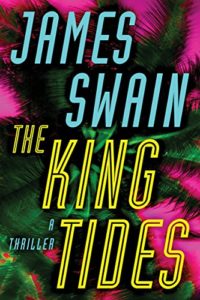
    Do not let my colleagues fool you with their nay-saying about James Swain’s The King Tides (Lancaster & Daniels Book 1). It is an entirely adequate beach read with a chipper pacing and zombie-like kiddie predators. To my mind, the main drawback to this book is the sponsored content, or the weird brand name dropping plus generic non-affiliated copy material–depending on if the author was paid for this or just lazy and trying to meet a word-count. It was jarring to be reading about the author’s disappointment that a kiddie diddler had smashed his phone only to be rescued by Verizon!
    “His phone was new, courtesy of his ex-girlfriend tossing the old one out of a moving car. Replacing it had been a snap. A quick trip to the Verizon store and forty-five minutes later he’d walked out with a new Droid, his contacts and apps restored. Kenny’s phone was also a Droid, and he wondered if Kenny had bought it from Verizon, which had more locations than a hamburger chain. If he had, then all his data was stored in the cloud and could be easily restored.”

    Spoilers: he also upgrades his phone from a Droid to a Moto Z2 Force during this exchange for only $40! I’m not sure that I’d recommend this book on its merits, but there are now enough people who have frog-marched themselves through it that it’s part of the current Glibertarian cultural canon. Don’t be left out!

    JW

    Have you ever read all the information that comes with penicillin prescriptions when the pharmacist fills them? Vomiting. Check! Mild skin rash. I wonder what “mild” means? Upset stomach. Check! Diarrhea. Uh-oh! I’ll be right ba….

    Brett L

    As part of an experiment in group self-abuse, I read James Swain’s The King Tides (Lancaster & Daniels Book 1). This book is terrible. Random shit not at all relevant to the plot, rogue FBI agents distributing kiddie porn (actually the most realistic part of the story), super-fit former Navy SEALs with beer guts congenital conditions that somehow didn’t disqualify them from that competitive system, kidnapping attempts of hot teen-aged white girls that the police don’t care about. I regretted reading this, even though it was free. Don’t buy it. Please do not encourage Mr. Swain to write any more books.

    In my literature entry for the month, I read Without a Country, a Turkish work translated into English. It’s an interesting family history starting with German Jews fleeing Hitler to populate Ataturk’s new university system, where hope and religious tolerance flourish, and tracks the changes in Turkish culture from the Muslim secular hope of Ataturk to the more fundamental Muslim sympathies. It was a good book. I enjoyed the writing.

    I also read Curious Tales from Chemistry: The Last Alchemist in Paris and Other Episodes by Lars Öhrström. As a chemistry geek, these are fun little tales about substances, some basic chemistry like orbitals, and history. Places, people, and things interesting to their history (like the guy tasked to steal British steel-making secrets for the Swedes). 

    Old Man With Candy

    In Jewish tradition, the Torah is divided up into sedras, roughly analogous to chapters. Each Sabbath, a sedra is read, sequentially, until at the end of a year cycle, the last sedra is finished. We have a nice holiday to celebrate it, Simchas Torah, then the process is begun again. For years, I had a similar ritual, reading a chapter at a time out of The Feynman Lectures on Physics each week until I was done the three volume set, then I’d begin again. This kept my basic physics sharp and it was, for a geek, remarkably enjoyable. The Lectures were a series of notes from a one year freshman physics sequence taught by Richard Feynman (arguably the greatest physicist of the 20th century), and transcribed and edited by two other physicists, Robert Leighton and Matthew Sands. The collaborators did a wonderful job capturing Feynman’s voice and unique style, and this set of books might be among the greatest works in the English language. Anyway, for reasons of life, I stopped doing my ritual some years back, and recently, it occurred to me that my brain suffered from the absence of Feynman’s ghost. So I started again. And it’s every bit as delightful and wonderful as I imagined, the exact opposite of dry technical books. Even if you’re not mathematically inclined, there’s so much clear and common-sense explication of how the universe works that you’ll come out of the experience much smarter than when you went in.

    I linked Volume 1 of the set because that’s the one that is likely to have the most appeal to non-physicists. It covers a sweeping range of topics; though focused on classical mechanics, Feynman talks about probability, thermodynamics, cosmology, biology, psychology, wine, and as a bonus, he offers his rather tart observations about philosophy. More so than anyone else writing about science, he is rigidly clear about what things are “this is the way it is, we can describe it, but we can’t say why it is this way” and what things are “here’s something about which we know why.”

    Strange as it may seem, we understand the distribution of matter in the interior of the sun far better than we understand the interior of the earth. What goes on inside a star is better understood than one might guess from the difficulty of having to look at a little dot of light through a telescope, because we can calculate what the atoms in the stars should do in most circumstances.

    One of the most impressive discoveries was the origin of the energy of the stars, that makes them continue to burn. One of the men who discovered this was out with his girlfriend the night after he realized that nuclear reactions must be going on in the stars in order to make them shine. She said “Look at how pretty the stars shine!” He said “Yes, and right now I am the only man in the world who knows why they shine.” She merely laughed at him. She was not impressed with being out with the only man who, at that moment, knew why stars shine. Well, it is sad to be alone, but that is the way it is in this world.

    Here’s an example of Feynman’s presentation methods, talking about the incredibly important and almost universally misunderstood topic of entropy. If you like this and the lightbulb goes on, pick up Volume 1 of the Lectures and prepare for a wild and crazy ride through the way the universe works.

    SP

    I also selected The King Tides (Lancaster & Daniels Book 1) for my free Kindle book this month since there was nothing else even remotely interesting. (How much do the authors pony up for this? I can think of no other reason for the choices.) However, being smarter than my dear Glib friends, I waited until they had all reported in, then quietly deleted it from my Kindle unopened.

    In enjoyable reading, I am swiping through How to Speak Midwestern by Edward McClelland. Things I’ve learned so far include: where Little Egypt is; what a frunchroom might be; where a gangway is located and for what it might be used; who Trixie is and what she’s up to with Chad.

    SugarFree

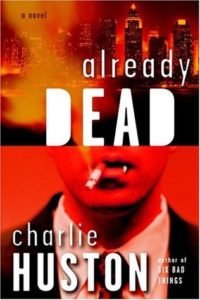
    I read the Joe Pitt series by Charlie Huston. Hard-boiled vampire private detective in a Manhatten ruled by vampire clans as bitchy and mean and petty as any 8th-grade clique of half-pretty girls. They are competently written. but mostly crib from various other, better detective novels for plot: the spoiled heiress with the monstrous father from The Big Sleep, the cynical operator playing all sides against each other of Red Harvest, Mike Hammer’s blase cruelty of those he has decided are guilty. The best book is the third, Half the Blood in Brooklyn, with Joe fighting off a thoroughly crazed sect of Hassidic vampires and their odd workaround for obtaining “kosher” blood. Overall, the series isn’t bad, it just also isn’t very good.

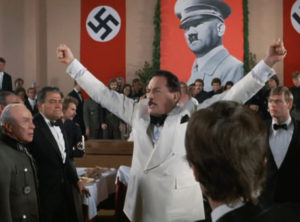
    I read/watched Ira Levin’s The Boys From Brazil. Gregory Peck as Dr. Mengele is one of the more inspired casting decisions in movie history, constantly walking the line between terrifying and absurd. The biggest knock on the movie from a production standpoint is the blue contact lens they had to put on young Adolf–they are distracting in our 1080p world.

    I also read/watched that old stand-by, The Exorcist by William Peter Blatty. Chock full of juicy Catholic guilt and atheist hate, the movie satisfies like no other. The Zodiac Killer said of the film “I saw and think ‘The Exorcist’ was the best saterical [sic] comidy [sic] that I have ever seen.”

    I made it through two chapters of The King Tides. It was terrible.

    Web Dominatrix

    I picked up a couple books this past week.

    Originals by Adam Grant and Talk like TED by Carmine Gallo. Originals is about how non-conformists influence and change the world, while Talk Like TED is about public speaking a la TED Talks.

    I have no interest in public speaking (or really doing anything that requires me showing up somewhere on someone else’s schedule), but I am into livestreaming and video marketing.

    So far Originals is really interesting. Adam Grant is a great writer and he pulls in some compelling studies and references. I haven’t cracked open Talk Like TED yet.


    ZARDOZ

    ZARDOZ SPEAKS TO YOU, HIS CHOSEN READING ONES. BOOKS CAUSE NOTHING BUT TROUBLE! OH AND IXNAY ONYAY ETHAY IZARDWAY OFYAY OZYAY!

    ZARDOZ HAS SPOKEN.


    Swiss Servator

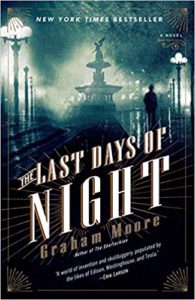
    Upon recommendation (and loan) of a regular at my local, I read “The Last Days of Night” Edison vs Westinghouse (as in Thomas Alva vs George) and Nikola Tesla wanders into the picture. The story is from the point of view of Westinghouse’s young lawyer in the fight against Edison over the patent of the light bulb. Mostly based on actual events, it is a fairly interesting look into inventing, what drives/drove the inventor/inventors of the time. A little electricity learnin’ and some fancy laweryin’ too. Reads quickly, and has some very, very short little chapters…almost like the author was not sure where he was going at first.  Probably would make a decent movie if cast right. Give it whirl if you have some time.


    STEVE SMITH

    STEVE SMITH BUSY WITH CASCADIA INDEPENDENCE. HIM NOT HAVE MUCH TIME READ. JUST TREATIES AND FOREST LAW (HIM PROMINENT FOREST LAWYER!). READ MONTHLY QA REPORTS ON HIKER ENCOUNTERS TOO. BY ENCOUNTERS, MEAN RAPE.

  • But The People Of 2074 Will Love Me

    (Note to the Glibsters: This was originally written with publication in a local newspaper in mind, after I had communicated with the editor of that paper several months ago, with her saying she wanted some different (i.e., not so picayune) editorial material submitted. Well, I messaged her about this finished piece and she never wrote me back, so… her loss is the Glibs’… um… ‘gain.’ Anyway, that’s why it’s written in such a stodgy, formal manner and doesn’t have any cursing or STEVE SMITH references.)

    This past Saturday (June 23rd 2018), the U.S. Association for Library Service to Children (or ALSC) decided to rename the award they give now and then to writers and illustrators of outstanding contributions to children’s literature. Previously known as the Laura Ingalls Wilder Award (or Medal), and named after its first winner, the author of the Little House series of books, the honor will now be referred to by the more generic title of Children’s Literature Legacy Award.

    This sounds perfectly innocuous, on the face of it. But why rename the award at all, given that Wilder’s books have been widely read and loved by probably millions of readers, most of them children? Well, it turns out that, all this time, the Little House books were racist: they sometimes contained unflattering depictions of Native American and African-American characters.

    Certainly, these are not the first or only books written for children which have received widespread success and recognition, but which also aren’t quite acceptable by modern race-acceptance standards. Sam Clemens’s The Adventures of Tom Sawyer and Huckleberry Finn are often cited as containing uncomfortable material, though the latter in particular can be read as particularly anti-slavery. L. Frank Baum, the author of The Wonderful Wizard of Oz, might not have shown much in the way of racism in his fictional work, but wrote several editorials for his local paper, the Aberdeen [South Dakota] Saturday Pioneer, calling for the extermination of Native American tribes. There are others, but these are the most frequently cited examples.

    It should be noted that each of these authors was born in the 19th century. Clemens, of course, became famous starting in 1865 when he was about thirty; Baum’s famous first novel of his Oz series was published in 1900 when he was in his forties; and Laura Ingalls Wilder’s first book of her defining series, Little House in the Big Woods, appeared in 1932, when the authoress was in her mid-60s.

    Each of them, therefore, grew up, and lived their young adult years, in a world completely different from our own: a world without automobiles, television, or even radio, a world where even such mundanities as electricity and indoor plumbing were uncommon, usually reserved for the well-to-do. They lived through the eras of the Western expansion, of the coming of the telegraph and the railroad. They were alive when the gunfight at the O.K. Corral would have been a current news item.

    Why, then, do we think it would be a good idea to judge their written work by our modern standards? They lived their lives in a world so different from our own that they might as well have been from another planet. Our era is not only separated from theirs by technology, but also (much more so) by sociological ideas. The idea that, for example, female or gay or black persons ought to receive the same rights and privileges as white men, would have been considered outrageous in the late 1800s. Simply expressing it might get one run out of town on a rail, if not prosecuted on some moral statute.

    Much of the world has moved forward on such things, of course, and rightly so. One can hardly expect any society to take a look at its accepted ideals and say, “All right, we’ve come as far as we can; we don’t need to ever change how we feel about anything.” A society’s morals and values are always in flux and changing, moving forward, or at least in one direction or another. To declare that things are now fixed and correct, never to be changed, is ridiculous.

    But isn’t that what’s happening now with situations like the award name change? We’re taking an item from a different time, judging it from our current standards, and, finding it unacceptable, tossing it over our shoulder onto the ash heap of history. It’s inevitable that we would view things through a modern lens. But where things become unsettling is when we decide that such items not only fall short of modern sensibilities, but must be purged from our sight altogether – not merely ignored or even seen as a quaint anachronism, but all mention of it wiped out completely.

    Certainly, no one is currently calling for the Little House books to be pulled from store and library shelves, or copies burned during some nighttime rally. But this is exactly how such things begin. (Keeping Wilder’s name on the award was apparently considered such a problem that a survey was sent out to members of the ALSC -as well as “ALA ethnic affiliates,” whatever those are- who voted for the change, 305 to 156.)

    If this incident were happening in isolation, we could shrug it off as a curious anomaly, chuckle at the stupidity of the ALSC, and almost immediately forget about it. But in the current cultural climate, it isn’t. Everything, it seems, is being dragged through a crucible process of sociological fitness according to currently-favored values (which are subject to change, but not necessarily subject to internal consistency); and very few artistic works of the past, as one can imagine, are coming out unscathed.

    This is all well and good, as society’s ideas must, again, keep moving forward. But while it’s perfectly all right to judge things according to modern standards, it’s particularly dangerous to do away with them completely, in the name of whatever banner our cultural betters might be waving currently. Judge them, chuckle at them, dismiss them if you like: these are all perfectly acceptable behaviors. But it is a horrible mistake of hubris to go so far as to start removing them completely – to start dismantling the old to make way for the new. In doing so, one denies others the ability to make that choice for themselves; after all, another person might decide he likes some of the old stuff just fine, thank you very much. And the reason for much of such destruction, it could be argued, might just be to deny others the chance to disagree with the destructor.

    There is no scientific barometer for social correctness. The soft “sciences” aren’t like the disciplines which can prove their hypotheses mathematically. In other words, we can never know when we are absolutely right or wrong. That’s why societies change their ideas over time. As things shift, people decide that, well, maybe they’ve been a bit too hard on this or that social group that they’ve been prejudiced against all these years. And maybe the heroes of the previous revolution don’t look quite so virtuous as they used to. People change their attitudes: but it’s far preferable for such attitudes to change gradually, by virtue of logic and experience, rather than by force or shame.

    So, judging 19th century authors by modern social standards –standards which, really, haven’t been in place very long– is a bit imbecilic. Could a person of the previous century have been able to see into the future, to our modern day, to see what ideas are in vogue? Of course not. Would she even change her own attitudes, if she could see into our world? The very idea is preposterous. Would she even understand what we’re talking about? More than likely, our society would seem like a mad anarchy to her. After all, she lived in her own world, not ours; so why would we not expect her to generally conform to our values? Again, the entire premise is ridiculous.

    But, wait. What if current authors are going to be judged by our future society? What if the cultural critics of, say, 2137 decide that we’re all just a bunch of barbaric rubes? Absent any time-travel technology, shouldn’t we put our finest historians, our most decorated social critics, to the task of figuring out what future persons will think of us, and then change our opinions so as to please them?

    No. Because that would be completely stupid.

    Stop trying to dismantle the past and rewrite history. Let people make up their own minds. After all, we’re all of us going to be history quite soon enough.

    (Note: a pdf outlining the ALSC’s decision-making process can be found here)

  • What Are We Reading – June 2018

    Read a book, read a book, read a motherfuckin’ book.

    Old Man With Candy

    I always have a geek book at hand, and this past month, my constant companion has been Electrochemical Methods: Fundamentals and Applications  mostly because I have suddenly been given a new role at work which requires some of this expertise, and there’s not much opportunity to fake it. I was immediately and uncomfortably made aware of how much physical chemistry I have forgotten in the mmmmph years since I was in college. Well, at least I remembered the Nernst equation.

    A discussion with SugarFree got me to pick up my copy of The Eyre Affair, the first of the Thursday Next series. I bought this the last time I was in England visiting my favorite author- he and I went book shopping and he urged me to give Jasper Fforde a try. He was right. Delightful mix of surrealism, science fiction, alternate history, and literary geekiness, sort of a Douglas Adams with better writing.

    SugarFree

    I’ve been on a horror kick. I re-read The Tommyknockers for the first time since it first came out. It remains one of the more interesting failures of Stephen King’s long career. The basic premise is sound and portions of the book are fantastic but–like much King’s work–it needed an editor, a very heavy-handed editor. It could lose a hundred or so pages and be a masterpiece for it. The TV miniseries is a rather dreary affair, hampered by poor casting and bad special effects.

    I read a dozen or so King short stories afterward as a palate cleanser–most of Night Shift and parts of Skeleton Crew–and watched all the TV and movie adaptations where they have been made. The only thing I really have to say is that Linda Hamilton might be wearing the least erotic pair of shorts ever produced for the female body in 1984’s The Children of the Corn.

    I read Nick Cutter’s first two books, The Troop and The Deep. The Troop is an effective and nasty little piece of splattercore, so efficient and complete that I cannot understand how it isn’t a movie yet (it even acknowledges a structural debt to Carrie that a movie adaptation could ignore.) The Deep is more ambitious, but I found it a little too derivative to be truly enjoyable, mashing up Solaris, Event Horizon, Sphere, The Abyss and any number of demonic possession stories to surface to an ambiguous ending.

    Finally, I read The Soldier, the first book in a new trilogy by Neal Asher, set once again in his sprawling Polity Universe. It is his usual sort of meth-freak out science fiction overdrive that you either adore or hate. The new trilogy is picking up my favorite narrative thread of his work and my least favorite narrative thread and tying them together into an interstitial tale that doesn’t quite break his continuity but does manage to whack it in the knee with a length of pipe a few times. I’m along for the ride, though, Neal.

    Riven

    I have really been slacking. The only books I’ve read this month were the childhood books I incidentally read while unpacking the last three boxes my parents were very graciously still storing for me in their garage. I kid you not when I say that my sister and I read this edition of Mother Goose to pieces. It was already well-loved by the time I “inherited” it from my sister, who is only five years my senior. If you are looking for a good book for a very young child, look no further. The illustrations are beautiful and are more than enough to capture the imagination of a child who can’t read yet. And it’s a great book for a kid to grow in to because the rhymes are simple and easy to read.

    Other notable childhood mentions are: Mooncake, Dinotopia (The World Beneath), Four Little Kittens, and The Poky Little Puppy. So, if you want to raise a crazy little libertarian chick, there’s a few ideas. Don’t forget to include plenty of Berenstain Bears (just be sure you pronounce it correctly), and go ahead and throw in some age-occasionally-appropriate spooky stories like Goosebumps, Scary Stories to Tell in the Dark, The Eyes of the Dragon, and (one of my favorites) The Iron Dragon’s Daughter.

    mexican sharpshooter

    Yesterday, I read the Very Hungry Caterpillar to my son.  Its a classic coming of age tale of a caterpillar coming to terms with a body shaming public that refuses to accept his outward appearance.  They simply do not understand the caterpillar and drives him to seek refuge in food as a coping mechanism.  The joke however is on society, as the caterpillar shelters himself away from the world, and shows them all what he becomes.

    SP

    Lots of mindless reading this month while on the road to and from Montana, most of which doesn’t deserve mentioning, so I won’t.

    Sorta enjoyed the latest Agent Pendergast book, City of Endless Night, but it seemed much weaker than previous works in the series. As usual, I knew the identity of the villain as soon as xe was introduced.

    I’ve started Robert Dugoni’s David Sloane series. I’m only a bit into book 1, The Jury Master, so haven’t quite formed an opinion yet. I am not generally a huge fan of lawyer novels (or lawyers, with a couple notable exceptions), but this seems less wrapped up in the legal story lines than most in the genre.

    In audio, I’m currently listening to The Final Cut by Catherine Coulter and J.T. Ellison. It has two narrators, Renee Raudman and MacLeod Andrews, neither of whom I’ve heard before. I like it so far, but I’m not that far into it since I only allow myself to listen to books when on solo roadtrips or as a reward while cleaning (of which I’ve not been doing much!).

    Brett L

    I toted along the first book in the Kvothe Series (I think its officially called the Kingkiller Chronicles, but since the author has spent seven years NOT RELEASING THE BOOK WHERE A KING GETS KILLED, I’m just going with the the name of the main character) to the beach to re-read. And then I read the 2nd volume and then I read the final oh wait, no. Rothfuss and GRRM are still having that contest about who gives less of a fuck about finishing his series. I read the Racing Weight book on the advice of Deadhead in the Glibfit series. I started the plan but then bombed out. Will attempt a restart on Sunday.

    Finally, I have been listening to Jordon Peterson’s 12 Rules for Life: An Antidote to Chaos on and off. I won’t say it changed my life, although I appreciate his perspective on some things. It’s like listening to the reverse version of a preacher who uses science and psychology. Or maybe it like taking an ethics class from a Jesuit? I don’t know how else to describe Dr. Peterson’s somewhat unique insistence on the Bible as a central allegory to our current civilization, while fully acknowledging an embracing FW Nietzsche’s critique of religion. What comes through clearly on the audiobook of Dr. Peterson reading his own book is that he believes what he wrote. I am glad to have listened to it, even if I’m not going to choose to clean my room, today.

     jesse.in.mb

    Recently had some flights and managed to put away quite a bit this month. The Dark Monk (A Hangman’s Daughter Tale Book 2) by Oliver Pötzsch: I enjoyed this one (I wrote about the first book in March) although there’s some minor element of the passing that I find off-putting, but not so off-putting I won’t read the next book. Finding Camlann: A Novel by Sean Pidgeon: frumpy archaeologist and a pretty Welsh linguist with turbulent personal relationships with other people investigate rumors of Arthurian legend and find each other. Monsoon Mansion: A Memoir by Cinelle Barnes makes me appreciate my…uh…problematic parents much more. While some part of me wonders if it suffers from some of the issues associated with I, Rigoberta Menchu, the story she tells is riveting.

    Web Dominatrix

    I haven’t been reading much this month since I’ve been so busy, but I just ordered (yet again) a copy of The Enneagram Made Easy. This book is my go to for all things Enneagram and really helps me understand myself better and those around me.

    I’ve had to order it again because I keep giving it away to people when I realise they’ve never read it because it really is that useful and interesting.

    Not Adahn

    I primarily read RPG manuals for entertainment these days. I like them. They have worldbuilding, a peek at how things work backstage (which is something I like) and they can be read in whatever chunks of time I have without interrupting a narrative flow. This month:

    Star Wars: The Role Playing Game, by West End Games. This came out in 1987, so if you want to know how Star Wars geeks thought about how the SW universe worked back in the day (with input from the studios that still had Jedi fresh in their mind), here’s your answer. TL;DR: George Lucas retcons every goddamned thing. Also interesting is looking back and seeing how sacred canon used to be. Unlike today, where every game designer puts his personal self-insert fanfic headcanon into the games they work on (Did you know that all elves in D&D are trans now?) this book treats the movies as inviolable fact. There are only two Jedi masters left, and no, you character can’t meet them. Which really sucks if you want to play a Jedi as the game allows that there might be a few minor Jedi that escaped the purges, but without real training, your character is going to be crippled. But having Obi-Wan or Yoda meet another potential student would completely fuck the storyline so it’s disallowed.

    Ars Magica 3rd Edition, by Wizards of the Coast. Is there any company that has done more to destroy the gaming industry than WOTC? They make one massively successful game, buy up everyone else, then it turns out that they’re not very good designers, they just got lucky once. This piece of crap follows in that tradition. I have a copy of the first edition of Ars Magica (by Lion Rampant games) and like everyone else loved the setting, the concepts behind the game, the alien medievalism, and found the mechanics a bit baffling when they weren’t clear but clunky. This book is literally five times the thickness of the first one, but completely fails at being any more clarifying. It guts the medieval mindset for a modern one and slathers on all sorts of 1990’s-era White Wolf emo crap and d10 rolling. In fact, this is so much a WW game, I had to double check to make sure it was WOTC. Unless WOTC bought WW which could very well have happened. And it became an even less-playable game. In fact, with the mutli-character concept, most of the playing is done solo filling out spreadsheets (which would be an excellent use of downtime between gaming sessions) except that it requires everyone in the group to be there watching you fill out your spreadsheet and approving your choices. Who would actually want to play this? Nobody. Which is why they made advancing your character so freakishly impossible — nobody is going to play this twice so those rules don’t matter. If you want to play an actual “I’m a wizard, I can do everything” game, you’ll need to get a copy of Mage: The Ascension.

  • The Wit and Wisdom of Cardi B

    • My slogan for my [Presidential] campaign is – “ISIS, Suck a Dick!” Remember, America! Suck a dick! Suck a dick. Suck a whole lot a dick. Vote for me!
    • I put niggas to sleep like Jigglypuff.
    • It’s cold outside, but I’m still lookin’ like a thottie, because a ho never gets cold.
    • Ride the dick like a BMX. No nigga wanna be my ex.
    • Eleanore Roosevelt, she did so much for the Blacks. That’s my bitch! And we got the same birthday – October 11!
    • Ever since I took that etiquette class, all I wanna do now is white people activities.
    • Everybody want to be a rapper. Fuck your dreams! Get a job.
    • God forbid, the government tries to take us over, and we can’t defend ourselves because we don’t have no weapons. How do you think American colonizers went to Africa and it was so easy for them to get those people? Because they had guns. No matter what weapon you have, you can’t beat a gun. They have weapons like nuclear bombs that we don’t have. So imagine us not having any weapons at all.
  • In Search of STEVE SMITH

    The twin suns were setting, leaving a darkening red mist over the sprawling city.  From my window in the hyper skyscraper I could see the floating car traffic hurtling above the bustling sidewalks.  The glass of the nearby buildings glittered like gems, dazzling my eye stalks as if I was in a dream.  I felt worn out like a used Kyrilomine wrapper.  I thought of going home but the sensor at the door beeped, indicating a client had come into the office anteroom.  I ambled back to the desk, sat on the chair, and hit the button to allow the connecting portal to open.

    A strange creature strode in.  She or he or it was a sad specimen with only four appendages, one pair used for mobilization, the other for grasping.  The hyper-chip in my cortex connected to the Encyclopedia Universal and fed the information directly into my memory glands.  Even before she spoke, I knew she was a female hominid from the Sol system.  With that detail in place I could look past her alien features and see a cascading wave of blonde hair, two brown visualization orbs, an opening smeared with a red, waxy substance, and hips that were wide enough for my nesting table.  Her dress, all shimmering silver, fitted the contours of her body well.  Of course I really wasn’t the sort of fellow who was into cross-species mating, but still the old copulating sac did give a minute twitch.

    “Are you Detective Balanxorp?”she asked.  Her voice was higher than the female of my species.  She spoke the Galactic Trade language stiffly as if she had learned it from a primitive memory impression chip.

    “Yes I am,” I said with an easy cosmopolitan drawl that I used for off-world creatures.  “What can I help you with?”

    “I am looking for my father.  He has gone missing.”

    With a free tentacle, I motioned for her to take a seat in front of my desk.  When she found a comfortable perch on the arch of relaxation, I reached into the desk and pulled out a sapphire bottle of off-world Muuze, the finest alcohol that a poor detective such as myself could afford.

    “Would you care for a snort?” I asked.

    She shook her head, giving me a look that I took to mean distaste.  It’s been my experience that some species want to get straight to business before relaxing with a suitable beverage.  It’s a damn shame, since communications when slightly intoxicated can lead to pleasant results.

    After pouring myself a drink, I carefully put the bottle away.  I took a small sip  and said, “Talk to me.”

    “My name is Elizabeth.  My father and I are originally from Earth.  He and I were taken off the planet years ago, back when I was just a child.” She made a small gesture with her grasping-appendage, which I couldn’t fathom.

    “Abduction?” I asked, already knowing the answer.  Some citizens of this galaxy had a thing for exploring alien anal cavities, supposedly in the name of science.  It was a practice that thankfully was dying out, thanks to the work of ARSE, the Alien Rectal Safety Enquiry.

    “Yes,” she replied smoothly.

    “And your father’s name?”

    “Dr. Edward Tinsdale.”

    In a microsecond, the Encyclopedia Universal returned the biographical data I requested.  It took me another moment to digest the information, quickly sorting through the man’s education, age, and background.

    “The famous cryptid researcher?” I finally asked even though I already knew the answer.

    “The very same,” Elizabeth said with obvious pride.  “My father has been all over the galaxy researching legendary monsters.  He’s had some success, like proving the Slithering Eels of Sexylvania were just a hoax.  But he did prove that Tulpa, the Internet Troll, was real.  I’m afraid the fame went to his head.  He returned to our home planet Earth to find the most dangerous cryptid of all, STEVE SMITH.  He wanted to prove to everyone that the Rapesquatch was real.”

    I knew already that she was from the Sol system, but I directed my network connection to look up some information on Earth.  A top-level warning flashed painfully across my neurons.  It turned out that this planet was under active quarantine, always guarded by a Trade Federation battleship against anyone from exiting the solar system.  Earth was apparently home to three Galactic outlaws: SugarFree, Warty, and STEVE SMITH.

    Expanding the search, I downloaded the thumbnail sketches of these criminals:

    SugarFree: the nom de plume of a writer who was convicted in absentia in the Federation Galactic Court, for his non-fiction musings of popular politicians.  He was also guilty by association for being the official Chronicler of Warty.

    Warty: Powerlifter, eternal enemy of the galactic state, and owner of most efficient “workout” dungeon on the planet.  Considered by many to be the most dangerous creature in the 7th Arm of the Milky Way Galaxy.  Warty is the only known survivor of being attached to the infamous Doomcock of Doom; and doing the Deathsquat of Death, which caused the rings of Saturn, a huge gas planet in the Sol system, to form.  His illegal Timesuit allowed movement in all four dimensions, which, in this case, made the Federation battleship useless.

    Pausing momentarily before downloading the next entry, I wondered why the Federation would go through all the expense of leaving a warship in orbit around a third-rate backwater of a planetary system.  The answer was readily ap-parent once my neurons, which revolted in horror, processed the next entry.

    STEVE SMITH: An ancient, immortal Rapesquatch of unknown origin.  Said to have been sent back in time and trapped on the planet Earth during its early formation, this cryptid has sexually conquered most of the species there.  The only safe creatures are the ones that can fly or live in seas.  STEVE SMITH only lives to rape and rapes to live.  One galactic physicist, though considered a crank, thought the very formation of the universe, the Big Bang, was actually the result of this Rapesquatch penetrating a white hole making it explode.  Though only mythical, the secret, ancient transcripts from the Federation archives show the council had taken the threat of this Rapesquatch seriously enough to post a Level-A Star Battleship in the Sol System.

    I inwardly shuddered, trying with difficulty to hide my disgust.  If STEVE SMITH escaped, then my very own rectal cavity could be in peril, not to mention my other orifices.  The very tightness of the Universe was at stake.

    With an expression that I took as expectation, she asked, “Well, Mr. Balanxorp, will you help me find my father?”

    My tentacles quivered in agitation.  I took another sip of my drink in a failed attempt to quiet my nerves. I blurted out,  “If your father has been taken by STEVE SMITH, then nothing can save him.  There is nothing I can do!”

    Her eyes were misting with some liquid substance.  “Please!”

    “This meeting is at an end.”  I slammed the desk to punctuate my point.  “You will have to leave as I have some pressing business to attend elsewhere.”

    The creature named Elizabeth ran out the room, making some untranslatable noises.  I hoped I had seen the last of her.  Little did I know this was the very beginning…

    The End. Or is it?

  • What Are We Reading – May 2018

    Old Man With Candy

    After a conversation with Warty, I remembered perhaps my favorite scientific biography ever, Oliver Heaviside: The Life, Work, and Times of an Electrical Genius of the Victorian Age by Paul Nahin, and have been giving it a reread. Heaviside is only vaguely known among people in the physical sciences (I only knew the name because of the Heaviside step function in math), but ought to be far better known; for example, what physicists and engineers think of as the Maxwell equations (the foundations of electromagnetic theory) are actually the Heaviside equations. Maxwell’s formulation was clumsy and complex- Heaviside reworked them into a simple but comprehensive set of partial differential equations, the ones familiar to contemporary students and practitioners. His operational calculus laid the groundwork for Laplace transform methods routinely used in circuit analysis. His work solved the massive problems of the nascent telegraphy and telephony technologies and brought us into the 20th century.

    But that’s what makes him interesting specifically to geeks. What makes him interesting overall is the sociology associated with him. Unlike most prominent British scientists of the era. Heaviside was a true outsider, born into poverty, and completely self-taught. Moreover, he was an odd personality, and if he were alive today, we’d put him somewhere on the autism spectrum. He had almost no social interactions beyond his immediate family, refused to adopt the manners and mores of the gentlemanly scientists with whom he interacted in scholarly journals, and larded his papers and books with thinly veiled invective and humorous insights (“It is wonderful how little work there is when you know how to do it.” “It is as unfair to call a vector a quaternion as to call a man a quadruped.”). Of course, establishment figures fought to keep this outsider outside, but the sheer power of his intellect swept that aside. Trigger warning: to understand what Heaviside did, some equations will inevitably present themselves. If you’re on the other side of CP Snow’s two worlds, you can skip over them and take my word that what he did was brilliant, significant, and vastly influential. This book is fascinating, a study in sociology and psychology as much as it is about physics, an absolute delight.

    SugarFree

    I had been meaning to read Annihilation by Jeff VanderMeer since it won the 2014 Nebula for Best Novel, but it wasn’t until the announcement of the Netflix adaptation that I finally got around to it. It involves a scientific expedition into Area X, a portion of the southern United States coast that has been inexplicably quarantined by an invisible and deadly barrier with a single, deliberate opening to allow people to explore. Inside, mutant animals and an inexplicable structure beg to be explored. Almost everyone that goes dies or disappears or comes back insane, with amnesia or riddled with strange cancers.

    I really have to say, I don’t understand the hype around this book. It wasn’t bad, but it wasn’t really anything groundbreaking or even exciting. It is written in a limited viewpoint from an unnamed and probably unreliable narrator in a journal. In fact, none of the characters have names and are just referred to by their job or functions on the expedition, The Biologist, the Linguist, The Psychologist, etc. In an experiment to find the optimum psychological conditions for an expedition that can both survive and return with some sort of coherent information about the conditions inside the barrier, all the members on this trip are women.

    Like much modern music, it seems like VanderMeer took a dozen or so better works, threw them into a blender, and hoped the reader wouldn’t find too many recognizable chunks floating around in the slurry. But I’m good at spotting chunks: There are bit and pieces of Solaris, Roadside PicnicRogue Moon and–for the first two–their cinematic adaptations, as well as all the movies and books derived from them (Event Horizon, Cube, et.al,) countless “found” memoirs of the inexplicable, the mind-flaying horrors of Lovecraft and even a solid piece of gristle from Poe’s The Narrative of Arthur Gordon Pym of Nantucket.

    The movie is a pretty disappointing follow-up to the excellent Ex Machina by Alex Garland. It takes a few things from the novel, but otherwise pretty much ignores it to create a strange mash-up of “The Colour Out of Space” and The Crystal World by J. G. Ballard (minus all of Ballard’s Heart of Darkness overtones.)

    Riven

    I finally passed my exam and have been celebrating by reading exactly nothing–except the dialogue in Persona 5. That said, Mr. Riven and I listen to some podcasts when we’re lifting or traveling. Last week we traveled to Missoula for the USPSA Area 1 Championship. Mr. Riven has been especially delighted with his recent find of the Myths and Legends podcast. It dovetails nicely with his current game of choice–God of War. The writer and host covers a wide variety of, well, myths and legends with a good deal of fairly dry humor and a flair for entertaining. Besides the Norse lore that’s so apropos for God of War, they also cover Slavic fairytales, epic Viking tales, and all of the standard classics: Greek and Roman mythology, King Arthur’s court, mythological beasts, etc. There’s plenty more besides what I’ve listed here, and we greatly enjoyed a lot of the Slavic tales on our trip. Fans of John Wick might also appreciate the stories that include Baba Yaga, who is seems to be equal parts hilarious and terrifying (just like an ancient boogeyman should be).

    mexican sharpshooter

    It came to my attention that my younger brother was not a prog, but is still in college, so I decided to pick up a few books he might benefit given his environment.  I got through this one pretty quickly, given Bastiat is pretty straightforward and concise.  I also picked up The Road to Serfdom.  This one is taking me longer.

    I also bought The Federalist Papers since I never read them.  I have to admit, I don’t like Hamilton.  I can deal with his arguments droning on, taking several pages and multiple essays to convey–I’ve read boring stuff before.  I simply find a lot of them ineffective, and he does not always adequately explain why something regulated by a state might be bad but it is totally okay for the federal government to do it.  It might be my biases as a former federal employee, and seeing ineffective, incompetent implementation of seemingly simple tasks for several years.  I do realize I should try to decouple that when reading a historical document.  I found myself flipping through Hamilton’s essays and finding the next one Madison wrote as his seem better thought out.  In all, it leaves me wondering if the natural born clause in the Constitution was intentionally written to keep certain assholes from being president, a certain asshole named Hamilton.

    Web Dominatrix

    I just started (and then finished in swift order) To Sell Is Human by Dan Pink. As a business owner I have to spend time selling, and I’ve hated it for years, which is why I was so delighted to discover this book which explains how to sell without feeling like a sleezeball backed up with case studies.

    I am now reading The Power of Habit by Charles Duhigg as my habits need some major work. There are habits I have that are good, others that are bad, and others that just simply aren’t serving me in the best way.

    Tulip

    I would like to recommend three short story collections. First is American Housewife by Helen Ellis. These are great little vignettes. My two favorites are “The Wainscoting War” and “My Novel Is Brought to You by the Good People at Tampax.”

    The second is Let Me Tell You by Shirley Jackson. I love her short stories. She is probably familiar to most as the author of The Lottery. She also wrote The Haunting of Hill House. I read that in one sitting when I was fifteen. It was a hot, August day and when I finished, I was in a cold sweat. I’m still not sure why, but that book creeped me out like no other.

    The last is Beyond the Woods: Fairy Tales Retold by various authors. Most are based on old tales, but with a modern twist. They are dark, creepy and sometimes funny.

    SP

    I’ve just started reading Bad Things Happen (David Loogan Book 1) by Harry Dolan. I’m enjoying it very much so far. It’s a noir-ish mystery, which I love in books and film. If it stays true to the promising beginning chapters, I’ll most likely pick up the rest in the series.

    Also reading several vegetarian and vegan cookbooks. I’m getting a little tired of the same old plain stuff I’ve been eating during my 60 day 100% plant-based window (in which I’m trying to cement the practice), and need to mix it up some. Highly recommended: The Complete Vegetarian Cookbook: A Fresh Guide to Eating Well With 700 Foolproof Recipes from America’s Test Kitchen. 250 or so of these recipes are vegan. I’ve cooked from this before and everything just works. I’m thinking about putting a post together with brief reviews of several others, if there is any interest.

    And, last, but certainly not least, a quick read through Year-Round Indoor Salad Gardening: How to Grow Nutrient-Dense, Soil-Sprouted Greens in Less Than 10 days by Peter Burke has inspired me to begin growing soil-raised sprouts in the house. I love that I’ll be able to do so next winter!

    Brett L

    I finished Mark Lawrence’s latest, Grey Sister. Its probably his least best work, and still better than almost anything out there in the SF/F genre right now. It definitely ends on an Empire Strikes Back note, so I expect the third one to really kick ass. I read John Conroe’s latest collection The Demon Accords Compendium, Vol. 1. I give it a B. I think that universe has mostly run its course. And then Exam Ref 70-532 Developing Microsoft Azure Solutions because this Azure shit is hot and I need to keep my LinkedIn profile popular. Azure is fun and I wish I was 23 and single and could spend 2 or 3 nights a week messing around in it for 3-5 hours at a time.

    STEVE SMITH

    STEVE SMITH READ ABOMINABLE BY HOOMAN WRITER DAN SIMMONS. ABOMINABLE LONG BOOK BUT SHORT ON HOT YETI ACTION; STORY ALL MOUNTAIN CLIMBING AND NAZIS! STEVE SMITH FIND HOOMAN SIMMONS AND STEVE SMITH SHOW HIM WHAT ABOMINABLE REALLY MEANS!

    jesse.in.mb

    AWOL on the Appalachian Trail: I have a confession to make. Travelogues make me bitter; I was miserable thinking about how little I’d traveled while watching The Secret Life of Walter Mitty…on a flight to spend a week in Berlin and Prague on my own for New Years, and was bitter *both* times I saw Under the Tuscan Sun (some of you are too young to remember when airlines just played one movie at a time)…while flying back from a month in Rome with side trips through the Tuscan countryside. So I reaaaally shouldn’t have read this delightful travelogue about hiking the AT because his motivations felt familiar and the adventure sounds absolutely awful, but doable.

    Happy Dreams: This novel, about a peasant who moves to the city to be a trash picker, was a constant aggravation and a struggle to read, but I’m glad I kept chipping away at it. Toward the end of the novel I ended up caring about the characters even if their behavior still grated deeply. The author’s afterward really should’ve been the intro. Once I understood where he was coming from the entire story came together as beautiful in its grind.

    Macbeth: A Novel: Audible had it on sale, and it was read by Alan Cumming. I’d never read it or seen the play (unless you count THRONE OF BLOOD), and I figured Cumming reading Macbeth would be awesome…except it’s not Shakespeare’s Macbeth, it’s Macbeth: A Novel. I kept thinking it didn’t *seem* very Shakespearean, and then looked into a it a bit and was annoyed.

  • Reviews You’ll Never Use: Texas Frightmare Weekend 2018

    Hello boils and ghouls, it’s your old pal the Cryptkeeper here…no wait, that’s not my name. Sorry, sometimes I get caught up in the moment.

    Though I gave up the regular movie review beat, I still thought I’d bang out an article like I did last year on our experiences at TFW. To celebrate, one of the below links will go to a hardcore porn site – the rest are safe. This is your NSFW warning. You’ll never know which one it is until you try. C’mon, don’t be a pussy.

    This one will be a bit different in content, since many of you would have already read my post on this from last year, and thus are already familiar with the context. For those of you who are new to the site within the past year, or didn’t read my previous write-up, in brief, TFW is the southwest’s largest horror convention, and my wife & I spend the weekend there every year.

    Like last year, I’ll have a few images in the text, but most all the photos will be at the bottom of the article. It’s mostly just pics of costumes & the stuff we bought, because almost all the celebrities this year charged extra for photos with them, and the few times I tried a creepshot, it came out terribly. The other photos are mostly terrible as well due to the fact that this is literally the only time of the year I ever take photos of anything, so please understand and forgive. The only ones I really regret it on are two cosplay photos of Tippi Hedren & Spawn, which were both good costumes but when I reviewed the pics afterward, you can barely see them due to bad backlighting. It was too crowded during the main hours to take shots, so I tried to snag a lot of them in the hotel lobby. Also as before, I had trouble formatting them into a row, so you’ll have to forgive me & simply scroll down the photos in a line at the end.

    The guest lineup this year was fabulous. They had all of the original cenobites (minus the chick from the first film, because she never does any conventions, ever – so the guest in her place was the chick from the second movie, which was still a good horror film). To round that group out, we had a *very* special treat – Mr. Clive Barker. He doesn’t do a lot of these kinds of things, so we were overjoyed. In addition to his prolific painting and film work, if you haven’t read any of his fiction, I highly recommend it. His Books of Blood is one of my favorite collected works of short stories ever. If you dig fantasy/horror short fiction, check it out, seriously.

    Also making appearances were Ron Perlman, Adrienne Barbeau, Billy Zane, Phil Fondacaro, Tommy Flanagan, Brad Dourif, Tom Savini, Matthew Lillard, all the kids from the new IT movie, Charles Band and a shit-load of people from the various Friday the 13th films. The Friday night party was themed Camp Crystal Lake, so they were heavy on those guests (as this is the 13th year of TFW). Since I’m honestly not crazy about that film series outside of the first two movies & a few creative kills, I didn’t much care about their presence. If you don’t recognize the names of anyone just listed, check the links – I promise you’ll recognize them or at least have heard of their work.

    The weekend got started off right, with Adrienne Barbeau flying in Thurs. night to attend a screening of Escape from New York at the Texas Theater, and do a Q&A afterward. The print they used was fantastic, better than my dvd, and Adrienne was an engaging speaker. She said she has done so much voicework that she has frankly forgotten most of it, and only recalls that she took some particular job once every year when some check shows up for $0.96 and has “Judge Dredd” written on the memo line (she was uncredited as the voice of the computer in that film). She tossed that out as the example, but said she just gets checks for tiny amounts every day for random old things she did. I thought this must be a strange thing, to go to your mailbox every day and be like, “Huh, I got 8 checks in the mail totaling $5.72.”

    So the next day the spousal unit & I took a half-day off of work & rolled into the convention in mid afternoon, though it doesn’t open until 6. On the plus side, in their fruit-infused water jug up front, the fruit was cut into the shape of skulls.

    Skull-melons
    “White people are fucking weird”. Also, wood.
    Stupid

    Also amusingly, the little cute Asian girls they have working there had to wear wound makeup and have silly horror accessories, like this photo of an attractive young lady with scissors sticking out of her head. I’ve often wondered what they think about that, because the racial breakdown of the con attendees is about 70% white, 25% hispanic, and the rest is miscellaneous. Like seriously, my wife is one of maybe 20 Asian people there actually attending, and I can always count the numbers of black folks on my fingers. I have no idea why that is, but it’s true. Less amusing was the eyeroll-inducing naming of the food on the menu. I mean come on, Trembling Turkey? Blood-Dripping Buffalo Wings? And what the fuck happened to the Southwest Shrimp Cocktail, didn’t warrant a new name because it’s already so awful?

    The convention started off poorly – it was so fucking crowded that Friday night, I panicked. This thing frankly outgrew the convention space last year, and this year was worse. We try to do signature hunting on Fri. night & Sun., when it’s less crowded. Well we spent an hour in line for Clive Barker, only to be told that he was leaving to do his scheduled photo shoot & wouldn’t return to the signature line that night due to feeling poorly.

    Yay

    So the first hour was a waste, but it kind of worked out. If you recall last year, we purchased a crocheted Count Orlock. Well the same vendor was there and she had a big crocheted xenomorph, but only one of them. She told us it had been a right bitch to make, and she was never going to make another one, so we pounced on it. If we hadn’t been forced to do a little browsing on Friday evening, I’m certain someone else would have bought it & then I’d have had to have killed my wife and myself, and possibly my extended family as well.

    5 of the 6 sides are now signed – four cenobites & Clive Barker

    We did get the rest of the cenobites, Adrienne, and Billy Zane that night. A few anecdotes – the cenobites, despite being English and therefore you’d think reserved, will talk your ear off, even if you’re actively trying to exit the conversation. Nicholas Vince, who played Chatterer, was dressed in nice proper business-formal attire, except for some weird Pinhead Hello Kitty cufflinks, and to his delight my wife was the first to notice them that evening. Of course it’s because she’s fucking Asian, so she saw the Hello Kitty shit immediately somehow.  Also, Barbie Wilde, the female cenobite, was selling her horror fiction books, and apparently is a very nasty-minded girl. Everything was a sexual innuendo or reference, and we all had a good laugh when, midway through our conversation, we could hear someone in another row (a worker, we believe, trying to repair something in a guest’s booth) said, “Damnit, I thought sitting in this chair would make it easier, but I think I was having more success on my knees.” Barbie, my wife and I all just looked at each other for a second before bursting out laughing. The photo you see is of the nice mahogany & etched brass puzzlebox we purchased to collect all their signatures on.

    Also true fact: Billy Zane was just a leeeetle-bit of a dick. The best line in Zoolander pertains to him; “You should listen to your friend Billy Zane – he’s a cool dude”. Well we purposefully waited until there wasn’t anyone in his line, so that we wouldn’t be holding anybody up, and I asked him, “Hey, I know this is a bit unorthodox, but could you possibly sign this, ‘You should listen to me – I’m a cool dude’?” He smiled and kind of laughingly said, “Absolutely not”, then just stared at us. We thought he was joking for a second, because he said it kind of jovially, but then he said, “So…you just want me to make this out to the two of you or what?” So we said sure, and that was that. I mean hey, celebrities don’t owe me anything, I know that. But perhaps a, “Sorry man I don’t do personalizations to that extent” could be used instead of, “Hahaha NO”. Anyway he seemed nice enough in every other way, so maybe he’s just sick of that request. He was in a tracksuit & cowboy hat, and so looked kind of like a Russian gangster.

    Phil Fondacaro’s line was short enough I was able to chat with him a bit. I asked him if it was just an outsider’s perception, or if there really were fewer opportunities for physically different actors like himself & Warwick Davis, with the advent of digital effects. He said absolutely, but it’s something of a mixed blessing because as he’s gotten older, and especially for someone who is physically limited to begin with, it’s a relief to not have to wear all the latex and costuming that he used to. A lot of the stuff that’s added in post now were the most cumbersome things to wear and act in, so the digital revolution isn’t all bad from his perspective. Of course the photo I got signed was of him as Vohnkar! And if you don’t get that reference, you’re no true child of the 80s.

    Saturday was given to drinking, shopping, and making merry. It still sucked, because I had to wake my ass up at 7:30 to get in line for Clive Barker. Keep in mind the convention didn’t open until 11. So over three hours I sat there, but was 10th in line and so assured a chance to meet the great artist. Still, it left me a bit depleted for the remainder of the day.

    We learned our lesson from previous years, and brought some beers, a bottle of bourbon (Larceny, which was very good for being as affordable as it was), and a bottle of Fireball. The hotel doesn’t care as long as you don’t get belligerently drunk – like David Arquette from a few years back. We were there and we saw bizarre things from a man still supposedly on the wagon. At least he drunkenly bought me a beer while we were both waiting at the bar. Anyway I attached a bunch of photos of all the shit we bought below, and some of the costumes we encountered.

    That evening we spent a bit of time in the karaoke party, & went to a screening of Takashi Miike‘s live action adaptation of the manga, As the Gods Will. Now granted I wasn’t exactly sober, or anything even really resembling sober, by the time I saw this thing, but I still have no fucking clue what was going on. A weird doll was playing red-light, green-light with a class of students, and when it caught them moving their heads exploded, then the survivors went to their gym & dressed as mice and a giant maneki-neko was eating them, and it just got stranger from there. We finished out the night hanging out with all our friends on the patio, and there was a dude giving away free cigars for some reason, so that went well with the last of my bourbon (yes, the bottle was killed, with the able assistance of a couple of our friends).

    Sunday was recovery day, so we went to the Ron Perlman panel. He’s a fun speaker – extremely foul-mouthed and self-deprecating. We snagged his signature and called it a weekend.  As of the time of my writing this (Monday evening), yesterday was the saddest day of our year. This is our biggest event, and we get to spend it with a lot of great friends, and get a lot of great merchandise and add to our already ludicrous collection of autographs. Monsters everywhere, blood and guts, toys, movies, games, it just doesn’t get any better for the dedicated horror fan. And now it’s a whole other year until it comes around again. Oh well, less than six months to Halloween.

    Love this shirt. I put this in just to trigger Old Man With Candy. “You all know me, know how I earn a living.” Great scene.
    This film stars a resident of Bronson, Missouri.
    Good costume tandem.
    I had no idea what the fuck this midget/child was dressed as.
    Sadly, they just don’t make movies like this anymore.
    This was sitting next to the coffee at the breakfast buffet.
    American Werewolf in London. Fucking awesome.
    A good group effort
    This is some monster from an anime I don’t watch, but he did a good job with it.
    Oddly enough we were in the market for a new shower curtain, so we picked this up.
    I purchased this shirt to use as evidence because it has an unauthorized use of my likeness.
    A Game of Thrones Super Friends print. The Wonder Twins are Jaime & Cersei. Check out how their Wonder Twin powers activate.
    A bunch of little Aliens figurines we bought
    My wife bought this shirt. I was so pleased with her, I gave her the gift of the penis that very night.
    Remember Mad Balls? I remember Mad Balls. Now they’ve come back in the general wave of nostalgia, and there are Aliens Mad Balls.
    Great Spawn costume. You can’t see it well, but the eyes do glow bright green.
    For some fucking reason, there was a ton of Halloween III merch everywhere. I have no idea why, nobody likes that movie. Or I guess it’s trendy to claim to like it.
    The maid from the first season of American Horror Story. Also, wood.
    Of course I bought this shirt.
    A pretty good female Pennywise. Also, wood.
    Sloth loves ink
    Andrew Lincoln stealthily infiltrated the convention
    Hottie Ash. Also, wood.
    I liked this shirt.
    Creepy random guy. It’d be great if he just showed up like that and didn’t know there was a horror convention going on.
    Oh you *know* I bought this movie.
    Succubus. Also, wood.
    I liked how the only part of her costume that glows is one little strip right beneath her eyes. Wood knot, however.
    Well she normally wouldn’t have bought a denim vest, but the damned thing fit like it had been tailor made for her, so fuck it, the wife picked this up.
    Mutilated Disney princesses. Wood knot, to both.
    It’s really a shame you can’t see this properly, because she really does have like four or five birds attached to this thing attacking her. Wood knot.
    This was a great heavenly Pinhead costume. The insert glowing heart really sold it. Kudos to this guy.
    The whole Game of Thrones Super Friends.
    Sadly, did not buy this movie.
    If you can tell what that creature with the one large yellow eye is at the bottom of the poster, I’ll buy you a cookie if we ever meet. *HINT* It was one of my favorite movies when I was a kid.
    It’s like the fuckers are purpose-designing posters to try and get me to leave my current job and apply with them.
    I appreciated that he did the whole costume head from the first movie. Very few Captain Spauldings go through that extra effort.
    Hard to see, but she has a super realistic werewolf baby. Wood knot.
    I have no fucking clue what this is supposed to be.
    Mexican Deadpool being eaten by a guy in a big inflatable dinosaur skeleton costume. I should have also gotten a head shot of Mexican Deadpool for you – he had a sombrero & a big mustache. Such problematic, so appropriation.
    What the fuck is this I can’t even
    Oh look, The Shining. Wood knot.
    A representative from Dark Hour Haunted House in Plano, TX.
    Loved this idea – it’s Jason as he appeared in the NES game. Clever. Sadly, I had no rocks to throw at him, to keep try and act out the game.
    I liked the work this guy did on his head piece.
    A kid dressed as something from Five Nights At Freddy’s.
    Don’t know what the character is from, butt wood.
    Some anime, I’m sure. Wood.
    I thought this to be a clever way to do something different from the dozen bloody-soaked Carries walking around.
    The less said about this, the better.
    Wood knot.
    Silent Hill. Respectively, from the left, wood, knot knot knot.
    Star Trek…spiders? WTF is this even…?
    I thought about buying this for those days I feel like identifying as female.
    Great shirt – I had to zoom a lot to get it, so if you can’t tell, it’s our two protagonists from “They Live”. If you haven’t seen that movie, you’re a disgrace of a human being.
    There were a lot of IT costumes about. This was one of like, fifty.
    Hmm – from the left: wood knot, knot, wood, knot.
    It seems strange and grimly hilarious to me that a horror convention chooses depression as it’s charity of choice.
    The family that slays together…
    And of course you can’t even go to a fucking FFA convention anymore without there being multiple Deadpools.
  • What Are We Reading – April 2018

    SP

    Reading two very different books at the moment, but that’s really not unusual for me as I generally read constantly.

    First, I’m dipping into Waking Up by Sam Harris. I’ve practiced meditation on and off for most of my adult life; currently in “off” mode. However, I’ve long acknowledged that during “on” periods, I seem to be much more resilient regarding the regular buffeting that life hands me. I simply lack the discipline necessary to always maintain a practice. Various things crop up that derail the habit, and it takes me a while to get back to it. I’m hoping that this book gives me a nudge to begin again. One day will simply lead to the next, and so on, and I’ll be back to a better practice and, perhaps, sort out some things that have been on my mind lately.

    I’ve also begun Data and Goliath: The Hidden Battles to Collect Your Data and Control Your World by Bruce Schneier. If you weren’t already paranoid – and you’re here at Glibertarians.com so I’m betting you are to some extent – this book will push you over the edge. I’m also looking forward to Bruce’s new book Click Here to Kill Everybody: Security and Survival in a Hyper-connected World due out in September.

    Web Dominatrix

    I’m currently reading two books as well, also very different from each other.

    The first is When: The Science of Perfect Timing by Daniel Pink. This is very much as is described in the title: all about why the timing of something matters as much — and sometimes more — than the thing itself. Pink discusses how people’s biorhythms make them more prone to mistakes at different parts of the day, and how it’s important to align the task you’re doing with your own natural rhythm. The book starts off with the suggestion that maybe the Lusitania sunk because it was early afternoon — typically a time when most people make mistakes — and the Captain made a series of bad judgement calls. I find this book very interesting.

    I’ve also just tucked into We The Corporations by Adam Winkler. It’s too soon to form an opinion.

    SugarFree

    I had been meaning to read The Three-Body Problem by Liu Cixin for a while now, intrigued by the idea of the most popular Chinese-language science fiction novel of all time and when it won the 2015 Hugo Award (in translation by Ken Liu.) But with the announcement that Amazon was prepared to commit a billion dollars to adapt the trilogy for Prime TV, I decided to move it up in my long reading backlog.

    The first book in the trilogy isn’t perfect, seemingly to only half-heartedly commit to its attempt to blend the history of Red China’s SETI program, the Cultural Revolution and a modern-day mystery of wide-spread suicides among physicists which are somehow connected to an underground VR game called The Three-Body Problem. The early parts of the book, set around the Cultural Revolution and the SETI program are very engaging, but the long sequences of the main character playing the VR game–with its grounding in higher mathematics and Chinese historio-mythologue–is less so. And when the reveal comes to tie it all together, it creates severe fictional whiplash.

    I was left with a real sense of “Where the hell does he go after this?” And after Liu showed me in the sequel, The Dark Forest, I was left asking “Where the hell does he go after this?” And after Liu showed me in the final book, Death’s End, all I could think was “How in the hell are they going to make this in a TV show?”

    There are few science fiction books that surprise me, and even fewer that don’t turn that surprise into disappointment. Liu Cixin didn’t disappoint me but these books are not an easy read.

    Riven

    The bad news is: I did not pass the exam on April 3rd. The good news is: I get to take it again on May 7th. … Yay. So, I’ve still been reading this lovely book, taking practice exams, etc. It’s been a very exciting few months. I’m looking forward to reading literally anything else after this is all over. … But mostly I’m looking forward to quality time with Persona 5, which Mr. Riven purchased for me for my birthday based on how much I loved Catherine. Since I can’t recommend you pick up the book I’m buried in, I will recommend you purchase either of these fine video games, instead.

    jesse.in.mb

    Al Qaeda’s Super Secret Weapon – a VERY tongue in cheek take on the end of DADT in short graphic novel form. I laughed until my sides ached. There’s an almost poignent discussion of the IDF and why threesomes seem like a good idea but aren’t somewhere in the middle, and a pointed criticism of the Dallas airport. ¯\_(ツ)_/¯

    An Irish Country Cookbook, Patrick Taylor – I didn’t realize when I picked it up that it was a tie-in to a book series. I’ve queued up a few of the recipes and the short stories interwoven into the book almost make me want to start reading Taylor’s Irish Country Doctor series.

    I’ve completely failed to put down Jia Pingwa’s Happy Dreams, which is both fascinating and infuriating, which is why I’m light on the reading this month.

    Old Man With Candy

    Two fun books, with a couple from SugarFree queued up for next month. First a reread of something I picked up a couple years ago and loved the hell out of, Bad Science: The Short Life and Weird Times of Cold Fusion, detailing what (to me) was the most interesting scientific fiasco of my lifetime. I may be somewhat biased because I know (or knew) about three quarters of the people talked about in the book, but it really is a delightful look at the use and abuse of science, the wonderful self-correcting nature of the process, the socio-religious tensions in the Salt Lake City-Provo axis, and the carnivorous world of academia. It does make me grateful that I’ve made a science career in industry instead…

    The polar opposite is an intimidatingly thick romance novel, The Proviso: Director’s Cut, by the Glibertarians’ own Moriah Jovan (mojeaux). I’m not much on the romance novel genre, but couldn’t resist this one. It’s set in a corporate cut-throat environment, and brings together fatal attraction, ultra-violence, Mormonism (I’m sensing a theme in my books this month), sex, and libertarian sensibilities. The personalities of the characters are very three dimensional and the storyline is compelling. I’m halfway through and greatly enjoying this exploration outside of my reading comfort zone. The scene in the prosecutor’s office will sound disturbingly familiar:

    “We don’t help people here. We find excuses to put them in jail and take their stuff… That means we’re the bad guys. Power hungry, abusive of the office, contemptuous of the law, in bed with all the wrong people, completely uninterested in justice,and to top it off, we’re a bunch of thieving bastards… And if you think any other prosecutor’s office is any different, think again.”

    JW

    I haven’t been eating at home much recently, so I’ve run out of cereal boxes to read. But the really cool thing is that at my favorite restaurant, they have special placemats! So instead of me telling you about what I’ve been reading, I’ll show you!

    It’s cool because it’s interactive.

    SP’s Dog

    Swiss came to visit me. Swiss brought me a whole pizza. Just for me. I didn’t share. I love Swiss. Swiss is my favorite forever. Bacon Magic didn’t bring me pizza. I bark and growl at Bacon Magic.

    Swiss inspired my reading. My Pizza. American Pie. The Pizza Bible.

    I love Swiss. Forever. Woof!

    Brett L

    I am reading the latest Mark Lawrence book, Grey Sister, second installment in his newest series. Honestly, I’ll probably take a break and re-read the first one as I can’t track the characters.

    I also read The Great Passage, a surprisingly entertaining book (set in Japan and translated from the original Japanese) about a young, uh, “focused” man who becomes the center of a fifteen year effort to create a new dictionary. I really don’t know how to describe it beyond that. But a really good novel about a couple of awkward people who fall in love with dictionaries and lexicography from a passionate desire to communicate better.

    I also read the Riyria Revelations trilogy since last I made a WAWR post. A fun “let’s go overthrow the empire” adventure by two thieves who turn out to be principled killers instead of just thugs. Fast-paced, entertaining, good plot twists. A little too reliant on deus ex machina but a good sword-and-sorcery yarn that doesn’t take itself too seriously.

  • What Are We Reading? – March 2018

    Hello fellow Glibertarians! We’ve been reading, or in jesse’s case listening…or in JW’s case looking vacantly at pictures on the back of a Lucky Charm’s box and wanted to share our experiences with you! Gather round and share your latest reads in the comments (like we could stop you).

    SugarFree

    Nothing but British Apocalypse this month, starting with a tenth or twelfth re-read of John Wyndham‘s The Day of the Triffids (1952), easily the best killer-plants-eat-middle-class-England novel. Despite my commitment to cut down on re-reading to focus on material I always wanted to read but never have managed to get around to, Triffids was an overlap of my book-to-film read/watch project. After reading it again, I watched the 1962 film adaptation, as well as the 1981 and 2009 BBC TV miniseries.

    Triffids is an oddly refreshing apocalypse to read in retrospect, relying on neither the dreary analogue politics of nuclear annihilation or the current vogue of climate change. Wyndham makes two changes to a familiar post-WWII England and lets the plot unwind: There are the huge plants called Triffids–poisonous, mobile and fecund–that everyone tolerates because they produce a valuable oil and manageable because in non-industrial settings their stinger can be docked and a comet that produces a cosmic light-show that blinds anyone who watches it. The protagonist, a worker on a triffid farm, wakes up in a hospital, eyes bandaged from an attack by the vicious vegetables that almost blinded him. (If all this sounds familiar, it is because the premise was taken in bits in pieces for the set-up for The Night of the Comet (1984), and the intros for both 28 Days Later (2002) and The Walking Dead (comic and TV show.) The protagonist stumbles around in London, avoiding packs of blind people who grow more violent in their desperation, finds himself a beautiful sighted girlfriend (who missed being blinded because she was sleeping off a massive hangover) and the struggle to survive begins. Slavers, plague, clueless goody-two-shoes and separation all afflict our lovers long before the killer plants become too much of a problem. A foster daughter and a couple of the friendly sort of blind folks later, they build themselves a comfortable if hardscrabble life on a lovely country estate, flamethrowers ever at the ready. (The last part led Brian Aldiss to dismiss this entire genre as “cozy catastrophes.”)

    The 1962 movie is pretty garbage, discarding most of the plot for rubber Triffid suits and wooden acting. The 1981 miniseries the most accurate to the spirit and letter of the book, lifting dialogue straight from certain sections. The Triffids are fairly well done; modeled on pitcher plants and oddly pretty (you understand why people would have a deadly walking plant in their gardens.) The 2009 miniseries is pretty crap, using only the broadest outlines of the book (and stealing a plot point from 28 Days Later in a sly twist.)

    Old Man With Candy and I both read The Death of Grass (US title: No Blade of Grass), 1956, a savage little exercise in doing what it takes to survive from John Christopher, best known as an author of children’s fantasy and science fiction novels. A virus attacks all the grasses of the world, wiping out more of the ready carbs and leading to worldwide famine. However, OMWC smartly declined to put himself through the terrible 1970 film adaptation, which changes the virus-famine to a namby-pamby environment horror story (think horrible folk guitar over stock footage of industrial waste and oil spill birds) that misses the point of the book.

    I finished off the spree with J. G. Ballard‘s apocalypse tetralogy: The Wind From Nowhere (1961), The Drowned World (1962), The Burning World 1964; variant title: The Drought), and The Crystal World (1966). Ballard takes the four medieval elements (air, water, fire, and earth) and sets about gleefully destroying the world. They were a bit much to read back-to-back. Wind and Burning are fairly skippable, and Drowned tries to work in far too much Heart of Darkness. Drowned and Crystal incorporates the sort of nightmare logic that informs his later and more accomplished work and the writing is superb, full of lush prose about awful things–but all of them are flawed in their own way, and you would be better off reading Crash or High-Rise to experience Ballard.

    jesse.in.mb

    Oliver Pötzsch – The Hangman’s Daughter. Pötzsch digs into his own family history to write a detective novel set in an inter-war period (1660, so not *that* inter-war) Bavaria. The story focuses on Jakob Kuisl the town hangman, and the town physician. The title is a bit misleading because even though she’s in the story and has all of the hallmarks of a strong heroine (clever, headstrong, agile), she’s a relatively minor character. The setting and the story are fun and the presentation (Kindle In Motion) was something I hadn’t experienced before. It made me feel a bit like I was reading a children’s book, but the art was solid.

    Randall Munroe – What If?: Serious Scientific Answers to Absurd Hypothetical Questions. As a fan of XKCD for about as long as XKCD has been a thing, I was excited to finally take a crack at What If?, and it was breezy and delightful. The audio edition was narrated by Wil Wheaton, which probably should’ve annoyed me but his tone augmented the nerdy whimsy of it quite nicely.

    John Scalzi – The Dispatcher. I have limited exposure to Scalzi’s early works (Old Man’s War has been near the top of my to-read list for a solid five years, but never quite gets there), and have heard his later stuff isn’t that great, but I enjoyed The Dispatcher as a thought experiment of a violent place (Chicago, natch) where violence has changed: when you’re murdered you feel it, but you return home unscathed after death. Much of the novella is presented as a conversation between a dispatcher (a licensed killer) and a CPD detective who are trying to find another dispatcher who has been violently abducted. Zachary Quinto brings a warm affability to the dispatcher which gives the moral discussions an interesting dimension.

    Heroic Mulatto

    Timothy Zhan – Thrawn. Because Thrawn.

    Riven

    Well… I’m testing on the material presented in this book on April 3rd, then I can start reading other books again. (Y’know, provided I pass…) I’m looking forward to finishing up the copy of the Kama Sutra that Swiss got me for Christmas. What, your friends wouldn’t get you a book like that? Get better friends. Mr. Riven and I also recently visited his parents and listened to about half of Jordan Peterson’s 12 Rules for Life on the drive there and back again over ~8 hours.  We still have the last half to listen to, but what we did hear was some pretty solid advice with a good bit of dry humor. Much to my delight, Peterson is the narrator of his own audiobook, and I’m looking forward to the next road trip across the state so we can finish it.

    SP

    My extended road trip to visit OMWC’s Mom resulted in varied reading. I read a couple issues of The Jewish Journal (Palm Beach), which is really pretty informative, but not as informative as my MIL’s canasta ladies. I read many of those inserts that pharmacists include with medications. I read through and sorted out all my MIL’s tax documents. And, as indicated previously on this website, I read many, many, MANY wine bottle labels.

    I downloaded The Complete Father Brown Mysteries for my Kindle app. Although there is some controversy of the “completeness” or lack thereof among the reviewers of this edition, for what I needed… mindless relaxation I could fit into small blocks of free time… this filled the bill nicely. Especially for $.99. In the 40 years since I last read them, I’d forgotten how gentle and charmingly written these short stories are. Perfect.


    Swiss Servator

    Beer labels, and lots and lots of contracts.