Category: LifeSkills

  • Working Your Wood with McGinty

    One of my good friends is having a baby (essentially a zero sperm count is not the same as a zero sperm count) and I asked if I could build something for the new baby. This is the same one I asked about a scotch recommendation for, and thanks to all that replied. Ended up with Macallan 18 year. Anyway, they asked for a changing table so I did some research into a design and came up with a 3 drawer dresser topped with a tray that holds a changing mat and sections for diapers, wipes, ointments, and anything else they may need to grab.

    Off to the lumber dealer I went for some slabs of poplar:


    Lumber from a lumber yard typically isn’t in your standard 2×4 or 1×8 format. It’s sold in board feet, where 1 board foot is 12 inches by 12 inches for a 1 inch thick board. The thickness (or thicc-ness if you prefer) is measured in quarters, so a 1 inch thick board is 4 quarters, 2 inches is 8 quarters, and so on. So now you have to do some math (math is hard!) and figure out how much board-feet you need. The boards pictured are sanded and trimmed so that they are 13/16ths thick and about 10 to 11 inches wide. Knowing this I figured I would need about 50 board feet.

    The lingo would be “I need 50 board feet of 4 quarter poplar in 8 foot lengths.” Basically a dime bag.

    Step one is to cut up the boards into widths I needed for the frame. Then a few passes through the planer to get it to 3/4ths of an inch. I check with a caliper and can get it close, and I think I planed the boards to 0.745 inches. I didn’t want to use screws so I cut a bunch of tenons and figured out where I needed a corresponding mortise. Don’t get me wrong I don’t have a problem with screws, and love a good screw as much as the next guy. Something like a 4 inch cabinet screw for example will really hold. But I thought mortise, tenons, and glue would hold it just fine. Here is the frame and one of the side panels:


    Then I added the other panel and frames and glued everything together:


    The sides are recessed panels, and the spaces for the 3 drawers are 8 inches tall – enough for a good 7 inches of drawer depth.

    The top was made with 5 to 6 inch wide boards with tongue and groove joinery, because every groove deserves a nice fitting tongue. It shouldn’t be too tight or too loose, it should just slide right in. Here it is being glued with the frame in progress:

    The top for the changing mat was the most difficult to figure out since it was all dadoes, rabbets, and glue:


    Everything needed to be precise and when I dry fit the pieces it went together great:


    But something happened when I put the clamps on it and when the glue dried it ended up with little bit of a warp to it. Not enough to make me want to redo it, but it’s close.

    The next step was to make some trim for the base that coordinated with the panel sides. I made a jig that would allow me to make repeatable cut outs with a router, and I used a ½ inch dado bit set to a ⅛ inch depth. Basically just the tip. They came out really well and only needed a little bit of sanding and some squaring of the corners with a chisel:


    The next step was to make the drawers taking into account the thickness of the drawer slides. I used a bunch of 3/4 inch plywood scraps I had lying around and used a type of locking rabbet joint to hold everything together:

    Somewhere through the course of time ¾ inch plywood stopped becoming ¾ inch plywood and became 0.7 inches thick. This ended up making the drawer box a smidge short. Basically, I cut the depth of the groove at ⅜ inch when I should have made sure the remainder of the groove was ⅜ inch and the groove depth was more like 0.32 inches in depth. What sucked is that the process of cutting the rabbetts was one of those “1 hour of setup, 5 minutes of cutting” jobs with the table saw. Rookie mistake and I used some flat washers to shim the drawer slides out a bit.

    Since the plywood edge would show I glued a thin strip of wood on it so it would look nice. They make these long rolls of thin veneer strips with glue on one side that you just iron on. I used a chisel to cut the ends at 45 degree angles so it looks like the box was made with mitered corners:


    A note on chisel sharpening – sharpen your chisel as often as you can. If you can get someone else to sharpen your chisel that’s fine too. Maybe on days when you’re home with nothing to do, whip it out and give it a good sharpening. It only takes a few minutes and you’ll be really glad you did when you’re finished. Don’t rush the job either, just nice, slow strokes.

    After some sanding and trimming of pieces that were a little too proud (proud is woodwork-ese for “sticks out too much”) it was time to spray the first of two coats of primer. I use a shellac base primer that you can spray right out of the can – no thinning needed. I also use a cheap Harbor Freight HVLP sprayer for everything. The 1.4mm tip leaves a smooth finish and it only costs  $15. I have used siphon feed and pressure feed guns but I felt the finish wasn’t as good. If the Harbor Freight gun ever craps out I will just buy a new one, but I clean mine in between uses and it’s worked great for a few years now. The first coat will often lift the grain and create a rough feel to the surface so I give it a little rubbing with some 200 grit sandpaper. Just a little rubbing as you don’t want to take off what you just put on. Just enough to leave a smooth surface. Here is the final result:

    The frame and drawers are a cream color and the blue color is hopefully a cheese eating surrender monkey, I mean French Country tone. I’m not good with colors, but this is pretty close to what I envisioned the final product to look like. Time to go work some more of my wood.


  • Let’s Make Pie!

    Heat is the enemy when you are making pie crust. If you want a good flaky crust, you need to keep it cold until you put it in the oven.

    The recipe I use, which makes enough for a nine inch double crust or two single crusts, is as follows:

    2 ½ C all purpose flour
    2 sticks cold butter
    1 T sugar
    2 tsp salt
    ¼ C icy cold vodka
    ¼ C ice water

    Instead of vodka you could use white or apple cider vinegar (chill it). Naptown Bill says he grandmother uses sparkling dry white wine or champagne in her pie crust. I may give that or sparkling water a try.

    Mix the flour, salt, and sugar in a bowl. Cut the butter into cubes and toss with the flour.

    Stick the bowl in the freezer. I also put the blade from my food processor in the freezer as well. After at least one half hour, I put the flour/butter mixture into the bowl of the food processor and give it a few pulses. Don’t over mix, you want the butter to remain in chunks.

    Next add the quarter cup of vodka while pulsing the food processor.

    (No! Don’t drink it! Put it in the dough.) I keep my vodka in the freezer, so it is ready to go. I keep a pitcher of water in the refrigerator and add ice cubes when I start making pie dough. Add the ice water, a tablespoon at a time until the dough starts to come together. It will still be pretty shaggy. The way to test if you have added enough water is to squeeze a handful. If it crumbles, you need to add a little more. If it breaks into big chunks, it is ready.

    Cut a big piece of plastic wrap and dump the dough onto it. It won’t really seem like dough yet. That’s ok as long as you can form it into two discs – about six inches in diameter. Wrap each in plastic and put it in the refrigerator. You should still be able to see pieces of butter in the dough.

    As it sits in the fridge, the flour will absorb the water and it will be less crumbly and shaggy.

    I like to make pretty things, so when I saw the rose apple pie all over the internet, I had to give it a try. I don’t know who deserves the credit for inventing it. This one has an excellent tutorial for slicing the apples and making the rose. I didn’t really like the recipe though. So I added my own small touches.

    If you want to do the rose design, follow the tutorial. Here are my tips and changes. You need about four medium apples. If they’re small, use five, if they’re big use three.

    I increased the cinnamon and nutmeg to ½ teaspoon each and added ½ teaspoon of ground ginger and added to the sugar. Then I tossed the slices with the sugar mix and let it sit.

    This lets the juice release and creates the liquid you will use for the caramel sauce.

    While the apples are macerating, take one of your pie dough discs out of the fridge. Sprinkle a little flour on a cutting board and roll it out. Press hard when rolling because it will be stiff. You want to make as few passes as possible. Flip the dough every two or three passes and more flour as needed to keep it from sticking. When it’s rolled out big enough, use your pie plate as a guide and cut around it. Remember to leave plenty of room around it to account for the depth. Press the dough into the pie plate and dock it with a fork.

    After the apple slices have sat for about ½ hour, you need to remove them from the liquid and squeeze the liquid out. I wear gloves for this and laying out the slices because it is ….sticky.

    That’s also why I have no pictures of the process. (See the tutorial).

    Preheat the oven to 375 now. It took me about five minutes more than the preheat time to lay out the apple slices. The tutorial I linked above says to overlap the ends of the slices. I think that makes the pie too ‘loose’, it creates gaps. I like my apple pie to be packed with apples. So, I put them end to end.

    Start on the outside and just keep going until it is all filled in. Lastly, curl one slice and stick in the center. Cover the pie with foil and bake for about 40 minutes or until the apples are the texture you like. You can test it with a knife. Not only should the knife slide in easily, it should also slide out easily. Then bake uncovered for another 10 minutes until the crust and apples are golden. Look at the flaky crust!

    While the pie is baking, make the caramel sauce with the reserved apple liquid. I added a tsp of vanilla and ¼ C of bourbon (No!, Don’t drink it! – honestly, you people.) Then reduce it to about half the volume. When it is almost done, the bubbles change. It becomes thicker and the bubbles are bigger and almost glossy.

    At this point, turn off the heat and slowly pour in some cream. I am always a little nervous making caramel sauce because a work colleague de-gloved two fingers when he spilled some. He had to have two surgeries and it took months to recover. Caramel is no joke.

    When you are ready to serve, pour caramel sauce over the pie.

    Caramel Rose Apple Pie

  • Dies – Reloading, Part 3

    Read: Part 1; Part 2

    This article is for informational purposes only. Suthenboy is not a credentialed expert. Do not attempt any of these activities without first consulting an expert or a manual published by accredited experts or manufacturers.

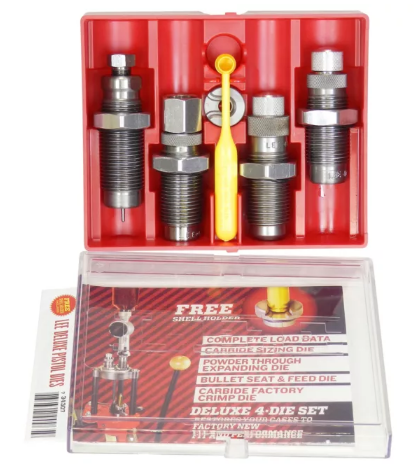
    Last time I hit the high points of beginning reloading and briefly discussed the different style of presses and other equipment. The presses are useless without dies specific to the cartridge that you intend to reload. Let’s talk about dies.

    There are two basic style cartridges: straight walled cases and cases with shoulders on them. Because of the different shape, properties of brass and steel we end up with two different kinds of dies: tool steel and carbide steel.

    Carbide steel is extremely hard making it prohibitively expensive to machine a cavity in the die to fit shouldered cases. You can get such a critter but when you see the price tag you will be purchasing tool steel dies. Because tool steel is not nearly as hard and kind of rubbery lubrication is requied to avoid having a brass case stick inside the die. These can be very difficult to remove and the die may be damaged in the process. This adds two extra steps to the reloading process: lubrication and subsequent cleaning of the cases.

    Dies for straight walled cases are usually fitted with a carbide steel liner. Because they are so hard and highly polished straight walled brass cases do not stick and slide right out with a polished surface. This greatly adds to the convinience of sizing spent cases back to size specifications. Always get carbide dies for straight walled cases.

    Of the manufacturers I prefer Lee Precision dies. Dies are full length threaded on the outside in 7/8×14 so that it screws into the press. This is pretty universal. There is a lock ring that rides on the outside of the die to set it firmly in the press. Lee is the only manufacturer that uses an easily replacable rubber O-ring to tension that lock ring. The other manufacturers use a set screw in the lock ring. That tiny set screw can become frozen and difficult to remove. It also sets against the 7/8×14 threads on the outside of the die and can damage them. Also, Lee dies are of high quality, low cost and combine several operations in single dies. Because some people prefer other brand dies but want the Lee style lock ring Lee will happily sell you as many of their lock rings as you wish to buy.

    All of the manufacturers produce high quality dies and I own at least one set from all of them. There is one more type of die worth noting. These are high-precision dies aimed at the long range rifle shooter. These allow for more precise sizing and seating of bullets, something we will discuss in a later article. The stand-outs are the Redding and Forster dies.

    If you are getting into benchrest shooting you would definitely want to shell out the bucks for some of these. I don’t have any because the dies I already have make ammunition that is more accurate than I can shoot anyway.

    This is a highly technical, tedious subject that is impossible to write about with inspiration. I will try to include as many tips and tricks I have learned over the years that you can’t find in any book so that those who intend to start reloading will be saved the time and trouble of learning on their own. I hope there are enough gun nerds around here that some will slog their way through and any other reloaders out there please add your tips in the comments.

  • Bacon Two Ways (A two part series)

    I mean come on, it’s bacon. You want a good reason to hate on Joos, Mooslims and vegetarians/vegans? They don’t eat pork, which means they don’t eat bacon. In this two part series, we’ll go through the process of creating two glorious versions of pork belly, smoked bacon and Pancetta.

    Today we do bacon. To start with, we need some fresh pork belly (also called pork sides). We have Cash & Carry here, which carries good quality products at reasonable prices. What you want to look for when making bacon, is a slab that is 2/3 meat to 1/3 fat. I find half bellies work best for me.

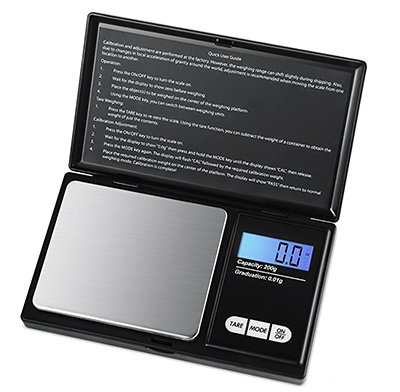
    What we need next is to calculate the proper amount of Cure #1 (pink salt), salt and sugar. Cure #1 contains 6.25% of Nitrite, with the rest being Sodium Chloride. The FDA guidelines for Cure #1 & 2 is 1.1gm per pound. This is approximately 1tsp per five pounds of meat. A great way to figure out your quantities is to use a cure calculator. The best one I know of is the one on the Digging Dogs Farm website. Do yourself a favor and purchase a decent scale that will do small quantities. This is the one I use:

    AMIR Digital Mini Scale, 200g

    Buy the 100gm calibration weight too.

    A note on Sodium Nitrite and Nitrate:

    Unless you’re eating quantities of cured meats on a regular basis, you may rest easy when it comes to the bogeyman that is Nitrites/Nitrates.

    “According to the Centers for Disease Control and Prevention (CDC), your daily intake of sodium nitrate shouldn’t be more than 3.7 milligrams per kilo of body weight.”

    For someone weighing 150 pounds, that equates to .25gm. A five pound slab of bacon contains .34gm of pure Nitrite.

    Sodium Nitrite is commonly known as Cure #1 and is typically used for meats that only undergo short term curing, usually two weeks or less. Sodium Nitrate, known as Cure #2 is used for longer curing meats such as salami. The Sodium Nitrate breaks down over time and converts to Sodium Nitrite, basically making it a time release source of Sodium Nitrite.

    Celery juice “substitute”. Yeah, the naturally occurring Sodium Nitrate in celery is chemically converted to Sodium Nitrite, or left as Nitrate. You’re using the same chemical to cure your meat. This is known as “marketing”. To stay  within FDA guidelines, the same quantities of both are used, regardless of source.

    Okay, we used the calculator, we measure out our curing mix, now we need to add other flavorings, if you so choose. You can use whatever strikes your fancy. I’ve found what works well for me is to add a good amount of black pepper, granulated garlic and ground bay leaves. Mix this all up with your cure and rub it evenly over your rinsed, and dried belly. Rub it in good. At this point, we need to wrap it and let it rest. You can buy 2 gallon zip lock bags, which work very well, or if you have a vacuum sealer that can do large bags, it’s a great option. I think the vacuum sealing results in better penetration of the cure. Next, into the refrigerator for 10-14 days. I like two weeks. I think it produces good flavor and you know your cure has penetrated all the way through. Every couple of days, flip the package over and rub the meat. Liquid will appear in the first few days and then most of it will gradually reabsorb.

    After we’re done curing our belly, it’s time to prep for smoking. Rinse all of the cure and flavorings off the belly and dry it well. Now it needs to go back on a rack in the fridge for 2-4 days. This will allow the surface to dry and form a pellicle, which is a slighty sticky surface the smoke will adhere to. This is also where you can add things like black pepper to turn it into pepper bacon just before smoking.

    Cold smoking versus hot smoking:

    Cold smoking will give you a product with a nice flavor and a finer crisp texture when the bacon is cooked. The bacon will still be raw when it’s done smoking. If you’re going to cold smoke, follow the directions on your smoker. Not all of them are capable of cold smoking. I have a quality electric smoker which allows me to control the conditions quite well, but it does put out a lot of smoke in the beginning, so I’ve had to develop process where I don’t over smoke the bacon, which will result in a product that smells like a campfire. The timing for cold smoking also varies widely. Some are capable of cold smoking for several days. In my situation, it’s about 4-6 hours or else there will be too much smoke.

    Hot smoking is a fine alternative. You will need a temperature probe for your bacon. ThermoWorks and Maverick both make quality probes.

    Follow the directions for your smoker. It should take about four hours at 200 degrees to reach an internal temperature of 150. Don’t get the smoker too hot, or you will start to render out the fat, which is not at all what we want. With hot smoking, the bacon will be fully cooked when it’s done smoking. I most definitely recommend slicing a piece off the end when you bring it inside and stuffing it into your maw for one of the finest bites of porcine known to man.

    Wood choice is up to you. I find a combination of hickory and cherry, or apple gives me the best results. And for those of you who don’t like smoked meats, or don’t have a smoker, bacon doesn’t have to be smoked at all if you so choose. Once you’ve let it dry in the fridge for a few days, slice it up.

    Once the bacon is done, let it rest in the fridge uncovered  for up to a week to allow the smoke to penetrate.

    On to processing. I cut the bacon into four squares and throw them into the freezer. You want the meat close to freezing for slicing. I cut them into pieces because I have a small slicer and it’s easier for packaging. I would recommend buying a slicer better than my cheap Cabela’s pos. I’ll be upgrading in the not too distant future. Cut the bacon to the thickness you like and then package it up. I do eight ounce packages.

    From here, the rest is up to you. I actually don’t eat a lot of bacon as just bacon. More often than not, it’s an ingredient in another dish. As for cooking slices, the best method is on a rack in a 325 degree oven. The way I typically do it is to lay it in a cold skillet and turn the heat onto medium. I keep an eye on it and turn it frequently. Dry on paper towels and enjoy! In our next episode, we will explore making that delectable Italian style bacon known as Pancetta.

    Thanks for looking.

  • Other Necessary Equipment – Reloading, Part 2

    Read Part 1

    This article is for informational purposes only. Suthenboy is not a credentialed expert. Do not attempt any of these activities without first consulting an expert or a manual published by accredited experts or manufacturers.

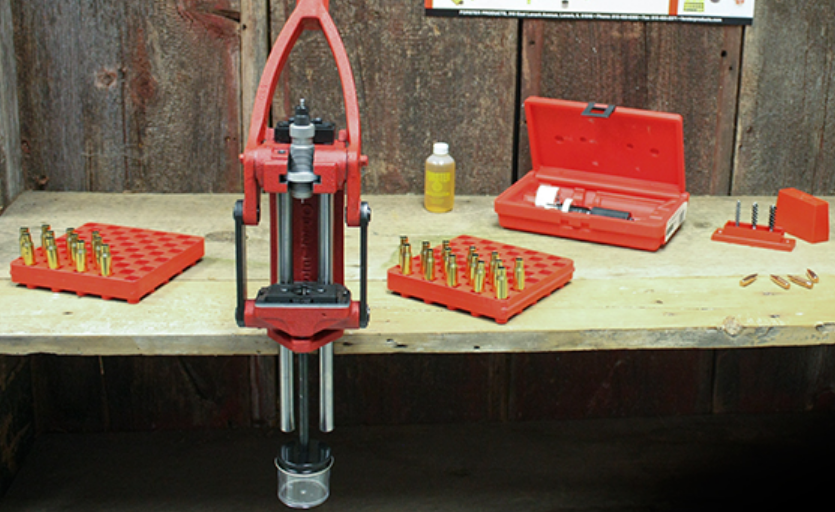
    The press is the heart of the reloading set but the beginning reloader will also need a good scale, a powder charger, a micrometer and a priming tool.

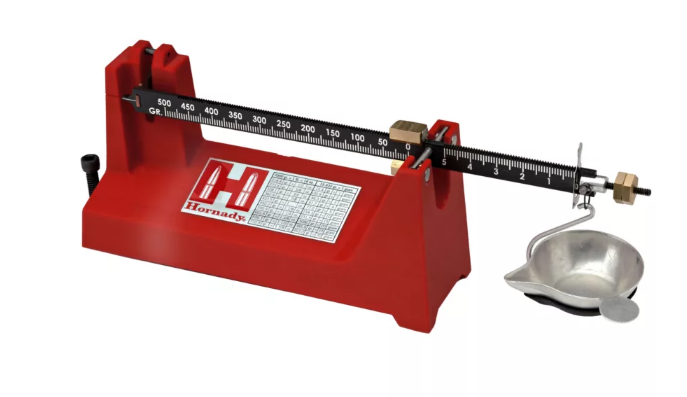
    Scales can be analog or digital but they must be calibrated in grains. The grain is an ancient unit of measure that originally meant the weight of one grain of wheat. Today it is defined as 1/7000 of a pound. As far as I know, the only people to use that measure any are in the firearms industry. My scale is a Hornady analog scale and is accurate to 1/10 of a grain. It cannot malfunction as it is a balance beam scale.

    There are also digital scales and powder dispensers with built in digital scales. I have never tried these but a lot of reloaders swear by them.

    A good micrometer can be had for a few bucks at any tool store. I recommend the dial type rather than the digital ones as they are easy to use and last much longer than battery powered micrometers. I also recommend one calibrated for inches as most calibers are measured in inches. Conversions are simple for metric calibers.

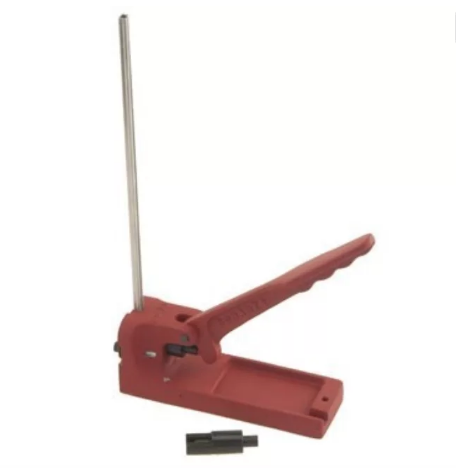
    Priming tools are another matter. There are many on the market and many presses have a priming function built in. It is important that primers be seated just below the base of the case and a good priming tool will do that in addition to allowing you to seat primers rapidly and accurately. You don’t want a tool that can mash a primer so hard that it ignites. After Lee precision changed the design of their hand tool it worked less smoothly so I switched to an RCBS which works fine for me but I am thinking of switching again to a Forster bench mounted priming tool. It is specially designed to seat primers very accurately without danger of ignition. It uses a tube style hopper instead of the pan style, which I like because it is easy to turn all of the primers correctly in a pan and then peck them up with the tube. Shell holders are not required and the bench mounted tool is easier on your hands.

    Powder dispensers can be fairly simple affairs or very complicated. I like simple. The old style has a hopper on top that feeds into a cavity drilled in a rotating block. The cavity has a piston style floor that can be moved into the cavity at various depths to adjust the amount of powder that can enter the cavity. When the handle is in the down position the cavity opening faces up and the hopper fills it. When you turn the handle down the rotating block turns and the cavity faces down, emptying through a small spout directly into the case which you hold under the dispenser in contact. The problem with these is that as the cavity opening passes away from the hopper on its way to the spout it can chop grains of gunpowder. This can change the weight of the charge slightly and also causes the gunpowder to burn at a different rate. It doesn’t really create danger but it does affect accuracy. This is a bigger problem with tube powders than flake or ball which means rifle powders where accuracy is more of an issue. A simple solution is to empty the case back into the hopper if you feel an especially hard chop as you move the handle. A better fix is the Lee Precision charger which is designed to not chop any powder grains.

    The automatic dispensers are much more complicated but easy to use. I have never used one, but I get good reports from the users.

    A couple of other tips:

    Your bench should be sturdy and large enough to mount your equipment on but not so large that clutter accumulates on it. Space has a tendency to fill up. If your bench is not too large it will be easier to keep clean and organized.

    A loading block is a cheap accessory that holds your cases in between loading steps so that they don’t get knocked over. It helps keep the process organized and you can keep a better eye on everything. You can get one for just a couple of bucks. Get one.

    A primer tray is another very cheap, very useful item. It is a small plastic tray with tiny ridges in it. Primers are placed in it and it can then be lightly shaken back and forth. As the primers slide around in it the open edges of the primers catch on those ridges and the primers flip to face all in the same direction. They can then be more easily loaded into the priming tool hopper.

    Clean cases are easier to work with and function better in firearms. You don’t have to clean your cases after every firing but after every second or third loading is a good idea. Most hardware stores sell vibrators for cleaning tool parts and the reloading suppliers sell them. Pick up a vibrator and some crushed walnut shell so you can keep your brass clean. These also help reduce corrosion if you store loaded ammo for long periods of time. Always use the vibrator on empty brass, never on loaded cartridges. Vibrating loaded ammo will damage the powder grains which will greatly increase its burning speed creating dangerous pressures.

    If the Lords of the Glibs keep publishing these next time we will go through dies and toss in more tips and tricks.

  • Beginning Reloading

    Read the series

     
    This article is for informational purposes only. Suthenboy is not a credentialed expert. Do not attempt any of these activities without first consulting an expert or a manual published by accredited experts or manufacturers.


    I developed a passion for shooting and hunting at an early age. I suppose my Grandfather’s and Father’s love of firearms rubbed off on me. Shooting for me was what golf is to others. It is an activity that requires discipline, an activity where focus and precision pays off. I constantly competed against myself always trying to improve and over time with effort the improvement was very evident to me. Like most the majority of my shooting was done with 22 Long Rifle because of economy. When I was about 14 years old my father gave me a wonderful Christmas gift – a Lee Precision handloading set and a Ruger No.3 rifle chambered in 22 Hornet. Suddenly I could shoot center fire for less than the price of 22 Long Rifle.

    Since that Christmas, I have reloaded hundreds of thousands of rounds, maybe approaching a million and a half, in every caliber you can imagine, save the new-fangled rounds that have come out in recent years. Yes, I said it. Get the hell off of my lawn.

    Since those days our economy has expanded dramatically, the cost of reloading components has risen and the cost of bulk ammunition in common calibers has fallen. For plinking ammo reloading is not as economical as it used to be but reloading still has an important place. Uncommon calibers can be exorbitantly expensive and difficult to find. Precision rifle shooters cannot obtain the quality of ammunition their sport demands off the shelf. For people like me, reloading is a very enjoyable hobby and an end in itself. With experience one can acquire one heck of an education about the sport, and with a small stock of components and tools never lack for ammo in a pinch.

    Many people, like me, got their introduction to reloading with a Lee Precision handloader kit. It is simple to use and at about forty bucks the smallest outlay of cash to get started making your own ammunition. I haven’t found any distributors for these little gems but you can buy them directly from Lee Precision.

    I am not aware of any other companies that fill that niche but if you want to step up to more sophisticated tools there are many manufacturers. The big names are RCBS, Lee Precision, Redding, Lyman, Hornady, Dillon, Forster and MEC. All of these companies have websites (links above) and are distributed through a large number of suppliers. I am not going to make strong endorsements for any of them because they all make quality products that are better in some ways than the others. Like choosing a firearm the beginning reloader will have to decide by their own personal preferences.

    As for distributors there is a plethora of them. If you prefer shopping in-store Bass Pro and Cabela’s keep a good stock on the shelf. There is also the odd and end small sporting goods stores around. For mail order there are number of large houses for comparison shopping. I find that their prices are very competitive, their stock reliable and their service top-notch. These include Midway USA, Wideners, Brownells, Precision Reloading, Natchez Shooter’s Supply and Cheaper Than Dirt. This is by no means a comprehensive list.

    The first step up from the Lee handloader kit is a single stage press. This press bolts onto a sturdy work bench and holds one die at a time. There are some very high quality single stage presses out there and these happen to be my personal favorite. I can concentrate on one step at a time and pay close attention to every detail. My personal press is a Forster. I consider it of the highest quality. It also has great advantage in convenience as the dies are held in a groove so you don’t spent time screwing them in and readjusting each time you change dies. Additionally it has clamping jaws to hold the cases so no large sets of shell holders are needed.

    Forster co-axial press
    Forster co-axial presses are not cheap but definitely worth every penny for the hard core reloader.

    The next step up from the single stage press are multi-stage presses. These presses hold more than one die at a time and each crank of the handle performs one step of the process on multiple cases as they progress around a turret. Spent brass goes in one end and a fully loaded case comes out with each crank of the handle. Obviously these presses produce loaded ammunition for the high volume shooter.

    The last step up would be motor powered presses. Many of the manual progressive loaders can be accessorized with motors and by now we are talking about high budget equipment. Dillon is commonly considered the top of the line motorized progressive loader and most competitive shooters use them but there are others that work well.

    I have a progressive loader but I prefer to use my single stage press. With the multi-stage press there are too many things going on at once for me to fully pay attention. If you are a novice intending to get into loading your own ammunition I highly recommend starting out with a single stage press. Safety must always come first so take your time. Don’t get in over your head. When you have learned all of the ins and outs of the loading process and all of the things that can go wrong then move up to a multi-stage press.

    Addendum

    A recent study showed that CCL holders are six times less likely to commit crimes than police officers.

    There is a reason for that. These are people who are law abiding by nature and interested in keeping their licenses. I suspect the same is true for reloaders. These people pay attention to detail. They follow the rules. That becomes second nature to them. Safety is a huge concern and they become accustomed to thinking that way. If you program yourself to behave that way reloading can be safe and rewarding. Never forget and become careless or have lax standards. You are dealing with inflammable materials that can develop very high pressures very quickly. Bullets, even travelling at low speed have incredible momentum. They carry more energy than you think even at speeds low enough to see with your eye. A relatively light lead slug travelling at the speed of an airsoft pellet can be deadly. You can lose eyes, fingers, get broken bones or severed arteries. You can receive severe burns. If you have a store of gunpowder in your reloading area, depending on how much, you might want to consider that if your house catches fire you may have to stand in the street and stop the firemen from approaching the structure. Let it blow. Nothing in your house is worth someone losing a life over. I threw all of the candles out of my house years ago. I don’t smoke in my reloading room.

    Safety. Safety. Safety. Always on my mind. In the forty years or so that I have been reloading ammunition I have never had a single failure. Every single cartridge I make is done with great care. I own about a dozen fire extinguishers. Kitchen, living room, Jeep, Honda, bedroom, garage, outside shed, mule, and two extra bedrooms.

    Don’t be that guy. Be Safe. Stuff can be replaced. People can’t be.

  • What Are We Reading – July 2018

    jesse.in.mb

    Do not let my colleagues fool you with their nay-saying about James Swain’s The King Tides (Lancaster & Daniels Book 1). It is an entirely adequate beach read with a chipper pacing and zombie-like kiddie predators. To my mind, the main drawback to this book is the sponsored content, or the weird brand name dropping plus generic non-affiliated copy material–depending on if the author was paid for this or just lazy and trying to meet a word-count. It was jarring to be reading about the author’s disappointment that a kiddie diddler had smashed his phone only to be rescued by Verizon!

    “His phone was new, courtesy of his ex-girlfriend tossing the old one out of a moving car. Replacing it had been a snap. A quick trip to the Verizon store and forty-five minutes later he’d walked out with a new Droid, his contacts and apps restored. Kenny’s phone was also a Droid, and he wondered if Kenny had bought it from Verizon, which had more locations than a hamburger chain. If he had, then all his data was stored in the cloud and could be easily restored.”

    Spoilers: he also upgrades his phone from a Droid to a Moto Z2 Force during this exchange for only $40! I’m not sure that I’d recommend this book on its merits, but there are now enough people who have frog-marched themselves through it that it’s part of the current Glibertarian cultural canon. Don’t be left out!

    JW

    Have you ever read all the information that comes with penicillin prescriptions when the pharmacist fills them? Vomiting. Check! Mild skin rash. I wonder what “mild” means? Upset stomach. Check! Diarrhea. Uh-oh! I’ll be right ba….

    Brett L

    As part of an experiment in group self-abuse, I read James Swain’s The King Tides (Lancaster & Daniels Book 1). This book is terrible. Random shit not at all relevant to the plot, rogue FBI agents distributing kiddie porn (actually the most realistic part of the story), super-fit former Navy SEALs with beer guts congenital conditions that somehow didn’t disqualify them from that competitive system, kidnapping attempts of hot teen-aged white girls that the police don’t care about. I regretted reading this, even though it was free. Don’t buy it. Please do not encourage Mr. Swain to write any more books.

    In my literature entry for the month, I read Without a Country, a Turkish work translated into English. It’s an interesting family history starting with German Jews fleeing Hitler to populate Ataturk’s new university system, where hope and religious tolerance flourish, and tracks the changes in Turkish culture from the Muslim secular hope of Ataturk to the more fundamental Muslim sympathies. It was a good book. I enjoyed the writing.

    I also read Curious Tales from Chemistry: The Last Alchemist in Paris and Other Episodes by Lars Öhrström. As a chemistry geek, these are fun little tales about substances, some basic chemistry like orbitals, and history. Places, people, and things interesting to their history (like the guy tasked to steal British steel-making secrets for the Swedes). 

    Old Man With Candy

    In Jewish tradition, the Torah is divided up into sedras, roughly analogous to chapters. Each Sabbath, a sedra is read, sequentially, until at the end of a year cycle, the last sedra is finished. We have a nice holiday to celebrate it, Simchas Torah, then the process is begun again. For years, I had a similar ritual, reading a chapter at a time out of The Feynman Lectures on Physics each week until I was done the three volume set, then I’d begin again. This kept my basic physics sharp and it was, for a geek, remarkably enjoyable. The Lectures were a series of notes from a one year freshman physics sequence taught by Richard Feynman (arguably the greatest physicist of the 20th century), and transcribed and edited by two other physicists, Robert Leighton and Matthew Sands. The collaborators did a wonderful job capturing Feynman’s voice and unique style, and this set of books might be among the greatest works in the English language. Anyway, for reasons of life, I stopped doing my ritual some years back, and recently, it occurred to me that my brain suffered from the absence of Feynman’s ghost. So I started again. And it’s every bit as delightful and wonderful as I imagined, the exact opposite of dry technical books. Even if you’re not mathematically inclined, there’s so much clear and common-sense explication of how the universe works that you’ll come out of the experience much smarter than when you went in.

    I linked Volume 1 of the set because that’s the one that is likely to have the most appeal to non-physicists. It covers a sweeping range of topics; though focused on classical mechanics, Feynman talks about probability, thermodynamics, cosmology, biology, psychology, wine, and as a bonus, he offers his rather tart observations about philosophy. More so than anyone else writing about science, he is rigidly clear about what things are “this is the way it is, we can describe it, but we can’t say why it is this way” and what things are “here’s something about which we know why.”

    Strange as it may seem, we understand the distribution of matter in the interior of the sun far better than we understand the interior of the earth. What goes on inside a star is better understood than one might guess from the difficulty of having to look at a little dot of light through a telescope, because we can calculate what the atoms in the stars should do in most circumstances.

    One of the most impressive discoveries was the origin of the energy of the stars, that makes them continue to burn. One of the men who discovered this was out with his girlfriend the night after he realized that nuclear reactions must be going on in the stars in order to make them shine. She said “Look at how pretty the stars shine!” He said “Yes, and right now I am the only man in the world who knows why they shine.” She merely laughed at him. She was not impressed with being out with the only man who, at that moment, knew why stars shine. Well, it is sad to be alone, but that is the way it is in this world.

    Here’s an example of Feynman’s presentation methods, talking about the incredibly important and almost universally misunderstood topic of entropy. If you like this and the lightbulb goes on, pick up Volume 1 of the Lectures and prepare for a wild and crazy ride through the way the universe works.

    SP

    I also selected The King Tides (Lancaster & Daniels Book 1) for my free Kindle book this month since there was nothing else even remotely interesting. (How much do the authors pony up for this? I can think of no other reason for the choices.) However, being smarter than my dear Glib friends, I waited until they had all reported in, then quietly deleted it from my Kindle unopened.

    In enjoyable reading, I am swiping through How to Speak Midwestern by Edward McClelland. Things I’ve learned so far include: where Little Egypt is; what a frunchroom might be; where a gangway is located and for what it might be used; who Trixie is and what she’s up to with Chad.

    SugarFree

    I read the Joe Pitt series by Charlie Huston. Hard-boiled vampire private detective in a Manhatten ruled by vampire clans as bitchy and mean and petty as any 8th-grade clique of half-pretty girls. They are competently written. but mostly crib from various other, better detective novels for plot: the spoiled heiress with the monstrous father from The Big Sleep, the cynical operator playing all sides against each other of Red Harvest, Mike Hammer’s blase cruelty of those he has decided are guilty. The best book is the third, Half the Blood in Brooklyn, with Joe fighting off a thoroughly crazed sect of Hassidic vampires and their odd workaround for obtaining “kosher” blood. Overall, the series isn’t bad, it just also isn’t very good.

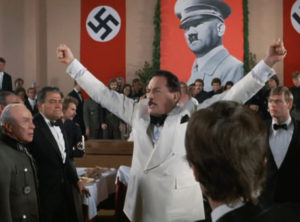
    I read/watched Ira Levin’s The Boys From Brazil. Gregory Peck as Dr. Mengele is one of the more inspired casting decisions in movie history, constantly walking the line between terrifying and absurd. The biggest knock on the movie from a production standpoint is the blue contact lens they had to put on young Adolf–they are distracting in our 1080p world.

    I also read/watched that old stand-by, The Exorcist by William Peter Blatty. Chock full of juicy Catholic guilt and atheist hate, the movie satisfies like no other. The Zodiac Killer said of the film “I saw and think ‘The Exorcist’ was the best saterical [sic] comidy [sic] that I have ever seen.”

    I made it through two chapters of The King Tides. It was terrible.

    Web Dominatrix

    I picked up a couple books this past week.

    Originals by Adam Grant and Talk like TED by Carmine Gallo. Originals is about how non-conformists influence and change the world, while Talk Like TED is about public speaking a la TED Talks.

    I have no interest in public speaking (or really doing anything that requires me showing up somewhere on someone else’s schedule), but I am into livestreaming and video marketing.

    So far Originals is really interesting. Adam Grant is a great writer and he pulls in some compelling studies and references. I haven’t cracked open Talk Like TED yet.


    ZARDOZ

    ZARDOZ SPEAKS TO YOU, HIS CHOSEN READING ONES. BOOKS CAUSE NOTHING BUT TROUBLE! OH AND IXNAY ONYAY ETHAY IZARDWAY OFYAY OZYAY!

    ZARDOZ HAS SPOKEN.


    Swiss Servator

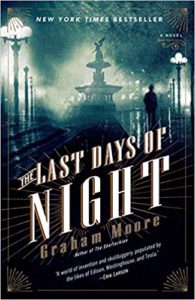
    Upon recommendation (and loan) of a regular at my local, I read “The Last Days of Night” Edison vs Westinghouse (as in Thomas Alva vs George) and Nikola Tesla wanders into the picture. The story is from the point of view of Westinghouse’s young lawyer in the fight against Edison over the patent of the light bulb. Mostly based on actual events, it is a fairly interesting look into inventing, what drives/drove the inventor/inventors of the time. A little electricity learnin’ and some fancy laweryin’ too. Reads quickly, and has some very, very short little chapters…almost like the author was not sure where he was going at first.  Probably would make a decent movie if cast right. Give it whirl if you have some time.


    STEVE SMITH

    STEVE SMITH BUSY WITH CASCADIA INDEPENDENCE. HIM NOT HAVE MUCH TIME READ. JUST TREATIES AND FOREST LAW (HIM PROMINENT FOREST LAWYER!). READ MONTHLY QA REPORTS ON HIKER ENCOUNTERS TOO. BY ENCOUNTERS, MEAN RAPE.

  • Spontaneous Cooking: Salads

    Back in May, I discussed how to make dressing – the most low stakes item you could make. Today, I’d like to talk about what you should put that dressing on. I showed you a wedge salad and provided recipes for both a spinach salad and a green salad.

    Green Salads

    Let’s start by thinking about what makes a great green salad. A great salad should be colorful, have a variety of textures and a balance of flavors: salty, sweet, sour, bitter and savory or umami. Think about the classic salads like a Caesar salad or a spinach salad or a Greek salad. The Caesar has the green of the lettuce, the crunch of the croutons and the creamy dressing. The anchovies and parmesan add a touch of salt and savory. The spinach salad has crispy lettuce, soft eggs and crunchy bacon. Both the mushrooms and bacon add umami. The Greek salad is colorful and gives a wide variety of tastes with the salty feta, lettuce, onions, and oily and slightly bitter olives.

    I think the green salad recipe I gave you in the salad dressing post is a nice template for a good salad. It has the green and dull red lettuce and the bright, sweet cherry tomatoes. The pine nuts add some crunch and the dressing is a touch sour from the lemon.

    Keep these things in mind as you make a green salad. I like to use a mix of lettuces. Adding radicchio adds a pronounced touch of bitterness. To counter that, I often add dried fruit – raisins, dried cherries, or dried cranberries, even sun-dried tomatoes. I also like to play around with crunchy elements like nuts or roasted chickpeas (Drain a can and toss with olive oil and spices. Bake in a 400 degree oven until crispy, about 20-30 minutes stirring half way through.) Add shredded carrots, jarred roasted red peppers, or halved cherry or grape tomatoes for a hint of sweetness. I also sometimes add roasted veggies like artichokes or Brussels sprouts. Pickled vegetables work well, I like pickled mushrooms or grapes or cherries.

    Salad Add-ins

    If you want your salad to be a main dish, add roasted chicken or grilled salmon. If you toss in apples, celery and walnuts, it is reminiscent of a Waldorf salad. Capers and olives have a nice briny taste. Add jalapenos, seasoned ground meat and crushed tortilla chips for a taco salad. Cheeses like Parmesan, cheddar and feta all add a bit of umami to the salad. Using a balance of flavors makes you want to take another bite.

    Now that you have all these items, stop a moment and edit. The salad I gave you in the dressing post has one element for bitter (lettuce), one for sweet (tomato), one for umami (Parmesan), and one for sour (dressing). It is pretty minimal. A good salad shouldn’t be something of everything you have in the fridge. I don’t like Cobb salad for this reason. The Greek and chef’s salad are pushing it for me. Just too much stuff. Your line will be different. You should experiment to find it.

    Salads aren’t limited to various lettuce concoctions, of course. Here are two more possibilities.

    Salmon salad

    This salmon salad is inspired by “Eat This Not That” grilled salmon salad. It uses grilled salmon, red onions, and cherry tomatoes, green beans or asparagus (or both, why not), capers, and I add a hard boiled egg.

    Salmon Salad

    First, slice a few red onions and put it in some red wine vinegar. Both red onions and shallots benefit from being soaked in vinegar. It mellows them out. Grill the salmon and either green beans or asparagus. Add a little dijon mustard to the red wine vinegar and onions and whisk. Add salt and pepper to taste. When the salmon and vegetables are done; chop. Add a little extra virgin olive oil to red wine vinegar and whisk. Then add the salmon and grilled vegetables. Lastly, add a few cherry or grape tomatoes and a sliced hard boiled egg and toss. This salad is just as good cold, so I make at least two servings and set some aside to take for lunch.

    Roasted Vegetable Salad

    I also like to make roasted vegetable salads. Again, this is something I actually make more than one serving. Roasted veggies are good both hot and cold, so I eat one serving hot as dinner and take the second serving to work for a lunch. You could also toss in a green salad. Paired with a crusty bread, cheese and a good wine, this is a satisfying summer dinner.

    Roasting Veggies

    I’m always interested in what everyone else is making. Here are two that intrigued me (if I missed including your salad, I apologize).

    Check out Timeloose’s Soba Noodle Salad

    He uses soba noodles, shredded cabbage, carrots, scallions, red peppers and snow peas and dresses it with a peanut butter dressing made of peanut butter, soy sauce, siracha and vinegar. It’s been added to my rotation. I am in love with this. It offers so many possibilities for experimentation. It’s delicious, as is, but, of course, I can’t resist experimenting with it. So far, I have added leftover pork to the noodles and garlic and fresh grated ginger to the dressing.

    Western Sloper’s Simple Summer Salad uses peeled and sliced cucumbers, halved cherry tomatoes, red onion, kosher salt, olive oil and sumac. Serve chilled. I’m going to have to go to the middle eastern market and see if I can find sumac. I’ve never tried it before. I recommend salting the onion before mixing in the rest of the ingredients. It will have a similar effect to soaking it in vinegar and remove some of the harshness.

    What are your favorite salads?

  • Lessons from a Ghost Forest, aka: Finding Beauty Among Death

    Preamble

    I recently returned from the Undisclosed Location at the Rio Grande National Forest in the San Juan Mountains of Southwestern Colorado. Beginning in approximately 2002, a spruce beetle (Dendroctonus rufipennis) epidemic has been spreading across this region, peaking in 2014 but still going on to this day. For those not familiar, the primary pests of slow-growing mountain conifers are bark beetles; spruce, fir and pine all have closely related species of this pest that will attack. About the size of a pencil lead, these little buggers are naturally occurring in all mixed conifer forests at varying background levels. They survive by boring into tree bark where they then lay their eggs. The larva hatch and grow within the tree, typically taking two years before reaching maturity and going out on their own to a new tree.

    Spruce Beetles

    As the larva mature, they burrow around within the tree creating a “gallery”. The larva, along with the adult beetles, disrupt the flow of xylem and phloem in the tree. The trees do have natural defenses against the beetles and a tree that is attacked does not always die. The tree will usually push sap through the gallery to try and push out enough of the invaders so that their activity is not fatal. However, every so often, conditions become favorable for a population explosion of the pests. They’ll multiply like crazy, finding abundant resources and will go on a mass killing spree until they run out of food. Before you know it, you have a ghost forest.

    Rio Grande National “Forest”

    For the past 20ish years, the mean temperature in the Southern Rockies has been about 2F higher than historic averages. This gets environuts’ panties in a twist even though mean temperature is meaningless when it comes to the beetles, except indirectly in how it relates to drought (don’t worry, this is not going to turn into a rant against “climate change”, though warm winters are part of the issue). One of the negative feedbacks against beetle epidemics is transient extremely low temperatures. If the temperature drops to -40F for a continuous 24-hour period, the beetles will die and the invasion will end. Temperatures that low are not unusual in the Rockies, but it is unusual for it to stay that low for that long. The other factors important to an outbreak are drought and overall tree health. Drought is also not uncommon in this part of the country; in fact it’s been part and parcel of life in the American Mountain West since long before the alphabet soup networks even existed, let alone took notice of it in service to their agenda. More precipitation provides more resources for the trees to defend themselves.

    None of that matters though if the forest is overcrowded, creating a high median tree age and fierce competition for resources. All of that increases tree stress and makes them much more susceptible to attack. Decades and decades of fire suppression and forest mismanagement in the West has created extreme overcrowding in many of the forests. Forest fires also get environuts’ panties in a twist, but they, in their hubris and stupidity, fail to understand that small fires thin out and renew forests. By suppressing fire completely (which has been policy for 100 years) the forest gets beyond crowded, making a catastrophic fire that completely sterilizes the landscape much more likely. If you keep suppressing so that even such a catastrophic fire doesn’t happen, the beetles move in; which leads me to the first lesson of the ghost forest.

    Human Hubris is Boundless

    Humans’ relationship with Nature has changed significantly since the Industrial Revolution. In a primarily agricultural society, people view Nature with fearful awe; it is either a life-giving force that helps your crops grow and provides for you, or it is a cruel puppeteer starving and torturing you. As humans have become more urbanized and less connected to this dichotomy, they have begun to view Nature through rose-colored glasses and idealize it as a long-suffering Mother ruined by the sinfulness of human existence (see also: watermelon cult of Gaia). In our hubris, we began thinking we could save Nature from our nefarious influence and started meddling. Admittedly, some of this has resulted in positive outcomes and we have cleaner air and water as a result. But most of the time, when we try to manipulate Nature, even with noble and pure motives, we just fuck things up worse once Nature reasserts itself.

    When looking at the ghost forest around the Undisclosed Location, I’m filled with sadness at the destruction, but I also laugh at Nature smacking down our forestry “experts” for trying to circumvent its will. The trees must die off; whether that be through fire or through disease, Nature will find a way no matter how much we try to fuck with it. Which segues to lesson two.

    Nature is Right and We’re Wrong

    The miraculous thing about this process is that, not only is it necessary, it’s healthy. To us, forests are immovable, unchanging monoliths. Especially in coniferous forests, the trees grow so slowly and live so long that in our limited view, we think that they will continue in their present form perpetually. Therefore, again in our hubris, we believe that preserving that form at all costs is the right thing to do and that we are actually helping Nature. We’re wrong. The forest is a living organism just as much as a human city. There are cycles of birth, death and rebirth happening all the time, even if it’s on a timescale too long for an individual human to appreciate. Pioneer species move in, thrive, die off and make way for new species over hundreds of years. After all, trees, just like us, don’t live forever, but we like to think they do. Understanding that something so huge, ancient and apparently implacable as a 500-year-old, 150-foot-tall Engelmann spruce is mortal brings our own fleeting mortality into stark relief. Protecting the forest really means protecting ourselves from the inevitability of Death.

    The beauty of this system, however, is that the beetles only attack trees over a certain trunk diameter, leaving the babies (“only” 30 or 40 years old) unharmed. Unhobbled by competition for resources from their elders, and with new, abundant access to sunlight, the babies have explosive new growth; up to a foot per year in some cases (insanely fast for high altitude conifers). Furthermore, the aforementioned abundant sunlight activates dormant underground complexes of aspen (which can’t grow without it) to start sending up shoots. Aspen is the weed of the tree world and will grow like a plague if given the chance. Soon (only 10 or 20 years) the forest will be filled with aspen and the baby spruce will slow down again (but not die). If you were able to peer down to the forest floor of the picture above, you’d see an explosion of life restarting the endless struggle of existence. Which leads me to the final lesson from the ghost forest.

    The Two Most Important Survival Qualities are Resilience and Determination

    The forest itself is incredibly resilient. It bounces back amazingly quickly from a beetle Holocaust, fire or even human-caused catastrophes like clear-cutting. But I speak now not of the overall resilience and health of the forest as amazing as it is, but of individual trees. Walking through the ghost forest, very occasionally, maybe 1 in 500 trees, you’ll see a tall, noble, ancient tree that stood its ground and survived the onslaught. You’ll see the sawdust from the beetles at the base and the holes made as they emerged. You’ll see the “pitch out” where the tree tried to flush out the invaders with sap. Somehow, while all its peers were succumbing to the epidemic, it stood tall and survived. How? Why? Was it pure luck? Probably. But I like to think that somewhere deep down in its non-sentient existence, it just wouldn’t give up. Its determination to survive and resilience in the aftermath mean it stands alone and earns the privilege of life. Even if that’s overly romantic anthropomorphizing, I still think it’s a very valuable lesson.

    Coda

    All susceptible trees around the Undisclosed Location died in 2010. The beetles have moved on and will continue moving on until they run out of food and eventually they too die. In the intervening years, it has been amazing to watch the forest begin the long process of regeneration. Already in places that just five years ago were bare, aspen are six feet tall. The ghosts of the past still haunt the forest, and will likely continue to stand for another decade or two before falling down and returning their life essence to the ground from which they sprang. Someday, in a couple hundred years, the baby spruce that survived this plague will have grown beyond the aspen, blocking out the sun and thirstily drinking up all the resources. The aspen will then die or go dormant in the ground, waiting for the next unspeakable massacre; just as we, along with who knows how many subsequent generations, will be dead. And so it goes.

    Boobs


  • Spontaneous Cooking: Pantry Meals

    [et_pb_section bb_built=”1″][et_pb_row][et_pb_column type=”4_4″][et_pb_text _builder_version=”3.9″]

    So far, I have talked about cooking from fresh ingredients and avoided the use of processed ingredients. But, just as I think everyone should have a date night dinner they can pull out to make, I think everyone should be able to make dinner strictly from pantry items. This is useful when you (like me) have recently been traveling and haven’t been able to get to the grocery store, or if (like me) you are just swamped at work and haven’t been able to get to the grocery store. Knowing how to make a meal from the pantry means you can still avoid the high calorie, high volume of take out.

    I have a pretty extensive pantry. As a partial list, I keep canned beans (black, white and red), canned tomatoes, canned green beans, canned artichoke hearts, canned tuna, and cream of mushroom soup on hand. I also always have frozen broccoli, artichoke hearts, Brussels sprouts, and salmon or other frozen fish in the freezer. I keep rice, wheat pasta, rice noodles, and bouillon in my pantry as well. In addition to canned, frozen, and dry goods, I think of a few fresh (fresher) items like kielbasa, or other pre-cooked sausage, onions, garlic, spinach, and lemons or limes as pantry items because I always have them on hand. Your pantry items may be different.

    Pantry meals do have a downside. They aren’t as tasty as cooking from scratch and downside for me – upside for some – they make more than one serving. I take the leftovers to work for lunch.

    Sausage and Beans

    I make sausage and beans from pre-cooked sausage (most recently chicken and garlic), white beans (usually cannellini, but others work), garlic and spinach.

    Sausage & Beans Ingredients

    I cut about one third of the kielbasa into rounds,the rest I put in the refrigerator – it will keep for a few days for other recipes – and sauté the rounds.

    Sausage Saute

    I just brown the slices on both sides. I don’t even add any oil. The slices will give off fat while browning. Next, I add some chopped garlic and a drained and rinsed can of white beans. I like the beans toasted, so I give it a minute or two, stirring occasionally.

    Add Beans
    Add Spinach

    Then add about one half of a bag of spinach.

    Turn off the heat and toss it until the spinach wilts.

    Sausage Sauté with Spinach

    Squeeze a lemon quarter over it, it does make a difference. This makes about three servings for me.

    But why not just get takeout? I timed this. It took me sixteen minutes to make, including slicing the sausage and chopping the garlic, and I wasn’t rushing. It also cost much less than takeout and I think it is better for me.

    Variations: You can use black or red beans, even chickpeas, instead. On one occasion, I didn’t have sausage, but I did have pepperonis. So I put a little oil in the pan, sautéed the garlic, added the beans and pepperonis, then the spinach. It was good. You could substitute chorizo or other sausage as well. If it isn’t pre-cooked, though, it will take longer to make.

    Another use for sausage is a variation of the stove top hotdish I grew up with. Stove top hotdish is a package of mac ‘n’ cheese combined with a cut up hot dog and frozen veggies or a can of tuna and frozen peas. I no longer buy packaged mac ‘n’ cheese. Instead I use a little pasta, frozen veggies and whatever cheese I have on hand. Most recently I had cream cheese to use up. I sautéed my sausage, microwaved a broccoli cauliflower mix and combined it with some pasta, cream cheese, cheddar, and cayenne pepper.

    Spinach, sausage, and garlic are fresh(er) ingredients. What if you don’t have those on hand?

    Easy, make 8 minute soup. This is a strictly canned goods dish. Drain and rinse a can of black beans and a can of red beans. Put in a pot. Add a can (including liquid) of tomatoes. Add a drained and rinsed can of corn. Add two or three cups of broth (made with bouillon if needed) and a tablespoon of chili powder and ½ tsp of cayenne and ¼ tsp of black pepper. Taste, then add salt. All those canned goods have salt, so make sure you taste to avoid an overly salty dish. Bring to a boil and boil for 8 minutes. If you use vegetable broth, you have a vegan soup. (You’re welcome, SP).

    These are just three of what I call pantry meals. There are hundreds more that you can make. As I mentioned above, it really depends on what you keep in the pantry. So, Glibertarians, what do you keep in your pantry, and what are your favorite pantry meals?

    [/et_pb_text][et_pb_text _builder_version=”3.9″]

    Done!

    [/et_pb_text][/et_pb_column][/et_pb_row][/et_pb_section]