Time to move on to the next part of brewing: bittering agents. The oldest known bittering agents were herb blends (the most famous being gruit), the modern bittering agent of choice is hops. The herbal beers are still being made today (but not a lot of it) by some of the American craft brewers looking to revive old styles and flavors. There’s lots of options for brewing with herbs instead of hops, here’s an article that talks about the various herbs, and how to use them.
We’re in the modern age now, which in the beer making world means almost a thousand years of history. So that means hops are the primary bittering agent. The bittering component of the hops is known as Alpha Acids, and any hops you buy from the homebrew shop will have an AA% on them. These get measured in a final beer by a scale called IBU (International Bittering Units). IBU’s aren’t the final determination in how bitter a beer tastes though, as that will depend on the residual (or non-fermentable) sugars left in the beer.
If you’re looking to replicate a recipe exactly, the AA% will be important to you. Most recipes will have the variety of hops, listed with an AAU number. That number is just the AA% times the weight in ounces. So, for an AAU of 30, you would need two ounces of 15 AA% hops.
Hops add a lot more flavors then just bitterness, and these flavors can lend themselves to different styles. One way of classifying hops is by the most frequent use for them:
Bittering – These are hops that are being used primarily for their AA% and to bitter the beer, they will be added at the beginning of the boil, and be boiled for 45 minutes or more. This will drive out most of the flavor and aromatic components of the hop.
Flavor – These are hops that are used with 30 – 15 minutes or so of time remaining in the boil. These will add some flavor, but most of the aroma notes from the hops will be driven off.
Aroma – These are hops added towards the end of the boil, or even after the boil has ended (either in a whirlpool or through dry hopping). These will add little to no bitterness, but will retain all of their aroma and flavor notes.
Another type of hops are the Noble hops. This is a special category of four different varieties of hops (Hallertau, Saaz, Spalt, and Tettnang). The term just came into being in the past couple of decades, and the hops from their original regions are generally in high demand. These classifications are more of guidelines, as any hop can be a bittering hop if enough of it is used, and some bittering hops have some very good flavor and aroma notes. Hops can have a wide variety of flavors, with the most common being: earthy, pine, citrus, spice, grapefruit, and tropical fruit.
Another use for hops is dry hopping. This is when hops are added to the beer after the yeast has been pitched, and will add no bitterness, but will add tons of aroma. There are even some beers being released now called 0 IBU beers where all of the hops are added at the beers flameout, or used as dry hops.
New and experimental hops are being cultivated every year for new characteristics, such as disease resistance, flavor, and high alpha acid percentage. These are generally released in small batches to breweries and home brew shops. At this point they’ll generally have letters and/or a number to identify them, only getting a name when they go into wide scale production.
If you say you don’t like hops, it can help to learn the varieties so you can learn which ones you don’t like. There are also several hops that can add negative qualities to beer if used with too heavy of a hand (garlic, catty, vegetal, etc.). Good brewers will avoid this, but not all breweries use good brewers.
It’s time for another woodworking project. Back in the spring a coworker and I headed up to his family farm to cut some cedar planks with his chainsaw sawmill. Apparently the mold or something from the cedar trees affects the apple trees they are growing so they have been cutting down the cedars. They had a nice big tree and I was able to get 5 planks that are 2 inches thick. You would never be able to find this at a lumber mill, and I got it for free so I am grateful for their generosity. I wanted to make a picnic table with the 3 planks pictured below, but I settled for two planks that I cut to 15 inches wide.
Planks
The plan was to have a live edge on the table, but due to how the slabs milled up I settled for a part live/straight edge combination, with other parts of the edge being sanded down cuts from the chainsaw. The 80 grit paper really smoothed these out so it looks like a live edge.
Edge
These planks are fairly heavy so running them through my table saw would have been difficult. I ended up buying a Makita track saw with an extra track to cut boards like this or to break down full sheets of plywood. The tracks connect fairly easily and I found that they were in a straight line when I placed my 6 foot level against them:
Level
Side note: if you are doing any framing, hanging doors, or leveling cabinets, I highly recommend getting a 6 foot level. I think I bought this model by Johnson to help with building a deck at a previous house, but never got around to it. So yeah, I have a 6 foot Johnson…level.
The tops only needed a little bit of sanding to knock down the milling marks, and the result is a nice rustic look. The right side is a single pass with 80 grit paper on my orbital sander, and the left side is what it looked like before.
Sanding
Since the table will be outdoors I used pressure treated pine to make the frame. I wanted the table to be 30 inches high, and with 2 inches being the cedar, a simple X frame that is 28 inches high and 28 inches wide will suffice. Enter geometry and trigonometry:
After about 2 hours of trying to remember this shit from 20 years ago, and messing up the cuts on the 2×6’s – not once but twice, I figured I would just draw the dimensions on my workbench and get the angles and measurements from there:
It’s a little hard to see but I just used my chalk line to draw out the 12×16 inch bases for the benches, and the 28×28 inch bases for the table. Once I had the board lined up how I wanted, I drew a line along the edge of my workbench and then used a sliding bevel to figure out the angle. This then comes in handy for aligning the miter saw as the angle worked out to be in between 25 and 26 degrees.
Sliding bevel
Many cuts later I had the frames for the benches done, and added a couple of supports in the center that make it nice and sturdy. I used deck screws and stainless steel lag bolts to secure everything:
The tabletop was similar to the benches, but I wanted the slabs to have a floating look to them. Once everything was put together it’s solid with no movement:
The space in between the slabs is big enough for those plastic flower boxes, which I figure can be used for flowers or to hold ice and drinks (sort of a table top cooler). But if you wanted the slabs closer together there’s only a handful of screws to undo for them to be adjusted. There is also a few inches of room to make them bigger if needed as well.
After a little more sanding and rounding edges over, here is what they looked like before finishing:
I decided to try my hand at filling the holes with epoxy resin. After watching a half dozen videos and practicing on a scrap piece I figured it would work – mix it, spread it, and hit it with a blow torch. Kinky. Here is one of the bigger holes close up:
It took a few rounds of the epoxy to fill the holes…
And I found a 2018 penny to put in the hole above…
For the top coat of epoxy I just smeared it all over using my hand (wearing a glove). I tried a 6 inch putty knife, but using a hand allowed me to get the epoxy in the hard to reach places.
I gave the top a sanding with 120 grit, and then 200 grit sandpaper. Then, I put one additional coat of epoxy on it. The finish is okay, and there are a couple of sticky spots even a couple of weeks later. I’m not sure if it’s a spot where the 2 parts of the epoxy didn’t quite mix together well or what. I decided to put a few coats of spar urethane on the benches, which turned out a little better, even though there are some brush marks. Plus the benches are smooth and slick so it makes moving around on them easier. Here is what the final product looks like:
I like the epoxy better than the urethane since it leaves a high gloss finish, and more of a contrast between the sapwood and the heartwood. But the urethane is much, much cheaper. Now to finish the Murphy bed.
Yes, at long last we’ve stepped through the various ways of making alcohol and have made it to the hardest to make. Beer. Over the next couple of installments, I’ll be going a bit more in depth on the ingredients used to make beer, but let’s get started with the equipment you’ll need to make a simple extract batch.
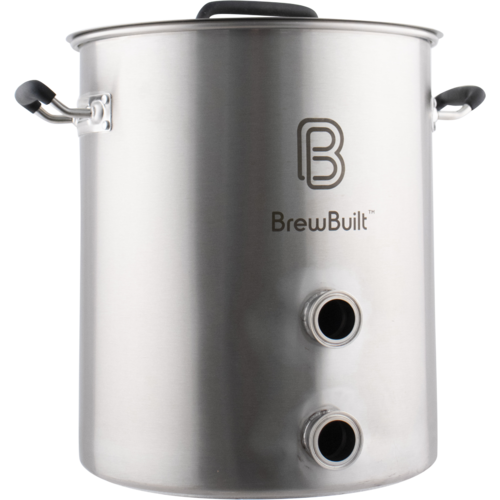
To begin with, the first thing we’ll need is a brew kettle. Unlike most other types of fermentation, beer requires being brought up to a boil for a time in order to sterilize it, use the alpha acids in the hops, and to help get a clear beer. Any kettle can work for a brew kettle, as long as it’s large. Most will also have a spigot put into them to allow you to get your wort (unfermented sweet barley water) into a fermentor more easily. Now, most beer recipes for homebrewing are written for a 5 gallon batch, that means if you want to do what’s called a full boil (the full volume of beer is boiled at once), you’ll need at least an 8.5 gallon kettle. Why the extra 3.5 gallons? Well, first you really don’t want a kettle full of boiling liquid full to the brim. Second, you’ll be boiling off water as you get the wort up to a boil, and during the time it’s boiling.
Then, you’ll need a wort chiller. While wort chillers are technically optional, you’d be hard pressed to find someone telling you they aren’t a worthy investment. You can make your own fairly easily as long as you have access to copper (or stainless steel) tubing, a way to bend it, and a way to get hose attachments on to it. Wort chillers are used to bring that boiling pot of wort down to a temperature where it’s safer to move it between vessels, and bring it down to a temperature where you can pitch your yeast.
But Nephilium, I’ve got this 4 gallon pot, and SWMBO (She Who Must Be Obeyed) has said that I can just put an ice bath in the tub to chill my beer. If you can’t do the full boil, you’ll be doing what’s called a partial boil. This means you’ll be boiling a partial amount of your total volume, then topping it off with water. Since the top off water doesn’t have to be boiling it will help with the cooling process. In general, if your tap water is safe to drink, you can just add it directly in for the top off, although that has a risk of infection. If you want to be safer, boil the water once, let it cool, and put it into a sanitized fermentor a day or so before.
Finally, we’ll talk about the two different basic types of malt extract. You can buy it either in a liquid form (LME) or in a dry form (DME). The liquid form will have the consistency of syrup, is slightly easier to mix into hot water, but will spoil faster and is harder to do measurements of. The dry form will have the consistency of powdered sugar, which means it’ll very easily coat things with a sticky mess, but can be kept around much longer as long as it’s kept in an air tight package and away from humidity.
So let’s go with a recipe. This is for a basic Saison, a style that is more descriptive than prescriptive. It is a traditional style brewed in France and Belgium at the time of the harvest, and was used to pay workers in the fields. I’d recommend following the recipe as written once, but then you can adjust it by adding rose hips and lavender, tart cherries, currants, peach juice, or whatever you would like.
Base Saison: 90 minute boil; Final volume 5 gallons
Ingredients:
2 lb. Wheat Dry Malt Extract
3 lb. Pilsen Dry Malt Extract
3 lb. Extra Light Dry Malt Extract
2 oz. Saaz hops
1 package Saison yeast (make sure it’s not a bacterial blend), I’ve had great results with the White Labs WLP565.
~7.25 gallons water (your amount may differ based on different boil off amounts)
Note: If you can’t find DME, you can substitute LME for it, just up the amounts by about 10%.
Method:
Prepare all of your ingredients, you’ll be separating the hops into two amounts 1.5 oz and .5 oz. Get your water up to a boil, then we’ll be adding the malt extract. Turn off the heat, add in the extract and stir. Then stir some more. Make sure the extract is mixed into the water. Get the water back up to a boil, and once it starts boiling put in 1.5 oz of the Saaz hops, and start your timer. 70 minutes into the boil (20 minutes before you turn off the heat) add in the last .5 oz of hops, and your wort chiller (but don’t start the water flow, we want to sanitize it). When your timer runs out, turn off the heat, and turn on the water flow for your wort chiller. You’ll need to move the wort chiller around every once in a while to help chill it down. It’ll take 20-30 minutes at least to chill your wort. If you want to pull a sample to check your gravity, it should be at about 1.060. At that point, move it to your fermentor and pitch your yeast. Let it ferment for 3-4 weeks, as the Saison yeasts can take some time to finish off, and the beer should finish up at around 1.005 (or lower). Saison yeasts are fairly heat tolerant, so you don’t need to worry so much about fermentation temperatures, but just keep the beer stable. After it completes fermenting (remember, 2 checks at least three days apart with the same gravity reading) bottle it, let it condition, and enjoy it.
Give me yesterday’s bread, this day’s flesh, and last year’s cider. (B. Franklin)
Most Americans have no idea what cider really is or its place in American history. The founding fathers brought apple trees and presses from England to the colonies. Everyone drank cider – morning, noon, and night – including children who drank watered-down cider. Apple trees and cider-making followed the settlers to the west. Nearly every homestead produced apples and cider.
The industrial revolution was the beginning of the end for cider consumption in America. As the population moved into cites, it became difficult to distribute cider in large enough quantities to serve the population. German immigrants in the mid-1800s brought beer-making processes and technologies to America that allowed for large-scale production of lagers. City-dwellers became beer drinkers, and cider-drinking was relegated to the country bumpkins. Prohibition killed what was left of cider production in the America. Orchards across the country ripped out cider apple trees and replaced them with eating apples and culinary apples. Now that cider is making a resurgence, orchards are frantically replanting cider apple varieties, but they are not keeping up with demand.
So, what is the difference between eating apples, culinary apples, and cider apples. Modern eating apples are basically just bags of sugar water with enough acid to keep them from being cloyingly sweet. They are crunchy and extremely juicy, which is desirable in an eating apple. But these juicy apples, actually have fairly low concentrations of sugar in the juice (typically about 10% sugar by weight). And, they don’t have much in the way of distinctive flavors. When you ferment away the sugar, you are left with modest alcohol levels (5% ABV) and bland flavors. Culinary apples are used for cooking or baking. Both tend to be high in acid. This provides sharpness to balance the sugar that is added during cooking and baking. Culinary apples can be used to make cider as they increase the acid level in the final product.
Cider apples generally fall into four categories based upon the relative levels of acid and tannin in each variety. If you are a wine geek, you understand that acid and tannin provide the structure and determine the mouthfeel of a wine. Acid and tannin serve the same purpose in cider. Acid makes your mouth water and conveys crispness in the product. Tannin provides bitterness and astringency (makes your mouth feel dry and sticky).
The most common cider apples were developed in England and France starting in the 1600s and continuing into the 1800s. The flesh of these apples is course and chewy, but it releases juice better than a modern apple when being pressed. The apples tend to be drier (less juicy) than modern apples, but they have much higher concentrations of sugar. Cider apples have complex, earthy flavors that are more intense than modern apples. These flavors carry over into the final product.
Sweet apples. These apples produce juice with very high concentrations of sugar – upwards of 19% sugar by weight (Brix). If fermented to dryness, this will produce alcohol levels to nearly 11% ABV.
Sharp apples. These apples produce juice with very high concentrations of malic acid, but relatively low levels of tannin. Sharp cider apples are similar to culinary apples, and some varieties of apples are used for both purposes.
Bittersweet apples. These apples produce high levels of both sugar and tannin. These apples also provide the classic cider flavor in traditional English and French ciders.
Bittersharp apples. These apples product high levels of both acid and tannin.
True cider apples are commonly referred to as “spitters”. They are either so tart or so tannic that you spit them out if you take a bite. One book on cider making from the 1800s stated that the best cider apples were so harsh the neighbors wouldn’t steal them and the pigs wouldn’t eat them when they fell on the ground.
Generally, cider is made from a blend of all four types of cider apples with roughly 40% from sweet apples, 30% from sharp apples, 20% from bittersweet apples, and 10% from bittersharp apples. The primary purpose of the sweet apple is to provide sugar for making alcohol. The sharp apples provide the acid for crispness, and the two types of bitter apples provide the tannin which completes the mouthfeel of the cider. A well-made cider is dry, acidic, and tannic. It has more in common with a dry red wine than the alcoholic soda pop that dominates the market right now.
It is rare for a cider to be made from a single variety of apple, but it can be done. Single-variety apple ciders typically use some variety of bittersharp apple which has all the necessary ingredients to make a balanced finish product – high sugar levels, high acid, high tannin levels, and complex flavors. Any single-variety apple cider you see on the market will be from a bittersharp apple (e.g., Kingston Black).
So, what are the options for a home cidermaker:
Become really good friends with someone that grows cider apples and will share them with you instead of selling all of them into the commercial marketplace (or keeping all of them for themselves).
Plant your own trees and wait (I planted in 2014. I should be getting apples soon).
Make do with alternatives from your local orchard.
Learn to make cyser (apple mead – subject of a future article).
Seriously, don’t go there. The soft cider that you buy in the grocery store or at your local orchard is generally a blend of juices from modern eating apples. It is sweet and barely tart. If you ferment it, the sweet will be gone, and what is left will be bland.
The rest of this article is focused on option 3) above – making do with the apples you can find in your local orchard.
This means buying fresh apples, crushing the apples, and pressing out the juice. You need apples that provide complex flavors.
Focus on heirloom varieties, particularly classic apple-pie apples – varieties that originated 100 years ago or more. These apples will be in the neglected part of the orchard. No one wants these apples, but the owner of the orchard hasn’t pulled them out yet (it’s not really that bad, but it has some resemblance to reality). Old apple varieties tend to have rich earthy flavors that are clearly “apple”, but still “different” from anything you are used to. Modern eating apples are pale in comparison to heirlooms. The texture of these apples is weird. They do not crunch. They are chewy and even a bit rubbery. It is off-putting if you grew up on red delicious and have moved on to Galas or Honeycrisp.
The next apples you want are crabapples. Really. Every commercial orchard has crabapples. These apples produce vast amounts of pollen and are in bloom for a long time. Thus, they are valued as great pollinators in orchards. But orchards will grow crabs that are useful for other purposes as well – mostly for making jellies and jams. Some crab apples are sweet, but many are very high in acid.
The good news is you can make great cider without access to classic cider apples.
The bad news is that not all apples blend well together. The first year I got serious about making cider, I worked with 15 different varieties of apples. In the end, I made 6 different blends. Two were great (I kept those for myself); two were good (I gave those to good friends); and two were OK (those became party booze – make it sweet; put it in a keg; the drunks love it). A lot of experimentation is required. The best blend that I made included roughly equal parts of cider made from Whitney Crab (sweet yellow crabapple), Spartan (child of McIntosh, red with white flesh and wine-like flavor), Rhode Island Greening (one of the two oldest varieties in America, green with yellowish flesh, outstanding apple-pie apple), and Dolgo Crab (red with white flesh, shockingly sour, but actually has the highest sugar concentration of all the apples used that year).
To make things more complicated, apples harvest anywhere from early August to late October. The apples you most care about don’t harvest at the same time. Crabs typically harvest in early August and heirloom apple-pie apples harvest in October. This means you make cider from individual varieties and then blend them some time later.
Now to walk through the process of making of a single batch of Dolgo Crab Apple Cider.
You will need two crucial pieces of equipment – something to crush apples and something to press the juice out of the crushed apples. There are many different configurations of crushers and presses. Apple crushers have fingers that shred apples and grinders have blades that do the same. It’s a bad idea to run your hand through either one of them. Vertical basket presses are the lowest cost style of press to start with and come in two basic configurations – a grape/wine press or an apple/cider press. Either will do the job. They look similar but are different. The T-handled apple press can be used without nailing it to the ground. The wine press must be fixed in place or it will turn in circles as you crank on the handle (foreshadowing amusing photos in the upcoming wine article).
Apple Crusher in Home-Built Stand
Whether you use a crusher or a grinder, the basic process is to put apples in the hopper and turn the crank. I have a hand-cranked crusher. With a little ingenuity, this can be converted into a motorized crusher. The next one I buy, when the orchard is producing, will be motorized.
Dolgo Crab Apples in the Hopper
Dolgo crab apples are about the size of a large cherry. They run through the crusher with ease. The fingers on the crusher are quite small. So, any apple bigger than these crab apples needs to be cut into halves or quarters depending on how big they are. While this seems like extra work, it means you get a chance to examine each apple and discard any that show signs of spoilage.
Dolgo Crab Apples after Crushing
When you turn the crank, the fingers inside the crusher shred the apples. The shredded apples fall out of the bottom of the crusher and into a bucket. From here, the apples go into the press. There is one serious problem to contend with when using a vertical basket. The juice must flow from the apples in the middle of the basket to the outside where gaps between the slats allow juice to exit the basket. Unfortunately, crushed apples (and grapes for that matter) are basically slimy little pieces of fruit covered in sticky juice. When you squeeze two fruit pieces together, they form a water-tight seal. So, juice that is in the middle of the basket can’t get out. The solution to this problem is to mix rice hulls into the crushed fruit (all-grain brewers will be familiar with this trick). The rice hulls act like little straws providing channels between the pieces of fruit so that juice can flow between the pieces even under high pressure.
Standard Vertical Basket Apple Press
A couple of important notes. First, all apples oxidize; some faster than others. If you cut an apple in half and leave it on the counter, the exposed flesh will turn brown. If you crush and press fresh apples, the juice will turn brown as you watch. This is concerning to a beginning cidermaker, because, in almost all cases in brewing, oxidation is a bad thing. However, in cider, oxidation is a key part of the flavor profile of the finished product. And much of the browning will be reversed during fermentation thus yielding the classic yellow-gold color of cider. Note that heat also produces browning (ask the food geeks at Glibs about the Maillard reaction). So, pasteurization of apple juice can contribute to browning. But the browning due to pasteurization does not produce desirable flavors and will not be reversed during fermentation.
Second, I learned the hard way to line the wooden basked with screening material (I now buy screen door repair fabric at the hardware store). If you don’t line the basket, pulp and seed will be squeezed into the spaces between the wooden slats. This is a pain to clean up afterward.
Primary Fermentation
One of the nifty features of Dolgo crab apples is the red pigment in the skins will rub off on your hands. It is also highly soluble. This results in pink colored juice running out of the press. I sliced the skins off a dozen or so apples and put them into the primary to enhance the color. Normally, I add oak cubes to secondary fermentation, but for this batch, I added medium toast French oak cubes in the primary. The cider was fermented with an English ale yeast (Wyeast 1318 London III). Note the primary is a Rubbermaid Brute which has a loose-fitting lid. There is no need for an airtight seal during primary fermentation.
Secondary Fermentation
After a week or so in the primary, the cider was racked to a 6 ½ gallon glass carboy. An airtight seal is provided by a rubber bung with a S-shaped airlock. It appears that I carried over the oak cubes from the primary because a week really isn’t long enough exposure for cubes. This is the time when a bacterial culture is introduced to the product to perform malo-lactic fermentation – the conversion of malic acid to lactic acid (the acid found in milk). This fermentation takes two or three months.
At some point, this batch of Dolgo cider was mixed with other batches of cider. Fining agents were used to clarify the blended cider (I really like Super Kleer). After it cleared, it was bottle conditioned by adding 1 ounce of raw cane sugar per gallon of product and bottling in beer bottles. This resulted in a sparkling, semi-dry cider.
Sometimes I keg and force carbonate. This allows the cider to be back sweetened and stabilized with potassium sorbate. The resulting product can be semi-sweet or sweet depending upon the target audience for the kegged product (party booze generally needs to be sweet, because there aren’t enough educated cider drinkers out there).
There are other major issues to consider.
Brewers will generally work with three types of acid in fruits: citric acid from citrus fruits (and many types of berries); tartaric acid from grapes; and malic acid from apples (and also many types of berries and grapes). For any given acid concentration, malic acid has the harshest flavor and mouth feel. Lactic acid has a much smoother flavor and mouth feel. Converting the malic acid in cider to lactic acid makes the product softer and smoother even at high acid levels (this is commonly done in a lot of red wine styles as well). So, malo-lactic fermentation provides great benefits to cider, but it comes with a significant risk.
The bacteria that convert malic acid to lactic acid are highly susceptible to potassium metabisulfite (sulfite) which is used to protect against spoilage organisms like Brettanomyces. And Brett lives everywhere. It is on the skins of fresh fruit. When you crush and press fresh fruit to make cider or wine, it is in the juice. It is essential to add sulfite to the fresh juice to kill spoilage organisms at the start of fermentation. Sulfite also works to prevent or reverse oxidation. When you put small amounts of sulfite into highly oxidized apple juice, it will chemically interact with the oxygen and become neutralized (read a book on wine chemistry if you care about the details). Thus, the amount of free sulfite in the juice drops quickly (this is complicated and could be the topic on a stand-alone article).
The goal is to introduce enough sulfite into the fresh juice to kill the spoilage organisms present on the fresh fruit, but at a low enough rate that there will be no free sulfite left by the end of primary fermentation. You can then rack into a secondary, pitch malo-lactic bacteria, and wait for 2 or 3 months for the bacteria to work while hoping your sanitation was good enough so that you didn’t introduce any new spoilage organisms going from primary to secondary. And the mathematical formula for getting that right is – I have no idea.
My process, which has worked so far, is to prepare a 1-quart spray bottle with a solution of 1 tsp of sulfite and 1 tsp of citric acid (sulfite works best in high acid solutions). I press juice into a small bucket. When the small bucket is full, I pour it into a large bucket and spray the juice with a couple of squirts of sulfite solution. Then I cover the large bucket with a lid while I continue to press juice. Eventually, all the juice is poured into a primary fermenter which was sanitized by spraying it down with the same sulfite solution. This seems to get enough sulfite into the juice to prevent spoilage while not carrying enough sulfite into the secondary to inhibit malo-lactic fermentation. After a couple of months of malo-lactic fermentation, I add about ¼ tsp of sulfite to each carboy. This will prevent spoilage during long-term aging.
So we’ve made cider and wine, let’s move on to what is commonly claimed to be the oldest fermented beverage in the world, Mead. What is mead? Mead is a fermented beverage where the majority of the sugars are coming from honey. Honey is naturally antibiotic, and is unique in that it doesn’t spoil (while it will crystallize, it stays edible). So, since we want the yeast to survive, we’re going to need to water it down. There’s several different paths you can go to add water to the honey, each with different drawbacks:
Boiling – Get water up to boiling, then add in honey. This runs the risk of scorching the honey, as well as driving off aromatics, but will ensure that the honey is equally mixed into the water. You’ll also need a way to cool the must before putting it into a fermentor and pitching yeast.
Hot water – Get water up to ~160 F, and mix in the honey. This will help the honey dissolve, but will drive off some aromatics. This also may require some method of cooling before putting it in a fermentor and pitching yeast.
Cold water – Mix water with honey. This will require more mixing and more stirring to make sure the honey is fully dissolved, has the highest risk of infection (still not a high one), but preserves the honey aromatics the best.
You won’t need any new equipment for making mead, but you may need a couple of additional ingredients. Yeast nutrients and yeast energizer. Fruit (and barley) have the compounds that yeast need naturally occurring in them, honey does not. While you can make mead without yeast nutrients and energizer, using both will help the yeast do well and convert the sugars into alcohol. With the cost of honey, it’s well worth the extra couple of dollars to ensure a good ferment.
There’s an ongoing debate in most of the mead forums about the best way to use yeast nutrients, with everyone certain that their way is the best (sound familiar?). You can either add it all in at the beginning of fermentation, you can do step additions (add 25% at the beginning, then an additional 25% each following week).
For those who think there’s too many different styles in beer, there’s a large list of different types of mead. For those of you here, I’m guessing the most popular will be:
Braggot – A mead made with malted barley and honey
Capsicumel – A mead flavored with chili peppers
Cyser – A mead that users cider instead of water to dilute the honey
Hydromel – A light/low alcohol mead (think around 5% ABV)
Pyment – A mead that uses grape juice instead of water to dilute the honey
Sack mead – A strong mead with more honey then a standard mead (to get to ~15% ABV)
For your standard mead, plan on between 2.5-4 lbs.of honey per gallon. Adjust as you wish for higher/lower ABV, and based on if you’re using a fruit juice to dilute (which will have sugar of its own). Be aware of the different types of honey, and realize that they will have different flavors when the fermentation is done. I recommend starting with small batches until you find something you like, then ramping that up to a higher volume.
Now for the recipe of a mead I made that came out really well, and should be ready for your next Thanksgiving. Yes, I’m talking about the one in 2019, most meads do well with a lot of mellowing and aging on them. Since it’s a 1 gallon batch, I generally bottle this into about ten 375 ml bottles instead of risking only getting four and some change into 750 ml bottles (remember that there’s sediment you don’t want in your bottles).
Cranberry Mead (1 gallon batch):
1.5 lbs Cranberries – Reduced to juice (or just buy cranberry juice)
3.5 lbs honey
Water to top off to one gallon
Blend the cranberries (or buy juice) and run the resultant liquid through a filter. Mix that with 3.5 lbs. honey and top off with cold water to get to one gallon. Shake it up (which will both aerate it, and make sure that the honey is mixed in with everything else) until the honey is dissolved. Figure out what nutrient schedule you want to use, and pitch a white wine yeast. Fermentation will take at least a month, so be patient with this one. After fermentation is done, wait for it do drop clear (sediment will settle at the bottom of the carboy), then bottle it up.
Time to move up the level of difficulty to making something that has a couple more steps… wine. While you can harvest your own grapes, and crush them yourself, in the modern day it’s usually easier to buy a wine kit. You can find kits for making 1 gallon batches or 6 gallon batches. These kits will come with everything you need to make a batch of wine (including a dry yeast packet). The kits will come with a plastic bladder full of grape juice concentrate, which you’ll put into a bucket (or carboy), and mix with warm water to get up to your total volume. Then you stir, and stir some more, and keep stirring to make sure that everything is mixed well. Your kit may come with some packets of items to be added in at this time (wood chips are common), follow your kit instructions here. At this point, you can take a sample and measure your gravity (if you want to know the starting gravity), check the temperature (to make sure the yeast won’t die), and pitch the yeast.
After a couple of weeks, the primary fermentation is done. At this point we want to minimize contact with oxygen, so we’ll move it from the bucket into a 6 gallon carboy. Use a sanitized siphon to move it over, and add any additions that your wine kit say to add. Then put on an airlock, and let it sit for another couple of weeks. Once fermentation is done (check this with your hydrometer), the final gravity will generally be below 1.000.
Now, fermentation should be complete, but we’re not done yet. Next we need to clarify it and degas it. Yeast breaks down sugar into alcohol and CO2, depending on the ambient temperature, some amount of that CO2 will have been absorbed by your wine. Most styles of wine do not have carbonation, so we need to do something to get that gas out. You can either take up more stirring (over 5 minutes, go ahead, count it out) or you can use a degassing wand. These labor saving tools go into your drill, and make degassing much easier. For clarifying, your kit will most likely have a couple of packets that need to be added in a certain order. Follow the instructions (or if you’re really patient, you can wait and the wine will eventually drop clear) with your kit (side note for those who are vegetarian, keep in mind the clarifying agent is where you may find animal products).
Back to waiting for a couple of weeks (or as your kit says) for the clarifying agents to work their magic. Now, you just need to carefully siphon of the wine into bottles (without stirring up that layer of sediment at the bottom), and cork or cap them. If you corked them, stand them up for 3-4 days for the corks to seal, then you can store them on their side. At this point, you’re done and will have around 30 bottles of wine (assuming a 6 gallon batch and standard 750 mL bottles).
Sorry for the lack of recipes this time around. The only non-kit wine I’ve made is beyond the level that I’ve gotten to in these tales. But if you want to follow it, you can find it here.
There are many roads to success in brewing. I try to avoid telling people how they should brew. So, I talk about how I brew, and let others decide whether or not my methods have any value to them.
Generally speaking, the universal recipe for making alcohol is 1) dissolve sugar in water; 2) add yeast; 3) wait for the yeast to work; and then 4) wait some more for the resulting product to be palatable. That’s it. We’re done here.
Well, I suppose there are a few more things to chat about. Firstly, there are many ways to make or acquire sugar-water. You can dilute honey with water. You can extract juice from fruit. You can mash malted grain in hot water. You can combine all of those options. Secondly, you can select from different kinds of yeast to improve your odds of getting a pleasant flavor in the final product depending upon what your source of sugar was. Thirdly, you can add all sorts of other ingredients to alter the flavor of the product at various stages in the production of that product. These include flowers, spices, herbs, and charred/toasted wood. And we’re not going to talk about any of those things today (Nephilium is taking the lead on those topics).
Today, we are going to focus on step 3) waiting and step 4) waiting – otherwise known as fermentation and aging. Given the products I make, steps 3 and 4 are pretty much the same regardless of which primary fermentable sugar I am working with whether it be honey for making mead, fruit juice for making cider or wine, or malt for making sour ales. This is because I ferment everything at pretty much the same temperature and age everything for pretty much the same amount of time (at this point I only make sour ales which can benefit from months even years of aging, so no young hoppy beers from me). This means that I have lots of product sitting around in secondaries for long periods of time – typically 12 months (and sometimes up to 36 months) before I package it up. This takes space – lots of it. And it requires good climate control.
My brewing room is roughly 15 feet by 15 feet in size. Three of the walls are part of the poured concrete foundation for the house. The last wall is a standard stud wall that I built to isolate the brewing room from the rest of the basement. There is no ductwork bringing heating or cooling into the room. Other than the open doorway, there is no significant flow of air in to out of the room. So, the temperature in the room is extremely stable and there is basically no temperature change over any given 24-hour period (this is probably true for any given week).
The temperature in the room is effectively controlled by the temperature of the soil outside the foundation walls. The soil temperature lags the seasons by about 3 months. So, the coldest temperature in the brewing room is typically late March or early April when the temperature drops to about 62° F (although it got down to 58° F after one particularly brutal winter). Conversely, the warmest temperatures occur in late September or early October when the room reaches about 68° F.
That means I do all fermentation and aging between 62° and 68° degrees. I focus on cool, slow fermentation, and I think this works great for the things that I make – mead, cider, wine, and sour ales. However; this is not ideal for other types of products such as lagers that need to be fermented cooler or saisons that need to be fermented warmer. But I rarely drink those products, and I never make them. When I do want one, there are many fine drinking establishments in the area that can provide one at a reasonable price.
But a room with temperature control isn’t enough. We need structures – tables, counters, shelves – to store primaries and secondaries that are in use, primaries and secondaries that are not in use, tools, ingredients, and other assorted sundries. My room has built-in shelving around the entire room. Every linear foot of wall (excluding the door) has shelves.
The middle shelf is a bit higher that a standard kitchen counter. This is where the most of primaries and secondaries are stored during fermentation and aging. Occasionally, I work with primaries that are too big for the shelves (note the 44-gallon Rubbermaid Brute that I am starting a batch of pyment in – to be discussed in a future post.). The middle shelf is wide enough to hold a 9-gallon demijon (not shown in the picture). The corners can hold a 14-gallon demijon.
The bottom shelf is somewhat narrower than the middle shelf. This keeps me from banging my shins when I am lifting primaries and secondaries from the floor and then placing them onto the middle shelf or moving them from one place to another. I generally keep heavy stuff on the bottom shelf, like the cases of honey in lower left of this picture (six 5-lb jars per case). There is an upper shelf which is the same width as the middle shelf. I keep empty carboys and other not-so-heavy items up there.
I long ago lost track of how may primaries and secondaries I have. I sold off a dozen 6-gallon carboys to my brewing friends several years ago. I have since acquired both bigger and smaller containers to fill that hole in my heart.
To the best of my recollection, I have a dozen ½-gallon jugs; two dozen 1-gallon jugs; half a dozen 1.3-gallon demijons; half a dozen 2.6-gallon demijons; half a dozen 3-gallon carboys; a dozen 5-gallon carboys; a dozen 6-gallon carboys; a dozen 6.5-gallon carboys; three or four 9-gallon demijons; and three or four 14-gallon demijons.
I generally use plastic for primaries. I have converted 2.5-gallon and 6.5-gallon screw-top pails into primaries. Basically, you drill a ½ hole in the screw-top and install a replacement rubber grommet into the hole. This allows the use of a standard airlock. I have half a dozen of each of these sizes. I have about half a dozen standard 7.9-gallon wine pails from the home brew shop. And I use a lot of Rubbermaid Brute garbage cans. They are food grade plastic and come in a variety of colors. I use white so they are easier to see if they are clean. As far as Brutes go, I have 10-gallon, 20-gallon, 32-gallon, and 44-gallon pails.
I generally use the small containers (plastic primaries and glass secondaries) for experimental batches. I have done yeast trials and oak trials over the years to see how these affect the product. I also do sets of small batches to make samples for teaching classes. I use the mid-size containers for most of my brewing (5 to 6.5 gallons of finished product). I use the large containers for bulk production – usually wine – when I am working with fresh seasonal fruit – mostly local grapes.
I also use the large Brutes for blending products such as ciders made from 3 to 5 different varieties of apples. The apples get harvested at different times in the season (anywhere from early August to late October), so the initial fermentation is done for each variety separately. Later in the winter, multiple batches of single-variety cider will get blended in a large Brute and then pumped into mid-sized or large-sized glass secondaries (carboys or demijons) for additional aging before packaging.
In the beginning, when I started making mead, I was paranoid about using air-tight primaries and airlocks. All the homebrew books and brew shops tell you that you need them. Then I started making wine with some friends. When you make red wine, you open the primary two or three times every day to punch down the cap (to be covered in detail in future posts, but you are pushing the grapes skins down into the wine below). You learn pretty quickly that as long as the fermentation is going strong, all you need is a loose cover to keep the bugs and dirt out. I have been to pro wineries where wine was fermenting in steel tanks with a blue plastic tarp pulled over the top.
I continue to use air-tight primaries and airlocks when I am working with small to mid-sized batches. This allows me to lift and move the primaries without worrying about spilling. But when I work on large batches with lots of whole fruit, I use the Brutes with loose fitting lids. The key point is to rack into an airtight secondary when you’ve extracted what you want from the whole fruit and fermentation is slowing down. Note, that I recently acquired the 1.3-gallon and 2.6-gallon demijons (listed above) which have very wide openings so that I could do small experimental batches with whole fruit. This allows me to open the demijon and punch down the fruit during the initial fermentation and to reach in and clean the demijon after the product is racked to a secondary.
One of the tricky issues is deciding when fermentation is done. It seems like an easy thing to check. The airlock stops bubbling or the hydrometer reading stays the same for a while. But rubber bungs and airlocks don’t always maintain a perfect seal. So very slow fermentation may not move the bubbles in the airlock. And the specific gravity of the product may change by less then your ability to detect it on a standard hydrometer. So, I have discovered an alternate way to tell.
It’s not Done
It’s Still not Done.
It’s Finally Done.
The key is to watch the very top of the product in a clear carboy or jug. Even when it is fermenting very slowly (too slow to notice activity in the airlock), you can still see tiny little bubbles running up the outside of the carboy or jug and joining a ring of bubbles at the top. When there is a continuous ring of bubbles, the product is still fermenting quite a bit. When there are only a handful of bubbles, the product is nearly done. When there no bubbles, there is no fermentation going on in the product.
If you are making a carbonated beverage and are going to bottle condition or keg, a ring of bubbles on the top of the product is not a problem. In fact, it indicates you have healthy, active yeast to support bottle conditioning. But if you are going bottle still products in a standard bottle with a cork, you need to wait till it is finally done. If you are going to continue aging the product in a carboy or jug, you can replace the bung and airlock with an airtight screw cap or rubber carboy cap as appropriate for the type of container.
I try to rack my products a few times as possible. My general schedule is to leave the product in the primary fermenter for 2 to 4 weeks, depending up what it is and how strongly it is fermenting. After primary fermentation is complete, I will the rack into a secondary and leave the product alone for 2 to 4 months. It is during this time frame that I will do malo-lactic fermentation if the product requires it (typically for ciders or wine). This is also the time when I will use oak cubes if it is part of the plan for that product. After this, I will rack it into another secondary (or tertiary, since it the third container). Here it will sit for half a year or several years depending up what product it is. Note that there is no fermentation going at this stage. So, there is no dead yeast piling up on the bottom. Therefore, autolysis is not an issue, and I don’t worry about the product sitting on whatever sediment builds up during this phase of aging.
When aging is done, it is time to package the product. If you want a carbonated beverage, you can bottle condition (fermentation in a sealed bottle) or force carbonate in a keg. If you bottle condition, the product must be put into a bottle that is intended to handle the pressure – beer bottles or champagne bottles. Standard wine bottles can explode if fermentation occurs in the bottle. If you want a still product, it can be put into pretty much any kind of bottle and sealed with a cork, a cap, or a swing top. Specific information on different ways of packaging products will be provided in subsequent articles on cider, wine, mead, and beer.
Let’s move onto something simple and seasonal. Cider. Cider is pretty easy to make, it requires cider (or fruit juice) and yeast. To make hard cider, find cider you like to drink (find ones without any preservatives other than ascorbic acid), and add yeast (this will happen naturally if you let it sit in an area that’s about 65 F but it’ll taste better if you select the yeast and pitch it). I’d recommend buying a batch of yeast from your local homebrew store (it’ll cost you about $8 assuming average prices). Put the yeast into your cider, slap on a sanitized airlock (you remember we talked about both of these things, right?), and let it sit for a couple of weeks. Keep in mind that everything that touches your cider needs to be sanitized, unless you want to make sours, which will be a much longer and involved series of articles.
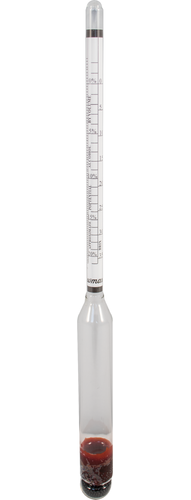
How will you know when it’s done? Time for the next pieces of homebrewing equipment you’ll need. A hydrometer and a wine thief. The wine thief will be used to pull a sample of your fermented cider to test it with the hydrometer (remember to sanitize it). The hydrometer is a device that is used to measure the specific gravity of a liquid. Pure water has a specific gravity of 1.00. Alcohol has a lower gravity (about 0.78), and sugar adds to the specific gravity of a liquid. So those OG and FG written on brewery stats, and on the sides of some of your bottles, are just a measurement of the Original Gravity (measure of how much sugar was in to start) and the Final Gravity (measure of the specific gravity after fermentation). Keep in mind that hydrometers are calibrated to be used at a specific temperature, and if your liquid is a different temperature, you’ll have to adjust that. There’s lots of calculators online to do that math for you. With both the OG and FG of your beverage, you can figure out the percentage of alcohol. If (and only if) you sanitized your hydrometer and sample tube, you can pour the sample but it does increase the risk of infection. Most people just drink the sample (or pour it out).
But back to finding out when your cider is done fermenting, what you want are two readings, at least three days apart with the same gravity reading. Do not bottle without verifying that fermentation is done. Bottle bombs are a real thing, and can be very dangerous. Do not assume fermentation is done because you don’t see any airlock activity or bubbling in the cider.
If you want it to be carbonated, then you’ll need to add sugar at this point (here is a decent calculator, but assume just under an ounce a gallon). Take your sugar, and mix it with boiling water. Then add it to the cider (stirring with a sanitized spoon) and then bottle it. To bottle, you’ll need a siphon (points at the equipment article), and a bottling wand. Bottling wands are a tube with a spring loaded stopper at the bottom. Push it down, liquid flows out. Lift it off the bottom, the bottom locks up. If you’re using swing tops, mix your sugar into your fermented cider (with a sanitized spoon or your siphon), and then bottle. If you need to cap or cork your bottles, I’d recommend filling them all before doing that, or use an orphan assistant for the capping/corking. After that, let them sit for about 3-4 weeks in a room that’s close to 65 F so they condition up (fancy term for letting the yeast eat the extra sugar to make carbonation). Then put them in the fridge and enjoy.
Keep in mind, if you like your first batch, you can easily modify your second batch. Add simple things like ginger, cinnamon, cloves, or whatever. The longer you let the cider sit on the spices, the more flavor it’ll pick up. For your first attempt, I’d recommend no more than 1 tbsp. per gallon, it’s always easier to add more spice, or let it sit on the spices longer, but you can’t easily take the flavor out.
After the previous article from Leap regarding putting a handle on a knife blank, and some ongoing discussions in the comments, I wondered if it was within my capacity to do likewise. I asked a lot of questions of the Glibertariat, trying to harvest knowledge for the project. The first big problem I saw was that the example from the original article was a single-edged hidden tang blade. Since I have heaps of utility knives, I am making something for a more artistic goal. Aesthetically, I like the shape of a double-edged blade. Structurally, I prefer a fully tang – which is where the shape of the handle and the shape of the metal within the handle are identical. Unfortunately, the unsharpened knife blank I found had a tang of a shape I didn’t like and would be too small to be comfortable in my oversized mitts.
So, I sank a lot of disposable income into buying tools and parts. In terms of cash outlay, it would have been cheaper to buy a knife. But part of that was because my toolbox was geared towards the problems I’ve had to deal with. But tools are a capital investment, and if I keep doing this as a hobby, the amortized costs would head towards negligable. But, that is neither here nor there. The question is, could I learn enough to make a decent piece?
First off, I discarded the idea of making the blade myself. That was just way too far out of my skill reach at the moment. So I’ll be trying to put a handle on the blank. This process stretched out over a couple of days in the evening after the day job.
Day 1 – The blank is here
The first box
While I technically started the project when I ordered the parts, but I couldn’t do anything until the parts arrived. The pieces that showed up in that first box were the blade blank proper, the handle scales and four Corby bolts. The blade blank is hardened high carbon steel, but not sharpened. This is good, because it’s easier to handle while working on it. Plus, without an edge, it’s not a dagger, it’s a letter opener. Thus this is not an elaborate confession to weapons possession. The handle scales are Resin Ivory, basically an imitation Ivory made of synthetic materials. So the only piece of hardware that might need elaboration are the Corboy bolts. Traditionally, handles would be held with solid pins. There are a lot of downsides to that, however. You either don’t have a mechanical lock, or you have to manually peen the ends. Corby bolts are one of several options that use threaded shafts to bridge two thicker ends. These provide a more secure connection, which is good for newbies like me. The trade-off is that the holes need to be coutnersunk. Luckily, I have a standing drill press, and know how to work with it.
So, after excitedly telling the Glibertariat that the parts were here, I set about assembling the remaining materials. Because the tang is smaller than my intended handle, I need to fill in the rest of the space around the tang on the same layer. If I was masochistic, I could try to cut out spaces in the resin ivory to rest the tang in. I’m not. I’ll be adding some spacers in which it is easier to cut the shape. The material I decided to use was leather. I have stores of leather scrap from various crafting projects. I picked some brown oil-tanned scraps and a bright red suede split. The oil-tanned leather I never got around to using before, as it was stiffer than I’d expected. The red pigskin suede I’d used to line my toolbox. Only the harder oil-tanned leathers would be cut to shape around the tang. The suede was too thin and elastic, and is there for decorative purposes.
Parts stacked and trimmed to size, I prepared to drill the holes. Since there were already holes in the tang, I decided to use that as my guide. Taped together to keep them from moving around, I brought the lot to my drill press. Resin ivory has an… interesting aroma when being worked. It wasn’t strong enough to drive me away, but something to note if you decide to use the material in one of your projects. On the plus side, it is easy to work. On the down side, it is easy to work. With one slip while drilling the last countersink, I suddenly had a three-sixteenths inch hole all the way through the scale instead of halfway through as intended. So, I was going to have a pin instead of a bolt holding that spot. Oh well, I’ll still have two bolts.
Putting holes in things
Holes drilled, it did my first test fit. It was a real pain to work corby bolts with one screwdriver. This is because they’re intended to be driven by two screwdrivers at once. Still, I got it together and it seemed to work. I chose not to do any more work that day, since it was getting late, and the only task I could do was trimming the oil-tanned leather.
Day 2 – The Epoxy
After I ordered the blank, I realized I’d ordered four Corby bolts for a blank with five holes. After some thought, I realized I didn’t want to have two countersinks on the holes by the base of the blade. That would seriously weaken the resin ivory. These holes are there for a bolster to be attached. I decided to pin them. I didn’t have copper pin stock, but that is easily rectified with a visit to the internet. My pin rod and epoxy arrived a day ahead of schedule, and one day after I started the project. So I set about getting ready to assemble. I trimmed the oil-tanned leather to shape with hobby knives I owned for other expensive passtimes *cough*Warhammer*cough*. Once I had these blanks, I did another test fit of the layers and tried to fit the pin rod through. Here I was reminded of the aforementioned elasticity of the suede. The drill bit didn’t punch a full eighth-inch hole through the material. So I got out my leather punch. It is basically a hole punch like those used for paper, only designed to put holes in leather. I punched out a set of larger holes in the suede to stop snagging things.
Despite using the holes in the tang as a guide for drilling, the pins didn’t fit, even without the suede. I am tempted to blame mystery causes, but the truth is, it’s my fault. My countersinks were not perfectly centered on the holes, so the corby bolts shifted the scales ever so slightly off. If you remember yesterday, The resin ivory is easy to work. A round file of small enough diameter shaved off enough resin to fit the pin stock through. There was a lot of grumbling through this stage. But it was better to find out these problems before I started with the epoxy. I was still within my margin of error for never having done this before. It could still be brought together. However, the dry-fitting told be something very important – I wanted to make sure I was in clothing I could afford to lose when I started working with the resin. The lack of a table-mounted vice meant the operation of the Corby bolts was awkward, even with two little screwdrivers. So the odds were, I’d spill on myself.
Having changed, cut two pins off the main pin stock, andassembled my stuff, I decided I hadn’t taken enough precautions. I grabbed a giant trash bag to use as a drop cloth, and a pair of resin-mixing gloves. Okay, they’re disposable nitrile kitchen gloves. Mixing up a quarter ounce each of resin and hardener, I began my assembly, spreading epoxy on before each layer was placed, and coating the pins. Suede is a very porous material, and soaked up epoxy into its structure. After hardening, it should be a composite material akin to fiberglass or carbon fiber rod, only with organic fibers. The oil-tanned leather is less porous, and didn’t soak in as much, but still absorbed enough to have a similar effect. When initially thinking about the process before any of the dry-fits, I wondered if I needed loc-tite, or similar thread glue. But the dry fits told me there was zero chance I wasn’t going to get epoxy in the threads of the Corby bolts. This is not an issue, since I want the handle as solid as I can get it.
Pins set, layers epoxied, I noticed a problem. The countersink that went all the way through resulted in the end separating, as it didn’t have the mechanical pressure of the other two bolts, and the leather is… squishy. Fortunately, I picked half hour epoxy, so I had time to grab some scrap plastic and a set of clamps. Fitting three clamps about the handle, I got everything back to the proper shape. Clamped up, I left it to cure overnight.
Sure the heaps of plastic look bad, but it’s better than getting epoxy all over the room.
Day 3 – Daily Grind
I get home from the day job, decide to remove the clamps and peel off the plastic. Luckily, the plastic didn’t adhere to the epoxy, but the last clamp was stubborn about letting go. At first I thought I’d ripped the plastic and epoxy had seeped through. Nope, once I detatched it, the plastic was intact. But there was this big round dent. I was mortified, thinking I’d overtightened the clamp and crushed my way into the resin ivory. Finishing the plastic removal I inspected the damage. It was not so dire as my fears. I had so much epoxy that had been pressed out of the middle of the handle that it had pooled around the clamp and shaped to the bevel of the pad. This was why it was so difficult to get the clamp off. Relieved, I set about getting ready to drind down the pins and take off the excess epoxy. For this, I definately wanted a face mask. I don’t care whether or not California thinks it causes cancer, I just don’t want to be breathing that stuff in when I reduce it to dust.
Not structual Damage
And it occurs to me at that moment that while I do own a belt grinder, it was still in the box. So I went and opened the Amazon box. Unsurprisingly, there was another box inside, unbranded. So after disentangling this box from the Amazon box, I open it – and find another box inside. They had sent me a Matroyshka Doll in box form. Eventually, I find not more cardboard, but styrafoam. Prying it off, I unveiled a lovely piece of hardware, which I didn’t have a place for. it ended up on top of my table saw. (Fortunately, the sawblade retracts below the level of the table). Finding a breath mask and ear protection, I set about cleaning up the pins and bolts.
Grinder all set up, I learned a few things, some of which I already knew to some extent. First, when you abraid off material, what is left heats up. Second, copper is an excellent conductor of heat. So, if you were, for example, grinding down a copper Corby bolt and hand your finger on the other end, you’re going to feel it. Third, Resin Ivory grinds easily. Fourth, eoxy-impregnated leather does not. Fifth, a belt grinder is a versitile tool that can do wonders in the hands of a skilled user. Sixth, I am not skilled with a belt grinder. Seventh, grinding produces an epic crapload of dust. I was so glad I put on a respirator mask. My first grind was pretty rough.
After the first grind
I realized that the layout of one of the grinder components was preventing me from doing what I needed to in order to have the shape I was looking for. I needed to adjust the location of a guard behind the belt proper. Removing the operation interlock from the power switch I took the side of the machine off. There’s no one to flick the switch, but I was about to stick my hands inside it. I saw that this white enamelled metal piece was just being held in with a paur of bolts which an allen key could operate. After loosening one and accidentally tighening the other, I got both loose and started to lower the guard. At which point I found that it was not white. It was dark blue. There was just so much resin dust coating the surface that I could no longer tell.
The guard lowered slightly, I got more shape into the handle. I noticed that the composite leather material was by far the harder one to grind. The resin ivory essentially disappeared when subjected to the belt, so all of the resistance preventing me from absolutely wrecking the handle came from that leather/epoxy core. So what had been intended as a decorative element became a key structural one. I’m okay with that. Especially since I’d been expecting the resin ivory to be stronger. After the second grind, it was pretty good. I did have a problem. The respirator mask so essential to not breathing in the particulates also impeded the airflow to my lungs. So, I had to step away from the room and take the mask off.
Part of me went, that is a pretty good shape for a first ever attempt. But there was another opinion rattling around in my head. It said there were things I could fix, even with my skill level. Flaws that I could remove. So, I got back in there and went for a third grind. I cleaned up a lot of the protests I had, making more refined handle than I’d had. It was still clunky and crude, and I did some hand filing and sanding to deal with areas where the grinder would do more harm than good. I even tried to polish it with beeswax. Only to very quickly discover I had no idea what I was doing. I sanded the wax off and went back to refining it with abrasives.
After the Third Grind
Finally, I had something that felt good in my hand. It wouldn’t win any beauty contests, but the handle is in one piece, there are no massive faults, and it will hold up. There was just one problem. There is no edge on the thing.
You all know my preferences on firearms and so forth by now. I have plenty more to say on that score, but just to change things up, I thought I’d share a tale or two from my younger years, when I was a little tad learning my way around life in Allamakee County, Iowa.
To that end: It might be interesting to poll parents on the subject of what sound they would most associate with memories of their children. Some parents might remember the sound of laughter, the plunk of piano keys, or the squeak of a bicycle chain.
In such recollection about me, my parents would probably have said “thump.”
If there were a title for the Northeast Iowa Falling Champion, I’d have won it hands down for quite a few years running. There are probably less than three bodies of water in the northeastern quarter of Iowa into which I haven’t fallen; if you can fall into, off of, on, or out of it, I’ve done it. A typical scene at my parent’s house in my childhood years may have read something like this:
A typical Allamakee County foot bridge.
ENTER: DAD, sitting in his chair on the front porch, reading a book.
YOUNG ANIMAL enters from stage left, and stops in front of the door, water dripping from his hair and clothes.
DAD: (Not looking up from the book) “Fall in the creek again?”
YOUNG ANIMAL: “Uhh… Yeah….”
DAD: “Don’t drip water on the carpet. Your towel is in the shed where it always is.”
In spite of the repeated dunkings, often at times of year which made immersion in a spring-fed stream extremely uncomfortable, there was always the urge to attempt a crossing on a three-inch wide down tree covered with loose bark and wet from a cold rain. At times like that the conflict between ego and id approached the stage of a declared war:
EGO: “Go ahead, you can walk across on that.”
ID: “Are you kidding? You won’t make it five feet! Remember what happened last time? And the time before that?”
EGO: “Don’t listen to that wimp! Cross on over, there’s bound to be grouse in that thicket on the other bank and now that it’s stopped snowing, they’ll be out feeding.”
ID: “This isn’t a good idea!”
SPLASH!!
Northeast Iowa is full of wonderful climbing trees, but as a young boy I had less than the normal enthusiasm for them, probably due to the repeated impacts with the ground underneath. Several of my Mom’s gray hairs were directly related to my crashing, high-speed, gravity-assisted exits from large trees.
I gave up hunting deer from tree stands in my early teens for this very reason. Mind you, this was in those innocent years before modern tree stands.
I recently received a catalog from one of the nation’s largest outdoor suppliers and was amazed at the technology in today’s tree stands. It now seems that the properly equipped hunter has a tree stand made of titanium and nylon webbing, with a nicely padded seat and backrest, a comfortable safety harness, a tray for your lunch and a beverage holder. The modern tree stand weighs less than a typical sandwich; well, at least less than one of MY typical sandwiches. It also follows you out to the hunting area, scouts the area for fresh sign, aids in the location of a tree, climbs the tree by itself, and places convenient steps strapped harmlessly to the tree trunk.
Our tree stands consisted of a piece of 2×6 nailed into the crotch of a tree at least 50 feet up, to make sure the deer wouldn’t see you. Safety belts? Safety belts were for sissies. We shinnied up the tree and used a piece of bailing twine to haul our shotgun or bow up after us. It was generally considered wise to have a shotgun or bow in the tree; not for the chance of a deer happening along, but rather because the weapon provided something to break your fall when the inevitable happened. Black-powder guns with large protruding hammer spurs and bows with razor-head arrows were preferred for this purpose.
With typical teenage enthusiasm, a typical opening morning of Iowa’s December deer season would see me on stand three hours before sunrise, shivering in the sub-zero cold, waiting for legal shooting light. With the approximate speed of a two-toed sloth on Valium, the sun would creep up over the horizon and with the light, enough warmth that I would begin to feel almost comfortable in my insulated coveralls. With comfort came the normal drowsiness associated with a 15-year old operating on exactly 12 minutes of sleep. With the drowsiness, eventually, came sleep.
Some memories stay with you, vividly, for years.
Reminiscing about hunting from a tree stand always brings to mind a wonderful dream. In the dream, I was enjoying a remarkable, floating sensation. I was adrift among the clouds, floating weightlessly above the ground. I remember thinking, isn’t this neat! I remember, though, something about a tree… What was I doing, before I fell asleep, that involved a tree?
The memory at this point involves a vision of grains of snow among brown, dried oak and maple leaves, seen from very close up, for one reason: I generally awoke, facing downward, approximately six inches from impact. Not just any impact, either, but the sort of tooth jarring, bone-rattling IMPACT that loosens several vertebrae and has you seeing stars for several hours afterwards. It is a singularly unpleasant way to wake up, one that I don’t recommend.
My most spectacular fall involved a .22 rifle, a cliff, a river, and a squirrel.
The Chimney Rocks, circa 1975.
The Upper Iowa River winds through some of the Midwest’s most beautiful countryside. The best of the best is the Chimney Rocks area near the tiny town of Bluffton. The Chimney Rocks are a set of limestone bluffs that form rounded towers a hundred feet or more above the river.
Early one morning, my friend Jon and I were creeping along the top of the Chimney Rocks, rifles in hand, searching for gray squirrels. A barking squirrel in a large hickory had drawn my attention, and in a stalk with all the sophistication and woodcraft available to a teenage boy, I had managed to close the gap to about 30 yards. Doing this, however, had necessitated creeping along the very edge of the bluff…
The more intuitive among you, dear readers, have probably already seen this one coming.
I could see the squirrel’s tail jerking as he barked a greeting to the morning. Another step and I’d have a shot.
The structure of the Chimney Rocks was such that the edge was somewhat, well, frangible. Pieces of limestone would occasionally detach themselves from the top edge of the bluff, to splash seconds later, through six inches of water, into the gravel riverbed far, far below.
The Chimney Rocks are composed of marine limestone, formed under some primeval ocean, countless millions of years before there were squirrels, boys, or .22 rifles. Over the eons, the limestone hardened, the oceans receded, the land rose. Over that unimaginable stretch of time leading to the present, the Upper Iowa River formed, eroded though a hundred or more feet of rock in forming its present channel. The Upper Iowa River flowed along the Chimney Rocks before Indians came to what is now Iowa. When Columbus set out in three tiny ships for the New World, the Upper Iowa flowed placidly through the woods and meadows of this place, and the Chimney Rocks stood watch over the river as now. When Patrick Henry shouted about liberty and death to the Continental Congress, the Chimney Rocks stood over the river, unconcerned. When thousands of Americans went off to fight in two world wars, the Upper Iowa and the Chimney Rocks were unimpressed. It was only after all those events, after that vast, unknowable stretch of geologic time, that I came in my eye-blink of time, to hunt squirrels on the upper edge of the Chimney Rocks. On that particular stretch of the bluffs, where I crept closer to the tantalizing flick of a gray squirrel’s tail, a section of the edge of the cliff stood as it had for millennia, waiting for a seminal event in the Earth’s history.
That seminal event, of course, was my stepping on that section of the cliff top. A large section of the cliff face – the section I was standing on – chose that moment – that precise moment! After millions of years of geologic time, after all the seasons, all the events, the section of cliff face chose that moment to give way and tumble to the river a hundred feet below.
Not being entirely willing to plummet a hundred feet into the river myself, I grabbed the only lifeline offered – a two-inch sapling growing near the new edge of the cliff. I then found myself in the interesting predicament of being suspended over a vast gulf of chilly mid-western air, a hundred feet over a six-inch deep river with a hard rock bottom. I had a rapidly shrinking sapling in one hand and my rifle in the other.
The squirrel bounded to the end of his limb and looked down. I wasn’t aware until that time that squirrels could adopt an intolerably smug expression.
Several seconds later, the detached rocks pattered into the water far below.
With the usual teenage aplomb, I flung the rifle up over the edge, to free my other hand; I was unable, however, to reach the sapling with my free hand.
After several years (well, it was probably only several seconds) it occurred to me that my salvation lay in my hunting partner Jon, who still stalked tree-dwelling rodents some fifty yards away. With a voice pitched a couple of octaves higher than normal, I calmly called to him.
“Hey! I could use a hand over here, Jon!”
Jon wasn’t known as a particularly bright character, but he did possess a certain primitive slyness.
“Are you trying to get me to spook him your way?” Jon replied, referring to the squirrel. “You can’t catch me that way! I’ll be on him in a minute!”
The squirrel grinned down at me from the branch.
“Jon, just get over here!”
Jon, walking towards the sound of my voice, was rather intrigued to find a .22 rifle lying unattended on the ground. At this point, even his primitive intellect sensed something amiss.
“Say,” Jon noted, “You can’t shoot no squirrel without your rifle.”
At this point, the sapling had shrunk to approximately the diameter of 2-pound test monofilament. The squirrel made himself comfortable on the end of his limb, in anticipation of shortly seeing a teenage boy attempt to fly.
Well, to make a long story short, Jon eventually saw my hand holding onto the sapling, and my arm disappearing, strangely, over the edge of the cliff. At this point, he realized that something had to be done and with a strength born of all his summers of tossing hay bales, he got hold of my wrist and managed to haul me to safety.
As I sat a few feet back from the edge that had almost led to the early and catastrophic end to my career, gasping hard enough to strip leaves off of bushes fifty feet away, Jon handed me my .22. The squirrel, sensing a reversal in his fortunes, had long since departed.
We trudged back to Jon’s van in silence.
Finally, as he was starting his ancient and asthmatic Dodge van, Jon decided to break the silence.
“So, I guess you didn’t get a shot at him, huh?”
As the years have gone on, I’ve grown somewhat more cautious. With age comes wisdom, after all, or so I’m told. (My wife may disagree.) In Colorado, mountain terrain offers unique opportunities for some really spectacular falls while pursuing mule deer and elk. Still, my record is improving, and my id and ego don’t fight over things as they used to, perhaps because 50-something-year old bodies don’t recover from spectacular drops onto sharp rocks as well as 15-year old ones do:
EGO: “Listen, those rocks are probably pretty stable. And you’re at least ten feet from that drop off, and the slope’s not that steep. You did see an elk over there three weeks ago, remember?”
ID: “I don’t like this. That’s at least a two hundred foot drop off, and I don’t think it’s ten feet, I think it’s more like three.”
EGO: “Well, maybe you’re right. Let’s go back to camp for a sandwich.”




 To begin with, the first thing we’ll need is a





 How will you know when it’s done? Time for the next pieces of homebrewing equipment you’ll need. A


