ZARDOZ SPEAKS TO YOU, HIS CHOSEN ONES. WE HERE AT GLIBERTARIANS ARE FULLY DEVOTED DEFENDERS OF THE RIGHT TO SAY, THINK, WRITE AND PUBLISH ANYTHING WITHOUT GOVERNMENT INTERFERENCE OR PRIOR RESTRAINT. RECENTLY, WE CELEBRATED WHAT WE THOUGHT WAS A BIG WIN FOR THE RIGHT OF FREE SPEECH IN AMERICA. THE FEDERAL GOVERNMENT VOLUNTARILY SETTLED A LAWSUIT WITH DEFENSE DISTRIBUTED AND CODY WILSON, REGARDING THE PUBLICATION OF SPECIFICATIONS FOR MANUFACTURING HANDGUNS ON VARIOUS TYPES OF COMPUTER CONTROLLED MACHINERY AVAILABLE TO THE GENERAL PUBLIC. TODAY, AUGUST 1ST, WAS SUPPOSED TO BE THE DAY THAT ALL OF THESE FILES WERE ONCE AGAIN AVAILABLE TO THE PUBLIC. HOWEVER, VARIOUS STATES AND LOCALITIES HAVE HAD FEDERAL JUDGES ENJOIN THIS BY EMERGENCY ORDER. WE DO NOT SUPPORT ANY SUCH RESTRICTIONS. IT IS THE CASE TODAY THAT PEOPLE PROHIBITED FROM POSSESSING A GUN BREAK THE LAW IN ORDER TO POSSESS A GUN. THEY CAN GO TO YOUTUBE RIGHT NOW AND WATCH “HOW TO” VIDEOS OF PEOPLE BUILDING GUNS WITH A DRILL PRESS, A HAMMER, AND AN ANVIL.
IN SUPPORT OF DEFENSE DISTRIBUTED’S NOBLE WORK OF EMPOWERING CITIZENS TO BUILD AND POSSESS THE TOOLS TO FIGHT AGAINST UNJUST FORCE, OF ANY TYPE, WE PROUDLY FEATURE THIS LINK TO THE FILES. ZARDOZ BRINGS YOU THE GIFT OF THE GUN! CLICK HERE TO GET THEM FROM AN END TO END ENCRYPTED SITE.
THIS ACT IS PART OF THE REASON GLIBERTARIANS WAS CREATED, AND IS STILL HERE.
The thing that attracts me to libertarianism (well, actually I call my own philosophy Constitutional Property Rights Minarchism, but more on that in a later post) is that it is a governing philosophy based on an idea of how society can best survive while respecting the individual. At the purest level it isn’t about how a person should live their life, but how they should be governed, if at all.
Pictured, a leftist’s idea of the common man
What grinds my gears, as Family Guy’s Peter Griffen said, is people who purport to be libertarian who try to tell me what I should accept on a personal level. The idea is to live and let live while keeping the peace, not to control people’s thoughts. Actually, on a personal level, I disagree with a lot of things that are popular in many libertarian circles, and that isn’t a problem for me. Because to me libertarianism isn’t about structuring society, it’s about structuring government.
This is the part where I get into the personal. There are no ‘to be sures,’ there are no caveats. These are the things I feel in my bones on a personal level. I am unashamed of them, this is who I am. I do not judge others by the same standard that I judge myself; I’m much harsher on myself. If I imposed my personal beliefs through politics, the place I create probably wouldn’t be much more free than a caliphate.
I have never shot a gun. I do not want to.
I do not believe any marriage outside the Catholic church is legitimate.
The Catholic church does not recognize gay marriage.
I do not believe there should be sex outside of marriage.
Except for beer, cigarettes and painkillers, drugs are bad, MKay.
Pictured: Commie Pope
This is not to say I loathe or hate anyone who does any of the above; but I will judge you by your actions, and I am free to disassociate with you as I feel fit if your actions abhor me. For anyone complaining that I wouldn’t personally recognize gay marriage, know that I also don’t recognize the marriage of my brother who got married by a justice of the peace. I hold no animus towards him or his ‘wife’, I just don’t consider them married. They are living together and raising their children and that is just fine, but they are not married in my eyes and are violating rule 4 that I would impose on myself but not others.
Now for the political. Well, all of those points have no place here. As long as people don’t harm each other or respective property, I have no problems. If I can’t convince you that my personal morals are correct, I have no right to force them on you. Choosing the way we govern ourselves is not the same as the way we personally act. Governance should be about understanding the rights inherent in being a human and respecting that. It is a whole other post to describe the nature of rights, as well as to explain my CPRM philosophy. I might get around to that, if you haven’t rejected me as a pariah by then.
We’re all individuals but if we work together we can put Heimdall out of a job.
White men suck, am I right? I mean think of it. Hitler. Stalin. Kristen Stewart. What did they have in common? That is right… Is it any wonder most libertarians are white men? I think not. Which raises– no begging allowed – the question. Why are all libertarians scumbags white men? Or, to rephrase, why are there not more women / higher melanin / pansexual / gender fluid libertarians? And the diverse ones we do get tend to be posting unsettling things… What does this say of men? What does this say of libertarianism? Who can address these burning questions? The answer to that is the second greatest philosopher of our times, the humble Pie. I will leave the identity of the greatest philosopher as an exercise for the comments.
White men all the way
It is pretty much a meaningless question for libertarians and a meaningful one just for those who use it as a line of attack. The group identity of libertarians is attacked as much or more as the ideology itself. It is as if people still think ad hominem is a valid argument, which is surprising, given the high quality public education that teaches the masses critical, independent though.
If significant part of white men were libertarians, maybe this would be more meaningful. But the vast majority of white men are not libertarians, just like the vast majority of <insert random group identity here>. Libertarian white men are an outlier among white men.
No the question is: why is the small percentage of libertarians from one group higher? Is the evil higher among white men? Or is it that they are less immersed in collectivist thought from a young age? Or maybe it is genetic. Who knows? Who cares? Well libertarian men who wish there were more libertarian wymmin care, but they are sad nerds.
Reasoning will never make a Man correct an ill Opinion, which by Reasoning he never acquired said a dead white Man. Most people do not reach political conclusions through a thorough process of thought and analysis. Not unlike religion, most people get their politics from their community, their social group, the schools and universities, the media. Otherwise you would not see, as in most countries, strongholds of this or that party in a region for generations. Often times, partisanship is more important than principle, as often seen in multiple psychology studies in which people are asked whether they support a certain policy, and the answer differs based on the party they are told suggested it. To be fair, that does not necessarily mean that libertarianism is right or that the mainstream ideologies are wrong (they are though) or that there is such a things as a right ideology. To be sure, it is possible to adopt some correct ideas by conformism.
Libertarianism, being a relatively small ideology, has little mainstream exposure, and most of it, being by rivals, is negative. It is quite clear educational and intellectual circles are dominated by people very hostile to libertarianism. So it requires either a strong natural instinct for liberty or a higher level of intellectual curiosity and effort to be exposed to libertarianism rather than the straw man versions that are more easily accessed. Usually a bit of both.
More diversity needed
I know this because the first time I read something libertarian I was already in college while supporting the Nordic model, and my first thought was: this is nonsense. Just my natural curiosity and wish to understand things by reason led me to persevere and, in time, convert. Although, to be fair, I had a mean personal responsibility streak as a child. I remember there were times of heavy snow when high mountain trails were closed to hikers. Sometimes determined hikers kept on going, were inevitably stuck on the mountain and needed a dangerous and expensive nighttime rescue during a blizzard by the mountain rangers. I remember hearing one in a TV interview saying “yes we were told not to go and went anyway, but they couldn’t have just left us there to die” and I remember asking my parents why not, and not fully in jest. So there is that.
In the end it may be more an issue of values, of feelings, of instincts. And these, in most humans, can lean to collectivism, to choosing perceived safety over liberty, to wanting free shit, to envying those with more, to the need of order, to ban things they find icky or just to mimic the peer group. There is little room left for inquiry. After all, there ought to be a law.
Our favorite libertarian feminist who writes for a libertarian rag about sex a lot blames, among other things misogyny and sammich jokes for keeping the female touch away. Some of the more diverse group blame the fact that some libertarians are racists. Is this believable? Maybe to a point, but I don’t fully buy it.
To be sure, there are misogynist and racists everywhere in every party and ideology. Also plenty of weirdos. Are there more in libertarianism? As absolute numbers, I doubt it. But being in a smaller group, they stand out more and do not get lost in crowds. They may also be more open, because libertarianism as an ideology allows them to think and say whatever as long as they live and let live.
The biggest obstacle to liberty
People who are libertarians believe in liberty, principles, small or no government, free association, non-aggression or self-ownership or negative rights or something similar. If your beliefs are solid, I cannot see how you are dissuaded from them by someone saying something you don’t like. You don’t see women renouncing a mainstream party and ideology despite plenty of sexual assaults committed by high ranking members of them, and all parties had such incidence. So why renounce libertarianism because one guy said something sexist? If you do, well your principles were not very strong in the first place.
Seeing libertarianism in bad light because some of its members is well, unlibertarian. To be fair, that does not mean that libertarians should not criticize racism and misogyny in their ranks, although this should be a general thing and apply universally, as these are some of the worst manifestations of collectivism and tribalism which plague peoplekind.
To be sure, there is a case to be made that people who are undecided, just dipping their toe, if you will, in the waters of liberty, can be turned off by some things and may need a bit of finessing to get them over the line. We do have many years of propaganda to overcome and heal. So yes, there is a case to maybe express opinions in a way others find appealing. You can say the same thing in different ways to get different reactions. But libertarians are a fairly diffuse, decentralized lot and it is hardly possible for them to police every asshole on the internet who claims to be one and somehow stop him from saying shit others find unappealing. So if people are turned away from libertarianism by random opinions on twitter, well there is no solution really. So might as well relax and have ourselves a nice sandwich and a cold beer. Also convince more models to be libertarian. Otherwise the terrorists win. And by that I do not mean kidnapping to attempt brainwashing. So you know, don’t do that.
NB: This piece speaks about suicide in an abstract and philosophical manner and should not be construed as advocating for or endorsing suicide. If for whatever reason, you have stumbled upon this page and are actively considering suicide, please go here or call 1-800-273-8255.
Preamble
This is probably not going to be a happy or fun piece. Death is sad. It represents the great unknown; the termination of our fragile existence into something we know not what. It is permanent; more permanent than anything else we deal with in this world. And it causes overwhelming emotions of loss, grief and sadness. Suicide adds many additional dimensions to this. When someone chooses to die, the typical emotions of grief are compounded by a whole host of other emotions; confusion, anger, guilt and helplessness all come along for the ride. Perhaps most pernicious, suicide seems to be contagious in that friends and family of people who have committed suicide are more likely to experience suicidal feelings and even carry it out. Along with criminal acts like rape, incest and murder, suicide is one of the most taboo actions we have in our (read: Western) culture. I struggled with whether or not I should even write this piece lest the unlikely event of someone reading it was driven to commit suicide (hence the disclaimer above). That fear and the stigma surrounding suicide makes it a difficult topic to discuss dispassionately. Why should this be? What goes into a person making the decision to self-terminate? Can it really ever be called a rational decision? These are the questions I’m going to try and tackle.
Who Commits Suicide?
Before getting into this, first I think I better define what I mean when I’m talking about suicide in this piece. There is a somewhat fine line between suicide and euthanasia. When I think of euthanasia, I think of someone with a terminal illness for whom death is imminent regardless of what action they take. They are also suffering greatly and would prefer to “get it over with” rather than suffer through a few more weeks or months of pain before expiring. As is wont to happen, this definition is expanding in places where euthanasia is legal to include people with mental illnesses or non-terminal but painful conditions. After all, we’re all terminal, it’s just a matter of the timescale right? That further blurs the line between suicide and euthanasia. The difference, as I see it, is that someone who is depressed is not going to experience depression as an imminent proximate cause of death. It may be horrendously painful, but there is at least a somewhat decent possibility that that person can receive treatment and return to some kind of baseline level of health. The same cannot (usually) be said of someone with Stage IV brain cancer. There is plenty of debate about euthanasia and its ethical and moral implications as well, and it certainly is related to suicide, but it’s not what I want to talk about here. To that end, when I refer to suicide, I’m talking about a person making a conscious decision to end his life when there is no physical condition that will otherwise cause imminent death. (I can already see you saying “depression is a physical condition!” Yes it is, but if you lock a severely depressed person in a room without the means to kill himself and force feed him to keep him from starving, he’ll certainly be miserable, but the depression on its own won’t cause him to keel over).
Because of stigma and shame surrounding suicide, it’s notoriously difficult to get quality statistics on it. Often, surviving families, if there’s any ambiguity, will try and get the cause of death to be classified as accidental to avoid that shame. For example, it’s estimated that the majority of opiate overdose related deaths are actually intentional, but it’s very likely that most/all of them get classified as accidental. With that caveat, best quality studies put incidence at around 1% of the population or 12 out of every 100,000 people. This number puts it at about the same prevalence as schizophrenia, though the real number is likely higher. About 75% of all suicides occur in the developed world and are overwhelmingly male. Although women are more likely to attempt suicide, approximately four times as many men succeed (some regional variation exists). It’s hard to peel apart “suicidal gestures” and “calls for help” from authentic suicide attempts so that even further muddies the statistical water. Speaking generally, suicide is most common in Europe (especially Eastern Europe), Sub-Saharan Africa and the Americas. It is least common in East/Southeast Asia (Japan and South Korea being notable exceptions) and Muslim countries of the Middle East and North Africa. There is a pretty solid inverse correlation between the level of collective religiosity of a population and prevalence of suicide. Most religions put a very strong prohibition on suicide, Catholicism going so far as to classify it as a mortal sin on par with murder. Most of these prohibitions stem from the view that life is a gift from G-d and rejecting that gift is the ultimate contemptuous rebellion toward the Creator. Along with explicit prohibition on suicide, religious people are more likely to be members of tight-knit communities of like-minded people; a suicide preventative.
Why?
This is the question that invariably haunts friends and loved ones in the aftermath of a suicide. Very occasionally, people will commit ideologically motivated suicide as a political statement (think Buddhist monks self-immolating during Vietnam) and their purpose is pretty clear. These are outliers, however. It is far more common for the reason to be, if not a complete mystery, then opaque at best. Even in the presence of a detailed note, people left behind are often flummoxed about the reasoning of the suicidal individual. However, this is one of the key things to understand about suicide; the suicidal individual’s thinking is often distorted and the reasoning leading to the conclusion that suicide is appropriate only makes sense to said individual. This is important because it calls into question the assumption that suicide is a rational decision. Is distorted logic somehow inferior to “consensus” logic? What does “distorted logic” even mean?
One thing is for certain: suicide almost always leaves a trail of destruction behind it. The shattered families, inconsolable grief, confusion about motive and unanswerable questions will haunt those left behind forever. As stated before, it can be contagious. I have personal experience in which family friends experienced the suicide of the father, then both daughters within a 5 year span, leaving the mother alone. Needless to say, this was an unparalleled tragedy that resulted in nothing but misery, pain and nihilism. After seeing that kind of shitshow, it’s very hard to be dispassionate and logical about the ethical implications of suicide. However, as a group of people driven primarily by principle, such an analysis should be done.
Self Ownership
A keystone of libertarian philosophy is the axiom of absolute self-ownership. What you do to yourself, as long as it doesn’t violate the NAP, is permitted unquestionably. This goes for drug use, sexual behavior, obesity etc. All is not fun and games, however, as you are expected to bear the burden of responsibility for the consequences of those decisions. Don’t smoke 3 packs a day and then expect the taxpayer to bail you out when you get cancer.
That said, is suicide a violation of the NAP? I’m inclined to say no. You are hurting your loved ones and the people around you, but are you engaging in aggression toward them? Not in the sense that you’re endangering their physical safety or liberty directly. One could argue that smoking 3 packs a day is suicide, just in slow motion. If we agree that’s acceptable behavior, then giving a blow job to a .357 is equally acceptable.
This brings me back to the “distorted thinking” point from earlier. Can someone who chooses to self-terminate really be considered to be “in their right mind” and capable of making such a choice? I say the question is irrelevant because being in a state of “right-mindedness” does not have a clear definition. Distinct from the “reasonable person” standard of law, postulating some kind of philosophical “right mind” takes us down a slippery slope that leads to reeducation, crimethink and “enthusiastic consent” arguments re: drunken sex. What about if someone has dementia or schizophrenia and is imagining things that are objectively false which leads him to suicide? This is a situation in which philosophical vagueness comes into play and I don’t have an easy answer (a bit of shameless self promotion, check out my discourse on vagueness here). The distinction between distorted and undistorted thinking is a blurry one and the unintended consequences of trying to define it solidly are too great. Besides, this goes into a question of motives, which ultimately are irrelevant. Why does someone smoke 3 packs a day when he knows how bad it is for him? Doesn’t matter. Mind your own business. Fuck off, slaver.
These edge cases certainly don’t justify nullifying the larger principle of self-ownership, so I feel comfortable declaring suicide to be ethical from a libertarian perspective. (Reminder: ethics are derived from external codes of conduct and morals are principles on which an individual’s judgement of right and wrong are based; they are intertwined but not identical). If libertarian ethics are derived primarily from the NAP, then I can’t see how suicide is unethical. I believe as libertarians, we have to reserve the right of people to terminate their own existence. After all, your own self is your most fundamental piece of property, and you can dispose of your property however you wish. To say that you are partially owned by your loved ones opens the door to slavery. If one really wanted to construct an ethical argument against suicide without referencing religion (which is easy: G-d said not to), you’d have to fall back on deontological arguments. One could say that implicit in a marriage contract and/or the implied contract between parent and child when said child is brought into the world is a duty to live for the sake of those people. I’m OK if you want to make that argument; it at least seems to be logically consistent, but that’s as far as I go. I don’t believe any similar argument can be made in regards to the relationship between a suicidal person and his parents or his friends. Taking that approach very quickly slides into “social contract” territory and we all know where that ends up (nowhere good). To be sure™, I’m not even sure how I feel about “implicit” clauses in marriage and parental relationships; if your future spouse is known to be suicidal, put a prohibition against suicide in your vows (or better yet, don’t get married to that person).
What of morality? Well, trshmnstr had an excellent piece about, what he called Deferentialism vs. Restraintism (see here) that sums up two opposing philosophies of how libertarians can approach the problems of moral relativism inherent to libertarian thought. In each case, however, I think the approach to the problem of suicide is similar to the problem of drug use. Many libertarians recognize how stupid it is to shoot heroin. They may condemn it as evil and morally reprehensible. However, no libertarian worth his salt would say using it should be illegal or a reason to be locked in a cage. Suicide is trickier because, if carried out properly, there is no one to arrest or lock up. The only way then for it to be codified as wrong is in a personal code of conduct or with a deity. I’ve already argued that, in spite of its colossal collateral damage, suicide is not a strict violation of the NAP. Therefore, it has to fall into the same category as drug use or adultery or promiscuity or a host of other social pathologies that libertarians must tolerate in order to live in a free society. Whether an individual considers it to be immoral likely falls on the Deferentialist/Restraintist spectrum.
Coda
When it comes to suicide, I fall on the Restraintist side of the aisle. I strongly condemn it as both immoral and stupid. I recognize a person’s right to take himself out of the game, but I also reserve the right to call that person a moron making a terrible decision. I say this not without compassion for those suffering through deep depression which distorts reality to the point that suicide seems rational. However, life is about taking personal responsibility. Part of being a fully actualized, mature human being is being capable of knowing when things in your life are going sideways, and then acting to fix them. Some people see suicide as “fixing” their problems and I suppose in some ways it does. However, to use a cliché, it’s a permanent solution to a temporary problem. It’s sending your car to the junkyard when the brakes go bad. It’s tunnel vision resulting in extreme selfishness. No matter how much you may think it, people will not be better off without you. And if you need to find a reason to live, you can always look at boobs on the internet.
As we approach the festival grounds my friend whips out a disabled parking placard and we get waved through to the special, reserved disabled parking area near the entrance gate. I am appropriately embarrassed because none of the guys in the car are in any way disabled. Our driver has the placard because he occasionally transports his legitimately disabled elderly mother. But his mother is a hundred miles away, and I wonder how many other vehicles in the disabled parking area are parked fraudulently. According to the Virginia DMV: “The person to whom the placard or plates was issued must be traveling in the vehicle in order to use these spaces.”
You don’t need a thesis to realize that “the problem of illegal parking in spaces reserved for the physically disabled will continue[…] as long as the benefits associated with parking[…] outweigh the perceived costs (i.e., legal or social consequences).” Disabled parking fraud is a big deal, but nobody knows how big. Virginia crime statistics, compiled by the State Police, don’t include statistics for placard-related crimes, but they do include other petty offenses as well as victimless crimes. None of the sources I found for this article listed convictions per state or other hard numbers. Both my own experience and the anecdotal evidence reported by others suggests that the problem is rampant. The number or laws and regulations addressing disabled parking fraud is also indirect evidence that there is a problem.
One in eight California drivers had disabled placards in 2016, up from one in ten in 2014. Apparently California residents are quite prone to “losing” their placards since a 2018 law “prohibits DMV from issuing more than four substitute permanent placards during a two-year period.” Surprisingly, California’s standards for issuing disabled placards are not that much looser than Virginia’s, but the Golden State adds Optometrists and Certified Nurse Midwives to the list of healthcare providers who can certify people as disabled for placard purposes.
Recently, my neighbor posted on FB asking that other neighbors be on the lookout for a disabled parking placard which had been stolen from her car. She was seemingly unaware that the placard was unlikely to be recovered because it is effectively a bearer instrument which can be used by anyone to park for free in metered spaces (in some localities) and to park in the convenient spaces reserved for the disabled (everywhere). My neighbor will have to report her placard as stolen in order to obtain a replacement but whoever ends up with her stolen placard is unlikely to be caught. I have never seen law enforcement or anyone else scan or record a placard number. Fraudsters prefer placards to disabled license plates for the simple reason of portability.
Under Virginia law all varieties of placard fraud, including forging and selling placards, are Class 2 misdemeanors punishable by “confinement in jail for not more than six months and a fine of not more than $1,000, either or both.” Police, and in certain jurisdictions private security guards, are authorized to seize placards suspected of being used illegally and hold them until the suspect has been tried. Conviction for placard fraud can result in future ineligibility for disabled parking placards.
Virginia disabled parking placards are issued by the DMV and require the signature of a physician, nurse practitioner, physician assistant, podiatrist or chiropractor.” The placards contain machine-printed serial number, barcode and expiration date. There is reciprocity for disabled parking placards among all US states, further expanding the opportunities for fraud. And there are also “Institutional placards… issued at no fee to authorized representatives of non-profit institutions or organizations that regularly transport disabled persons.” Which is totally not a loophole you could drive a commercial wheelchair van through.
While it might be hard to forge an exact replica of a Virginia placard, it would probably be a simple matter to forge one that would be good enough for daily use using a color photocopier, cardstock, and perhaps a laminator.
Several years back I saw a yoga panted, Volvo driving soccer mom whip into a disabled parking space at the supermarket, hang a disabled placard from her rearview, and stride perkily towards the entrance. Upon receiving the hairy eyeball from your author, she said: “It’s my mother, I’m grocery shopping for her.” Uh-huh. The universal belief, or at least the well-rehearsed story, is that if the shopping trip in any way benefits a disabled person then the use of the placard is legitimate. This belief shows up in many of the other sources I’ve linked to in this article and contradicts (at least) Virginia law.
Fraudsters of all sorts rely on the goodwill of the public. Nobody wants to falsely accuse a disabled person of fraud. There are a number of plausible excuses for not having a placard – loss, theft, placard left in another vehicle. Fraudsters always have an excuse ready. You also run the risk of misidentifying fraud in cases of invisible disabilities, such as asthma where the symptoms manifest intermittently. And there’s the ever-popular IDGAF technique where people just park in the disabled spaces and dare anyone to challenge them, like the woman in the Kroger parking lot last weekend.
I’ve wrestled with whether disabled parking fraud is an actual crime with which liberty lovers should concern themselves, or a victimless crime we should ignore. The disability movement views this as a crime against the disabled, but from a libertarian perspective they are neither more or less entitled to dibs or discounts on public parking spaces than anyone else. Statists claim that the state is the victim since fraudsters deprive the state of revenue from metered parking spaces. The state-as-victim argument does not sit well with libertarians, and the best libertarian position is to say that the state should not be involved in this in the first place a position sure to anger everyone else, but which avoids lending support to either of two equally bad positions. The actual victims here are the private property owners who on the one hand are forced by ADA to provide disabled parking spaces, and on the other hand are open to ADA complaints and bad publicity when fraudsters grab all the disabled parking spaces and the legitimately disabled complain.
Like many other issues, the liberty position on disabled parking makes us easy targets for sound bite criticism – “you libertarians hate disabled people, you oppose disabled parking spaces.” I know of no libertarian who objects to businesses voluntarily providing convenient parking for the disabled, but this is not an area in which the government should be involved. Particularly not the federal government. There exists a very lucrative ADA trolling industry where people go looking for ADA violations and sue businesses which do not comply with the myriad regulations the ADA has spawned. Government, always on the lookout for ways to expand its power and control, has been handed an Orwellian tool to solve a problem of its own making.
Now the real dilemma – what does a libertarian do when confronted with blatant parking fraud? Snitching to the government is distasteful to libertarians. The Iron Laws tell us that the more you prop up busybodies and snitches the more likely you are to be next in their cross-hairs for things like code violations or victimless non-crimes. Complaining to the property owner is unlikely to result in any action since they risk negative publicity in the case of a legitimately disabled person who forgot to put their placard on display, etc. Like so many other problems, perhaps the best answer is to mind your own business if it doesn’t directly affect you.
There is, predictably, a cottage industry in snitching on suspected fraudsters, which is run by a company selling disabled parking signage. From this we learn that actual enforcement is often lax, given the number of repeat offenders. Virginia also allows municipalities to deputize volunteers to enforce disabled parking laws (but no other laws), but whether this has ever been implemented is unknown. California DMV has a link where you can report suspected fraud. Even the disability community grudgingly acknowledges that maybe the free parking for disabled placards might be part of the problem. Incentives, how do they work?
Now that we are a year into The Glibertarian Age, the POWERS THAT BE decided to hold a meeting. Our…organization… took in some money this year (from your donations and a bit from the sales of Glibs merch). We have set aside some to keep the site up and running (with SP’s patience being tried every once and while). So, what to do with the remainder? As the POWERS THAT BE had agreed earlier, two particular organizations would receive a donation.
This is a group that is truly fighting the good fight. They wade in and fight on four main issues: Educational Choice, Economic Liberty, First Amendment and Private Property. As much as we can disagree and dispute (from things as serious as abortion to as fun as pizza) – I think we can all cheer on the IJ.
One of the most difficult aspects of fighting the constant encroachments on liberty, is the money to engage in litigation can be scarce for the little guy. This is where the IJ steps in. They send in the lawyers who will walk in and say “not so fast”. They will fight cases all the way to the end. Once they start to help, there is no running the abused party out of money or time.
This group has been useful in shining a light on the administrations of various schools/colleges/universities attempts to rid themselves of those pesky rights of speech, due process and the like. They will also get in there and assist with the defense of individual faculty and students.
FIRE’s mission …
The mission of FIRE is to defend and sustain individual rights at America’s colleges and universities. These rights include freedom of speech, legal equality, due process, religious liberty, and sanctity of conscience—the essential qualities of individual liberty and dignity. FIRE’s core mission is to protect the unprotected and to educate the public and communities of concerned Americans about the threats to these rights on our campuses and about the means to preserve them.
This support for liberty has been made possible by YOU, the Glibertariat. YOUR donations, and purchases have helped defend liberty. Raise a glass to yourselves, or pat yourself on the back. You deserve it.
UPDATE: We also should point out the link on the right side of the page…
Last week, as part of his latest book-shilling tour, Steven Pinker looked us straight in the eye and threw down the gauntlet with his Big Think rumination “Why libertarianism is a marginal value and not a universal value.” Pinker argues that “the free market has no way to provide for poor children, the elderly, and other members of society who cannot contribute to the marketplace.” Furthermore, Pinker claims a robust social safety net as a necessary characteristic of a “developed” economy.
Of course, this is argument is even more laughably fallacious than his criticisms of the connectionist model of language acquisition. To support his premise, Pinker indulges in a false choice fallacy, argumentum ad populum, and the beloved ‘Somalia fallacy‘. It truly is a mediocre bit of hackery that exposes the poverty of his arguments in just a little over 4 minutes.
Split Pinker’s wig and bust his cheeks open in the comments below, and when you are finished, you can wash your ears out with this.
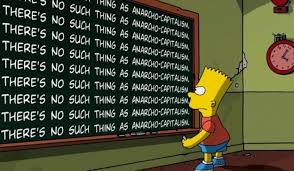
Throughout my life, people have often wondered why I’m an anarcho capitalist. Often asking questions like “Why?” and “How about roads?” and “Why is private property not theft?” and a million other questions. This is a series of essays on the subject so that I can refer people to them, just to make my life slightly easier. So let’s start out with a small description of what Anarcho-Capitalism is.
Anarcho-Capitalism is not a system of government–it’s a system of society, one which allows for the existence of whatever subsystems you want: Anarcho-Communism, Socialism, free market communes, whatever you want. The whole point is that people engage in free association and don’t aggress against each other. In fact the central tenet is the NAP, or the Non Aggression Pact, which stipulates that someone can’t attack someone else unless previously attacked or trespassed upon beforehand. There is of course a simple problem however, how does one avoid a “tit for tat” situation? Well that ends quite simply in that although others cannot punish the infractor normally, they may instead enact an effective ban on interaction with the aggressive actor. Because of this, one can’t force people to follow certain rules, unless they’re on your land or property, and you may peacefully eject people who are on your property, assuming that you can persuade them to do so.
Is this so hard?
So now that that’s out of the way, time to answer the meat and potatoes of this essay, “Why is private property not theft? If people are laboring and the factory owner sits in his office, why does he deserve the money and profits that they make?”
Products rely on a few simple things, the actual labor going into them, and the organization of that labor. 20 men digging randomly with spoons is a lot of labor, but in fact very little is made, whereas if 3 men are using shovels to dig a trench with 1 man organizing it to lay a pipeline, there is far less labor but the actual product is worth far more. The private property is organized by the owner while the laborers enact the labor. The point is that the business is an agreement between the workers and the owner, the owner organizes their labor and adds most of the value to their work, thus the owner is entitled to most of the profit. Especially in situations where a single owner has accrued massive wealth by the virtue of their company, if an owner can manage to make it so profitable then they are still entitled to all of the profits. One ought to notice that playboys themselves often have very lackluster lifestyles.
I’m on a bit of a roll, so how about another question, “How would people be protected against bank failure without insurance on their deposits?”
Well the answer to that is simple, the banks will be organized slightly differently, or insurance companies will ensure the customers just like any other product is entitled to. But how is everything organized you might be asking? Well, allow me to explain. The insurance company will be entitled to a fee, a fee which is determined based on your choice of bank and the practices from that bank, as well as how much you are insuring under them. The worse the bank’s practices, the higher fee they charge and the lower the percentage they will return to you is. But what about the new organization of bank? Well that’s even more exciting, the bank is organized so that it may not fail, it must be organized so that in case of a severe series of withdrawals, that it may force all people who have taken loans to return those loans to them.
Let’s throw down one more before I have to leave before this turns into a novel, “How would people be protected from attacks without an organized military or even a police force?”
For this single question I have two answers, the first is protection without the police. Private police forces, these police forces are actually better than the current system, because if you don’t like the way your police force is handling your protection, you can easily fire them and instead hire a different force or even start your own. In fact a private police force will have far more accountability, after all if an officer shoots your dog, he can’t say “I feared for my life” and the company he works for will fire his ass to make sure that it doesn’t get out that they hired a psychopath and lose many more prospective customers. But what about the second component: protection without a military? For this I must use a small part of Machiavelli’s one book, The Prince. He states that republics and other freer states are more difficult to dominate, because the people will not submit to an outside force. So there is no reason for another state to be able to move in and expect to retain that land. But what about someone who wants to kill everyone in the area? Quite simply it’s harder to execute an entire population without encountering extreme resistance, especially if the natives are armed with high grade weaponry. There’s not even a reason to fear a nuclear attack, because nuclear weapons are only useful in destroying a state’s will to fight.
Anyway, those are my answers to those questions, if there are any other questions about the answers of an AnCap, don’t hesitate to ask! I love answering questions about this.
To start, I do not write from the perspective of an American. My country has more of a problem with emigration than immigration, and it is not out of the question that I might want to leave myself. So I can see myself on the other side of the border to many from the States. I live under a sort of double jurisdiction, Romania and the European Union, and of a nationality that has been often the object of attack and mockery as immigrants in Western Europe. We are all lazy thieves, beggars, gypsies, wanting to take both the good jobs and welfare of the British chav. I have been bullied on this very website by, to my greate shame, Canadians of all people. I am aware of the collectivist generalization most Western Europeans are prone to – despite the fact that without Eastern European doctors and nurses, their fabulous state medicine would have collapsed a while ago. And if you want trained doctors and engineers, some riff raff will inevitably come along. Although, after influxes of immigrants of late, Romanians no longer seem so bad.
The Picts payed for this
I am a reasonably moderate libertarian, in that I am a bit of minarchist plus. So I do not write or think from an an-cap perspective. I am also the kind of libertarian who believes you have to advocate for both ethical, principled libertarian positions – regardless of their chance of being implemented – and policies that are fit for purpose, good enough, and move things to the right direction while being more palatable to others. I see little point to the “Fiat justitia, et pereat mundus” of libertarians, purity to the exclusion of everything else, who only recite philosophy and ignore the real world. And I am well aware of the danger of compromise but find it acceptable when the alternative is nothing. To complete, I am not a nationalist, I am not a patriot and dislike patriotism in most cases, and I do not feel any particular affinity for certain people over others just because there is a border between us. I can see I have more in common with the fine people on this fair website than with the vast majority of Romanians.
So I am starting with what I consider to be some basic facts: states and governments exist. Debating whether they should is meaningless at this certain point in time, for the purpose of this discussion. These governments have jurisdiction over state borders and have citizens and residents and temporary visitors, with the former having additional prerogative and responsibilities, especially in politics. Governments more or less (usually less) are – should be, to be more accurate – accountable to the citizens. Governments, having jurisdiction inside certain borders, have powers over and responsibilities towards people inside those borders. The US government should uphold the rights of people – including temporary visitors – in areas it has jurisdiction over – by libertarian standards this is its only job – and not the people of, say, Romania. The exceptions to this are American citizen abroad, towards which the government has certain responsibilities.
So a government treats insiders differently than outsiders. The question at hand is in what way the latter should become the former. Has government the right to control who crosses the border? My view is yes, up to a point.
The most often libertarian view for open borders is, paraphrased, the state has no right to impede peaceful people from traveling where ever they wish on public property, and to where ever they are invited on private property. The state has no right to stop people from freely associating. It is the right of humans to travel where they choose. Or to go bleeding heart about it (which I do not recommend), we should care more about humans than borders.
This is all very feel-good, but has some issues, in my view. I would in first instance. replace people with people under the jurisdiction of said state. In my view when talking about rights – freedom of speech, assembly, religion in the context of government – we are talking first and foremost people who happen to be within those border. In a better, non-interventionist world, government should not be able to influence non-residents, outside letting them in or not.
From a pure libertarian an-cap / minarchist point of view, many immigration issues would not be issues at all. With most property private and fully protected, the issues of public lands / areas would be minimal. With no government support at all for immigrants and refugees and with the perspective of being shot if you aggress the locals, a good number of problems would not appear. But that is not the world we live in.
There are several utilitarian reasons for some immigration restrictions. There is a risk posed by a large number of people with radically different values moving into an area, if these values can lead to breaking the Law. Any area has limited capacity to absorb newcomers and exceeding this will cause conflict. Police doing their job plus an armed citizenry could be a reason this problem would not appear in certain societies, but overall it can be unpleasant to have constant conflict in a community that needs to be addresses with violence. How about deontological ones?
Lines are important
Libertarians who do not want to become caricatures understand liberty is not defined as do whatever you want, but within limits. First and foremost, your fist my nose, as the saying goes, but even beyond, there are certain elements of living in a society that will curtail liberty – just the difficulty of defining boundaries between my liberty and yours, and compromises necessary to live in a community.
The libertarian argument is this should be as little as possible and for very good reason. It is, of course, a vulnerable argument, like all arguments in politics – where to draw the line. (Bugs step over this line.) This always applies to human dealings and there should be a constant attempt to swing things in libertarian direction, err on the side of freedom and all that. Even anarchic communities have rules about behaviour, written or not, and probably debate them. But in the end, the community needs a very good reason for any intervention. That is the basic argument.
I usually ignore the every square inch of land privately owned school of libertarianism. This is not the case. Not how humans function. Commons always exist, the village green was rarely privately owned, many roads and lanes likewise.
While no libertarian would deny the right to associate on your property – as long as you are not doing something to affect others’ property – you will not have an immigrant solely on your property (except that 15 year old Russian girl you buy on the dark web and keep in your basement, but this is an exception). The community will have a role in deciding what happens in the commons. So unless you can teleport people onto your private property and then teleport them away, immigration will not be a solely private property issue.
Similarly there is not always an absolute right of free association. I cannot associate with convicted murderers whenever I choose. So here I go back to an earlier paragraph “the state has no right to impede peaceful people from traveling where ever they wish”. So I would say a state can at the very least restrict access to non-peaceful people.
Let the right one in
I talked above about Romanians in Europe. To be completely fair, plenty of Romanians went West with mischief on their minds and some locals were rightfully annoyed. Especially in small towns and villages in which people were not used to rude, loud foreigners making a mess and stealing whatever they can. Romanians eating sunflower seeds and drinking beer on the street while spiting the seed husks is not something a Swiss mountain town wants to see – although these can be mere tourists, not immigrants. So the problem here can be simply of generalizing immigrants, not all immigrants. Some Romanians are, I assume, good people.
So I can say that a government may restrict access of people with high probability to engage in violent or illegal acts, or deport those who do engage. Another class of people with restricted access beyond the violent may be the very diseased. A government may refuse access to people with dangerous, contagious diseases.
I find it difficult to make the freedom of association argument for completely open borders, let any and all in just in case I might want to associate with one of them. One solution to the freedom of association standard might be a resident should vouch for immigrants he want to associate with, a member of community with skin in the game and possibility of redress of wrongdoing.
In a world of government welfare – which I am not happy about the locals getting but there at least is some limit to them – and in which government does not properly protect the locals from immigrants, open immigration will not work. A main argument against this along the lines of two wrongs do not make a make right argument, or just because we have welfare does not mean we should restrict immigration. I do not agree with this argument. If a needs b to work, then you can’t have a before b, is my view. So yes, in libertopia immigration self regulates. To a point. Rapist and thieves may want to come anyway, but they would be dealt with without all the politics involved in current governments. We do not live in libertopia.
To be clear, I am not saying build a wall or kick all immigrants out. I am for as much immigration as possible within limits of safety, with some clear rules. No criminals would be a basic one. You cannot really bring the thieves of the world to your country. It is not in order to protect jobs, not racial or cultural purity. Just keeping a certain control of dangerous criminal elements is not too much to ask. You can still get all the good people you need while restricting the very violent. And I would also add no government aid to new immigrants for at least a couple of years in which they earn income and pay taxes. Giving no aid at all is not an option.
Ok, thoughts? Let me have it in the comments. (I did write this post because my last few were kind of light on the comments, and it is sort of an experiment to see if I can get an good old fashioned argument going like on you know which site.)
I thought about titling this “Hey Hihn, how’s this for deep libertarian thought?”, but I’m not that spiteful. This article is based upon an idea I’ve been tossing around in my head for a while. It usually comes back to the forefront whenever we’re talking about transfolk or open marriages. As with all of my articles, I make no representation that I’m not unknowingly ripping off some philosopher or, even worse, walking into some trap.
There seem to be two types of libertarians… really more of a spectrum with clustering near the edges. On one end is what I’ll call the Deferentialists. The Deferentialists work from the premise that when an individual makes a decision, it is the right decision for them. Deferentialists’ motto is “live and let live.” They’re deferential to the individual’s decision making.
On the other end is what I’ll call the Restraintists. The Restraintists work from the premise that when an individual makes a decision, it is their decision to make, whether or not it is the right decision. Restraintists’ motto is “who am I to tell you what to do?” They restrain their own sense of morality to avoid overstepping their authority.
The oddest image that came up for “authority”
I’ve written in the past about my authority-based view of rights. To sum it up, your mom had the authority to wash your mouth out with soap when you cussed as a kid, but a politician doesn’t have the authority to punish you for your speech. This places me firmly in the Restraintist camp, and I think that all libertarians who care about being effective should join me.
The Ineffectiveness of Deferentialism
When viewed from a simplistic and static point of view, Deferentialism and Restraintism achieve the same thing. Should the government implement a law implementing some social goal? Deferentialism says no because the social goal may be right for some people, but it may also be wrong for some people. Restraintism says no because even if the social goal is good, the government overstep of its authority is evil, and the ends don’t justify the means.
However, Deferentialism is ineffective in two ways. First, people, even Deferentialists, tend to have a line drawn in the sand where they shift from relativistic deference to the individual to a more absolutist stance. For example, Cosmotarians tend to be Deferentialists up to the point where their particular identity politics ox is gored. Second, Deferentialism gives no answer to Cultural Marxism. Deferentialists are either forced to kowtow to the virulent left, or they end up drifting authoritarian.
This image seemed oddly appropriate.
In contrast, Restraintism handles both of these issues differently. Restraintists have absolutist stances for everything, so there is no line drawing to be done. Any failure to properly act libertarian on a certain issue is a failure of moral restraint, not a philosophical deficiency. Similarly, Restraintism isn’t hampered when facing off against Cultural Marxism. While Restraintists would never strip away the rights of Marxists, they’re free to criticize, ostracize, and attempt to curtail the creeping growth of Cultural Marxism.







 This is probably not going to be a happy or fun piece. Death is sad. It represents the great unknown; the termination of our fragile existence into something we know not what. It is permanent; more permanent than anything else we deal with in this world. And it causes overwhelming emotions of loss, grief and sadness. Suicide adds many additional dimensions to this. When someone
  These edge cases certainly don’t justify nullifying the larger principle of self-ownership, so I feel comfortable declaring suicide to be ethical from a libertarian perspective. (Reminder: ethics are derived from external codes of conduct and morals are principles on which an individual’s judgement of right and wrong are based; they are intertwined but not identical). If libertarian ethics are derived primarily from the NAP, then I can’t see how suicide is unethical. I believe as libertarians, we have to reserve the right of people to terminate their own existence. After all, your own self is your most fundamental piece of property, and you can dispose of your property however you wish. To say that you are partially owned by your loved ones opens the door to slavery. If one really wanted to construct an ethical argument against suicide without referencing religion (which is easy: G-d said not to), you’d have to fall back on deontological arguments. One






 There seem to be two types of libertarians… really more of a spectrum with clustering near the edges. On one end is what I’ll call the Deferentialists. The Deferentialists work from the premise that when an individual makes a decision, it is the right decision for them. Deferentialists’ motto is “live and let live.” They’re deferential to the individual’s decision making.
