- Pumpernickel / Oat / Flax / Whole Wheat bread is best bread.
- Black Panther as Alt-Right Fable is truest fable.
- Hitler was on the Right, Orwell was on the Left. Deal with it.
- RPGs in which Kung Fu masters get into fights in restaurant kitchens are best RPGs. I recommend using FATE for this game.
- Knives you make yourself are best knives.
- What are we reading posts are best posts, with Galaxy’s Edge being best recommendation, Out of the Shadow of a Giant being best surprise read, Badlands being best not-surprise read, Valiant 2.0 being best comic book line and everything by Charles C. Mann being best Honorary Mention for writing three runners up for other best things.
- Update – Just finished The Wizard and the Prophet: Two Remarkable Scientists and Their Dueling Visions to Shape Tomorrow’s World by Mann. It is best book.
- Carolina brand work boots are best work boots.
- Giant white dog begging for people-food in public is best dog.
- Barbell Medicine is best podcast.
- Thinking about the fact that none of Nephilium’s actual facial hairs are the length of the average Nephilium facial hair is best distraction when should be focusing on Kung Fu Action.
- Seriously, this guy’s facial hair is super bimodal.
Category: History
-

The Canonical Top Ten List of 2018
-

A History of The Six-gun, Part Two
Colt Modernizes – Cap and Ball Colts
The Walker Colt

A well-known fan of the Walker. In 1846, Sam Colt found a young man from Texas knocking at his door. That young man, Captain Samuel Walker, was on a mission; he wanted Sam Colt to return to the business of making revolvers.
At this time Colonel Colt was engaged, as noted in Part 1, in manufacturing underwater electrical cable, tinfoil and marine mines. Captain Walker wanted revolvers for the new-born Republic of Texas, but he didn’t want a rebirth of the .36 caliber Paterson. He wanted a big, heavy, powerful revolver; a revolver for horsemen. He wanted a dragoon pistol.
Sam Colt was apparently interested, because he sat down to create Captain Walker’s desires in steel. The result of this process was the sidearm that first defined the form of the modern sixgun. The 1847 Colt Walker held six loads rather than five, and the big cylinder, while described as a .44, was actually a .45, taking a .457 round or conical ball over as much as 60 grains of FFFG black powder. The gun further had a hinged, attached rammer for reloading and a fixed trigger and trigger guard. This was not only the first modern-form sixgun but also the first magnum revolver, as the big cylinder and the heavy .457 ball packed quite a wallop.
A few years back I had the pleasure of firing a replica Walker. It was an interesting piece to handle, but sure as hell not a quick-draw piece. The Walker Colt is long, heavy and cumbersome, but it’s important to remember what the Walker was designed for; it is a dragoon pistol. It was designed for horsemen, to be carried my mounted riflemen (dragoons.) Some Walkers as well as the later dragoon models were adapted to be fitted with shoulder stocks but making the revolver a carbine presents the same problem that led to the demise of revolving rifles in general; the cylinder gap has a distinct tendency to vent hot gases and, if a gun is ill-timed, to spit the occasional lead shaving. None of this is good for the shooter’s non-firing arm.
The Colt Walker was effective but less than perfect. Poor metallurgy in the early guns led to problems with ruptured cylinders, and the weak loading lever latch often led to the rammer dropping under recoil, jamming the gun up and preventing a fast follow-up shot. In the end, this led to only 1,100 Walker revolvers being built. These problems did, however, led to the next step in Colt sixgun development only a year after the advent of the Walker.
The Dragoons

Unknown Union soldier with a brace of Dragoons. A martial pistol must be powerful, reliable and tough; the Walker was powerful, but fell a bit short on the other two aspects. So, what started with the Walker revolver led to several developments and refinements in the basic dragoon pistol. There were four primary variants of the Dragoon revolvers:
- The First Model Dragoon, made from 1848 to 1850, with oval cylinder stops, a square-backed trigger guard, and no wheel on the hammer where it rode on the mainspring.
- The Second Model Dragoon, made from 1850 to 1851, with rectangular cylinder stops and a square-backed trigger guard. The first few hundred Second Models had the old V-type mainspring and no wheel on the hammer; later guns had the flat mainspring that would persist in Colt revolvers for many decades, along with a wheel on the hammer where it rode on the mainspring.
- The Third Model Dragoon, made from 1851 to 1860, with rectangular cylinder stops and a rounded trigger guard. Colt played around with the Third Model more than the others, producing some with folding leaf sights on the barrel, cuts for shoulder stocks, and so on.
- The 1848 Baby Dragoon, a small .31 caliber pocket revolver. This was later refined into the 1849 Pocket Revolver, which was popular among gold-seekers, gamblers and outlaws as a hideaway gun.
The various Dragoon pistols were popular but even the Third Model still weighed in at a tad over four pounds. There was obviously a market for a lighter, handier gun, more along the weight of the old Paterson guns but more modern and reliable. That led to the development of an icon among cap-and-ball sixguns, the Colt Navy.
The Colt Navy Revolvers
My first sixgun was a replica of the 1851 Navy Colt, which is widely regarded as the best-handling sixgun made. I see little reason to doubt that assessment based on my own experience. My Navy had the standard 7 ½” barrel and a brass frame. Back in my youth in Allamakee County I did a fair amount of fast-draw and reflex shooting practice, drawing and firing from an old drop belt from which the cartridge loops had been removed and a Mexican loop holster. That Colt was excellent for such things, smooth, light and slick as a snake. I shot it with .380 round lead balls and 30 grains of FFFG in paper cartridges I made myself. I got so I could draw and place six rounds in a regular paper plate at 15 yards very quickly, and with the paper cartridges and a brass capper could reload and recap efficiently, usually having the old gun back in action in about a minute. I carried the capper on a string around my neck, paper cartridges in an old tobacco tin and generally toted the old Navy around with me on many of my adventures in woods and fields.

Colt Navy. There was a down side that resulted in my eventually discarding that old sixgun, and that was the brass frame. With every shot that steel cylinder hammered back into that soft brass frame, eventually deforming the frame to the point where I reckoned the old piece unsafe to shoot. I had a couple of friends who were in a local theater group, so I seated some balls in the empty cylinder, hammered a few balls into the barrel and removed the nipples to render the gun useless, then gave it to them as a prop gun. I would like to have another of these guns, but when the day comes for me to find another cap and ball gun, it will be a steel frame version. Brass frame replicas are still common on the gun market as flies in a barn, but I can’t recommend them for the reasons described above.
Back in the day the Navy Colts were very popular. The well-equipped cowpoke, lawman or gun twist frequently carried a brace of them in saddle holsters in addition to his belt gun; in the famous Charles Portis book True Grit, in that renowned final charge, it was with a brace of Navy Colts from saddle holsters that Marshal Cogburn engaged the four bad men, not the SAA Colt and ‘92 Winchester wielded by John Wayne in the movie.
Ten years after the first Navy Colts were made, the Colt works brought out the ultimate Navy, that being the streamlined 1861 Navy, also in .36 caliber, with an improved “creeping” loading lever and the added loading clearance introduced in the .44 Army Colt of 1860. There was also a miniature variant, the 1861 Pocket Navy, later refined into the 1862 Pocket Police, both small-framed .31 caliber revolvers.
The Root Sidehammer

Colt Root Sidehammer Patent Drawing The Root Side-hammer Colt, designed by Colt engineer Elisha K. Root, was in some ways a better design than the traditional versions; its solid frame was stouter, and the rear sight was on the frame rather than on the hammer nose. The Root revolver, introduced in 1855, was popular among officers on both sides in the Civil War, but it was a real pipsqueak, manufactured only in .28 and .32 calibers
The 1860 Army Colt
What many consider the ultimate expression of the Colt cap and ball revolver was introduced in 1860, just in time for the Civil War or, as Mrs. Animal calls it, the War of the Northern Aggression.
In many ways the 1860 Army combined the best of both worlds. It was a much lighter and handier arm than the Dragoon pistols, and with it’s .44 caliber loads packed more punch than the Navy guns. It was a fine, well-crafted, well-balanced piece, handicapped only by it’s open-topped frame and the odd placement of rear sight on the hammer nose. This was perhaps the ultimate development of the Colt cap-and-ball revolver. Its grip shape was so admirably suited to being fired accurately one-handed, even from horseback, carried over to the famous Colt Single Action Army and remains in use on the vast majority of single-action sixguns made today. The use of a rebated cylinder allowed for the use of the same size frame as the Navy revolvers frame and kept the gun’s weight to about two and a half pounds.

The Colt 1860 Army. As with the Walker and Navy revolvers, it has been my pleasure to handle a few Army Colts, most replicas but notably one original, although we didn’t fire the original. The Army Colt is a pleasure to handle, heavy by modern standards but the big sixgun points naturally, barrel rise under recoil is controllable, and the rotation of the curved grip in the hand brings the hammer spur nicely under the thumb, allowing for quick follow-up shots. The .44 round ball or conical bullet in front of 40 grains of FFFG packs a hearty punch. A few shooting sessions with one will bring home exactly why this was probably the most desired martial sidearm of its era.
And the demand for martial sidearms was about to explode.
And Then This Happened
Colt revolvers, especially the 1860 Army but also the Dragoon and Navy types, were soon in great demand as the War Between the States broke out. Sam Colt, having foreseen the great increase in demand, had expanded the factory and, when the southern states began to secede, sold at least 2,000 revolvers to Confederate military buyers, an act which nearly killed the company when the war was over. But what remains inarguable is the reason that the Colt revolvers were in demand by both Union and Confederate armies; they were tough, powerful, reliable sidearms, the state of the art for their day.
Sam Colt passed away in January of 1862, killed of all things by complications of gout. The appellation of Colonel was real, Sam Colt having received a commission from the state of Connecticut as commander of the 1st Regiment Colts Revolving Rifles of Connecticut. But that unit never took the field, and Colonel Colt was soon released from service. But the erstwhile Colonel Colt’s company was building thousands and thousands of Army revolvers and a variety of guns for the civilian market, they didn’t lack for competition. Plenty of people were getting in on the sixgun action, including America’s oldest surviving gunmaker, Remington, as well as plenty of others. We’ll talk about them in Part 3. Meanwhile, bigger things were afoot; about this time two men were set to change the world of sixguns forever. Those two men were Horace Smith and Daniel B. Wesson, and they had an idea and a patent. But that’s a story for Part 4!
-
A History of The Six-gun, Part One
Revolvers B.C.
In the history of sixguns, there are two periods of time to be considered: Before Sam Colt, and after Sam Colt. The Before Colt (B.C.) era was the time of the flintlock, and a surprising number of innovative repeating guns were made during this time, mostly custom jobs and one-offs. But there is one B.C. revolver that stands out, and that is the Collier.

The Collier Revolver. Elisha Collier was a Boston inventor, and his revolver was unique in one respect among flintlock repeating guns; it used a cylinder separate from the barrel to carry the arm’s multiple charges, rather than the pepperbox-styled arrangements that were found prior to his time. Collier’s first flintlock revolvers around 1814 and production continued up to about 1824, all guns being made by John Evans & Sons of London. Estimates of numbers produced vary but are almost certainly under 500, in both handgun and long gun versions.
The Collier revolver was a fine piece for its day. It was innovative, well-made, well appointed and, given the shortcomings of its flintlock ignition system, reliable. One of Collier’s innovations was an automated priming mechanism in the flintlock’s frizzen, that made possible repeated shots without re-priming the pan. But the limitations of the flintlock remained; the guns, like all flintlocks, were vulnerable to wet and wind. The advent of the percussion cap would change all that, but while Collier’s London manufacturer produced a few models using the newfangled percussion ignition system, for the most part Elisha Collier missed that boat.
The real impact of the Collier revolver was not to come from Britain. It came instead from a young cabin boy aboard the brig Corvo, who saw a Collier revolver on board ship and set to thinking about revolving repeaters. That cabin boy’s name was Samuel Colt.
The Advent of Colonel Colt

Colonel Colt. He made all men equal. There’s a reason that the saying “God created men, Colonel Colt made them equal” was a truism in the old West. The form of the modern wheelgun was in large part designed and defined by Sam Colt, and with the Colt revolver came the advent of the modern personal sidearm.
The young Samuel Colt was an interesting character. As a youth he was intrigued by gunpowder, electricity – he made one of, if not the first underwater electrically-fired explosive device – and manufacturing. He’s known for pioneering revolver designs but also pioneered mass production and the use of interchangeable parts along with his contemporary Eli Whitney. He also was among the first to dabble in such modern marketing techniques as celebrity endorsements, soliciting Italy’s King Victor Emmanuel II among others to make prominent use of his revolvers. He used art liberally in advertising, paying substantial sums to have artists produce heroic scenes of the West featuring use of his revolvers in fighting outlaws and Indians. A Renaissance Man he may not have been, but he was a brilliant inventor and marketer, and he changed the nature of sidearms forever.
While the Collier revolver may have been the inspiration for Colonel Colt, he had the advantage of the new percussion cap ignition system. After making several prototypes, including the famous hand-carved wooden model he produced while on board the Corvo, he arrived on the configuration that defines the sixgun to this day: A solid frame and a revolving cylinder with stops to align each chamber in turn with the single barrel.
European and American patents in hand, Colt obtained financing and set up shop in Paterson, New Jersey, calling his operation the Patent Arms Manufacturing company.
The Paterson Colts
Colt’s first revolver venture only ran for six years, from 1836 to 1842. In that time the company produced 2,350 sidearms, 1,450 revolving rifles and carbines, and 460 revolving shotguns.
The early Paterson revolvers were iconic, innovative and popular, but in hindsight weren’t terribly effective. The lack of a trigger guard is noticeable, the guns having a fragile folding trigger that extended when the hammer was cocked. The first models had to be partially disassembled to be reloaded. But Colt finally achieved a measure of success with the .36 caliber Belt Model #5,

The Texas Paterson. commonly known as the Texas Paterson.
By modern standards the ergonomics of the Paterson revolvers are pretty bad. The odd-shaped grip doesn’t suit people with large hands. The guns were a little light on the barrel end unless you had one of the 9” versions, making them feel whippy in handling; but the long-barreled guns were not as quick to clear leather, putting the horse soldier or gunfighter at a disadvantage. Even so, the gun pointed naturally and shot reasonably well.
The Paterson was imperfect in other ways. Guns made before 1839 were, as noted, difficult to reload, and all the Paterson guns only held five shots.
Being a five-shooter rather than a six-shooter was a problem for one more reason than the one missing shot. All Colt revolvers up to and including the famed Single Action Army had the same issue, namely that the only safe way to carry one was with the hammer down on an empty chamber. This reduced the Paterson to a four-shot gun, and (at least, before 1839) one that couldn’t be quickly or easily recharged.
Bear in mind that this was an era in which most sidearms were still front-stuffing single-shots, so the handicap wasn’t seen as being as dire as we might consider it today, in a time where many semi-auto sidearms carry enough ammo in a single magazine to lay low a small army of attackers. Even so, the limitation often led to the conscientious pistolero carrying two or three revolvers on belt or saddle.

A Paterson Colt rifle. The Patent Arms Manufacturing Company sold a number of sidearms to the US Army who issued them to troops fighting in the Second Seminole Wars. Those troops favored the Paterson Colt’s capacity, but Army evaluators found the guns too finicky and unreliable in combat and so disallowed any further purchases. Sam Colt did sell a couple hundred sidearms and a like number of revolving rifles to the Republic of Texas, who issued them to their new-found Navy, but when that Navy disbanded in 1843, the Paterson guns were issued to the Texas Rangers. The Rangers liked the revolving guns, which gave them a much-needed firepower advantage over the Comanche Indians, with whom the Republic of Texas was then engaged in hostilities.
It was in fact the use of Paterson revolvers by the Texans and their increasing popularity with the new waves of settlers crossing the prairies that set the stage for the next step in the development of Colonel Colt’s revolvers. While the Paterson Colt was arguably a failure both in martial and commercial sales, and while the Patent Arms Manufacturing Company went under after only six years, a seed had been planted.
That seed sprang forth in 1846, when General Zachary Taylor send a young Army Captain, Samuel Walker, to Connecticut, where Sam Colt was engaged in manufacturing underwater electrical cable, tinfoil and marine mines. Captain Walker had one mission: To convince Colonel Colt of the need for a revised revolver, one that would be more reliable, more rugged and more powerful than the .28 and .36 caliber Patersons. That mission by Captain Walker would bear significant fruit…
…But that’s a tale for Part 2.
-
The Day Civilization Fell

…and so it began. It started so….simply. The CDC said to stay away from Romaine lettuce, until they figured out why it was giving the bloody flux, dropsy, the grippe or whatnot. I shrugged and headed off to work… just a couple of hours, and then I would have a nice 4 day weekend for Thanksgiving.
On the way home, I stopped by the grocery store to pick up a couple of last items for Thanksgiving. “Huh, looks like all the romaine is gone.”
Then I noticed it. The mood was…ugly. The shoppers were already blasting adrenaline, and in a surly disposition. This didn’t help. In fact, it pushed them over the edge…

This ain’t Black Friday, son…it is worse! I was surprised at the lack of response at the store. Bust a shoplifter, and usually there were three squad cars roaring in for the kill (hoping it was a hot 17 or 18 year old perp). Now…nothing. I fled the store, and that is when I found out how bad it was. The cops didn’t come, because this scene was playing out everywhere. And not just the grocery stores. Riots at various and sundry sandwich places….rioting vegetarians and vegans at salad bars. I even saw a burning Sweet Tomatoes restaurant as I tried to make my way home.

“Go for the Arugula!” Never got there… had to go by too many Panera Bread locations. The primal fury of the quasi-hipster mobs was something to see. How those skinny jeaned, bearded, Planet Fitness members managed to flip over the fire truck, and tear the crew apart…. no, I don’t want to know. I cannot erase the images from my already shaky mind.
The few of us that managed to make it to the farm (corn and soybeans, thank God it wasn’t a lettuce farm) tried to piece it all together. The cops were overwhelmed right away, and the states were collapsing before they could even think about calling out the National Guard. And what were they going to do, with their mess sections already in mutiny. Communications went next…everyone frantically checking their devices for the store that would let them get crazy Aunt Sophie’s @#$%ing salad mix. The net and the cell towers never stood a chance. Transport was impossible, as the roads became a single, extended road-rage episode. Hell, even domestic rabbits and chinchillas went straight at their owner’s throats.

“Fluffy…I am sorry. We, we…are out of lettuce.” In the quieter moments, when we are not trying to scratch in the soil – hoping for one last head of butter lettuce – I marvel at how fragile our society was. A wanderer did come by and mention that he had heard a few hydroponics outfits in rural Canada may have survived. Come Spring, we may send a scout up that way….but I hold out little hope.
Not sure why I am penning this, in the last pages of a scavenged spiral bound notebook. Vanity, I suppose. Maybe I just hope it will serve as a warning, should the survivors rebuild a civilization someday.
Don’t shit where you grow lettuce.
-
And God Stepped out on Space
And God stepped out on space,
And he looked around and said:
I’m lonely –
I’ll make me a world.James Weldon Johnson[i]
This is the first in a three-part subseries about the Plan of Salvation. This article deals with our life before we came to earth.
In the comments on the first article, interest was expressed in a comment I made about the Latter-day Saint view of the afterlife. Specifically, I said: “[W]e believe that only people who have accepted the gospel, and received the required ordinances will be able to live in God’s presence. There isn’t really a burning hell in Mormon theology, simply various degrees of distance from God.”
So, if interest was expressed in the afterlife, why am I writing about what happened before we were born? In a word, context. Our beliefs about the afterlife are part of what we call “the Plan of Salvation” which refers to the overarching plan our Heavenly Parents (The Church is clear in the doctrine that we also have a Heavenly Mother, and that He and She work as a team.[ii]) have for our development and future. The goal of the plan is specifically stated in by the Lord: “For behold this is my work and my glory – to bring to pass the immortality and eternal life of man.”[iii] Immortality is just what it sounds like – we will all be raised in the resurrection and be immortal. Eternal life or exaltation is the life which God the Father lives. Immortality is a gift from the Father made possible by the Atonement of Christ. Exaltation is also made possible by the Atonement, but can only be achieved by “obedience to the laws and ordinances of the gospel.”[iv] Thus, the goal of the plan is for us to be immortal and live again with our Heavenly Parents and be like them – in short, they want us to become gods and goddesses – their peers, friends, and colleagues.[v]
Spirit Children
Why would they want this for us? Because they are our Parents, and they love us. They don’t claim that title by happenstance. The scriptures agree: God is the father of our spirits.[vi] Every parent worth his or her salt wants their children to grow up to reach their adult potential. Our Heavenly Parents are no different. Indeed, they set the standard for earthly parents to follow.
As with all parents, they undertook to educate us with the things we would need as we embarked upon our journey to adulthood.[vii] One of these things was the use of our moral agency.[viii] As might be expected, some spirits advanced more quickly than others, and God marked these spirits for leadership roles on earth.[ix]
Council in Heaven
Eventually, we had progressed as far as we could. It was time to leave home and go out into the world. Our Parents called a council to discuss the plan. Jesus, our eldest brother, presented the plan: We would be born into mortality, having no memory of the time before our mortal birth. Prophets would be sent to teach us why we were there and how to return to our Parents. We would continue to learn to exercise our agency by being tempted by both good and evil. Correct use of our agency would enable us to resist the evil temptations. We would make mistakes and commit sins which would render us unable to return to our Parents. Because sin is inescapable in the mortal condition, a Savior would be provided who would make atonement for all our sins, enabling us to return. This Savior would be Jesus. Because of our agency, some of us would choose not to accept the atonement, and thus choose not to return.
War in Heaven
Lucifer, one of the advanced spirits, had his own plan. He would force us to live in such a way that all of us would return. Because it was his plan, the glory and honor would go to Lucifer.[x] Lucifer’s plan was rejected, and he rebelled. Because of this rebellion, he and the spirits which wanted to live by his plan were cast out of heaven.[xi] This amounted to one-third of all the spirits in the council.[xii] They became the devil and his angels, and are here to tempt us and draw us away from God’s plan. Because of their choices, they will never enter mortality, will never have a body, and will never have the chance to progress to Godhood.
Time to Go
Through uncounted time we had matured as spirits. In the end, we had helped to cast out one-third of our brothers and sisters when they rebelled against our Parents. With the war moved to earth, it was time for us to leave our Heavenly Parents, and enter mortality. One by one we approached the veil which would block our memories, bade our Parents farewell, and “[w]e walked, as it were, through an open door. The door was closed behind us.”[xiii]
[i] James Weldon Johnson, God’s Trombones Seven Negro Sermons in Verse (New York, Penguin Books, 1927) “The Creation” p 17
[ii] LDS.org – Heavenly Mother; Paulsen, David L. & Pulido, Martin “A Mother There”: A Survey of Historical Teachings about Mother in Heaven (pdf)
[iii] Pearl of Great Price Moses 1:39
[iv] LDS.org – Eternal Life, Articles of Faith 1:3
[v] Chieko N. Okazaki, Sanctuary (Salt Lake City: Deseret Book, 1997), 59
[vi] Acts 17:29, Doctrine and Covenants 76:24, Romans 8:16
[ix] Abraham 3:22–25; Jeremiah 1:4–6; Alma 13:3–5
[xi] Abraham 3:27–28; D&C 29:36–38; 2 Peter 2:4; Revelation 12:7–9
[xiii] Harold B. Lee, The Teachings of Harold B. Lee: Eleventh President of The Church of Jesus Christ of Latter-day Saints, ed. Clyde J. Williams (Salt Lake City: Bookcraft, 1996), 20–21.
I have removed the “Mormons in the Mist” title because the Prophet has asked that we not use the term “Mormons” to refer to members of the Church of Jesus Christ of Latter-day Saints.
-
No, Not That Springfield Armory. The Other Springfield Armory.

Yes, a Blue Point Ale. Don’t know why they call it that since it’s neither blue nor pointy. Boston
A few years back I took on some work in the Boston area. And, as I usually do, I took the opportunity to see everything I could, including such landmarks as the Boston Common, the Old North Church, Paul Revere’s house, and Sam Adams’ grave. I also spent some enjoyable Saturday afternoons hoisting Blue Point Ales in Durty Nellie’s. That fine establishment advertises itself as the North End’s best dive bar, and I see no evidence to the contrary.
In fact, Boston quickly became my favorite major city, after Denver.
I saw stuff outside of Boston as well. Now, Taxachusetts isn’t a state known for the shooting sports, but over in Springfield (otherwise an unremarkable town) they do have a major landmark in American shooting history: The Springfield Armory.
 No, not that Springfield Armory. The original Springfield Armory, now the Springfield Armory National Historic Site and Museum. This was America’s original Arsenal of the Republic (I know FDR described an Arsenal of Democracy, but the United States is a Republic, dammit, not a democracy; Roosevelt should have known better.)
…and The Armory!
Established in 1777, the Armory produced such items as gun carriages and cartridges until 1795, when they started building muskets. This began a long history of producing small arms for the U.S. military for almost two hundred years. In their long history, the Armory produced everything from flintlock muskets to the M60 machine gun. That run included such landmarks in gun history as the 1903 Springfield and M1 Garand rifles, but the Armory also pioneered mass-production manufacturing techniques, including use of the Blanchard Lathe to mass-produce interchangeable gun stocks.
It’s a neat place for the gun lover to visit, but enough about the history; you can get that anywhere. Instead, I’ll describe some highlights of my own visit.
I’ve fired weapons that came from the Armory. I’ve owned weapons that came from the Armory; two 1903 Springfield rifles in various states of sporterization, but the actions came from the Springfield Armory. In my time in Uncle Sam’s colors I handled M60 machine guns (the infamous Pig) and M2 .50 calibers that almost certainly were built in Springfield. So, my visit to the Museum was even more fascinating because of that connection.
The Guns

Front-Stuffers. Front-stuffers are fun, and the Springfield Armory made a lot of them, starting with the Model 1795 flintlock smoothbore musket to the Civil War-era percussion rifle-muskets. But while the Springfield 1862 Rifle-Musket may have been the key weapon that won the Civil War, the museum shows much more than just the products of the once and former Armory; the racks are full on one-offs, prototypes, weapons of note made in other locations, and even weapons fielded by other nations, but allies and foes. In the museum you can see development models and prototypes from the first Allin conversions that became the trapdoor Springfield rifles, to the development models of the famous M1 Garand, all the actual guns, on display.
It’s a fascinating visit for the gun aficionado.
My Personal Favorites
This history of the M1 rifle, the famous Garand, described by George Patton as “the finest implement of battle ever designed” is represented in detail. Every working model, every prototype is there. The early ones are (not surprisingly) crude, being built just to test concepts. What’s really interesting is how you can watch refinement after refinement until, at last, the familiar shape of the M1 takes place. I’ve long desired an M1 for my own gun rack, for no particular reason other than its place in history; it’s really interesting to see how this groundbreaking rifle was developed.
Also documented in the museum is the search for a lightweight military rifle, which search culminated in the M16 platform. This project originated with variations on the M14, also a product of the Springfield Armory and the United States’ last MBR (Main Battle Rifle.) While the M16 was not developed or built at the Armory, the rifles that it replaced were, and the Armory was involved in the testing of the lightweight carbine. The wisdom of giving up having an MBR ready for issue was, apparently, not discussed.
Another neat not-produced-at Springfield display presents the small arms of both World Wars, not only those of the United States but also our allies and enemies. Such items as the Mauser, SMLE, Mosin-Nagant, the various submachine guns and sidearms, all are present. It’s an interesting look at the weapons used in the two great wars of the last century.
So, there.
Pictures really are worth a thousand words. I could describe the various displays in the Museum all day, but I’m sure you’d all rather see for yourselves. Since you can’t, unless you go to Springfield, you’ll have to settle for the photos with which I have liberally sprinkled this article. Enjoy!
-
The Three Way Contour
On the side… On the back… On the front… No Glibs, it’s not that kind of three way we’re talking about. This particular THREE WAY is a “Contour” watch made by Hamilton Watch Company of Lancaster Pennsylvania for only two years – 1938 and 1939. It was a massive market failure and as a result is one the more highly desirable watches made by Hamilton because of its scarcity. The watch sold so poorly that Hamilton bought back all remaining stock from its retailers, removed the movements to re-use them in more popular case styles and recycled the Contour cases.

The New THREE-WAY “Contour” So called “driver’s watches” that could be worn on the side of the wrist became trendy in the late 1930s. The Contour was Hamilton’s answer this trend. Hamilton watches were arguably one of the best mass produced watches of the time. Many would say they are better than anything almost anything of the period except for some limited production Swiss watches. In terms of massed produced watches the American brands were generally superior to the mass produced Swiss watches of the same time.
For whatever reason it’s also the watch that my maternal grandfather wore. I’m not sure if he liked the style or simply got a deal on a watch that didn’t sell especially well. Sadly, I never got the chance to ask him about this particular watch as I found it when cleaning out a closest in the basement after he died. Fortunately, I was close to my grandfather and we did talk about many other things.

Restored Hamilton Contour – Click for Full Size Image When I found the watch it was missing its band and buckle as well as its stem and crown. It also had a cracked crystal. Luckily as a Hamilton collector I had an original stem and crown in my parts collection. For a band I used a period correct pigskin band with a period correct gold filled buckle. I was able to order a replacement plastic crystal that you see in my photos from a parts house. However, later a fellow collector sent me a new old stock original mineral glass crystal after he found out I was restoring a family piece.
The movement in the watch is a Caliber 980 – a 14/0 size tonneau shaped movement that is about 19mm or 0.73 inches in length. The 980 was commonly used in Hamilton’s gold filled cased watches.

Hamilton 980 Movement This is the original and correct movement to my grandfather’s watch. However, for Hamilton’s higher end and solid gold movements they also made a more highly finished version of this movement called the 982. Functionally it’s identical to the 980, but has more jeweling and finishing. It is one of my absolute favorite Hamilton movements.

Hamilton 982 Movement In the old days watchmakers would inscribe the inside of the case every time the watch was brought in for service. These cases are far from dust proof and the lubricants of the time also evaporated relatively quickly. As a result watches of the period needed to be serviced every 2 to 4 years. Here is the case back of the watch.

Contour Case Back And here is a close up of the service marks:

Service Marks – Click for Full Size Image It appears the watch was serviced from 1939 through 1955. Each watchmaker had a different code and style for service marks so it is difficult to be 100% sure. Today we don’t scar a watch like this. We use a Sharpie to note the date that we last serviced the watch and remove it with solvent when we clean the watch again. With modern synthetic lubricants and gentle usage of the watch you can easily get a decade or more between services.
The case is gold filled which means it is made of brass with thin sheets of gold applied to either side of the brass and bonded to it under high pressure. The thicker the gold the longer it will last, but it almost always wears through on the high spots and the edges of the case. After a decade or so of usage by my grandfather the corners on the top of the case have worn through. There is no way to repair it. Folks have tried to electroplate the cases, but it generally doesn’t work well. It’s a problem with watches from this era as many case styles were only available in gold filled. Here is how the case is constructed:

Case Back 
Front of Case 
Underside of Case The dial of the watch is made with sterling silver and has solid gold applied numerals. I’ve never gotten a good answer as to what karat gold the numerals are. The consensus is 18K. The hands are gold plated. The dial is one of the most fragile parts of the watch. There are firms that specialize in restoring dials, but collectors prefer originality if at all possible. Best I can tell this dial is original, but during routine service of the day it wasn’t uncommon for the dial to be sent out for repair as part of a general service.

Contour Dial Values for Contours in good condition are anywhere between $500 and $1,000 US. Needless to say for me, the watch is priceless and is basically the only watch in my collection that I wouldn’t sell.
-
The Keystone
“I told the brethren that the Book of Mormon was the most correct of any book on earth, and the keystone of our religion, and a man would get nearer to God by abiding by its precepts, than by any other book”[ii]
Joseph Smith, Jr.
The previous article discussed Joseph Smith and the translation of The Book of Mormon. This article discusses the book itself.
So, what is The Book of Mormon? To start with, the full title of the book is The Book of Mormon Another Testament of Jesus Christ. The book is a volume of scripture similar to the Bible. Like the Bible it is comprised of “books” – the writings of various prophets expressing the will of the Lord to people whose willingness to obey what the Lord said varied wildly.
If it’s just like the Bible, then why do we need it? It’s another witness of the divinity of Christ. In Paul’s second epistle to the Corinthians, he re-stated the Old Testament dictum that “in the mouth of two or three witnesses shall every word be established.”[iii] We have had the Bible and now we have the Book of Mormon which both bear witness of the divinity of Christ.
The Book of Mormon teaches of Christ on nearly every page. As Nephi, the first prophet of the Book of Mormon, states “And we talk of Christ, we rejoice in Christ, we preach of Christ, we prophesy of Christ, and we write according to our prophecies, that our children may know to what source they may look for a remission of their sins.”[iv]
The Church of Jesus Christ of Latter-day Saints sees the Book of Mormon as the fulfillment of prophecy. It is Isaiah’s “voice from the dust”,[v] and “sealed book”[vi] (see the story of Martin Harris’ encounter with Dr. Charles Anton in the previous article), and the stick of Joseph referenced by Ezekiel.[vii]
The importance of the Book of Mormon to the Church cannot be overstated. Joseph Smith’s description of the book as the “keystone of our religion” is apt. Like the arch a keystone supports, the Church would crumble without it. If the Book of Mormon is not the word of God, then Joseph Smith was a master con-man whose fraud continues to this day, and all the millions of people who have professed a belief in his teachings are either credulous dupes or cynical perpetuators of the fraud. If, on the other hand, the Book of Mormon is the word of God, then it was translated as Joseph Smith said it was, which means that Joseph Smith was a prophet, and the Church has a modern imprimatur from God.
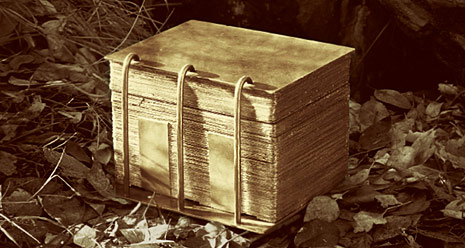
The Book of Mormon is an abridgement of sacred writings generated over a thousand years by prophets living in the Americas. The records were selected, edited, and compiled mostly by the prophet Mormon (after whom the book is named). The project was completed by Mormon’s son Moroni (the same Moroni who gave them to Joseph Smith). After Moroni finished his father’s work, he added two things: The Book of Ether, which relates the story of the Jaredites (see below), and the Book of Moroni, which contains letters and sermons which Mormon gave to his son along with procedures for ordinances such as baptism and the administration of the sacrament.
The Book of Mormon was not created for the people it talks about. It was written for the people who lived in the time it was brought to light – our time. The prophet Mormon was compiling it as his nation was sliding towards oblivion. His enemies would have destroyed the writings if they had found them. His son Moroni added his contributions and buried the plates to preserve them, and there they remained for 1400 years, until he showed them to Joseph Smith.
So, what’s in the book? Wonderful things. The Book of Mormon relates the rise and fall of two civilizations on the American continent. The earlier civilization, known as the Jaredites, began as a number of family groups who came out from the confusion of tongues at the Tower of Babel under the guidance of a prophet known only as the brother of Jared. This prophet guided them to the sea shore where the Lord instructed them to build boats in which he would carry them over the sea to the land of promise. While the Jaredites were building the boats, the brother of Jared went to the Lord with two problems: because the boats were airtight, 1) it was dark and 2) the people in them would suffocate and die.[viii]
The Lord told them how to solve the problem of the air: Drill holes in the top and bottom of the boat, and stop them up. When the air gets foul, open which ever plug is on top. If water comes in, you’re underwater, plug it back up.[ix]
For light, the Lord told the brother of Jared to come back with a suggestion. They couldn’t have fire – they’d be going up and down on waves and diving beneath them – but he should come up with something.[x] The prophet melted sixteen clear, small, stones (two for each boat) out of a rock and brought them to the Lord, and asked him to touch them so that they would shine in the darkness.[xi] The Lord agreed, and when he reached out to touch the stones, “the veil was taken from off the eyes of the brother of Jared, and he saw the finger of the Lord; and it was as the finger of a man, like unto flesh and blood; and the brother of Jared fell down before the Lord, for he was struck with fear.”[xii] When the Lord asked him what had happened, the brother of Jared replied that he had seen the Lord’s finger, and was afraid he would be struck down “for I knew not that the Lord had flesh and blood”[xiii].
The Lord responded that faith had enabled the brother of Jared to see the finger, and the fact that he would eventually take on a mortal body. He then revealed his spirit body to the brother of Jared, and introduced himself as Jesus Christ.[xiv]
After this revelation, the brother of Jared took the lit stones down off the mountain and put them in the boats. After preparing stores for themselves and their flocks for the voyage, the Jaredites boarded the boats, and the Lord conveyed them across the ocean. The remainder of the Book of Ether reports a cycle of righteous and wicked kings among the Jaredites. They war and intrigue against each other until finally, in a last calamitous battle, the Jaredite nation destroys itself completely. The Book of Ether reports that the lone survivor was one of the kings, who had been warned by the prophet Ether that if he did not repent of his sins, he would live to see his lands taken over by another people.[xv] The Book of Mormon records the fulfillment of this prophecy in the Book of Omni.[xvi]
The other major civilization described by the Book of Mormon is the family of Lehi. Lehi was a prophet who lived near Jerusalem in 600 BC. Lehi warned the people of Jerusalem about the imminent Babylonian invasion. When the people tried to kill him, the Lord instructed Lehi to leave and take his family – comprised of his wife, Sariah, his sons Laman, Lemuel, Sam, and Nephi, and an unspecified number of daughters – out of the city. 1 Nephi, the first book in the Book of Mormon, is the story of their travels in the wilderness until they came to the seashore, where they built a boat, and were guided by the Lord to the Americas.
The story is punctuated by tension between the brothers. The older brothers (Laman and Lemuel) were quite happy with their civilized lifestyle, and didn’t actually believe their fathers teachings. Bailing out of the city at a moment’s notice, based on a dream their father had was not part of their plan. The younger brothers (Sam and Nephi) believed their father and obeyed his commands without complaining.
One example of this division is an event which took place in 1 Nephi 3. The Lord commanded Lehi to send his sons back to Jerusalem (several days journey from where they were) to obtain plates which contained the scriptures and other records they would need to preserve their civilization once they arrived at the promised land. These plates were in the keeping of Laban – a powerful member of the ruling class in Jerusalem.
From the beginning of the journey back, Laman and Lemuel complained about the orders and their father. When the plan ran into difficulties, they took it out physically on their younger brothers.[xvii]
Eventually, the plates were obtained by Nephi who found Laban drunk in the street, killed him after a fair amount of soul searching, and assumed his identity to trick Laban’s staff into giving him the plates.[xviii]
Once the family reaches the Americas, the split grows wider. Once Lehi dies, the family splits into the two factions by which they are known for the rest of the Book of Mormon: the Nephites and the Lamanites. The Book of Mormon is told from the point of view of the Nephites who followed the same cycle of righteousness followed by wickedness we saw in the Book of Ether.
The highlight of the Book of Mormon takes place in 3 Nephi. At the death of Christ, the Nephites and Lamanites are wracked by a series of natural disasters followed by three days of impenetrable darkness.[xix] At the end of these three days, the resurrected Christ appears and ministers to them.[xx] He preaches the Sermon on the Mount, blesses them, heals their sick, and ministers to their children. While he was among them, he chose twelve especially righteous men as disciples to run the church, and gave them their choice of a reward. All but three of them chose to be reunited with him once they had lived out a normal lifespan. Those three made the same choice as John the Beloved and chose to remain on the earth as ministers until Christ’s millennial return.[xxi]
After the departure of Christ, the inhabitants of the new world lived in peace for 200 years. There were no divisions among them, “nor any manner of
-ites.”[xxii] After the 200 years were done, people began to abandon the teachings of Christ, and things began to go downhill. One group who left the church called themselves the Lamanites, and the old divisions began again. By about AD 320 the entire civilization was sliding over the edge into apostasy and wickedness.The prophet Mormon, who compiled the Book of Mormon, narrates the end of the Nephite nation. His writings form an internal Book of Mormon. The people had grown so wicked that they would not listen when he tried to teach them, and, at one point, the Lord forbade him to try because they had willfully rebelled against God.[xxiii] Mormon’s writings tear at the heart, because you watch this man of God desperately trying to save his people. A people so far gone into wickedness and nihilism that they weren’t interested in survival, much less salvation.
The final battle took place at a location called Cumorah in about AD 384. Mormon lists by name 11 commanders of 10,000 who fell along with their commands – wiped out to a man – along with his 10,000 and those of his son Moroni. He also states that “there were ten more who did fall by the sword, with their ten-thousand each[.]”[xxiv] There is no count of the Lamanite casualties, but of the nearly a quarter million Nephites who marched to that final battle, 24 escaped alive.
After the death of Mormon, Moroni completes the project of compiling the plates, adds the Book of Ether and his own writings, and buries them. This was completed in about AD 420.
That’s the bare plot, but it doesn’t do justice to what the book is. Intertwined with the narrative are the teachings of Christ. The book discusses faith, moral agency, the fall of Adam, the atonement of Christ, and many other principles – sometimes putting them in terms clearer than what the Bible describes.
So, what is the Book of Mormon? To the believers, it is another testament of Jesus Christ. It contains His gospel, and His promises to our day. It is also a warning – that God will not always strive with man. Sometimes, when we are sufficiently unwilling to listen his voice, he withdraws and leaves us to the natural consequences of our actions.
[i] Photo credit: www.lds.org
[ii] History of the Church 4:461
[xx] 3 Nephi 11 – 26
I have removed the “Mormons in the Mist” title because the Prophet has asked that we not use the term “Mormons” to refer to members of the Church of Jesus Christ of Latter-day Saints.
-
D-Day, 1944 pt. 6/7 – A bunch of stuff – And Water!
Catch up on all the Omaha Beach Diorama posts
Part 6
The Wife relates a tale. Recently I had drunken almost tears at my diorama accomplishments so far, and today she asked this question, “Why do you take such joy in all this death and destruction? Why the obsession with all the blood?”
History is remembrance, it’s foolish to hide from it. History is to me a study of human nature, and I like to build stuff….
I figured since I built a two tier bunker system I could do something interesting with ‘splosions,
Like this:

Closed

Open
Yes, there is a Flak 36/37 under there, burning…. I had to build a blast wall so the other 88s didn’t get wrecked. I have a pair for the other positions and still thinking naval gun…pricey.

Man overboard! I finally got the men in the water, the White Glue dries clear and works with the water chemically, so don’t sweat that.

I thought maybe this is too busy, but then I watched a few videos, and decided to make a bunch more water ‘splosions, the real deal was WAY worse than anything I can reproduce, at least in this lifetime, and the H beams in the surfline are a nice touch.

I’m finally getting a handle on the men (euphemism alert!). My German mortar team is done.

And after a fiasco with a first group of Americans, I found some I can work with. Painting men is an ongoing process that never ends, whether you’re doing 7 colors or 4, it’s definitely the worst part of the entire project, but if you take it as a challenge, and work bit by bit, the results are worth the effort.

How do I do stuff? Water ‘splosions need these ingredients. I see guys using a full blown caulking gun for this stuff, and to me it’s overkill, anyway. Take a stick of H beam that you have lying around, (you do have ¼” Styrene H beam , right?) cut it and slather clear silicone on generously, (Jesse may have some thoughts, but whatever) and then take the toothpick and drag the silicone ’til it looks jagged, then let it dry. Then dry brush white paint over the outside edges. Take a small brush full of paint and knock off 95% of the paint, then brush upwards, and you’re done.

Smoke/Land ‘splosions. These are funny to me because it’s so damn easy. Here we take some steel wool and pull and puff it out, then spray it black. If you miss a spot it’s cool because it’s grey. Yippee! Then dry brush, in order: Chrome Yellow; Crimson Red; Mix for Orange; Black; Grey; Black; Mix Grey and Black. Ingredients above.

Results


We added a few 500 lb bomb craters, because, craters!
Everything is in place for the water pour, so barring any bullcrap, our next installment will be WATER!

Propaganda! I found the source of my previous posters and they do them in 1/72 scale, they are wonderful! Details, and great color. Bravo!
Until next time, thanks for watching!
Link to Gallery #6
D-Day, 1944 pt. 7
Water
Drafted or volunteered, most of the men who were at Omaha were 18-20 year old kids, had never seen combat, and were told that 4/10 would die that day. The prevailing thought was, not me, the other guy, so gung ho they went to their deaths. There are entire squadrons of men who were flat out never heard from again, and no record of what happened to them. This is here, this is now, this is war.

I work on several sub projects at once, it keeps me moving forward and breaks up the monotony, all moving towards the pour. like the new 500 lb bomb craters, and some new blast effects.

And some finished Army Men! 5 German mortar teams.

And a boatload of U.S. troops.
I still need to flock the bases they stand on, but otherwise ready for the board. I decided on stands because they are so damn small they are hard to locate and stand with just glue.
A few minutes later……
The Pour


I’m ready to go, no flecks of dirt, foam, cat hair, etc. I have my materials. The syringe is to inject the food color/water mix. The tape and wax paper are to tent it from dust after the pour.
Realistic Water, probably need more. Toothpicks and plastic bits to move the water around. Light, lots of it. Cobra, but only one to calm myself. If I mess this up, the whole thing will be ruined.
Let’s pour…

Things worked out well, and with prep it turned out nice for the first pour. The stuff flowed like…water, and I’m glad I leveled the board or it would have been a disaster.

And here’s good example of guys in water, and guys that are not yet in water, where I finished the first pour transition.

And the tent FWIW. I’m told it’s a good idea.
Now I wait at least 36-48 hours and then pour again What will I do to fill the time?
Gaaaahhhh! How about fix the leaks so you don’t lose 20% of your water? All it needed was some blue tape on the bottom seam. I didn’t catch that, derrr! Due to the contours most of the pour is intact and it won’t be affected at all.

Two days later….
After sealing leaks, I went for the second pour, and found two more leaks, which I promptly repaired and ended up with a pretty nice water base.
Once I’m satisfied/broke, I’ll add the waves, ripples and surf effects with the water effects stuff from Woodland Scenics, then a dry coat of white caps and we should have some good water.

This will dry clear, then, after some more waves and ripples, it dries clear, then dry brush (popular, ain’t it?) some white on top to create whitecaps, etc. I’m stopping here so I can at least post before I’m done, ’til next time.
-
Civil War II: Antifa Boogaloo (The third edition)

Occasionally, it’s good to see where we stand in regards to our political infighting in the good ol’ US of A turning into armed conflict. 13 months ago, I wrote an update that highlighted some of the dynamics that may spark Civil War II. Looking back, I mostly stand by what I said at the time, but some of the dynamics have cooled off since then. Specifically, I wrote:
Overall, I’m still pessimistic on the chances of widespread fighting. I think the worst we will possibly see is an LA riots type situation. However, as shown in Charlottesville, all it takes is one body for the self-righteous leftist media to climb on top and start agitating. Like a high-stakes game of “Press Your Luck,” both sides keep smacking the button, hoping to hit the political jackpot, ignorant of the lurking Whammy.
I still believe that to be true. I’m of the belief that the Left can only muster a LA riot as their maximum amount of agitation. They simply don’t have the fortitude nor the logistical ability to take the fight to the Right. The Right is, and for the foreseeable future will be, the key to any true armed conflict. The Right has the equipment, the tactical advantage, and the fortitude to wage war on the Left if ever pushed to do so. The Left has the motivation, but no ability. The Right has the ability, but no motivation.
Except for the fact that conservative media is continuing to find its own voice by stoking outrage, driving a wedge between themselves and the leftist mainstream media, the Right has nothing to complain about. They have the reins of the federal government, as well as most state governments. They’re winning the charter school battle, and the traditional media is self-destructing. If things keep going the way they are, the leftist hegemony in the universal institutions of society will be broken within our lifetimes.

In my opinion, there are only four ways that a civil war breaks out: 1) There is a significant federal gun control act put in place; 2) the Left grows a pair of balls and takes the fight into the suburbs; 3) Trump is impeached and removed from office in a blatantly corrupt proceeding; or 4) Your average middle-class working man or woman has a substantial chance of losing their livelihood to SJW bullshit. Frankly, 1) and 2) seem highly unlikely.
However, let’s take a trip into the Derplight Zone yet again, and see what’s gonna kick off Civil War II: Antifa Boogaloo.
Isn’t that the Outer Limits? Let’s imagine a world where this prog-leftist corporate circle jerk intensifies for a few more months. Dicks and Nike and Levi were the precursors, but now we’re seeing major companies daily announce their intentions to fund gun control groups and SJW shakedown groups, and every time a shitlord sneezes in front of an oppressed class, it’s a national case. The constant drumbeat of this shit starts to take a toll not on the A-listers, or even on journeyman race car drivers and local sports announcers. Now it’s senior regional managers and executive editors and anybody with any modicum of power in the workplace either getting #metoo’d or N-worded or pronouned into trouble with HR, no matter the veracity of the allegations. The incentives are there, ruin the life of your shitlord boss, and you’re not only a hero, but the perfect candidate to replace them.
My wife is already concerned about such things. She wants me to do the Mike Pence thing and completely refuse to meet 1:1 with women. Unfortunately, I can’t do that 100% of the time, but I do it as often as possible. I’ve even talked with a couple of coworkers who are concerned about the same thing. They’re not comfortable being 1:1 with women because all it takes is one unprincipled woman with an axe to grind or a path up the corporate ladder, and you’re radioactive.
Anyway, in a world where outrage firings go from one every few weeks to multiple per day across various industries, the primary mechanism for avoiding armed conflict begins to erode. The biggest thing that keeps the US from melting apart in a fiery battle is that most average, everyday people have more to lose by fighting than they have to gain by being rid of their political opponents. When one’s livelihood is legitimately targeted, such incentives flip, and armed conflict is inevitable. Once a critical mass of people feel substantially threatened, they will retaliate violently.

Another relief valve in American culture is slowly being eroded. The Internet, for all of the gasoline it dumped on the political and social fires burning in our culture, also gave a platform for people who agree with one another but not with the mainstream media to commiserate, vent, and discuss current events without feeling smothered by the MSM’s blatant agenda. Now that the push has started for deplatforming, the relief valve is gumming up. Folks on the right are running out of patience when it comes to abridging the 1st and 2nd amendments, and if there is a substantial leftist push to deplatform most conservative, alt-right, and libertarian voices on major social media, it’s like holding a flamethrower to a gas can. God forbid they start trying to get the DNS servicers and site hosting companies involved… overstepping into complete censorship on the Internet will end violently. The Alex Joneses of the world may get completely silenced before the right wakes up from its slumber, but if a mainstream conservative/republican were to be deplatformed or completely silenced, I think more than a few right wingers would see the writing on the wall regarding the 1st amendment.

I think that the left is moving fairly slowly and methodically right now. They know they can bide their time until the midterms, and that after the election, they can go full nutzo on Trump and the alt-right for another year and a half before they need to cool off to look semi-sane for the 2020 election. However, I think there is a narrow path to a very bad place. I think that it starts with a legit blue wave, giving the Democrats a majority in the House and a neutral split of the Senate, if not a slight majority. From there, “all is right” in the world again except for Trump, who would quickly be brought up on charges for an impeachment hearing. The inevitable vitriol from a Trump impeachment, possibly leading to isolated violence would be all the impetus a prog-leftist Congress would need to regulate social media and begin deplatforming the right en masse. Also, once that “racist, sexist, bigot” is out of the way, the easiest virtue signal in the world is to dump a ton of money into a bureaucratic leviathan for helping colleges and companies deal with the #metoo crisis through strict enforcement and a liability shield for companies who shoot first and ask questions later. Maybe toss on a recession as the cherry on top? Repealing the tax cuts and passing a medicare expansion would probably trigger a recession.
The right would very quickly go from having a ton to lose, to having nearly nothing to lose, and I think violence would be inevitable in such a situation. How likely is it that all of this falls into place? Infinitesimal. However, it is the one clear path I see to organized violence.