Category: Fun

  • White Male Privilege, D-Day, 1944 pt. 2

    Note: Title by straffinrun

    Read Part 1

    Landscapes: They work like this, everything gets thrown out. You get all your men ready, lay out your guns, and then look at YT or Google images. Oh My. Even though the distance from the beach to the cliffs was only 35-50 yards, the Higgins drivers dropped the doors sometimes 500 hundred yards from the surf line, dumping men into 8 feet of water with 120 lb packs and gear; many drowned. Many who didn’t were killed by MG 42s coming from the cliffs above. Some, enough, made it to poor defensive positions. That’s where we are.

    I saw that a 20”x 30” diorama wasn’t going to work. So I bought a 4’x8’x 2” piece of foam board, and cut it to 24” x 60” which is 120 yards scale, enough for the Higgins Boats, sunken Sherman Tanks, a good long field of fire, and some good Atlantic wall stuff.

    Water is Tough to Model: You see, to make water work, you need to paint depth gradients, and carve out pits to install the boats, tanks, etc. at various depths, then pour ⅛” deep at a time. To get the proper effect, I did a practice run, and the results were good.

    The Base: I’m building my own “Atlantic Wall”, the online offerings are slim and everything I find, I can do better. I noticed my acrylic duct sealer finishes in a nice shade of grey, so I’ll try it for the base of the Landscape. I get to model mortar hits, on land and water, gunfire and 88 shells. This might be awesome. No, this is becoming awesome!

    Sand: It isn’t flat is it? I’m working with duct sealer to get an undulating, but still low sandy shore look, and then it will be mostly covered with a fine railroad ballast to make the sand.

    Then things changed, I decided the cliff was too tall/cumbersome, so I tossed it aside and built a lower bluff instead, one I can integrate into my Atlantic wall.

    So far I have had to learn:

    Blood in water;

    Water;

    Craters and explosions;

    Bunkers and cliffs;

    Sand dunes.

    I’m sure I’m not done learning.

    The Men: Are a Pain in the Ass! They are too small for my old eyes, and I don’t own an electron microscope, so the level of detail is a bummer compared to 1/35 scale. However, the action precludes the detail so it’s cool. I finally found a skin tone that works so I don’t have to mix batches anymore, still a long way to go…….

    36 faces, 36 minutes, and they all will become casualties.

    Link to the latest album, Part 2 and Part 1

  • Dies – Reloading, Part 3

    Read: Part 1; Part 2

    This article is for informational purposes only. Suthenboy is not a credentialed expert. Do not attempt any of these activities without first consulting an expert or a manual published by accredited experts or manufacturers.

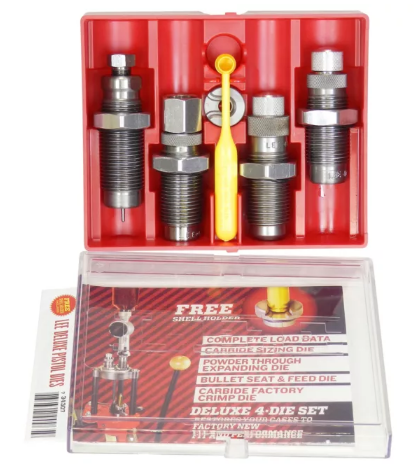
    Last time I hit the high points of beginning reloading and briefly discussed the different style of presses and other equipment. The presses are useless without dies specific to the cartridge that you intend to reload. Let’s talk about dies.

    There are two basic style cartridges: straight walled cases and cases with shoulders on them. Because of the different shape, properties of brass and steel we end up with two different kinds of dies: tool steel and carbide steel.

    Carbide steel is extremely hard making it prohibitively expensive to machine a cavity in the die to fit shouldered cases. You can get such a critter but when you see the price tag you will be purchasing tool steel dies. Because tool steel is not nearly as hard and kind of rubbery lubrication is requied to avoid having a brass case stick inside the die. These can be very difficult to remove and the die may be damaged in the process. This adds two extra steps to the reloading process: lubrication and subsequent cleaning of the cases.

    Dies for straight walled cases are usually fitted with a carbide steel liner. Because they are so hard and highly polished straight walled brass cases do not stick and slide right out with a polished surface. This greatly adds to the convinience of sizing spent cases back to size specifications. Always get carbide dies for straight walled cases.

    Of the manufacturers I prefer Lee Precision dies. Dies are full length threaded on the outside in 7/8×14 so that it screws into the press. This is pretty universal. There is a lock ring that rides on the outside of the die to set it firmly in the press. Lee is the only manufacturer that uses an easily replacable rubber O-ring to tension that lock ring. The other manufacturers use a set screw in the lock ring. That tiny set screw can become frozen and difficult to remove. It also sets against the 7/8×14 threads on the outside of the die and can damage them. Also, Lee dies are of high quality, low cost and combine several operations in single dies. Because some people prefer other brand dies but want the Lee style lock ring Lee will happily sell you as many of their lock rings as you wish to buy.

    All of the manufacturers produce high quality dies and I own at least one set from all of them. There is one more type of die worth noting. These are high-precision dies aimed at the long range rifle shooter. These allow for more precise sizing and seating of bullets, something we will discuss in a later article. The stand-outs are the Redding and Forster dies.

    If you are getting into benchrest shooting you would definitely want to shell out the bucks for some of these. I don’t have any because the dies I already have make ammunition that is more accurate than I can shoot anyway.

    This is a highly technical, tedious subject that is impossible to write about with inspiration. I will try to include as many tips and tricks I have learned over the years that you can’t find in any book so that those who intend to start reloading will be saved the time and trouble of learning on their own. I hope there are enough gun nerds around here that some will slog their way through and any other reloaders out there please add your tips in the comments.

  • I Fucking Love Astrology: The Horoscope for the Week of August 12

    This week, we explore new frontiers in how-late-can-I-submit-something-and-still-make-its-slot?

    If I told you exactly how busy I’ve been, I wouldn’t have time to tell you anything else.   Suffice it to say:  Germans.


    Fortunately, this week the skies are pretty straightforward, if not particularly happy.  The big indicator is a FIVE (5!) planet alignment of Sol-MERCURY RETROGRADE-Terra-Luna-Mars(retrograde). None of these are good signs in and of themselves, and when you line them all up together you get bad shit happenin’ yo.  Everything is representing bad change, loss, destruction etc.  There is an interlocked alignment of Sol-Venus-Saturn(retrograde) indicating that part of this general shittiness will be the end of a loving relationship, or (possibly) a bit of pleasant novelty in the rump-pumpy aspect of life.

    Sorry.

    There is one bit of good news; Venus is in Libra.  This means that the second interpretation of the the second alignment is more likely.  Thank Bob for small favors.

    Leo, which had been enjoying niftiness is going to have a week of chaos and general shitstorms, what with MERCURY RETROGRADE and the moon causing havoc.  Huh.  Maybe I’m a week behind in my charts, because if next week is more hectic than this one…  well, it was nice knowing you all.  For the rest of you, DO NOT get a haircut this week.

    Rufus’ life remains stable.

    Jupiter really should be doing something about the general state of the skies, but instead is just vaguely helping out chemo patients in Scorpio.  I guess I can’t really bag on him too much for that.

    TW:  Hipster Porkpie, Trilby Neckbeard, 70’s Drummer, Blonde Asian, (((Redhead))), and Brunette Bassist Babe.  God Bless America.


  • Other Necessary Equipment – Reloading, Part 2

    Read Part 1

    This article is for informational purposes only. Suthenboy is not a credentialed expert. Do not attempt any of these activities without first consulting an expert or a manual published by accredited experts or manufacturers.

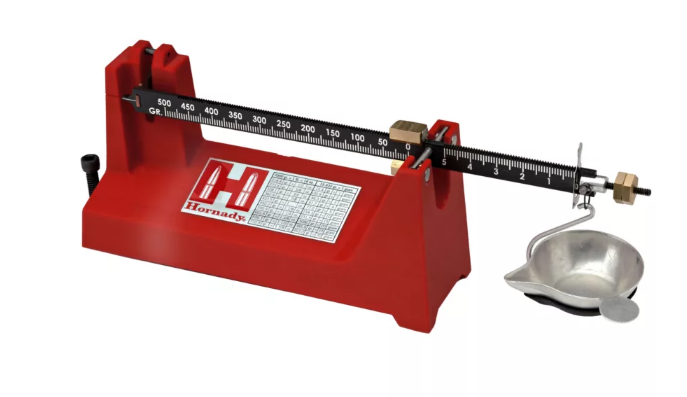
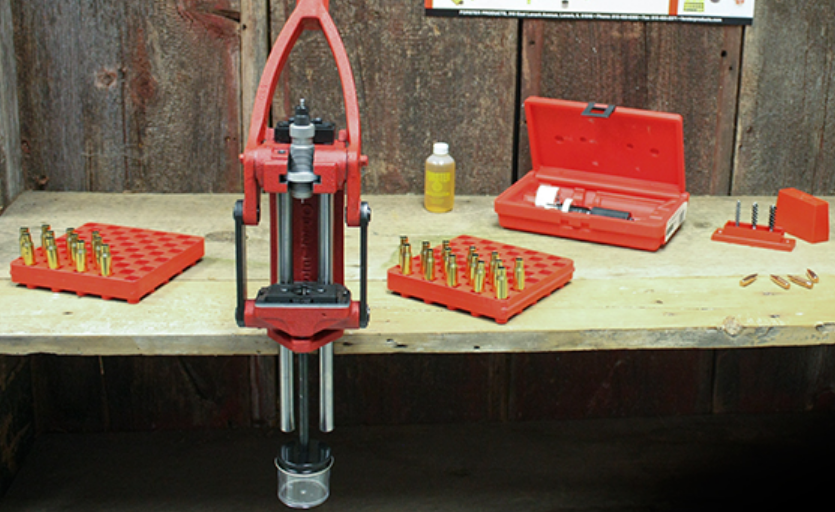
    The press is the heart of the reloading set but the beginning reloader will also need a good scale, a powder charger, a micrometer and a priming tool.

    Scales can be analog or digital but they must be calibrated in grains. The grain is an ancient unit of measure that originally meant the weight of one grain of wheat. Today it is defined as 1/7000 of a pound. As far as I know, the only people to use that measure any are in the firearms industry. My scale is a Hornady analog scale and is accurate to 1/10 of a grain. It cannot malfunction as it is a balance beam scale.

    There are also digital scales and powder dispensers with built in digital scales. I have never tried these but a lot of reloaders swear by them.

    A good micrometer can be had for a few bucks at any tool store. I recommend the dial type rather than the digital ones as they are easy to use and last much longer than battery powered micrometers. I also recommend one calibrated for inches as most calibers are measured in inches. Conversions are simple for metric calibers.

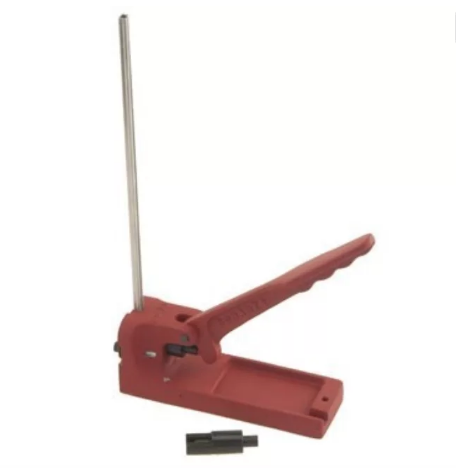
    Priming tools are another matter. There are many on the market and many presses have a priming function built in. It is important that primers be seated just below the base of the case and a good priming tool will do that in addition to allowing you to seat primers rapidly and accurately. You don’t want a tool that can mash a primer so hard that it ignites. After Lee precision changed the design of their hand tool it worked less smoothly so I switched to an RCBS which works fine for me but I am thinking of switching again to a Forster bench mounted priming tool. It is specially designed to seat primers very accurately without danger of ignition. It uses a tube style hopper instead of the pan style, which I like because it is easy to turn all of the primers correctly in a pan and then peck them up with the tube. Shell holders are not required and the bench mounted tool is easier on your hands.

    Powder dispensers can be fairly simple affairs or very complicated. I like simple. The old style has a hopper on top that feeds into a cavity drilled in a rotating block. The cavity has a piston style floor that can be moved into the cavity at various depths to adjust the amount of powder that can enter the cavity. When the handle is in the down position the cavity opening faces up and the hopper fills it. When you turn the handle down the rotating block turns and the cavity faces down, emptying through a small spout directly into the case which you hold under the dispenser in contact. The problem with these is that as the cavity opening passes away from the hopper on its way to the spout it can chop grains of gunpowder. This can change the weight of the charge slightly and also causes the gunpowder to burn at a different rate. It doesn’t really create danger but it does affect accuracy. This is a bigger problem with tube powders than flake or ball which means rifle powders where accuracy is more of an issue. A simple solution is to empty the case back into the hopper if you feel an especially hard chop as you move the handle. A better fix is the Lee Precision charger which is designed to not chop any powder grains.

    The automatic dispensers are much more complicated but easy to use. I have never used one, but I get good reports from the users.

    A couple of other tips:

    Your bench should be sturdy and large enough to mount your equipment on but not so large that clutter accumulates on it. Space has a tendency to fill up. If your bench is not too large it will be easier to keep clean and organized.

    A loading block is a cheap accessory that holds your cases in between loading steps so that they don’t get knocked over. It helps keep the process organized and you can keep a better eye on everything. You can get one for just a couple of bucks. Get one.

    A primer tray is another very cheap, very useful item. It is a small plastic tray with tiny ridges in it. Primers are placed in it and it can then be lightly shaken back and forth. As the primers slide around in it the open edges of the primers catch on those ridges and the primers flip to face all in the same direction. They can then be more easily loaded into the priming tool hopper.

    Clean cases are easier to work with and function better in firearms. You don’t have to clean your cases after every firing but after every second or third loading is a good idea. Most hardware stores sell vibrators for cleaning tool parts and the reloading suppliers sell them. Pick up a vibrator and some crushed walnut shell so you can keep your brass clean. These also help reduce corrosion if you store loaded ammo for long periods of time. Always use the vibrator on empty brass, never on loaded cartridges. Vibrating loaded ammo will damage the powder grains which will greatly increase its burning speed creating dangerous pressures.

    If the Lords of the Glibs keep publishing these next time we will go through dies and toss in more tips and tricks.

  • A Slice of Omaha Beach: D-Day, 1944 pt. 1

    I think it was MikeS who said, “What next, Omaha?” It took about 10 seconds to say, “Why not?” Well, for one thing, 10,000 Allied casualties on the first day, It wasn’t a small battle, and a lot of shit happened all at once, kind of like war, anyway…

    I decided to work in 1/72 scale this time (a soldier is 1” high) due to the scale of battle, and I could get more men on the field that way. Next was deciding where I wanted to build. I chose a cliff that has a large bunker system full of artillery, and the Rangers are going to attack and scale the cliff, WooHoo! Uh, oh, how do you get there?

    Higgins Boats: Built on a design from a Loosiana Swamp Boy, low draft and easy landing, they carry 15 troops, and are swampy as all get out, but they get the job done, of course, until the Germans open up on you. We will get to that….

    Water: Yay! I get to spend a lot of time and money experimenting with surface water, you see, I need to have deep water, sunk/blown up Higgins Boats, and blood water up against the shore; mockups will be required.

    Army Men!: I have 47/87 finished, and another 30 on deck, tedious is too simple a term for this tiny ass BS, but it’s cool. I’m trying for at least 500+ men, 9 or 10 landing craft, multiple Shermans, and a very busy landscape.

    The Germans: I found a guy who 3D prints out various useful objects, very cool but he ships like a snail. We’ll go over the Germans next.

    ’til next time!

    WAR! What is it good for? Making dioramas!

    HUH!

    Check out all the photos here (so far)

  • I Fucking Love Astrology: The Horoscope for the Week of August 5

    I am made of busy.  Fortunately the single busiest day is past, though there will be a significant local maximum next week.  Hopefully the week after that work should return to normal levels.  Of course, I’m moving at the beginning of September, so that activity is picking up.  My visual media collection fits in four 12″ x 14″ x 18″ boxes.  My cookbooks fit in two.

    I have been so busy that I haven’t been able to Glib properly.  I will say that after reading ‘s excellent fiction piece that this site is just some Gilmore couture reviews away from being Hefner-era Playboy.

    MERCURY RETROGRADE

    It is very strange to have an alignment that lasts for a week, especially those involving inner planets.  But this week we still have that good-but-awkward-lovin’ arrangement of Venus-Jupiter-Mercury (retrograde).  It’s not in the same orientation, what with orbital resonances and all, but is still exists.  Someone up there wants you to have good stories to tell.  Please do tell in the comments.  I’m sure there are lonely people reading that would appreciate it.

    There is another, more disturbing alignment this week:  Sol-Mercury (retrograde)-Terra-Mars (retrograde) with the Moon in opposition.  Bad weather, destruction, extreme tides, loss, ill tidings, floods, wild animal attacks, drownings, fires.  Other than that, things should be fairly routine.

    The special effects were too loud.
    Other than that, how did you like the play, Mrs. Lincoln?

    With all this retrogradin’ going around, the zodiacal influences are stagnating.  Capricorn and Aquarius are going to be with us for a loooong time.  That’s not going to be too terrible actually, though we will be coming uncomfortably close to the very bad retrograde house crossing.  Close, but it won’t be happening.  So we got that going for us.

    Other things we have going for us?  Stars-aligning-for-destruction music.

  • Beginning Reloading

    Read the series

     
    This article is for informational purposes only. Suthenboy is not a credentialed expert. Do not attempt any of these activities without first consulting an expert or a manual published by accredited experts or manufacturers.


    I developed a passion for shooting and hunting at an early age. I suppose my Grandfather’s and Father’s love of firearms rubbed off on me. Shooting for me was what golf is to others. It is an activity that requires discipline, an activity where focus and precision pays off. I constantly competed against myself always trying to improve and over time with effort the improvement was very evident to me. Like most the majority of my shooting was done with 22 Long Rifle because of economy. When I was about 14 years old my father gave me a wonderful Christmas gift – a Lee Precision handloading set and a Ruger No.3 rifle chambered in 22 Hornet. Suddenly I could shoot center fire for less than the price of 22 Long Rifle.

    Since that Christmas, I have reloaded hundreds of thousands of rounds, maybe approaching a million and a half, in every caliber you can imagine, save the new-fangled rounds that have come out in recent years. Yes, I said it. Get the hell off of my lawn.

    Since those days our economy has expanded dramatically, the cost of reloading components has risen and the cost of bulk ammunition in common calibers has fallen. For plinking ammo reloading is not as economical as it used to be but reloading still has an important place. Uncommon calibers can be exorbitantly expensive and difficult to find. Precision rifle shooters cannot obtain the quality of ammunition their sport demands off the shelf. For people like me, reloading is a very enjoyable hobby and an end in itself. With experience one can acquire one heck of an education about the sport, and with a small stock of components and tools never lack for ammo in a pinch.

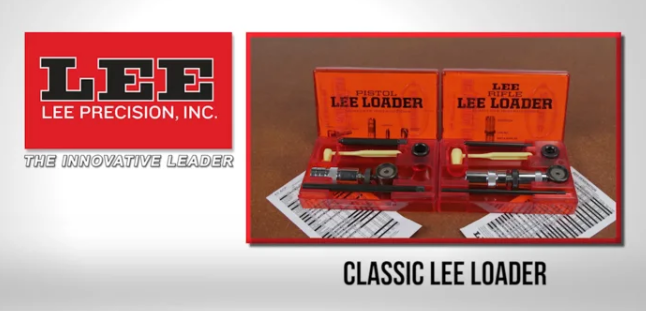
    Many people, like me, got their introduction to reloading with a Lee Precision handloader kit. It is simple to use and at about forty bucks the smallest outlay of cash to get started making your own ammunition. I haven’t found any distributors for these little gems but you can buy them directly from Lee Precision.

    I am not aware of any other companies that fill that niche but if you want to step up to more sophisticated tools there are many manufacturers. The big names are RCBS, Lee Precision, Redding, Lyman, Hornady, Dillon, Forster and MEC. All of these companies have websites (links above) and are distributed through a large number of suppliers. I am not going to make strong endorsements for any of them because they all make quality products that are better in some ways than the others. Like choosing a firearm the beginning reloader will have to decide by their own personal preferences.

    As for distributors there is a plethora of them. If you prefer shopping in-store Bass Pro and Cabela’s keep a good stock on the shelf. There is also the odd and end small sporting goods stores around. For mail order there are number of large houses for comparison shopping. I find that their prices are very competitive, their stock reliable and their service top-notch. These include Midway USA, Wideners, Brownells, Precision Reloading, Natchez Shooter’s Supply and Cheaper Than Dirt. This is by no means a comprehensive list.

    The first step up from the Lee handloader kit is a single stage press. This press bolts onto a sturdy work bench and holds one die at a time. There are some very high quality single stage presses out there and these happen to be my personal favorite. I can concentrate on one step at a time and pay close attention to every detail. My personal press is a Forster. I consider it of the highest quality. It also has great advantage in convenience as the dies are held in a groove so you don’t spent time screwing them in and readjusting each time you change dies. Additionally it has clamping jaws to hold the cases so no large sets of shell holders are needed.

    Forster co-axial press
    Forster co-axial presses are not cheap but definitely worth every penny for the hard core reloader.

    The next step up from the single stage press are multi-stage presses. These presses hold more than one die at a time and each crank of the handle performs one step of the process on multiple cases as they progress around a turret. Spent brass goes in one end and a fully loaded case comes out with each crank of the handle. Obviously these presses produce loaded ammunition for the high volume shooter.

    The last step up would be motor powered presses. Many of the manual progressive loaders can be accessorized with motors and by now we are talking about high budget equipment. Dillon is commonly considered the top of the line motorized progressive loader and most competitive shooters use them but there are others that work well.

    I have a progressive loader but I prefer to use my single stage press. With the multi-stage press there are too many things going on at once for me to fully pay attention. If you are a novice intending to get into loading your own ammunition I highly recommend starting out with a single stage press. Safety must always come first so take your time. Don’t get in over your head. When you have learned all of the ins and outs of the loading process and all of the things that can go wrong then move up to a multi-stage press.

    Addendum

    A recent study showed that CCL holders are six times less likely to commit crimes than police officers.

    There is a reason for that. These are people who are law abiding by nature and interested in keeping their licenses. I suspect the same is true for reloaders. These people pay attention to detail. They follow the rules. That becomes second nature to them. Safety is a huge concern and they become accustomed to thinking that way. If you program yourself to behave that way reloading can be safe and rewarding. Never forget and become careless or have lax standards. You are dealing with inflammable materials that can develop very high pressures very quickly. Bullets, even travelling at low speed have incredible momentum. They carry more energy than you think even at speeds low enough to see with your eye. A relatively light lead slug travelling at the speed of an airsoft pellet can be deadly. You can lose eyes, fingers, get broken bones or severed arteries. You can receive severe burns. If you have a store of gunpowder in your reloading area, depending on how much, you might want to consider that if your house catches fire you may have to stand in the street and stop the firemen from approaching the structure. Let it blow. Nothing in your house is worth someone losing a life over. I threw all of the candles out of my house years ago. I don’t smoke in my reloading room.

    Safety. Safety. Safety. Always on my mind. In the forty years or so that I have been reloading ammunition I have never had a single failure. Every single cartridge I make is done with great care. I own about a dozen fire extinguishers. Kitchen, living room, Jeep, Honda, bedroom, garage, outside shed, mule, and two extra bedrooms.

    Don’t be that guy. Be Safe. Stuff can be replaced. People can’t be.

  • A Quick History of Northeast Dirt Modifieds and The Lessons it has to Teach


    Foreword

    This is a brain droppings piece on the development of modified stock car racing in New York, New Jersey, and Pennsylvania, and a couple lessons that can be learned from it. My family has been racing for three generations, and it is without a doubt my biggest hobby and passion. Hopefully, the lesson is clear: without the guidance of a Top Man, people spontaneously created a sport that still thrives almost 70 years later.

    Early History

    In the late 1940s, much of the young male population returned from war with a decent education in mechanics. This set the stage for a transition from the special-built race cars of the past, to racing stock cars. In the northeast, the coupes and sedans of previous decades were pulled from junkyards and put to work on the dirt ovals as racing machines.

    Over the first few years, innovation was rampant. Each week the coupes and sedans would become more modified. First went the front fenders, to allow for bigger tires with more turning radius. Then the engines were altered, custom building parts and boring out the cylinders to make the biggest (and fastest) motor. They went from being stock car races, to modified stock car races.

    1960s style coupe modified restored
    1960s style coupe modified, restored

    The Golden Age

    By the mid ’60s, the cars followed a basic formula, a ’55 Chevy frame, a ’40s truck solid front axle, a classic coupe body, and a 427ci Corvette engine. Most of the parts were gathered from junkyards, stripped off of old cars, or custom built. This is where the spirit of small time dirt track racing lies. A driver or mechanic could come up with something in their garage, build it themselves, install it onto a car, and win.

    As 1930s coupes and ’55 Chevys began to transition from junkyard jalopy to collector’s item, the racers had to seek out a new body and chassis design. Enter the subcompact car. Turns out those cheap Pintos, Gremlins, Pacers and Omnis might not have race car hearts, but they did have the skins. The small, boxy style was easy to recreate with a sheet metal brake and some elbow grease. The bodies were made as small as possible, with the driver going from the stock left side of the car to the center, running the driveline directly between his legs. The modified stock cars began to stray further from their stock roots.

    Late 1970s Gremlin body modified, restored

    Super Dirt Car Big Block Modifieds

    The innovative minds of the day took racing from junkyard cars racing for a couple hundred bucks, to highly tuned machines running for purses in the tens of thousands. The northeast touring series, which still exists today, brought regional and national sponsors into the fray. With more money available, drivers were willing to spend more to have a better chance at the prize (incentives and all that). Enterprising and successful drivers began to build their cars for other people. Speed shops began popping up to sell custom parts. The days of winning with a home built car began to fade.

    The stock car moniker was finally dropped in 1981. At the end-of-season race at the Syracuse Mile, a driver from Florida and a car builder from Missouri showed up with a car that looked nothing like anything on the street. The rules of the time prohibited bodies that were too narrow to reduce weight and drag, but they made no mention of a maximum width. This was exploited by the team of Kenny Weld and Gary Balough, who showed up with a piece holding F1 inspired aerodynamics, with wide wings and louvers that sucked the car to the ground. The car won by a lap. Teams scrambled in the off season to imitate the aerodynamics of what became known as the “Batmobile” and the rules were altered to become far more restrictive. The sanctioning body vowed to never let this happen again, as the racers all deserved a fighting chance against such innovation. And so the cars went from varied bodies and individual pieces to uniform cars bought from a few dealers.

    Modern Era

    This year, one of my local tracks (Orange County Fair Speedway) will host the 57th annual Eastern States Championship weekend in October. Older than the Super Bowl, this race is a remnant of days gone by. It once hosted over 150 unique and homemade modifieds and packed the house with close to 10,000 fans. This year, 2018, it will still pack the house, with a weekend full of camping, racing, and general redneck debauchery. But the cars will be towed there in stacker haulers, they will all look exactly the same, with components that can be bought from two or three different suppliers. The car counts will remain strong; 60-70 will try to qualify for 40 spots. But the sport has definitely changed. If someone comes to the track with something new, it is more often called cheating than innovating.

    Eastern States 200

    How this connects to Glibs

    You might wonder what this is doing on this site, as opposed to some blog. In my opinion, this was a description of what a completely unbridled marketplace can create. Rules were not developed before the class, but afterwards to fit what already existed. Many of these rules were misguided attempts to keep the sport safe and inexpensive that often had the opposite effect. The biggest rule, a mandatory 467ci big block engine, has priced many people out as these engines become antiquated and harder to find. If the rule was not in place, bored out small blocks would easily surpass the big blocks in use and efficiency, but a bureaucratic series that has the philosophy of “it has always been this way” will not allow it. After all, they collect the sanction money.

    Many tracks operate independently with open motor rules and see good car counts and better competition. However, these small budget drivers are unable to run for the large purses that the series offers, hamstringing them from being able to grow their team. Almost as though having more restrictions gives the established, higher dollar teams a better chance of remaining dominant…amazing.

    The story of modifieds is also one of order arising spontaneously and not from the might of a sanctioning body. Competition normalized, cars became safer and faster, all without the guiding hand of a Top Man. The track was a safer place when a wild driver would be taken care of in the pits by the team whose night he wrecked, as opposed to a he said/she said scenario arbitrated by a track promoter and sometimes the local police.

    Afterword

    Hopefully you enjoyed this and learned something. Racing has been in my family for generations, and I tried to keep it as brief and true as possible. The links to libertarianism may be tenuous, but they are sincere.

    As a parting word, I would ask you to go to your local dirt track. Bring the family, it is happening somewhere close to you (unless you live in Massachusetts; I have yet to find a dirt track there). Not all racing is the glamour of F1 or NASCAR. The top billed car classes may be pre-built, but most tracks have beginner classes that are pulled out of used car lots. Plus, the drivers are still the same old blue collar guys looking to have a good time on a Friday or Saturday night by participating in a sport they love.

    Any Glib that lives around the NY/NJ/CT area, try to get to the Eastern States 200. The racing is better than any major series, and the beer is cheaper and cold.

    Thanks to Tundra for getting me off my ass to write this finally.

    History Sources
    Superdirtseries.com
    Orangecountyfairspeedway.net

  • What Are We Reading – July 2018

    jesse.in.mb

    Do not let my colleagues fool you with their nay-saying about James Swain’s The King Tides (Lancaster & Daniels Book 1). It is an entirely adequate beach read with a chipper pacing and zombie-like kiddie predators. To my mind, the main drawback to this book is the sponsored content, or the weird brand name dropping plus generic non-affiliated copy material–depending on if the author was paid for this or just lazy and trying to meet a word-count. It was jarring to be reading about the author’s disappointment that a kiddie diddler had smashed his phone only to be rescued by Verizon!

    “His phone was new, courtesy of his ex-girlfriend tossing the old one out of a moving car. Replacing it had been a snap. A quick trip to the Verizon store and forty-five minutes later he’d walked out with a new Droid, his contacts and apps restored. Kenny’s phone was also a Droid, and he wondered if Kenny had bought it from Verizon, which had more locations than a hamburger chain. If he had, then all his data was stored in the cloud and could be easily restored.”

    Spoilers: he also upgrades his phone from a Droid to a Moto Z2 Force during this exchange for only $40! I’m not sure that I’d recommend this book on its merits, but there are now enough people who have frog-marched themselves through it that it’s part of the current Glibertarian cultural canon. Don’t be left out!

    JW

    Have you ever read all the information that comes with penicillin prescriptions when the pharmacist fills them? Vomiting. Check! Mild skin rash. I wonder what “mild” means? Upset stomach. Check! Diarrhea. Uh-oh! I’ll be right ba….

    Brett L

    As part of an experiment in group self-abuse, I read James Swain’s The King Tides (Lancaster & Daniels Book 1). This book is terrible. Random shit not at all relevant to the plot, rogue FBI agents distributing kiddie porn (actually the most realistic part of the story), super-fit former Navy SEALs with beer guts congenital conditions that somehow didn’t disqualify them from that competitive system, kidnapping attempts of hot teen-aged white girls that the police don’t care about. I regretted reading this, even though it was free. Don’t buy it. Please do not encourage Mr. Swain to write any more books.

    In my literature entry for the month, I read Without a Country, a Turkish work translated into English. It’s an interesting family history starting with German Jews fleeing Hitler to populate Ataturk’s new university system, where hope and religious tolerance flourish, and tracks the changes in Turkish culture from the Muslim secular hope of Ataturk to the more fundamental Muslim sympathies. It was a good book. I enjoyed the writing.

    I also read Curious Tales from Chemistry: The Last Alchemist in Paris and Other Episodes by Lars Öhrström. As a chemistry geek, these are fun little tales about substances, some basic chemistry like orbitals, and history. Places, people, and things interesting to their history (like the guy tasked to steal British steel-making secrets for the Swedes). 

    Old Man With Candy

    In Jewish tradition, the Torah is divided up into sedras, roughly analogous to chapters. Each Sabbath, a sedra is read, sequentially, until at the end of a year cycle, the last sedra is finished. We have a nice holiday to celebrate it, Simchas Torah, then the process is begun again. For years, I had a similar ritual, reading a chapter at a time out of The Feynman Lectures on Physics each week until I was done the three volume set, then I’d begin again. This kept my basic physics sharp and it was, for a geek, remarkably enjoyable. The Lectures were a series of notes from a one year freshman physics sequence taught by Richard Feynman (arguably the greatest physicist of the 20th century), and transcribed and edited by two other physicists, Robert Leighton and Matthew Sands. The collaborators did a wonderful job capturing Feynman’s voice and unique style, and this set of books might be among the greatest works in the English language. Anyway, for reasons of life, I stopped doing my ritual some years back, and recently, it occurred to me that my brain suffered from the absence of Feynman’s ghost. So I started again. And it’s every bit as delightful and wonderful as I imagined, the exact opposite of dry technical books. Even if you’re not mathematically inclined, there’s so much clear and common-sense explication of how the universe works that you’ll come out of the experience much smarter than when you went in.

    I linked Volume 1 of the set because that’s the one that is likely to have the most appeal to non-physicists. It covers a sweeping range of topics; though focused on classical mechanics, Feynman talks about probability, thermodynamics, cosmology, biology, psychology, wine, and as a bonus, he offers his rather tart observations about philosophy. More so than anyone else writing about science, he is rigidly clear about what things are “this is the way it is, we can describe it, but we can’t say why it is this way” and what things are “here’s something about which we know why.”

    Strange as it may seem, we understand the distribution of matter in the interior of the sun far better than we understand the interior of the earth. What goes on inside a star is better understood than one might guess from the difficulty of having to look at a little dot of light through a telescope, because we can calculate what the atoms in the stars should do in most circumstances.

    One of the most impressive discoveries was the origin of the energy of the stars, that makes them continue to burn. One of the men who discovered this was out with his girlfriend the night after he realized that nuclear reactions must be going on in the stars in order to make them shine. She said “Look at how pretty the stars shine!” He said “Yes, and right now I am the only man in the world who knows why they shine.” She merely laughed at him. She was not impressed with being out with the only man who, at that moment, knew why stars shine. Well, it is sad to be alone, but that is the way it is in this world.

    Here’s an example of Feynman’s presentation methods, talking about the incredibly important and almost universally misunderstood topic of entropy. If you like this and the lightbulb goes on, pick up Volume 1 of the Lectures and prepare for a wild and crazy ride through the way the universe works.

    SP

    I also selected The King Tides (Lancaster & Daniels Book 1) for my free Kindle book this month since there was nothing else even remotely interesting. (How much do the authors pony up for this? I can think of no other reason for the choices.) However, being smarter than my dear Glib friends, I waited until they had all reported in, then quietly deleted it from my Kindle unopened.

    In enjoyable reading, I am swiping through How to Speak Midwestern by Edward McClelland. Things I’ve learned so far include: where Little Egypt is; what a frunchroom might be; where a gangway is located and for what it might be used; who Trixie is and what she’s up to with Chad.

    SugarFree

    I read the Joe Pitt series by Charlie Huston. Hard-boiled vampire private detective in a Manhatten ruled by vampire clans as bitchy and mean and petty as any 8th-grade clique of half-pretty girls. They are competently written. but mostly crib from various other, better detective novels for plot: the spoiled heiress with the monstrous father from The Big Sleep, the cynical operator playing all sides against each other of Red Harvest, Mike Hammer’s blase cruelty of those he has decided are guilty. The best book is the third, Half the Blood in Brooklyn, with Joe fighting off a thoroughly crazed sect of Hassidic vampires and their odd workaround for obtaining “kosher” blood. Overall, the series isn’t bad, it just also isn’t very good.
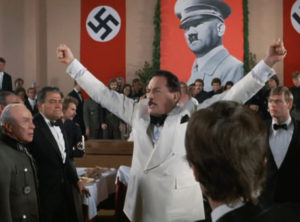
    I read/watched Ira Levin’s The Boys From Brazil. Gregory Peck as Dr. Mengele is one of the more inspired casting decisions in movie history, constantly walking the line between terrifying and absurd. The biggest knock on the movie from a production standpoint is the blue contact lens they had to put on young Adolf–they are distracting in our 1080p world.

    I also read/watched that old stand-by, The Exorcist by William Peter Blatty. Chock full of juicy Catholic guilt and atheist hate, the movie satisfies like no other. The Zodiac Killer said of the film “I saw and think ‘The Exorcist’ was the best saterical [sic] comidy [sic] that I have ever seen.”

    I made it through two chapters of The King Tides. It was terrible.

    Web Dominatrix

    I picked up a couple books this past week.

    Originals by Adam Grant and Talk like TED by Carmine Gallo. Originals is about how non-conformists influence and change the world, while Talk Like TED is about public speaking a la TED Talks.

    I have no interest in public speaking (or really doing anything that requires me showing up somewhere on someone else’s schedule), but I am into livestreaming and video marketing.

    So far Originals is really interesting. Adam Grant is a great writer and he pulls in some compelling studies and references. I haven’t cracked open Talk Like TED yet.


    ZARDOZ

    ZARDOZ SPEAKS TO YOU, HIS CHOSEN READING ONES. BOOKS CAUSE NOTHING BUT TROUBLE! OH AND IXNAY ONYAY ETHAY IZARDWAY OFYAY OZYAY!

    ZARDOZ HAS SPOKEN.


    Swiss Servator
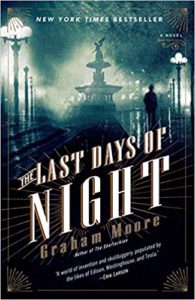
    Upon recommendation (and loan) of a regular at my local, I read “The Last Days of Night” Edison vs Westinghouse (as in Thomas Alva vs George) and Nikola Tesla wanders into the picture. The story is from the point of view of Westinghouse’s young lawyer in the fight against Edison over the patent of the light bulb. Mostly based on actual events, it is a fairly interesting look into inventing, what drives/drove the inventor/inventors of the time. A little electricity learnin’ and some fancy laweryin’ too. Reads quickly, and has some very, very short little chapters…almost like the author was not sure where he was going at first.  Probably would make a decent movie if cast right. Give it whirl if you have some time.


    STEVE SMITH

    STEVE SMITH BUSY WITH CASCADIA INDEPENDENCE. HIM NOT HAVE MUCH TIME READ. JUST TREATIES AND FOREST LAW (HIM PROMINENT FOREST LAWYER!). READ MONTHLY QA REPORTS ON HIKER ENCOUNTERS TOO. BY ENCOUNTERS, MEAN RAPE.

  • What Are We Drinking; or a very special National Tequila Day Post

    Dearest Glibertariat, as some of you may know (or not), every day is a national day of something, to the point where the entire concept almost becomes empty…like my glass…right this second *runs off to fix that*, but what you need to know is that July 24th–TODAY–is national tequila day, and I can think of no better reason to clear some space off of your shelf and celebrate the pluralism of ‘murrica by drinking something that cannot be legally produced here! I have recruited the Boyfriend (henceforth TBF) to help me drink a bit of every  tequila in my home and asked the other Glibs to join in with their notes on such an effective beverage.

    My portion of this is storied including a reposado that I received as a gift for marrying a couple who met on TOS, a bottle given to me by my aunt and destroyed by a theater major 14 years ago, a couple of bottles that my roommate LOVES and a bottle of mezcal that she declines to finish, so I’ll be helpful. We’ll be rolling through easiest to hardest to drink.

    Mixed tequilas as found in jesse’s house

    Clase Azul Reposado

    • Jesse: This is too easy to drink, almost desserty. Nice notes of vanilla, kinda sweet. I can sip this at room temp and not flinch.
    • TBF: Really smooth. I’m guessing oak-barrel aged [J: we looked, he guessed right]. It’s the color of honey and has citrus, vanilla and clove notes.

    Casa Noble Reposado

    This has a special place in my heart. 15 years ago my aunt gave me this bottle, which I saved for New Year’s Eve. I brought this and a bottle of OJ, took the first sip of the tequila and gave the OJ to someone who had a bottle of vodka and looked lost…it made her night and I proceeded to drink the Casa Noble straight all night until a theater major cracked the cork into the bottle and I—most of the bottle deep at this point, and quite possibly stoned (things are fuzzy here)–proceeded to spend the night enjoying it in reverse. Because of the corking it’s sat on a shelf for years and I’m using today as an excuse to try it again.

    • TBF: You goofed. I can tell this was good once but it’s oxidized to shit. All the flavors are muted to the point of being uninteresting. I’m getting some wood and leather, it’s like drinking Jesus’s sex dungeon, but it’s incredibly smooth.
    • Jesse: [glumly] I goofed. *pours out the rest of the bottle with chunks of cork floating in it, contemplates buying a new bottle because it was that good…even at this price point.

    Espelon Reposado and Espelon Añejo (bourbon barrel aged)

    I’m pairing these together because they were similar. The reposado was a bit softer than the Añejo, which we found surprising, and the reposado was a bit simpler with the Añejo having a more complicated and more bourbon-ey profile.

    • TBF: *cracks reposado bottle open* HELLOOOO SPRING BREAK. This is all very agave, very drinkable, but not a ton of complexity.  This screams going to a frat party in your sweatpants senior year of college. This is why your roommate’s margaritas are so good. I just thought she was skilled. *tries the añejo* way more complex, more vanilla and bit harsher. The bourbon notes ask the question “Jesse, why are you making me drink tequila when you have bourbon in your house?” This is a frat party in sweatpants in KY.
    • Jesse:  If we kill off everything  below [the reposado] and make this the plastic jug tequila the world will be a better (or maybe worse) place. Still sippable but we’ve definitely stepped down a tier from the Clase Azul and Casa Noble [circa 2004]. The añejo is good, but I’m happier with the reposado *has more reposado*.

    Mezcal Embajador de Oaxaca (blanco)

    Kinda the oddball here. I hoped TBF would enjoy it since he likes Islays. My roommate decided it was undrinkable and I’ve been chipping away at it for a while.

    • TBF: This smells like nail polish and smoke. It’s like a structure fire at a nail salon off the nose. *Sips* Do moonshine distilleries explode like meth labs? You know what, they probably do. That’s what I’m getting from the flavor. Can we go back to the Clase Azul?
    • Jesse: I’m getting more smoke and less “Vietnamese women perishing in a fire”. It’s got a warm front, extremely bland middle and smoky/spicy finish. It’s surprisingly easy drinking for how smoky it is, but not particularly interesting. I’m definitely circling back to the Clase Azul.