Category: Food & Drink

  • Triskaidekaphobia

    Which one of you is it?  The Saturday day drinking crowd at Glibertarians.com has averaged 163.7 comments per weekend for the past 10 Saturdays, which means if this crowd is anything like the rest of America, around 16.4 (I’ll let you decide who is less than 2/5 of a Glib) of you have on some level have an unnatural fear of the number:

    “Please, I’m not afraid of a number,” “that’s preposterous,” you say.  Sure you’re not.  You wear the veneer of the pure rationalist as your public face.  Never flinching at the thought bad luck or fate.  You walk happily under ladders and you pet the nice black kitty that crosses your path—if you’re not a cat person maybe you kicked the little bastard in the ribs.  Deep down inside you’re clutching your rabbit’s foot or rubbing the head of the Raphael action figure you’ve had since 1991, the last remnant of the talisman you swore by as a kid.  After all, Raphael was cool—but rude.  You do this in secret.

    I know with certainty, one of you uses Not Adhan’s horoscope as an investment strategy.  Your secret is safe with me.  Its cool, I won’t judge you.

    This is my review of Lagunitas Lucky 13 Mondo Large Red Ale

    Whether or not you are among the 10% of Americans that is superstitious, Friday the 13th does have an effect on your life.  Not just the marathon from the movie, which I contend still has the best ending to any horror movie.  There is a quantifiable effect, that has drawn the attention of serious academic researchers.  People call in sick from work, stop travelling, and generally avoid leaving their house.  But why?

    Foolish mortal, murder is merely mischief,

    Some attribute it unfortunate events occurring on Friday the 13th.  The number 13 itself being associated with the Norse god, Loki, the god of mischief.  Leave it to the Vikings to consider murder merely “mischief.”. Maybe Judas Iscariot was the 13th person to show up to dinner and we all know he formed a heavy metal band in the 80s.  Most of it is simply attributed to simply being one digit behind the number 12.  With 12 months,12 apostles, 12 Norse gods, a day being divided into 12 hour segments, et al.  12 is a “complete” number.

    80% of buildings in America avoid using the number 13; buildings with greater than 12 stories simply call the 13th story above grade the 14th floor. The Apollo program even considered skipping 13, which would have made the movie much less interesting.  Interestingly enough,  a commercial runway is designated 13R and the standard Roulette wheel sports Black 13.

    Lucky 13 was released at an unusual time.  Its spring, but for most of the country it still pretty cold out.  Maybe a bit late for a stout but certainly too soon for a summer ale.  They made it a red ale, and a strong one at that.  This one I have to admit, is okay.  I’ll leave it at that.  Lagunitas Lucky 13 Mondo Red Ale 3.0/5.


    I would like to draw attention to an update to an article from a couple weeks ago.  The information I presented was, to put it bluntly, incorrect.  I have amended the article to reflect this.  H/T:  DEG.

    Why mention this?  Unlike some other websites, I like to think we have integrity.  That is all.

  • Spontaneous Cooking for One: Pan Sauces

    Last time I explained the brown and bake method which is so simple it doesn’t even feel like cooking. Another simple dinner method is to saute a protein and then make a pan sauce. This is one of the most versatile methods I know, and is perfect for chicken breasts or thin pork chops. Both can become dry and tasteless. This method adds flavor and moisture.

    One thing I like about spontaneous cooking is that I am not tied to a specific recipe, I can buy whatever looks good at the store. This week, the asparagus at the market looked sad, but the green beans looked good, so that’s what I bought.

    The method follows a general set of steps, but they are not hard and fast. The steps are:

    • Brown the protein and set aside.
    • Add aromatics to the pan. Aromatics are things like garlic, ginger, shallots, onions, celery and carrots.
    • Deglaze the pan and reduce the sauce by half
    • Extend the sauce
    • Finish (braise) the protein and vegetables.

    Babs: Laziest Line Cook
    Babs: Laziest Line Cook
    I am playing a little loose with the definition of a pan sauce by finishing the protein and vegetables in the sauce. A classic pan sauce stops at step 3, then adds cream or butter. But this is how I cook and it shows the versatility. I will demonstrate the method by making a pork chop with mushrooms and green beans in a mustard cream sauce.

    Start with your mise en place (French for put in place). I have a bunch of small glass bowls that I got at the dollar store. They are really useful, and I recommend that anyone who loves to cook get some. First, I wash and trim the green beans I think I will eat. I get some salted water boiling while I prepare the rest of the mise en place.

    Take a shallot and chop some fine and set aside. You’re cooking for one – so you don’t need much. The shallot you don’t use will be ok covered in the fridge for a few days. Mince a clove of garlic and set aside*. Next clean and slice a few mushrooms. By now the water should be boiling and I add the green beans and just cook until they are bright green. I then remove them and add to a bowl with ice water to stop the cooking. I will finish them in my sauce.

    Mise en place
    Mise en place

    Brown the pork chop on both sides but don’t cook it all the way through. Remove it from the pan and set aside. Add the shallots to the pan and let brown. Shallots brown much more quickly than onions which is why I am using them here. When the shallots are browned, add the mushrooms and garlic and cook until the mushrooms are browned and softened.

    Add Shallots and Mushrooms
    Add Shallots and Mushrooms

    Now start the sauce. Add a little white wine to the pan and swirl it around to deglaze the pan. Next, I add a little dijon mustard and some stock. Because I want this to be a cream sauce, I will add the chop and beans back to the pan now. Normally, I would wait until I extended the sauce, but I don’t want to curdle the cream.

    Deglaze and reduce
    Deglaze and reduce

    Once I add the chop and beans back to the pan, let the sauce simmer and reduce by at least half. Watch the beans and chop carefully and remove when they are done. You don’t want to overcook.

    Finish meat and beans
    Finish meat and beans

    Once the sauce is reduced to a syrup – if you coat the back of a spoon you should be able to draw a finger through it and leave a clean streak- it is ready. Add a dollop of cream, swirl and plate over the chop and beans. Garnish with a few slivered almonds.

    Add cream
    Add cream

    Done!
    Done!

    This type of sauce – wine, mushrooms, dijon mustard, is flexible. Swirl in a little butter instead of cream to create a classic sauce. You could also pan fry a steak and make the sauce with red wine and serve with mashed cauliflower.

    Other Variations:

    Another classic is a piccata sauce and it works well with pork, chicken or fish. Deglaze with white wine and add lemon juice. Reduce, then add some broth before returning the protein to the pan. Garnish with capers. I like to do that with chicken and asparagus.

    Chicken and Asparagus
    Chicken and Asparagus

    Another classic is the sauce for coq au vin. That uses a little bacon (when done, remove from the pan and crumble), add onions and mushrooms and deglaze with red wine.

    Chicken cacciatore uses wine, onions, peppers and tomatoes. Add onions and peppers as your aromatics, deglaze with wine and extend with tomatoes and their juice.

    Next time I’ll break down how I translate a recipe to my cooking method.

    * This is a LOT of garlic for a single serving, so I set some of the minced garlic aside for a dressing.

  • The Holy Thursday Special!

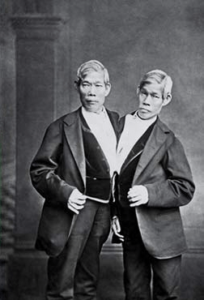
    Sometimes humans have an unhealthy infatuation with things that are simply not normal.  This has been going on since we realized that people with odd deformities are not the result of demons residing in their bodies.  Nope, these people were just freaks.

    This is my review of Green Flash Le Freak Belgian Style IPA


    This was the first beer I picked up following my annual medieval self-punishment.  It’s fairly inexpensive, available in my area, and a hoppy Saison sounds compelling in a, “that simply isn’t natural” sort of way.  Why did I get it?

    As I said, freaks have been a draw for a long time.  The earliest of nature’s curiosities are believed to gain popularity during the 1600s.  Later on, travelling shows featuring such people began.  One example were the conjoined twins Lazarus Colleredo and John Baptista, who travelled Europe with, “female about four feet high in every part like a woman excepting her head which nearly resembles the ape.”

    One person many associate with freak shows is PT Barnum.  Who is credited with the infamous quote, “There is a sucker is born every minute.”

    Turns out this is misattributed to him. Barnum however, was the type of person that would embellish the truth and even engage in activities of questionable ethics in order to turn a profit:

    The nature of this exhibition showcases Barnum’s willingness to skirt controversy and behave in potentially unethical or immoral ways. What he purchased was a nearly paralyzed woman named Joice Heth. This woman, who was nearly 80 years old, was displayed as a 161-year-old ex-nurse of George Washington.

    Barnum was well aware that buying slavers was illegal in New York at the time. However, he used a slavery loophole that allowed him to lease her for a year. During this time, he would display this frail woman for up to 12 hours a day. As a result, Heth passed away a year later and left Barnum with no source of income. Thinking on his feet, he scheduled a live autopsy of her body and charged 50 cents (a hefty sum at the time) for people to watch.

    He was even credited with creating hoaxes.

    The Cardiff Giant – This infamous case was a hoax based on a hoax. In 1869, a large statue was dug up in New York, which the discoverer claimed to be the body of a 10-foot ancient man. It was claimed that this was one of the giants mentioned in the Bible. The creator of this hoax charged people 25 cents to view it, and people showed up in droves. After it was sold for $23,000 to another showman, Barnum built a giant and claimed that his giant was the real one. When the owner of the original statue tried to sue Barnum, the case was thrown out of court. This event was the origination of the “There’s a sucker born every minute” line, a quip that was spoken by the plaintiff in this case, not by Barnum.

    The world’s earliest known photo STEVE SMITH?

    More info on PT Barnum and his antics during the age of toxic capitalism gone wild, can be found here.

    Is this beer worthy of it’s moniker?  It has good body like nearly every Saison out there with a strong citrus flavor.  It uses copious amounts of Amarillo hops which aren’t as bitter, which seem to compliment rather than balance.  It’s definitely different, but freak might be going too far.  Green Flash Le freak Belgian IPA:  3.5/5

  • Cocktail of the Week: Pink Pirate


    Avast!


    The Pink Pirate was born of a combination of intolerance and boredom. The intolerance part comes from Mrs. Dean: there is a fairly short list of liquors that she can tolerate without headaches and just kinda weird side-effects. Tequila fell off of her short list a few months ago, so she’s basically down to rum, rye whiskey, and beer. Effin’ tragic, I tells ya.

    Thus, the boredom: Her cocktail rotation was down to three or four drinks. I needed a new recipe, and for some reason was fixated on working cranberry juice into a cocktail. After surprisingly little experimentation, the Pink Pirate was born.

    This is a summer drink for getting people hammered in a hurry – the dry of the cranberry juice, the tart of the lime juice, and the heat/sweet of the ginger beer syrup all work together to make a dangerously drinkable libation. Since we invented this one, we get to name it, and between the party-pink color of the final product and the rum, the Pink Pirate was born.

    Pink Pirate

    3 oz. white rum (Flor de Cana)
    1 ¼ oz. cranberry juice (unsweetened, not the cranberry juice cocktail)
    ¾ ounce lime juice
    Ginger beer (Maine Root or Cock and Bull preferred)

    This one can also be made with 1 oz. Pickett’s No. 1 Medium Ginger Beer Syrup and club soda/seltzer instead of ginger beer.

    Ginger Beer Recipe:

    Pour the rum, cranberry juice, and lime juice over rocks in a highball glass. Top with @ 6 oz. ginger beer. Stir.

    Ginger Beer Syrup Recipe:

    Pour the rum, cranberry juice, ginger beer syrup, and lime juice into a mixing glass. Mix well – the syrup will need to be stirred or it will separate out. Top with club soda/seltzer to @ 11 oz. total. Pour over rocks in a highball glass.

    You could probably throw a lime garnish on it if you want to dress it up a little. Hell, one of those little umbrellas would look right at home on this one.

    The kind of white rum you use isn’t terribly important – the rum is backgrounded by the all the other flavors. I did try making this with dark rum, but it just wasn’t as crisp and refreshing.

    As ever, cocktailing is all about proportions and balances – feel free to adjust any of the amounts to dial it in to your preference.


    And ye better be rememberin’, no drinking and navigating!
  • Do you know what else is from Austria?

    The fun part about the internet is the ability to review products before you buy.  Which can be nice, but it resulted in a lot of blogs specializing in certain things, like say, hair products.  Then marketing departments start to notice the number of clicks they get and the blogger figures out what their price is.  Then what happens?

    “These all suck, buy brand X hair spooge.”  All of them do it on some level; never saying a negative word about any one of them willing to toss a few bucks their way.  I guess you might say it’s pretty good work to get paid to play with other people’s stuff, then write up something and post something online.  Why mess that up by writing something negative?

    I’m not getting paid, and let’s face it there’s like 80 of you, so I don’t need to worry about that.

    This is my review of Samichlaus Classic Bier.

    If you’ve never heard of it, it’s probably because it’s hard to find due to a small batch of it being brewed once a year.   Officially, it is Austrian in origin but in recent years moved its brewing to Switzerland.  This is a 14% abv beast, that might be the worst beer I’ve ever had. That might be interpreted as hyperbole but I had to think this one over for a bit.  Could it really be that bad?  Let’s compare:

    Stone Stocasticity Project.

    Take everything that Stone has ever made.  Maybe you had no idea why everyone was throwing a chip at the dealer and said, “C & E” but you followed suit and came back with 15x your bet and bought the entire product line.  Whatever the reason you bought everything Stone makes and put it in a blender.  That is what this tastes like.  The only redeeming quality its it’s healthy 7% ABV which quite frankly is a given.  Stone Stocasticity Project: 1.8/5


    Crush Cucumber Sour

    This one.  This is a sick joke played on Mexican Hipsters.  Yes, they do exist.  Crush Cucumber Sour. 1.5/5

     At this point you must be wondering what was wrong with Samichlaus.  First, it took me forever to figure out how to pronounce it due to the font.  It makes me think they are trying to hide something.  At one time they identified it on the bottle as the world’s strongest beer, which might have been true at one point but now is not even close.  It was lighter than I anticipated given its ABV.  It is a reddish-brown color.  It smells like something I can only describe as spiked almond milk.  It is sickeningly sweet, like chocolate covered malt balls.  If it was ever hopped, I can’t tell.

     Maybe I got a dud, because people apparently like this.  Samichlaus Classic Bier 1.5/5.


    *UPDATE*

    It was brought to my attention the information in the article is incorrect. H/T DEG:

    NEIN!

    Samichlaus kommt aus dem Schweiz! Schloß Eggenberg in Austria purchased the recipe from Feldschlösschen-Hürlimann-Holding. Samichlaus is still listed on the Schloß Eggenberg brewery’s webpage. I did some digging, your source has things backwards.

    The beer is still made in Austria.

  • Burger Wars – The Open Post

    Here at Glibertarians.com, we have had some good preliminary skirmishes over TEH BEST BURGER – Major combatants in the field so far are; In-N-Out, Whataburger, 5 Guys, Culver’s, Fatburger, and a couple of cursory mentions of the Golden Arches, Wendy’s, and the like. I am here to report that at the Glibs HQ, this has broken out into all out civil burger war. Being Swiss at heart, I have remained neutral. But, next thing I knew, french fries were being dragged into the conflict… a couple of snarks about shakes were seen as well.

    As this conflict swells into a new PIZZA WAR sized fight, we can only take advantage of it by having an open post and letting the combat rage! Defend your burger! Denounce your foe’s fries! Establish shake superiority!

    Oh, the innocents caught in the line of fire!

    Only one rule….we are talking chains here. Regional or National. Because if we went down to the local/one location level – everyone would have to bend the knee to Nick’s, in Lemont, Illinois.

  • A Word on Glass

    Since this question was raised, now is as good a time as any to go over basic glassware.  Like nearly anything else, beer tastes better when served in a glass; preferably a clean one.

    This is my review of–wait I don’t have a beer to review today.  Let me check the archives…

    Stone Xocoveza! Hat Tip: Yusef drives a Kia a.k.a Russian Kia drive Yusef.

    Since the type of beer many brewers put out have been increasingly become more complex, with some styles becoming some sort of arms race to see who can put the weirdest, hoppiest, or highest gravity beer to market, it helps to have a suitable glass.  Much like a pistol needs a proper holster, the right golf club to get the most efficiency from the shot needed, knowing why a mallet exists and why you might want to use it instead of a hammer, or even picking the right pair of socks–you get the best result with a tool built for task.  I will focus on the basics since there many out there that will over-complicate this.

     The Snifter

    If you drink a lot of Barleywine, Imperial Stouts, or if you are one of those people that are obsessed with bourbon barrel aged ales, this is your best bet.  Chances are if you are the type that likes a good cognac, you probably already have one on hand.

    Because of their high ABVs and strong, aggressive flavors, imperial stouts and barleywines are meant to be served in small pours at cellar temperatures (around 55° F). This makes them perfectly suited for a short-stemmed, globe-shaped snifter like the kind you’d use for bourbon, brandy, or cognac. The balloon shape focuses volatile aromas that would otherwise dissipate in an open-topped glass while allowing the beer to unfurl and develop as it warms in the glass.

    If you only occasionally drink this type of beer, the next best thing is a chalice.

    The Chalice

    No, it’s not pretentious to put beer in a wine glass! Especially if you’re drinking a fruity, light-bodied, highly effervescent saison or farmhouse ale like the ones brewed in Belgium and France where wine glasses are de rigueur.

    This is true, it is not pretentious to put beer in a wine glass–but if you do, make sure to wear a Rush Limbaugh brand necktie with your favorite polo.  Preferably in clashing colors, which will likely be a given due to the garishness of the tie. It is this way, everyone around you will assume you are a one of the world’s “special people” and will not pass judgement on you as a courtesy.  Get a chalice.

    This is probably the most versatile glass, being that it will suit also suit IPA, pale ales and nearly any other effervescent beer like many West Coast Amber Ales.  It does not however, do as well for malty beer.


    The Pint Glass

    No need to differentiate between English type with that ring near the top, the Irish version with the svelte curve, or even the ubiquitous tumbler, they’re pretty much all the same.

    This does better with malty beers.  Think English ales, stouts, porters, and brown ales. The idea here is your hand is intended to warm the beer slightly over the time you spent with it.  This link has an exhaustive list of suitable varieties.  I will concede the existence of a variant called, “the stout glass” which is really just a pint glass with a wide shoulder.  I have never used one.

    The Stein/Mug

    How I decorate my cubicle.

    Lagers go in a mug.  The thick glass and handle is meant to keep your hand from warming it.  It is also handy for those times when you had too many but are still toasting your friends with too much force or need a handy melee tool.

    Many like these because you can have a lot of fun with them.  These are suitable for all lagers with one exception:

    The Pilsner Glass

    Pilsners go in a Pilsner glass.  Unless it is dirty or all you have is a mug, this is not a polite suggestion.


    Das Boot

    This has its roots well before the movie Beerfest.  There are a few different versions of how this came to pass:  both versions begin with a Prussian General making a wager to his men prior to a particularly hard battle ahead to drink beer from his boot should they win. Turns out they did.  Here’s where it deviates:  the first is he actually drank from his boot, and the glass was made to commemorate the occasion.  The other is that he chickened out and had commissioned the glass be made.  Either way, the article linked below, says the boot shaped glass actually has its origins in England but eventually became popular in Germany.  So much so that by WW1/WW2 the glasses were sought after as war trophies by allied soldiers.  Personally, I’d take a P-08 Luger.


    So how was Stone Xocoveza?  It was actually pretty good.  It’s a chocolate stout that like Mexican hot chocolate contains various spices such as cinnamon, nutmeg, ginger, and red chillies.  It isn’t overwhelming at all, they actually keep everything in balance.  Served of course, in a pint glass.  The only downer, was the price.  Over $12 for a six pack…otherwise, good call, Yusef.  Stone Xocoveza 4.0/5.

  • An Artisanal Hawai’ian Style Deep Dish Pizza


    Pizza is widely understood to have originated on the Italian peninsula over 1000 years ago according to Wikipedia. A lot time elapsed until the 1940s when American GIs went to Europe during World War II and brought back home with them a taste for pizza. In more modern times, pizza has exploded onto the world food scene, both as a go-to fast snack to be enjoyed when time is of the essence, as well as having gained acceptance as highly regarded haute cuisine.

    In the last 70 years or so, considerable innovation has occurred in pizza technology. This article will focus specifically on a treasured pizza style: deep dish pizza of the Hawai’ian type. Deep dish pizza is made by means of baking pizza in a deep pan, and is thought to have originated in Chicago around the middle of the 20th century. The famous Pizzeria Uno claims to have produced the first. Deep dish pizza consists of an inverted topping layer scheme: cheese, then protein and vegetable ingredients, then the tomato sauce, and finally a dusting of some sort of a pulverized cheese product. In this article, we will take it to the next level by laying out the optimal process for you to create a perfect artisanal, Hawai’ian-style, deep dish pizza.

    The crust

    It is important that, in order to make the highest quality, artisanal pizza, one must start with the finest ingredients. The pizza dough is no exception. If you do not feel up to the task of making your own high quality pizza dough, you can just skip this section and buy an acceptable pre-made dough. I would recommend the pre-made dough sold by Whole Foods Market, or alternatively, any dough sold by your local trattoria – just ensure that you confirm they use non-GMO flour.

    •Approximately 2 US cups (450 ml) of Vermont’s finest King Arthur low gluten, unbleached white flour
    •Approximately 1 cup (225 ml) of distilled water, Ty Nant mineral water, or other reputable water brand
    •1 heaping tablespoon (15 ml) of Bob’s Red Mill, gluten free, active dry yeast
    •1 heaping tablespoon (15 ml) of Wholesome Sweetener’s Malawian Fair Trade Natural cane sugar
    •Approximately 1 teaspoon (5 ml) of pink Himalayan salt, Fair Trade and Conflict-Free preferable
    •1 bottle of high quality imported extra virgin olive oil (EVOO) – I prefer Fair Trade EVOO from Tunisia, and always avoid oils that include trans-fats

    Warm the water, because it will speed the activation of your yeast, and you will therefore not have to wait days or even weeks for the dough to rise. To warm the water, I would recommend using an electric kettle because electricity is clean power, but make sure you stop warming the water once it gets to a temperature of about 120F/50C. You need to do this to ensure that the yeast is not killed due to excessive temperature, as yeast is a living microorganism. Mix the warm water, the yeast, and sugar in a large mixing bowl until the sugar is completely dissolved. Let the yeast activate for about 10 minutes so as to reduce its toxin content. You will know that it’s time to move on to the next step if the liquid mixture develops a frothy head about fingernail-deep. Add to the liquid mixture a couple glugs of the olive oil, and the salt. Next, gradually stir in the flour until the mixture begins to form a viscous paste and gradually transforms into a ball of dough. Continue to add small amounts of flour and work the mixture with your hands, being careful not to add too much flour. Cease the addition of flour once the dough becomes only a little bit tacky. Knead the dough for about 10 minutes. I like to throw that shit down into the bottom of the bowl and spank the dough. If the dough starts to stick to your fingers whilst kneading, simply dust your hands with a bit of flour, and continue. The purpose of all of this kneading is to begin to further break down the gluten – don’t worry – this process will also continue during fermentation as your dough is made to sit and rise. When the kneading has gone on long enough that the dough isn’t that tacky, form the dough into a ball, and cover with a thin layer of EVOO. Let the dough sit at room temperature covered with a towel. I suggest that you allow it to double in volume, about 1 hour at room temperature, punch it down/kneed a bit more, and let rise again for another hour as it ferments. As the dough sits for an extended period of time, the yeast digests, releasing gas by-products within the dough, resulting in a crust that is fluffy and not so dense.

    Preheat your oven to 425F (or gas setting 7).

    Take your baking pan – in this case I have chosen a Williams-Sonoma lodge cast iron skillet for a more rustic taste – and coat the baking pan with a liberal application of EVOO. If you are on a tighter budget, simply stop off at a Dollar General store (mind the smell – have a handkerchief on hand) and buy a steel baking pan for single use and ask your handyman to recycle it for you after you’re done. The quantity of oil used here is important. It will ensure that the crust becomes crispy, and at the same time, quite buttery and similar in consistency to First Nations Aboriginal People’s fry bread of the American Four Corners region. By using this amount of olive oil, it is ensured that the crust will effectively be fried during the baking process.

    Extract the wad of dough from the bowl, deposit into the middle of the baking pan, and work the dough outward so that it forms raised edges thusly:

    Bake the crust alone for about 15 minutes, when it has begun to develop its first signs of golden brown as illustrated below, not unlike the look of pre-burnt, naan. As the crust is still partially raw at this stage, it is therefore pliable and ready to accept the toppings.

    The toppings

    Now, as this is the recipe for Hawai’ian style deep dish pizza, it must include the two staple ingredients: cured pork product (typically Canadian bacon) and pineapple. As everybody knows that the Polynesian races prefer to pair pork with tropical fruits for all of their meals, it is but a natural and a culturally sensitive choice that this pizza – Canada’s finest gift to the world – includes these toppings.

    For the bottom layer, I have elected to use slices of Mozzarella di Bufala, derived from grass-fed, hand-drawn, free range milk. Press the cheese slices into the crust so that a deeper cavitation is created in the partially inflated crust – more room for toppings!

    For the pineapple, I was able to obtain a rare pre-war, aged tin of pineapple chunks off from an Etsy seller, for its novelty factor. But it is equally acceptable (and even exciting) to use fresh cut pineapple slices. Just make sure that your pineapple is from non-GMO trees. Ensure that you drain off and sufficiently dry out the pineapple using unbleached, single source, fair trade, high thread count Egyptian cotton cheesecloth. I reserved the juice from my aged pineapple chunks for later use in a drink with cachaça, Angostura bitters and macerated mint leaves.

    In terms of cured pork, here is the selection of toppings that I have chosen for this recipe:

    •Enough slices of jamón ibérico to cover the bottom of a 14 inch diameter (about 3.5 decimeters) deep metal pan – I obtained slices at the cost of US$80/lb (don’t balk, the quantity you need is small, so this won’t break the bank!) Because this meat product originates from Europe, it is by definition 100% natural and organic.

    •Applewood smoked bacon – cooked until strips are crispy and wick away excess pork fat with 100% post-consumer recycled paper towels. Discard the rendered fat. Do not undercook the bacon until merely chewy, as the British race is wont to prefer. The applewood smoke is a conscious choice, as apple has a natural synergy with pork. My local butcher sells me gluten-free cuts from free range, locally sourced animals.

    •Free range ham steak – only choose locally sourced ham steak from swine that are massaged twice daily. Cut away the bone and trim away the fat, as you do not want the fat to render on your pizza and make it too greasy. Just throw the trimmings into your compost bin or allow your Salvadorian housekeeper to take them home in lieu of a good performance bonus. Note that I have deviated from the conventional rectangular slices of Canadian bacon, and opted instead to cut the ham steak on the bias to produce attractive parallelogram and diamond shapes which also enhance the flavour and mouth feel.

    Proceed to layer the toppings.

    We’re almost at the end! For my sauce, I slow cooked sun-ripened, non-GMO, organic San Marzano tomatoes along with pulverised fresh garlic clove and fresh chopped basil from my window sill terrarium, a pea-sized amount of anchovy paste to enhance umami, freshly ground Indonesian Fair Trade black pepper from Aceh, a splash of Amarone for sweetness and body, love, and just a kiss of organic smoked Oaxacan red chili flakes. Ensure that you produce a thick sauce and boil off much of the water, otherwise the end result will be ham, pineapple, and tomato soup in a bread bowl! Deposit the tomato sauce to cover all of the other toppings.

    Lastly, before baking, you will want to use Parmagiano-Reggiano from Parma to liberally dust over the top of the pizza, along with a handsome amount of all natural Bottarga of your choice for additional umami.

    Place the pizza into the oven to bake for another 35-40 minutes, or as needed to yield a beautiful golden brown deep dish crust.

    Buon appetito!

  • SPRING BREEEEEEAAAAAAK!!!!!!!!1!11!


    “Naturally, I’m misanthropic. But the Negronis are helping considerably.” -Anthony Bourdain in The Nasty Bits.

    Now that my wife is a professor, and I’ve shifted my career to become a professor at a hilariously shitty community college, it turns out there are some pretty cool upsides. For the first time ever, we get to enjoy BOTH spring break AND not being poor at the same time. That means it’s time to drink some tasty booze instead of Popov vodka Jell-O shots or whatever nasty shit I can no longer remember drinking in college.

    Hi. I’m Negroni Please and I’m here to help you get fucked up.

    It seems wrong to talk about drinking and not start with my namesake. So, let’s get down to some Negroni business. For those of you not in the know (and are too goddamn lazy to google it) a Negroni is equal parts Gin, Campari, and Sweet Vermouth with an orange twist. Easy peasy.

    Allegedly some dude named Count Negroni asked his bartender to fortify his favorite drink, an Americano, and the bartender whipped up the first Negroni by adding some gin to the cocktail. So basically an Americano (made with equal parts Campari and Sweet Vermouth, with a splash of soda) is the boring buttoned-down Ward Cleaver drink and a Negroni is the “FUCK YOU DAD” version.

    Pointless Side Note: According to Wikipedia, James Bond drinks an Americano in “From a View to a Kill” because “in cafés you have to drink the least offensive of the musical comedy drinks that go with them.” I don’t know what that means. But James Bond said it, so I’m certain it’s sophisticated and dripping with panache.

    Regardless of the supposed origin, sometime around 1919 this wonderful cocktail took off AND THE WORLD WAS NEVER THE SAME. Or something.

    So what do you need to make an acceptable Negroni? The obvious, classic, no-brainer answer here is Campari. Campari is a type of Italian bitters with a beautiful ruby hue. Once upon a time, this color was achieved with carmine dye which is made from crushed bugs. Unfortunately, those days are over, and now we get artificial coloring instead of all-natural organic bug parts. Campari is essentially just an herbs/fruit infusion in alcohol, and my wife says it tastes like she imagines cough syrup from the Great Depression would taste. Whatever. She likes Michelob Ultra and mixes flavored LaCroix with her red wine so it’s not like her opinion matters here.

    If this description of Campari doesn’t already have you running out to the liquor store to buy some, then you just need to watch this 1984 Campari commercial by none other than Federico Fellini.

    What the fuck was that? I don’t know either, but I do know that now you want some Campari. That’s the power of marketing, baby.

    Next up you need Gin and Sweet Vermouth. If I’m just mixing up some cocktails for a random after work drink, then I’m all about cheap and ubiquitous. New Amsterdam Gin is cheap enough for homeless people and actually works pretty well in most cocktails. And even Yanomami Indians in the heart of the Amazon have access to Martini & Rossi sweet vermouth. Mix equal measures of these ingredients and add an orange peel twist and you’re all set.

    But what about those times where you need something a little more refined? Something smooth and sophisticated like…. SPRING BREEEEEEAAAAAAK!

    Well, first off, you can keep the Campari, as it’s always a welcome addition to the drink, but you should consider giving Gran Classico a shot at the title. Next, you should up the ante with your other booze. The most perfect vermouth ever gifted to man by the liquor gods is Carpano Antica. This stuff is pricy (for a mixer) but the vanilla and cocoa notes are well worth it for a quality cocktail. Especially when paired with Gran Classico, it makes for an excellent Negroni. But you don’t have to stop there! Carpano Antica is also perfect friends with bourbon and makes killer Manhattans. For gin, you should pick your favorite top shelf gin. My favorite is St. George Dry Rye, but you can’t go wrong with any St. George gin. For you Hendrick’s lovers out there though, keep that nifty little apothecary bottle on the shelf. Hendrick’s is a bit too delicate to hold up well in a Negroni, and you end up wasting it while the drink’s balance is a little off.

    OK. We’ve done the basic Negroni which is good. But it’s time to expand on the Negroni and get to the drinks in this family that really shine.

    Looks suspiciously similar to a Negroni…

    The Boulevardier

    Despite my name being Negroni Please, the Boulevardier is actually my favorite cocktail, but Boulevardier Please just doesn’t have the same ring to it. The Boulevardier is pure awesomeness and you NEED to learn how to make it at home, because absolutely no one wants to be caught trying to pronounce Boulevardier in public after a drink or two.

    The Boulevardier proves that the best way to improve on the bright complexity of a Negroni is to swap out the gin and bring Whisk(e)y to the party. According to some (other) douche on the internet:

    “A simple substitution? Hardly. The bittersweet interplay between Campari and vermouth remains, but the whiskey changes the storyline. Where the Negroni is crisp and lean, the Boulevardier is rich and intriguing. There’s a small difference in the preparation, but the result is absolutely stunning.”

    Also, you’re going to change your ratio a bit. The Boulevardier can certainly be made in the simple 1:1:1 ratio of the Negroni, but these days most people up the whiskey and go for a 1.5:1:1 ratio or even a 2:1:1 ratio. For me it depends on the proof of the whiskey. Anything 80 proof automatically gets a 2:1:1 pour from me, and the 100 proof stuff usually gets a 1.5:1:1. Play with your booze of choice and find the ratio you like. The more whiskey centric your ratio is, then the more this drink turns into a riff on a Manhattan. The less whiskey you use, then the more the Campari shines and the drink is closer to a classic Negroni.

    I don’t really like Gran Classico in my Boulevardiers so I stick with Campari. As already mentioned, Bourbon and Carpano Antica are so good together they’ve got to be boning behind closed liquor cabinet doors. So stick with the Carpano Antica. (If you’re feeling cheap, then any sweet vermouth should work in a pinch. I’d stay away from Dolin though. It’s a little too light to hold up well in this booze fest).

    What whisk(e)y to pick though?

    My absolute favorite bourbon for pretty much anything is Eagle Rare. Unfortunately, neckbearded hipsters buy anything from Buffalo Trace as soon as it hits the shelves, so sometimes that’s not an option. If you’re a rye fan, then you likely already know that Rittenhouse Rye is a powerhouse that works in pretty much every whiskey cocktail. If you want to go the bourbon route, then you can’t go wrong with anything Bottled in Bond as the higher proof helps the bourbon stand up to Campari’s bullying. Old Granddad 100 (or 114 for that matter) are good choices, as is the Evan Williams 100 (but the lower proof expressions of both are too soft, weak, and girly). In general though, just pick any bottle you like and I’d bet you can find a ratio where your favorite whiskey works well with the Campari and Vermouth. Personally, I would avoid the wheaters though. That same wheaty softness that makes them so smooth also gives a slightly muted flavor profile that gets crushed by the Campari. While Weller 12 is a kickass bottle to drink neat, I find it washes out too much in most cocktails. But hey, whatever floats your boat.

    Also if you wanna get fancy schmancy you should flame your orange twist for this one, as allegedly the flamed twist pairs well with the slight smokiness of the whiskey. I don’t know. I can’t really tell much difference, but over-earnest bartenders (ahem. That’s Mixologist mother fucker) with handlebar moustaches assure me this is the case.

    Need something even MORE decadent? Ok. Let’s drink some Left Hands. The Left Hand is a Bourbon Boulevardier using Campari and Carpano Antica. But things get a little interesting by adding Chocolate Bitters and a brandied cherry garnish. Bitter Truth Xocolatl Mole bitters are generally preferred here, but Fee Brothers Aztec Chocolate Bitters will work, too. Most recipes call for 2 dashes, but I find that to be a little too understated. I usually opt for 3 or 4 (depending on the ratios and volumes I’m mixing). As previously mentioned, the Carpano Antica has some vanilla and cocoa notes that play really well with bourbon. The chocolate bitters bring those flavors to the fore and the whole thing works beautifully. Play around with it and I’m sure you’ll find a ratio you like.

    As for the brandied cherries. You can make your own like a good little hipster, but if you’re lazy like me then you simply want a jar of Luxardo Cherries. These little dark orbs of deliciousness elevate any cocktail that calls for a cherry and they don’t taste like those nasty neon-red maraschino cherries that you grew up with. Save those for your Shirley Temples. If you’ve never had Luxardo Cherries, then you are missing out. Even if you ignore all this nonsense, you should get a jar of these babies and stick ’em in pretty much any booze concoction you can come up with. Or just eat them. Mmmmmmmmm, booze cherries. Seriously. They are ridiculously good.

    Now go forth, you lushes and imbibe the bitter-sweet ambrosia of the gods. I’ve got one more shitty lecture to prepare before SPRING BREEEEEAAAAK and then I’ll be drinking myself into sweet oblivion.

  • Hooray Beer!

    I am going to try to spice things up a bit and tell you about that one time I went to Jamaica.  Turns out, the cruise ship I was on made a stop there and I got to look around a bit as the bus drove us to Montego Bay.  Okay, maybe I just got the Cliff’s Notes version of Jamaica, but the island seemed like a nice place, at least the tourist areas. Something I found kind of odd was when the group transferred from one Jamaican chaperone to the other, they all seemed to fill in the time by telling the group about their country’s tax code.

    No, seriously.

    This is my review of the beer in the short, stubby, ugly bottle:  Red Stripe!

    I have been dying to use that picture.

    First, I got off the ship and hopped on the bus.  The bus driver explained a few things unique to Jamaica, such as their habit of locals letting loose their goats off the side of the road.  It served two purposes:  to feed their goats and to keep the grass trim, that way the government saves money cutting grass along the side of the highways.  Clever.  He also explained that Jamaica had a general consumption tax and a property tax.  That was it.

     Later the guys on the catamaran said the same thing. There’s a general consumption tax, and a property tax, but they also explained there was a tax on some imported goods, like gasoline.  Then a different bus driver again explained their tax code.

    I thought that was pretty cool, if true.  Maybe there are places besides the US where a libertarian can be somewhat welcome.  After all, they had pretty well maintained roads, even by US standards and there was other infrastructure like overhead powerlines and sewers.  They even speak English! Snorkeling with my 3 year old only created more interest; perhaps something rubbed off on this particular former British colony.  This one has some awesome things to do and the people here seemed to be every bit as fun as you want them to be.

     Nope.  I was wrong.

     Here is a basic breakdown of Jamaica by the things that people around here tend to pay attention to.  As always, everyone here is welcome to call bullshit.

    State Legitimized Theft

    • There is a tax on real property, but it is broken down by value as determined by the Jamaican government.  This table below has a breakdown of property values.

    • There is also a tax levied upon the transfer/sale of real property of 5% or 1% for shares–if the capital gains made on the property exceed 37.5%.  There is also a stamp duty for the same transactions of 1% of shares and 4% for real property–there are exemptions on the stamp duty for shares sold on the Jamaican Stock Exchange.
    • General Consumption Tax.  It’s basically a VAT at 16.5%.  Taxes on some imported goods, such as petroleum products and alcohol apply.
    • There is no income tax!…..if you make under 1,500,000 JMD/year.  Over that, its a flat 25% unless you make more than 6,000,000 JMD/year–then it is 30%.  There are also some considerations for Jamaicans living abroad vs. on the island.
    • You’ll like this one.  There is no tax on capital gains or inheritance.
    • Minimum Business Tax:  60,000JMD/year for all corporate bodies.  This also applies to tradesmen, professionals, and businesses exceeding 6,000,000 JMD/year–this tax can be deducted from an individual’s income tax.  Source

    JMD to USD for your reference

     Weed:

    It is well-known that Ganja is illegal.  Culturally, they don’t care.  In fact, I was propositioned twice to purchase Ganja and I was on the island for about 10 hours.

     Buttsecks:

     Apparently, they have some serious cultural issues with the concept.

     Messicans:

     Immigration laws are quite humorous:

    “Prohibited Immigrants:

    4.-(1) The following Commonwealth citizens (not being persons deemed to belong to the Island as defined by subsection (2) of section 2) are   prohibited immigrants-

    (a) any person who is likely if he entered the Island to become a charge on public funds by reason of infirmity of body or mind or of ill-health or who is not in possession of sufficient means to support himself and such of his dependants as he shall bring with him to the Island;

    (b) any idiot or epileptic or any person who is insane or mentally deficient or any person who is deaf and dumb or deaf and blind, or dumb and blind, unless in any such case he or a person accompanying him or some other person gives security to the satisfaction of the Chief Immigration Officer for his permanent support in the Island or for his removal therefrom whenever required by the Chief Immigration Officer;

    (c) any person certified by a Health Officer to be suffering from a communicable disease which makes his entry into the Island dangerous to the community;

    (d) any person over sixteen years of age who by reason of deficient education is unable to fill up the prescribed form of declaration for immigrants in his own handwriting and is likely to become a charge on public funds;

    (e) any prostitute or any person who may be living on or receiving or may have lived on or received the proceeds of prostitution; cf, the children under the age of sixteen years being dependants of a prohibited immigrant;

    (g) any member of a class of persons deemed by the Minister on economic grounds or on account of standard or habit of life to be undesirable immigrants and so declared by order published in the Gazette; […] “

    So no gays, and no idiots.

    Guns:

    On the surface, they look like they are on par with one of the more restrictive states in the US.  In practice?  Forget it.

    I tried. Jamaica is no libertarian paradise, but the goat curry is tasty.

    So is Red Stripe any good?  Not really.  The owner of the $400,000 catamaran generously informed us the Red Stripe was on him at the boat’s mini bar, just tip the nice lady serving you.  So in effect, its cheap enough that even Jamaicans give it away for free.  It’s not without its charms though and certainly something I’d grab out of nostalgia for that time I went snorkeling with my family in Montego Bay.  Red Stripe Jamaican Lager 2.0/5.