Category: Books

  • What Are We Reading – August 2018

    Riven


    mexican sharpshooter

    I decided to pick up a book from one of those “Intellectual Dark Web”…people.  Since pretty much everyone here is familiar with Jordan Peterson I picked something different.  Enlightenment Now by Steven Pinker is what I picked, and ordered here.  I finished it while traveling home last weekend from Kansas City.  What interested me was his interview on Joe Rogan (leave me alone) where he came across as a soft-spoken, somewhat bumbling professor type which more or less is his persona.  The podcast left me thinking he was a left-wing professor that happens to stick his head out of his bubble every now and then and honestly reports what he sees.  He does have a lot of good musings over individual rights, free markets, and authoritarian governments.  His overall message is to look at the history, look at the data and be smart about how you form your opinions because where many fall short is their opinions are not backed up by objective fact.  Where he will probably fall short around here are his arguments against libertarianism, a good rundown of his arguments in his book are located at this link here.  One thing that I kept noticing is while he recognizes where the rights for the individual have led to positive impacts, he still advocates for actions on certain issues that some here will find antithetical to his message.

    Otherwise, his premises are explained clearly, cited thoroughly, and he shows them visually (there are 75 graphs and 40 pages of notes).  If there is any interest I can do a more thorough review.

    Brett L

    As part of our hate-reads, SF dared Jesse and I to read Happy Doomsday. This is the worst professionally written book I have ever read. Seriously. There is nothing good about it. Two too many of the characters survive the apocalypse. Do not read it. No, no. Don’t get curious about how bad it can be. DO NOT READ IT. SF did make it up to me by passing on to me Hardwired by Walter John Williams. This is 80s Mirrorshade Cyberpunk at its most fun. Aside from an irrational hatred of Texans common to many border-staters, it is great. Cyborgs jacked directly into hovercrafts, street samurai with cybernetic snakes implanted in their throats, a monomaniacal corporate titan who thinks he’s plugged into the heart of the silicon. I loved it. I also read Nathan Lowell’s latest two books in the Solar Clipper series. Suicide Run and Home Run. I really like the original story line. You just have to believe me when I say that he makes working the mess deck on merchant marine in space seem interesting. It gets more interesting from there, but somehow getting the coffee out on time seems like a worthy challenge.

    jesse.in.mb

    Erotic Stories for Punjabi Widows by Balli Kaur Jaswal. Not gonna lie, I was grabbed by the name and the first third of the story felt interminably slow. The main character was a wee bit too SJW and the person we assume is her antagonist a little too self-satisfied and traditional. There were erotic short stories embedded throughout, which I suppose I should’ve expected, but was a little scandalized by. Once the story starts rolling it’s engaging and endearing and you’re satisfied with the ending even if it’s a bit fairy-tale perfect.

    The World of Null-A by A. E. van Vogt. I had to keep reminding myself that this was classic sci-fi…and that the copy I purchased on Amazon still managed to be a shittily transcribed/scanned version. It was a jaunty read and the [scifi jargon] + [household item] formula was charming in an old-timey way.

    All New Square Foot Gardening (2nd Edition) by Mel Batholomew. One of these days I’ll get my ass in gear and at least grow tomatoes again. This book is pure garden-project pornography. One disappointment is that the book seems better suited for people who have a winter, and while they make occasional mention of plants that’ll grow in more temperate climates, instructions about harvesting after the first light frost but before the first hard frost are…unhelpful in climate zone 10b.

    Happy Doomsday: A Novel by David Sosnowski. Someone’s mother (not mine, obviously) always used to say “if you can’t say anything nice about a book, don’t say anything at all.” I did not prefer the characters in this book, which made it difficult to finish. I blame SugarFree’s enthusiasm for “this will be so bad it’s good” which he then abandoned in favor of “it’s so bad I refuse to continue” leaving Brett and me to struggle through. SP wisely chose a different Kindle First Reads book and mocked Brett and me for our “suicide pact.” I notice Brett has recommended that you not read it, but he’s just being a little theatrical, I’ll point out that it’ll continue being free to Prime members until the end of the month.

    While engaging in some Happy Doomsday avoidance I listened to the first (and second) novel in the Whiskey Business series, which SP is also listening to. It’s a fun light mystery with a built-in explainer for making and drinking whiskey. I also listened to Andrea Vernon and the Corporation for UltraHuman Protection, which could’ve been written by one of you. I don’t know that it’d hit everyone’s funnybones the way it hit mine, but I would recommend it if you’re looking for a very light superhero caper in a world where superheroes are privatized and an uplifted lady-rhinoceros with an assault rifle discusses her masturbatory habits during a mandatory sexual harassment training.

    JW

    Chelsea Clinton – She Persisted

    SP

    I have nothing interesting to report as my reading time has been taken up by a pharmacology textbook. Not exactly a bedtime page-turner.

    Oh, I am also listening to this book’s Audible version this week while working out, cleaning, and folding laundry. (It’s a full life.) The story itself is OK, but the female narrator sometimes loses me between the heavily-Scots-and-English-accented male characters, making me have to hit the 10-second rewind button, which annoys me when I am wearing nitrile gloves.

    SugarFree

    Great Googly-Moogly, Happy Apocalypse was terrible. I made it 15% in and had to stop. Just bad. Bad, bad, bad. I could only read about 500 words at a time before I had to put it down. In-between the pain, I read James Tiptree Jr.‘s Her Smoke Rose Up Forever story collection. Tiptree is the most celebrated act of literary transvestitism in science fiction, being the nom de plume for Alice Sheldon. It was a fairly open secret that Tiptree was a woman, and I have a hard time believing that anyone of any sophistication who read more than a couple of stories by her couldn’t have figured it out.

    Still not able to shake trying to read Crappy Apocalypse, I turned to intellectual comfort food and re-read the first Uplift Trilogy, by David Brin. Despite Brin’s turn to loathsome politics,* my dozenth pass through his universe of plucky humans, adorable neo-Dolphins, and courageous artificially-evolved Chimpanzees is like a meaty, starchy, filling plate of Thanksgiving food. (The 2nd Trilogy sort of disappears up its own ass in striving for cosmic apotheosis, and I can’t recommend it.)

    *Brin has deleted his call for “climate justice” tribunals, so I’ve linked to an H&R thread where I posted some of his deranged screed. Brin used to write for Reason, by the way, before the madness settled in.

    Old Man With Candy

    There were two authors from my childhood who set me on my life-path to become a scientist. One was Roy Chapman Andrews (truly one of the most interesting humans to ever walk the Earth). The other was Arthur C. Clarke. When I was about 8 years old, my father handed me a copy of Profiles of the Future, which totally captivated me. It was an overview of common futuristic tropes of the sort that would fascinate an 8 year old science geek (invisibility, giants and Lilliputians, alien intelligence, matter replication, interstellar exploration) with some technical analysis of what was possible and what was sheer fantasy, and why. I read and re-read it so many times that it eventually fell apart. So I was determined to give this to my son as well, and found out that there was an updated edition from about 2000. I bought it for him and… well… let’s just say he’s more of a YouTube guy than a reader. It languished on our bookshelves for some years until I picked it up and dusted it off last week, then put it in the Room of Honor. Re-reading it, I can see why it grabbed my attention. Much of it hasn’t aged well, but much of it is frighteningly prescient. And of course, it’s Clarke, which means superbly clear and absorbing writing. I had the chance to meet Clarke once (as a college student) and was not disappointed, other than him avoiding the question about what the Ramans looked like. I cannot be the only one who has told him that he was the one who made them choose a career in science, but he acted as if I had said something special. What a great person.
  • What Are We Reading – July 2018

    jesse.in.mb

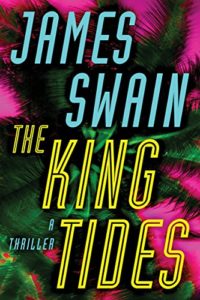
    Do not let my colleagues fool you with their nay-saying about James Swain’s The King Tides (Lancaster & Daniels Book 1). It is an entirely adequate beach read with a chipper pacing and zombie-like kiddie predators. To my mind, the main drawback to this book is the sponsored content, or the weird brand name dropping plus generic non-affiliated copy material–depending on if the author was paid for this or just lazy and trying to meet a word-count. It was jarring to be reading about the author’s disappointment that a kiddie diddler had smashed his phone only to be rescued by Verizon!
    “His phone was new, courtesy of his ex-girlfriend tossing the old one out of a moving car. Replacing it had been a snap. A quick trip to the Verizon store and forty-five minutes later he’d walked out with a new Droid, his contacts and apps restored. Kenny’s phone was also a Droid, and he wondered if Kenny had bought it from Verizon, which had more locations than a hamburger chain. If he had, then all his data was stored in the cloud and could be easily restored.”

    Spoilers: he also upgrades his phone from a Droid to a Moto Z2 Force during this exchange for only $40! I’m not sure that I’d recommend this book on its merits, but there are now enough people who have frog-marched themselves through it that it’s part of the current Glibertarian cultural canon. Don’t be left out!

    JW

    Have you ever read all the information that comes with penicillin prescriptions when the pharmacist fills them? Vomiting. Check! Mild skin rash. I wonder what “mild” means? Upset stomach. Check! Diarrhea. Uh-oh! I’ll be right ba….

    Brett L

    As part of an experiment in group self-abuse, I read James Swain’s The King Tides (Lancaster & Daniels Book 1). This book is terrible. Random shit not at all relevant to the plot, rogue FBI agents distributing kiddie porn (actually the most realistic part of the story), super-fit former Navy SEALs with beer guts congenital conditions that somehow didn’t disqualify them from that competitive system, kidnapping attempts of hot teen-aged white girls that the police don’t care about. I regretted reading this, even though it was free. Don’t buy it. Please do not encourage Mr. Swain to write any more books.

    In my literature entry for the month, I read Without a Country, a Turkish work translated into English. It’s an interesting family history starting with German Jews fleeing Hitler to populate Ataturk’s new university system, where hope and religious tolerance flourish, and tracks the changes in Turkish culture from the Muslim secular hope of Ataturk to the more fundamental Muslim sympathies. It was a good book. I enjoyed the writing.

    I also read Curious Tales from Chemistry: The Last Alchemist in Paris and Other Episodes by Lars Öhrström. As a chemistry geek, these are fun little tales about substances, some basic chemistry like orbitals, and history. Places, people, and things interesting to their history (like the guy tasked to steal British steel-making secrets for the Swedes). 

    Old Man With Candy

    In Jewish tradition, the Torah is divided up into sedras, roughly analogous to chapters. Each Sabbath, a sedra is read, sequentially, until at the end of a year cycle, the last sedra is finished. We have a nice holiday to celebrate it, Simchas Torah, then the process is begun again. For years, I had a similar ritual, reading a chapter at a time out of The Feynman Lectures on Physics each week until I was done the three volume set, then I’d begin again. This kept my basic physics sharp and it was, for a geek, remarkably enjoyable. The Lectures were a series of notes from a one year freshman physics sequence taught by Richard Feynman (arguably the greatest physicist of the 20th century), and transcribed and edited by two other physicists, Robert Leighton and Matthew Sands. The collaborators did a wonderful job capturing Feynman’s voice and unique style, and this set of books might be among the greatest works in the English language. Anyway, for reasons of life, I stopped doing my ritual some years back, and recently, it occurred to me that my brain suffered from the absence of Feynman’s ghost. So I started again. And it’s every bit as delightful and wonderful as I imagined, the exact opposite of dry technical books. Even if you’re not mathematically inclined, there’s so much clear and common-sense explication of how the universe works that you’ll come out of the experience much smarter than when you went in.

    I linked Volume 1 of the set because that’s the one that is likely to have the most appeal to non-physicists. It covers a sweeping range of topics; though focused on classical mechanics, Feynman talks about probability, thermodynamics, cosmology, biology, psychology, wine, and as a bonus, he offers his rather tart observations about philosophy. More so than anyone else writing about science, he is rigidly clear about what things are “this is the way it is, we can describe it, but we can’t say why it is this way” and what things are “here’s something about which we know why.”

    Strange as it may seem, we understand the distribution of matter in the interior of the sun far better than we understand the interior of the earth. What goes on inside a star is better understood than one might guess from the difficulty of having to look at a little dot of light through a telescope, because we can calculate what the atoms in the stars should do in most circumstances.

    One of the most impressive discoveries was the origin of the energy of the stars, that makes them continue to burn. One of the men who discovered this was out with his girlfriend the night after he realized that nuclear reactions must be going on in the stars in order to make them shine. She said “Look at how pretty the stars shine!” He said “Yes, and right now I am the only man in the world who knows why they shine.” She merely laughed at him. She was not impressed with being out with the only man who, at that moment, knew why stars shine. Well, it is sad to be alone, but that is the way it is in this world.

    Here’s an example of Feynman’s presentation methods, talking about the incredibly important and almost universally misunderstood topic of entropy. If you like this and the lightbulb goes on, pick up Volume 1 of the Lectures and prepare for a wild and crazy ride through the way the universe works.

    SP

    I also selected The King Tides (Lancaster & Daniels Book 1) for my free Kindle book this month since there was nothing else even remotely interesting. (How much do the authors pony up for this? I can think of no other reason for the choices.) However, being smarter than my dear Glib friends, I waited until they had all reported in, then quietly deleted it from my Kindle unopened.

    In enjoyable reading, I am swiping through How to Speak Midwestern by Edward McClelland. Things I’ve learned so far include: where Little Egypt is; what a frunchroom might be; where a gangway is located and for what it might be used; who Trixie is and what she’s up to with Chad.

    SugarFree

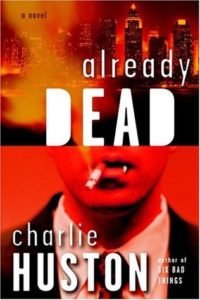
    I read the Joe Pitt series by Charlie Huston. Hard-boiled vampire private detective in a Manhatten ruled by vampire clans as bitchy and mean and petty as any 8th-grade clique of half-pretty girls. They are competently written. but mostly crib from various other, better detective novels for plot: the spoiled heiress with the monstrous father from The Big Sleep, the cynical operator playing all sides against each other of Red Harvest, Mike Hammer’s blase cruelty of those he has decided are guilty. The best book is the third, Half the Blood in Brooklyn, with Joe fighting off a thoroughly crazed sect of Hassidic vampires and their odd workaround for obtaining “kosher” blood. Overall, the series isn’t bad, it just also isn’t very good.

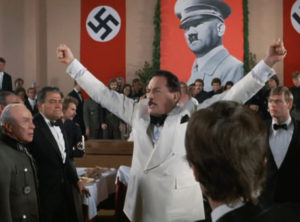
    I read/watched Ira Levin’s The Boys From Brazil. Gregory Peck as Dr. Mengele is one of the more inspired casting decisions in movie history, constantly walking the line between terrifying and absurd. The biggest knock on the movie from a production standpoint is the blue contact lens they had to put on young Adolf–they are distracting in our 1080p world.

    I also read/watched that old stand-by, The Exorcist by William Peter Blatty. Chock full of juicy Catholic guilt and atheist hate, the movie satisfies like no other. The Zodiac Killer said of the film “I saw and think ‘The Exorcist’ was the best saterical [sic] comidy [sic] that I have ever seen.”

    I made it through two chapters of The King Tides. It was terrible.

    Web Dominatrix

    I picked up a couple books this past week.

    Originals by Adam Grant and Talk like TED by Carmine Gallo. Originals is about how non-conformists influence and change the world, while Talk Like TED is about public speaking a la TED Talks.

    I have no interest in public speaking (or really doing anything that requires me showing up somewhere on someone else’s schedule), but I am into livestreaming and video marketing.

    So far Originals is really interesting. Adam Grant is a great writer and he pulls in some compelling studies and references. I haven’t cracked open Talk Like TED yet.


    ZARDOZ

    ZARDOZ SPEAKS TO YOU, HIS CHOSEN READING ONES. BOOKS CAUSE NOTHING BUT TROUBLE! OH AND IXNAY ONYAY ETHAY IZARDWAY OFYAY OZYAY!

    ZARDOZ HAS SPOKEN.


    Swiss Servator

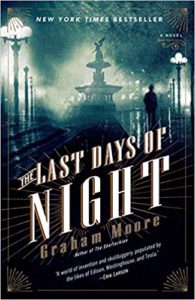
    Upon recommendation (and loan) of a regular at my local, I read “The Last Days of Night” Edison vs Westinghouse (as in Thomas Alva vs George) and Nikola Tesla wanders into the picture. The story is from the point of view of Westinghouse’s young lawyer in the fight against Edison over the patent of the light bulb. Mostly based on actual events, it is a fairly interesting look into inventing, what drives/drove the inventor/inventors of the time. A little electricity learnin’ and some fancy laweryin’ too. Reads quickly, and has some very, very short little chapters…almost like the author was not sure where he was going at first.  Probably would make a decent movie if cast right. Give it whirl if you have some time.


    STEVE SMITH

    STEVE SMITH BUSY WITH CASCADIA INDEPENDENCE. HIM NOT HAVE MUCH TIME READ. JUST TREATIES AND FOREST LAW (HIM PROMINENT FOREST LAWYER!). READ MONTHLY QA REPORTS ON HIKER ENCOUNTERS TOO. BY ENCOUNTERS, MEAN RAPE.

  • What Are We Reading – May 2018

    Old Man With Candy

    After a conversation with Warty, I remembered perhaps my favorite scientific biography ever, Oliver Heaviside: The Life, Work, and Times of an Electrical Genius of the Victorian Age by Paul Nahin, and have been giving it a reread. Heaviside is only vaguely known among people in the physical sciences (I only knew the name because of the Heaviside step function in math), but ought to be far better known; for example, what physicists and engineers think of as the Maxwell equations (the foundations of electromagnetic theory) are actually the Heaviside equations. Maxwell’s formulation was clumsy and complex- Heaviside reworked them into a simple but comprehensive set of partial differential equations, the ones familiar to contemporary students and practitioners. His operational calculus laid the groundwork for Laplace transform methods routinely used in circuit analysis. His work solved the massive problems of the nascent telegraphy and telephony technologies and brought us into the 20th century.

    But that’s what makes him interesting specifically to geeks. What makes him interesting overall is the sociology associated with him. Unlike most prominent British scientists of the era. Heaviside was a true outsider, born into poverty, and completely self-taught. Moreover, he was an odd personality, and if he were alive today, we’d put him somewhere on the autism spectrum. He had almost no social interactions beyond his immediate family, refused to adopt the manners and mores of the gentlemanly scientists with whom he interacted in scholarly journals, and larded his papers and books with thinly veiled invective and humorous insights (“It is wonderful how little work there is when you know how to do it.” “It is as unfair to call a vector a quaternion as to call a man a quadruped.”). Of course, establishment figures fought to keep this outsider outside, but the sheer power of his intellect swept that aside. Trigger warning: to understand what Heaviside did, some equations will inevitably present themselves. If you’re on the other side of CP Snow’s two worlds, you can skip over them and take my word that what he did was brilliant, significant, and vastly influential. This book is fascinating, a study in sociology and psychology as much as it is about physics, an absolute delight.

    SugarFree

    I had been meaning to read Annihilation by Jeff VanderMeer since it won the 2014 Nebula for Best Novel, but it wasn’t until the announcement of the Netflix adaptation that I finally got around to it. It involves a scientific expedition into Area X, a portion of the southern United States coast that has been inexplicably quarantined by an invisible and deadly barrier with a single, deliberate opening to allow people to explore. Inside, mutant animals and an inexplicable structure beg to be explored. Almost everyone that goes dies or disappears or comes back insane, with amnesia or riddled with strange cancers.

    I really have to say, I don’t understand the hype around this book. It wasn’t bad, but it wasn’t really anything groundbreaking or even exciting. It is written in a limited viewpoint from an unnamed and probably unreliable narrator in a journal. In fact, none of the characters have names and are just referred to by their job or functions on the expedition, The Biologist, the Linguist, The Psychologist, etc. In an experiment to find the optimum psychological conditions for an expedition that can both survive and return with some sort of coherent information about the conditions inside the barrier, all the members on this trip are women.

    Like much modern music, it seems like VanderMeer took a dozen or so better works, threw them into a blender, and hoped the reader wouldn’t find too many recognizable chunks floating around in the slurry. But I’m good at spotting chunks: There are bit and pieces of Solaris, Roadside PicnicRogue Moon and–for the first two–their cinematic adaptations, as well as all the movies and books derived from them (Event Horizon, Cube, et.al,) countless “found” memoirs of the inexplicable, the mind-flaying horrors of Lovecraft and even a solid piece of gristle from Poe’s The Narrative of Arthur Gordon Pym of Nantucket.

    The movie is a pretty disappointing follow-up to the excellent Ex Machina by Alex Garland. It takes a few things from the novel, but otherwise pretty much ignores it to create a strange mash-up of “The Colour Out of Space” and The Crystal World by J. G. Ballard (minus all of Ballard’s Heart of Darkness overtones.)

    Riven

    I finally passed my exam and have been celebrating by reading exactly nothing–except the dialogue in Persona 5. That said, Mr. Riven and I listen to some podcasts when we’re lifting or traveling. Last week we traveled to Missoula for the USPSA Area 1 Championship. Mr. Riven has been especially delighted with his recent find of the Myths and Legends podcast. It dovetails nicely with his current game of choice–God of War. The writer and host covers a wide variety of, well, myths and legends with a good deal of fairly dry humor and a flair for entertaining. Besides the Norse lore that’s so apropos for God of War, they also cover Slavic fairytales, epic Viking tales, and all of the standard classics: Greek and Roman mythology, King Arthur’s court, mythological beasts, etc. There’s plenty more besides what I’ve listed here, and we greatly enjoyed a lot of the Slavic tales on our trip. Fans of John Wick might also appreciate the stories that include Baba Yaga, who is seems to be equal parts hilarious and terrifying (just like an ancient boogeyman should be).

    mexican sharpshooter

    It came to my attention that my younger brother was not a prog, but is still in college, so I decided to pick up a few books he might benefit given his environment.  I got through this one pretty quickly, given Bastiat is pretty straightforward and concise.  I also picked up The Road to Serfdom.  This one is taking me longer.

    I also bought The Federalist Papers since I never read them.  I have to admit, I don’t like Hamilton.  I can deal with his arguments droning on, taking several pages and multiple essays to convey–I’ve read boring stuff before.  I simply find a lot of them ineffective, and he does not always adequately explain why something regulated by a state might be bad but it is totally okay for the federal government to do it.  It might be my biases as a former federal employee, and seeing ineffective, incompetent implementation of seemingly simple tasks for several years.  I do realize I should try to decouple that when reading a historical document.  I found myself flipping through Hamilton’s essays and finding the next one Madison wrote as his seem better thought out.  In all, it leaves me wondering if the natural born clause in the Constitution was intentionally written to keep certain assholes from being president, a certain asshole named Hamilton.

    Web Dominatrix

    I just started (and then finished in swift order) To Sell Is Human by Dan Pink. As a business owner I have to spend time selling, and I’ve hated it for years, which is why I was so delighted to discover this book which explains how to sell without feeling like a sleezeball backed up with case studies.

    I am now reading The Power of Habit by Charles Duhigg as my habits need some major work. There are habits I have that are good, others that are bad, and others that just simply aren’t serving me in the best way.

    Tulip

    I would like to recommend three short story collections. First is American Housewife by Helen Ellis. These are great little vignettes. My two favorites are “The Wainscoting War” and “My Novel Is Brought to You by the Good People at Tampax.”

    The second is Let Me Tell You by Shirley Jackson. I love her short stories. She is probably familiar to most as the author of The Lottery. She also wrote The Haunting of Hill House. I read that in one sitting when I was fifteen. It was a hot, August day and when I finished, I was in a cold sweat. I’m still not sure why, but that book creeped me out like no other.

    The last is Beyond the Woods: Fairy Tales Retold by various authors. Most are based on old tales, but with a modern twist. They are dark, creepy and sometimes funny.

    SP

    I’ve just started reading Bad Things Happen (David Loogan Book 1) by Harry Dolan. I’m enjoying it very much so far. It’s a noir-ish mystery, which I love in books and film. If it stays true to the promising beginning chapters, I’ll most likely pick up the rest in the series.

    Also reading several vegetarian and vegan cookbooks. I’m getting a little tired of the same old plain stuff I’ve been eating during my 60 day 100% plant-based window (in which I’m trying to cement the practice), and need to mix it up some. Highly recommended: The Complete Vegetarian Cookbook: A Fresh Guide to Eating Well With 700 Foolproof Recipes from America’s Test Kitchen. 250 or so of these recipes are vegan. I’ve cooked from this before and everything just works. I’m thinking about putting a post together with brief reviews of several others, if there is any interest.

    And, last, but certainly not least, a quick read through Year-Round Indoor Salad Gardening: How to Grow Nutrient-Dense, Soil-Sprouted Greens in Less Than 10 days by Peter Burke has inspired me to begin growing soil-raised sprouts in the house. I love that I’ll be able to do so next winter!

    Brett L

    I finished Mark Lawrence’s latest, Grey Sister. Its probably his least best work, and still better than almost anything out there in the SF/F genre right now. It definitely ends on an Empire Strikes Back note, so I expect the third one to really kick ass. I read John Conroe’s latest collection The Demon Accords Compendium, Vol. 1. I give it a B. I think that universe has mostly run its course. And then Exam Ref 70-532 Developing Microsoft Azure Solutions because this Azure shit is hot and I need to keep my LinkedIn profile popular. Azure is fun and I wish I was 23 and single and could spend 2 or 3 nights a week messing around in it for 3-5 hours at a time.

    STEVE SMITH

    STEVE SMITH READ ABOMINABLE BY HOOMAN WRITER DAN SIMMONS. ABOMINABLE LONG BOOK BUT SHORT ON HOT YETI ACTION; STORY ALL MOUNTAIN CLIMBING AND NAZIS! STEVE SMITH FIND HOOMAN SIMMONS AND STEVE SMITH SHOW HIM WHAT ABOMINABLE REALLY MEANS!

    jesse.in.mb

    AWOL on the Appalachian Trail: I have a confession to make. Travelogues make me bitter; I was miserable thinking about how little I’d traveled while watching The Secret Life of Walter Mitty…on a flight to spend a week in Berlin and Prague on my own for New Years, and was bitter *both* times I saw Under the Tuscan Sun (some of you are too young to remember when airlines just played one movie at a time)…while flying back from a month in Rome with side trips through the Tuscan countryside. So I reaaaally shouldn’t have read this delightful travelogue about hiking the AT because his motivations felt familiar and the adventure sounds absolutely awful, but doable.

    Happy Dreams: This novel, about a peasant who moves to the city to be a trash picker, was a constant aggravation and a struggle to read, but I’m glad I kept chipping away at it. Toward the end of the novel I ended up caring about the characters even if their behavior still grated deeply. The author’s afterward really should’ve been the intro. Once I understood where he was coming from the entire story came together as beautiful in its grind.

    Macbeth: A Novel: Audible had it on sale, and it was read by Alan Cumming. I’d never read it or seen the play (unless you count THRONE OF BLOOD), and I figured Cumming reading Macbeth would be awesome…except it’s not Shakespeare’s Macbeth, it’s Macbeth: A Novel. I kept thinking it didn’t *seem* very Shakespearean, and then looked into a it a bit and was annoyed.