Category: Big Government

  • The Hyperbole’s Homebuilding Houseparty – The Penultimate Part

    Previously on H3

    Part 1: Introduction, Caveat, and Stakeout

    Part B: Permits and Foundations

    Part III: Do’h, Stumps, Rodan!!!, and Framing

    Part The Fourth: Rough-in, Decks, and Inspection


    Insulation, Drywall, Paint, Siding

    Carbonara

    First off my apologies for the delay in getting this part out, but I’ve been busy what with building homes and whatnot1. Assuming we passed the rough-in/framing inspection we now get to cover everything up and get to finishing. First comes the insulation. We have always subbed out the insulation, in the early days we did so because installing insulation is a nasty, scratchy job and more importantly the big companies could do the job for little more than what the cost of the insulation alone would be to us, economies of scale, FTW. I hear the insulation isn’t as itchy these days and sometimes they use the sprayed in fibrous and/or foamy stuff. Today it’s still cheaper to let the pros do it, plus we now have stricter standards on just how much insulation we need and we have to “prove” that we meet those standards. One “proves” this by submitting forms filled with calculations that I’d wager no one even checks2, but it’s in the file, so it’s all good. The insulation companies have people who fill out these forms, so we let them, it costs more but at least the homeowners know that their homes are nice and tight.

    Speaking of which, with the house wrapping, caulking every crack, and the better insulation, some areas started seeing “Sick Home Syndrome,” a situation where people would get sick simply from being in certain buildings too long. Turns out all these energy efficiency regulations were making homes too tight. The answer – require a pressure test and add air exchangers so the houses can breathe3. Government – breaking your legs so it can supply you with crutches.

    After the pink stuff comes the grey stuff.4 Drywall is another trade that we have always subbed out, apart from very small jobs it’s just not worth the hassle. In ’88 we used a couple of brothers who hung and finished the jobs themselves, they used hammers and nails but the screw guns were only a few years away. Most drywallers today seem to specialize in either finishing or hanging, the guy we use today doesn’t even employ hangers; he hires a crew that works for two or three other finishers. There are not many codes concerning drywall, we have to hang fire-rated boards on any walls between living spaces and garages but that’s about it.

    After the grey stuff comes the stuff that’s whatever color you want it to be5. In the early days I spread a lot of paint6 but as my skill/value in other areas increased it became wiser to sub out the painting and staining. Which isn’t to say that painting is easy and that any hillbilly can do it. In fact, one of the most conscientious tradesmen I have worked alongside of was our long-time painter and wood finisher. Outside of the exemption in footnote #57 there aren’t any codes regarding paint…yet, you can still paint your farmhouse kitchen some shade that’s almost blue or your imperial bedroom an off yellow. I don’t know much about the technological advances in paints; what I do know is that over thirty years the cost has skyrocketed. It could be market driven, but since most things seem to come down in price over time-unless artificially manipulated- my money is on government intervention. Admittedly, this is a personal bias; I’ll gladly defer to anyone with actual knowledge of the ins and outs of the paint game.

    Outside it’s time for siding, these days that means vinyl siding and cultured stone. For the first few houses, we used T-111 sheathing and later cedar. T-111 is cheap8 and the cedar expensive, both require maintenance, so vinyl and stone it is. Other than styles, not much has changed in siding; vertical is popular right now and they have some halfway decent looking fake shakes and stone products. The tools might have improved but the application is still the same, likewise with the stone; we’ve used the same masons for 25 years and they’ve always done things the same way.9


    The Big Finish

    From here on out it’s mostly cosmetics; technically all you need for the final/occupancy permit is a WC, hot water, and a kitchen sink. This is also about the time the owners start to get happy feet, the exterior is done and all the ‘big’ steps have been taken, but there is still plenty to do. I imagine if you had a big enough crew-or separate crews-installing cabinets, hanging doors, and trim, putting in the various floor coverings and such you could finish up quickly but we10 do all that stuff ourselves, so it’s going to take some time. Back when I did our electric, I would start with the lights and outlets, as it makes finishing easier when you don’t have to drag lights and extension cords everywhere.

    Other than carpeting, which one likes to install dead last, I like to get the hardwoods, laminates, and ceramic down next; saves having to undercut doors and work around cabinets. Styles and products have changed over the years, laminates are the most popular now, and they have improved a lot. People still like hardwood and ceramics, but the cost difference is substantial. After flooring I like to set the cabinets; they, too, have improved mostly in the hardware, soft close hinges, full extension drawers and such. Countertops are mostly granite or quartz, and those farmhouse apron sinks are all the rage. I use a laser to level the cabinets, and the countertops are digitized and cut on CNC machines.

    After the countertops are installed, the plumber can return and finish up, while I move on to hanging doors and trim. All these little things seem to go on forever, installing latch sets, door stops, towel bars, closet shelving, and the inevitable “favors” we do for the homeowners- hanging the wall mount TV brackets they bought or that big mirror and heavy pictures or the swinging porch chair… But then one day it’s done, the inspector can come by and stick his tester in a few outlets11, flush all the toilets and make sure the water at the sink is hot, but not too hot. We gather up any tools and materials still around and move on to the next job.

    I know this section comes across as sparse, but other than styles and aforementioned improvements in tools and products finishing, a house hasn’t changed all that much during my 30-year career. To make up for that here’s some argument-starting clickbait type opinion stated as fact.

    Every Tom Waits Album12 Ranked Worst to First.

    test
    Proof I’m not selling wolf tickets

    The Black Riders
    Blood Money
    Real Gone
    Foreign Affair
    Alice
    Closing Time
    The Heart of Saturday Night
    Franks Wild Years
    Bad As Me
    Small Change
    Bone Machine
    Nighthawks at the Diner
    Swordfishtrombones
    Raindogs
    Heartattack and Vine
    Mule Variations
    Blue Valentine


    That’s it for the penultimate part. Next time will be the last time. I’m going to attempt to wrap all this up with some observations about what all this has to do with libertarianism, or perhaps better said, how it has influenced my particular take on libertarianism. If you have any questions or would like more details about some particular area hit me up in the comments and I’ll endeavor to address those issues as well.


    1. Mainly trying to drink all the beer Riven sent me.
    2. Not one time have I seen an inspector refer to any of the various forms we must submit while he’s doing the inspecting
    3. Just like they used to.
    4. That might be a euphemism…I’m just not sure for what
    5. Except for outside, but I’ll get to that next time
    6. [waggles eyebrows]
    7. see footnote 5
    8. But not inexpensive.
    9. Recently retired, maybe the new masons will have new tricks.
    10. With Dad pushing 80 that really should be “I”
    11. Now, there’s a euphemism!
    12. Yes, Nighthawks is technically a live album, but since it’s all original songs (aside from the Red Sovine cover) that aren’t on any other studio albums I include it here.

  • GDPR & You Glibertarians.com

    [et_pb_section bb_built=”1″][et_pb_row][et_pb_column type=”4_4″][et_pb_divider _builder_version=”3.3.1″ color=”rgba(0,58,96,0.44)” divider_style=”double” /][et_pb_text admin_label=”Joke” _builder_version=”3.3.1″ text_orientation=”center”]

    SP: “Hey, Webdom, do you know a good GDPR consultant?”

    Webdom: “Yes.”

    SP: “Can you give me her email address?”

    Webdom: “No.”

    [/et_pb_text][et_pb_divider _builder_version=”3.3.1″ color=”rgba(0,58,96,0.44)” divider_style=”double” /][/et_pb_column][/et_pb_row][et_pb_row][et_pb_column type=”4_4″][et_pb_image admin_label=”Email screenshot” _builder_version=”3.3.1″ src=”https://glibertarians.com/wp-content/uploads/2018/05/email-screenshot.jpg” align=”center” /][/et_pb_column][/et_pb_row][et_pb_row][et_pb_column type=”4_4″][et_pb_text admin_label=”First section” _builder_version=”3.3.1″]

    If you’ve ever signed up for an email newsletter, registered for a user account online, or purchased something from an online purveyor, you’ve undoubtedly been bombarded the last week (or longer) with emails like the one above. You’ve noticed the new cookie notice here on Glibertarians.com. You might have even read our Privacy Policy.

    I’m not going to get into the details of the mind-numbing array of things the EU’s General Data Protection Regulation (GDPR) requires to be in compliance. I’m not a lawyer and much of it is open to interpretation.

    If you’re interested there is no shortage of online resources, including the EU’s own website. Companies across the globe have been working on this compliance since the law was passed in April 2016.

    No, what I want to rant about is the fact that as of May 25, 2018, the provisions of the 2-year-old regulation are now enforceable.

    I hear you saying, “So what? It’s an EU law, and we aren’t in the EU.”

    HAHAHAHAHAHAHAHA

    You crack me up.

    The new regulation is supposedly to protect EU citizens and their “personally identifiable information” (PII) that may be collected, processed, stored, and transferred online.

    What the EU considers PII is much broader than what the US has generally considered PII. The EU insists that anything that could directly or indirectly be used to identify someone is included.

    Personal data is any information that relates to an identified or identifiable living individual.

  • Different pieces of information, which collected together can lead to the identification of a particular person, also constitute personal data.
  • Personal data that has been de-identified, encrypted or pseudonymised but can be used to re-identify a person remains personal data and falls within the scope of the law.
  • [/et_pb_text][et_pb_text _builder_version=”3.3.1″ text_orientation=”center”]

    *****

    [/et_pb_text][et_pb_text admin_label=”Section 1a” _builder_version=”3.3.1″]

    So, how the heck is the EU going to enforce the myriad complex and heavily nuanced provisions of the law? Fairly and objectively.



    OK, I couldn’t even type that with a straight face.

    The EU provides this helpful information:

    Stronger rules on data protection mean

  • people have more control over their personal data
  • businesses benefit from a level playing field
  • Oh, good! Businesses are going to benefit!

    Well, Uncle Sam wants to help make sure that US businesses are also going to benefit. The EU-U.S. Privacy Shield Framework is the mechanism by which the EU can impose their laws and regulations on US businesses and non-profits.

    What’s that? Non-profits like the Glibertarian Foundation? Why, yes!

    The U.S. Federal Trade Commission (FTC) has committed to work closely with the DPA (SP note: data protection authority in the EU) to provide enforcement assistance, which, in appropriate cases, could include information sharing and investigative assistance pursuant to the U.S. SAFE WEB ACT.

    Indeed, one of the key provisions of the GDPR is increased territorial scope. Because of this, any website that “processes” any data from anyone in the EU must comply. Your business website may only ever have one visitor from the EU and if you set a web browser cookie for any reason whatsoever, you must meet the requirements of the GDPR. Seriously.

    What’s the penalty for non-compliance?

    Infringement: the possibilities include a reprimand, a temporary or definitive ban on processing and a fine of up to €20 million or 4% of the business’s total annual worldwide turnover.

    Oh, and that fine is whichever is greater. No potential there for abuse or selective enforcement! But remember, this is not about grabbing money or controlling the world. Because the Forces of Evil said it’s not.

    [/et_pb_text][et_pb_text _builder_version=”3.3.1″ text_orientation=”center”]

    *****

    [/et_pb_text][/et_pb_column][/et_pb_row][et_pb_row][et_pb_column type=”4_4″][et_pb_text admin_label=”Second section” _builder_version=”3.3.1″]

    So, what are US businesses doing? Most have been working on compliance for a long time now and are falling into line. Nobody really wants to lose their European customers and site visitors, after all.

    Except for a bunch of media outlets and businesses that apparently weren’t ready for the enforcement to start on Friday. But, the EU says, don’t worry! There will not be an effect on innovation or access. Oh, wait, other organizations have just decided not to bother complying, closing business segments or blocking access from European countries.

    Here at Glib HQ, we’ve determined that we have only one European registered user. We’ll miss you Pie in the Sky!*

    We all know who is making bank from the GDPR, as is usual from regulation: lawyers and politicians. On Friday, many lawsuits and complaints were filed against large American tech firms like Amazon, Facebook, and Alphabet. We can expect dozens more to be filed in the coming weeks, months, and, probably, years.

    [/et_pb_text][et_pb_text _builder_version=”3.3.1″ text_orientation=”center”]

    *****

    [/et_pb_text][et_pb_image _builder_version=”3.3.1″ src=”https://glibertarians.com/wp-content/uploads/2018/05/statue.jpg” align=”center” /][et_pb_text admin_label=”Third section” _builder_version=”3.3.1″]

    Does my disgust and cynicism mean I am anti-privacy? Hell, no.

    I have many stylish and useful tinfoil hats, as you all know. I use VPNs, encrypted email, mask my phone numbers, block cookies, browse from different browsers and devices, use cash for everything I can, have a prepaid cell phone for certain uses. The list goes on.

    What I am is anti-government intrusion and regulation.

    Remember, kids, with the exception of this Glibertopia, “If the product is free, the product is me.” Don’t like what Facebook does with your data? Don’t use Facebook; but don’t insist your congress critter pass another law or allow the FTC to enforce a cumbersome and impossible-to-get-right regulation from across the pond. Individuals and their rights always lose when bureaucracy wins.

    [/et_pb_text][et_pb_divider _builder_version=”3.3.1″ color=”rgba(0,58,96,0.36)” /][et_pb_text admin_label=”*” _builder_version=”3.3.1″ text_font_size=”10px”]

    * Just kidding, Pie.

    [/et_pb_text][/et_pb_column][/et_pb_row][/et_pb_section]

  • The Hyperbole’s Homebuilding Hoedown – Part The Fourth

    Previously on H3

    Part 1: Introduction, Caveat, and Stakeout

    Part B: Permits and Foundations

    Part III: Do’h, Stumps, Rodan!!!, and Framing

    Rough-in it, Hah!

    Really shoulda had an arc fault circuit breaker on those attic lights!

    The framing completed we can now move on to the electric, HVAC, and plumbing rough-in, well almost. While one could elect to start running supply lines and drain and pulling wire right away, it is preferable to ‘button-up’ the home first. Exterior doors and windows need to be installed and the roof needs to at least be felt papered if not fully shingled, this not only weatherproofs but keeps light-fingered passersby honest. Sadly with escalating cost of building supplies, theft is a serious concern even in the rural heartland of Ohio. The products and tools have improved but the processes remain the same, very few codes concerning doors, windows, and roof installation have changed or exist at all. What color they are is something else, but more on that later. Now with the buttoning-up completed lets rough-in it.

    Back in ’88 dad hired an electrician to wire the spec house. He was good enough to let me help and willing to teach me all I needed to know about wiring a home. If he was ever concerned about training his own replacement he never let on, he had plenty of other work and I have, over the years, learned that there is a friendly competition between most tradesman. Sure, some might dislike each other but most will buy rounds for each other in the local bars and swap stories about insane clients and stupid inspectors. The exception being anybody who would give the rest of us a bad name, guys who do shoddy work and rip people off. If you’re talking to a tradesman you’re thinking of hiring, and he tells you all his competition are losers and no good, be cautious, especially if he brings it up unasked. If you ask and he speaks well of his competitors that’s a good sign he’s being honest.

    Unless we were too busy, I wired our homes for the next ten or fifteen years. I stopped and we again hire an electrition to wire our jobs, mainly because the codes kept changing and it wasn’t worth it to try and keep up with them. I’d estimate in those early houses I would run a total of maybe fifteen-twenty circuits for the average house, now it can take over thirty and some need to be ground fault protected, some arc fault protected. It seems like every appliance needs to be on a dedicated circuit and you have to put fewer and fewer outlets or lights on the rest. Meaning that there are more home runs from the service entrance panel, and wire isn’t getting any cheaper. For those arc-fault protected circuits, one can lay out up to 10x what a standard one costs. Our electrician also has to install two grounding rods, tamper proof outlets, CO2 alarms, etc. I estimate that changes in the electrical code alone have added up to five thousand dollars to the cost of a new home.

    We have almost always hired out the plumbing. For the first few years, we used a father & son and son crew, the average home would take them one day to rough-in, well, the father and one son did; the other son installed the furnace. When the furnace son bought the farm, oh relax, he bought an actual farm and raises llamas or ferrets or something, dad and I took over the furnace installations. A few years later for various reasons, we switched to another plumber and he started installing our furnaces, which made me very happy. I hate ductwork, I doubt that I installed one single furnace that doesn’t have my blood on it, that metal is sharp, and I must have used up a good chunk of my profanity quota by mumbling “CodKnobbin’ Melonfarmer!” while fighting with it. Plumbing codes have not changed much, ‘Pipe’s still round, shit still runs downhill, and payday’s still on Friday’. The plastic supply lines are now the norm, copper prices being what they are. The furnace/ductwork installation is the same as well, the furnaces are more efficient but nobody has improved ductwork and it still sucks balls Seriously, you’d need armed forces to get me to install another furnace, I’ll go back to delivering pizza first.

    Decks

    Deck Pics!

    When I’m not involved in the roughing-in, this is usually a good time to build the decks. Unlike ductwork I love decks. I like framing, and I really like finish carpentry, but my favorite has got to be building decks. Framing gives you instant gratification, you can get a lot done quickly, but it’s crude and almost anyone can do it.  Finish work requires skill but it’s very repetitive- measure, miter, cope, install, measure, miter, cope, install -repeat ad nauseam. Decks offer the best of both worlds, they make an instant visual impression but are a finished product so one can get his woodworking on — it’s not like building a cabriole legged table but it not exactly slapping up a chicken coop either.

    Structurally decks haven’t changed much– posts and beams, joists and decking, railings and stairs. I use screws now where I used to use nails, and structural lag screws replace some of the through bolts. Somewhere along the way, the maximum spacing between the railing went from 6″ to 4″ which means you need more balusters and that could cost a pretty penny on a deck with lots of railing. After building three or four railings I was sick of the standard 2×2 balusters and since then I try to come up with a new and exciting design for each deck and railing. There are fancy kits and pre-formed balusters but they are costly, same with the composite decking boards. They have nice hidden fastening systems and an occasional power washing is a lot cheaper than staining every few years but you pay for it up front. A composite board costs between three and five times the cost of a wood one and the composite boards require more framing and labor.

    The important thing to remember is that this section was added primarily for me to show off some of my handiwork. Look on my works, ye Glibby, and despair!

    Big Deck Pics!

    Inspections

    Back in ’88, we had our first ‘inspection’ at about this point, as I’ve mentioned a few more have been added since, but this is still the first real one, the others are more ‘take a quick look and check a box on the form’ type of inspection. In ’88 the ‘inspectors’ were volunteers on the HOA’s code enforcement detail. They really didn’t know much about construction (there were a few retired engineers and they at least knew what they didn’t know), they were better suited for enforcing the HOA rules regarding how long your grass was or if you could leave the RV parked in the drive for four straight days. The Inspections were more of an open house than anything else, some ‘inspectors’ would bring their buddies or wives along, everyone wants to check out the new house on the block. Lot’s of “So this is the kitchen?” and “Are you putting in tile?” questions…not so many “What’s the span on those joists” type questions.

    Today we have a real inspector, he was an electrician and then a building inspector one county over before the HOA hired him. He is thorough and fair, he does a pressure test on the drain lines, he makes sure the wiring is secure but not too tightly stapled. He knows what is structurally required and he follows the codes. I really can’t complain about him, if you are going to have codes and enforce them better a by-the-book guy than looks-good-to-me type. You know what you’re getting with the former, some (most) of the codes may be redundant, subjective, or overkill but they are what they are. In the latter case, who knows what B.S. they might come up with.

    The Dunning–Kruger effect or ‘knows just enough to be dangerous’ rule applies here as well. Between the totally unqualified looky-loos we started with and the professional we have now the HOA went through half a dozen others. One, I mentioned in the introduction, he stuck his thumb on top of his head and extended his fingers up if his pinky could touch the ceiling there was a headroom problem. I had to explain the difference between a ridge beam and a ridge board to the next guy every time we had a cathedral ceiling that extended into a loft. A few feel it’s their job to find something wrong, not ensure things are right, they’ll make up ‘issues’ on the spot to justify their phony baloney jobs. I’ve had a few say ‘I’m happy about X but I’m not sure if that’s covered in the codes, I’ll look into it and let you know.”

    A competent inspector will add some value to a homeowner if he catches some oversight or incompetence on the part of the builder. He may also add a little peace of mind in that a second pair of eyes looked over the construction, which may be of some value. A bad one can cost the homeowner real money, either by forcing the builder to either fight some arbitrary rule, and time is money, or go along with it to get things done. Worse case scenario he misses something that causes problems down the road. People assume that if it passes ‘inspection’ it’s all good, buyer beware has gone out the window; Big daddy government or the HOA has my back.

    Due diligence is a thing of the past, we offer to show potential customers the last five homes we’ve built, not cherry-picked ones, the last five. We’ll give them the number of the owners so they can call them personally. (Yes, we get permission to do this, we have never had a client not want to show their new home to others, many tell us to send people their way without us even asking) As far as I know,  no one has ever taken advantage of this, granted we get most of our business through word of mouth so people are getting referrals in a way. But still, for most people, a new home is the single biggest expense in their life and given the chance to check out our credentials most people just give it a ‘meh’. I don’t get it.


    That’s it for Part the Fourth, I know I promised a story about color codes, but I spent a ridiculous amount of time formatting this article so that the first letter in each line spelled out a secret message, then I realized that everyone’s browser and window settings are different and all that work was for naught. So this is what you get, no anecdote, no red sauce recipe. I’ll make it up to you next time, promise.

    Not when it comes to decks or ductwork

  • How Predictive Analytics Simultaneously Improves and Ruins Your Life

    Preamble

    Flashback nearly a decade and you’ll find me toiling away in a filthy (custodians would typically not go into the labs for fear of getting blamed for something going wrong) basement lab working on an algorithm for my doctoral thesis. Identifying exotic particles (eg: magnetic monopoles, Q-balls, strangelets, etc.) in cosmic ray datasets is not exactly what you’d call the most employable pursuit. However, it was definitely more useful than SJW grievance studies, more interesting than working as a glorified proofreader for other people’s code like some of my friends and I wasn’t paying for it, so what the Hell? Everyone knows the real reason you get into physics is for the pussy anyway (hahahahaha, oh I almost made it through typing that without LOLing).

    So here I am cannibalizing standing on the shoulders of giants, using previous theoretical mathematical work on Bayesian predictive inference. Mathematics like this had been around for decades, this was just a novel application of it and formed the basis of my thesis work. I was creating an algorithm to use simulated training data and a Bayesian comparison between said training data and real data to try and identify compositional limits on particles theorized to exist but never observed (aforementioned MMs, strangelets, Q-balls etc.). While certainly fun to talk about at parties and a real panty peeler (more LOL), the thought that I’d use any of this stuff in the real world seemed remote. I had already ruled out pursuing a career in academia, so I figured I’d just go become a code monkey like my friends. Little did I know that I was inadvertently making myself eminently employable in a field that has become the new “hot thing” in tech.

    A Rose By Any Other Name is Just as Confusing

    At the time, this field was limited to academia and a few tech companies that were using it to claw their way to the top (see: Google, Facebook, Amazon, et. al.). It didn’t even have a name other than just “statistics” or “data analytics”; boring pedestrian things that only the pocket protector squad cared about. Glamorous Silicon Valley VCs would never get on board with such dull nonsense. So, being the innovators that they are, techies rebranded this field “data science” employing “artificial intelligence” and “machine learning”. I personally have issues with all these monikers; “data science” is just meaningless (in spite of that being my job title) and “artificial intelligence” and “machine learning” both suffer from the same problem. Namely, they both imply that a computer is learning in the same fashion as a human brain. My preferred moniker is “predictive analytics” since I think it captures reality better and doesn’t overstate what the algorithm is doing to some kind of mind reading and/or Skynet AI.

    So what exactly is it? Well, the short explanation is that any predictive algorithm takes parametric data inputs to build a statistical model that will predict the outcome of future iterations within some uncertainty. Essentially, you start with a set of “training data” with known outcomes, the algorithm then processes that data to build a model of how each parameter affects the outcome. You then feed the algorithm a set of test data, it applies the model to all the parameters, makes a prediction, then looks at the known outcome and scores whether it’s correct, a false positive or a false negative. If the algorithm passes some human-defined threshold, it starts working to make predictions on real-world data, all the while refining its model to get better as it processes more data. This real-time refinement is where the “learning” and “artificial intelligence” stuff comes in. To an external observer, it looks like the computer is learning and adapting; which in a way it is, but only in some narrowly defined brute-force iterative way within specific parameters. It has none of the heuristic properties of human intelligence. Perhaps someday we’ll unlock the secrets of the human mind and be able to simulate true intelligence, but I see that as a long way off.

    How It Makes Your Life Better

    As stated, this kind of analysis has been used in mathematical and academic settings for a long time, but the first exposure I ever had to it in the real world was a fun little quiz called the Gender Test at www.thespark.com (to early internet denizens, this was kind of a forerunner to places like College Humor, Ebaum’s World and finally the Glib-approved favorite, The Chive). This test asked a series of seemingly irrelevant questions such as “Which word is more gross, used or moist?” and showing pictures of two different cartoon monkeys asking “Which one will win?” After 50 or so of these kinds of questions, the quiz would then predict if you were male of female and ask if it got it right. This was long before the misgendering insanity so it was a binary choice; each time it got it right, it increased the relative weights of the preceding questions toward that gender. Each time it was wrong, it reduced the weights. The very first time someone took the test, the prediction was pure chance. But after a couple hundred thousand iterations, the relative gender weighting on the questions got pretty good and the algorithm could predict male or female almost all the time. In this case, the answers to the questions were the parameters and the gender was the predictive variable. While it may seem simple minded, this basic paradigm is what drives most of our modern computational conveniences.

    Every time you search something in Google, that’s a set of parameters used to refine its model. It gets better and better at searching. Each time you “like” something on Facebook or click a link in Twitter or look at a job posting on LinkedIn, their models refine and get a little bit better. Each time you ask Siri something, she gets a little better at understanding you (remember when you first unboxed your new iPhone and Siri asked you to say a few things at startup? There’s your training data).

    Of course the most important innovation is in the industry that is always the tip of the technological spear: porn. This goes way beyond dumbly suggesting videos tagged “big tits” after you’ve searched for big tits. EVERYTHING you do is a parametric data point. Among the videos you watch, are the tits real or fake? How big are they exactly? Is this lesbian, one on one hetero, threesome, group or something more exotic? What parts of the scene do you linger on? Go even further and perhaps there’s eye tracking technology (tape over your webcam people). What part of the tits do you look at the longest? In what sequence do you look at them? Is there a type of nipple you gaze at longer? Can the nipples themselves be broken down into parametric data for classification? The possibilities are endless. In this way, the porn site “learns” not only what your revealed preferences are, but it also can use data from other users with similar preferences to suggest things that you yourself might not even know you like. Like big tits? Might we suggest these ebony strap-on compilations for you?

    There are of course more pedestrian applications like what I’m working on professionally now. We have biopsy slides that have been pre-tagged by experienced pathologists as cancerous or non-cancerous. The algorithm does pixel-by-pixel imagery analysis to classify features that indicate cancer or not. The hope is that eventually the algorithm will get good enough that it can identify cancer on its own, even in stages too early for a human to see. It’s not nearly as cool as porn, but a guy’s gotta eat right?

    How it Ruins Your Life

    Coolness factor aside, this way of doing things can quickly cross over from nifty to creepy. Target famously has an algorithm that not only tracks what you buy, but will automatically latch onto your smartphone and track your movements in the store. The most amazing (read: creepy) application of this is its ability, through lots of training and refinement, to tell the gender of the customer, the approximate age of the customer, whether the customer is pregnant and the approximate due date of the customer before she herself even knows she’s pregnant. All this is possible from millions of data points of known pregnant women (going from buying prenatal vitamins, to stretch mark cream to eventually diapers and formula) and their purchases and movements around the store leading up to the birth. The more times this happens, the better the algorithm gets.

    One might be tempted to actually put this in the “how it improves your life” column. After all, Target can offer you discounts on things it knows you’ll need and make your life more convenient in the process. However, it doesn’t take much imagination to see how this can quickly morph into something very sinister, very quickly.

    Creepy when a private company does it, this becomes nefarious when a government does it. Even worse is when government gets in bed with private companies to start profiling you based on your data. Buying a lot of fertilizer? Maybe you’re making a bomb. Let’s look at literally every parameter that comprises your life for the past decade to see (at a 95% confidence level) if you’re a terrorist. G-d help us if we ever get to a point in which this kind of shit is accepted in a court of law. We would literally have a Minority Report Pre-Crime situation on our hands.

    Every single thing you do, seemingly significant or not, is a parametric data point that can be fed into an ML algorithm to extract features, classify them and make predictions about you. Not just what toothpaste you use, but how long and how often you brush. Do you start from the molars or the incisors? Do you gargle your mouthwash? What are your favorite sexual positions? How loud are your orgasms? Do you own a tabby or a tuxedo cat? Do you typically move your bowels in the morning or the evening? Do you configure your toilet paper over or under? People like to think that this kind of data collection is limited to conscious decisions like the products they buy or the places they go, but that is barely scratching the surface. Emotions, unconscious behaviors, pointless or useless decisions of daily life; these things are the treasure trove that gives insight into your essence. The eyes are not the window to the soul, Big Data is. The only way to escape it is to forsake all modern technology, retreat to the woods and live as if it’s the 18th century (behavior which itself, by the way, offers a ton of data about you).

    Now of course all of this can be used for good or ill. In all seriousness, a change in bowel habits could indicate a health problem. But let’s not be naive about the true nature of how these technologies are/will be used. To those who crave power and long to rule us, these developments are a gift from Heaven (or, more likely, Hell). These analytical techniques, so seemingly innocuous when Thomas Bayes first pioneered them 300 (!) years ago have opened a can of worms that could enslave the human race in ways Big Brother could only dream of. If Bayes could see what’s happening now he might echo Oppenheimer; “now I am become Death, the destroyer of worlds.”

    Unfortunately, I don’t hold out a lot of hope for the future. Constitutional protections have proven toothless, people stupidly *volunteer* massive amounts of data and the data that they don’t volunteer gets vacuumed up by an ever more intrusive State. The campus #metoo squad is just the advanced scouting group checking out how fortified the “innocent until proven guilty” doctrine is; a trial balloon for the destruction of due process.

    Working in the field I do only makes me more pessimistic because I see how powerful this is first hand. My advice: well, I don’t really have any; aside from the aforementioned retreat into the woods. Other than that, all you can do is continue to support causes that shore up data privacy protections and defend against 4th Amendment violations. That’s at least a finger in the dike (not finger in the dyke you perverts).

    But, hey, at least PornHub’s suggested viewing is spot on right?

  • The Hyperbole’s Homebuilding Hootenanny Part III

    Previously on H3

    Part 1: Introduction, Caveat, and Stakeout

    Part B: Permits and Foundations

    D’oh!

    Pizza D’oh
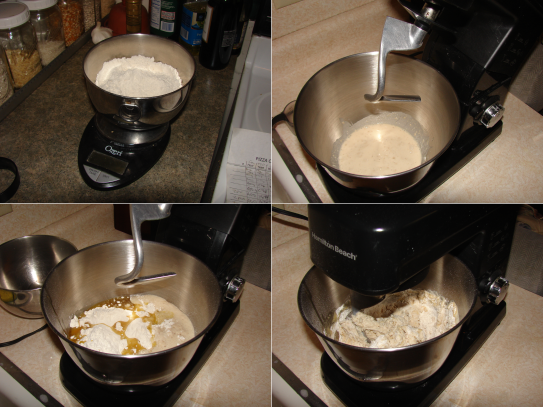
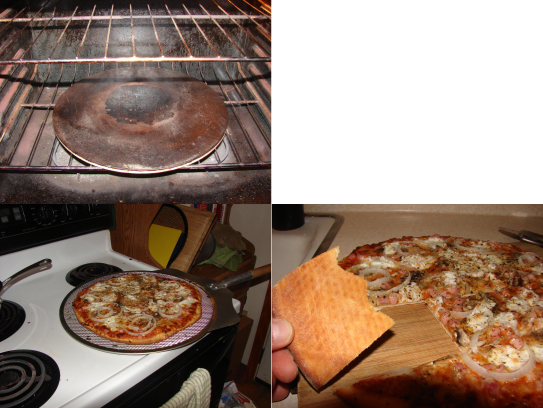
    What with all the excitement about lasers and my eagerness to bitch about the permitting process, I forgot a few things, so bear with me as I backtrack a bit. We used to pour the footers as soon as they were dug and/or formed, we would often call for the “mud” before they were completely ready because it could take up to two hours for the truck to get to the site. We would have the rebar delivered on the truck and place it as we poured. Now we have to have our footers ‘inspected’ before we can pour, we can’t call for the concrete until the inspector shows up and we have to have the rebar in place ahead of time, meaning we have to make a trip to the concrete plant and bring the rebar down ourselves and then sit idle for a few hours waiting on both the inspector and the truck. Those are minor annoyances; the real problems arise when the inspector can’t get to the site in time to get the pour in. Nothing is as frustrating as being ready to go, not being allowed to and then after a nice overnight rain getting to pull out rebar, scrape out mud, dig out cave-ins and get all set again only to wait for the inspector once more. Worse yet (worst if you’re Rufus) 9 times out of 10 the inspector walks up to the edge of the hole, looks around and says “looks good, see ya next time.” Now with cell phone cameras ever present, some inspectors will allow you to take photos of the footer those times that they can’t get there in a timely fashion, but it’s up to them if they want to be a pain in the ass about it they can.

    There is also a new inspection of the block walls as well. In the early days the masons would lay the block, back plaster up to the finish grade line, put in anchor bolts and if we determine it necessary, add rebar and fill cores to strengthen the wall. We would have the back plaster sprayed with tar and place sill seal and a treated 2×8 plate over the anchor bolts, tighten them down and we were ready for the framing crew. Now before we put the treated plate on we have to be inspected, the top course of block now has to be solid and every 6 to 8 cores rebar-ed and filled. The tarred back plaster is no longer good enough, now we need to have a rubbery membrane applied with a thin layer of foam stuck to that. It may be argued that these changes do in fact add value to the home, you get a stronger wall and better waterproofing. These things are true but ignore the costs, you can always build a stronger foundation, you could fill every core or use 12-inch instead of 8-inch block, you could pour a three-foot-thick solid foundation. Somewhere in that continuum, the cost of extra strength outweighs the benefit. Instead of dictating a minimum standard, which for all intents and purposes becomes ‘The Standard’, perhaps we should allow homeowners and builders to make that determination.

    Stumps

    You can use it for calzones as well
    I also forgot about clearing the lot, due to the coincidence that the first house we built and the latest one are both on treeless lots. This is very rare for the development we build in; in fact, I believe these are the only two homes we’ve built that we didn’t have to take down at least a few trees and I’d estimate three-quarters of the time the lots were completely wooded. In the early days, we would sell any trees worth harvesting for lumber to an Amish chap with a name so Amish-ish you’ll think I’m making it up. Eli Yoder would show up with a half dozen other straw enhattened fellows and piously chainsaw away for a few hours, then they haul off the logs they want and leave the rest in eight foot or so lengths, along with a large pile of branches and tops. We would then position the unwanted logs by the road and within a day they’d be gone as locals would stop and ask if they could have them for firewood, we would pop out the stumps and with the brush have a nice big fire, any stumps too big to burn we could take to the ‘stump farm’ a field outside the development owned by the HOA.

    Nowadays we still sell any trees Eli wants but we no longer are allowed to burn the brush, which as the development filled in makes some sense, however, it’s another one size fits all solution. It is a large development and there are still plenty of lots with no nearby homes, but no fires are allowed even if the nearest homes are hundreds of yards away. So we bring in the guys with the woodchipper, yes, yes, a true libertarian would have his own woodchipper, sigh. The state health department and EPA shut down the stump farm, seems stumps are a hazardous material once you dig them up, so the large stumps we must now have hauled off and disposed of in whatever approved method our tree guys use. I think that they are supposed to grind them up in one of those machines you see on youtube eating cars and couches and what have you. Again not a very big deal but you might have noticed a pattern by now, a little more cost here a little time wasted there, it’s like boiling a frog or a camel’s nose or some other animal related metaphor for slowly nickel and diming you to death.

    Rodan!!!, what’s that …Radon?.. well that’s disappointing.

    Lastly, before we start framing we need to get any underground plumbing placed and the basement floor poured. Not much has changed here, dig some trenches and a hole or two for grinder and sump pump pits, lay some Sch 40 PVC drain lines, have some Mexicans (some I assume are good people) do the work Americans won’t, and bingo bango Bob’s your uncle. Somewhere along the line we were required to add a vent for radon, a 4″ pvc pipe from the gravel base under the slab up through the roof. As far as I know, there have been no cases of radon poisoning or tests showing an unhealthy level of radon in the area, but vent it we must. It’s only a couple lengths of PVC and a tiny amount of labor, just one more drop in the ‘it’s not a big deal, whats the harm?’ bucket.

    2″ SCH 40 PVC makes a nice rolling pin

    Framing

    Okay now that we are back on schedule I’ll endeavor to keeps us on target, hopefully, my aim is true. Speaking of aim I used to be able to drive nails with the best of ’em. I could sink 16d spikes all day long, tap-sink tap-sink, or set a 6d finish nail just below the surface without a nail set and without leaving any pecker tracks. I don’t mention this to brag but to lament that I can no longer do so, I’m out of practice thanks to nail guns. In Part B when I mentioned that lasers were the biggest advancement in the trade I was surprised no one brought up nail guns in the comments. There is a good argument to be made for nail guns; for me, lasers edge them out, but just barely. My father bought our first nail gun back when we were framing that first house, but for various reasons, it took us a while to adapt. It jammed a lot, and dragging around our undersized and noisy compressor that wouldn’t always kick on in the cold was a pain, the hoses get tangled and trip you up. Within ten years or so we had fully integrated them, I must have a dozen nail guns now – framing, finish, pinners, staplers, roofing, one just for installing joist hangers and one just for hardwood floor installation. The sound of compressors running on the job site during framing is now as ubiquitous as Mötley Crüe blasting out of a battered and beaten Dewalt radio that fades in and out when it gets over 90° and you better not change the station because the tuner’s fucked and it took Randy twenty minutes to dial in WRKZ 99.7 THE BLITZ!!!

    For the most part, the actual framing hasn’t changed all that much, 2×6 exterior walls have become the norm, and only the cheapest builders still use fiberboard or foam panels for wall sheathing. For a few years, the manufactured “I” joists replaced 2x10s, but they burn up quickly in a house fire so you are required to fireproof them which has made most builders return to 2×10 joist. LVL’s have replaced steel beams and structural screws have replaced nuts and bolts. Cranes, booms, and lifts have also become common, previously they were mostly considered commercial equipment and not often used residentially. We used to ‘swing’ trusses into place, and hump materials around the job site using manpower alone. Extension ladders and jacks and planks were constantly being set up and tore down to install second story windows and gable end sheathing. Now machinery does all the heavy lifting, it’s faster, easier, and most importantly, much, much safer- I don’t have any statistics but falling off roofs, planks and ladders has got to be the most common cause of job site injury. Certainly, there are extra cost involved but that cost is easily offset by the benefits, and it is a decision builders make, you aren’t forced to make these changes or use these tools, and yet most builders have. Take that, central planning tyrants.

    There are two code related changes to our framing that I can think of. We are now required to use ‘hurricane straps’ to attach the rafters/trusses to the top plate of the walls. This fits right in with the running theme – small additional cost, doesn’t take long, adds strength that may not be necessary, should be left up to the homeowner and builder. We also now frame 2×4 walls around the perimeter of the basement, whether it is going to be finished or not, because we have to insulate the basements. Depending on the size of the house the framing and insulation can add a good bit to the cost, again might be a good idea, should be an option, not a requirement.

    That’s it for Part III, in Part the Fourth we will look at the rough in plumbing and electric, and HVAC (none of those letters stand for anything) and I’ll regale you with the curious tale of how the exterior color guidelines went from earth tones only to ‘sure you can have white trim, just this once’.

    ♫Three out of four ain’t bad♫

    Obvious song choice is obvious.

  • On Welfare State, compassion aside

    There was a fine post on this fair blog about compassion, pity and the welfare state. I though I would add my 2 grams of silver and share a few thoughts.

    Outside a narrow circle of non-bleeding heart libertarians or, as I like to call them, actual libertarians, there is about zero support of completely removing welfare. The people on the left generally want more of it, and the people on the right just want somewhat less of it and “more efficiency”. Neither of these options will work in the long term, in the opinion of this heartless libertarian who just hates the damn children.

    The Universal Basic Income is, for example, one of the more prominent recent attempts to fix welfare, one that even some libertarians support. The idea is no welfare is not an option, so let’s have the best system. Sadly, I do not believe a best system, even if it existed in theory, can exist in practice. Why? This is what I will try to cover.

    They just want what is best for you, really...
    Kind, compassionate people

    The essence of the question is found in the essence of government. Government is at its core a concentration of power. This, naturally, now and always, attracts people who want power. So in the end, the ultimate goal for many at the top of government will be to get and retain power. Sure, they may have other ideas about society and maybe even be honest about wanting to improve it (at the point of a gun if necessary) and thinking they have the capability to do so (ignoring a few broken eggs here and there). But this is always secondary, at least for the ones who get to the top.

    In my view, in a struggle between those who want power to use it for, let’s say for lack of a better word, “good” and those who want power for the sake of power, the latter will come on top. What has this got to do with welfare? Well, any government activity will be inevitably used as a tool to get power, and will not be shaped to maximize results but to keep people in power. Welfare is no different. You will never get the welfare that is most efficient and helps the poor; you will get the one that helps politicians.

    Now, there are moments when feelings get the best of reason, and I think it would be acceptable to have a limited welfare system for the truly needy. This is a view of many right wing people I know. This will not work because there is not choice between limited welfare just for truly needy and a massive and much abused inefficient system. The choice is between no welfare and a massive and abused inefficient system. A limited system will never stay limited because, in essence, any program that allows politicians to transfer money from one person to another will be used to buy votes. More and more needy will be found. More and more people will receive something. And the limited help will be declared insufficient.

    Honesty is the best policy... exept in politics
    Telling it how it is

    It was always strange to me how people who support a social democracy scream about the evils of campaign money as “buying votes” while their political platform is literally buying votes. If someone gets money from the government, when a politician says, “I will increase these payment,” that someone will, quite literally, hear vote for me and I give you money. A welfare state is practically a license for a politician to buy power with other people’s money. And if I am wrong, I would love to hear a reasonable, logical argument as to how I am wrong.

    But there is a second layer. The large amounts of people not on welfare but who emotionally support the programs, either out of a misguided view on compassion or basic signaling of their moral high ground. So this is another group who will be convinced to give their votes because welfare is insufficient. I have seen multiple articles in the press where such people tried to live on welfare money to prove it can’t be done, and the conclusion was it can but it is not easy. So even when there is a level of welfare that many view as quite enough, others want more of it.

    One should keep in mind that the cost of welfare is not just the money that ends up at welfare recipients. Welfare also keep politicians in power, which means lots of money spent on various graft, not directly related to the welfare, but related to the politicians. Another point is that there will be an ever-growing bureaucracy dedicated to administering welfare, which may end up costing more than the welfare itself. There is also the cost associated with people who may be able to do something productive and do not, both due to incentives of welfare and to the economy in general, which is affected by the taxes needed to fund all the above costs.

    On the other side of the spectrum, other politicians will use it as a tool for their base, talking about scroungers and welfare frauds. But this will basically lead to another layer of division between people which is exactly what the politicians want. Divide et Impera is what keeps the big parties in power. There always need to be another side which is bad, and my side which is less so.

    The art of politics is basically to keep the people split on as many issues, so that they do not notice that no issue is handled properly. Must spread attention as thinly as possible to keep scrutiny off what the government actually does.

    Universal Basic Income will be no different. It will not stay for long as the only program, as different programs for different groups will be invented. It will constantly be under pressure to increase. And it will create an ultimate feeling of entitlement. You get money for breathing, basically.

    So to me the alternative is no welfare or a system which will inevitably become first and foremost a tool for power, with all other functions secondary. If no welfare is not an option,  I will accept a constant struggle will be on this and just stay out of it and leave it to others. I assume the system will oscillate, going too far then followed by a snap-back and then too far again. But to those who think welfare will be mostly about helping people as well as possible, I have a bridge to sell.

  • Become A Constitutional Scholar With This Simple Trick (Or: How Not To Pick Up Chicks At Belt-Way Cocktail Parties)

    “This has nothing to do with bananas! Believe me, I’ve checked!”


    Are you confused by the supreme law of the land? Did your high school’s civic classes leave you with a clammy feeling on your buttocks and nothing else? Does Judge Andrew Napolitano have a patent on articles consistent entirely of questions?

    Don’t worry, your friendly neighborhood immigrant is here to help you figure this stuff out. This isn’t legal advice, I’m not a lawyer, and this is simply my plain English reading of the founding documents of this great country.

    With that out of the way, let’s get to the subject at hand. How does the United States Constitution actually work, and in particular, the Bill of Rights? Most people seem to have a very vague understanding of this; they think that it mainly lists their rights and a few other things, like how elections are done, how the justice system works, and that it prescribes the structure of the three branches of the Federal Government. But beyond that they don’t really know or care about the specifics – that’s for experts to know and deal with, amirite?

    Sure, you know much more than most people about this subject, but a few things might still surprise you, and maybe you need a refresher, or a way to convince those you love and care about to truly understand it as well?

    So in a nutshell, the U.S. Constitution is written by the people of the United States of America, and it originally was intended to create the structure of the Federal Government and grant it certain powers. Those powers are therefore granted by the people to the government. This is an important distinction that most people in my experience have backwards – they think the Constitution is the government’s way to grant rights to the people, and that they can be arbitrarily re-interpreted and restricted based on need.

    Seen in this new (to some) light, it becomes obvious that this document is mostly a white-list of things the Federal Government and states (more on this later) can do. That is, anything not specifically mentioned as a power is simply out of bounds. I won’t go into the specific powers listed, just mention that they are quite limited, and that most lawmaking was thought best left to the states and other local governments.

    The part of the Constitution that most people know and love is the Bill of Rights. They will enthusiastically point out that they have a certain right because it’s mentioned here. They also attempt to limit rights they don’t agree with by interpreting the text in certain ways, or by showing that a right isn’t explicitly mentioned. But what if I claimed that these initial amendments actually really do nothing at all? That they are just a list of examples of rights that you have regardless of their mention or not. Almost anyone I have talked to about this has balked at the idea, but I think it’s the only way to truly read and understand the Bill of Rights. I’ll explain why.

    The Bill of Rights consist of amendments to the original Constitution. It was effectively an afterthought, based on a reasonable fear that people would have a hard time understanding that rights existed by omission, rather than inclusion. In hindsight this was spot on. Today most people consider this afterthought to the Constitution one of its most important features, mainly because we are so much better at dealing with, and understanding specifics rather than those things not mentioned.

    The Founding Fathers were inspired by Enlightenment Philosophy. They were Enlightenment philosophers themselves, and arguably contributed as much as they borrowed. One of the ideas that define this philosophical movement is the notion that we are all born with certain rights, and that these rights come from simply existing, not because someone else gave them to us. Today people are in the habit of claiming anything they want as a “right”, but to Enlightenment philosophers, rights were a definable spectrum of what we today call negative rights.

    It’s therefore obvious to me that every time the word “right” is used by a Founding Father, that it really means“negative right”, such as in this famous passage from the Declaration of Independence:

    “We hold these truths to be self-evident, that all men are created equal, that they are endowed by their Creator with certain unalienable Rights, that among these are Life, Liberty and the pursuit of Happiness.”

    This is essentially the prologue to American history, everything that followed was based on this idea, and the sense that it had somehow been violated by Britain. It eloquently describes the two concerns discussed above; that rights are inherent and not limited to specific ones.

    This is echoed in the Bill of Rights, or rather the pre-amble to it, as well as the Ninth and Tenth Amendments. These pieces of text bookends the Bill of Rights and adds necessary context to the rights that are listed.

    From the pre-amble:

    “THE Conventions of a number of the States having at the time of their adopting the Constitution, expressed a desire, in order to prevent misconstruction or abuse of its powers, that further declaratory and restrictive clauses should be added: And as extending the ground of public confidence in the Government, will best insure the beneficent ends of its institution”

    The “declaratory and restrictive clauses” are the First through Eight Amendments.

    The Bill of Rights conclude with the very simple Ninth Amendment:

    “The enumeration in the Constitution, of certain rights, shall not be construed to deny or disparage others retained by the people.”

    And further expands on it in the Tenth Amendment:

    “The powers not delegated to the United States by the Constitution, nor prohibited by it to the States, are reserved to the States respectively, or to the people.”

    The cautious concern expressed in these three clauses is almost palpable, and in historical hindsight, completely justified. Clearly there was some worry that rights by omission was just not enough, but also that it was necessary to point out that the Bill of Rights is not the origin of your rights, or the only rights you have.

    So what does this mean in practice? Let’s use the Second Amendment as an example, as it has popularly been both misconstrued as limiting your right to keep and bear arms, or as the originator of this right. It states:

    “A well regulated Militia, being necessary to the security of a free State, the right of the people to keep and bear Arms, shall not be infringed.”

    Eggheads and regular Americans alike have been pointlessly dithering over the meaning of this sentence for a long time. Each trying to use it as justification for their desired outcome. The various claims are that it only applies to the militia, or that it justifies regulation, or that it applies to everyone because that’s who the “militia” is, or what the meaning of “arms” is in this context. The real truth is that none of this matters. It’s an affirmation of a negative right. Even if the Framers only intended this to cover the militia, it still doesn’t overrule your negative right to keep and bear arms. That exists separate from this sentence, which was tacked onto the Constitution by a bunch of worried gun nuts in the late seventeen hundreds. You can repeal this amendment, and it still would not change a single thing.

    The only way to curb this right is for people to willingly give it up by rewriting the Constitution with an amendment to grant government the power to regulate arms.

    “A-ha!” you say, “but what about laws at the state level?”

    This would have been a somewhat valid argument until July 9th, 1868, where the Fourteenth Amendment to the United States Constitution was adopted. At least if you have a hard time reading the Ninth Amendment, which to me seems nearly indecipherable to most people, including jurists. In any case the Fourteenth Amendment hammers it home, and the most important passage in this amendment for our context is this:

    “No State shall make or enforce any law which shall abridge the privileges or immunities of citizens of the United States; nor shall any State deprive any person of life, liberty, or property, without due process of law; nor deny to any person within its jurisdiction the equal protection of the laws.”

    This has been understood to limit the states, and not just the Federal Government to the legislative powers laid out in the Constitution. It was really written because the states were being willfully stupid when it came to enforcing those pesky negative rights for slaves.

    At least one amendment has been added based on the clear understanding that legislative powers have to be granted via the Constitution – not only to Congress but also to the states, after the Fourteenth Amendment. And I think this fact lends some credibility to the idea that the Constitution has been understood in the way outlined above for most of its history, until just very recently.

    Which amendment is that? The Eighteenth. Pay particular attention to Section 2:

    “Section 1. After one year from the ratification of this article the manufacture, sale, or transportation of intoxicating liquors within, the importation thereof into, or the exportation thereof from the United States and all the territory subject to the jurisdiction thereof for beverage purposes is hereby prohibited.

    Section 2. The Congress and the several States shall have concurrent power to enforce this article by appropriate legislation.

    Section 3. This article shall be inoperative unless it shall have been ratified as an amendment to the Constitution by the legislatures of the several States, as provided in the Constitution, within seven years from the date of the submission hereof to the States by the Congress.”

    This was of course one of the silliest mistakes in American history, but at least it was implemented in a legal way, in accordance with the Constitution.

    So if banning alcohol at both the Federal and state level required an amendment to the Constitution, why is the same not true for regulating guns, drugs, and rock’n’roll? Do you even logic, bro?

    And no, Judge Napolitano does not have a patent on articles consisting entirely of questions. Or does he?

  • Pity v. Compassion: A distinction without a difference or all the difference?

    There are thoughts that gnaw at me sometimes. One, for example, is the extent to which my faith-informed morals (DISCLAIMER: I may skirt around some Jesus-y stuff in this article, where necessary) allow for resistance against those who would take advantage of me, whether it be asserting my interests when somebody is being manipulative or whether it be using violence in defense of self and others. Another example is the difference between charity and welfare.

    My faith-informed morals also compel me to be charitable with my time, my money, and my efforts. I don’t believe that it is something “over the top” for me to do as a “good” person. It is, to me, a basic component of obedience to the morals and principles that guide me. As such, it can sometimes be hard to conceptually separate charity from welfare when you strip away the ad hominems, the dystopian undertones, and the inherent force of government and view welfare in its most favorable light, as “people more effectively helping their neighbors out of a hard place.” Yes, this is a rather unfaithful definition of welfare, but it’s important to be able to address opponents at their most mendacious.Now Our Charity Is Born! - Chris's Cancer Community

    Of course, when addressing welfare, it’s easy for a libertarian to toss out a few cliches and dismiss the entire thing. Taxation is theft. The ends don’t justify the means. There is a man with a gun behind every government program. However, cliches don’t change minds. Cliches also don’t address the emotional imbalance that is equivalent to the economic imbalance discussed in Economics in One Lesson. Specifically, when the warm-fuzzies are openly apparent and the pain is diffused among an entire tax base and hidden in withholding lines of a pay stub, it’s important to address this issue on an emotional level.

    Most who advocate for welfare do so under the guise of compassion. Their overwrought whinging about how everybody against welfare hates the poor is convincing to many who feel true compassion for the poor. They are apparent emotional allies with the welfare advocates. Any amount of nuance and rationality on our part feels to them like equivocation and excuse-making. However, I’ve found that hearts are a blunt-force instrument and minds are a precision instrument. The heart is really bad at differentiating similar emotions or similar intentions. Without engaging the mind, the heart can easily mistake compassion for the similar emotion of pity. However, pity is different enough to completely change the emotional tenor of a situation.

    Compassion is an emotion of similarity. You feel compassion because you recognize the innate human dignity of another. You see somebody who is suffering and want to help them overcome their suffering. It’s an emotion of humility.

    Pity is an emotion of difference. You feel pity for something beneath you. Something pitiable is low and less than you. Pity is an emotion of pride. There’s a tinge of smug condescension that comes with pity.  As libertarians, we know that if anything describes statists, it’s smug condescension.

    Welfare isn’t driven by compassion, but by pity. This is why welfare is rotten to its core. The dehumanizing effects of welfare dependency are easily observed, but it’s no clearer than when somebody tries to get off of welfare. If you want to see somebody’s “compassion” for the needy vaporize, watch them interact with somebody who isn’t willing to stay enslaved to the welfare system. It starts with a guilt trip, continues with anger, and finishes with jealousy. See, the competitive undergirding of their pity motive for supporting welfare can’t deal with their lessers becoming their equals. When they say “think about the people who haven’t been as successful as you,” they’re really saying “mind your place in the order of things.” When they say “you’re being ungrateful for the help you were given” they’re really saying “welfare comes with strings, and these strings can’t be cut.” When they say “you’re self-hating” they’re really saying “back to the plantation, slave!”Top 10 Tips: Avoid Pickpockets & Thieves On Your Next ...

    If welfare were truly about compassion, it wouldn’t merely be a check-writing mission. Compassion imparts dignity, and cutting a check isn’t always the dignified action to take. Compassion is a personal connection, welfare is profoundly bureaucratic and impersonal. To the extent that welfare moves beyond writing checks, it is still completely beholden to the pity that drives it. Welfare programs are designed to maintain and increase enrollment in order to show a need for further investment. Much like any other government program, any initial “good intention” is quickly corrupted by the perverse incentives that come with “free” money. Of course, I question the initial good intention in the first place. Pity is lazy, and welfare is lazy. The hard work of understanding the poor and formulating a dignified response to their challenges is a herculean effort, not something that a government program is usually known for.


    This "Sesame Street" Photo Will Give You Nightmares ForeverCharity shows what true compassion looks like. Most charity isn’t front page news. It isn’t touted. People aren’t shamed for not throwing their whole-hearted support behind a cause. Recipients aren’t shamed for no longer needing charity or for making suggestions for improvement. By removing the competitive dynamic that exists in pity based relationships, charity becomes more effective than welfare. This may seem counter-intuitive to those who are used to talking about competition as a primary driver of the free market, but social competition between the provider and the recipient is a very different competition than economic competition between similarly situated providers.

    In summary, the supposed compassion of the welfare advocate is truly pity, which introduces a competitive dynamic between the provider and the recipient. This pity-based giving has the potential to be a net harm and is based in pride rather than humility. Charity, on the other hand, is a true act of compassion and is based in humility. This is why charity is effective while welfare is chronically ineffective.

  • Disabled Parking Fraud: A Libertarian Perspective

    By Tonio


    As we approach the festival grounds my friend whips out a disabled parking placard and we get waved through to the special, reserved disabled parking area near the entrance gate. I am appropriately embarrassed because none of the guys in the car are in any way disabled. Our driver has the placard because he occasionally transports his legitimately disabled elderly mother. But his mother is a hundred miles away, and I wonder how many other vehicles in the disabled parking area are parked fraudulently. According to the Virginia DMV: “The person to whom the placard or plates was issued must be traveling in the vehicle in order to use these spaces.”

    You don’t need a thesis to realize that “the problem of illegal parking in spaces reserved for the physically disabled will continue[…] as long as the benefits associated with parking[…] outweigh the perceived costs (i.e., legal or social consequences).” Disabled parking fraud is a big deal, but nobody knows how big. Virginia crime statistics, compiled by the State Police, don’t include statistics for placard-related crimes, but they do include other petty offenses as well as victimless crimes. None of the sources I found for this article listed convictions per state or other hard numbers. Both my own experience and the anecdotal evidence reported by others suggests that the problem is rampant. The number or laws and regulations addressing disabled parking fraud is also indirect evidence that there is a problem.

    One in eight California drivers had disabled placards in 2016, up from one in ten in 2014. Apparently California residents are quite prone to “losing” their placards since a 2018 law “prohibits DMV from issuing more than four substitute permanent placards during a two-year period.” Surprisingly, California’s standards for issuing disabled placards are not that much looser than Virginia’s, but the Golden State adds Optometrists and Certified Nurse Midwives to the list of healthcare providers who can certify people as disabled for placard purposes.

    Recently, my neighbor posted on FB asking that other neighbors be on the lookout for a disabled parking placard which had been stolen from her car. She was seemingly unaware that the placard was unlikely to be recovered because it is effectively a bearer instrument which can be used by anyone to park for free in metered spaces (in some localities) and to park in the convenient spaces reserved for the disabled (everywhere). My neighbor will have to report her placard as stolen in order to obtain a replacement but whoever ends up with her stolen placard is unlikely to be caught. I have never seen law enforcement or anyone else scan or record a placard number. Fraudsters prefer placards to disabled license plates for the simple reason of portability.

    Under Virginia law all varieties of placard fraud, including forging and selling placards, are Class 2 misdemeanors punishable by “confinement in jail for not more than six months and a fine of not more than $1,000, either or both.” Police, and in certain jurisdictions private security guards, are authorized to seize placards suspected of being used illegally and hold them until the suspect has been tried. Conviction for placard fraud can result in future ineligibility for disabled parking placards.

    Virginia disabled parking placards are issued by the DMV and require the signature of a physician, nurse practitioner, physician assistant, podiatrist or chiropractor.” The placards contain machine-printed serial number, barcode and expiration date. There is reciprocity for disabled parking placards among all US states, further expanding the opportunities for fraud. And there are also “Institutional placards… issued at no fee to authorized representatives of non-profit institutions or organizations that regularly transport disabled persons.” Which is totally not a loophole you could drive a commercial wheelchair van through.

    While it might be hard to forge an exact replica of a Virginia placard, it would probably be a simple matter to forge one that would be good enough for daily use using a color photocopier, cardstock, and perhaps a laminator.

    Several years back I saw a yoga panted, Volvo driving soccer mom whip into a disabled parking space at the supermarket, hang a disabled placard from her rearview, and stride perkily towards the entrance. Upon receiving the hairy eyeball from your author, she said: “It’s my mother, I’m grocery shopping for her.” Uh-huh. The universal belief, or at least the well-rehearsed story, is that if the shopping trip in any way benefits a disabled person then the use of the placard is legitimate. This belief shows up in many of the other sources I’ve linked to in this article and contradicts (at least) Virginia law.

    Fraudsters of all sorts rely on the goodwill of the public. Nobody wants to falsely accuse a disabled person of fraud. There are a number of plausible excuses for not having a placard – loss, theft, placard left in another vehicle. Fraudsters always have an excuse ready. You also run the risk of misidentifying fraud in cases of invisible disabilities, such as asthma where the symptoms manifest intermittently. And there’s the ever-popular IDGAF technique where people just park in the disabled spaces and dare anyone to challenge them, like the woman in the Kroger parking lot last weekend.

    I’ve wrestled with whether disabled parking fraud is an actual crime with which liberty lovers should concern themselves, or a victimless crime we should ignore. The disability movement views this as a crime against the disabled, but from a libertarian perspective they are neither more or less entitled to dibs or discounts on public parking spaces than anyone else. Statists claim that the state is the victim since fraudsters deprive the state of revenue from metered parking spaces. The state-as-victim argument does not sit well with libertarians, and the best libertarian position is to say that the state should not be involved in this in the first place  a position sure to anger everyone else, but which avoids lending support to either of two equally bad positions. The actual victims here are the private property owners who on the one hand are forced by ADA to provide disabled parking spaces, and on the other hand are open to ADA complaints and bad publicity when fraudsters grab all the disabled parking spaces and the legitimately disabled complain.

    Like many other issues, the liberty position on disabled parking makes us easy targets for sound bite criticism – “you libertarians hate disabled people, you oppose disabled parking spaces.” I know of no libertarian who objects to businesses voluntarily providing convenient parking for the disabled, but this is not an area in which the government should be involved. Particularly not the federal government. There exists a very lucrative ADA trolling industry where people go looking for ADA violations and sue businesses which do not comply with the myriad regulations the ADA has spawned. Government, always on the lookout for ways to expand its power and control, has been handed an Orwellian tool to solve a problem of its own making.

    Now the real dilemma – what does a libertarian do when confronted with blatant parking fraud? Snitching to the government is distasteful to libertarians. The Iron Laws tell us that the more you prop up busybodies and snitches the more likely you are to be next in their cross-hairs for things like code violations or victimless non-crimes. Complaining to the property owner is unlikely to result in any action since they risk negative publicity in the case of a legitimately disabled person who forgot to put their placard on display, etc. Like so many other problems, perhaps the best answer is to mind your own business if it doesn’t directly affect you.

    There is, predictably, a cottage industry in snitching on suspected fraudsters, which is run by a company selling disabled parking signage. From this we learn that actual enforcement is often lax, given the number of repeat offenders. Virginia also allows municipalities to deputize volunteers to enforce disabled parking laws (but no other laws), but whether this has ever been implemented is unknown. California DMV has a link where you can report suspected fraud. Even the disability community grudgingly acknowledges that maybe the free parking for disabled placards might be part of the problem. Incentives, how do they work?

  • “Write to your congressmen,” they said. “It’ll be fun,” they said.


    “Dear direct, lineal descendant of the impenitent thief on the Cross, that happens to represent me in Congress…”


    After the Parkland school shooting, I decided to write my elected officials. This is out of character for me because A) I hate elected officials and B) I’m not that great of a writer. My arguments or points are not conveyed clearly. What I wrote was meant to suggest there is perhaps a better, or at least different way of educating children that doesn’t leave them as easy targets. I don’t think I conveyed that point, but I also wanted to avoid rambling. Anyway, I received 2 responses, one from a Republican and one from a Democrat. I also come across a little bit like Judge Napolitano, whom I enjoyed reading most of the time, but some of his articles got a little redundant at times. Here is what I wrote:

    “The recent school shooting has brought out the calls for action. The arguments are the same on both sides, “ban assault rifles” on one and “protect my rights” on the other. Which one is correct? Do we ban assault rifles and guns altogether? Do we repeal the second amendment? Who will enforce the law? Will there be a massive policing and forced confiscation? One only needs to look at history to see that will not go well and would likely be the end of America.

    What if there was something we could do that did not infringe on the rights of law abiding citizens, but at the same time protected our children from gun violence in schools? Would we do it? Would we at least entertain the idea?

    A school is made up of children from a wide range of backgrounds. Some children are smarter than others, some struggle with certain subjects, some are gay, some are athletic, some are of a different religion, some would rather be doing other things. This diversity is great in any society, but as humans we tend to mock something we view as different. We do this as children and adults. I’m not a psychologist so I don’t know why we do it, I just know it happens. The aforementioned types of children just want to be accepted like everyone else, and when they are not they are made to feel inferior in some way. This may be the cause of emotional issues that lead to these tragedies.

    So what if there was a school for your smart child, or gay child, or disinterested child (this was me) where they can be around others like them or get specific help in an area of interest? What about a school for children that have an interest in and accel at science, art, dance, sports, music? Would that not lead to a more confident child to be surrounded by others like him or her sharing similar interests and activities in an environment of encouragement?

    Now here comes the most outrageous part – what if these schools were not run by the government but were private schools that the parents could pick and choose to send their kids to? Private schools are too expensive one may offer as a counter argument. I would then counter “What if they weren’t?” How much money does it take to educate a child, $1000 a month? What if it was $500? That’s getting in the car payment range. $250 A month? Less? How can this be done? The good news is it is already being done. It is called the Free Market. As consumers we pick and choose where we spend our money, so why not apply that same concept to education? Parents are already asking for vouchers and a choice in schools, this would open up that possibility to every parent. Educators would then meet this demand with a supply of education, and competition would bring prices down to a balance of cost versus product, or value. We see this in everything else we buy, so why not apply that same concept to education and treat it as a service provided by businesses? Should we at least entertain the idea that there may be a better way?”


    First response:

    “Thank you for sharing your thoughts on the devastating attack on students and faculty at Marjory Stoneman Douglas High School in Parkland, Florida. These are terrible events for our nation and we must find appropriate ways to respond.

    On the afternoon of February 14, 2018, former student Nikolas Cruz opened fire on students and faculty at Marjory Stoneman Douglas High School, killing 17 people. Students should be safe at school and those with mental illness should have their needs met. Here are 3 things we should do to help prevent these kinds of attacks:

    – We need to enforce the laws we already have on the books. The means making sure U.S. Attorneys and state and local law enforcement officials have the resources they need to keep guns out of the hands of people are not supposed to be able to buy or possess a gun.

    – We need to make existing background checks more effective. This is why I’ve cosponsored Senator Cornyn and Senator Murphy’s legislation – the Fix NICS Act – which helps ensure that federal agencies and states get information about individuals who should be prohibited from buying a gun into the national background check system.

    – Finally, we must continue to help the large number of Americans suffering from mental illness.

    Last Congress, we passed two new laws to help do that. The Every Student Succeeds Act (ESSA) provides federal dollars to states and school districts to help meet the needs of students with mental health disorders. Along with ESSA Congress passed the 21st Century Cures Act which makes it easier for those suffering from mental illness to get the care they need and encourages early intervention and the use of the most up to date and evidence-based treatments.

    People with good mental health are not causing these incidents, so if we can find ways to diagnose and treat people with mental health issues, that will be an actual solution to the problem. I’m grateful you’ve shared your reactions with me and will keep them in mind as we move forward.”


    Second response:

    “Thank you for contacting me about gun control.

    Mass shootings happen in America far too frequently. Yet Congress has refused to do anything to reduce gun violence, even ideas Americans overwhelmingly support.

    House Republican leadership has not allowed a single vote on any gun legislation, even Republican bills, that would reduce gun violence. Democrats even organized a sit-in last Congress to try and force a vote on gun legislation. In fact, Republicans are trying to loosen gun laws. They rolled back Obama-era regulations that limited gun ownership for people with mental health issues. The House also voted to make it easier for veterans who have serious mental health conditions like PTSD and schizophrenia to own a gun and allow people from out-of-state to come into Tennessee with concealed weapons, even if these outsiders have had no training or background checks.

    Whether it’s increased security at venues, expanded background checks, allowing objective federal research on gun issues, banning bump stocks like the ones used by the Las Vegas shooter, or even banning military style weapons and high capacity magazines, we should begin seriously debating ways to minimize risk.

    I am a gun owner and have my concealed-carry permit. But almost all the gun enthusiasts I know think that Congress can take sensible steps to try to reduce gun violence.

    Thanks again for reaching out to me.”


    Clearly neither of them read what I wrote, and I probably ended up on a list, but I avoided profanity and insults.