Category: Beer

  • Smoke em if you got em.

    I’ve said it before, and I’ll say it again:  there are times I draw inspiration from the audience.  This time around…..

    …so this is my review of Cigar City Maduro Brown Ale. H/T Ed Wuncler

    No, this is not a bizarre reference to our favorite South American dictator.  Maduro is a reference to a style of cigar wrapper.

    Let’s take a step back.  There are three parts to a cigar:  the filler, the binder and the wrapper.  Each comes from a different part of the plant, and when done correctly will blend together to form what many argue is the perfect companion to a glass of Scotch.  On a handmade cigar the filler is made from long leaf; oily in texture and slow burning. The binder is somewhat loose and its purpose is to serve exactly as the name implies.  The wrapper on the other hand is made from the silky leaves on the bottom of the plant, shaded from the sun and providing the subtle texture against the lips and much of the flavor.  

    There are many kinds of wrappers, some are natural, some are darker and some even claim to be grown in Connecticut.  For our purposes, a Maduro wrapper comes from the same part of the plant only left to ferment for longer periods of time until the leaf turns a deep brown.  Some will take it to another level called Oscuro, but this adds a lot of cost and in the past has led me to clearing out a smoke pit. Maduro wrappers add a nice complexity to the smoke; often giving hints of chocolate and spiciness.  Being that I happen to like darker beer than light, it should come as no surprise that a cigar with a Maduro wrapper is right up my alley.

    Steady…
    See? Nice and easy.

    To smoke a cigar, you need to cut the cap clean and plum.  Many use a device that simply punches a hole into the cap, others will cut a slit into it, but the more popular way to do it is with a guillotine style cutter.  If you have a sharp blade and a steady hand however…

    A crooked cut will cause an uneven burn which does affect the smoke characteristics, not to mention make you look like a noob.  If you’re going to roll with it my way go slow, and know the cap is paper thin, and held together with a mild adhesive. Nice and easy.

    Do not use a lighter, unless you are in a pinch and even then if you are in a pinch why are you smoking?  Use a wooden match. Yes, it does make a difference. By the way, Ed…this was good, very good. We can hang out.  

    Now I didn’t drink the beer with the cigar, before anyone asks.  This one is quite robust with the malts but also does have a bit of hops to balance it, therefore it is not a proper Scotch Ale.  Like the other from this brewery I tried, and reviewed it is well made and one I can recommend. Cigar City Maduro Brown Ale 3.8/5.

  • Ain’t My Bitch

    A question was posed, that got a lot of response:

    At which point it became apparent that nobody liked my suggestion.

    Later that week, it became apparent that nobody likes my music.  Sad.

    Surely, there must be somebody else around here with some level of discerning taste.

    *raises glass to Certified Public Asshat*

    Today is my review of beer that I picked because it got a song stuck in my head at the time of purchase.  I will post links, but given my audience, you have my word as a Spaniard that none of them will be Metallica.**

    First up, is this Belgian Style Ale from Victory Brewery.  I should be H/T somebody here, but to be honest I forgot who it was.  Here is the song.

    This is not half bad, and while I generally do like the Saison and/or Farmhouse style this one is a tad on the bitter side.  I think Boulevard does it better with their Tank #7.  Victory Golden Monkey Ale:  3.5/5

    Up next is Wells’s Banana Bread Ale (H/T: Riven)  I regret this one.  It is expertly brewed, but I believe I made my feelings for bananas clear in a previous review.  For this one, there can really only be one thing running in my head.  In the event you actually clicked that, and wish to murder me, consider that I only played you a clip.  Wells Banana Bread Ale:  2.0/5


    Left Coast Brewery VooDoo American Stout. This is a bit heavier than the run of the mill milk stout.  It has more coffee notes so think of this as more of the type like Guinness Extra Stout.   The song of course is something that also manages to be both heavy and mellow.  I played it as loud as the terrible speakers in my car could play.  Left Coast Brewery VooDoo American Stout:  3.8/5.


    Finally, this one was pretty blatant about the music choice.  I happened to like Deftones when I was in high school but they kind of fell off the face of the earth until that day I found this.  They were always just a little bit…different.  Anyhow, they picked an IPA and one that is particularly gruesome.  Lot of heavy citrus notes in this one, and as you can tell is very hazy.  A few of you will like the song, somebody here will like the beer, but nobody will like the price tag ($14 for  4-pack).  Belching Beaver Digital Bath IPA:  2.5/5.


    **Right, I’m no Spaniard, but none of the links were Metallica.  At least give me that.

  • You know what really grinds my gears?

    You know what really grinds my gears? Disappointment. Kind of like below:

    I will resist the urge to point out thst it is not I that lacks taste.  On some level I decided I should be open minded enough to write something objective about Unfiltered Sculpin….

    …but this article is about disappointment.  They had no Unfiltered Sculpin, therefore this is my review of Breakside Lunch Break IPA.

    Left: sickeningly sweet. Right: unsweetened.

    Seriously, though. How hard can it be to stock things and stock things correctly? I did the retail thing before and I get that its demeaning, menial work.  Totally suited for somebody with a philosophy degree. Then people like Starbucks have to go, and make things with pretty much the same label. For example, their Cold Brew Coffee comes in multiple versions but the one I get is Black. I get the Black Unsweetened. The problem is—morons, who hire other morons to design the format of their bottles, run Starbucks.  In short, Starbucks are a bunch of morons. Here’s what I mean.

    Notice how they look nearly identical? I am in a rush and want some coffee in the morning because like most of us, I have an addiction to caffeine. I don’t want the dizzying high and the spellbinding low that comes from the ensuing insulin dump that comes from drinking several spoonful’s of sugar. I just want the buzz.

    I can hear you now, “don’t they teach people how to read in Mexico?” I don’t know, but they did teach me to read in Arizona and yes, I can just read the label. This is my own damn fault and I recognize that; I really do. I am half awake, in a rush, and quite frankly I am not the only one that misses this, as I often find the sweetened coffee in the place of the unsweetened coffee. That tells me the morons that run the local Kroger are also in the business of hiring morons that think there is no difference between sweetened coffee and unsweetened coffee, to stock their refrigerated beverages section.

    The worst part is I always find out by opening it and taking a swig. I expect to get a blast of burnt coffee and then BAM! Instant tooth decay. This is an outrage, and something should be done to prevent morons from creating confusing labels, so other morons can put the wrong product on the wrong shelf. Something like this:

    Don’t tell me libertarians never have any solutions to societal ills.

    Its not rocket surgery, Starbucks, just make it green or blue or something, and I will stop calling you morons….okay I’m probably not going to stop calling you morons.  I will, however buy from somebody else.  Turns out Stōk keeps it simple by having a red label (sweetened) and a green label (not sweet).

    As far as the beer goes, its not bad for an IPA. In the grand scheme of things it is disappointing that I can’t find Unfiltered Sculpin at the moment but I probably wouldn’t really like that either. Breakside Lunch Break IPA: 3.2/5.

  • The Beer Wars:  An Incomplete History of the American Beer Industry (pt 1)

    Part I – Pre-prohibition

    This is part one (of five) in a series of the Beer Wars in America (primarily 1970-1990) and some before and after history.  There are much better beer historians than me who would be far more accurate.  At the end of each piece, I am going to include how the period in question effected a local brewery to me, Falls City.  It adds a bit of individuality to a big picture story.  And now let us begin.

    In the beginning of America there was beer, and it was good, but it wasn’t really an industry so I am going to ignore it.  The Mayflower had beer, Washington and Franklin brewed beer, some breweries existed on the Eastern Seaboard.  But the exciting stuff happened with a combination of the industrial revolution and the German invas…ummm, immigration wave in the 19th century.  This was followed by the commercial use of refrigeration and an industry was born.

    Below is a not-so-random selection of mostly-German, mostly Midwest, breweries that were founded in the mid 19th century and would continue to play a major part in our story in the late 20th century.  This list is by no means complete, but it gives you a flavor of the Germanic character of the industry in these days.

    Yuengling, 1829, Pottsville
    Falstaff, 1838, St Louis
    Ballantine, 1840, Newark
    Schaefer, 1842, New York
    Pabst 1844, Milwaukee
    Schlitz 1849, Milwaukee
    Stroh 1850, Detroit
    Blatz, 1851, Milwaukee
    Anheuser-Busch, 1852, St Louis
    Christian Moerlein, 1853, Cincinnati
    Leibmann, 1854, Brooklyn
    Hudepohl, 1855, Cincinnati
    Miller, 1855, Milwaukee
    Jacob Schmidt, 1855, St Paul
    Heileman, 1858, La Crosse
    Christian Schmidt, 1860, Philadelphia
    Hamm, 1865, St Paul
    Coors, 1873, Golden
    Sterling, 1880, Evansville
    Pfeiffer, 1882, Detroit
    Anchor, 1896, San Francisco

    The Seibel Institute in Chicago taught brewing in German up until World War I.  The Brewmaster’s meetings at Budweiser were held in German up until about the 1960s.  The inability to speak German limited a brewer’s advancement in the company in the first half of the 20th century.

    Prior to this time, American breweries were based in the English tradition and were primarily Ales.  Lager became King with the German influence.  In 1873 there were 4,131 breweries in America, a number that would not be topped until late 2015.  In the 60 years from 1865 to 1915, the amount of beer produced and the per capita drinking increased dramatically (from 3 to 18 gallons per capita per annum).  However, the number of breweries decreased as industrialization and refrigeration allowed for larger breweries.  See the chart below:

    1865-1915

    Year National Production (millions of barrels) Number of Breweries Average Brewery Size (barrels)
    1865 3.7 2,252 1,643
    1870 6.6 3,286 2,009
    1875 9.5 2,783 3,414
    1880 13.3 2,741 4,852
    1885 19.2 2,230 8,610
    1890 27.6 2,156 12,801
    1895 33.6 1,771 18,972
    1900 39.5 1,816 21,751
    1905 49.5 1,847 26,800
    1910 59.6 1,568 38,010
    1915 59.8 1,345 44,461

    Source: United States Brewers Association, 1979 Brewers Almanac, Washington DC: 12-13.

    Of course, by the next line in the chart, the number was zero.  At least legally.  But that is a story for another post.

    At the beginning of the 20th century, Central Consumers Company, an alliance of Louisville breweries, had many of the taverns in Louisville under contract as “tied houses.”  Basically, they had a monopoly and a contract to prevent the taverns from buying elsewhere.  Some independent taverns and grocery stores refused to sign on and instead created a cooperative brewery in 1905 – Falls City.  In 1911, Central Consumers tried to buy out Falls City, but the owners chose not to sell.  Falls City would continue to grow and succeed until a horrible shadow fell over the country with the 18th Amendment.

    But there is a point to this part of the story – even in the face of monopoly, there isn’t a need for the government to fix the problem.  The plucky upstarts were able to succeed without subsidy and without selling out.  It’s a libertarian success story … for now.

  • You Win Again, Kentucky!

    So this one time I went to Kentucky….

    Relax it wasn’t like that. I was in Lexington for work and I rather liked the town. The first thing about Lexington I noticed was–horses. I mean, hello! It’s called an automobile. It is faster than your horse. The other thing I noticed, once I got out of the class I was in, is the glut of whiskey, and whiskey related things.

    This is my review of beers aged in Bourbon Barrels.

    Why put it into a barrel? Why not?  Even if I already gave you a pretty good rundown on barrels, expanding beyond stouts may be prudent.  Besides, the chances are pretty good at least one of you has three fingers of whiskey and an open bottle of beer. More of you probably switched to whiskey once your college football team managed to knock itself out of contention–already. You were going to do both, and quite frankly the people that sell mind altering substances know their buyer.

    Supposedly, this craze began 1992, when

    Greg Hall of Goose Island Beer Company in Chicago produced a bourbon barrel-aged beer by filling six barrels that had previously contained Jim Beam with his beer. He premiered it at the Great American Beer Festival in Denver that fall, effectively debuting an entirely new style.

    So if you hate it, blame that guy. Stouts aren’t the only thing you can throw into bourbon barrels, they simply bode well with the smooth vanilla notes the wood imbues into the beer.  They even put wine in them for reasons I cannot give an intelligent answer.

    What I can discuss, however:

    This one was pretty good. I would think a pale ale would be overpowered by the taste of whisky, and I don’t think I was wrong. Still if you happen to sip whiskey you will probably like it. Full Sail Kentucky Cream Bourbon Barrel Aged Pale Ale. 4.0/5

    I rather enjoyed this one. While I normally don’t go for an IPA, the red varieties I do find interesting. This one stands up better than the pale ale due to the robustness in ale to begin with. The whiskey mutes out a lot of the hoppiness. Founders Dank Wood Red India Pale Ale: 4.2/5

  • Milch ist Eine Schlechte Wahl!

    One of the problems I find with my preferences is that it is simply too damn hot for me to be drinking the type of beer that I normally go for. When it’s 110 degrees outside, the last thing I want to drink is milk. I hate the stuff. The way it coats your mouth, the full feeling, probably sourced from a few dozen Holsteins… On a hot day it’s a bad choice and let’s be real—I get a lot of hot days. A close second is an IPA but given my purchasing habits no longer revolve around what I want to drink and what serves a sufficient writing prompt, I have to choke that down from time to time. But imperial stout? I could but it’s just not refreshing, and quite frankly I am drinking copious amounts of beer because I am thirsty.

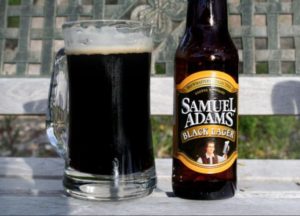
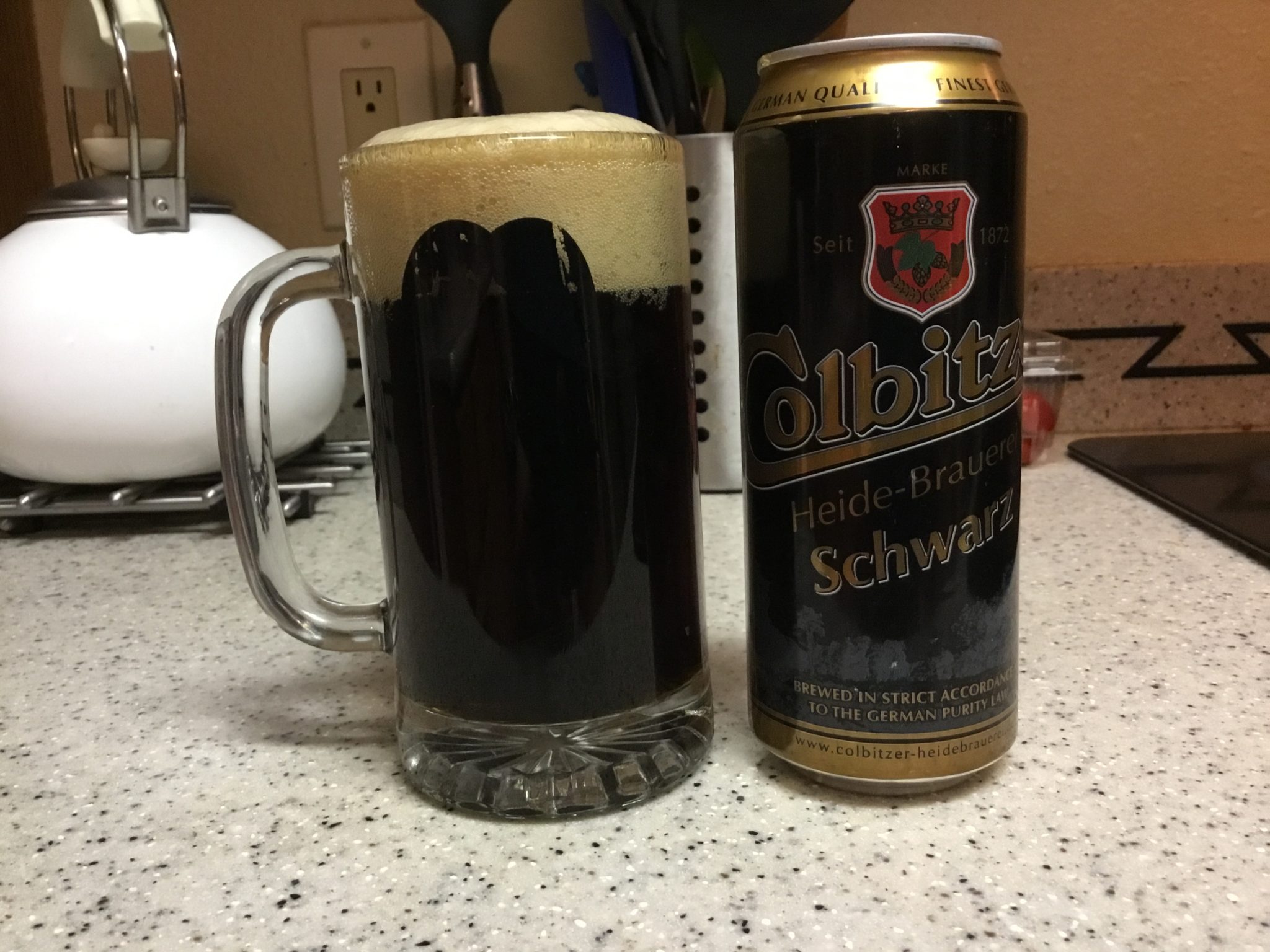
    This is my review of Colbitz Heide-Braurer Schwartzbier.  Cue the Space Balls-related puns.

    This beer reminds me of a friend of mine who got into Black Lager about ten years ago during college. We would take advantage of the $0.50 wings Tuesdays on Buffalo Wild Wings and get a bunch of wings. Until that one day it occurred to me I got a free T-Shirt if I did the Blazing Wing challenge. The challenge was only to eat 24 within their time constraint of an hour. Later they made it more difficult where you had to eat fewer of them, but had to do it in a few minutes.

    So…um…would ya?

    So I did it, and had a Sam Adams Black Lager or two along with it.

    Word to the wise–do not do this to yourself. You might think it’s a good idea to eat 24 ghost pepper wings, with the capsicum burning your lips the entire time. The pH balance in your stomach altering ever so slightly that you feel like your insides are digesting themselves. The mild acid reflux, the stench of fried chili grease oozing from your pores. Then there’s the morning after…. I was in ROTC at the time and had PT at 0600 the morning after. They accepted my stupidity as an excuse for missing it, because they were laughing too hard to stay serious enough to admonish me at the time.

    By the way, I didn’t get a free t-shirt.

    Eventually we made it a weekly thing. I didn’t do the challenge again, because as it turns out I am not that much a glutton for punishment, but the Black Lager thing continued.

    What is Schwartzbier anyways? You may not know it, but it is apparently one of the oldest styles around.

    Schwarzbier, literally “black beer,” is probably the longest continuously brewed beer style in the world, with its known ancestors close to three millennia in age and with definitive origins in the modern brewing cradle.

    Today’s schwarzbier combines Old World rusticity with the graceful smoothness of lagerbier, and a clean roasted edge with German malt complexity. It’s deep, ruby-black color and modest strength makes schwarzbier the lager equivalent of basic stout.

    The origin of schwarzbier lies in what perhaps the most significant historical brewing region in the world: southeastern Germany, including some of Bavaria, and portions of the former Bohemia, now the Czech Republic. The most famous, and arguably the most important, development from there was the invention of pilsner beer less than 200 years ago in Plzen, Bohemia. But the true gems from the region are the ancient, but modernly polished styles: schwarzbier and the smoky rauchbier.

    There is concrete evidence that crude schwarzbier was being brewed there as long ago as the ninth century B.C. (and undoubtedly, well before). This proof comes from an 1935 archaeological discovery seven miles west of Kulmbach in Northern Bavaria. The venture unearthed an Iron Age Celtic tomb that dated to about 800 B.C. That grave held an amphora with some residual brewing material and the charred crumbs of partially baked wheat bread, known to be the raw material for Celtic and Germanic brews of the time. Since this discovery places the oldest evidence of brewing in Central Europe in Kulmbach, and that beer was black, we can deduce that the world’s oldest, and still-produced, style of beer was schwarzbier.

    The result is something that has the dark roasted complexity of a stout (minus the lactose) combined with the refreshing nature of lager.

    Serve it cold, in tall mugs with a group of friends. This one in particular was actually pretty inexpensive for a six pack of pint cans and like all German beer is made in compliance with the Reinheitsgebot, assuming that means anything to you at all. Colbitz Heide-Braurer Schwartzbier 3.5/5