Category: Beer

  • Enslaving Yeast – All Grain Beer Part 2 – Bittering agents

    Enslaving Yeast – All Grain Beer Part 2 – Bittering agents

    Time to move on to the next part of brewing: bittering agents.  The oldest known bittering agents were herb blends (the most famous being gruit), the modern bittering agent of choice is hops.  The herbal beers are still being made today (but not a lot of it) by some of the American craft brewers looking to revive old styles and flavors. There’s lots of options for brewing with herbs instead of hops, here’s an article that talks about the various herbs, and how to use them.

    We’re in the modern age now, which in the beer making world means almost a thousand years of history.  So that means hops are the primary bittering agent. The bittering component of the hops is known as Alpha Acids, and any hops you buy from the homebrew shop will have an AA% on them.  These get measured in a final beer by a scale called IBU (International Bittering Units). IBU’s aren’t the final determination in how bitter a beer tastes though, as that will depend on the residual (or non-fermentable) sugars left in the beer.

    If you’re looking to replicate a recipe exactly, the AA% will be important to you.  Most recipes will have the variety of hops, listed with an AAU number. That number is just the AA% times the weight in ounces.  So, for an AAU of 30, you would need two ounces of 15 AA% hops.

    Hops add a lot more flavors then just bitterness, and these flavors can lend themselves to different styles.  One way of classifying hops is by the most frequent use for them:

    • Bittering – These are hops that are being used primarily for their AA% and to bitter the beer, they will be added at the beginning of the boil, and be boiled for 45 minutes or more.  This will drive out most of the flavor and aromatic components of the hop.
    • Flavor – These are hops that are used with 30 – 15 minutes or so of time remaining in the boil.  These will add some flavor, but most of the aroma notes from the hops will be driven off.
    • Aroma – These are hops added towards the end of the boil, or even after the boil has ended (either in a whirlpool or through dry hopping).  These will add little to no bitterness, but will retain all of their aroma and flavor notes.

    Another type of hops are the Noble hops.  This is a special category of four different varieties of hops (Hallertau, Saaz, Spalt, and Tettnang).  The term just came into being in the past couple of decades, and the hops from their original regions are generally in high demand. These classifications are more of guidelines, as any hop can be a bittering hop if enough of it is used, and some bittering hops have some very good flavor and aroma notes.  Hops can have a wide variety of flavors, with the most common being: earthy, pine, citrus, spice, grapefruit, and tropical fruit.

    Another use for hops is dry hopping.  This is when hops are added to the beer after the yeast has been pitched, and will add no bitterness, but will add tons of aroma.  There are even some beers being released now called 0 IBU beers where all of the hops are added at the beers flameout, or used as dry hops.

    New and experimental hops are being cultivated every year for new characteristics, such as disease resistance, flavor, and high alpha acid percentage.  These are generally released in small batches to breweries and home brew shops. At this point they’ll generally have letters and/or a number to identify them, only getting a name when they go into wide scale production.

    If you say you don’t like hops, it can help to learn the varieties so you can learn which ones you don’t like.  There are also several hops that can add negative qualities to beer if used with too heavy of a hand (garlic, catty, vegetal, etc.).  Good brewers will avoid this, but not all breweries use good brewers.

  • The Review Where I Mess With Texas

    The Review Where I Mess With Texas

    I am going to write something controversial.  I am fully aware of what I am about to write, is probably going to result in the very least, being pelted with rotten cabbage.

    This is my review of Shiner Holiday Cheer.

    Not my photo

    What is so controversial about this particular beer….I’ll get to that.  You see, I don’t particularly care for Shiner or as the brewery is officially know as Spoetzl Brewery.  This is awkward coming from somebody that happens to like Bocks.  I just don’t think Shiner is that great, to be honest.  I will have my AR at the ready while this is active, because this be fighting words.  People from Texas just love this stuff.

    Spoetzl Brewery to it’s credit does have an interesting history.  Like many large breweries it was founded by a German Immigrant:

    Kosmos Spoetzl, a German immigrant brewmaster, learned of the Shiner operation and coleased the facility with Oswald Petzold with an option to buy in 1915. Spoetzl had attended brewmaster’s school and apprenticed for three years in Germany and worked for eight years at the Pyramid Brewery in Cairo, Egypt, before moving to San Antonio in search of a better climate for his health. He came, carrying the recipe for a Bavarian beer made by his family from pure malt and hops. Within a year Spoetzl bought the brewery, which he renamed the “Home Brewery,” and began to produce beer in wooden kegs and bottles. After 1916 the beer was packaged in glass returnable bottles; aluminum kegs were first used in 1947, nonreturnable bottles came in 1958, party kegs in 1964, and cans in 1970. When Prohibition was declared in 1918, Spoetzl produced near beer, ice, and, according to some sources, regular beer as well. During this period, he sustained the brewery by doing construction work in Florida with crews and trucks brought from Texas. After his wife’s death in 1921, Spoetzl considered returning to Bavaria but was convinced by his daughter to retain the business. “Miss Celie,” as Cecilie was called, served as business manager of the firm, and her daughter Rose joined the firm in 1964. August Haslbeck, who served as brewmaster, was the son of a noted Bavarian maltmaster and Spoetzl’s nephew. He later returned to Germany to complete an apprenticeship and receive a brewmaster’s degree. With repeal of Prohibition in 1933, the business resumed, with the introduction of “Texas Export,” a new product later known as “Texas Special” beer. Sales were made within a 100-mile radius. Over the next decade the company added a new bottling room and brew house, and in 1947 Spoetzl constructed the white brick Alamo-style plant still in use today.

    The first time I had Shiner Bock, it was probably the only one available not made by what was then Anheuser-Busch.  It was okay but as I drank more beer, including actual bocks from Germany, I realized there was something missing.  I don’t know what it is, but I’ll just focus on the basics.

    • Is it malty?  Yes.
    • Is it balanced?  Yes.
    • Does it have body?  Not really.

    The last one I think is where it falls short.  While it is carbonated it dissipates so quickly that I feel like I am just drinking flat beer.  It’s like opening a beer, telling yourself you will finish it later and putting it back in the fridge.  When you get back to it, its just not the same.  It is this feeling except I just opened it.  Now, many Mexican beers have this same quality, except they aren’t necessarily pretending to be something their not.  Then again, Shiner Bock is what it is, take it or leave it.  I’ll accept it if offered, but I am not about to buy it.

    Not my photo, nor am I participating in this particular parade.

    I have had several of their varieties while I was TDY at Sheppard AFB, near Wichita Falls, TX.  The liquor store in town had quite the selection of all their varieties and since I was in my 20s and quite frankly stuck in Wichita Falls for a month…I had what is in hindsight, a disturbing amount of beer while getting hotline certified on overhead power lines.  One that does stand out in my opinion from Spoetzl is their Czech Pilsner.  While it may seem like faint praise, this is actually quite good and should I actually find it in Arizona, I might be inclined to buy it.  Unfortunately, I only ever see Shiner Bock.

    So how it Holiday Cheer?  Same as the rest of them, which is pretty flat.  Also it is very fruity, perhaps not in a good way.  Last year (yes, I’ve been doing this over a year now)I reviewed a holiday ale that was also fruity but it had significantly more body, and the malt complexity went well with the fruitiness.  This one is just sweet, so I slammed it down, and opened an amber ale.  Shiner Holiday Cheer:  2.5/5


  • Enslaving Yeast – All Grain Beer Part 1 – Malts and Adjuncts

    Enslaving Yeast – All Grain Beer Part 1 – Malts and Adjuncts

    At this point, you may have two batches of mead, a batch of wine, a batch of cider, and a batch of beer fermenting away in your basement.  So, let’s take a step away from making something this week and start going over the main ingredients in beer.

    First, what is malt?  Malting is a process to soften the outer husk of a grain, and allow access to enzymes that break down starches into sugars.  This process has several steps which are:

    1. Germination – The grains are mixed into water in a dark room to begin the germination process.
    2. Kilning – At this point the grain is dried and heated.  The heating will change the quality of the grain making different types of malt (we’ll get to those in a bit)
    3. Cleanup – Now they want to break off the little dried out rootlets that have sprouted, test the malt to check the quality and the specs of this batch.

    Many grains can be malted (including corn, wheat, rice, and oats), but barley is the main one for beer.  Malts can be broken down into a couple of broad families:

    • Base Malts [Diastatic Malt] – These malts have enough diastatic power (measurement of the amount of enzymes present in the malts) to convert the starches in themselves and a certain amount of other malts.  The main ones used in beer are referred to as 2-row and 6-row (based on the structure of the head of barley) with many regional ones being used for specialty beers (Marris Otter – British, Munich – German, Pils – Pilsners).  These can add biscuit and bready notes to the beer.
    • Crystal/Caramel Malts – While the process to make Crystal and Caramel malts is different, the end result is very similar and at the homebrew level the two terms are generally used interchangeable.  These are malts that have been roasted and to force the sugars to be modified into a non-fermentable state. These are referred to by their Lovibond rating (this is a measure of the color, the higher the number, the darker).  These malts will add body, some caramel notes, some sweetness, and (for the darker ones) some roasted notes.
    • Specialty Malts – These are used in small amounts for specific characteristics they can impart to the beer.  Carapils is a popular one that’s said to increase head retention and body, smoked malts have been smoked and add that flavor, chocolate malt will add chocolate notes, roasted barley is non-malted and will add a dark color and roasted flavors.  Technically all Crystal/Caramel malts could be considered specialty malts as well.

    A beer recipe will generally have between 50-75% of the grist (crushed malts) made up of base malts, with the rest being crystal/caramel or specialty malts.  You can also make a beer with nothing but base malts or just a single base malt. The vast majority of the time, you can also freely swap between base malts (although it will change the flavor) in a recipe, unless it’s using a large amount of specialty malts or adjuncts.

    Now that I’ve mentioned adjuncts, I should probably explain them.  When talking about an adjunct in the brewing world, you’re referring to anything that isn’t malted barley (or wheat in some cases), hops, water, and yeast.  So rice, corn, oats, and rye are all adjuncts, as are Candi syrup, table sugar, or fruit juice. Spices, vegetables, fruits, and herbs also qualify. Do adjuncts make a beer bad?  No, forget the Reinheitsgebot.  It was passed to protect the income of nobility who were making wheat beers.  It sets price controls!

    So why use adjuncts?  The main reason is for different qualities that the grain and sugar additions can make.  You want that creamy mouthfeel of an oatmeal stout? You need to use some oats. Want to make a milk stout?  You’ll need to include some lactose (milk sugar). The other is flavor, there’s nothing wrong with a good fruit beer, or a nice spiced porter.  According to a couple of books I’ve read, some of the Belgian breweries (if you drink good beer, you’ve probably had their stuff) use flour as an adjunct in the mash.  And you can’t say the Belgians don’t make good beer.

  • I SAID WE’LL DO IT LIVE

    I SAID WE’LL DO IT LIVE

    By ron7344

    By the way: A 2-outlet faceplate runs you about $2, cowboy.

    I like beer. For better or worse, this has been a mantra that I lived by from the age of 18-present day 47. I can’t drink like I used to, but I still really enjoy drinking beer. My wife has never had a problem with the beer drinking, because it was (mostly) on the weekends and I never changed my personality while I was drunk so it almost never caused me any problems. The following story is one of the times it did, but it turned into a positive thing in the long run.

    In December of 1990 I was a 19-year-old Lance Corporal and had been stationed on Okinawa for 8 months. On a Wednesday, I ran into my drinking buddy from Fort Sill, Pete. He had just gotten to the island on a six-month deployment. We had to go drinking that night even though I had to be up at 4:30 for a machine gun shoot Thursday morning. It started as “I’ll just have a few beers and be back by midnight so I can get 4 hours of sleep.” (It was so great to be young.) We went bar hopping and somehow wound up at the Sunabe Seawall at around 11:30.

    I met this pretty Okinawan girl, she was 22 and we REALLY hit it off. She and her friend had just watched the movie Ghost and came to the seawall for a little bit before they went home. Next thing I knew it was 2:00. Man, WE HAVE TO GO!! The girl is nice enough to drive us to the front gate, but as I get out of her car I realize my wallet is missing because the bottom of my pocket was ripped. She took me back and we found it, but instead of coming back we sat and talked for another couple of hours (not getting any sleep anyway at this point). She drives me back and I get to my room as reveille was sounded at 4:30.

    I shaved and got into my cammies and still had 45 minutes before formation, so I had the fatal thought “I can take a nap” figuring that I would hear when everyone went down for formation. To quote Charlie Murphy, “WRONG!!”. To make matters worse, my section Chief and the A chief were in school so nobody noticed I wasn’t at formation.

    I woke up at noon.

    Not sure what to do, I started helping the rear party with cleaning the barracks in preparation for our weekly cleaning (field day) and was terrified when I heard the 5 tons come back, but trying to be slick, I went down and started cleaning the .50 cals, MK 19’s, and M60’s. Suddenly I hear my Platoon Sergeant yelling for me to get my stupid ass in his office NOW.

    “WHERE THE FUCK WERE YOU?!?!?!”

    What to say? I suck at lying and I think I’m in enough trouble without adding to it so I didn’t know what to say except to tell him exactly what happened and why. No excuses, just the truth.

    “Talked? I’m not even mad. I’m dissapointed.”

    He shook his head and told me to go back out. I thought my career was over, I would never get promoted and maybe kicked out. He never said another word about it, but for at least six months, every time there was a shit detail he would look over the formation and when he saw me he would do a double take, yell my name, say “Holy Shit, you’re here. Thanks for volunteering.” Much guard duty was stood, and many hours were spent picking up trash and brass.

    The positive thing to come out of that night: the girl I met has been married to me for 24 years now.

    Now for reviews of my BIF from L0b0t:

    Black Duck Porter by Greenport Harbor Brewing Company 4.7% ABV: Excellent example of a high quality Porter. Nothing extra, just right. 4.25/5

    Common Sense Kentucky Style Ale by Upstate Brewing Company 5.3% ABV: Very easy to drink reddish ale. Good taste of hops, but not too strong. 4/5

    Hawaiian Pizza IPA by Rockaway Brewing Company 5.9% ABV: I was skeptical about this one, but there was a pineapple beer in my last BIF package that was enjoyable, so let’s see.

    Is this grapefruit juice? One swallow and I’m done (TWSS) 1/5
    I give it to my wife (not a beer drinker) and she tastes it says “I can drink it, but it doesn’t taste like beer” She gives it 2/5

    …FILLS HIS VICTIMS FULL OF DREAD

    Heavy Boots of Lead by Single Cut Beersmiths 11.2%ABV: Pours like motor oil out of my Cummins BLACK and THICK. Even the foam is dark. Can’t see a light through it.

    Tastes like an imperial stout, but there is a lot more to the flavor. Very thick and heavy but in a good way, hard to explain. I would never guess this was 11.2 %. I like it a lot and wish I could find this around here. 4.5/5

    High Ryse by Iconyc Brewing Company 7.5% ABV: Very smooth Saison beer. Not my favorite type of beer, but it definitely got better as it went down, really liked it by the end. 3.75/5

    First drink and I think” this is the perfect beer” almost reminds me of Double Bastard, one of my all-time favorites.  12%, but it goes down way too easily. I love this beer, my next trip to NY I will definitely be looking for this and the High Ryse. 4.75/5

    Super Kitty by Keegan Ales 12% ABV: Bottle has a pop top like Grolsch, and it’s wax sealed. Excellent red color and nice “beer” smell. My wife smells it and recoils in horror.

    Thanks again Nephilium for coordinating all this and also thank you l0b0t for the excellent beers.

  • Enslaving Yeast – Extract Beer

    Enslaving Yeast – Extract Beer

    Yes, at long last we’ve stepped through the various ways of making alcohol and have made it to the hardest to make.  Beer. Over the next couple of installments, I’ll be going a bit more in depth on the ingredients used to make beer, but let’s get started with the equipment you’ll need to make a simple extract batch.

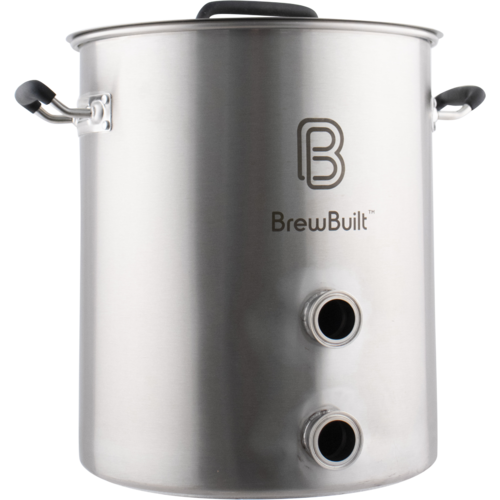
    To begin with, the first thing we’ll need is a brew kettle.  Unlike most other types of fermentation, beer requires being brought up to a boil for a time in order to sterilize it, use the alpha acids in the hops, and to help get a clear beer.  Any kettle can work for a brew kettle, as long as it’s large. Most will also have a spigot put into them to allow you to get your wort (unfermented sweet barley water) into a fermentor more easily.  Now, most beer recipes for homebrewing are written for a 5 gallon batch, that means if you want to do what’s called a full boil (the full volume of beer is boiled at once), you’ll need at least an 8.5 gallon kettle.  Why the extra 3.5 gallons?  Well, first you really don’t want a kettle full of boiling liquid full to the brim.  Second, you’ll be boiling off water as you get the wort up to a boil, and during the time it’s boiling.

    Then, you’ll need a wort chiller.  While wort chillers are technically optional, you’d be hard pressed to find someone telling you they aren’t a worthy investment.  You can make your own fairly easily as long as you have access to copper (or stainless steel) tubing, a way to bend it, and a way to get hose attachments on to it.  Wort chillers are used to bring that boiling pot of wort down to a temperature where it’s safer to move it between vessels, and bring it down to a temperature where you can pitch your yeast.

    But Nephilium, I’ve got this 4 gallon pot, and SWMBO (She Who Must Be Obeyed) has said that I can just put an ice bath in the tub to chill my beer.  If you can’t do the full boil, you’ll be doing what’s called a partial boil. This means you’ll be boiling a partial amount of your total volume, then topping it off with water.  Since the top off water doesn’t have to be boiling it will help with the cooling process. In general, if your tap water is safe to drink, you can just add it directly in for the top off, although that has a risk of infection.  If you want to be safer, boil the water once, let it cool, and put it into a sanitized fermentor a day or so before.

    Finally, we’ll talk about the two different basic types of malt extract.  You can buy it either in a liquid form (LME) or in a dry form (DME). The liquid form will have the consistency of syrup, is slightly easier to mix into hot water, but will spoil faster and is harder to do measurements of.  The dry form will have the consistency of powdered sugar, which means it’ll very easily coat things with a sticky mess, but can be kept around much longer as long as it’s kept in an air tight package and away from humidity.

    So let’s go with a recipe.  This is for a basic Saison, a style that is more descriptive than prescriptive. It is a traditional style brewed in France and Belgium at the time of the harvest, and was used to pay workers in the fields.  I’d recommend following the recipe as written once, but then you can adjust it by adding rose hips and lavender, tart cherries, currants, peach juice, or whatever you would like.

    Base Saison: 90 minute boil; Final volume 5 gallons

    Ingredients:

    2 lb. Wheat Dry Malt Extract
    3 lb. Pilsen Dry Malt Extract
    3 lb. Extra Light Dry Malt Extract
    2 oz. Saaz hops
    1 package Saison yeast (make sure it’s not a bacterial blend), I’ve had great results with the White Labs WLP565.
    ~7.25 gallons water (your amount may differ based on different boil off amounts)

    Note: If you can’t find DME, you can substitute LME for it, just up the amounts by about 10%.

    Method:

    Prepare all of your ingredients, you’ll be separating the hops into two amounts 1.5 oz and .5 oz.  Get your water up to a boil, then we’ll be adding the malt extract. Turn off the heat, add in the extract and stir.  Then stir some more. Make sure the extract is mixed into the water. Get the water back up to a boil, and once it starts boiling put in 1.5 oz of the Saaz hops, and start your timer.  70 minutes into the boil (20 minutes before you turn off the heat) add in the last .5 oz of hops, and your wort chiller (but don’t start the water flow, we want to sanitize it). When your timer runs out, turn off the heat, and turn on the water flow for your wort chiller.  You’ll need to move the wort chiller around every once in a while to help chill it down. It’ll take 20-30 minutes at least to chill your wort. If you want to pull a sample to check your gravity, it should be at about 1.060.  At that point, move it to your fermentor and pitch your yeast.  Let it ferment for 3-4 weeks, as the Saison yeasts can take some time to finish off, and the beer should finish up at around 1.005 (or lower).  Saison yeasts are fairly heat tolerant, so you don’t need to worry so much about fermentation temperatures, but just keep the beer stable.  After it completes fermenting (remember, 2 checks at least three days apart with the same gravity reading) bottle it, let it condition, and enjoy it.

  • They decorated my cube….

    They decorated my cube….

    About a week ago it finally happened.  People in my office began to celebrate the holidays.  First it was the fake, pre-lit tree they couldn’t assemble, and the one person in the office that knew I used to be an electrician ran me down as I walked in.  So I assembled it.  More irritating was they decorated my cube with a poinsettia.


    This is my review of Ridgeway Brewing Bad Elf Winter Ale

    But first!  I thought I called last call for BIF.  Apparently, that is meaningless like most of the rules here.  The problem is, this last one is something I should probably put on it own, so I’ll put it on its own later, because it’s a good story.  Thats right, f*** it.  We’ll do it live.

    The plant in question hasn’t always been a staple around the holidays. It smells pretty neutral, doesn’t really need a lot of watering.  Its just got red and green leaves, but there’s more to the Poinsettia.  Much, much more.

    The plant itself is indigenous to Southern Mexico and was originally cultivated by the Aztecs to make a dyes.  Later the plant’s sap was discovered to make latex.  That’s right—Mexicans gave you the material to make condoms, rubber bands, and a slew of other stretchy things.  Let thet soak in for a second.

    If not for the efforts of Joel Poinsett, Americans may not know or care for the plant at all.  Poinsett was the first Ambassador to Mexico and appointed by James Madison.  He had a thing for botany, which given the absurd number of people that grow vegetables to decompress from the modern world, doesn’t sound all that unusual.  He happened to like the plant and sent several back to his home in South Carolina.

    Why is it associated with Christmas?  Here’s why:

    Pepita, a poor Mexican girl who had no gift to present the Christ Child at Christmas Eve Services. As Pepita walked slowly to the chapel with her cousin Pedro, her heart was filled with sadness rather than joy. I am sure, Pepita, that even the most humble gift, if given in love, will be acceptable in His eyes,” said Pedro consolingly.

    Not knowing what else to do, Pepita knelt by the roadside and gathered a handful of common weeds, fashioning them into a small bouquet. Looking at the scraggly bunch of weeds, she felt more saddened and embarrassed than ever by the humbleness of her offering. She fought back a tear as she entered the small village chapel.

    As she approached the altar, she remembered Pedro’s kind words: “Even the most humble gift, if given in love, will be acceptable in His eyes.” She felt her spirit lift as she knelt to lay the bouquet at the foot of the nativity scene. Suddenly, the bouquet of weeds burst into blooms of brilliant red, and all who saw them were certain that they had witnessed a Christmas miracle right before their eyes.

    From that day on, the bright red flowers were known as the Flores de Noche Buena, or Flowers of the Holy Night, for they bloomed each year during the Christmas season and thus, the legend of the poinsettia was born.

    Its a miracle!  In 1851, Congress would later declare December 12 to be National Poinsettia Day.  Why do that?  Turns out Poinsett was a pretty big deal.  He only helped found the Smithsonian.

    This beer isn’t too bad.  Its a traditional English ale, with a bit of spiciness as a twist.  Not a bad combo but ultimately left me searching for that hated bananna flavored residue from the yeast they use over there.  Eventually I found it.  Ridgeway Brewing Bad Elf Winter Ale 3.0/5

  • Enslaving Yeast – Mead

    Enslaving Yeast – Mead

    So we’ve made cider and wine, let’s move on to what is commonly claimed to be the oldest fermented beverage in the world, Mead.  What is mead? Mead is a fermented beverage where the majority of the sugars are coming from honey. Honey is naturally antibiotic, and is unique in that it doesn’t spoil (while it will crystallize, it stays edible).  So, since we want the yeast to survive, we’re going to need to water it down. There’s several different paths you can go to add water to the honey, each with different drawbacks:

    1. Boiling – Get water up to boiling, then add in honey.  This runs the risk of scorching the honey, as well as driving off aromatics, but will ensure that the honey is equally mixed into the water.  You’ll also need a way to cool the must before putting it into a fermentor and pitching yeast.
    2. Hot water – Get water up to ~160 F, and mix in the honey.  This will help the honey dissolve, but will drive off some aromatics.  This also may require some method of cooling before putting it in a fermentor and pitching yeast.
    3. Cold water – Mix water with honey.  This will require more mixing and more stirring to make sure the honey is fully dissolved, has the highest risk of infection (still not a high one), but preserves the honey aromatics the best.

    You won’t need any new equipment for making mead, but you may need a couple of additional ingredients.  Yeast nutrients and yeast energizer.  Fruit (and barley) have the compounds that yeast need naturally occurring in them, honey does not.  While you can make mead without yeast nutrients and energizer, using both will help the yeast do well and convert the sugars into alcohol.  With the cost of honey, it’s well worth the extra couple of dollars to ensure a good ferment.

    There’s an ongoing debate in most of the mead forums about the best way to use yeast nutrients, with everyone certain that their way is the best (sound familiar?).  You can either add it all in at the beginning of fermentation, you can do step additions (add 25% at the beginning, then an additional 25% each following week).

    For those who think there’s too many different styles in beer, there’s a large list of different types of mead.  For those of you here, I’m guessing the most popular will be:

    • Braggot – A mead made with malted barley and honey
    • Capsicumel – A mead flavored with chili peppers
    • Cyser – A mead that users cider instead of water to dilute the honey
    • Hydromel – A light/low alcohol mead (think around 5% ABV)
    • Pyment – A mead that uses grape juice instead of water to dilute the honey
    • Sack mead – A strong mead with more honey then a standard mead (to get to ~15% ABV)

    For your standard mead, plan on between 2.5-4 lbs.of honey per gallon.  Adjust as you wish for higher/lower ABV, and based on if you’re using a fruit juice to dilute (which will have sugar of its own).  Be aware of the different types of honey, and realize that they will have different flavors when the fermentation is done. I recommend starting with small batches until you find something you like, then ramping that up to a higher volume.

    Now for the recipe of a mead I made that came out really well, and should be ready for your next Thanksgiving.  Yes, I’m talking about the one in 2019, most meads do well with a lot of mellowing and aging on them.  Since it’s a 1 gallon batch, I generally bottle this into about ten 375 ml bottles instead of risking only getting four and some change into 750 ml bottles (remember that there’s sediment you don’t want in your bottles).

    Cranberry Mead (1 gallon batch):

    • 1.5 lbs Cranberries – Reduced to juice (or just buy cranberry juice)
    • 3.5 lbs honey
    • Water to top off to one gallon

    Blend the cranberries (or buy juice) and run the resultant liquid through a filter.  Mix that with 3.5 lbs. honey and top off with cold water to get to one gallon. Shake it up (which will both aerate it, and make sure that the honey is mixed in with everything else) until the honey is dissolved.  Figure out what nutrient schedule you want to use, and pitch a white wine yeast. Fermentation will take at least a month, so be patient with this one. After fermentation is done, wait for it do drop clear (sediment will settle at the bottom of the carboy), then bottle it up.

  • Autumn BIF:  Last Call

    Autumn BIF: Last Call

    By Nephilium

    So, I’ve run a couple of these BIF’s, and here’s the shipment that I received in the most recent one:

    A nice new nonic glass, and several new to me beers.

    Let’s start with one I’ve had before, but still enjoy.  Southern Tier Harvest Ale: Nice citrus hop aroma, with an undertone of tannin.  Very pale, small head, and moderate carbonation in the appearance of the beer itself.  But the flavor is there, sharp crisp hop tastes slowly fading away. I really wish this was available year round. 3.8/5

    Moving on to another one that had a great old ((ad)) campaign, formerly known as just He’Brew Messiah: Sweeter aroma then the ones I usually go for, a slight hint of hops hiding behind a caramel/nutty aroma.  Pours a dark reddish-brown, with a fluffy white head. Yep, there’s the nutty notes, and just a wisp of hops lurking behind it.  A drinkable beer, but not one I’ll be going for again. 3/5

    On to the new to me beers.  Saranac 1888 Oktoberfest: Pours a clear golden-copper with a full white head. Aroma is a touch of caramel and biscuit, with some earthy notes. Flavor is not as sweet as some Marzens, with just a kiss of caramel. There’s some earthy and spice notes from the hops in the finish. 3.68/5

    Orbital Tilt: Vic Secret: Big bright citrus hop aroma, with some mango underneath. Pours a nearly opaque orange with a dusting of white head. A touch of caramel sweetness starts off the beer, which then rolls into pine, pith, grapefruit, and a touch of sweet mango. This fades away leaving a long lingering bitter finish. Rich mouthfeel, with just enough carbonation to keep it from getting cloying. 4.24/5  One of my favorite from the batch.

    Light crisp aroma, with a touch of noble earthy hops. Pours a mostly clear pale straw with a quickly fading white head. There’s a touch of malt sweetness, which fades to a mild earthy bitter finish. A light body, and nice carbonation keeps this an easy drinking pils.  3.67/5

    Brown’s Oatmeal Stout: Pours a clear dark ruby with a dusting of light tan head. Rich roasty aroma, with a touch of coffee in the end. Slick mouthfeel, with a fullness from the oats. Starts with a slight note of milk chocolate, which fades to roast, with a touch of acrid notes in the finish. Not enough to be overpowering, but enough to be noticed. Overall, a solid Oatmeal Stout. 3.62/5

    I hope you all have enjoyed hearing us geek out about beers, and feel free to jump into the next BIF (currently scheduled for late April/early May, unless someone else wants to run one… hint hint).


    By DEG (who Kinnath shipped to):

    Thanks to Kinnath for sending some good beers.  My ratings are simple:

    “Would” for “Would Drink Again” and “Would Not” for “Would Not Drink Again”.

    Oja from Iowa Brewing – An excellent Baltic Porter.  Rating: Would.

    Oktobot 3000 from Lion Bridge Brewing – Lion Bridge aged this Märzen in Water of Life barrels.  The Water of Life overwhelmed the Märzen. Rating:  Would Not.

    CoCo Stout from West O Beer – A Milk Stout with Chocolate.  Quite tasty, and not enough lactose to send me running to the toilet.  Rating:  Would, but only in small quantities.

    Oktoberfest from Confluence – The only problem with this beer is I didn’t have enough to fill a Maß.  It is competitive with some Märzens I had at the Wiesn.  Rating: Would.

    G. G. from Exile – A dunkel lager.  It was flat, but still rather tasty. Rating:  Would Not unless they fixed the carbonation.

    Compensation from Lion Bridge – An English Mild.  It had a nice roasted, malty character.  Rating: Would.

    Not DEG’s photo

    Tragedy of the Common from Iowa Brewing – Beeradvocate shows it as a California Steam Beer but the label says it is an Amber Lager.  The name made me laugh at a time I needed it.  I just got home from traveling for a funeral, and my BIF box was waiting for me when I got back.  I saw this bottle’s label and laughed.  Rating: Would.

    My favorite?  It’s a threesome – Oja from Iowa Brewing, Compensation from Lion Bridge, and Oktoberfest from Confluence.


  • R C Dean Gets BIFfed

    R C Dean Gets BIFfed

    Lackadaisical (PBUH) sent me a nice selection of upstate NY beers.

    For some reason, the arrival of the BIF box got me thinking about something that has struck me as an odd inversion.  It used to be that beer was the cheap/economical way to get your booze on (and it still can be, if you stick with mass market beers), but given the price for craft beers (which is still a little shocking to someone who started drinking beer back when the only thing on the shelf was cheap crap), I have been laboring under the perception that they are actually as or more expensive than cocktails.

    However, I was moved to do the math.  A six-pack of good craft beer costs me between $10 – 12.00, call it $1.75 a bottle.  A bottle of beer has between .75 and 1.0 oz. of alcohol, so to be we’ll say craft beer delivers alcohol at @ $2.00 per ounce.  Your typical fifth of booze is 80 proof, and so it has 10.25 oz. of alcohol.  Now, there is crazy variability in booze prices, so we’ll take Bulleit Rye as our standard, which costs me $21.00 for a fifth, or . . . $2.05 per oz. of alcohol (before mixers).

    Bottom line:  there’s so much variability in price per oz. for both beer and booze that its hard to give a general rule, but the craft beer market (although it seems pricey to this old-timer) actually is pretty much equivalent per oz. to cocktails, maybe a little cheaper.  I would say craft beer and cocktails both deliver the goods within about the same (broad) range.

    I’m not the most critical beer drinker, and tend in general to enjoy pretty much whatever is in front of me at the time.  With that in mind, my impressions:

    Rohrbach Scotch Ale:  Either this one or the Asylum Porter were my favorites.  This is an excellent example of Scotch Ale, one of my preferred types of beer.  Decently full bodied, nice caramel malt flavor with some roast, and the hops were behaving themselves and being good team players.

    42 North Asylum Porter:  Very interesting beer, probably more depth and more flavors around the edges than the Scotch Ale.  I got a little bitter chocolate and maybe coffer, and just enough smoke, but not so much that it was getting into the stout range.  The kind of beer that you keep working because you want to chase some of the flavors.

    Rohrbach Patty’s Irish Ale:  A good Irish Ale – very comparable to their Scotch Ale, not quite as much body, and a hair less roasted flavors, a little drier on the finish.  No complaints, would drink again.

    Genesee Octoberfest:  Genesee in general takes me back to my college days, and this is a competent, if not too exciting, beer.  Adequately malty, if not quite as much body as I might like.  Decent flavor.  I would say this is an excellent beer to take to a tailgating party to class it up a little, and not go broke when your friends (and their friends) go through your cooler like a Mongol horde.

    Big Ditch Hayburner:  An IPA, but not hop soup.  I can tolerate a legit IPA, so long as the brewer hasn’t decided that  adding hops is somehow going to compensate for certain . . . personal shortcomings.  This is a good example of the breed – decent body, hops definitely there but a little more on the floral side (which I prefer) rather than tastebud-killing bitterness.

    Big Ditch Low Bridge:  Interesting beer – a golden ale (whatever that is).  Kinda-to-pretty hoppy; in a blind test I would have likely said this was a pale ale of some kind, but maybe a little maltier than I expect from a pale ale.  It went right down, I’ll tell you that.  A good beer for moderately spicy food.  May get the nod over the Genesee for a good session beer, depending on how you like the hopping.

    Not a dud in the bunch.  I would not be sorry to discover any of these in my fridge.  Thanks, Lack (and Nephilium)!   Will BIF again.

  • Fall BIF Review 2018: Lacky Reviews RobC

    Fall BIF Review 2018: Lacky Reviews RobC

    I get to review the offerings from RobC, whose avatar is a beer, so you know it is going to be good. Lots of stuff from Cincy and Kentucky, that I’ve never tried so this should be fun.

    Good Guy RobC
    The Culprit

    Rhinegeist: Puma Pilsner (40 IBU, 5.2% ABV, Cincinnati, OH)
    An… interesting can, this pils reminded me more of an IPA than not. Floral notes and a bit too much ‘striking noble hops’ left me a bit bitter at only 40 IBUs. 1.9/5

    West Sixth Brewing: Pay it forward Cocoa Porter (?? IBU, 6.0% ABV, Kentucky)
    This was a lot tastier. The chocolate was very noticeable, but in a good way. Nothing truly special about this beer, but I would drink this all the time if it was available around here. 3.8/5

    Falls City Brewing: Streetlamp Porter (??IBU, 5.4%ABV, Louisville, Kentucky)
    Rather tingly mouthfeel for a porter, and decent head when first poured (how’s that for a euphemism?) Very rich flavors, must be the molasses. Could be great if it had a more heavy mouthfeel (I like the feeling that I’m eating bread), though this is easy drinking for a porter, especially at this ABV. 4.2/5

    Country Boy Brewing: Cougar Bait American Blonde Ale (?? IBU, 4.9% ABV, Georgetown Kentucky)
    Wasn’t very impressed with this offering, I think it may just be a limitation of the style, it isn’t offensive at all, but just doesn’t do it for me. 2.5/5

    Against the Grain: 35K Stout (?? IBU, 7.0% ABV, Louisville Kentucky)
    Weirdest can art ever. Delicious, I got a little buzzed on this one, I don’t have a great recollection of the exact qualities that made it enjoyable, it just was. 4.5/5

    Kentucky Bourbon Barrel Ale (?? IBU, 8.19% ABV, Lexington Kentucky)
    First impression: ‘I knew I shouldn’t have opened this one up. I’m sure it is expensive and probably tastes great to someone who loves bourbon. I hated it. I had that little shutter when you take your first shot of the night, barrel aged ales just don’t do it for me, unless the liquor taste is very subdued. This isn’t.’
    Somehow by the time I took the second sip I found it was quite tolerable, and ended up enjoying it. I still suspect it was wasted on me. 3.0/5

    RobC also sent a couple glasses and a hat! Sadly, one glass didn’t make it, but the important stuff (the beer) made it here just fine. Thanks to Rob for giving me a chance to try all sorts of beer from his region.