Author: Suthenboy

  • Castles in the Air

    Castles in the Air

    Recently my Glib friends were kind enough to publish an article I had written  wherein I laid out a case that there is empirical evidence of the existence of natural rights. I contend that natural laws existing independent of man govern both human society and the natural world. We don’t invent these laws, we discover them. When we attempt to concoct laws to better suit ourselves it has invariably resulted in failure of our attempts to shape the world around us.

    Today we can successfully manipulate the natural world beyond the wildest dreams of our ancestors. Because we have discovered many of the laws that govern nature people from even one generation past would be in awe or disbelief of the world we live in today. Our understanding of the natural laws governing chemistry and adherence to them has given us ever increasingly sophisticated and useful metals, plastics, medicines, fuels, and building materials. Combining that with our understanding of physics allows us to create ever more useful machinery for manufacture, transportation, communication and tools for discovery or deeper understanding of natural law. They have allowed us to discover whole worlds, both macro and micro that mankind never knew existed. Using that deeper understanding increases our ability to lengthen our own lives and improve the quality of that life. It enables us to vastly improve our ability to produce food and simultaneously improve our environment.

    These applied sciences are not a God’s eye view of the universe. They are analogies. Underlying these sciences is mathematics which is also a human invention and an analogy. Underlying the mathematics of applied science are mathematical constants. These constants may be expressed mathematically but they themselves are not analogies. They are descriptions of the behavior of the natural world as it exists independent of man.

    If we try to invent our own, such as changing the gravitational constant to G/2 instead of G to save ourselves a great deal of effort and expense in the construction of rocket ships, our rocket ships will fail disastrously. Using any number other than G will result in failure. From this we can infer that a gravitational relationship exists. We simply express it as G. It is not subject to our whims. It existed before humankind, it exists now and it will exist long after we are gone. The universe makes the rules, we do not.

    In the same way that discovering and adhering to the laws of physics gives us success in manipulating the natural world, discovering and adhering to the laws of economics and human nature gives us success in social endeavors. Human nature is a product of evolution, not something we concocted. Any system we devise is subject to the body of natural law. Numerous efforts to change human nature have been tried in order to salvage some preferred but failing system and like The Good Ship G/2, all have failed disastrously. Our successes have been the result of observing human nature and creating a system to mesh with it. Our most notable failures have been the result of working the other way about. From this we can infer that human nature exists independent of our desires, it is not ours to invent.

    By far the most successful political system in human history is the one currently in effect in the United States, and not just by a little bit. The success has been so spectacular as to almost defy description. It has allowed individuals, both natives and foreign born immigrants, to contribute more to humankind than all of the systems in history combined. It has created more wealth in a mere hundred years than all of humanity throughout history. Nearly everything that makes the modern world what it is was conceived or popularized by people in the United States.

    This tells us that the premises that underlie that system are more comport with the natural order of things than any other system. The corner stone of that system is the premise that all people inherently and equally possess inalienable rights. Inalienable in that those rights exist as a product of our humanity. They cannot be granted or taken away. They are an integral part of every person. Building this system from the bottom up resting on that premise is the key to that system’s success. From this we can infer without doubt that inalienable rights are naturally occurring.

    The key to other system’s failures is ignoring natural law and attempting to build the system from the top down, something that can no more result in success than attempting to levitate and build a house from the roof down. Starting with a preferred ideal outcome, ignoring simple truths and then inventing a system to achieve that outcome does not work. It does not work in politics or economics any more than it works in science. It is remarkable to me how far afield from natural law some systems go. We only have to miss one or two natural laws for the system to collapse, yet some systems ignore even stark truths, such as that happiness is better than sorrow, that strength is better than weakness, that wealth is better than poverty, that independence is better than dependence, that health is better than sickness, that success is better than failure, that good is better than evil, and of course that natural rights even exist.

    Being of the mind that ends justify the means, that a few eggs have to be broken to make an omelet, leads one to commit all sorts of evil. Evil does not result in good. Wishes do not inform reality. That is farcical thinking, pure and simple, akin to magical spells. Recognizing that inalienable rights are naturally existing and respecting them results in success. Violating inalienable rights results in failure. Building up from sound principle gives us a sound house. Attempting to build on air from the roof down gives us a pile of rubble.


    *I am not attempting to argue the origin of natural rights. That is an argument that cannot be resolved. My attempt is to give a sound argument that they exist not as an invention of man but are naturally occurring. Those that argue that they are in invention of man are doing so to justify hand waiving them away. As for the arguments over the origin, God or nature, I don’t care. It is good enough for me that both sides agree that they do in fact exist.


  • Maximizing the Value of Your Timber

    Suthenboy is not a credentialed expert. This is just his personal experience, not legal advice. Consult credentialed professionals before attempting any of this.


    Some here have asked me about this subject so here it is.

    Timber buyers, obviously, want to pay as little as possible for timber. Timber growers want to collect as much as they can for their timber. The nature of timber purchase is speculation. From the time of sale a tree may stand for months before harvest. It may stand for a couple of years. From there it can lay in a yard for a couple of years. From there it may still be a year or more before that lumber lands in The Hyperbole’s hot hands. The buyer is trying to arrive at a price that allows them to make money in a future market. They have to take a chance on, mostly housing starts, years into the future.

    *If you want to get an fairly accurate prediction about the economy’s future performance, check the price of timber. Those guys aren’t screwing around, they know what they are doing and they aren’t political. BTW, timber prices on the stump are sky high right now. Must be those pesky Russians.

    If you are selling timber you may want to have a professional forester evaluate your timber and give you and estimated value. However, it is hard to know how incestuous a relationship exists between foresters and various buyers. Here is the best way to go about it once you are certain you want to sell your timber. It is tried and true.

    1. Do some research. Find all of the potential buyers in your area. This will include all of the saw mills, pulp mills and plywood mills. You may also find some timber brokers. It is hard to say how large your area is. Because of fuel cost and highway usage fees the further from your timber a mill is the less they will be willing to pay. Out of courtesy I include everyone inside about 50 miles but I know the best offers will be from those half that far away. Write a letter to each one announcing that you intend to sell your timber in a closed bid auction on a given date and time. Include a survey of your property, directions to and legal description of the property. Include a title search confirming that you are in fact the owner. These can be found at your Clerk of Court’s office. Include a copy of your contract. Invite them to examine the timber at their leisure.
    2. Contract. You should be able to get a timber sale contract from your local clerk of court easily. Every state has different style and requirements. Get an example at your local courthouse of someone else’s completed sale from the clerk’s office. Just walk right in and tell them what you want, they are glad to help. The contract should include things like access, road building, time limits, damage repair and clean up. Use that contract as a template for your own and adjust the terms to your liking.

    Consider things that will increase your price: clean up is expensive. If they have to spend 10K or 20K on labor and gasoline pushing tree tops around, it will be reflected in your price. Those tops will rot away in a couple of years on their own.

    Remember, they are speculators. The longer you give them the better off they are. Here, most time limits are 6 months. I give ‘em two years. That will be reflected in your price. Most land will restore itself in a couple of years and bulldozers are damned expensive to operate. That will be reflected in your price. Don’t worry about minor things: Often the cutter will change oil several times and just dump the used oil on the ground. Don’t sweat it. That will be gone in a couple of years on its own.

    Lastly, make certain that the contract places liability on either the cutter or the buyer if they cut over the line. Once they crank up the saws you have no control over them so you should have no liability.

    If any of this makes you nervous, get a lawyer. There are a lot of good land guys around that will facilitate a sale for a modest fee.

    1. Clearly mark your lines with paint before the potential buyers inspect it. Most harvesters will not cut the trees with the paint on them. They are considered ‘line trees’ and will be left as future markers. Chose crooked trees, don’t mark veneer quality logs. The buyer wants those. If you are uncertain about those lines you may want to have a survey performed, but that can be expensive. If you are on good or neutral terms with your neighbors it is a good idea to have them accompany you to examine where the lines are before you paint so that you are in agreement.
    1. If you have any contact with any of the buyers do not discuss money. Do not discuss price. I cannot overemphasize this. If they try to bring it up inform them that you absolutely cannot discuss money until after the bid. If you are seen as someone who tries to manipulate a sealed bid auction no one will touch you. Word will spread and no one will show up at your bid. In fact, you may never be able to sell your timber. You will become persona non-grata. Not acting in good faith will burn you.
    1. Rent a small conference room at a mid-level hotel. Don’t go expensive, don’t go cheap. You don’t want cracked-out hookers accidentally wandering in while you are opening bids. Bring cinnamon rolls, doughnuts, etc and coffee. Lots of coffee. Most of the buyers that intend to place a bid will RSVP so you should have a good idea how many people you are serving. Hopefully you will be serving at least ten.
    1. You should have a check-list of everyone you sent an invitation to. Check them off as they arrive. If at the appointed time there are some that did not show ask the room politely if you can wait another few minutes. If you have anyone who cannot wait do not try to accommodate the person who is late.

    *At least once the winning bidder showed up about ten minutes late, and they weren’t the winner by just a little bit.

    1. Collect all of the bids in plain sight of everyone. Open them and read them out loud so that everyone can hear. Just read the numbers and then place the bids out in plain sight on the table. When you have finished, pick the largest bid and announce it and the bidder. Thank everyone for coming. If there are any who don’t have to be anywhere try to engage them in conversation so that you can pick their brain. Ask questions. These guys know the business inside and out.
    1. The winning bidder will likely have the check on them, already filled out. They will present it to you and you both will sign the sale contract. You should have two copies of the contract to sign.
    1. Immediately after the sale you want to do two, maybe four things. First go to the bank and deposit the check. Find out how soon the money will be available.

    Then go straight to the courthouse and record the contract with the Clerk of Court. Lastly, if the money is available go straight and pay any local, state, or federal tax you owe. Don’t feel flush and think you will do it later. Do it now.

    I also recommend, while you are at the bank to open a separate account to reserve some of the money for future property tax, a personal ESCROW. Those taxes are going to come due like the sun will come up. Make sure you have the money when the time comes.


    As it turns out maximizing the value of your timber is a lot of work. If you are only going to do it once in your life you want to get it right. I have included as many pointers as I can think of. My father wrote a detailed book on the subject, but I can’t seem to find my copy. It’s buried in a mountain of books. If it turns up I’ll let y’all know and anyone that wants a copy, just ask. I will be happy to share it.

    Last bit of advice – There are timber companies and land management companies that purport to manage your timber for you. In return they want exclusive rights to your timber when it comes time to harvest. They will lock you into a contract and thus into a price. NEVER ENTER ONE OF THESE CONTRACTS. They are not crooks. They think it is fair because of the services they provide which might include a survey, but probably not, justifies reducing the sale price. You will end up with a minimum price just short of being legally actionable. DON’T DO IT.


  • Components – Reloading, Part 6

     
    Read the series
     

    This article is for informational purposes only. Suthenboy is not a credentialed expert. Do not attempt any of these activities without first consulting an expert or a manual published by accredited experts or manufacturers.


    The number one consideration in choosing component cases and bullets is price. There are lots of manufacturers out there but the quality of the cases all meet the same requirements for material and dimension. I have never found that any one brand is better than another. What I have found is that used surplus military stuff can be a problem. Military brass is thicker and softer than civilian brass. This is because military loads are higher pressure and a looser fit in the chamber. The loose fit is so the cartridges will still chamber under adverse conditions (mud, sand, water). Because they are a looser fit they need to expand more to seal the chamber so they are softer. Because they are soft and higher pressure the walls of the cases are thicker. Resizing these cases can be a real struggle. I once ripped my press off of its bolts trying to resize some 7.65×51 NATO brass. The straight wall pistol cases are fine and the 5.56 NATO is ok but after that buy commercial brass. The military stuff also has shorter life because of overexpansion and the resulting work hardening.

    For standard calibers there are multiple outlets including Midway, Brownells, Cheaper than Dirt, Black Hills and a host of others. Just do a search for ‘bulk brass reloading’ and you will get oodles of suppliers. For non-standard calibers the suppliers are spotty. Some calibers are seasonal, meaning they are only produced once every ten years or so. Some suppliers will have some calibers sometimes and others not. You just have to search. I once found where Black Hills had bought all of the 375 Winchester produced and was selling it for a song. I bought a lifetime supply.

    Another consideration for cases is the priming. Standard priming means the primer flash hole is single and centered in the bottom of the case. All standard reloading dies are designed for standard priming. Another type of priming is Berdan priming. This type case has two small off-center holes in the bottom of the case. Normally these cannot be reloaded without special tools and are a pain in the ass even with that. Stay away from Berdan.

    For priming you definitely want quality, consistent, reliable primers. The best on the market I have found is CCI. Remington and Winchester are good. I have never tried any foreign manufacturers. They are pricey anyway. With primers you want to handle them carefully. I use tweezers to manage them. Never touch them with your fingers. Any oils from your fingers can kill the primer. Any oils or grease from your bench can spoil the primers. Open them fresh, use them immediately without touching and then put the package away.  Never subject the primers to any kind of shock. The priming material is very powerful. It may seem like a tiny amount but it wont seem that way if you set one off.


    The primer is a small swaged brass cup. Inside the cup is the priming material and on top of that is a little three legged anvil so that the priming material is mashed between the cup wall and the anvil upon being struck by the primer.  This little anvil can be ejected from the cup if the primer is set off outside of the cartridge case. Even smashing one with a hammer can cause small pieces of shrapnel to fly. Be careful with primers. Don’t screw around with them.  It is all fun and games until someone gets their eye put out.

    Gunpowder. I love gunpowder. I love the look, the smell of fresh powder and the smell of burned powder.

    Gunpowder does not explode. Gunpowder burns. It is a very rapid but very carefully controlled burn. Because the grains burn on the exterior adjusting the surface area of the grain can control how fast it burns. The fastest burning powders are flakes. American gun powders are small disc shaped flakes. Adjusting the width and thickness of the flakes controls the burn rate. These powders are used in pistol and shotgun rounds. They are lower pressure and lower velocity. European powders are square flakes but the principles are the same.

    Next up are tube powders. These are primarily for rifles. Tube length, outside and inside diameter governs the  burning speed. The tube powders are the ones most likely to be severed in the powder measure. If you really want precision with tube powders you have to trickle them into the scale by hand instead of using the powder dispenser. I can load without any margin of error at all using that time consuming method but with standard hunting loads I prefer using the powder dispenser.

    The last powder type are ball powders. These are the slowest powders. They are for Magnum loads in pistol and some rifles. Burn rate is governed by ball diameter. These guys can give tremendous pressures and velocities and can also be metered out very consistently.

    Remember, after choosing your load only use the exact powder, powder measure and bullet style and weight in the published load. Never mix those combinations and NEVER, EVER, EVER mix two different powders together.

    A consideration in choosing the load is recoil. For every force there is an equal and opposite force. Heavier bullets generate more recoil than light ones. Faster bullets create more recoil than slow ones. Another factor in recoil is the powder. In addition to pushing 200 grains of lead out of the barrel at 2500 fps you are also pushing 50 grains of powder out of the barrel at the same speed. You can add that mass to the bullet mass as recoil generating. Finding a load that gives comparable speeds but using less powder can make a noticeable difference.

    In general there are three different type bullets and they all require different considerations in loading.

    The first are the lead bullets. These are usually cast but sometimes swaged.  Cast bullets are made by pouring molten lead into a mold. The hardness of these bullets is adjusted by varying the mixture of the alloy. Pure lead is soft as chewing gum and will cause heavy lead deposits in your barrel. This can be very difficult to remove. I have seen barrels so heavily leaded that the rifling was completely filled. Leading occurs because the high friction between the bullet and the barrel causes the contact surface of the bullet to become liquid resulting in heavy lead streaking. Repeating this over and over results in heavy deposits. The easiest way to remove barrel leading is with Mercury but that is hard to come by these days. Stay away from pure lead. The easiest way to prevent leading is to put a small copper cup on the base of the bullet called a gas check. I highly recommend gas checks.

    Typical bullet alloy is Lead, Tin and Antimony. The lead is for weight, the Tin for hardness and the Antimony for ease of casting. You can buy pre-mixed alloys for bullet casting but my preferred source is waste lead. In the past that has been wheel weights from garages. This mixture is anybody’s guess. It is usually pretty hard but does lend itself to limited tempering. By simply dropping the bullets out of the mold into a bucket of water while they are hot you can harden them but they only keep their temper for about one year. A freshly cast and tempered bullet of this style is a wonder. I have had 44 magnum cast flatpoint bullets penetrate 12 inches of oak with almost no deformation. There are more sophisticated methods of tempering but we will get into that later.

    Swaged bullets are made by pressing sections of lead wire or lead powder into dies using a hydraulic press. Those pressed from wire are a bit softer than cast bullets and those pressed from powder (common for 22 long rifle) can disintegrate on contact with a target.

    Copper jacketed bullets allow for much higher velocity loads as copper fouls the barrel much less than lead because copper has a significantly higher melting point. Jackets can also be adjusted to allow for controlled expansion in the target. They aren’t nearly as hard as solid cast, tempered bullets but for most game they are more than sufficient. Never mix copper jacketed loads with cast bullet data and visa versa. The increase in friction between the copper jacket and the barrel causes the powder to burn at a much higher pressure.  Only use data listing jacketed bullets for jacketed bullets.

    The last kind of bullet are the solids. These are swaged or machined individually from solid copper or solid brass. They are very expensive. They are designed for high penetration and low deformation in tough, dangerous game. Because they are solid they will not compress as easily as the other type bullets causing still higher pressures to develop. Only use loading data for solid bullets with solid bullets. It is unlikely that you will ever load many, if any, of these.

    Jump over to Midwayusa.com. Choose SHOP DEPARTMENT – > RELOADING SUPPLIES and peruse the powders, primers, brass and bullets. You will get a good idea what is available and at what prices. Before you do, hide your wallet from yourself. You will be like a kid in a candy shop.

    If you have managed to slog your way through my articles, congratulations. You are probably a reloader at heart. Encyclopedias can be filled with all of the information about reloading. Everything in the world has been tried and retried but it is still fun to experiment with. You can shoot more and cheaper, you can make specialized ammunition for all kinds of uses. If you are not that into all the technical information you can buy one of the reloading kits from any of the manufacturers and stick strictly to the published data. You can load for one caliber or a hundred. You can shoot 500 S&W or 10mm Auto for nearly the same price as 38 Special. You will have access to obscure calibers or highly specialized ammo. Whatever you decide to do never forget: SAFETY, SAFETY, SAFETY.  That goes for more than just reloading.

  • Not Just Self-Evident

    Suthenboy is not a credentialed philosopher. Consult a credentialed professional before deciding.
    “We hold these truths to be self-evident, that all men are created equal; that they are endowed by their Creator with certain inalienable rights; that among these are life, liberty, and the pursuit of happiness.” -Declaration of Independence of the United States, 1776

    The notion of natural rights, that a person’s rights are inseparable from that person under any circumstances, is a relatively new concept and one that is and has been from the outset of its declaration controversial. It’s detractors say that it is an abstract concept existing only in the minds of its proponents. They claim that there is no objective evidence that such a thing exists in nature and thus that morality and ethics are arbitrary. I disagree.

    Whatever our founders believed the source of natural rights they made and appeal to the divine to justify belief in them. Perhaps it was a somewhat cynical, utilitarian approach to appeal to a nation that was strongly religious.

    “Can the liberties of a nation be thought secure when we have removed their only firm basis, a conviction in the minds of the people that these liberties are of the gift of God?” -Thomas Jefferson

    Certainly the founders were not monolithic in their belief in the origin of rights, but they were in agreement that they existed. I propose that whether a gift from God or simply existing by virtue of our nature objective evidence can be found for their existence. It does not matter where they come from, their existence is evident.

    Few rational people would argue that our world does not function on naturally existing laws. The sciences operate on this premise. Science is a method for discovering what those laws are and how they affect ourselves and the world around us. The veracity of scientific discoveries is measured by the ability of those discoveries to make accurate predictions about how we and the world around us will behave. By this measure science is a far superior system than, say, astrology. Simply put, superior systems yield superior results.

    An engineer that can produce a functioning spacecraft certainly has a superior grasp of the laws of physics and chemistry than one whose most sophisticated accomplishment is a dugout canoe. The production of a computer requires a far greater depth of knowledge about nature’s law than the production of an abacus.

    Geologists have a deeper understanding of the earth’s structure than the guy who believes in turtles all the way down and so can produce petroleum or predict earthquakes and volcanoes whereas the latter cannot. The success of this system of knowledge is evidence of its correlation with natural law.

    Those disciplines are based on an understanding of the naturally existing laws of physics and chemistry. Systems of morality and ethics are the products of ideas. Their success depends on how closely those ideas conform to the natural laws of human nature and economics.

    To whatever degree societies have allowed individual liberty – that is the belief in and respect for natural rights – success by any measure has been exponentially greater than those societies that have not. The United States is the premier example of such a society.

    The US has produced more wealth than all other nations through the history of mankind combined. The US contributed to increased worldwide health, wealth and longevity more than any other nation. The US has more social mobility than any other nation. The US produced air conditioning, flight, electricity, refrigeration, hamburgers, hotdogs, telephones, mass produced automobiles, atomic energy, chocolate for the masses, heart surgery, vulcanized rubber, computers and the internet. The list is nearly endless. As the joke goes “There are two kinds of nations: nations that do X, and nations that have put men on the moon.” Nearly everything that makes the modern world what it is is a product of the United States.

    This wild success is the product of a belief in and respect for natural rights. Innovative individuals have been free to innovate and profit from their efforts. Individuals have been able to think, speak and act as they willed more than in any other society. By respecting the concept of self-ownership – that every individual naturally owns their mind, body and conscience exclusively and thus the product of their intellectual and physical labor – a powerful incentive for those individuals to strive for success is created. As a result the United States has flourished more than any nation in history and contributed mightily to the welfare of all mankind.

    Simply put, superior systems produce superior results because they adhere more closely to the existing laws of nature. A belief in and respect for natural rights has unquestionably produced superior results.
    * Fun story: During World War II my grandfather owned a pulpwood business and had a contract with the federal government to use German POW labor. One of the jobs he secured was in south Louisiana. He transported the POWs to the job site on a route that went through Baton Rouge. The first time the POWs saw the Wilkinson bridge they were awestruck. If you have occasion to cross that bridge pay attention to it. Most people that cross the bridge take it for granted but if you really look at the scale of it it is awe inspiring. It is easy to see how the POWs were barely able to believe their own eyes. What they said to my grandfather about it really stuck with me. “If we had known what America is like we never would have gone to war against you. No one can defeat a country that can build something like this.”

  • The Steps – Reloading, Part 5

    Read the series


    This article is for informational purposes only. Suthenboy is not a credentialed expert. Do not attempt any of these activities without first consulting an expert or a manual published by accredited experts or manufacturers.


    Get ready to start loading!

    Sizing

    In a standard die set the first die is the sizing die. When firing a brass case expands and seals off the gun’s chamber like a gasket. It bounces back after the pressure drops but not all the way back to original size so the first thing to be done is to size it back to specifications. With a straight wall case carbide die this is fairly simple. Screw the die into the press until it touches the shell holder with the press in the up position then back it off about half of a turn. Make sure the pin of the center punch extends past the opening of the die but the stem of the punch does not. Place the case in the shell holder and pull the press handle a full stroke. If you meet solid resistance before the stroke is complete stop and back the die off a little bit. The die will size the case to specs and the center punch in the die will decap (remove the spent primer) the case. Run all of your cases through the die.

    With shouldered cases you must first lightly lubricate them. I use a lubed Q-tip to swab the inside of the case neck. I put a drop or so in the palm of my hand then line 6 to 8 cases in the palm of one hand. I put my hands together and rub them back and forth in a hand-warming style motion until the lube is evenly distributed on all of the cases. This method goes pretty fast. Make sure the lube is light or the excess lube will create a ripple like surface on the brass, ruining it. A trace amount is all that is needed.

    Some rifle die sets will have two sizing dies, one for sizing the neck and the other for sizing the body, making sizing a two-step process. I prefer the one step dies but I am not a benchrest shooter.

    After sizing the cases must be cleaned. As I mentioned the brass case expands during firing and becomes a brass gasket to seal off the chamber. To do this it must expand and grip the walls of the chamber. If there is lube on the case you would have the same effect as if you oiled your brakes. The bolt of the gun cannot hold the pressure. It is not designed to. It is the brass case gripping the walls of the chamber that holds the pressure. If the brass ruptures or cannot grip you may find tens of thousands of pounds of pressure escaping in your direction. This can ruin your day. Clean your cases well.

    Priming

    Various formulations (lead styphnate, antimony sulfide, barium nitrate plus secret ingredients depending on the manufacturer) are used for priming material but the first thing to know about all of them is that they are extremely sensitive to decomposition. The primary explosive in primers must be sensitive enough to ignite upon being struck by the gun’s firing pin. This means these formulations are much less stable than the secondary incindiary material – the gunpowder. You should never touch primers with your fingers. Even trace amounts of oils, water or salt from your fingers can cause the priming material to become inert. Touch a primer and you end up with a dud round or worse, delayed ignition. I keep tweezers on hand at all times to manipulate loose primers. Also, that instability means you should never subject primers to shock or heat. If you have one go off you will be surprised how much bang one of those tiny caps have.

    *Priming material is a very powerful explosive. Historically primers were assembled in small, one person sheds surrounded by sandbags. Only women were hired to do this tedious job because women can sit comfortably and focus for long periods of time much easier than narrow hipped men can. Thankfully today they are manufactured in unmanned facilities by remote control.

    Make certain that you have the proper primer for your load. Small differences in primer operation make big differences in how the gunpowder burns. Never use magnum primers for standard loads. There are:

    Small pistol
    Small pistol magnum
    Large pistol
    Large pistol magnum
    Small rifle
    Small rifle magnum
    Large rifle
    Large rifle magnum
    Various specialized formulations such as military primers

    Again, always make sure your primer matches the load you are making.

    Priming tools, either hand squeezed or lever operated, use a small plunger to press the primer into the case’s primer pocket. In both cases very little practice is needed to get the feel of properly seating a primer. I used to sit in front of the television with 500 or 1000 batches of brass and do the operation almost entirely by feel while watching TV. Make sure the mouth of the case is facing away from you, other people, pets and especially from your store of other primers or gunpowder. Press the primer in and then after each one run your finger over the primer to make sure it is properly seated. It should feel just slightly below the base of the case. If it is not in far enough it will cause revolver’s cylinders to jam as the primer will rub against the frame and in rare cases could be set off in semi-autos by being struck by the slide upon feeding. You don’t want to have one go off before it is fully chambered. Make sure they are fully seated.

    Another safety tip: If you try to fire a round and you only get a click DO NOT IMMEDIATELY OPEN THE GUN AND REMOVE THE DUD ROUND. Keep the gun pointed in a safe direction and wait for half a minute or so. It is possible to have a hang fire, that is delayed ignition. Don’t be this guy:

    https://www.youtube.com/watch?v=Za2ezCNvBeU

    Trimming and Flaring

    Cases can stretch with repeated use but with pistol cases I have never found them to stretch excessively. They work harden before that happens. With longer rifle cases the stretching can be greater and affect accuracy. Use your micrometer to check for stretching and either discard or trim cases back to specifications. I have never felt a great need to do this except for some rifle cases. Case trimmers are relatively cheap and easy to use but you can get by without one.

    It is worth the investment to buy a universal flaring die but most die sets have a flaring function. You want to flare the case the least amount possible as it will work harden the mouth of the case and after a few uses the mouth can split upon firing.

    Put a case in the shell holder and pull your press handle all the way down with no die in it. Now screw the die in and keep screwing until you feel very slight resistance. Turn the die in ¼ to ½ more turn but not so much that it starts moving the press handle. Take the case out and try to put a bullet in the mouth of the case with your fingers. If the base of the bullet clears the mouth of the case you are good. Lock the die in place with the lock ring and run all of your cases through that die. If not then screw the die in ¼ turns and put the case back in the die. Continue doing this until the base of the bullet fits into the mouth without catching on the edge of it. This allows you to seat bullets without crushing the edges of the case mouth.

    Charging the cases

    Obviously charging the case with gunpowder is the most critical step in the process. Great care must be taken.

    I am going to hit the high points here and I will write an article later on just gunpowder. It is a subject with a lot of information and I don’t want anyone lapsing into a coma while trying to slog through it.

    Gunpowder does not explode. It burns. Under confinement it burns rapidly. If you pour a little powder out on a safe surface and ignite it will make a sputtering flame for a few seconds. Under pressure or in confinement it burns much more rapidly. Ideally we want the powder to finish burning just as the bullet leaves the muzzle. We don’t want it to finish burning before the bullet leaves the muzzle because that means pressure is dropping and the bullet slowing before it leaves the gun. If it doesn’t finish burning until after the bullet leaves we end up with a lot of muzzle flash and wasted powder.

    Powders come in three types: ball, tube and flake. The powder burns on the surface so by changing the surface area/volume the rate of burn can be controlled. Obviously the ball powders are the slowest burners as a sphere has the lowest surface area/volume possible. Their burning rate is adjusted by changing the sizes of the spheres. Next are the tube powders. These grains are tiny tubes and these offer the greatest variability. They have different outside diameters, inside diameters and lengths. The fastest powders, used in shotguns and pistols, are the flake powders. These are tiny little sheets that have the greatest surface area/volume.

    Each of these offers different advantages. Ball powders can be measured very accurately because there is little variability in the number of balls that can fit in your measure. Tube powders measure reasonably well but as I have mentioned before the mechanics of your powder dispenser may chop some of the tubes changing the burning rate of some of the grains. This variability is small enough that the normal shooter wont notice but long range bench rest shooters generally use methods of measure that don’t damage the grains such as powder tricklers that measure powder by weight instead of volume. Flake powders are the most difficult to measure accurately but since they are used in pistol and shotgun (short range) this doesn’t present much of a problem.

    If you are measuring powder with a dipper… pour about a half of a pound of powder into a glass bowl that does not have corners inside. When scooping the powder with the dipper you want to start at one side of the bowl and make a sweeping motion from one side of the bowl along the inside surface all the way to the other side keeping contact with the bowl the whole time. Try to scoop using the same motion and speed each time. Set your scale for the desired amount of powder and then measure about five consecutive scoops and see how consistent the amounts are and how close they are to your desired amount. If a scoop comes up heaping with powder put it back in the bowl. Don’t try to adjust a scoop by leveling powder off of the top or adding to it. Consistent motion equals consistent measure. If you let the amount of the powder in the bowl get too low it will start scooping differently so keep the amount of powder in the bowl consistent.

    With powder dispensers put about half of a pound of powder in the hopper. Set the can of powder with the lid on it near the powder dispenser. Make sure it is the only can of powder on the table. Do not move that can until you are finished dispensing and you have poured the hopper back into the can.

    I say again: SET THE CAN OF POWDER NEAR THE DISPENSER, MAKE SURE IT IS THE ONLY CAN ON THE TABLE AND DO NOT PUT THAT CAN AWAY UNTIL ALL OF THE EXTRA POWDER IS BACK IN THE CAN. This way if you take a break or leave powder in the hopper for next time you will always know exactly what powder is in the hopper. If you fail to do this never try to remember or guess which powder is in the hopper. You will have to dispose of it. I know someone who did this. He guessed it was Unique powder, it turned out to be Bullseye, a much faster powder. He blew his gun up and escaped injury by the skin of his teeth.

    Set your scale for the desired amount. Set your dispenser over the amount you are aiming for. Dispense one charge and weight it. Adjust your dispenser down and weight again. Keep doing this until you hit the target load. Firmly set the charger adjustment with the lock ring or set screw. Now dispense about five charges and weigh each one. If it consistently hits within one to two tenths of a grain of the target load you are ready to go.

    Charge each case and set them in the loading block as you go.

    When you are finished all of the cases in the loading block will be standing close together and upright. As with the dipper method try to keep your hopper filled consistently. Don’t run it dry or near the end it will measure differently.

    STAND UP AND LOOK DIRECTLY DOWN INTO THE MOUTHS OF ALL OF THE CASES. USE A FLASHLIGHT AND SHINE IT DOWN SO THAT YOU CAN CLEARLY SEE ALL OF THE POWDER IN THE CASES. If one of the cases didn’t charge, got double charged or has more than the slightest variation in charge it will jump right out at you. You will see it easily. Pour that charge back into the hopper and recharge it.

    Now randomly choose three to five charges from one end of the loading block to the other and weigh them. Pour the weighed charges back into the hopper and recharge the cases. Check again with the flashlight.

    You are now ready to start seating bullets.

    *A revolver round that does not get charged is very dangerous. The power of the primer is enough to push the bullet partway down the barrel. If you are firing rapidly it is possible that you may fire another round while that bullet is lodged in the barrel. This will result in a catastrophic failure of your gun and likely serious injury or death for you. In a semi-auto of course the gun wont feed and you will know something is seriously wrong.

    Use the flashlight method when charging. Make safety your religion.

    Seating Bullets

    While your cases are still in the loading block use your fingers to press a bullet base down firmly and as straight as you can into each case. Because the cases are flared this should be an easy and quick operation. The bullets should stick enough that they don’t wobble around and fall out when you handle the cases. Be careful not to jostle things around or powder could splash from one case to another – firm flat surface and press straight down. Any jostling or spilled powder and you must dump them all out and start the charging process over.

    The seating die will both seat the bullet and crimp the case around it. Adjusting both of its functions can be a difficult puzzle so I will give you the key.

    1. Put one of the cases with a bullet in the mouth into the press with no die and pull the handle all the way down.
    2. On the top of the die unscrew the seating adjustment most of the way out.
    3. Screw the die in the press until it goes down most of the way over the case but you still feel no resistance.
    4. On the top of the die screw the seating adjustment down until you feel it contact the bullet.
    5. Pull the press handle up a bit and then screw the seating adjustment down 4 or 5 turns.
    6. Pull the press handle down all the way. You will feel it begin to press the bullet into the case.
    7. Raise the press handle again and see how far you pressed the bullet in.
    8. Repeat this process several times and use your micrometer if you need to to measure the loaded round until it is at proper seating depth. If your bullet has a cannelure or a crimp groove this is easy to do by eye. The bullet should be seated to the proper depth but you can still see the case mouth flared around the bullet.
    9. Unscrew the seating adjustment most of the way out then pull the press handle all the way down.
    10. Screw the die down until you feel resistance. That resistance is the crimping ring inside the die contacting the case.
    11. Move the press handle up a bit and screw the die in ¼ to ½ turn and then press the case back into it. Then examine the case. Continue this until you observer a firm crimp around the bullet but not enough to crush it.
    12. You are now at proper crimping depth but the seating adjustment is not contacting the bullet. Lock the die in place using it’s lock ring.
    13. With the cartridge still in the die screw the seating adjustment down until you feel it contact the bullet. Make sure it is screwed down firmly and then using it’s lock ring lock it in place.

    Your die is now properly adjusted and you can go to town. Run all of the cases through the die examining each as it comes out. Congratulations! you have just loaded a batch of safe, reliable ammunition at a small fraction of the cost of off of the shelf centerfire ammunition.

    *Gunpowder burn rate is strongly affected by amount of confinement. If you seat the bullets too deeply it will cause the powder to burn more quickly, raising pressure. Get yourself one of these: https://www.midwayusa.com/product/685703/rcbs-powr-pull-impact-bullet-puller-kit

    Occasionally while adjusting your seating die you may over-seat one and need to remove it. That little gem will take it back out for you without damaging the bullet.

    *When you are loading if you become tired, stop. You must be attentive and focused throughout the process. Don’t push it. This is not an emergency and the stuff wont run away. It will be there when you are rested and ready to load again.

    Next up: components

    If you are still awake, jump into the comments.

    Bonus: Hatcher’s Notebook is hands down the best technical book on ballistics ever written. It is in the public domain and you can download it as a free .pdf from Glibs, or acquire it in other formats here.

  • Choosing A Load – Reloading, Part 4

    Read the series

    This article is for informational purposes only. Suthenboy is not a credentialed expert. Do not attempt any of these activities without first consulting an expert or a manual published by accredited experts or manufacturers.

    Before beginning your reloading operation you need to choose a load. A lot of factors go into this choice. What do you intend to do with this load? Are you hunting and if you are what kind of game? Are you target shooting or plinking? How much recoil can you tolerate? Are these self-defense loads?

    First I would like to discuss self-defense loads because it is the most important to consider. There are a lot of bullets out there that are advertised as having near magical qualities. Forget them. It is all marketing and if you fall for it and ever have to use them in earnest you can land yourself in hot water. You may have to defend yourself against serious felony charges and it is a certainty that the prosecutors are going to say that you chose bullets that have multiple projectiles or super claws or extra expanding hollow points because you were itching to smoke someone. I repeat, it is a certainty. You want to have the most generic, least scary looking ammo possible. Rest assured that this ammo is just as effective as kewpie doll bullets. A simple hard cast, lead bullet with a flat nose designed for shooting paper targets is more than adequate. Don’t load them up too hot – pick a mid-range load. In a .357 Magnum or a .38 Special a 158 grain semi-wadcutter travelling from 800 to 1000 feet per second will do what you need it to do very effectively and no one can accuse you of being a vigilante wannabe. In 45ACP a 230 grain round nose at 800 fps is just as effective as Golden Swords or Blue Talons at 1000 fps.

    Another good tip: Don’t use ball powders, use flake powders for defense loads. Ball powders burn slower and hotter and tend to create large, blinding fireballs at night, especially in short barreled guns. Flake powders can be tuned to create no or nearly no flash at all. If you have to defend yourself at night you don’t want to be blinded on the first shot.

    With that unpleasantness behind us we can move on to more interesting discussion: hunting. Do you intend to harvest deer? In heavy brush or at long distance over open ground? Deer don’t require high energy bullets but heavy brush is easier to defeat with heavy bullets . This would usually be at short range so any heavy, flat nosed, hard bullet would be a good choice even if it has a flat base. Long ranges are easier to cover with boat tail bullets and the heavier the bullet the more velocity it will retain at range. Hogs are considerably tougher than deer and I recommend as much energy as you can get your hands on. Heavy, fast bullets are preferred but don’t go crazy and make something that is going to hit you as hard as it hits the hogs…keep recoil in mind. For larger animals you want deep penetration which means harder bullets that don’t expand rapidly and dump all of their energy before they hit the vitals.

    For plinking light loads and light bullets are fun because they don’t wear you out with recoil and blast. Go light. You can shoot them all day.

    Always choose loads from reputable publications. All of the manufacturers publish them and they can be found in reloading sections of stores or online. Never try to cook up a load from scratch on your own and never, ever mix powders or use powders or bullets not recommended by the loading manual. Powder manufacturers test their powders in special guns designed to measure pressures safely and you can easily find published starting and maximum loads so there is no point in taking chances. Always stay inside those parameters and work up towards the maximum loads with great caution. My favorite source for loads is www.loaddata.com. I have subscribed to them for years. They are not expensive and I have never had a load that didn’t perform as advertised.

    When making your chosen load make only one and test it. You don’t want to have to dissemble a large number of loads that are unsafe. Watch for signs of pressure as you test each change in the load. Then work up one half grain at a time until you reach your target load.

    Signs of pressure

    1. Flattened primers. The exposed part of the primer has a beveled edge. When the pressure gets high enough to start flattening that bevel out you are getting into the danger zone.
    2. Split cases or bulged cases. This should be self explanatory. In an a semi-automatic if the load is too hot it can move the slide or bolt back before all of the pressure is released resulting in a bulge, usually on one side of the case near the base. You are way into the danger zone. Split cases could be the result of work hardened brass that you need to replace or it could be a load that is hot enough to expand the brass too quickly. Splitting on the side of the case is more of a danger sign than a split mouth. The split mouth is more likely work hardened brass that has been loaded too many times. Replace it.
    3. Soot around the outside of the case. If you find an excess of soot around the outside of the mouth or down the side of the case your pressure is too low. The case is not expanding enough to seal the chamber.

    Interesting historical note and excellent tip

    Always make sure the case is at least half filled with powder. Once upon a time you could buy very light loads intended for small game in large, powerful calibers. You are out deer hunting and see a cottontail rabbit or a squirrel? Simply pop one of these load in and bag it. They were made with round balls instead of cylindrical bullets and used very light powder loads. Occasionally one of those loads would blow a gun to pieces and injure people. How could a light load do that? It took a lot of experimentation and quality checks before they figured out what was going on. You can no longer buy them but there are people out there unaware of why it happens and are wildcatting their own loads. Never do this. What happens is called SEE or Secondary Explosion Effect. It is how Primacord works. When you lay the rifle down on your target there is a small chance that the light powder load can string itself out in the lower part of the case. If the primer ignites the powder string at both ends it will burn from both ends towards the center. When those two pressure waves meet they can be additive and create enormous pressure, enough to blow the gun apart. It is difficult to duplicate but it can happen so don’t take the chance.

    One more tip: The rifling in gun barrels comes in different speeds of twist. It is designated with two numbers such as 1:9. This means one rotation of the bullet in 9 inches. The longer a bullet is the faster it has to rotate to stabilize. If it does not stabilize it will begin to tumble. This completely destroys accuracy and the effectivness of the bullet. You may find loads for your caliber using bullets that your particular gun is not designed to shoot. They are safe if you find them in a manufacturers publication but they are useless. If you find keyhole shaped or oval shaped holes in your target or cant find any holes at all you have chosen a bullet that is too long in relation to its diameter for your gun. Choose a lighter/shorter bullet.

    Next time we will go through the steps for reloading from spent brass to loaded ammunition.

  • Dies – Reloading, Part 3

    Read: Part 1; Part 2

    This article is for informational purposes only. Suthenboy is not a credentialed expert. Do not attempt any of these activities without first consulting an expert or a manual published by accredited experts or manufacturers.

    Last time I hit the high points of beginning reloading and briefly discussed the different style of presses and other equipment. The presses are useless without dies specific to the cartridge that you intend to reload. Let’s talk about dies.

    There are two basic style cartridges: straight walled cases and cases with shoulders on them. Because of the different shape, properties of brass and steel we end up with two different kinds of dies: tool steel and carbide steel.

    Carbide steel is extremely hard making it prohibitively expensive to machine a cavity in the die to fit shouldered cases. You can get such a critter but when you see the price tag you will be purchasing tool steel dies. Because tool steel is not nearly as hard and kind of rubbery lubrication is requied to avoid having a brass case stick inside the die. These can be very difficult to remove and the die may be damaged in the process. This adds two extra steps to the reloading process: lubrication and subsequent cleaning of the cases.

    Dies for straight walled cases are usually fitted with a carbide steel liner. Because they are so hard and highly polished straight walled brass cases do not stick and slide right out with a polished surface. This greatly adds to the convinience of sizing spent cases back to size specifications. Always get carbide dies for straight walled cases.

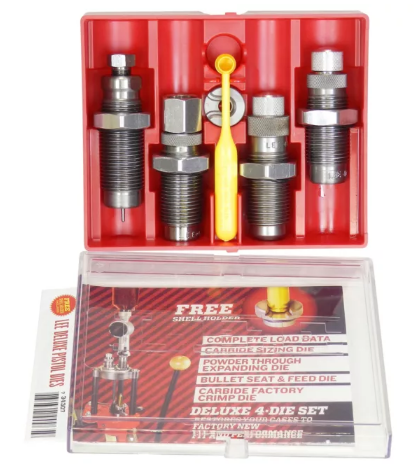
    Of the manufacturers I prefer Lee Precision dies. Dies are full length threaded on the outside in 7/8×14 so that it screws into the press. This is pretty universal. There is a lock ring that rides on the outside of the die to set it firmly in the press. Lee is the only manufacturer that uses an easily replacable rubber O-ring to tension that lock ring. The other manufacturers use a set screw in the lock ring. That tiny set screw can become frozen and difficult to remove. It also sets against the 7/8×14 threads on the outside of the die and can damage them. Also, Lee dies are of high quality, low cost and combine several operations in single dies. Because some people prefer other brand dies but want the Lee style lock ring Lee will happily sell you as many of their lock rings as you wish to buy.

    All of the manufacturers produce high quality dies and I own at least one set from all of them. There is one more type of die worth noting. These are high-precision dies aimed at the long range rifle shooter. These allow for more precise sizing and seating of bullets, something we will discuss in a later article. The stand-outs are the Redding and Forster dies.

    If you are getting into benchrest shooting you would definitely want to shell out the bucks for some of these. I don’t have any because the dies I already have make ammunition that is more accurate than I can shoot anyway.

    This is a highly technical, tedious subject that is impossible to write about with inspiration. I will try to include as many tips and tricks I have learned over the years that you can’t find in any book so that those who intend to start reloading will be saved the time and trouble of learning on their own. I hope there are enough gun nerds around here that some will slog their way through and any other reloaders out there please add your tips in the comments.

  • Other Necessary Equipment – Reloading, Part 2

    Read Part 1

    This article is for informational purposes only. Suthenboy is not a credentialed expert. Do not attempt any of these activities without first consulting an expert or a manual published by accredited experts or manufacturers.

    The press is the heart of the reloading set but the beginning reloader will also need a good scale, a powder charger, a micrometer and a priming tool.

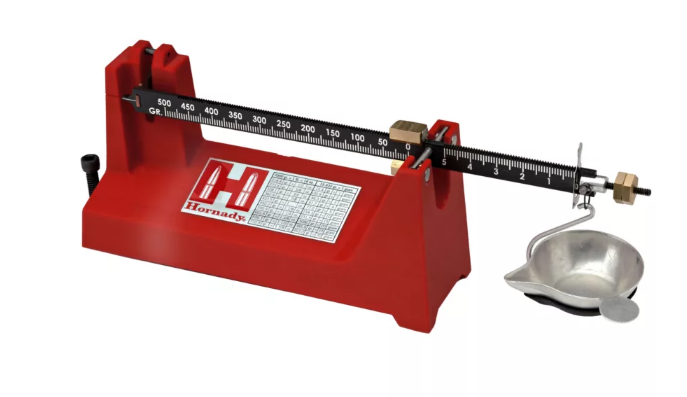
    Scales can be analog or digital but they must be calibrated in grains. The grain is an ancient unit of measure that originally meant the weight of one grain of wheat. Today it is defined as 1/7000 of a pound. As far as I know, the only people to use that measure any are in the firearms industry. My scale is a Hornady analog scale and is accurate to 1/10 of a grain. It cannot malfunction as it is a balance beam scale.

    There are also digital scales and powder dispensers with built in digital scales. I have never tried these but a lot of reloaders swear by them.

    A good micrometer can be had for a few bucks at any tool store. I recommend the dial type rather than the digital ones as they are easy to use and last much longer than battery powered micrometers. I also recommend one calibrated for inches as most calibers are measured in inches. Conversions are simple for metric calibers.

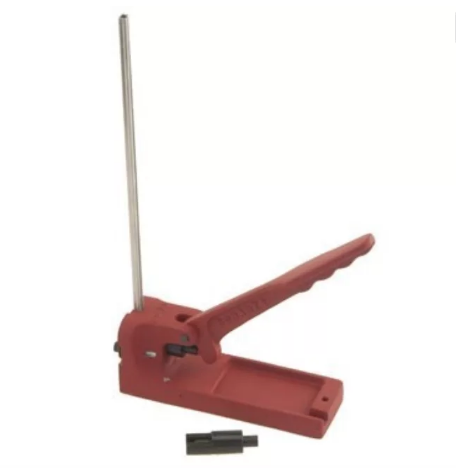
    Priming tools are another matter. There are many on the market and many presses have a priming function built in. It is important that primers be seated just below the base of the case and a good priming tool will do that in addition to allowing you to seat primers rapidly and accurately. You don’t want a tool that can mash a primer so hard that it ignites. After Lee precision changed the design of their hand tool it worked less smoothly so I switched to an RCBS which works fine for me but I am thinking of switching again to a Forster bench mounted priming tool. It is specially designed to seat primers very accurately without danger of ignition. It uses a tube style hopper instead of the pan style, which I like because it is easy to turn all of the primers correctly in a pan and then peck them up with the tube. Shell holders are not required and the bench mounted tool is easier on your hands.

    Powder dispensers can be fairly simple affairs or very complicated. I like simple. The old style has a hopper on top that feeds into a cavity drilled in a rotating block. The cavity has a piston style floor that can be moved into the cavity at various depths to adjust the amount of powder that can enter the cavity. When the handle is in the down position the cavity opening faces up and the hopper fills it. When you turn the handle down the rotating block turns and the cavity faces down, emptying through a small spout directly into the case which you hold under the dispenser in contact. The problem with these is that as the cavity opening passes away from the hopper on its way to the spout it can chop grains of gunpowder. This can change the weight of the charge slightly and also causes the gunpowder to burn at a different rate. It doesn’t really create danger but it does affect accuracy. This is a bigger problem with tube powders than flake or ball which means rifle powders where accuracy is more of an issue. A simple solution is to empty the case back into the hopper if you feel an especially hard chop as you move the handle. A better fix is the Lee Precision charger which is designed to not chop any powder grains.

    The automatic dispensers are much more complicated but easy to use. I have never used one, but I get good reports from the users.

    A couple of other tips:

    Your bench should be sturdy and large enough to mount your equipment on but not so large that clutter accumulates on it. Space has a tendency to fill up. If your bench is not too large it will be easier to keep clean and organized.

    A loading block is a cheap accessory that holds your cases in between loading steps so that they don’t get knocked over. It helps keep the process organized and you can keep a better eye on everything. You can get one for just a couple of bucks. Get one.

    A primer tray is another very cheap, very useful item. It is a small plastic tray with tiny ridges in it. Primers are placed in it and it can then be lightly shaken back and forth. As the primers slide around in it the open edges of the primers catch on those ridges and the primers flip to face all in the same direction. They can then be more easily loaded into the priming tool hopper.

    Clean cases are easier to work with and function better in firearms. You don’t have to clean your cases after every firing but after every second or third loading is a good idea. Most hardware stores sell vibrators for cleaning tool parts and the reloading suppliers sell them. Pick up a vibrator and some crushed walnut shell so you can keep your brass clean. These also help reduce corrosion if you store loaded ammo for long periods of time. Always use the vibrator on empty brass, never on loaded cartridges. Vibrating loaded ammo will damage the powder grains which will greatly increase its burning speed creating dangerous pressures.

    If the Lords of the Glibs keep publishing these next time we will go through dies and toss in more tips and tricks.

  • Beginning Reloading

    Read the series

     
    This article is for informational purposes only. Suthenboy is not a credentialed expert. Do not attempt any of these activities without first consulting an expert or a manual published by accredited experts or manufacturers.


    I developed a passion for shooting and hunting at an early age. I suppose my Grandfather’s and Father’s love of firearms rubbed off on me. Shooting for me was what golf is to others. It is an activity that requires discipline, an activity where focus and precision pays off. I constantly competed against myself always trying to improve and over time with effort the improvement was very evident to me. Like most the majority of my shooting was done with 22 Long Rifle because of economy. When I was about 14 years old my father gave me a wonderful Christmas gift – a Lee Precision handloading set and a Ruger No.3 rifle chambered in 22 Hornet. Suddenly I could shoot center fire for less than the price of 22 Long Rifle.

    Since that Christmas, I have reloaded hundreds of thousands of rounds, maybe approaching a million and a half, in every caliber you can imagine, save the new-fangled rounds that have come out in recent years. Yes, I said it. Get the hell off of my lawn.

    Since those days our economy has expanded dramatically, the cost of reloading components has risen and the cost of bulk ammunition in common calibers has fallen. For plinking ammo reloading is not as economical as it used to be but reloading still has an important place. Uncommon calibers can be exorbitantly expensive and difficult to find. Precision rifle shooters cannot obtain the quality of ammunition their sport demands off the shelf. For people like me, reloading is a very enjoyable hobby and an end in itself. With experience one can acquire one heck of an education about the sport, and with a small stock of components and tools never lack for ammo in a pinch.

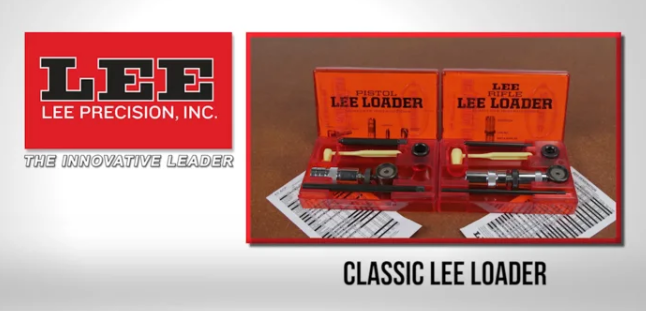
    Many people, like me, got their introduction to reloading with a Lee Precision handloader kit. It is simple to use and at about forty bucks the smallest outlay of cash to get started making your own ammunition. I haven’t found any distributors for these little gems but you can buy them directly from Lee Precision.

    I am not aware of any other companies that fill that niche but if you want to step up to more sophisticated tools there are many manufacturers. The big names are RCBS, Lee Precision, Redding, Lyman, Hornady, Dillon, Forster and MEC. All of these companies have websites (links above) and are distributed through a large number of suppliers. I am not going to make strong endorsements for any of them because they all make quality products that are better in some ways than the others. Like choosing a firearm the beginning reloader will have to decide by their own personal preferences.

    As for distributors there is a plethora of them. If you prefer shopping in-store Bass Pro and Cabela’s keep a good stock on the shelf. There is also the odd and end small sporting goods stores around. For mail order there are number of large houses for comparison shopping. I find that their prices are very competitive, their stock reliable and their service top-notch. These include Midway USA, Wideners, Brownells, Precision Reloading, Natchez Shooter’s Supply and Cheaper Than Dirt. This is by no means a comprehensive list.

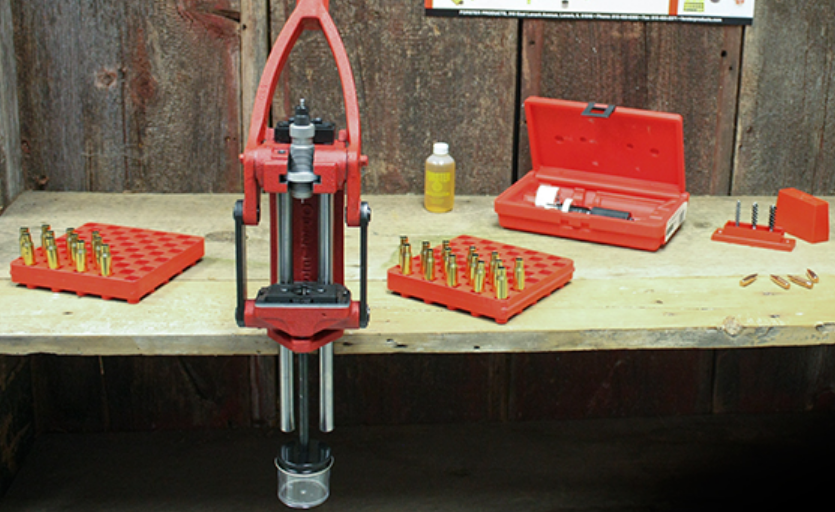
    The first step up from the Lee handloader kit is a single stage press. This press bolts onto a sturdy work bench and holds one die at a time. There are some very high quality single stage presses out there and these happen to be my personal favorite. I can concentrate on one step at a time and pay close attention to every detail. My personal press is a Forster. I consider it of the highest quality. It also has great advantage in convenience as the dies are held in a groove so you don’t spent time screwing them in and readjusting each time you change dies. Additionally it has clamping jaws to hold the cases so no large sets of shell holders are needed.

    Forster co-axial press
    Forster co-axial presses are not cheap but definitely worth every penny for the hard core reloader.

    The next step up from the single stage press are multi-stage presses. These presses hold more than one die at a time and each crank of the handle performs one step of the process on multiple cases as they progress around a turret. Spent brass goes in one end and a fully loaded case comes out with each crank of the handle. Obviously these presses produce loaded ammunition for the high volume shooter.

    The last step up would be motor powered presses. Many of the manual progressive loaders can be accessorized with motors and by now we are talking about high budget equipment. Dillon is commonly considered the top of the line motorized progressive loader and most competitive shooters use them but there are others that work well.

    I have a progressive loader but I prefer to use my single stage press. With the multi-stage press there are too many things going on at once for me to fully pay attention. If you are a novice intending to get into loading your own ammunition I highly recommend starting out with a single stage press. Safety must always come first so take your time. Don’t get in over your head. When you have learned all of the ins and outs of the loading process and all of the things that can go wrong then move up to a multi-stage press.

    Addendum

    A recent study showed that CCL holders are six times less likely to commit crimes than police officers.

    There is a reason for that. These are people who are law abiding by nature and interested in keeping their licenses. I suspect the same is true for reloaders. These people pay attention to detail. They follow the rules. That becomes second nature to them. Safety is a huge concern and they become accustomed to thinking that way. If you program yourself to behave that way reloading can be safe and rewarding. Never forget and become careless or have lax standards. You are dealing with inflammable materials that can develop very high pressures very quickly. Bullets, even travelling at low speed have incredible momentum. They carry more energy than you think even at speeds low enough to see with your eye. A relatively light lead slug travelling at the speed of an airsoft pellet can be deadly. You can lose eyes, fingers, get broken bones or severed arteries. You can receive severe burns. If you have a store of gunpowder in your reloading area, depending on how much, you might want to consider that if your house catches fire you may have to stand in the street and stop the firemen from approaching the structure. Let it blow. Nothing in your house is worth someone losing a life over. I threw all of the candles out of my house years ago. I don’t smoke in my reloading room.

    Safety. Safety. Safety. Always on my mind. In the forty years or so that I have been reloading ammunition I have never had a single failure. Every single cartridge I make is done with great care. I own about a dozen fire extinguishers. Kitchen, living room, Jeep, Honda, bedroom, garage, outside shed, mule, and two extra bedrooms.

    Don’t be that guy. Be Safe. Stuff can be replaced. People can’t be.

  • A Lone Voice in the Wilderness

    Supreme Court Photo: SAUL LOEB/AFP/Getty Images
    In 1981, Elena Kagan wrote her undergrad thesis on why socialism failed in the United States. It is a mixture of the usual litany of excuses, but primarily she contends that: A) the right people weren’t in charge; and B) the people were deplorables who voted against their own interests. They were unworthy of the glories of socialism.

    Aside from sitting on the Supreme Court, there is not anything notable about her daftness. Almost to a man this is the line that leftists use to excuse the catastrophic results that socialism yields each time it is instituted, without exception. If it were not so serious, it would be entertaining to listen to the gibberish that is indistinguishable from insanity; after all these are people who cannot accept objective reality and wish to impose their views on the population as a whole.

    What I find more alarming is that the inability to completely grasp reality is not limited to the left. Last night, I made the mistake of watching news on television. There was a lot of ranting about the evils of the Obama administration, the calling out of bad actors and explicit accusations of corruption since the 2016 presidential election in our entrenched and unaccountable bureaucracy. One phrase kept coming up: abuse of power.

    It is frustrating to me that so many people only ever get it almost right. Of course there has been gross abuse of power. Of course there have been and are bad actors. The chances of this not happening are exactly zero. What the bobblehead pundits are missing is the fundamental premise that the Founders based our constitution on.

    I hear people cite the separation of powers fairly often but it is not really that. It is not about separating of powers, it is about dividing power into smaller and smaller portions until no one person or group has the ability to do serious damage to our society. The Founders knew from experience that bad actors and abuse of power are inevitable so they crafted a system that dispersed power as much as possible.

    Eventually some discussion of Senator Rand Paul’s hesitancy for endorsing Supreme Court nominee Brett Kavanagh came up. There seems to be much alarm about this yet no real examination of why Senator Paul has taken this position. While Kavanagh is a brilliant jurist and a fine human being, Paul’s hesitancy is based on Kavanagh’s less than stellar stance on Fourth Amendment rights. I think in the end Paul will vote to confirm, but now is his chance to call attention to the massive surveillance state we have built that is trampling our inalienable rights with impunity. You cannot have a massive surveillance state and secret courts in a free country. It is a simple fact. The FISA law and its courts should be burned to the ground and the ashes thrown in the sea. This is what Paul is trying to draw our eye to. This ain’t rocket science.

    I would be satisfied with Kavanagh sitting on the court. He is probably the best we can hope for. He would be a huge help in undoing much of the undiluted evil that has been inflicted on us by statists, but he is not a cure for the problem. We must dismantle the apparatus of the surveillance state and the concentration of unaccountable power. As long as it remains, we will continue to have gross abuses of power.