Author: Glib Staff

  • What Are We Reading

    What Are We Reading

    OMWC

    One of the few benefits of the pain-in-the-ass called “relocation” is the occasional discovery of something one possesses but had forgotten. In my case, it was one of my favorite books from my childhood, covers missing, pages yellowed and tattered, thumbed through to nearly the point of collapse, but still readable and delightful. Curtis MacDougall‘s Hoaxes is a classic, ranking with Mackay’s Extraordinary Popular Delusions and Randi’s Flim-Flam in the category of “books to help you develop a healthy cynicism.” Put aside MacDougall’s idiot politics, the guy could write and do real research.


    SugarFree

    The menu that Cracker Barrel Typhoid Mary handed me. Ugh.


    Riven

    Ah, so when we last left off, I was just fixing to read Grave Peril, the third book in the Dresden Files by Jim Butcher. Since then, I’ve finished that book–and Summer Knight, Death Masks, Blood Rites, Dead BeatSomething BorrowedI Was a Teenage Bigfoot, and Proven Guilty. I’m currently about hip-deep in White Night, which isn’t as Christmasy as the title had initially led me to believe, but then I’ve had Christmas on the brain since Halloween, so… Maybe that’s not on Butcher. Also reads but timeline-ambiguous: Vignette, A Fistful of Warlocks, B is for Bigfoot, and A Restoration of Faith. Clearly very easy and whimsical stories to read, they’re entertaining and just-distinct-enough from each other that I will likely read the entire series right into the dirt. As long as Butcher keeps writing them, I’ll keep reading them, and I think I’m about halfway through the entire catalog at this point, if I include all the sundry shorts. … So he’s got another month or so to write the next one before I get to the current end of the series.


    mexican sharpshooter

    My reading once again, has been limited by what I read my four year old.

    This month’s entry is Shel Silverstein’s classic, The Giving Tree.  It is a touching story on the surface, but upon closer examination is a cautionary tale about the moral hazard of the welfare state.  The story begins with a boy playing with a tree but inevitably, time plays its terrible curse upon the boy and the tree.  The boy grows and no longer has interest in the tree.  The tree notices the boy coming by less often, but when he does, she finds the boy is missing something.  The boy first has no money, but the tree offers the boy her apples.  Now this is act of pure kindness on the tree’s part, and also an important lesson missed by the boy.  The apples you see, were meant to be sold in the market for a profit so the boy was able to have spending money.  Given the utter lack of overhead costs incurred by the boy, any apple sold was sold for a profit.  The boy then makes the mistake of spending all his money foolishly.

    His mismanagement of the tree’s gift is evident because the next time the boy comes to the tree for help, he is in need of a house.  Perhaps he knocked up some girl and needed a house.  Who knows?  Ultimately, if he had been a better steward of the tree’s gift of her apples, he would have used the profits from the apple sales, and applied those towards the startup for another, more profitable venture.  At the very least, the profits could have been used towards a down payment on a house. Given he had no money tells me it was spent on women and booze, because he now had a family and was once again asking the tree for help.  She offers her branches to build a home, and probably a shabby one at that.  Apple trees aren’t exactly known for their high strength wood, unless this was some kind of magic tree.

    Clearly, the boy made a mistake in who he married, because the next time he comes to the tree for help he wants to get away and have an adventure.  Between his debts and his dilapidated home, I would want to get away from everything too.  The tree once again offers the boy help by allowing him to chop down her trunk, and use it to make a boat.  Boats are nothing more than a hole in the water filled with money if you ask me.  The tree apparently was happy, but not really.

    Behold! The Welfare King upon his throne.

    The story concludes with the boy comeing back to the tree as an old man.  Surly, broken down—he can’t even chew on apples anymore out of disgust for his poor decision making.  The tree inevitably offers the only thing left she can as a stump, and offers the boy a place to sit his lazy ass down.

    The lesson here is the moral hazard of the welfare state.  The tree gives selflessly, and the boy takes advantage of her generosity by stealing everything she is worth—even in death.  A better course of action would have been to give the boy the apples as a loan.  How do you pay back a loan to a tree?  I don’t know, maybe the tree could’ve loaned the apples with the stipulation the boy plant a dozen of those apples somewhere.  Something, anything really to instill upon the boy the apples he is selling to spend on hookers and booze was not his to begin with.  The smartest course of action, being that he could clearly sell apples, is to plant more trees. Then the tree wouldn’t be so damn lonely for one, being surrouded by other trees, but the boy would have a larger supply of apples to bring to market.  Perhaps even plant a few more trees, and entire orchard of trees, and become de facto king of the magical apple tree forest. That never occurred to the creepy bearded, bare-footed Silversteen.  Obviously, because he wanted you to believe it was better to give everything to everyone, especially the undeserving.

    Ayn Rand would’ve had an epic, 96 page field day with this.


    jesse.in.mb

    Coming off a rough few months and finally getting a chance to do some reading. I finally finished the Lies of Locke Lamorra which I mentioned a quarter ago. It got better after where I was at before, but I’m not sure I’m going to pick up the next book in the series. There were open questions, but the tale itself comes to a satisfying close.

    Jeff Wheeler’s Storm Glass is another first book in a series. I *might* pick up the next one. The blurb made it sound like an impressively hamfisted parable for modern socioeconomic disparities set in a roughly steampunk (English, not wild-west) setting, but it was more enjoyable than the blurb made it sound.

    The Shadow & Bone trilogy (also apparently called the Grisha trilogy) is again a vaguely steampunk set of novels reminiscent of The Legend of Kora. The setting is overtly Russian and at about the end of the tsarist era, but in this universe some people are born to manipulate aspects of the world around them and some people are just fodder for the constant wars at play. There were a few points in the series where the story faltered, but the cadence kept me reading and I put down 2.5 of the books in a day-and-a-half.

    Currently reading Roadside Picnic, but I’m barely through the foreward so it’ll have to wait until next time.


    SP

    I have been reading self-help and how-to books this month.

    ”How to Relocate AGAIN and Stay Married”

    ”Creative Arson: When You REALLY Can’t Pack One More Box”

    ”Toss It! (Grandma’s dead, she’ll never know you gave her ‘heirlooms’ away)”

    “How to Get Moving Quotes Without Talking to Humans”

    “Nobody Needs 23 Kinds of Wine: Throwing Packing Parties to Reduce Your Cellar”

    ”Do the Math, Or Is it Cheaper to Replace All Your Household Goods Than Move Them?”

    “Ikea is Everywhere: Why Move Your Furniture?”


    Brett L

    I read to unwind, and after a hell of a month of November, I dove into a whole crapload of books this month. Not all of them great, but several pretty quality reads.

    I started with Gears of the City by Felix Gilman. I’ve had a pretty serious literary crush on Felix since reading The Half-Made World. Gears is a sequel to his 2007 book Thunderer. in the first book, a man named Arjun came to The City looking for his God, who had left Arjun’s monastery quiet and empty. The City contains hundreds of gods, and Arjun gets tangled up with two in particular, one a god of rot, water, and death; the other a god of flight, wind, and freedom. Many hijinks ensue and we leave the first book with Arjun going to The Mountain to look for his god. But the The City and The Mountain are mystical places, not really fixed or Euclidean in space or time. The second book picks up with Arjun having been spat out by The Mountain with a hazy set of memories. Short version is, the first book is great, the second one’s reach exceeds its grasp. I really wanted to love it, but it tied up too many things too neatly. Still loads of great characters and imaginative encounters, just not as sexy.

    After that came something lighter — the 4th installment of Drew Hayes’s NPC series (officially Spells, Swords, & Stealth series according to Amazon, but the first one was NPCs). Anyhow, this is I guess, LitRPG genre? There are two interwoven stories in the series. One is that the characters in the DnD-style game are actually in existence somewhere and controlled by people in our plane. The other is a group of NPCs who form a party to save their little town. I think its a fun series. Has some original twists and turns. Hayes does a good job between just shrugging his shoulders at some things (adventurers take stupid risks. its what they do.) and really nice world building on the other. Some of the characters include a gnome paladin of the god of minions, a half-orc wizard, and a former player-controlled character who should have died on a natural 1 roll but instead became an NPC.

    I also read the first two books of the Books of Babel series, Senlin Ascends and Arm of the Sphinx. The first book was wonderful steampunk. The second was not as original or lyrical, but moved the story along. A slightly older schoolmaster named Senlin takes his new bride to the Tower of Babel for a honeymoon (think steampunk technology, trains, some electricity, lots of steam engines) and immediately gets separated in the crowd. Thereafter begins his quest to reunite with his wife, in which he discovers that his morality is fluid, and he will do whatever it takes to get back to her. The second book takes Senlin to the mysterious Sphinx who seems to run and repair all of the automation for the tower. Senlin makes a deal to get closer to finding his wife.

    I also read a short story from Mark Lawrence in the Nona Grey universe called Bound. Lawrence continues to be one of my favorite writers, but $3 for 16k words is at the edge of my price range for anybody. Only read it if you are caught up on the Jorg/Red Queen and Nona Grey books and are waiting impatiently for the next book to drop.

    Finally, I started the Expanse books by James SA Corey. I don’t know why I hadn’t read them before, since space opera is absolutely my jam, but I had not. Nor have I watched any of the series on Syfy/Amazon. I really feel cheated that I haven’t been reading this all along. Although given the sheer number of novels and novellas in the series, it would be great if someone could tell me when to pull the ripcord so I don’t become bitter and disillusioned.


  • A Very Special Message From the Glibs Staff

    STEVE SMITH EXAMINE BOOKS

    IT TIME OF YEAR WHERE FUNNY GLIBERTARIANS GIVE MONEY TO GOOD CAUSES. STEVE SMITH A LITTLE DISAPPOINT IT NOT TO CASCADIA FREEDOM FUND, BUT THEM PICK TWO GOOD ONES. LAST YEAR THEM PICK THE INSTITUTE FOR JUSTICE (IJ) AND THE FOUNDATION FOR INDIVIDUAL RIGHTS IN EDUCATION (FIRE). THEM DO GOOD WORK AND HELP LIBERTY. WHEN GLIBS STAFF MEET, THEM SAY “WHY NOT THOSE TWO, AGAIN?” IT NOT LIKE FREEDOM WINNING, SO THEM STILL NEED HELP.

    $400 OF WHAT YOU GOOD, FUNNY GLIBERTARIAN PEOPLE HAVE GIVEN WILL GO TO IJ.

    $250 OF WHAT YOU GOOD, FUNNY GLIBERTARIAN PEOPLE HAVE GIVEN WILL GO TO FIRE.

    YOU BE PROUD YOU HAVE HELP LIBERTY! STEVE SMITH OFFER HIM SAVINGS OF 500 BIRD NESTS AND 25,000 STRIPS BIRCH BARK – BUT GLIBS STAFF SAY “NO, YOU DO ENOUGH FOR US, STEVE, PLEASE KEEP ALL THAT. OH, AND COULD YOU HELP KILL ALL THE INSECTS THAT DROPPED OUT OF THOSE NESTS? THANKS.”

    FREE CASCADIA!


    AND NOW FOR THE NOT SO HAPPY PART

    ZARDOZ SPEAKS TO YOU, HIS CHOSEN GLIBERTARIAN ONES. WHILE THIS YEAR HAS SEEN YOU SNARK WELL AT THE BRUTALS, WHO ARE LEGION AND PLAGUE THE INTERNET AS IN DAYS PAST… THE VORTEX…UM, GLIBERTARIANS STAFF HAVE HAD TO RELY ON FEWER DONORS, AND LESSER MERCH SALES. THOSE THAT HAVE GIVEN AND THOSE THAT HAVE PURCHASED ARE TRULY THE CHOSEN OF THE CHOSEN ONES. ZARDOZ DESIRES THAT SP HAS THE MONEY AVAILABLE TO CLEANSE THE FILTH OF WORDPRESS, AND KEEP THIS MOST VALUABLE SITE RUNNING. ALSO, WHILE DESIRING THE PURIFICATION OF THE FILTH OF BRUTALS…ZARDOZ IS NOT UNTOUCHED BY THE WORK THAT IJ AND FIRE DO. YOUR GENEROUS SUPPORT HAS ALLOWED THE CHOSEN ONES ON THE GLIBS STAFF TO SUPPORT THESE WORTHIES.

    ZARDOZ WOULD BE PLEASED, IF THE CHOSEN GLIBERTARIAN ONES WERE ABLE TO SUPPORT THIS SITE. HOWEVER, BE WARNED!!!! NO DONATIONS UNLESS YOU HAVE IT PURELY WITHIN DISCRETIONARY FUNDS. WE WOULD NOT HAVE ANYONE TAKE MONEY AWAY FROM NECESSITIES, FAMILY OR VITAL NEEDS. THE ETERNALS…ER, GLIBERTARIAN STAFF WILL GET BY. EVEN IF THEY HAVE TO CUT DOWN ON THE END OF YEAR BANQUET…

    GLIBS STAFF BANQUET


    DONATE HERE.

    MERCH FOUND HERE.

    ZARDOZ HAS SPOKEN.

  • What Are We Reading – November 2018

    OMWC

    I haven’t had much fiction time this past year, but some travel allowed me to read The Bear and the Dragon, by Tom Clancy, which posits a future alliance with Russia and a shooting war with China (this was written before Putin had transformed the Russian government into a one-man Mafia). Ever find yourself at home and alone, and just vegged out on the couch finishing off bags of Doritos? This is the literary equivalent- absolutely no substance, but lots of fun if you don’t get caught. Like the usual Clancy novels, the characters would have to be fleshed out quite a bit more to even reach the level of cardboard, the plot is predictable, and the tech is more interesting than the prose. It sprawls, it badly needs editing, and Clancy’s verbal tics, particularly useless foreshadowing, pepper the pages (“He would soon find out how wrong he was.”). His sex scenes are cringe-worthy. But still… mindless fun.


    SugarFree

    Getting ready to read the new Laundry Files novel from Charles Stross, The Labyrinth Index. I say getting ready because my habit with The Laundry Files is to back up a few novels and hit the new one at a run with the last couple or so fresh in my mind. I went back to The Annihilation Score this time, the one everyone seems to hate and is the jump the shark point for the series, blah blah. I like that The Annihilation Score and The Nightmare Stacks are from different POVs than Bob–it keeps the series from going stale. I’m about halfway through The Delirium Brief, so I should start the newest one this weekend.

    I’ve been spending most of my reading time this month gorging on Dracula movies since I finished rereading the novel in October. The 1931 Bela Lugosi’s version is slower than I remember, but his performance is still fantastic. (It is an adaptation of a stage version of Dracula and its yap-yap-yap origins really drag it down.) I rewatched all the Hammer Draculas as well, and their pleasures are intact. Christopher Lee will always be Count Dracula to me: haughty, snide, sadistic and bloody-eyed. He doesn’t even have any dialogue in 1966’s Dracula, Prince of Darkness–he just snarls and growls and ends up the only thing on the screen.

    Blacula is so much better than it has any right to be and even the much-derided 1979 version with Frank Langella’s disco hair is better than I remembered. Dan Curtis’ 1973 version for American television has Jack Palance as the Count and it is really enjoyable. I still have the 1977 BBC production (supposedly the most faithful adaptation of the book ever made) and Coppola to go. It has been a very long time since I have subjected myself to Keanu Reeves’ whoa, like totally Jonathan Harker, bro, and I’m not looking forward to it.


    Riven

    Over Thanksgiving weekend I read the first two Dresden Files books by Jim Butcher: Storm Front and Fool Moon. They were both fun and easy reads, which was nice because two dogs and a toddler were a huge distraction in the living room in which I was reading. They were a little formulaic, but I was sufficiently pre-warned by SF and was expecting that. In fact, I expect the rest of the Dresden Files books will follow very similar formats. I’ll be finding out soon because Grave Peril is next on my reading list. Reading these books feels a little bit like homework, since reading them was sort of a prerequisite for my rpg group’s next adventure: Your Story. (Everyone wanted a Pathfinder break.) But it’s really easy homework, and they remind me a bit of The Hollows series that I enjoyed so much last summer. If you’re looking for entertaining urban fantasy that isn’t too challenging and builds a nice world, either series would be a good fit.


    mexicansharpshooter

    Recently I found an old book titled, Green Eggs and Ham by Dr. Seuss.  Its been gathering dust as a shim for the kitchen table for the past three months, I figured I might as well actually read it to my 4 year old.

    Its a harrowing tale of a missionary named Sam, sent to an unfortunate land where nobody speaks in complete sentences, or without a form of pentameter.  I imagine it might have taken him months to adapt to the local custom in order to converse with the locals, and the story focuses on his interaction with one nameless local.  I imagine Dr. Seuss was unable pronounce the local’s name, and to be honest I doubt I would remember it either—the man is vegan, as is the standard in his culture.  I imagine his B12 deficiency is the root cause of his demeanor throughout the entire story.

    Sam is a missionary from the Church of Carnivorous Kinship (COCK) and is charged with converting a single vegan to a meat eater, thus fulfulling his destiny, and securing his place in heaven by his alien Reptilian overlords.

    I assume it begins early in the morning as the story begins while the local is reading a newspaper, and Sam offers him a simple ham and eggs breakfast.  He first tries to convince the local to eat it with a both a rodent and cannine companion, offers him a consideably large piece of real estate, and even offers the local to eat it in the location of his choice.  Much to Sam’s charign, the local then violates NAP by pushing him into oncoming traffic on a major highway, even forcing Sam to dodge an oncoming  train—WITHIN A TUNNEL.  The local’s shocking refusal would shake the convictions of the average missionary, but Sam is no average missionary.  The local eventually forces both over a seaside cliff, where he finally submits to Sam’s simple request and tries the meal.

    He loved it.  Becasue ham and eggs are delicious.

    The local, now cured of his B12 deficiency, is a much more personalble fellow, and likely continues the COCK lifestyle to this day.  It wouldn’t surprise me if the local is the missionary in the sequel Go Dog Go.

    Tune in next month.


    SP

    More Bosch. (And I started watching the series on Prime, and have some thoughts, but this post isn’t about TV shows.) Also read Scott Pratt’s latest Joe Dillard, Due Process, number 9 in the series. Enjoyable, if predictable, mind candy. Robert Dugoni’s A Steep Price, the most recent Tracy Crosswhite installment, is now the fiction in rotation on my Kindle.

    I’ve just begun the non-fiction-ish Lincoln’s Last Trial: The Murder Case That Propelled Him to the Presidency. Too soon to have formed a real opinion.

    Another book that just landed on my doorstep is Gene Machine: The Race to Decipher the Secrets of the Ribosome, penned by Venki Ramakrishnan, who shared the 2009 Nobel Prize in Chemistry for his work with the ribosome.  I purchased this one in print, as is my habit for anything I think OMWC and/or various geeky houseguests might also be interested in reading (and why we have overflowing bookshelves in our library). Haven’t read more than the introduction, but I think it will be very interesting.

    As part of an ongoing personal project building a sort of online research aid website for family history in my hometown (yes, I’m a nerd), I am re-reading the history book the two local historical societies produced 30-odd years ago and indexing the people . It’s very interesting to revisit this collection of local history and local family histories submitted by the families. This makes the book something of a cross between oral history anecdotes, verifiable facts, supposition, and wishful thinking. My family joined this community just a few years before my birth, and even having spent my entire life before college there, I’m finding all sorts of new connections and gossipy details about the place. It’s quite fun.


    jesse.in.mb

    It’s been a trying two months and I haven’t gotten much reading done. I finally (and just in the nick of time) Finished James R. Walker’s Lakota Myth. It’s been on my shelf since I visited the Crazy Horse Memorial. The editor, Elaine Jahner does the unenviable job of balancing an academic understanding of ethnography and folklore, the context that Walker brought to the stories, and showcasing the work Walker did in trying to bridge the gap between oral story-telling and a literary cycle. Some of the stories are told multiple times in the book, with each telling revealing how differently shamans, converts and entertainers told familiar tales with different emphases. I’d picked it up expecting something more like Bulfinch’s Mythology, but was pleasantly stimulated by the explanations for why certain decisions were made about the presentation of a mythology that was not already rooted into an English-speaking audience’s popular consciousness.


    Web Dominatrix

    I am currently enjoying We The Corporations by Adam Winkler. I met the author randomly some years ago at a book festival. Truthfully the book caught my eye because I recognised the author’s name.

    Winkler is a constitutional law professor at UCLA, and We The Corporations explores the complex topic of corporate personhood, and how businesses have won constitutional protections. I’m not far enough into it to give a review, so I expect I will report back next month.


    Brett L

    My big read of the month was Charlie Stross’s latest Laundry Files book The Labyrinth Index. Let me start with the good: The premise — that a Cthulonic cult has worked a mass glamor on the USA to make everyone forget the President every time they sleep was actually excellent. The group of Secret Service agents on the Presidential detail basically sleep every 4th day so enough are awake to remember why they are guarding this guy. The rest of the book is shit. Everyone and his fucking brother who isn’t currently the Eater of Souls or cohabiting with him is basically a vampire by the end. I don’t know, Stross started out emulating the styles of spy novelists in his first 2 or 3 installments. Maybe he decided to emulate Robert Jordan with this one because basically nobody remotely important dies, and I was bored by the end.

    I also tried to read The Systems Thinker: Essential Thinking Skills For Solving Problems, Managing Chaos, and Creating Lasting Solutions in a Complex World. Maybe I’ll go back to it at some point but if you’ve ever had to take any sort of process engineering or electronics course, you’ll know the systems he’s talking about. And then take a not particularly imaginative person and have them try to explain through large, complex poorly defined systems in the real-world like schools. I don’t know, maybe its because the author started with a “nuanced” view of Norman Borlaug and I have a very un-nuanced view of Norman Borlaug. I’m sure this is a revelation for people who don’t have any formal systems training, but I found it not particularly insightful and his deep thoughts not particularly deep before I gave it up about 2/3 of the way through.


  • CRYPTID SALUTE TO VETERAN’S DAY LINKS

    THE TRUE PICTURE.

    ZARDOZ SPEAKS TO YOU, HIS CHOSEN ONES. TO HIS VETERAN CHOSEN ONES, ZARDOZ HOPES YOU HAD AN ENJOYABLE DAY. ZARDOZ HAS GIVEN HIS BRUTAL EXTERMINATORS THE DAY OFF IN THEIR HONOR. FRIEND STEVE SMITH AND HIS COUSIN WILL HELP GIVE THE GIFT OF THE LINK, BELOW. ZARDOZ HAS SPOKEN.

    FRENCH ARTIST DEPICTION

    SEA SMITH SAY HAPPY VETERAN’S DAY. HE NOT REALLY VETERAN, BUT HELP IN COLD WAR. BY HELP, MEAN RAPE SOVIET KILO CLASS SUBMARINE ONCE. USSR NAVY NOT COME BACK NEAR SEA SMITH HOUSE AFTER THAT. SEA SMITH HOPE ALL NAVY VETERANS HAVE GOOD DAY. COME ON BACK DOWN TO OCEAN, WATER FINE!

    STEVE SMITH GRANDFATHER IN WWI

    STEVE SMITH HOPE ALL VETERAN FUNNY GLIBERTARIAN PEOPLE HAVE GOOD DAY. HIM GRANDFATHER WAS TERROR OF EASTERN FRONT IN GREAT WAR. BY TERROR, MEAN HIM RAPE MANY CENTRAL POWER SOLDIERS. STEVE SMITH READY SERVE CASCADIA WHEN GET INDEPENDENCE. HIM BE STRATEGIC RESERVE…BY STRATEGIC RESERVE, MEAN … YOU KNOW.

    FREE CASCADIA!

    • “MAFIA”, “RUBBISH”… BULGARIA PROTESTERS FUN!
    • STEVE SMITH NO CONFIRM OR DENY THIS.
    • NO GET HAIR WET!
  • What Are We Reading – October 2018

    OMWC

    Geek books and real books. My fun real book this past month was by H.L. Mencken, who was incapable of writing anything uninteresting. Although we love him for his short and cynical essays, chock full of quotable and meme-able sentences, his scholarly work is equally enjoyable. The American Language is a study on how our version of English developed and on the taxonomy of American vocabulary, grammar, and usage. It delights my inner geek, amuses and informs on every page, and gives a fascinating insight into Mencken’s inner thoughts on the language that he used so brilliantly and effectively. I was less thrilled with a lot of the updates added by editors after Mencken’s stroke and eventual death, but at least they were kind enough to set their portions off in brackets.

    My geek book for the month is High Fidelity Circuit Design, by Norman Crowhurst and George Cooper. This is a book from the 1950s that has recently been reprinted. If you want to understand Nyquist stability criteria, feedback, and the finer points of tube amplifier design (I told you it was a geek book!), look no further. These days, engineers use computer modeling to determine gain and phase margins for stability and sims to predict performance, but back in the stone ages, they actually plotted stuff on graph paper and used rulers and protractors. I confess that reading this covered my with waves of anachrophilia.


    SugarFree

    October is the month for horror. I went back to the classics: Dracula, Frankenstein and The Strange Case of Dr. Jekell and Mr. Hyde. Old friends to cuddle up with.

    If you’ve never, Frankenstein plays out far differently that pretty much every movie adaption. The Monster is made over just a few pages of grave robbing and surgery, no electricity and no cackling, and Frankenstein is young, only about 21, and while full of hubris, he isn’t a mad scientist, just a mildly full-of-himself student. It would be interesting to see a film adaptation actually tackle the book.


    SP

    Let’s see, what have I been reading this month. I’ve just started The Pattern of Evolution by Niles Eldredge, which our European guest had selected from our library for bedtime reading and left laying on the table upon his departure. (One of the great benefits of marrying another extreme reader is that there are always books that I haven’t read, and I don’t even have to venture out to the library or pay Amazon.)

    I’m revisiting The Drunken Botanist by Amy Stewart. Stewart has put together a pretty comprehensive look at the major plants, herbs, spices, that are made into various potent potables. There are interesting historical notes about the discovery and use of the different ingredients, and some geeky botany stuff, too. Oh, and recipes for drinks. This isn’t really a book one reads straight through, although I am. But I also read cookbooks cover to cover just for fun.

    Just picked up the book mexican sharpshooter has recently reviewed, Data in Decline: Why Polling and Social Research Miss the Mark by Steve Wood. I expect a throughly interesting read.

    In fiction, I’m still working my way through the Harry Bosch series by Michael Connelly on Kindle. I haven’t viewed the series which is based on the character, but I might add it to my watchlist.

    In audio, I was listening to A Dangerous Fortune by Ken Follett, but I’ve kind of lost interest about halfway through. Plot: Horrible people do horrible things. Less horrible people also sometimes do horrible things. Especially in 19th century banking empires, British politics, and banana republics run by thugs. Eh. Probably won’t finish it unless I end up having another long, tedious drive alone.


    jesse.in.mb

    I don’t have much to report. I went on a bit of a binge of buying cookbooks including Mormioto’s Mastering the Art of Japanese Home Cooking which is accessible enough and got me to make my own dashi from scratch (god damn did my kitchen stink of fish for days, but it was very tasty). I found the content personal, but I was hoping for more…I dunno, context for the food I was preparing. I also grabbed Maangchi’s Real Korean Cooking more to kick money her way than anything as I’ve been scraping recipes from her website for years (The Boyfriend does not approve of how much I gravitate to her more gochugaru-centric offerings).

    I burned through the available issues of The Chilling Adventures of Sabrina which started off with just the right level of twisting to the character I was first introduced to by Melissa Joan Hart, but I’m not sure it is living up to its promise so far.

    Started but not finished: I circled back to The Lies of Locke Lamora, and pushed through until it found its groove. I’m a little more than half-way done at this point so maybe by next WAWR I’ll have a final opinion. I’ve been chipping away at just the introduction to James R. Walker’s Lakota Myth, which has been unskippably interesting, but also too academic for the naked-poolside-reading I was hoping the main contents would be while Iwas in Palm Springs…perhaps next time I’ll have more.


    JW

    A wise man once screamed “NO! You must not read from the book!“and I have followed that advice ever since.


    A Leap At The Wheel

    Books on Audiobook:

    The Wizard of Oz: Or so I thought.  It was actually a 2 hour radio broadcast will a full cast.  Not recommended.

    Till We Have Faces: I didn’t realize this was fiction, based only on the name I assumed it was non-fiction.  But it was one of the few Lewis books left that I hadn’t read so I threw a hold on it in the library’s audiobook application.  It is in fact fiction, and it is fantastic.  In addition to being written by an expert craftsman, this is a novel that would be pretty impossible to write in this day and age.  The concept of having a female protagonist who takes up some masculine role in society would inevitably become bogged down in the current simple-minded discussion of gender issues.  But being written in the 50s actually allows Lewis to write a stronger, more interesting female character that provides a clearer analysis of gender roles.  Nothing turns me off of fiction faster than weak women, and between this book and That Hideous Strength, its nice to see my literary hero doesn’t fall into my literary pet peeve. Also, this not really a book about gender roles.  Its not a book about any one thing, because it is about nine or so different things.  If I had to pick one thing it was about the most, it would be about how you would get along in a world where the divine is real and doesn’t really love us.  Highest Recommendation.

    Democracy in America: Ufda.  I find historical books about history and political economy really interesting, but they require a lot of concentration because you need to both consider the words on the page and the frame of reference that they were written in.  Kind of like the Screwtape Letters.  In any case, 34 hours of that is just too much for me this month, when I’ve either been too sick to do productive work (fucking strep, fucking high-false-negative strep tests), or working 7 days a week to catch up.  Only made it through about the first third, I’ll come back later.  Incomplete.

    Whitepapers: I don’t normally list all the whitepapers and journal articles that I read, but there were some interesting ones that might be of interest here

    Why Suburban Districts Need Public Charter Schools

    Honestly, there isn’t much groundbreaking here, but it lays out the argument for charter schools in the suburbs.  Just the kind of thing you would expect to find from some shitlord conservative think-tank like… *needle scratch* the Progressive Policy Institute?  Interesting for that reason alone.

    Hidden Tribes

    You know all those people saying “80% of the US is opposed to political correctness?”  This is the research that they are pulling from.  Its generally a pretty interesting look at the electorate, though I think it has some shortcomings.  It’s interesting because the categorization they propose feels truthy, and it seems to be a better signal than party affiliation for predicting opinions of the tribes.  It’s limited because it doesn’t spend a lot of time on meeeeeeee and my tribe.  Political opinion is a high dimensional space, and this projects that space onto a single axis.  It puts me in the moderate camp, which is probably right in that I’m pretty close to center on the left-right axis.  But I’m a huge outlier on a bunch of other axes on the political space.  A model is only as good or bad as its predictive power, and this seems predictive for a lot of people.  “Bad for outliers” is hardly a reason to reject a model.  And I found it to be very helpful to see the divisions within the right wing and within the left wing.  Its not news that the right and left disagree, but disagreements within the wings are pretty important these days.  Highly Recommended.

    Truth Decay

    The truest thing I’ve ever read was the argument that Killmonger was the protagonist in Black Panther, which is an Alt-Right parable.  The second truest thing I’ve ever read was this paper.  This paper documents and discusses the reduction in faith in information provided by institutions like media, government, and academia.  The interesting thing though is that this paper is *incredibly* careful to present the case in a way that doesn’t turn off anyone from any political orientation.  One of my hangups is that a lot of this distrust is the result of these institutions becoming untrustworthy because they are becoming self serving, partisan, and/or low-quality shitholes.  Guess what, it talks about that (maybe using different terminology…)  One of the hang-ups of a friend of mine is that the Right has a financial incentive in developing an ecosystem of alternative news outlet and those with the biggest financial incentive are the loudest talking about how you can’t trust the MSM.  Guess what, it talks about that too.  It is pretty clear that this has been heavily edited to take into considerations the thoughts and objections of reviewers with a very wide array of intellectual orientations, and its a very, very strong document because of that.  I told this friend that this is exhibit A for why educational institutions need intellectual heterogeneity.  While this progressive friend is not yet ready to admit that academia is a stifling monoculture, this paper is helping me change his mind. Highest Recommendation

    Podcasts: I just wanted to call this one out because it is really, really interesting

    So to Speak Podcast with Don Verrilli. Verilli was the Solicitor General in the Obama administration.  He is, quite possibly, the most skilled Supreme Court lawyer alive.  I probably don’t agree with him on anything policy-wise, but when the guy talks about how to argue in front of the Supreme Court, there aren’t too many living people with more to say.  And when he makes an admission against interest, well, that’s worth taking a note of.  He makes two here.

    First, Verilli says that he thinks the Roberts Court really does support the 1st amendment because they have an ideological commitment to it.  Its not just a tool for achieving a partisan end of being pro-business or owning the libs.  I think this too, but its nice to hear it confirmed like this.

    Second, an more importantly, Verilli comes out and says that there’s not an Originalist argument for campaign finance laws.  He talks about how the Founders had a broader understanding of corruption that the modern court does.  But even if that’s true, they didn’t think that there was an exception to the 1A to combat this.  I don’t think he says it, but this is consistent with the idea that it was the structure of the government that was supposed to prevent this type of corruption, not restrictions on civilian action.  Recommended if you follow the SC

  • What Are We Reading – September 2018

    SugarFree

    I spent the month reading The Complete Chronicles of Conan, a volume issued to celebrate the centennial of Robert E. Howard’s birth. It not only collects the published stories but also the fragments and notes from Howard’s archived papers. The stories are arranged by publication order, my preferred way to read them, and were taken from the original publications with comparisons and corrections to Howard’s final drafts where still extant.

    Re-reading the Cimmerian’s adventures is like going out drinking with an old friend: you know all the stories but the pleasure of hearing them again cannot be dismissed. I also re-watched the 1982’s Conan the Barbarian, one of my favorite movies, the terrible Conan the Destroyer and the aggressively mediocre 2011 reboot (although I thought Momoa made a pretty good Conan.) And, to complete a total Conan emmersion, I re-read all The Savage Sword of Conan issues edited by Roy Thomas. So much barbarian action…


    Web Dominatrix

    When I’m not whipping websites into shape, I am a business consultant to service providers, so most of what I read is related to business. I just finished Scaling Up by Verne Harnish, founder of the Young Entrepreneurs’ Association. The book is all about how to scale a business and what a lot of companies get wrong.

    I really like that this book draws a distinction between starting a business and scaling a business, both two very different processes, but many “business gurus” lump them together.

    There are many concepts in this book that aren’t a great fit for service providers, though the author indicates these strategies could be used for any business. For example, the author says there are four areas in which one needs to optimise their strategies and systems, and one of the areas is “routine.” As a systems strategist, I would argue that routine execution needs to be built into each strategy and system, and not treated as a separate system itself. If each system isn’t designed to be implemented, then ultimately the system won’t be as effective.

    But I digress.

    All in all I would recommend this book for any business owner to read, but keep an open mind and think about where you can improve upon these concepts instead of merely accepting them as commandments written in stone.


    SP

    I’ve generally been a fan of Michael Connelly, dipping into his work here and there over the years. I realized a couple weeks ago that I’d never read the early Harry Bosch books. So I’m correcting that with The Black Echo: A Novel (A Harry Bosch Novel Book 1). I like to read series in order, so I can only imagine I first picked up a mid-series book laying around someplace way back when and didn’t realize at the time that it was, in fact, part of a series. Now, I will, of course, proceed to binge-read the complete Bosch books (in order). (Update: I’ve just moved on to Harry Bosch Book 2.)

    In the car while driving this week, I started listening to Ken Follett’s A Dangerous Fortune. The narrator, Michael Page, has a wonderful voice, and that’s improving the story considerably.

    Also, I’ve been trying to follow jesse.in.mb’s marvelous example and pare down my physical book collection. HAHAHAHAHAHA. I crack myself up!

    This week I did manage, though, to take a box of about 3 dozen books to my Dad, from whom I received my voracious read-anything-all-the-time habit. He’s read everything in all the libraries of his county, so we try to keep him supplied with interesting works. This time he received all my Rick Riordan Tres Navarre books (all now available on Kindle if I want to revisit them periodically), along with a bunch of others.

    Oh, yeah, and I am reading my constant companion: my pharmacology textbook.


    jesse.in.mb

    Slow month for me. I put away a trio of novellas by romantic fiction author Illona Andrews (it’s actually a husband and wife effort. Their Innkeeper novels are a foray into urban fantasy without erotic content and they were breezy literary candy. The downside is that Amazon now thinks I’m a randy heterosexual hausfrau. I’ll live.

    I set aside a copy of The Lies of Locke Lamora at 1/5 of the way through, I was having a hard time maintaining interest.

    On the audiobook front I listened to Ken Lozito’s Genesis, which was entertaining enough although some sections seemed like filler. L.T. Ryan‘s Noble Beginnings is a big ol’ no for me. It’s 6 hours of uninspired fight scenes read in a clipped tone. I’m reminded of Homeric poetry in the way the author used a series of stock phrases without alteration over and over again. Various characters “hitched up [their] shoulder[s]” 27 times and shrugged once…at the end. I’d kind of assumed the author was unfamiliar with the word.


    Not Adahn

    I had thought about going on a rant abut how Catalyst Games has completely cocked up FASA’s Battletech, when I received a Mysterious Package in the post. Opening it, I discovered the following cookbook:

    I assume that this was written by UnCiv, and forwarded on to me for a review prior to a second edition, or perhaps for an additional cover blurb. It is somewhat distressing that my post box location was so easily obtained, but that was a risk of becoming known to the Glibhedrin.

    In any case, this is a wonderfully useful addition, as it allows me, through judicious variation of my orphan’s food supply to engage in carrot-and-stick motivation techniques, without the expense of obtaining carrots! My only criticism, minor as it is, is that in an effort to pad the book’s length to a full 28 pages, our UCS has engaged in excessive extravagance in his ingredients list on a few recipes. Butter, really?


  • What Are We Reading – August 2018

    Riven


    mexican sharpshooter

    I decided to pick up a book from one of those “Intellectual Dark Web”…people.  Since pretty much everyone here is familiar with Jordan Peterson I picked something different.  Enlightenment Now by Steven Pinker is what I picked, and ordered here.  I finished it while traveling home last weekend from Kansas City.  What interested me was his interview on Joe Rogan (leave me alone) where he came across as a soft-spoken, somewhat bumbling professor type which more or less is his persona.  The podcast left me thinking he was a left-wing professor that happens to stick his head out of his bubble every now and then and honestly reports what he sees.  He does have a lot of good musings over individual rights, free markets, and authoritarian governments.  His overall message is to look at the history, look at the data and be smart about how you form your opinions because where many fall short is their opinions are not backed up by objective fact.  Where he will probably fall short around here are his arguments against libertarianism, a good rundown of his arguments in his book are located at this link here.  One thing that I kept noticing is while he recognizes where the rights for the individual have led to positive impacts, he still advocates for actions on certain issues that some here will find antithetical to his message.

    Otherwise, his premises are explained clearly, cited thoroughly, and he shows them visually (there are 75 graphs and 40 pages of notes).  If there is any interest I can do a more thorough review.

    Brett L

    As part of our hate-reads, SF dared Jesse and I to read Happy Doomsday. This is the worst professionally written book I have ever read. Seriously. There is nothing good about it. Two too many of the characters survive the apocalypse. Do not read it. No, no. Don’t get curious about how bad it can be. DO NOT READ IT. SF did make it up to me by passing on to me Hardwired by Walter John Williams. This is 80s Mirrorshade Cyberpunk at its most fun. Aside from an irrational hatred of Texans common to many border-staters, it is great. Cyborgs jacked directly into hovercrafts, street samurai with cybernetic snakes implanted in their throats, a monomaniacal corporate titan who thinks he’s plugged into the heart of the silicon. I loved it. I also read Nathan Lowell’s latest two books in the Solar Clipper series. Suicide Run and Home Run. I really like the original story line. You just have to believe me when I say that he makes working the mess deck on merchant marine in space seem interesting. It gets more interesting from there, but somehow getting the coffee out on time seems like a worthy challenge.

    jesse.in.mb

    Erotic Stories for Punjabi Widows by Balli Kaur Jaswal. Not gonna lie, I was grabbed by the name and the first third of the story felt interminably slow. The main character was a wee bit too SJW and the person we assume is her antagonist a little too self-satisfied and traditional. There were erotic short stories embedded throughout, which I suppose I should’ve expected, but was a little scandalized by. Once the story starts rolling it’s engaging and endearing and you’re satisfied with the ending even if it’s a bit fairy-tale perfect.

    The World of Null-A by A. E. van Vogt. I had to keep reminding myself that this was classic sci-fi…and that the copy I purchased on Amazon still managed to be a shittily transcribed/scanned version. It was a jaunty read and the [scifi jargon] + [household item] formula was charming in an old-timey way.

    All New Square Foot Gardening (2nd Edition) by Mel Batholomew. One of these days I’ll get my ass in gear and at least grow tomatoes again. This book is pure garden-project pornography. One disappointment is that the book seems better suited for people who have a winter, and while they make occasional mention of plants that’ll grow in more temperate climates, instructions about harvesting after the first light frost but before the first hard frost are…unhelpful in climate zone 10b.

    Happy Doomsday: A Novel by David Sosnowski. Someone’s mother (not mine, obviously) always used to say “if you can’t say anything nice about a book, don’t say anything at all.” I did not prefer the characters in this book, which made it difficult to finish. I blame SugarFree’s enthusiasm for “this will be so bad it’s good” which he then abandoned in favor of “it’s so bad I refuse to continue” leaving Brett and me to struggle through. SP wisely chose a different Kindle First Reads book and mocked Brett and me for our “suicide pact.” I notice Brett has recommended that you not read it, but he’s just being a little theatrical, I’ll point out that it’ll continue being free to Prime members until the end of the month.

    While engaging in some Happy Doomsday avoidance I listened to the first (and second) novel in the Whiskey Business series, which SP is also listening to. It’s a fun light mystery with a built-in explainer for making and drinking whiskey. I also listened to Andrea Vernon and the Corporation for UltraHuman Protection, which could’ve been written by one of you. I don’t know that it’d hit everyone’s funnybones the way it hit mine, but I would recommend it if you’re looking for a very light superhero caper in a world where superheroes are privatized and an uplifted lady-rhinoceros with an assault rifle discusses her masturbatory habits during a mandatory sexual harassment training.

    JW

    Chelsea Clinton – She Persisted

    SP

    I have nothing interesting to report as my reading time has been taken up by a pharmacology textbook. Not exactly a bedtime page-turner.

    Oh, I am also listening to this book’s Audible version this week while working out, cleaning, and folding laundry. (It’s a full life.) The story itself is OK, but the female narrator sometimes loses me between the heavily-Scots-and-English-accented male characters, making me have to hit the 10-second rewind button, which annoys me when I am wearing nitrile gloves.

    SugarFree

    Great Googly-Moogly, Happy Apocalypse was terrible. I made it 15% in and had to stop. Just bad. Bad, bad, bad. I could only read about 500 words at a time before I had to put it down. In-between the pain, I read James Tiptree Jr.‘s Her Smoke Rose Up Forever story collection. Tiptree is the most celebrated act of literary transvestitism in science fiction, being the nom de plume for Alice Sheldon. It was a fairly open secret that Tiptree was a woman, and I have a hard time believing that anyone of any sophistication who read more than a couple of stories by her couldn’t have figured it out.

    Still not able to shake trying to read Crappy Apocalypse, I turned to intellectual comfort food and re-read the first Uplift Trilogy, by David Brin. Despite Brin’s turn to loathsome politics,* my dozenth pass through his universe of plucky humans, adorable neo-Dolphins, and courageous artificially-evolved Chimpanzees is like a meaty, starchy, filling plate of Thanksgiving food. (The 2nd Trilogy sort of disappears up its own ass in striving for cosmic apotheosis, and I can’t recommend it.)

    *Brin has deleted his call for “climate justice” tribunals, so I’ve linked to an H&R thread where I posted some of his deranged screed. Brin used to write for Reason, by the way, before the madness settled in.

    Old Man With Candy

    There were two authors from my childhood who set me on my life-path to become a scientist. One was Roy Chapman Andrews (truly one of the most interesting humans to ever walk the Earth). The other was Arthur C. Clarke. When I was about 8 years old, my father handed me a copy of Profiles of the Future, which totally captivated me. It was an overview of common futuristic tropes of the sort that would fascinate an 8 year old science geek (invisibility, giants and Lilliputians, alien intelligence, matter replication, interstellar exploration) with some technical analysis of what was possible and what was sheer fantasy, and why. I read and re-read it so many times that it eventually fell apart. So I was determined to give this to my son as well, and found out that there was an updated edition from about 2000. I bought it for him and… well… let’s just say he’s more of a YouTube guy than a reader. It languished on our bookshelves for some years until I picked it up and dusted it off last week, then put it in the Room of Honor. Re-reading it, I can see why it grabbed my attention. Much of it hasn’t aged well, but much of it is frighteningly prescient. And of course, it’s Clarke, which means superbly clear and absorbing writing. I had the chance to meet Clarke once (as a college student) and was not disappointed, other than him avoiding the question about what the Ramans looked like. I cannot be the only one who has told him that he was the one who made them choose a career in science, but he acted as if I had said something special. What a great person.

  • What Are We Reading – July 2018

    jesse.in.mb

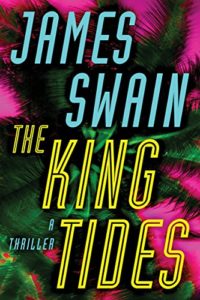
    Do not let my colleagues fool you with their nay-saying about James Swain’s The King Tides (Lancaster & Daniels Book 1). It is an entirely adequate beach read with a chipper pacing and zombie-like kiddie predators. To my mind, the main drawback to this book is the sponsored content, or the weird brand name dropping plus generic non-affiliated copy material–depending on if the author was paid for this or just lazy and trying to meet a word-count. It was jarring to be reading about the author’s disappointment that a kiddie diddler had smashed his phone only to be rescued by Verizon!
    “His phone was new, courtesy of his ex-girlfriend tossing the old one out of a moving car. Replacing it had been a snap. A quick trip to the Verizon store and forty-five minutes later he’d walked out with a new Droid, his contacts and apps restored. Kenny’s phone was also a Droid, and he wondered if Kenny had bought it from Verizon, which had more locations than a hamburger chain. If he had, then all his data was stored in the cloud and could be easily restored.”

    Spoilers: he also upgrades his phone from a Droid to a Moto Z2 Force during this exchange for only $40! I’m not sure that I’d recommend this book on its merits, but there are now enough people who have frog-marched themselves through it that it’s part of the current Glibertarian cultural canon. Don’t be left out!

    JW

    Have you ever read all the information that comes with penicillin prescriptions when the pharmacist fills them? Vomiting. Check! Mild skin rash. I wonder what “mild” means? Upset stomach. Check! Diarrhea. Uh-oh! I’ll be right ba….

    Brett L

    As part of an experiment in group self-abuse, I read James Swain’s The King Tides (Lancaster & Daniels Book 1). This book is terrible. Random shit not at all relevant to the plot, rogue FBI agents distributing kiddie porn (actually the most realistic part of the story), super-fit former Navy SEALs with beer guts congenital conditions that somehow didn’t disqualify them from that competitive system, kidnapping attempts of hot teen-aged white girls that the police don’t care about. I regretted reading this, even though it was free. Don’t buy it. Please do not encourage Mr. Swain to write any more books.

    In my literature entry for the month, I read Without a Country, a Turkish work translated into English. It’s an interesting family history starting with German Jews fleeing Hitler to populate Ataturk’s new university system, where hope and religious tolerance flourish, and tracks the changes in Turkish culture from the Muslim secular hope of Ataturk to the more fundamental Muslim sympathies. It was a good book. I enjoyed the writing.

    I also read Curious Tales from Chemistry: The Last Alchemist in Paris and Other Episodes by Lars Öhrström. As a chemistry geek, these are fun little tales about substances, some basic chemistry like orbitals, and history. Places, people, and things interesting to their history (like the guy tasked to steal British steel-making secrets for the Swedes). 

    Old Man With Candy

    In Jewish tradition, the Torah is divided up into sedras, roughly analogous to chapters. Each Sabbath, a sedra is read, sequentially, until at the end of a year cycle, the last sedra is finished. We have a nice holiday to celebrate it, Simchas Torah, then the process is begun again. For years, I had a similar ritual, reading a chapter at a time out of The Feynman Lectures on Physics each week until I was done the three volume set, then I’d begin again. This kept my basic physics sharp and it was, for a geek, remarkably enjoyable. The Lectures were a series of notes from a one year freshman physics sequence taught by Richard Feynman (arguably the greatest physicist of the 20th century), and transcribed and edited by two other physicists, Robert Leighton and Matthew Sands. The collaborators did a wonderful job capturing Feynman’s voice and unique style, and this set of books might be among the greatest works in the English language. Anyway, for reasons of life, I stopped doing my ritual some years back, and recently, it occurred to me that my brain suffered from the absence of Feynman’s ghost. So I started again. And it’s every bit as delightful and wonderful as I imagined, the exact opposite of dry technical books. Even if you’re not mathematically inclined, there’s so much clear and common-sense explication of how the universe works that you’ll come out of the experience much smarter than when you went in.

    I linked Volume 1 of the set because that’s the one that is likely to have the most appeal to non-physicists. It covers a sweeping range of topics; though focused on classical mechanics, Feynman talks about probability, thermodynamics, cosmology, biology, psychology, wine, and as a bonus, he offers his rather tart observations about philosophy. More so than anyone else writing about science, he is rigidly clear about what things are “this is the way it is, we can describe it, but we can’t say why it is this way” and what things are “here’s something about which we know why.”

    Strange as it may seem, we understand the distribution of matter in the interior of the sun far better than we understand the interior of the earth. What goes on inside a star is better understood than one might guess from the difficulty of having to look at a little dot of light through a telescope, because we can calculate what the atoms in the stars should do in most circumstances.

    One of the most impressive discoveries was the origin of the energy of the stars, that makes them continue to burn. One of the men who discovered this was out with his girlfriend the night after he realized that nuclear reactions must be going on in the stars in order to make them shine. She said “Look at how pretty the stars shine!” He said “Yes, and right now I am the only man in the world who knows why they shine.” She merely laughed at him. She was not impressed with being out with the only man who, at that moment, knew why stars shine. Well, it is sad to be alone, but that is the way it is in this world.

    Here’s an example of Feynman’s presentation methods, talking about the incredibly important and almost universally misunderstood topic of entropy. If you like this and the lightbulb goes on, pick up Volume 1 of the Lectures and prepare for a wild and crazy ride through the way the universe works.

    SP

    I also selected The King Tides (Lancaster & Daniels Book 1) for my free Kindle book this month since there was nothing else even remotely interesting. (How much do the authors pony up for this? I can think of no other reason for the choices.) However, being smarter than my dear Glib friends, I waited until they had all reported in, then quietly deleted it from my Kindle unopened.

    In enjoyable reading, I am swiping through How to Speak Midwestern by Edward McClelland. Things I’ve learned so far include: where Little Egypt is; what a frunchroom might be; where a gangway is located and for what it might be used; who Trixie is and what she’s up to with Chad.

    SugarFree

    I read the Joe Pitt series by Charlie Huston. Hard-boiled vampire private detective in a Manhatten ruled by vampire clans as bitchy and mean and petty as any 8th-grade clique of half-pretty girls. They are competently written. but mostly crib from various other, better detective novels for plot: the spoiled heiress with the monstrous father from The Big Sleep, the cynical operator playing all sides against each other of Red Harvest, Mike Hammer’s blase cruelty of those he has decided are guilty. The best book is the third, Half the Blood in Brooklyn, with Joe fighting off a thoroughly crazed sect of Hassidic vampires and their odd workaround for obtaining “kosher” blood. Overall, the series isn’t bad, it just also isn’t very good.

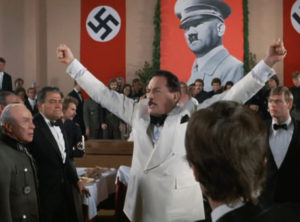
    I read/watched Ira Levin’s The Boys From Brazil. Gregory Peck as Dr. Mengele is one of the more inspired casting decisions in movie history, constantly walking the line between terrifying and absurd. The biggest knock on the movie from a production standpoint is the blue contact lens they had to put on young Adolf–they are distracting in our 1080p world.

    I also read/watched that old stand-by, The Exorcist by William Peter Blatty. Chock full of juicy Catholic guilt and atheist hate, the movie satisfies like no other. The Zodiac Killer said of the film “I saw and think ‘The Exorcist’ was the best saterical [sic] comidy [sic] that I have ever seen.”

    I made it through two chapters of The King Tides. It was terrible.

    Web Dominatrix

    I picked up a couple books this past week.

    Originals by Adam Grant and Talk like TED by Carmine Gallo. Originals is about how non-conformists influence and change the world, while Talk Like TED is about public speaking a la TED Talks.

    I have no interest in public speaking (or really doing anything that requires me showing up somewhere on someone else’s schedule), but I am into livestreaming and video marketing.

    So far Originals is really interesting. Adam Grant is a great writer and he pulls in some compelling studies and references. I haven’t cracked open Talk Like TED yet.


    ZARDOZ

    ZARDOZ SPEAKS TO YOU, HIS CHOSEN READING ONES. BOOKS CAUSE NOTHING BUT TROUBLE! OH AND IXNAY ONYAY ETHAY IZARDWAY OFYAY OZYAY!

    ZARDOZ HAS SPOKEN.


    Swiss Servator

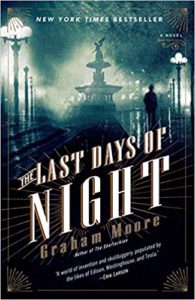
    Upon recommendation (and loan) of a regular at my local, I read “The Last Days of Night” Edison vs Westinghouse (as in Thomas Alva vs George) and Nikola Tesla wanders into the picture. The story is from the point of view of Westinghouse’s young lawyer in the fight against Edison over the patent of the light bulb. Mostly based on actual events, it is a fairly interesting look into inventing, what drives/drove the inventor/inventors of the time. A little electricity learnin’ and some fancy laweryin’ too. Reads quickly, and has some very, very short little chapters…almost like the author was not sure where he was going at first.  Probably would make a decent movie if cast right. Give it whirl if you have some time.


    STEVE SMITH

    STEVE SMITH BUSY WITH CASCADIA INDEPENDENCE. HIM NOT HAVE MUCH TIME READ. JUST TREATIES AND FOREST LAW (HIM PROMINENT FOREST LAWYER!). READ MONTHLY QA REPORTS ON HIKER ENCOUNTERS TOO. BY ENCOUNTERS, MEAN RAPE.

  • What Are We Reading – June 2018

    Read a book, read a book, read a motherfuckin’ book.

    Old Man With Candy

    I always have a geek book at hand, and this past month, my constant companion has been Electrochemical Methods: Fundamentals and Applications  mostly because I have suddenly been given a new role at work which requires some of this expertise, and there’s not much opportunity to fake it. I was immediately and uncomfortably made aware of how much physical chemistry I have forgotten in the mmmmph years since I was in college. Well, at least I remembered the Nernst equation.

    A discussion with SugarFree got me to pick up my copy of The Eyre Affair, the first of the Thursday Next series. I bought this the last time I was in England visiting my favorite author- he and I went book shopping and he urged me to give Jasper Fforde a try. He was right. Delightful mix of surrealism, science fiction, alternate history, and literary geekiness, sort of a Douglas Adams with better writing.

    SugarFree

    I’ve been on a horror kick. I re-read The Tommyknockers for the first time since it first came out. It remains one of the more interesting failures of Stephen King’s long career. The basic premise is sound and portions of the book are fantastic but–like much King’s work–it needed an editor, a very heavy-handed editor. It could lose a hundred or so pages and be a masterpiece for it. The TV miniseries is a rather dreary affair, hampered by poor casting and bad special effects.

    I read a dozen or so King short stories afterward as a palate cleanser–most of Night Shift and parts of Skeleton Crew–and watched all the TV and movie adaptations where they have been made. The only thing I really have to say is that Linda Hamilton might be wearing the least erotic pair of shorts ever produced for the female body in 1984’s The Children of the Corn.

    I read Nick Cutter’s first two books, The Troop and The Deep. The Troop is an effective and nasty little piece of splattercore, so efficient and complete that I cannot understand how it isn’t a movie yet (it even acknowledges a structural debt to Carrie that a movie adaptation could ignore.) The Deep is more ambitious, but I found it a little too derivative to be truly enjoyable, mashing up Solaris, Event Horizon, Sphere, The Abyss and any number of demonic possession stories to surface to an ambiguous ending.

    Finally, I read The Soldier, the first book in a new trilogy by Neal Asher, set once again in his sprawling Polity Universe. It is his usual sort of meth-freak out science fiction overdrive that you either adore or hate. The new trilogy is picking up my favorite narrative thread of his work and my least favorite narrative thread and tying them together into an interstitial tale that doesn’t quite break his continuity but does manage to whack it in the knee with a length of pipe a few times. I’m along for the ride, though, Neal.

    Riven

    I have really been slacking. The only books I’ve read this month were the childhood books I incidentally read while unpacking the last three boxes my parents were very graciously still storing for me in their garage. I kid you not when I say that my sister and I read this edition of Mother Goose to pieces. It was already well-loved by the time I “inherited” it from my sister, who is only five years my senior. If you are looking for a good book for a very young child, look no further. The illustrations are beautiful and are more than enough to capture the imagination of a child who can’t read yet. And it’s a great book for a kid to grow in to because the rhymes are simple and easy to read.

    Other notable childhood mentions are: Mooncake, Dinotopia (The World Beneath), Four Little Kittens, and The Poky Little Puppy. So, if you want to raise a crazy little libertarian chick, there’s a few ideas. Don’t forget to include plenty of Berenstain Bears (just be sure you pronounce it correctly), and go ahead and throw in some age-occasionally-appropriate spooky stories like Goosebumps, Scary Stories to Tell in the Dark, The Eyes of the Dragon, and (one of my favorites) The Iron Dragon’s Daughter.

    mexican sharpshooter

    Yesterday, I read the Very Hungry Caterpillar to my son.  Its a classic coming of age tale of a caterpillar coming to terms with a body shaming public that refuses to accept his outward appearance.  They simply do not understand the caterpillar and drives him to seek refuge in food as a coping mechanism.  The joke however is on society, as the caterpillar shelters himself away from the world, and shows them all what he becomes.

    SP

    Lots of mindless reading this month while on the road to and from Montana, most of which doesn’t deserve mentioning, so I won’t.

    Sorta enjoyed the latest Agent Pendergast book, City of Endless Night, but it seemed much weaker than previous works in the series. As usual, I knew the identity of the villain as soon as xe was introduced.

    I’ve started Robert Dugoni’s David Sloane series. I’m only a bit into book 1, The Jury Master, so haven’t quite formed an opinion yet. I am not generally a huge fan of lawyer novels (or lawyers, with a couple notable exceptions), but this seems less wrapped up in the legal story lines than most in the genre.

    In audio, I’m currently listening to The Final Cut by Catherine Coulter and J.T. Ellison. It has two narrators, Renee Raudman and MacLeod Andrews, neither of whom I’ve heard before. I like it so far, but I’m not that far into it since I only allow myself to listen to books when on solo roadtrips or as a reward while cleaning (of which I’ve not been doing much!).

    Brett L

    I toted along the first book in the Kvothe Series (I think its officially called the Kingkiller Chronicles, but since the author has spent seven years NOT RELEASING THE BOOK WHERE A KING GETS KILLED, I’m just going with the the name of the main character) to the beach to re-read. And then I read the 2nd volume and then I read the final oh wait, no. Rothfuss and GRRM are still having that contest about who gives less of a fuck about finishing his series. I read the Racing Weight book on the advice of Deadhead in the Glibfit series. I started the plan but then bombed out. Will attempt a restart on Sunday.

    Finally, I have been listening to Jordon Peterson’s 12 Rules for Life: An Antidote to Chaos on and off. I won’t say it changed my life, although I appreciate his perspective on some things. It’s like listening to the reverse version of a preacher who uses science and psychology. Or maybe it like taking an ethics class from a Jesuit? I don’t know how else to describe Dr. Peterson’s somewhat unique insistence on the Bible as a central allegory to our current civilization, while fully acknowledging an embracing FW Nietzsche’s critique of religion. What comes through clearly on the audiobook of Dr. Peterson reading his own book is that he believes what he wrote. I am glad to have listened to it, even if I’m not going to choose to clean my room, today.

     jesse.in.mb

    Recently had some flights and managed to put away quite a bit this month. The Dark Monk (A Hangman’s Daughter Tale Book 2) by Oliver Pötzsch: I enjoyed this one (I wrote about the first book in March) although there’s some minor element of the passing that I find off-putting, but not so off-putting I won’t read the next book. Finding Camlann: A Novel by Sean Pidgeon: frumpy archaeologist and a pretty Welsh linguist with turbulent personal relationships with other people investigate rumors of Arthurian legend and find each other. Monsoon Mansion: A Memoir by Cinelle Barnes makes me appreciate my…uh…problematic parents much more. While some part of me wonders if it suffers from some of the issues associated with I, Rigoberta Menchu, the story she tells is riveting.

    Web Dominatrix

    I haven’t been reading much this month since I’ve been so busy, but I just ordered (yet again) a copy of The Enneagram Made Easy. This book is my go to for all things Enneagram and really helps me understand myself better and those around me.

    I’ve had to order it again because I keep giving it away to people when I realise they’ve never read it because it really is that useful and interesting.

    Not Adahn

    I primarily read RPG manuals for entertainment these days. I like them. They have worldbuilding, a peek at how things work backstage (which is something I like) and they can be read in whatever chunks of time I have without interrupting a narrative flow. This month:

    Star Wars: The Role Playing Game, by West End Games. This came out in 1987, so if you want to know how Star Wars geeks thought about how the SW universe worked back in the day (with input from the studios that still had Jedi fresh in their mind), here’s your answer. TL;DR: George Lucas retcons every goddamned thing. Also interesting is looking back and seeing how sacred canon used to be. Unlike today, where every game designer puts his personal self-insert fanfic headcanon into the games they work on (Did you know that all elves in D&D are trans now?) this book treats the movies as inviolable fact. There are only two Jedi masters left, and no, you character can’t meet them. Which really sucks if you want to play a Jedi as the game allows that there might be a few minor Jedi that escaped the purges, but without real training, your character is going to be crippled. But having Obi-Wan or Yoda meet another potential student would completely fuck the storyline so it’s disallowed.

    Ars Magica 3rd Edition, by Wizards of the Coast. Is there any company that has done more to destroy the gaming industry than WOTC? They make one massively successful game, buy up everyone else, then it turns out that they’re not very good designers, they just got lucky once. This piece of crap follows in that tradition. I have a copy of the first edition of Ars Magica (by Lion Rampant games) and like everyone else loved the setting, the concepts behind the game, the alien medievalism, and found the mechanics a bit baffling when they weren’t clear but clunky. This book is literally five times the thickness of the first one, but completely fails at being any more clarifying. It guts the medieval mindset for a modern one and slathers on all sorts of 1990’s-era White Wolf emo crap and d10 rolling. In fact, this is so much a WW game, I had to double check to make sure it was WOTC. Unless WOTC bought WW which could very well have happened. And it became an even less-playable game. In fact, with the mutli-character concept, most of the playing is done solo filling out spreadsheets (which would be an excellent use of downtime between gaming sessions) except that it requires everyone in the group to be there watching you fill out your spreadsheet and approving your choices. Who would actually want to play this? Nobody. Which is why they made advancing your character so freakishly impossible — nobody is going to play this twice so those rules don’t matter. If you want to play an actual “I’m a wizard, I can do everything” game, you’ll need to get a copy of Mage: The Ascension.

  • A Call for Articles

    Sounding the Glibhorn

    As we have made clear from the beginning – this site runs off content from all of us. The Shadowy Figures That Run Glibs post much of the content – but we could not get by without the contributions from all of you, the Glibertariat. We’d like to push the amount of content a bit, and thus we are calling on all of you who have thought, “Huh, I should write something up on [subject].” DO IT! Lash your typing orphans, give extra bananas to your infinite number of monkeys with typewriters…whatever it takes to share something which means something to you.

    “Easy for you to say! How in the heck do I even get something published here?”


    How To Submit

    If you look at the top of our page, you will see a link titled “Leads/Submissions.” When you click it, this will pop up:


    Write your elevator pitch and click “Submit to the Glib Editors.”

    As for preparing your first file to send in (when we say “thank you, plz send”):

    We’re pretty flexible. Microsoft Word documents, Google-docs, PDFs, Notepad docs, or just copy and pasted into an email–we have handled at least one article in each of these formats before.

    If you’re savvy enough to embed the pictures you want into your own post, go for it! We try to preserve as much of what is submitted to us as possible, including formatting. If not–hey, that’s fine, too. You can see some of us are pretty big on images, and we’re happy to supply our own (plus alt-text). If you have pictures you want us to use* but you’re not sure how to do all that fancy tech/formatting stuff, we can work with that. Label your pictures clearly, make note in your post exactly where they should go, and be sure to send the images in the same email as you’ve sent your proposed article.

    You can apply the same idea about labeling to image captions and alt-text. For example, if you put the following line between two paragraphs in your article: “Image 1” goes here; caption: words that mean things; alt-text: more words that mean things, you can expect we will grab the picture titled “Image 1” that you submitted with your article, we’ll embed it on that line, and we’ll caption and alt-text it as you indicated. Easy, right?

    What’s In It For You?

    Mostly, a little fleeting glory and acclaim from your fellow Glibs; the chance to share something about which you are passionate; the possibility of getting something off your mind and out on the page where you can examine it; and the opportunity to forge stronger connections with all the wacky denizens of Glibs.com.

    Also! If you contribute two or more articles which we run, SP will upgrade your site user status so that you have your own byline (instead of Guest Contributor) and the user bio from your dashboard will show in the author box at the bottom of your articles. You’ll be GlibFamous!

    So, what are you waiting for?

    Ready? Set? Submit!

    *Please note that pictures should be free to use; so you’ve taken them yourself or the owner of the image is fine with it being used without their being remunerated for it, or even, perhaps, given credit. Two good sources for images: https://unsplash.com and https://pixabay.com


    Looking for a comprehensive how-to draft your subsequent articles in WordPress? Read Tonio’s excellent post on the topic. Working with WordPress: A Guide for Glibs Authors


    Fine Print