Author: Spudalicious

  • Bacon Two Ways, Part Due – Pancetta

    Last time I went through the steps to turn simple pork belly into yummy smoked bacon. This week, we wander over to Italy to discuss another delicious form of “bacon”, Pancetta.

    The primary difference between the two is that Pancetta is not smoked, but it is aged to reduce water content and to allow flavors and texture to develop. It actually belongs in the charcuterie family. In the beginning though, the two are actually treated pretty much the same way, with the primary difference being the use of Cure #2 instead of Cure #1 in this application. As we discussed last week, Sodium Nitrate(Cure #2), is basically a time release form of Sodium Nitrite(Cure #1), in that as it breaks down over time, it converts from one to the other. This allows the meat to sit at higher than refrigerator temperatures for an extended period of time while minimizing the fear of botulism. It is also very important that everything, including your hands, be squeaky clean when working with charcuterie.

    On to the recipe. The recipe I’m using here is from Stanley Marianski, author of a number of cookbooks on meat and pretty much the go to for sausages and charcuterie in general. This recipe is from his website. It’s easy to get lost in a deep dive there.

    Because every cut of meat differs in weight, ingredients are typically measured in a percentage of the weight of the meat. For this particular batch, this is what went into it.

    1950gm(100%) Pork belly
    47gm(2.4%) Kosher salt
    5gm(.26%) Cure #2
    21.5gm(1.1%) Brown sugar
    37gm(1.9%) Black pepper
    8.4gm(.43%) Juniper berries
    1.36gm(.07%) Bay leaves
    3.7gm(.19%) Nutmeg
    2.34gm(.12%) Dry thyme
    4 cloves Garlic, minced

    Mix salt, sugar and Cure #2 together. Grind all the herbs and spices and mix them, along with the garlic, into the cure mixture. Make sure it’s mixed evenly.

    Wash and dry the pork belly. Evenly distribute the mixture over both sides of the belly and the sides. Place in a 2 gallon zip lock bag, or into a vacuum bag big enough to handle the belly. Add any cure and spice mixture that did not adhere to the meat and seal.

    Like the bacon, flip and massage the belly in the bag every couple of days. It will exude liquid initially, and then reabsorb it. We’re going to let this cure in the fridge for 14 days. At that point, remove from the bag, rinse and dry. Slice off a small piece and taste to see how the flavors are. Because we used Cure #2, the Pancetta is fully cured and does not have to be cooked before consuming. You can fry it, if you prefer.

    At this point, we’re ready to tie it up. If you like, you can sprinkle the fat side with some black pepper. Place the belly skin side down with a piece of butcher twine(heavy string) centered and long enough to tie around the rolled belly. Roll the meat into a tight roll, you do not want any air pockets in the middle. You want the belly really dry, otherwise getting a purchase can be a pain. Tie the string tightly around the roll using a double overhand knot. Another pair of hands can also come in handy here. At this point, you are going to tie a string ever inch or so moving from the middle to the ends, taking care to keep the belly rolled tightly. You want to know the best part? You can skip this step all together and leave it flat. I don’t but you can. You would just be making Pancetta Tesa instead of Pancetta Arrotolata.

    Now for ageing. The ideal conditions are 50-70 degrees Fahrenheit and 50-70% humidity. If you are fortunate enough to have a basement, or some other place with those conditions, you win! If not, many people build a curing chamber. I don’t have one, so I have found another method that allows me to age in the refrigerator. I give you: UMAi Dry Bag

    UMAi dry bags are da bomb. The bags are a one way, semi-permeable membrane, which allows moisture out but not in. They are designed to be used in the refrigerator, and the normal air circulation that comes from opening the door is enough. I’ve used them in a number of different applications and am pretty pleased with the results. Until I have a place to put a curing chamber, these work quite well for me.

    Weigh the cured meat and write it down. If you’re going to hang it outside of a curing chamber, wrap it lightly in a cloth and tie some string around it and hang it in your chosen spot. If you’re using an UMAi bag, follow the directions that come with the bags and place on a rack in the fridge. What we’re shooting for here is 30-33% weight loss. The downside with the UMAi bags is that it tends to take longer to achieve that goal. Hanging the Pancetta will get you there in several weeks, UMAi can take 6-8 weeks. When it’s done, the Pancetta should be firm. Smell it to make sure it hasn’t developed any off odors. If it does, there’s a possibility that spoiling has occurred and it’s not worth the risk. If handled and processed properly, there should be a very low risk of this happening.

    Time to slice! I typically shoot for 3/8″ thick. Because there are only two of us, I vacuum seal two slices per package and throw it in the deep freeze. Because this is fully cured and can be eaten raw, I also slice some paper thin for charcuterie plates.

    Like smoked bacon, I use Pancetta mostly as an ingredient in something else. Diced Pancetta cooked into any type of greens adds great flavor to the dish, along with the complex flavor when you chew a piece. If you have thinner slices, you can also use it in place of bacon in a BLT. Soups. The options are endless.

    Enjoy!

  • Bacon Two Ways (A two part series)

    I mean come on, it’s bacon. You want a good reason to hate on Joos, Mooslims and vegetarians/vegans? They don’t eat pork, which means they don’t eat bacon. In this two part series, we’ll go through the process of creating two glorious versions of pork belly, smoked bacon and Pancetta.

    Today we do bacon. To start with, we need some fresh pork belly (also called pork sides). We have Cash & Carry here, which carries good quality products at reasonable prices. What you want to look for when making bacon, is a slab that is 2/3 meat to 1/3 fat. I find half bellies work best for me.

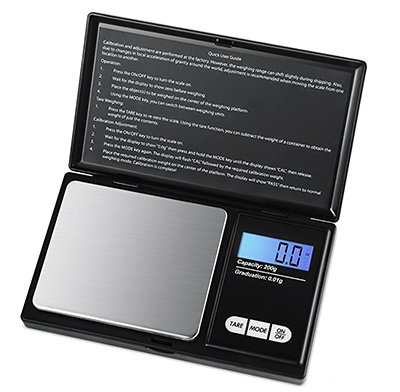
    What we need next is to calculate the proper amount of Cure #1 (pink salt), salt and sugar. Cure #1 contains 6.25% of Nitrite, with the rest being Sodium Chloride. The FDA guidelines for Cure #1 & 2 is 1.1gm per pound. This is approximately 1tsp per five pounds of meat. A great way to figure out your quantities is to use a cure calculator. The best one I know of is the one on the Digging Dogs Farm website. Do yourself a favor and purchase a decent scale that will do small quantities. This is the one I use:

    AMIR Digital Mini Scale, 200g

    Buy the 100gm calibration weight too.

    A note on Sodium Nitrite and Nitrate:

    Unless you’re eating quantities of cured meats on a regular basis, you may rest easy when it comes to the bogeyman that is Nitrites/Nitrates.

    “According to the Centers for Disease Control and Prevention (CDC), your daily intake of sodium nitrate shouldn’t be more than 3.7 milligrams per kilo of body weight.”

    For someone weighing 150 pounds, that equates to .25gm. A five pound slab of bacon contains .34gm of pure Nitrite.

    Sodium Nitrite is commonly known as Cure #1 and is typically used for meats that only undergo short term curing, usually two weeks or less. Sodium Nitrate, known as Cure #2 is used for longer curing meats such as salami. The Sodium Nitrate breaks down over time and converts to Sodium Nitrite, basically making it a time release source of Sodium Nitrite.

    Celery juice “substitute”. Yeah, the naturally occurring Sodium Nitrate in celery is chemically converted to Sodium Nitrite, or left as Nitrate. You’re using the same chemical to cure your meat. This is known as “marketing”. To stay  within FDA guidelines, the same quantities of both are used, regardless of source.

    Okay, we used the calculator, we measure out our curing mix, now we need to add other flavorings, if you so choose. You can use whatever strikes your fancy. I’ve found what works well for me is to add a good amount of black pepper, granulated garlic and ground bay leaves. Mix this all up with your cure and rub it evenly over your rinsed, and dried belly. Rub it in good. At this point, we need to wrap it and let it rest. You can buy 2 gallon zip lock bags, which work very well, or if you have a vacuum sealer that can do large bags, it’s a great option. I think the vacuum sealing results in better penetration of the cure. Next, into the refrigerator for 10-14 days. I like two weeks. I think it produces good flavor and you know your cure has penetrated all the way through. Every couple of days, flip the package over and rub the meat. Liquid will appear in the first few days and then most of it will gradually reabsorb.

    After we’re done curing our belly, it’s time to prep for smoking. Rinse all of the cure and flavorings off the belly and dry it well. Now it needs to go back on a rack in the fridge for 2-4 days. This will allow the surface to dry and form a pellicle, which is a slighty sticky surface the smoke will adhere to. This is also where you can add things like black pepper to turn it into pepper bacon just before smoking.

    Cold smoking versus hot smoking:

    Cold smoking will give you a product with a nice flavor and a finer crisp texture when the bacon is cooked. The bacon will still be raw when it’s done smoking. If you’re going to cold smoke, follow the directions on your smoker. Not all of them are capable of cold smoking. I have a quality electric smoker which allows me to control the conditions quite well, but it does put out a lot of smoke in the beginning, so I’ve had to develop process where I don’t over smoke the bacon, which will result in a product that smells like a campfire. The timing for cold smoking also varies widely. Some are capable of cold smoking for several days. In my situation, it’s about 4-6 hours or else there will be too much smoke.

    Hot smoking is a fine alternative. You will need a temperature probe for your bacon. ThermoWorks and Maverick both make quality probes.

    Follow the directions for your smoker. It should take about four hours at 200 degrees to reach an internal temperature of 150. Don’t get the smoker too hot, or you will start to render out the fat, which is not at all what we want. With hot smoking, the bacon will be fully cooked when it’s done smoking. I most definitely recommend slicing a piece off the end when you bring it inside and stuffing it into your maw for one of the finest bites of porcine known to man.

    Wood choice is up to you. I find a combination of hickory and cherry, or apple gives me the best results. And for those of you who don’t like smoked meats, or don’t have a smoker, bacon doesn’t have to be smoked at all if you so choose. Once you’ve let it dry in the fridge for a few days, slice it up.

    Once the bacon is done, let it rest in the fridge uncovered  for up to a week to allow the smoke to penetrate.

    On to processing. I cut the bacon into four squares and throw them into the freezer. You want the meat close to freezing for slicing. I cut them into pieces because I have a small slicer and it’s easier for packaging. I would recommend buying a slicer better than my cheap Cabela’s pos. I’ll be upgrading in the not too distant future. Cut the bacon to the thickness you like and then package it up. I do eight ounce packages.

    From here, the rest is up to you. I actually don’t eat a lot of bacon as just bacon. More often than not, it’s an ingredient in another dish. As for cooking slices, the best method is on a rack in a 325 degree oven. The way I typically do it is to lay it in a cold skillet and turn the heat onto medium. I keep an eye on it and turn it frequently. Dry on paper towels and enjoy! In our next episode, we will explore making that delectable Italian style bacon known as Pancetta.

    Thanks for looking.