Author: PieInTheSky

  • Romanian Food – A Short Primer – Part One

    Romanians have the peculiar habit of, on occasion, eating food. This is talk of such food. So without further ado, let’s get to the heart of the matter – sometimes literally. Romanians consume offal, we eat nose to tail, like most not that prosperous countries, waste not and all that. As a note, I will not be covering fresh blood, as this is a touchy subject for outsiders. I will just mention that the best quality is from subjects 16 to 25 and their virginity is unimportant.

    Please also notice the typical Eastern European plastic table covering for the kitchen table - which as you can see also graces my kitchen.
    Nothing like sucking on a nice bone

    I will not attempt to cover what are authentic, traditional Romanian dishes. I have no idea and doubt anyone does. There is no way of knowing where a particular dish comes from, and Romanians generally share a lot of dishes with other countries around them. There are plenty of Slavic, Turkish, Greek and German/Hungarian influences. While Romania’s version of a stuffed leafs dish may derive from Greek, they may be independent. I will not go into the food available to relatively well-off urbanites such as yours truly (the sushi isn’t bad), but what is the generally the food of the common folk (such as you glibertarians might consume were you residents of this fine country).

    Romanians do eat a lot of ciorbă, but how typical it is, I dunno. Here is a example of a pork one, with a large bone with some meat covered by broth, a small glass of tuica and the requisite hot pepper. Please also notice the typical Eastern European plastic table covering for the kitchen table – which as you can see also graces my kitchen. Eating such ciorbăcan be an unaesthetic affair and a bit savage if you are not used to it, as it implies taking the bone in your hands, ripping meat off it with you teeth and then loudly slurping the bone marrow.

    No bloody vampire jokes!
    Mujdei

    Some claim mujdei de usturoi is Romanian, which is basically crushed garlic with salt, oil and water. I dunno, but several countries have garlic dips, although most are creamy and mayo-like. Mujdei is more watery and has small slivers of garlic in it, unincorporated in a paste. We also have mămăligă – basically corn meal, salt and water – similar to polenta, with various degrees of softness, depending on taste. It can range from quite solid to porridge like.

    Now an ehm… burning question is: is Romanian food hot or spicy? No it is not, or very rarely so. The local habit is to have a hot pepper on the side of the dish and occasionally bite it. This is raw in summer or pickled in winter. Generally Romanian farmers are not careful about grouping their peppers by heat or cultivar, so a particular pepper is usually a gamble on how hot. Romanians are not particular about cultivars so you always buy/request peppers. And in the same batch some may be hot, some not. Ciorbă is always accompanied by a hot pepper. For cabbage dishes some people – me included in some cases where the smell factor is not important – bite out of cloves of raw garlic as they eat.

    As for other spices, Romanian kitchens are not spice rich. Besides the ever present salt and pepper, garlic is used a lot, alongside thyme, paprika, parsley, dill. Bay leaves on occasion. Some other dried spices in small quantities.

    Much more Sibui cheese is sold in Romania than made in Sibiu
    Sibiu cheese

    For oil, Romanians most often use sunflower. It is cheaper and readily available, and made the locals feel good because it is mostly of local production, Romania is an important grower of sunflowers in Europe. Similar to sugar coming from locally grown sugar beets rather than imported cane sugar, although olive oil and cane sugar are rapidly growing in quantity consumed. Vinegar is most often white wine vinegar, followed by apple vinegar.

    Cheese is a big part of Romanian diet. Brânză is, as a random factoid, one of the words still considered to be left in Romanian from the Dacian language. In Romania, it is actually split into several categories: white cheese called brânză and yellow cheese called Caşcaval (etymology apparently from Sicilian Caciocavallo cheese). Brânză can be telemea (somewhat feta like) either fresh or aged, caş (soft with very little salt), urdă (made from whey) or using the diminutive branzica for cottage cheese. Caşcaval is often eaten breaded and deep fried, unlike the white stuff.

    The main meats the Romanians eat are pork and chicken. Those are by far the most consumed, with beef, mutton and waterfowl as second tier, “whatever else” is third.

    The main fish freshwater eaten are crap (European carp), caras (crucian carp) which is the main pan fish, somn (wells catfish), biban (perch), pastrav (trout), ştiuca (pike), şalau (zander), Scrumbie (Pontic Shad), with some other minor fish.

    The house wine in a carafe is not
    Stuffed pike is a delicacy

    Traditionally more freshwater fish is eaten than salt water. Stuff like tuna and salmon and sea bream are now eaten in the cities, but I will not include them. The main saltwater fish are chefal (golden grey mullet), guvid (Pinchuk’s goby), Hamsie (anchovy) served whole deep fried, zargan (garfish, Belone belone, or sea needle). Of the pricier traditional fish, the delicacies so to say, are calcan (turbot), rechin (shark) and various sturgeons.  Fish is most often eaten grilled or fried (usually dragged through corn flower before frying). Grilled fish is often eaten as Saramura (briened). Basically you heat some water, add salt, pepper, slice chile peppers in it and pour hot water on top. When you take the fish from the grill you place it in the brine, also besides on the grill sometimes bell pepper and tomatoes are added, and after grilled themselves, they are peeled cut into chunks and placed into the brine. Grilled chicken thighs are also sometimes eaten in Saramura.

    Romanians, at least ones I know, usually have a side salad with dishes. Unlike other people who have the salad as a separate course, salad in Romania is on the side of the main for lunch/dinner, or as a side to breakfast. It is most often lettuce or chopped cabbage (with sunflower oil and vinegar, not ugh mayo). In summer it is tomato salad – tomatoes, salt, pepper, sunflower oil and chopped raw onion. Another local favorite is ardei copt (baked bell pepper) which is as it sounds – you put a dry pan on a fire and add peppers in it until the skin turns blackish and can be easily removed. Take them off, peel the skin; add a bit of salt, a bit of oil and a bit of vinegar, and that is it. In winter, side salads are replaced by pickles – Romanians eat a lot of pickles.

    No, this is not an euphemism
    You can see the gogoșar in my Christmas post

    On pickles, Romanians have The Big Four pickles with a bunch of minor additions. The Big Four being cabbage, cucumbers, gogosari (a cultivar of ball pepper) and gogonele (unripe tomatoes). There are two ways of pickling: brine and vinegar. Cabbage and tomatoes are always brined, gogosar is always vinegar, cucumbers can be either the right way (brine) or the wrong way (vinegar). Cucumbers are also the only ones pickled in summer, with a different taste due to much faster pickling at a much higher temperature (often left in direct sunlight as they pickle). Autumn pickles are low temp long time.

    While these are the main pickles, many other things are added, usually in smaller quantities mixed in. For example when pickling gogosari, the core is taken out and the inside filled with, in general, cauliflower, grapes and slices of carrot. Among the green tomatoes we get cauliflower, cabbage, and some green bell pepper, sometimes small unripe watermelons and sometime red beet, mostly to give it colour. Cucumbers (if you ignore some dill which is added) and cabbage are pickled alone. In general horseradish is added to most pickles as a preservative (don’t know if it actually works as one but is used as one nonetheless.)
     

  • On Cultural Marxism, Critical theory, postmodern philosophy and other such nonsense

    To start with the disclaimer, I have read quite little of the considerable corpus of either the Frankfurt school – a many of whom were, in fact, neo-Marxists – or postmodern philosophy – quite a number of whom were, in fact, Marxists or neo-Marxists. What little I have read was, for me, rather uninteresting and kinda obscurantist, which I dislike, and overall not a good use of my time. Why am I writing about it? It is the internet, brethren. This is what it is for. Reading is for cucks; writing opinions on any and everything is for the modern Alpha male. So I am about to drop the definitive view on Cultural Marxism et al.

    Now, cultural Marxism is en vogue these days among certain segments of the population, of the right wing persuasion. It is sort of like fascism for the left. The difference is that, beyond being buzzy and exaggerated, it is slightly more accurate, at least in my opinion. Most things that are literally Nazi are not Nazi much, if at all. But many things that are cultural Marxist can be somewhat described as such. As long as you define the term properly (and in these brave new worlds of ours, you get to define everything for yourself and thus never lose a debate)

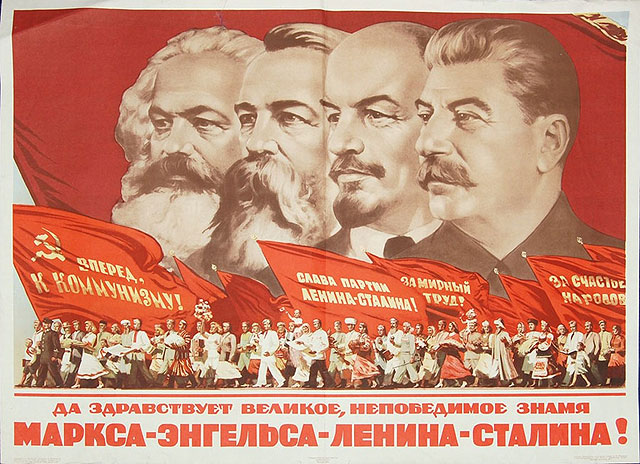
    No evil Western Society in Soviet Russia, so sucess I guess?
    Not part of a series on Marxism

    When I use a phrase like “Cultural Marxism, Critical theory and postmodern nonsense”, I use it knowing well enough that those are different concepts and that they don’t quite gel together. It is a way to describe some modern leftists’ views that take a bit from each place, usually the worst bit, and mix it up together.

    These elements of the Modern Left are not really critical theory; it is not really postmodern philosophy. Current postmodern philosophy may not be postmodern philosophy, but, being obscurantist, no one can tell, really.  There is great debate what Derrida or Foucault or whomever really meant. This is not relevant that much, it is more how what they said is interpreted in the rpesent. On my Romanian lit papers in high school, no one cared what the poet really wanted to say with this or that metaphor, but what respectable literary critics thought they meant.

    So what is cultural Marxism? It is used, yes, excessively, as a generic catch all term for “Everything I don’t like is cultural Marxist” by some on the right. But does the term have its uses? In serious debates, probably rather limited. But in less-than-serious ones, it can send across some information – people know, in a general way, what you mean when you say it.  But is there a rigorous, clear definition?

    Wikipedia does not seem to have a page on it, except as a subsection of Frankfurt School saying:

    “‘Cultural Marxism” in modern political parlance refers to a conspiracy theory which sees the Frankfurt School as part of an ongoing movement to take over and destroy Western society.

    Now, I admitted as much that it is a catch all buzzy word. But conspiracy theory seems a bit strong to me.  I have seen many left wingers recently on the interwebz countering the term with “conspiracy theory”. Not to engage in conspiracy theory, it does seem a bit coordinated.

    Wiki: “The term ‘cultural Marxism’ has an academic usage within cultural studies, where it refers to a form of anti-capitalist cultural critique which specifically targets those aspects of culture that are seen as profit driven and mass-produced under capitalism”

    Well, yes. And in many views of the successors of the Frankfurt school those aspects of culture that are seen as profit driven and mass-produced under capitalism are almost all aspects of culture.

    Continued: “it was misappropriated by paleoconservatives as part of an ongoing culture war in which it is argued that the very same theorists who were analyzing and objecting to the “massification” and mass control via commercialization of culture were in fact working in a conspiracy to control and stage their own attack on Western society,”

    Ah, here we get to the key points. Was it misappropriated? In a way yes, but many words were, sadly, changed in meaning over time. But it was only partially misappropriated; it had a nugget of truth.

    Wait, is siree white heteronormativ patriarchal oppression? Shit, I need body armour
    Not trying to attack Western society, no siree

    Let’s address “take over and destroy Western society”.

    I think it is quite obvious many elements of the left wanted to obtain social change. It is clear to me that a way of achieving this is through taking over educational and cultural institution. Just like elements of the right want the same thing. Where is the conspiracy theory? Most of the vast right wing and left wing conspiracies alike are quite in the open. We are having a sort of kind of war aren’t we, on the cultural front. It is clear the sides want different things and are willing to use this war to get them. So where is the conspiracy? Hell, even some classical Marxist use the term cultural Marxist in a derogatory fashion, because they believe it draws attention from class war to more meaningless struggles.

    Wait Pie, Culture War is also an ill-defined buzzword. Never mind you that, that is not the point, focus here!

    All activists want to change society in a way they see fit. That is why they are activists. Progressives quite more so then others, it is one of their defining characteristics. All people in the culture war want something different. It is ridiculous to suggest otherwise.

    And anyone with half a brain can see the left are trying to shove their social justice views in popular culture, being books, movies, games, comics, etc. It is not conspiracy that in certain areas of education it is more likely to have a Marxist professor than a moderate conservative one. And to the right, this equates with a destruction of Western Civilization as they see it. No need to see conspiracies everywhere. If I believe socialism destroys society (and I do), then I believe people who push socialism aim to destroy society. Maybe they don’t believe they do, but that does not change things. And they do quite clearly state that western society must be radically changed, in way to make it almost unrecognizable. So… destroy and rebuild in a different fashion, but destroy nonetheless.

    Now, I am sure these poeple will bring about a better society
    The future of politics

    I will come on record: I despise most of what the social justice left wants to achieve and would very much like to see it stopped. I outed myself as a supporter of conspiracy theories.

    So basically Cultural Marxism, Critical theory and postmodern nonsense for me means the modern far left side of the culture war and the weapons used by them, attacking culture and education that does not conform, intersectionality and the oppression Olympics, attacking reason and reality when it does not go their way, calling math and science racist, sexist, ableist. Making everything white patriarchy. Can there be better definitions for this? Sure. I usually try to avoid these terms myself. But cultural Marxism can be good enough on Twitter – not that I am on Twitter, mind you. Helps some folks never forget these people support actual Marxism. The good ones do, others are Stalinists and Maoists.

    So can you tell us more of postmodern philosophy? Carpenter in the sky, you people with all the questions. Ask HM or something, he’s the one blessed with the gift of book learning (I got the looks and sexual endowment part instead).

    And on this note, how about you my fellow glibs? Do you like your Marxism of the cultural variety? Is your theory critical? Would you say you moved on beyond modernism? Thoughts below.

  • Five minute Romanian lesson

    Five minute Romanian lesson

    Earlier on this fair blog, straffinrun senpai regaled us with a short Japanese lesson. And while learning how to say American in Japanese is useful and all, it is not the most useful thing one may know about a language. As any fule kno, when learning a language, you first learn to swear, so you know whose ass to kick while abroad. And thus begineth the five minute Romanian lesson.

    I can provide appropriate pickup lines for second grade for OMWC
    Second grade level lesson

    But Pie! you will cry. This is a family friendly website, full of wholesome individuals, who never said a swear word in their life! True. But if you ever meet a flesh and blood Romanian, you will want to know what they say. And they will. To begin… Romania is a poetic, musical language and, as such, there are many a ways to swear. In five minutes, alas, we only have time for the basics.

    Like in many countries, males swear more then females and otherkin, and males are touchy about their mothers, so many swear words ehm… touch mothers. Without further ado…

    To start with the symbol of ever present patriarchy, pula is the basic vulgar word for penis. It may mean dick or cock or what have you. But to find equivalent English swear words, it would be closer translated to fuck, based on it’s use. It is found in such swears as sugi pula (suck my cock), ia pula (“have a dick” aka fuck off), date-n pula mea (“go to my dick” aka also fuck off), ce pula mea vrei (what “my dick” do you want so basically what the fuck do you want), or imi bag pula-n mă-ta (I’ll stick my dick in your mom), băga-mi-aş  pula in ea de treabă (feeling of anger, literally: I’d stick my dick in this whole business or basically fuck this). It is also used as a comparison word, usually for something bad. Cum a mers interviul (how was the interview), ca pula (like a cock aka awful)

    Pizda (a word of I assume Slavic origin) is the basic vulgar word for the vagina. Found most often in the swear dute-n pizda mă-tii (go to your mama’s pussy, also knows as sending one to ones origins). It is also a comparison word, but this time meaning something good pizdă de masina (great car), pizdos (cool) or the superlative form miez de pizdă (miez can mean essence, in case of bread can mean the crumb, in case of fruit like walnut it can mean the actual nutmeat, it can mean middle of something, etc.)

    Fut means to fuck. A common verb in swears in many a country. Frequented uses are the fut in gat/gura (fuck you in the throat/mouth), o fut  pe mă-ta (fuck your mother) and it only escalates from here.  Futu-ţi morţii mătii (fuck your mother’s dead people aka ancestors). Futu-ţi dumnezeii mătii  (fuck your mother’s gods) and many variations of this theme.

    Muie is basically either semen or the act of fucking someone orally (the most used expression is să-ţi dau muie which means I see you are fellating me in your future). It is mostly used as a standalone swear. Sloboz (release) is another slang term for semen, used in phrases like date-n sloboz (got into semen), si ce sloboz vrei (what in the name of semen do you want).

    Now to complement the above, pronouns in Romanian:

    Old school : Eu Tu El/Ea Noi Voi Ei

    New School: xir, xer, ji, hjer, zag, zog, zig

    Conjugate the verb to be:
    A fi 
    Eu sunt
    Tu esti
    El/Ea este
    Noi suntem
    Voi sunteţi
    Ei sunt

    Conjugate the verb to have:
    A avea
    Eu am
    Tu ai
    El/Ea are
    Noi avem,
    Voi aveti
    Ei au

    Numbers to ten: zero unu doi trei patru cinci şase şapte opt noua zece

    Unde este creionul? Creionul este pe birou (where is the pencil? the pencil is on the desk)

    This concludes the five minute Romanian lesson. For homework write “pula pizda fut sloboz muie” 100 times.

    And to have some English involved, for no reason, I leave you with Monty Python’s naval medley subtitles in Italian