Author: PieInTheSky

  • This is not real glibertarianism: the importance of definitions in politics

    This is not real glibertarianism: the importance of definitions in politics

    Hello and welcome back to “Pie ponders”, in which Pie – that is me, for those who are situationally unaware – raises questions on various topics of great importance. Today, we talk about definitions and their role in politics.

    Typical glibertarian femaleWhat is glibertarianism, as a doctrine? Let me drop some definitions on you, as the self-appointed arbiter of all things glib for today.  Well it is the perfect political idea that leads to liberty, universal happiness, a better world where all the men are thicc and all the women can deadlift 800 pounds. In this utopia everyone knows wine is better than beer, scotch is better than bourbon and the NBA is the best sports league in the US. Anything else, well that is not real glibertarianism. Don’t @ me, as the kids say these days on the twits.

    I noticed a real problem with definitions in current debates on that most marvelous of mediums, the internet. Whenever something looks bad, well that is not the real deal. See socialism. While this may be seen as a version of the true Scotsman fallacy, I am not sure it is quite the same.

    Being a Scotsman, you see, can have some measurable definition- was one born in Scotland would be a start? On the other hand, one can claim any ideology one wants, without having to suffer through haggis and bagpipe music, and very often it can indeed be the case that X is not a true liberal/conservative, but just claims to be. For the actual ideology, we need to see if we can define things to see what is what, and then to measure the individual, preferably by the walk they walk as opposed to the talk they talk. Talking is exceedingly easy, after all.

    All failures of socialism were, off course, not true socialism. Well, socialism needs to have a clear definition to see what is and is not true. And this definition, like all definitions in politics, needs to respect some ground rules.

    Let us start with Wikipedia:

    Socialism is a range of economic and social systems characterized by social ownership and workers’ self-management of the means of production[10] as well as the political theories and movements associated with them.[11] Social ownership may refer to forms of public, collective or cooperative ownership, or to citizen ownership of equity.[12] There are many varieties of socialism and there is no single definition encapsulating all of them

    These are the alleged goals of socialism, while implementation takes a variety of forms, mostly authoritarian and disastrous in outcome. To go around the issue of the bear in the room, internet socialist change the definition in an idiotic manner and say socialism is some sort of perfectly just, utopian, classless society where everyone is happy. This is a neat little trick, if you define an ideology as an ideal outcome, whenever it fails, well it was not the real one.

    One rule of defining ideology should be that you cannot define it as outcome, but as the path to reach the outcome. Outcome is not guaranteed. Outcome is what is expected and needs to be proven. So you say we do socialism like this and it leads to that. If the result is an authoritarian hellhole, it does not mean it was not real socialism, it means socialism just does not lead to what proponents say it leads to. Critics of communism, on both left and right, said before it was implemented the very first time that it will lead to dystopian authoritarianism. And they were right. Which means communism is a bad ideology, not that the USSR was not real communism.

    Not real fascists, real fascism was never tried

    Certainly, one can very well claim their own personal flavor of socialism will not lead to all that. But since every attempt failed, it takes a bit of a burden of proof that a slight variation will succeed. Every attempt under the umbrella of socialism failed, and one can easily find an infinity of minor variations that are claimed different from any other minor variations attempted. Why, beyond empty claims and wishful thinking, will this variation succeed? This time the right people will be in charge is not acceptable, because that is, again, an outcome that cannot be guaranteed. I think we are at the point where we can safely say socialism failed and ignore minor variations which keep the fundamentals the same, as the fundamentals are rotten.

    The criticism of socialism is based on incompatibility with human nature, not due to minor flaws in minor variations. If, for example, there can be no functioning economy without property – no way to allocate resources, establish prices as has been shown long ago – no minor variation of property-less ideologies will help. Because the core is the problem, not the “implementation.”

    Let us take a look at another definition.

    Feminism is a range of political movements, ideologies, and social movements that share a common goal: to define, establish, and achieve political, economic, personal, and social equality of sexes.[1][2] This includes seeking to establish educational and professional opportunities for women that are equal to those for men.

    This seems a straightforward definition, with some goals that different between flavors and may or may not be achieved. On the other hand, internet feminist define feminism as „equal rights for men and women” in order to say that people who do not consider themselves feminists are against equal rights.  This is again a type of definition I oppose. You cannot define an ideology as abstract concept.

    Just another version of feminism, reallyFeminism is a loose group of ideologies who claim to strive for what they believe to be equality. That does not mean that is what they actually want, just what they say they want. It does not mean it is what they will actually achieve. It does not mean there are no other ways to achieve equality besides feminism. As such, it does not mean that those who think there is a better way are against equality. Off course, inside feminism there are also multiple subcategories, being various waves, attitudes (to men, government, trans, sex work etc etc etc) or simply opinions.

    Now that we can be somewhat more honest about definitions, we should ask ourselves how useful are they? Because one of the key words in both definitions above is “range”, which means those two labels cover a whole range of movements. So are they of any use? Do we need to break them down into subsets or can we use the whole as a guideline? And if we break down enough, do we not get to individual opinions and decide to forgo labels and focus on the individual? Off course not, that is crazy talk. And humans like to categorize things, to put them in boxes and apply labels.  In the end, we can only address an ideology by the common underlying paradigm of all variations.

    Wait Pie, but if labels may not be of use and people keep using them, that may lead to a total shitshow! Quite astute, dear reader, but fortunately, looking at the world, things somehow seem to have worked out perfectly, so no worries. Libertarianism in general has an even bigger problem as there is less than the usual amount of groupthink, the labels are even more unworkable. So what is the solution? Personally, I am going to go with get drunk and ignore all this. If you have a better plan, do tell.


  • Romanian Christmas Carols

    Romanian Christmas Carols

    As we are in Midwinter, give or take, the festival of the Saturnalia is upon us, and such the sound track of many a place is quite transformed – and has been, depending on each person’s luck for up to a month.


    It is that special time of year where in every store and on radio station you hear the same old Christmas music. Somehow, all Christmas music was made in the past and is now repeated. Also, at least round these parts, so called Christmas Fairs are popping up, giving you the chance to hear the music in the streets and squares.


    https://www.youtube.com/watch?v=ImoGBimxSYw

    Some people like that – it puts them in a Christmas mood, reminds them of childhood or it goes well with the day drinking. Some people hate it and are sick and tired of the same stuff. For both these types of people the solution is simple: instead of listening to your old Christmas music, listen to Romanian old Christmas music.


    https://www.youtube.com/watch?v=XKMKrDTj-0M

    Romanian carols were originally sang by well… carolers. This was when most Romanians lived in villages and it was a deeply rooted tradition. Usually a group of people would go house to house to announce the Holidays, bring a bit of cheer in the long winter days, ward off bad spirits and get some goodies and, for the adults, a bit of tuica.


    If you knew Romanian, you would catch two common themes in carols. One is religious, announcing the birth of Christ, and the second is about the actual act of caroling and asking people to open their homes, get the carolers inside for warmth, and bring out the goodies.


    Goodies are usually baked goods and a bit of brandy or wine. Also walnuts are prominent, as most fruit is was not really available in winter, although recently oranges have become a staple associated with Christmas.


    https://www.youtube.com/watch?v=DWGbyTdL9a8

    Off course carols, especially on YouTube, are not exactly what they were 100 years ago, but this is a selection of the more popular ones around here, the ones some of us are sick of hearing every year.


    https://www.youtube.com/watch?v=gqbQ9ZUBtM8

    Nowadays Romanians often associate carols with Ștefan Hrușcă, in both a nostalgic and mocking fashion, depending. There are lots of jokes about him, he is a bit of a joke, but not in a mallicious way and still sort of popular around Christmas. He now lives and works in Toronto, the one in Canada, and comes to Romania to sing during December and makes some extra money.


  • Romanian music: indie pop, rock and songs of the hipster persuasion

    Romanian music: indie pop, rock and songs of the hipster persuasion

    In my attempt to give this joint a bit of culture – and also link dump posts are easier to write – I had a post earlier about the peak of modern musical achievements, known as manele in Romanian. I am sure that post elicited the curiosity of the glibertariat. But Pie, everyone wondered, that seems like lower class music. What do the young, hip urban people listen to?

    Well, I am not one to leave such pressing questions unanswered. So I have prepared this post. Alas, I am no longer young and, as such, I have no idea what those damn kids listen to these days. So this post will not be about that after all and my insight may be less than valuable. But has that ever stopped me? So what will I post about? Well, whatever I can think of, which is not much as I am well into a bottle of nice wine.

    So I was thinking with what to start… And I will start with something that does not really fit with title of the post. Why? Well… because it is the band of a buddy of mine and why not plug those you know… The guy is not famous enough to be considered an actual rock star or anything – although he has had his fair share of hot 20-something female fans, but not that obscure either, and he is very passionate about the guitar and has practiced it intensely for many years, with results I will leave you to judge. Besides that, he is not in the drugs section of rock musicians, but in the martial arts, meditation and passion for Japanese culture section – he learned the language and spends a few months a year at some temple there. The name of the band is Days of Confusion and the style of music was initially based on something called djent. I will post 3 songs off 3 different albums for your viewing pleasure (as usual I do not expect many of you to click the links but whatever.)


    Now, getting on to something more topical, indie and/or hipster-ish bands in Romania use a mix of own songs with various covers and mashups. I will post some, in no particular order for bands and no particular selection for the songs. These songs have a chance of being more familiar to you as a style compared to manele, and I think a few are even in English, as are many of the band names. I will post the original band names, not translations of them. The genre of the music I did not dwell on, basically local interpretations of indie pop/rock or even mainstream pop as a style, but not hugely popular. I am not attempting to do an in-depth analysis, as I am not a music writer and Glibertarians is not really a music blog. I will just give some links and maybe write more for a future post. Or maybe not.

    One of the most successful bands, especially with the female demographic, is Robin and the Backstabbers, although the style is called melodramatic pop and the songs can get a bit whiny for my taste. Here is a more recent one:

    And as a bonus one of their more popular ones, which was overplayed on the radio station I listen to in my car to the point on annoyance.


    Moving on with various bands in no apparent order and with a song from each. The songs can be as old as 5-6 years or 1-2 years, I did not choose them for a particular reason…

    Toulouse-Lautrec (no relation, and no, they do not sing in French) are a indie rock band of some popularity.

    We then have Moonlight Breakfast

    Followed by The Mono jacks

    The Amsterdams – I went to university with one of these guys although we were not exactly friends. They are an indie band, but sing in a very mainstream fashion.

    Jurjak started as on of the few local indie bands doing a sort of electro-blues sound:

    Les Elephants Bizzar, despite the name, also sing in a fairly mainstream pop inspired way. So nothing too surreal here

    The Kryptonite Sparks – just like hipster beer, hipster bands have silly names, are a fairly young indie rock band

    YellLow is a sort of electro-pop

    And finishing of with something more electronic than pop / rock we have Karpov Not Kasparov

    Anyway if you want further such posts do comment, we can cover 90s pop, classic rock, heavier rock, maybe folk, old time drinking/pub songs, traditional music and more. Sky’s the limit, as the saying goes. Or is Pie the limit? Either way…

  • Pie ponders: Life, Luck and Libertarianism

    Pie ponders: Life, Luck and Libertarianism


    Hello and welcome to Pie Ponders, in which Pie – that is me for those who took a rather undersized bus to school– raises questions on various topics of great importance. While in some post I present my views on one thing or another, others are sort of thinking out loud. This post is part of the latter.  Today I want to cover a common argument that appears in political debates and which I often find dubious – the let us call it Luck of Birth argument.

    The way it usually goes: well it is easy for you to talk, you were lucky, you were born healthy/ in a good country/ in a good family / cisheterowhitemale / tall dark and handsome / whatever. You won the birth lottery, so shut up and pay, shitlord. I find this ehm… problematic, excuse the word, and I will expand upon it.

    Romanian lottery tickets changed recently but this is the picture you getFirst what is a human? Well, dear children, in most cases when and evil cishet patriarch oppresses a poor innocent woman through unspeakable acts of reproduction, a human may or may not appear. For the purposes of this argument, we will ignore the spiritual part and say we have a bag of meat, bone and various fluids of questionable purity. In the end, we are a species with sexual reproduction, so in most cases a human is the product of DNA of two other humans. This lump of organic matter is then shaped by the environment it develops in, and by a messy combination of nature and nurture you end up with Pie or one of you lot.
    The what I like to call “socio-religious” version is much more clear, simple and straight forward. You have these pre-born humans you see, who, by pure chance, are assigned to one female or other. If you are assigned to a certain female, you are lucky, ya bastard. And since you are lucky, you are no longer entitled to an opinion for the rest of your life.

    I find the luck argument does not stand up to scrutiny. I am not really lucky because I was born in Romania. I could not have been born in the Congo (worse luck) or Switzerland (better luck), because I, whatever that may be, am the result of combined Romanian genes raised in a Romanian environment. I would not be me had I been born anywhere else. Furthermore if you are born in a good country or family it is, in part, because generations worked to build a better world, specifically for their offspring.

    I am not lucky to have been born to a responsible family which provided for me, I was the product of a deliberate process of two people to create me, and they had to try for a while, I did not come easy. My parents would have behaved quite differently had I not been born.

    The cisheteromale thing I have no defense on. While I am slightly above average tall and dark haired, I am not particularly handsome. So no luck there. Then again, one of my university professors used to say it is bad to be short, ugly and stupid. If you are not one of those, it is still ok.

    While yes, there is a let’s say valid view that it is lucky not to be born with a severe illness or disability, or in a war zone, or a soulless ginger, or any of the bad things that may happen, in the end your genes are part of the very base of human biology and I struggle to call it a “genetic lottery” because it is what it is. Height, health, beauty, intelligence. A well-shaped nose, well-proportioned ears, nice eyes, good hair, all these things are just characteristics, and while you can indeed say it is “lucky” to get some of the good ones, it is over all meaningless. Because it is what it is and it cannot be changed. Is it better to be taller or have a prettier face? Healthier or smarter? Who knows? This is to integral to what a human is to just call it luck.

    In the white male lottery you never know what you get

    Now let’s assume that all this is, in fact, luck, depending on how you define luck. It still has no bearing on the validity of your words. Just because you get lucky, it does not mean you are wrong. I often heard in debate “maybe you would think differently if you were born poor”. There is an old saying: if my grandma had wheels, she’d be a car… What relevance does that have? It would not have made my views better or more correct. It is a rehash of the whole bourgeois logic argument commies throw around – the left is nothing if not unoriginal when you get down to the basics. When I argue politics, I try to use reason and fact, not personal anecdotes, precisely because personal anecdotes are just that, subjective views. My whole attempt at political philosophy is to derive something as objective as possible, keeping in mind the constraints of human though. The left, off course, tries to push the whole “everything is subjective” precisely to shut down debate. Why find counterarguments when you can say well you were born in a family that took care of you, you were lucky? It is just another ad hominem, in the end.

    The ”birth logic” argument is, in fact, quite objectively wrong. There are poor and rich people on the right, the left, the center or the libertarian sides, sick and healthy, young and old, tall and short, Romanian and American. It is clear that being poor does not guarantee having the same views, I mean just look at all those poor people who internalized wrong think and do things against their interest. There are plenty of poor libertarians, so had I been poor there is no guarantee I would have been a left winger. If birth logic is the logic “they should have”, it is still wrong, as what an idealist thinks people should believe is pointless.

    In the end, the birth lottery is no guarantee of anything. I will finish the post with a personal anecdote, because it seems fashionable these days to do so and it was one of the things that made me reexamine the luck argument. So let us get anecdoting.

    I was lucky to be born in Bucharest to a family that provided for me – not any kind of luxury, but sufficiently that I did not fear about whether the next meal will come. The second person in my anecdote had the same luck, his family being somewhat wealthier than mine. I graduated from the Bucharest Polytechnic with a degree in Electronic engineering focused on information technology. I did not choose this university out of some passion for the subject matter, but because in general employers in Romania have good opinions of its graduates. This is not because it is a particularly good university – none in Romania are – but because it ensures a level of selection and filtering of people. It is a fairly difficult university and not necessarily in a good way. But the first level of selection is that, in general, people who want to go there and pass the exams are usually in the top performers in high school.  The second level is you have to learn a lot of stupid shit and you have to understand some not so stupid shit. Finishing it is sort of a sign you are fairly intelligent and capable of learning and willing to put in the work – often pointless and/or unpleasant work – which is sometimes necessary in the modern work place.

    Some times not only do you get seven deuce off, but the card quality is shitty I finished this rather difficult university while holding down a job – this is very common in Romania, university is for getting a degree, a job is for learning things and getting hands on experience. The university being in Bucharest – the best job market in the country, luckily for me – and the high demand for tech work ensures polytechnic students can find jobs. The job are also needed because when you graduate with no actual work experience, you will be competing for jobs with mostly people who also graduated and have work experience. It is difficult though, most days I left home at 7 30 AM and got back at 7 pm and often worked some in the weekend. My holiday from work was mostly during exam period, so I could study.

    On the other hand, the University of Economic Studies is not particularly difficult. If you study some bullshit like International Economic Relations as he did, it is even easier. You can graduate without a sweat and with plenty of time to get a job should you choose. It is, in fact, significantly easier to find time for a job, as school attendance is much more voluntary. The fellow I speak of did not get a job as he wanted to have a bit of fun and enjoy university life, and his parents were giving him enough money. Even so, he did not graduate with a particularly good grade average, as studying was not his thing.

    You can imagine, his first job did not pay much and he was rather unhappy about it. So when we met and talked about jobs he told me, without a hint of irony, you are so lucky, you have a good job. I was a little dumbstruck. There was zero association made between working versus partying in university and the subsequent income. And I understood the appeal of luck.

    Not all cases are this clear cut off course, and there is some luck – if you define it at that – in everything. But people are too quick to appeal to “the luck of the draw” as a universal explanation. And in the end, you play the hand you are dealt.


  • Life of Pie: Romanian summer food

    Reading my previous posts on the culinary delights of the fair Romanian folk, it may have seemed a bit to focus around various bits of animal, with focus on the mighty pig. So I thought of writing a piece on somewhat lighter fare that is eaten in the summer. It is no longer summer at the time of writing this post, it was not at the time the pictures were taken and it will certainly not be at the time of posting, but it was a particularly mild autumn so I will keep the title.

    October is one of the nicer months in Bucharest, a city of very hot summers and quite cold winters. It is the driest month, historically speaking, not too cold and not too hot. It is so nice people often say: I don’t remember the last time we had such a nice October – usually the last time was the previous year. But the meteorological memories of people can be unreliable. This particular October was, in fact, nicer than usual, especially the last week when temperatures got to the mid 20s, some 8 degrees above normal. This post was written on a particularly nice day mid-month, although ever so slightly on the too windy side of things. The sun was shining, the swans were swimming and the last tomatoes were still struggling to ripen on the vine. And we had a nice family meal in the style of summer.

    I will begin with a note that this particular post will not have exact recipes, that is not really my thing, but more of an overview, focused on the starters. Romanian meals usually start with ciorba during the week day, but during a weekend gathering other things are preferred. I should mention that whenever I reference oil, it is sunflower oil I am speaking about. It is, by quite some distance, the most popular cooking oil in Romania because it is quite cheap and Romanians consider it neutral tasting, although this may be just because they are used to the taste. It is not particularly healthful – seed oils generally are not in my opinion – and I use none of it in every day eating – I use mostly olive oil or butter – but these dishes just do not taste right to Romanians with oil other than sunflower.

    One of the more popular summer foods in Romania is “salata de vinete cu ardei copt” – eggplant “salad” – more of a dip really – with roasted pepper. This is done quite simply. The eggplants and peppers are roasted – on a grill if available or on a stove top if not – until done, which I cannot tell you when it is, you have to see it.


    A medium eggplant should take some 40 minutes until it is charred on the outside and baked on the inside. When done baking, it needs to be processed still hot or the flesh can darken. This can be difficult and lead to burning of fingers if care is not used. Just remove some of the skin and scoop the flesh with a spoon in a colander. Salt it some and leave drain for 20 minutes.


    The resulting eggplant can be turned into the dip – just add a tablespoon of oil per eggplant and a very finely chopped raw onion, mix and that is it. The drained eggplant also freezes reasonably well, and people sometimes freeze a few bags of it to be prepared at a later date – the preference is to bake more eggplants at a time.


    The peppers are easier – bake until the skin is slightly charred and can be peeled off. Add salt and vinegar to taste and that is about it. Usually the core and seeds are removed from the pepper, but that is not the way of the Pie household. Each one removes the core of the peppers they eat. So to eat get some good bread, cover in a layer of eggplant and either put a piece of pepper on top or, as I do, take a bite of each, alternatively.


    A second popular dish is a form of deviled eggs. This is simple; hard boil the eggs, remove the yolk, crumble it and mix it with salt, pepper, some herbs, and either butter or liver pate and a tablespoon of mayonnaise. Refill the egg with with the mixture.


    The next dish is a fish roe dip and it is made from either carp roe – cheaper – or pike roe – pricier and preferred. It is practically like making mayo, but with fish eggs. Add the row, salt and some lemon, and then mix while slowly adding oil until desired consistency. Add finely chopped onion to taste – the onion is sometimes served on the side, but most often mixed in.


    Next we have green string beans and garlic. This type of beans are ones that grow long and thin – we call them Chinese beans in Romania, don’t know what particular cultivar it is. This is also quite simple, pick tender pods, boil for 3 minutes and add a lot of minced garlic and some mayo to tie things together. The garlic is the secret – boiled green beans being disgusting themselves. Often a similar thing is made but with mushrooms instead of beans.


    Finally no Romanian summer meal is complete without some raw vegetables – tomatoes, peppers, radishes, onions –  and plain white cheese – usually a piece is fresh, softer and less salty, the other is aged, harder and saltier. All these starter are placed on the table and each eats what they want.


    The main course was catfish – the Wels catfish – two ways.

    One is the traditional way of cooking fish down these parts saramura – which translates as brine. But unlike most places when things are brined before cooking, here the brine is like a sauce. You basically add a teaspoon and a half of salt per cup of hot water, with fresh ground black pepper, paprika and thinly sliced chilies to make the base – or thin brine. The fish is taken hot off the grill and placed directly in the brine. Various vegetables can be added on the grill next to the fish – tomatoes, peppers, chilies, onions – to be used as a side. Sometimes these are peeled and mashed in the brine to for a thicker brine – more similar to a sauce, other times they are on the plate next to the fish. The dish is usually served with polenta. In my family we usually do the thin brine. Also this type of brine is also used with grilled chicken.


    The second way is simply fried – just dredge it in a bit of cornmeal and fry it on both sides in a pan – we don’t usually deep fry fish. This is eaten simply with a good squeeze of lemon or mujdei de usturoi.


    So this about covers the food for the day. It was warm enough to eat outside on the patio. The lake looked good and clean – for reasons I do not understand the last few summers it was plagued by some vegetation that completely filled it to the point you barely realized there was water there. The white wine was properly chilled and of good quality. Overall it was not a bad day.


  • Pondering pragmatism in politics redux

    A while ago I wrote about the issues of pragmatism in politics. Planning the second part, I ran into a serious dilemma: I could not find the proper alliterative title. I thought of words starting with p to indicate this is a second part of a previous post, but I found none.  Redux does not really work but r is sort of like p…

    But enough of my personal failings. Let us once more grab pragmatism by the balls… My first post was not a critique of the concept of pragmatism in itself – this can be a different story – but what I called pseudo-pragmatism. This is basically completely ignoring principles and the multitude of problems with many politicians in the name of so called pragmatism, leading descending spiral of corruption and incompetence which is not in any way “pragmatic.”

    This led me to think, get the old rusty cogs turning among the cobwebs. Where is the place of pragmatism in libertarianism? Can we find it some room of its own? The answer to this depends on who you ask. Because, otherwise, libertarianism would be thoroughly boring.

    I thought about expanding on the issue by analyzing pragmatism and ideology, not pragmatism and every day politics. Because I believe that an ideology which is not at least somewhat rooted in reality is mostly pointless, and basically not that better than utopian communism. It is quite easy – as the corpus of fantasy literature shows – to imagine all sorts of things and put them in words. Something that will actually work in our world – and not Middle Earth – is more difficult.

    To be fair, feudalism is probably better than anarcho-syndicalism

    Now, given there are 10 different opinions for every 9 libertarians, I assume few will agree to what exactly constitutes pragmatism in ideology. But, as many of our little talks around this place are in agreement, let’s get controversial.

    The main issue is: to what point can you bend a principle in service of being pragmatic, before it ceases to be a principle? Some would say not at all, slippery slope and such. Others would try to define some minimal leeway in it. Another way of viewing things is: can we design the principles to be pragmatic? My island experiment post was an attempt to start from some basic premise and define some principles, while keeping an eye on reality.

    So let us dive in the deep end… I see two types of political discussion. One idealistic, how we would like things to be in perfect universe (cough anarchism) and another what is a good enough ideology for the world we live in – presently, not 500 years from now or in some post scarcity utopia and/or dystopia. My answer is along the lines of minarchism plus, a form of limited government, free(ish) markets and personal liberty, enabling for each a life as close to what they want as can be.

    Now, I am all for talking anarchism for the sake of an interesting debate, but after a point, we need to get back on Earth Earth and see what has a chance in hell of working. What is not impossible, but merely highly improbable? Anarchy? Yeah… no. Minarchy? Probably not true minarchy. Reasonably limited government? Well that is a very long shot maybe.  Which, in the end, we might never live to see, but I am saying there is a chance.

    To clarify, by working, I mean something that allows the individual to live and thrive. Feudalism was stable for many years, but I would not say it worked. Certainly not for the serf. One out of 100 people in a harem may think it is working.  Somewhat anarchic Zomia worked a while, only if working means hunting, gathering, swidden agriculture and almost no capital accumulation.

    While this may or may not be possible, I am trying, against the modern trend, to find principles as objective as possible, otherwise it becomes a quagmire of subjectivism and feels. So I am trying to think of some basic guideline of organizing a political entity. This is not necessarily fully libertarian, but something that maybe can appeal to a slightly broader demographic.

    We can dismiss out of hand ideas that would work if humans were different. Humans have a certain nature, respond to incentives and are not some sort of altruistic angels. Teach murderers not to murder is not a viable idea, certainly not pragmatic in any sense of the word. Due to the problems associated with putting humans and power in the same room, I will say outright that no ideology without some clear limits on state power can function.

    As I believe that, quite objectively, humans are unique individuals, I believe any system needs to focus on individual human rights, not collective ones. A system must not sacrifice individuals – which are obviously a real entity, you can touch them if you want, as long as the sign the consent form – for the sage of a vaguely defined society – which may have a function as an abstract concept but does not really exist. Neither tyranny of minority or majority must rule.

    A functioning country must have some level of stability. A revolution every two years is not sustainable. At the same time there must be a way to change whatever “leaders” there are. Whoever is in a position to wield tools of coercion – police, justice, taxation, regulation, whatever – needs to be held accountable and have some skin in the game. History shows that when leaders can act with impunity, nothing good happens.

    So is socialism right out? Socialism was always right out. I never got the whole socialism would work if humans were better. If humans were better, it would still not work and anyway there would be no need of it. There is no situation where socialism is needed or desired. We can dismiss democratic socialism. It is lipstick on a pig, trying to add the veneer of legitimacy by the democratic part.

    Any form of dictatorship or monarchy should be excluded – this can rarely exist with accountability. A monarchy can be ceremonial at best. Any form of democracy must not lead to mob rule and must be restricted by the fundamental rights of the individual, as history can show us how people were often mistreated by bad laws that had the support of the majority. Excessive centralization is not desirable. This reduces accountability and skin in the game. It concentrates power and it makes corruption easier. It makes the coercive institutions distant for the individual.

    Economically, for better or worse, say what you will of the tenets of small government decentralized republics, it worked some. Yes, there was graft and government imposed monopoly and protectionism, but keeping government somewhat limited meant these could not mess things up to much. And when the state grew too much, there were always problems, even in the Swedish paradise.

    Socially, the main problems were brought by putting the so called collective over the individual. There are no clear models in history for ways of organizing that did not do this. Monarchies, republics, dictatorships, theocracies, capitalism, socialism they all wronged people. The solution is simply extending laissez faire economics of small government to the non-economic issues. I do not believe in social and economic division of freedom. They are either both or neither.

    Now what are my principles? Well I believe rights are individual and that peoplekind [hupersons?]  are social beasts. As such, living together, various conflicts appear. The core role of government is solving or mediating these conflicts in a fashion which best preserves said rights. There is an individual sphere – what is inside is none of societies damn business – and a common sphere – which is basically interaction of individuals, and the main issue with many forms of government is bringing into the common things that are individual. To take a small example, there can be a case for common involvement in health when it comes to contagious diseases e.g. quarantines, but not when it comes to broken legs.

    Believing in non-anarchy, I believe there is some taxation needed and this, in my view, is where I bend the principle some libertarians hold of taxation is theft / extortion / whatever. So to get to the actual point, basically the single land tax is a good idea, is where I am getting at.

    Anyway I think this topic can go on and on and as such I want to take it to the comments section… So how do you like your principles, fellow glibs? Medium rare or blue? Not cooked at all? Discuss …

  • Traveling Transalpina: the highest road in Romania

    No, not that kind of high… Just 2150 meters above sea level.

    Romania as a country is not exactly well known for its quality infrastructure, although, to be sure, that is relative. It is mostly serviceable, overall, if you don’t like your car too much. Which cannot be said for many a country on our fair planet. We have roads and stuff, although not great on the freeway front. We have yet to have a two lane road crossing the mountains, which generally creates bottlenecks when you try to drive to Transylvania and, further, to Western Europe.

    In fact the bottle neck on the main Road coming to Bucharest from the west is called the Black Hill and it is dark and full of hairpin curves, which sucks when you are stuck behind a truck. It sucks even more at night when the visibility is awful. Accidents are exacerbated by the fact that frustrated drivers often pass recklessly when in a hurry. If you are not in a hurry, a rare case in these times of ours, you can cross the mountain on the scenic route. It may take two hours more, but the roads are almost empty and you can’t beat the view. Sometimes, as the saying goes, one should take the high road.


    The high road in this case can be one of two. The older and better known is Transfăgărășan, made famous by Top Gear, back when Top Gear was good. The lesser known one, although it’s well… higher – the highest in Romania – is Transalpina. Both Roads were expensive and unnecessary wastes of resources by the government, one by the communist times the other by the ehm… let’s call them capitalist times. But since they are there now, it can be nice to drive. So I thought I would show the Glibs some pictures of my trip over the Transalpina. And yes, there are many such photos on the internet, many better ones, but these are mine and that’s the point.

    Depending on the route taken, at first the road starts as a standard road between villages, although empty and off the beaten track.


    Historically, the road is assumed to be ancient, first started who knows when as a path for taking sheep over the mountains. It was allegedly used by some Roman troops when fighting the Dacians. The Austrians though of making it a road in the 18th century. For most of its history it was just a mountain path, although wider than most such paths. The German army partially paved it with stone and gravel in the First World War, although it was not used much. Romania widened and improved the road in the 1930, when, although not fully paved, it could be crossed using an off-road vehicle.

    Finally the road was fully paved between 2009 and 2015.

    The maximum speed limit is 30, but you would not drive faster anyway given the windy nature. A man could have a lot of fun here on a motorbike. Not me off course, but a man could.

    If you fancy a bite on the road, you can stop at a sheep station (stâna in Romanian) where you can eat polenta, sheep’s cheese, sour cream, and well… mutton. The mutton is a stew and a sort of never ending pot, which sits on a fire and meat is constantly added to cook in what is mostly its own fat and juices and some onion.

    Where there are sheep there are sheep dogs.


    Towards the end you go to lower altitudes when the forest starts again.


    You can see lakes in the forest if that is your thing.

    Or take a detour through the countryside,


    The roads may not always be paved

    And you can encounter some traffic.

    You can visit a church build in 1100 over the ruins of a Roman mausoleum which was built over the ruins of a Dacian temple.


    After a long day on the road you can stay at a nice hotel and golf course in Transylvania, in a quiet area far from the main road. This was the view from the room


    Anyway this about covers it. A short trip through Romania. Can’t really think of an ending paragraph right now so I am going to leave it like this.


  • Libertarianism basics: a classic thought experiment

    No man is an island, entire of itself…any man’s death diminishes me, because I am involved in mankind; and therefore never send to know for whom the bell tolls; it tolls for thee. – Decebalus, king of Dacia

    But Pie! Thought experiments are dumb! you will say… Well possibly, but they can be vaguely useful and I was always particularly fond of this one, as it was somewhat foundational for my views back in the day. So this is about The Desert Island. It is my attempt to see if this though experiment is or can be made useful as a tool to talk to non-libertarians about certain fundamentals. I will give my own interpretation, open to corrections, addenda  and whatnot.

    The thought experiment I would say is one on individual rights. Humans, after birth, sign a contract and get to live in a society of sorts. Due to all these messy social interactions, it is sometimes hard to see the border between individual and group – everyone who has been in a 6+ people orgy knows this. The point of this experiment is to simply isolate an individual from the rest and analyze.


    So the way this goes, let’s say someone lives alone on an island. In this case there are no constraints on behavior outside of nature –gravity still gravitates. If you build that, you got it, if not, you don’t. If you brought with you your book and record (mixed tape whatever), and no one takes them they are yours to keep. Otherwise do without. Of course, as you don’t have electricity you cannot listen to the music anyway, but if you could, it could be real loud, no one would complain. You can yell obscenities or vocally support Trump – freedom of speech would be quite absolute-, worship whatever interesting rock you see on the island or  the local volcano or lightning or some weird notion of an transcendent god.

    Basically live as you choose in the limits of you possibilities and possessions, as long as no other human acts against you. Life, liberty and the pursuit of coconuts one might say. In this scenario there are no obligations to others, nor from others to you. No right to things not produced, by the simple fact that there are none available, but absolute right to those you have or make.

    Such a human is free from aggression, as there is no one to initiate it. The only issue may be if his island is truly his – that is if he paid the required single land tax. So I consider these a sort of tire 1 rights, purely individual.

    Off course, if any of us were in this situation,  sometimes we would feel we’re gonna break down and cry, nowhere to go, nothing to do with our time … lonely, so lonely, living on our own. Anyway… In the end coconut oil only gets you so far. So people seek other people. And this is where the average no libertarian will tell you the experiment is useless and there is no point to it, not even making loneliness and lubricant jokes. But I disagree, I fell it helps to see the lone individual in itself. So let us say each human is an island – metaphorically speaking off course.

    Let’s say there are other islands all around – with other people. And you can meet them, shoot the shit, trade some, talk, you can even show them your coconuts. Off course, they may be selfish bastards and not want to do all hose things with you. And here is where the philosophy part kicks in. The essence of libertarianism is that those tire 1 rights – the ones the humans have in themselves, as individuals, absent all others – should be preserved in the presence of other people, society if you will. Furthermore these should form the basis of social organization, as unobstructed as possible. The other philosophies of the world beg to differ.

    Humans under a certain level of wealth do not live each alone on his island, there simply are not enough islands to go around. So I am going to switch metaphors in the middle of the text … hmmm… people are boats, that works. And boats on the water can run into each other. Some at this point would tell libertarians absolute freedom liberty cannot exist. As if libertarians do not know this… It is implied liberty for all that you cannot be at liberty to infringe upon others’, as my liberty to swing my oar ends at the tip of your boat. So societies create various rules in order to solve or prevent conflict – either codified into legislation or as unwritten rules of society – manners and morality. The purpose of these rules is in much debate by various ideologies. From a libertarian standpoint, the goal is to preserve liberty as much as possible and to minimize infringement of individual rights – defined as rights of individual absent the group.

    Life liberty and the pursuit of coconuts

    On various levels the conflict is true of a society as a whole, as it is of people living together in the same home or friends going together to a restaurant. You can no longer do anything you want, you have to take into account others and compromise, even if you may end up in a place serving Hawaiian deep dish. Although, to be sure, all people have some limits to the amount of freedom they are willing to give up. So most ideologies at least vaguely pretend to care about some level of individual rights and liberty, because it does not sound good not to. Off course they mostly lack any clear definition of these rights, which end up being whatever someone likes at a given time.

    Which aspects of life are the business of the individual alone, which of the group or family, which of society, and which of government institutions if such institutions exist is the main question of politics. Or, in other words, where the line is drawn – over this line government and/or others do not cross, do not interfere. And this is where such a thought experiment can be useful, although not sufficient.

    So this thought experiment got us nowhere in the end, beyond presenting the idea that a human can be seen as a thing in itself, outside society. Isn’t this just preaching to the choir round these parts? Well, maybe, but still. A blog needs posts, does it not? So I dunno, comment or don’t, as is your right


  • Manele: brief analysis of a cultural phenomenon with music links

    Good old manele, ya either love em or hate em. Really. Well, provided you are Romanian that is.

    Pie… what the bloody hell are you talking about? Well… Dixit Wikipedia:

    Manele (from Romanian, fem. sg. manea; pl. manele, the plural form being more common) is a music style from Romania.

    The manele can be divided into “classical manele” and “modern manele”. The “classical manele” are a Turkish-derived genre performed by lăutari in a lăutărească manner, while the “modern manele” are a mixture of Turkish, Greek, Arabic, Bulgarian and Serbian elements, generally using modern (electronic) instruments and beats.

    So manele is a type of singing. I dumped a bunch of links in this post, which I do not expect people to click on. They are not in a particular order because that seems like to much work and this is a lazy post. – yes it would have made sense to fit the links to the text. But life does not always make sense.  All the links are music and none of them are rick rolls. So I dunno click one or more. See how many you like, if any. Let’s just start with one.

    Few musical genres created so much division in the Romanian cultural landscape. For some, it was the music for parties and gatherings, fun and unpretentious; for others, a sign of low culture, no class, little education, low standards and poor taste. In many circles listening to manele got you immediately douchebag status. There were few in the middle on this issues, although the saying goes everyone likes manele after the second bottle of wine. The hate was particularly prominent among fans of heavy metal and folk music.

    Now is there some truth to the previous snobbish stereotype? Like in most cases yes. Listening to manele is somewhat correlated with low socioeconomic status, drinking wine mixed with cola and being functionally illiterate. Although, a few years ago, the phenomenon did go full circle when some hipsters started listening to manele ironically. Usually after the scared hipster got out of a cab in the bad part of town, to enter a local seedy dive bar which had a special, safe, but vaguely authentic manele party going on.

    Manele are sort of an eclectic mix of sounds sang originally by Roma / Gypsies (depending on preferred nomenclature) singers at parties and events. The have a very similar style and lyrics, grouped around the main aspects of a human life – money, love, loss, money, women, enemies who hate you but are not as good as you so you always come on top, ass shaking and money.

    The classic manea was a fairly slow paced mostly instrumental love song of Turkish origin during the 1800s. The modern manea as we know it started to appear in marginalized communities and had – like many such musical origin stories – an element of protest to exclusion in general and the high-brow culture of the more intellectual elite, if you will. Intellectuals which promptly criticized it eclectic mix of Balkan sounds, the crude language and sexual and violent elements of the lyrics. With the obvious laments of the effect on the children. So the protest factor was a success on that front, all things considered.

    Further opposition came from mainstream Lăutarii – singers of drinking and party music – which though it brings their profession – a rather lucrative and privileged one during communism – in disrepute.  This is probably part of the source of the division caused by the music. The other part being it kinda sucks.

    Who critiques the critics though? Well other critics usually… And so it happened. Some came to the defense of the manele, simply stating that like in all forms, there are good ones and bad ones and it can be a valuable p[art of the cultural landscape. The music was studied at the University level both a cultural and melodic point of view. There is some truth, off course, to snobs piling on popular music. The history, the communities and conditions that generate it generally are worth studying. Although just because something came from a marginalized community does not make it good, or opposing it racist.

    https://www.youtube.com/watch?v=Y01xp6GsKSg

    The modern form is seen by some proponents of the genre as a degraded version that focuses to much of money and sex and lost some of its roots, which I think can be seen as somewhat paralleling some criticisms I hear of hip-hop culture in the States. This has probably something to do with the fall of communism which brought a new found freedom for artists and a possibly to get rich (or die trying). Capitalism man, it ruins everything by excessive commercialization.  The change of the manea, like all music in fact, can be seen as a chronicle of the changes in society, for people who study these sort of things.

    https://www.youtube.com/watch?v=l0C3AEVbgXY

    The honest truth is that singers of manele are, generally, not bad singers. They have a good voice and quite a bit of practice. And there were cases when prominent manele singers sang different styles of music and did a damn good job at it. So it is mostly the form that is disliked.

    There are also parodies in the genre


    While the 1980s manele still had the classic instruments like accordion, violin, dulcimer, bass and cobza, after the 90s electronic instruments became more propeminent, although some of the classics are still kept.


    In the end, keep in mind the humble manea your next American party. Alternatively, sit on your American porch, drink your American whisky and listen to manele – in order to be culturally appropriate and respect the Romanian tradition, this should be loud enough for your neighbors to hear (and I realize your neighbor may be quite some way). Also eat roasted sunflower seeds and spit the husks on the ground.

  • This is why there are no Good People libertarians

    White men suck, am I right? I mean think of it. Hitler. Stalin. Kristen Stewart. What did they have in common? That is right… Is it any wonder most libertarians are white men? I think not. Which raises– no begging allowed – the question. Why are all libertarians scumbags white men? Or, to rephrase, why are there not more women / higher melanin / pansexual / gender fluid libertarians? And the diverse ones we do get tend to be posting unsettling things… What does this say of men? What does this say of libertarianism? Who can address these burning questions? The answer to that is the second greatest philosopher of our times, the humble Pie. I will leave the identity of the greatest philosopher as an exercise for the comments.

    Also short and bald
    White men all the way

    It is pretty much a meaningless question for libertarians and a meaningful one just for those who use it as a line of attack. The group identity of libertarians is attacked as much or more as the ideology itself. It is as if people still think ad hominem is a valid argument, which is surprising, given the high quality public education that teaches the masses critical, independent though.

    If significant part of white men were libertarians, maybe this would be more meaningful. But the vast majority of white men are not libertarians, just like the vast majority of <insert random group identity here>. Libertarian white men are an outlier among white men.

    No the question is: why is the small percentage of libertarians from one group higher? Is the evil higher among white men? Or is it that they are less immersed in collectivist thought from a young age? Or maybe it is genetic. Who knows? Who cares? Well libertarian men who wish there were more libertarian wymmin care, but they are sad nerds.

    Reasoning will never make a Man correct an ill Opinion, which by Reasoning he never acquired said a dead white Man. Most people do not reach political conclusions through a thorough process of thought and analysis.  Not unlike religion, most people get their politics from their community, their social group, the schools and universities, the media. Otherwise you would not see, as in most countries, strongholds of this or that party in a region for generations. Often times, partisanship is more important than principle, as often seen in multiple psychology studies in which people are asked whether they support a certain policy, and the answer differs based on the party they are told suggested it. To be fair, that does not necessarily mean that libertarianism is right or that the mainstream ideologies are wrong (they are though) or that there is such a things as a right ideology. To be sure, it is possible to adopt some correct ideas by conformism.

    Libertarianism, being a relatively small ideology, has little mainstream exposure, and most of it, being by rivals, is negative. It is quite clear educational and intellectual circles are dominated by people very hostile to libertarianism. So it requires either a strong natural instinct for liberty or a higher level of intellectual curiosity and effort to be exposed to libertarianism rather than the straw man versions that are more easily accessed. Usually a bit of both.

    The good kind
    More diversity needed

    I know this because the first time I read something libertarian I was already in college while supporting the Nordic model, and my first thought was: this is nonsense. Just my natural curiosity and wish to understand things by reason led me to persevere and, in time, convert. Although, to be fair, I had a mean personal responsibility streak as a child. I remember there were times of heavy snow when high mountain trails were closed to hikers. Sometimes determined hikers kept on going, were inevitably stuck on the mountain and needed a dangerous and expensive nighttime rescue during a blizzard by the mountain rangers. I remember hearing one in a TV interview saying “yes we were told not to go and went anyway, but they couldn’t have just left us there to die” and I remember asking my parents why not, and not fully in jest. So there is that.

    In the end it may be more an issue of values, of feelings, of instincts. And these, in most humans, can lean to collectivism, to choosing perceived safety over liberty, to wanting free shit, to envying those with more, to the need of order, to ban things they find icky or just to mimic the peer group. There is little room left for inquiry. After all, there ought to be a law.

    Our favorite libertarian feminist who writes for a libertarian rag about sex a lot blames, among other things misogyny and sammich jokes for keeping the female touch away. Some of the more diverse group blame the fact that some libertarians are racists. Is this believable? Maybe to a point, but I don’t fully buy it.

    To be sure, there are misogynist and racists everywhere in every party and ideology. Also plenty of weirdos. Are there more in libertarianism? As absolute numbers, I doubt it. But being in a smaller group, they stand out more and do not get lost in crowds. They may also be more open, because libertarianism as an ideology allows them to think and say whatever as long as they live and let live.

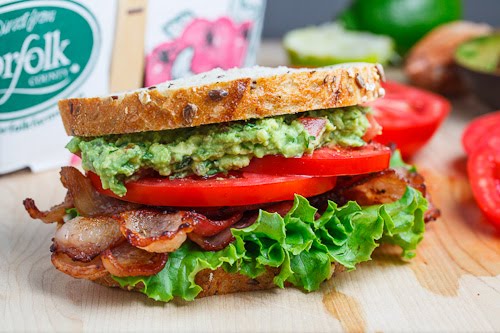
    I chose a picture with avocado on BLT to be controversial
    The biggest obstacle to liberty

    People who are libertarians believe in liberty, principles, small or no government, free association, non-aggression or self-ownership or negative rights or something similar. If your beliefs are solid, I cannot see how you are dissuaded from them by someone saying something you don’t like. You don’t see women renouncing a mainstream party and ideology despite plenty of sexual assaults committed by high ranking members of them, and all parties had such incidence. So why renounce libertarianism because one guy said something sexist? If you do, well your principles were not very strong in the first place.

    Seeing libertarianism in bad light because some of its members is well, unlibertarian. To be fair, that does not mean that libertarians should not criticize racism and misogyny in their ranks, although this should be a general thing and apply universally, as these are some of the worst manifestations of collectivism and tribalism which plague peoplekind.

    To be sure, there is a case to be made that people who are undecided, just dipping their toe, if you will, in the waters of liberty, can be turned off by some things and may need a bit of finessing to get them over the line. We do have many years of propaganda to overcome and heal. So yes, there is a case to maybe express opinions in a way others find appealing. You can say the same thing in different ways to get different reactions. But libertarians are a fairly diffuse, decentralized lot and it is hardly possible for them to police every asshole on the internet who claims to be one and somehow stop him from saying shit others find unappealing. So if people are turned away from libertarianism by random opinions on twitter, well there is no solution really. So might as well relax and have ourselves a nice sandwich and a cold beer. Also convince more models to be libertarian. Otherwise the terrorists win. And by that I do not mean kidnapping to attempt brainwashing. So you know, don’t do that.